
What is PP Bags? (Definition & Aliases)
PP Bags—short for polypropylene bags—describe a family of packaging formats that share a PP backbone but diverge in construction to meet wildly different demands. Two architectures set the tone. In woven PP Bags, slit PP tapes are oriented for strength, woven into a textile, and often laminated with PP or BOPP film for moisture protection and photographic print. In non‑woven PP Bags, melt‑spun fibers are thermally bonded into a sheet (spunbond), which is then converted into reusable shoppers and promotional totes. In commercial usage you will also see PP woven bags, polypropylene woven sacks, BOPP‑laminated PP bags, valve PP sacks, and—in bulk formats—FIBCs (flexible intermediate bulk containers). Titles vary; the mission does not: build a mostly mono‑material PP platform that protects powders, granules, and consumer goods in fast filling, in long storage, and in hot, humid warehouses, while remaining legible to recycling streams.
From the standpoint of field knowledge, PP Bags sit at the crossroads of polymer chemistry (melt‑flow, antioxidant/UV stabilization), textile engineering (mesh, denier, gsm), surface science (corona treatment, dyne stability), and color management (ΔE control, rub/scuff resistance). For food‑contact SKUs, resin and laminate selections reference FDA 21 CFR §177.1520 and EU No 10/2011 (overall migration limit 10 mg/dm², SMLs, NIAS oversight); plant hygiene and documentation are governed by BRCGS Packaging Materials (Issue 7) and Good Manufacturing Practice under EC No 2023/2006. Mechanical integrity of woven fabric is typically verified by ASTM D5035 (strip tensile), while plastic woven sack requirements map to GB/T 8946‑2013.
Horizontal vs. vertical thinking clarifies why this category wins. Horizontally, textiles contribute tenacity and seam logic; film converting brings surface energy and lamination peel; warehousing adds pallet stability and inter‑layer friction; retail brings color fidelity and shelf glare. Vertically, causes stack: resin → tape → fabric → laminate → bag geometry → pallet behavior. Change one dial—mesh from 9×9 to 12×12 or lamination from 20 μm to 35 μm—and outcomes ripple through puncture resistance, print halftones, stiffness, forming speed, and stack compression. Nothing moves alone.
For one trusted doorway into the family, explore PP Bags. One anchor term; many solutions.
Data reinforcement. Practical corridors recur across Made‑in‑China and Alibaba listings for woven PP Bags: mesh 8×8–14×14, denier 650D–1500D, fabric 55–140 g/m², lamination 20–50 μm, widths 260–750 mm, and capacities 5–50 kg. For non‑woven shoppers, typical substrate weights cluster around 60–120 g/m² with 4–8 color flexo/UV options. These are not ornamental numbers; they are operating lanes where price, performance, and manufacturability balance.
Case analysis. A coastal rice brand retired paper multiwall in favor of laminated woven PP Bags built on 12×12 mesh, ~900D, ~95 g/m² fabric, 25 μm BOPP. Distribution breakage dropped, humidity‑induced caking receded, and shelf presence improved due to photographic print—proof that structure and story can coexist.
Comparative study. Paper offers tactile warmth yet struggles in monsoon humidity. Heavy‑duty PE film hermetically seals but tends to creep at height. PP Bags resolve these tensions with a stiff, stack‑stable substrate, a printable face, and a mono‑material pathway that supports recycling claims where PP streams exist.
What is the features of PP Bags? (Performance & Print‑Led Differentiation)
Mechanical integrity & durability. Properly drawn and heat‑set PP tapes in woven PP Bags deliver high tensile with restrained elongation—a combination that keeps seams intact on high‑speed fillers. Fabric and joints validated by ASTM D5035 and methodical seam‑strength checks translate into fewer stoppages and fewer claims. Block‑bottom and valve geometries raise pallet cubic efficiency and accelerate de‑aeration for dusty powders.
Moisture control & shelf aesthetics. A 20–50 μm PP/BOPP laminate adds humidity resilience and a scuff‑resistant, high‑definition print surface. With corona treatment holding ≥38 dynes, inks anchor predictably; ΔE color tolerances secure brand tones from lot to lot. Gloss that attracts, barrier that protects—both matter when a bag must survive a rainy season and retail lighting in the same week.
Food‑contact credibility & hygiene. For edible goods, PP Bags align with FDA 21 CFR §177.1520 and EU No 10/2011 (OML 10 mg/dm²) while plants operate to BRCGS Issue 7; additive stewardship follows REACH (EC No 1907/2006). Compliance is not a sticker; it’s a dossier—Declarations of Compliance, migration results, and lot‑level traceability.
Circular design & rPP pathways. A mono‑material PP bill of materials simplifies sortation. Where migration and performance permit, verified rPP content can be introduced under GRS v4.0 without undermining safety or aesthetics.
Automation readiness & handling safety. Anti‑slip coatings increase inter‑layer friction; UV stabilization supports open‑yard storage; anti‑skid emboss on laminates improves pallet discipline. These are not extras; they are enablers for higher stacks and smoother warehouse turns.
Horizontal/vertical analysis. Horizontally, compare PP Bags against kraft paper (tear energy per gram and moisture resilience favor PP) and against PE film (long‑term creep at heat favors woven PP). Vertically, micro‑choices—mesh, denier, gsm, lamination thickness—roll into macro outcomes: drop performance, allowable pallet height, and on‑shelf legibility.
Data reinforcement. For 25‑kg woven SKUs, credible ranges cluster at mesh 9×9–14×14, denier 800D–1200D, fabric 80–110 g/m², lamination 25–35 μm. Non‑woven retail totes often specify 80–100 g/m² substrates with stitched or heat‑sealed handles.
Case analysis. A fertilizer importer cut loss claims by ~40% after moving from 9×9 / 650D / 60 g/m² uncoated to 12×12 / ~900D / ~95 g/m² + 25 μm BOPP. Seams held. Abrasion declined. Pallets stood straighter, longer.
Comparative study. Think in triads: unit cost, performance at height, recyclability narrative. PP Bags frequently sit on the efficient frontier for humid, high‑stack corridors where mixed constraints collide.
What is the production process of PP Bags? (From Resin to Retail‑Ready Print)
Resin preparation & extrusion (woven). Food‑grade PP—optionally blended with rPP—is compounded and extruded into slit tapes. Melt‑flow index is trended per ASTM D1238 to keep die and draw conditions in sync; antioxidant and UV packages are checked against CoAs.
Orientation & heat‑setting (woven). Tapes are stretched to raise crystallinity and tenacity, then heat‑set to stabilize dimensions. Over‑draw invites brittleness; under‑draw leaves strength on the table—both expensive in different ways.
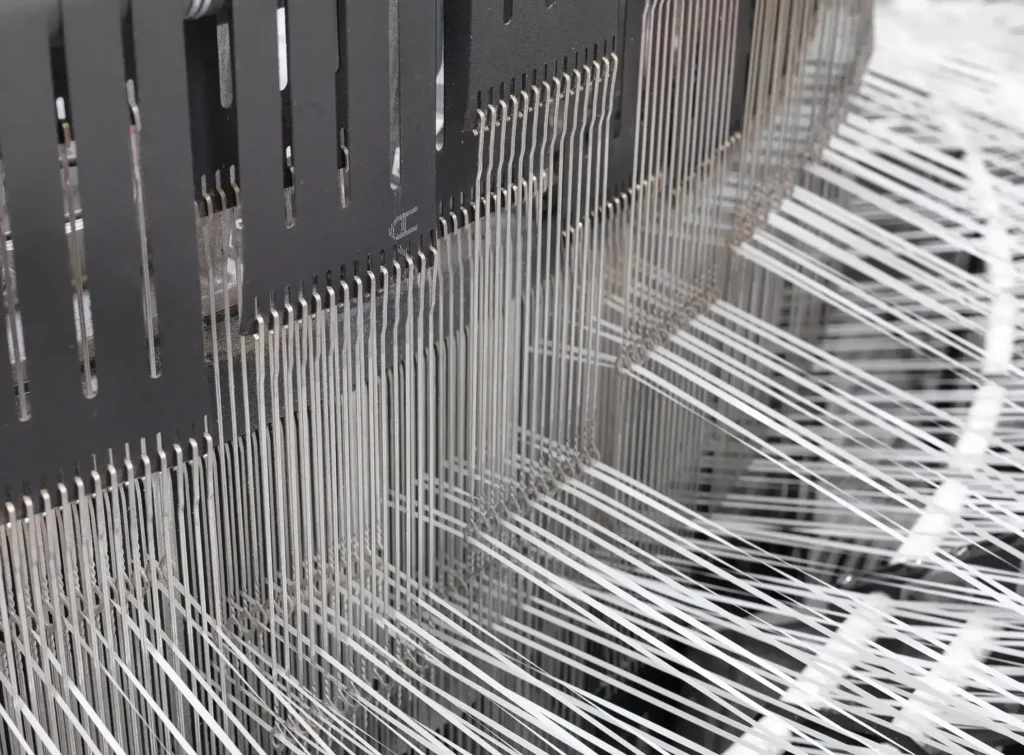
Weaving (woven). Circular or flat looms produce the base fabric to target mesh/denier/gsm. Pick density and tape uniformity dominate defect rates, which in turn govern puncture resistance and print smoothness.
Spunbond formation (non‑woven). PP is melt‑spun, laid as a web, and thermally bonded. Basis weight sets stiffness and reusability; calendering tunes hand‑feel and print receptivity.
Surface activation & lamination. Corona treatment stabilizes surface energy at ≥38 dynes. PP or BOPP film (~20–50 μm) is laminated; bond strength (e.g., peel ≥1.5 N/15 mm) and curl are tuned for downstream forming speeds and flat lay.
Printing (innovative, not ornamental). Rotogravure renders photo‑quality images at scale for laminated woven PP Bags (8–10 colors typical). Flexography offers cost‑efficient, low‑VOC runs for woven and non‑woven formats. Digital presses enable short runs and rapid artwork iteration; ICC profiling and ΔE dashboards protect brand identity.
Cutting, forming & sewing. Heat‑cut tops reduce fray; block‑bottom and valve constructions set fill speed, de‑aeration, and pallet cube. Stitch architecture—single vs. double fold, stitches‑per‑inch windows—governs seam performance and dust leakage.
Quality & compliance. Tensile/seam verification (ASTM D5035 plus seam tests), migration to EU No 10/2011, hygiene to BRCGS Issue 7. Print durability is checked via rub/scuff protocols (e.g., ASTM D5264 Sutherland rub) and abrasion rubs representative of warehouse floors.
Horizontal/vertical analysis. Horizontally, converting borrows dyne control and peel testing from films, uptime playbooks from textiles, and HACCP discipline from food plants. Vertically, process drift propagates: dyne decay → ink pick‑off; under‑drawn tapes → warehouse elongation; low stitch density → seam splits. A line is a chorus—if one voice is flat, the whole song suffers.
Data reinforcement. In‑line dyne meters, SPC on MFR, standardized peel targets, and stitch‑density windows per GB/T 8946‑2013 create reproducibility across lines and sites.
Case analysis. Installing in‑line corona with live dyne telemetry cut print defects by more than half in one converter and enabled lower solvent‑ink laydowns without compromising ΔE. Less waste, steadier color, calmer audits.
Comparative study. PP‑only laminates preserve mono‑material status, easing sortation versus paper/PE composites that drift into multi‑material categories and complicate recycling.
What is the application of PP Bags? (Retail, FMCG & Brand Storytelling)
Food & beverage retail. Rice, flour, sugar, pulses—categories that punish weak packs—benefit from humidity control and billboard‑grade print. Windowed BOPP panels in laminated PP Bags let consumers inspect grains without compromising pallet discipline.
Pet care & garden. High‑fat kibbles, lawn seed, and fertilizers stress packs with grease, abrasion, and dust. Laminated PP Bags provide scuff‑tolerant faces and robust seam architectures that resist split and spill.
Reusable shoppers & promos (non‑woven). Spunbond PP Bags at 80–100 g/m² with stitched or heat‑sealed handles and matte/gloss lamination yield durable, wipe‑clean carriers that retailers can brand at will.
Data reinforcement. Retail woven SKUs cluster at 10 / 25 / 50 kg with widths 300–700 mm and mesh 10×10–14×14; non‑woven shoppers frequently list 60–120 g/m² substrates and 4–8 color print.
Case analysis. A rice brand added transparent BOPP windows and recorded double‑digit shelf pick‑up without destabilizing pallets—proof that storytelling and structure can pull in the same direction.
Comparative study. Against paper multiwall in damp seasons, moisture regain and tear energy tilt toward woven PP; versus cotton totes, non‑woven PP offers lower moisture uptake and easier cleaning at retail scale.
What is the application of PP Bags? (Industrial, Export & Logistics Physics)
Industrial minerals & building materials. Cement, gypsum, resins—materials that punish weakness—require drop resistance and stack stability. Valve PP Bags accelerate filling and reduce fugitive dust.
Agriculture & feed. Seeds and compound feed benefit from puncture resistance, UV‑stabilized options, and anti‑slip coatings that raise inter‑layer friction on tall stacks.
Export lanes (ASEAN/EU/Americas). Documentation aligned to EU No 10/2011 and hygiene under BRCGS Issue 7 speeds retailer acceptance. Woven PP’s lower creep vs. thin films preserves pallet geometry in hot warehouses; FIBC relatives cite ISO 21898:2024 for safety factors.
Data reinforcement. Export RFQs commonly request tensile and seam certificates, OML 10 mg/dm² migration reports, and third‑party verifications (SGS/Intertek/TÜV). These are the passports that let pallets cross borders.
Case analysis. A fertilizer distributor lifted pallet height by two layers after moving to anti‑slip, block‑bottom PP Bags; outbound damage claims fell and truck cube improved.
Comparative study. Where hermetic sealing is absolute, PE film may be mandated; where humidity, height, and scuff coexist, woven PP Bags typically deliver the surer compromise.
Quick Spec Sheet (Typical, Commercially Verifiable)
| Parameter | Typical range / option | Technical note |
|---|---|---|
| Fabric weight (woven) | 55–140 g/m² | Select by product bulk density and drop‑test target; avoid over‑engineering beyond creep needs |
| Mesh (warp×weft, woven) | 8×8 – 14×14 | Higher mesh refines puncture resistance and print laydown |
| Denier (woven tapes) | 650D – 1500D | Heavier denier for abrasive contents or taller stacks |
| Lamination (PP/BOPP) | 20–50 μm | 25–35 μm common for retail gloss/moisture control without excessive curl |
| Width (woven) | 260–750 mm | Align to 10/25/50 kg fills and block‑bottom geometry |
| Substrate (non‑woven) | 60–120 g/m² | Spunbond PP; stitched or heat‑sealed handles; matte/gloss options |
| Printing | Rotogravure / flexo / digital | Maintain dyne ≥38; manage ΔE; verify rub via ASTM D5264 |
| Testing | ASTM D5035 (tensile); seam strength | Strip tensile + sewn joint validation under realistic loads |
| Sack standard | GB/T 8946‑2013 | General technical requirements for plastic woven sacks |
| Food‑contact | FDA 21 CFR §177.1520; EU No 10/2011; EC No 2023/2006 | OML 10 mg/dm²; SML/NIAS oversight; GMP documented |
| Hygiene system | BRCGS Packaging Materials (Issue 7) | GFSI‑benchmarked hygiene & hazard control |
| Bulk reference | ISO 21898:2024 | For 500–2,000 kg FIBC relatives |
Figures mirror live supplier listings and widely used lab methods. Final specs must be validated via tensile, seam, drop, creep, migration, and print‑durability tests tuned to route risk and line speed.
A Systems‑Thinking Synthesis: VidePak’s End‑to‑End Solution
Sub‑problem A — Compliance & chemistry control. Lock polymer/additive recipes to FDA 21 CFR §177.1520 and EU No 10/2011; qualify rPP via migration; maintain REACH‑compliant inventories with change control. Solution: approved‑supplier lists, incoming MFR checks, lot‑level DoC/CoA, periodic migration audits.
Sub‑problem B — Strength vs. weight vs. pallet height. Navigate the mesh/denier/gsm grid using designed experiments; validate with ASTM D5035, seam tests, drop testing, and pallet creep checks at heat. Solution: baseline for 25‑kg duty at 10×10 / 900D / 90–100 g/m², then tune to product density and lane stress.
Sub‑problem C — Print quality vs. recyclability vs. speed. Keep PP‑only laminations, enforce dyne ≥38, set ΔE and rub benchmarks, and right‑size lamination at 25–35 μm for gloss without over‑stiffness. Solution: in‑line corona, ΔE dashboards, solvent capture, press‑side QC.
Sub‑problem D — Audit readiness & traceability. Operate to BRCGS Issue 7 with allergen/foreign‑matter prevention and mock recalls. Solution: batch‑level genealogy from resin to pallet, retain samples, CAPA discipline, and audit dry‑runs.
Integrated outcome. A mono‑material packaging platform—PP Bags—that carries product safely, prints convincingly, audits cleanly, and recycles credibly. Not a slogan: specification, verification, repetition.
- What is PP Bags? (Definition & Aliases)
- What is the features of PP Bags? (Performance & Print‑Led Differentiation)
- What is the production process of PP Bags? (From Resin to Retail‑Ready Print)
- What is the application of PP Bags? (Retail, FMCG & Brand Storytelling)
- What is the application of PP Bags? (Industrial, Export & Logistics Physics)
- Quick Spec Sheet (Typical, Commercially Verifiable)
- A Systems‑Thinking Synthesis: VidePak’s End‑to‑End Solution
Introduction
The global PP woven bags market is projected to grow at a CAGR of 5.2% through 2030, driven by advancements in printing technologies and their critical role in packaging fertilizers, chemicals, and industrial materials. A key challenge lies in balancing durability, regulatory compliance, and functional design—especially for hygroscopic and corrosive products like fertilizers. This report explores how PP bags address these demands through customizable printing, material innovations, and compliance-driven parameter selection, while aligning with international standards such as ASTM (US), EN (EU), and GB/T (China).
Fertilizer Packaging: Challenges and PP Bag Solutions
Fertilizers—particularly nitrogen-based and compound varieties—require packaging that combats moisture absorption, heat buildup, and chemical reactivity. PP woven bags, with layered structures and specialized coatings, offer tailored solutions:
- Moisture Resistance
- Problem: Ammonium nitrate absorbs moisture, leading to caking and reduced efficacy.
- Solution: BOPP-laminated bags reduce water vapor transmission by 60% compared to uncoated PP.
- Case Study: Shandong Leihua’s 50kg urea bags integrate 25μm PE inner liners, achieving <1% moisture ingress even at 85% humidity.
- Heat Dissipation
- Problem: Exothermic reactions in compound fertilizers risk combustion.
- Solution: Breathable PP fabrics with 30–50 mbar air permeability (ISO 5636-5) allow controlled gas exchange.
- Corrosion Resistance
- Additives: UV stabilizers (e.g., UV-326) and antioxidants (e.g., Irganox 1010) extend bag lifespan by 40% in acidic environments.
Global Standards and Parameter Selection
Q: How do regional standards dictate PP bag specifications?
A: Compliance governs thickness, seam strength, and barrier properties. Below is a comparative analysis:
| Standard | Key Requirements | PP Bag Parameters |
|---|---|---|
| ASTM D5276 (US) | Drop-test resistance ≥1.5m, UV stability | Thickness: 90–100 g/m²; PE-coated seams |
| EN 13590 (EU) | REACH-compliant additives, azo-free dyes | Inner liner: 20μm PE; Oeko-Tex® certified |
| GB/T 8946 (CN) | Tensile strength ≥5.0 kN/m | Double-stitched seams; anti-UV lamination |
| JIS Z 1539 (JP) | High-clarity printing, recyclability | Water-based inks; 80–90 g/m² thickness |
Example: Vedhaa Polypack uses copolymer PP with 25% calcium carbonate filler to meet EN 13590’s tear resistance standards while reducing costs by 15%.
Customization Based on Content
Dialogue: Addressing Client Queries
Q: When should laminated vs. non-laminated bags be used?
A: Laminated bags (e.g., BOPP/PE layers) suit hygroscopic fertilizers like urea, offering <0.5% moisture absorption. Non-laminated, breathable bags are ideal for slow-release granules requiring airflow.
Q: Are inner liners necessary for powdered fertilizers?
A: Yes. Xinfeng’s 50kg DAP bags use 25μm PE liners with ultrasonic seals, reducing spillage by 90%.
Technical Innovations in Printing and Materials
- Anti-Corrosion Coatings
- Technology: Fluoropolymer-coated PP bags resist acidic fertilizers (pH 2–3), retaining 95% tensile strength after 6 months of exposure.
- Smart Printing
- Case Study: Taian Xinfeng’s 6-color gravure printing ensures QR codes remain scannable after 12 months outdoors, enhancing traceability.
- Sustainability
- Trend: Brands like Phenisky Industrial use 30% recycled PP, cutting carbon footprints by 25% while complying with EN 13432 compostability standards.
Performance Metrics and FAQs
Table 1: Critical PP Bag Parameters for Fertilizers
| Parameter | Test Standard | Typical Value |
|---|---|---|
| Thickness | ASTM D3776 | 90–120 g/m² |
| Tensile Strength | ISO 13934-1 | ≥5.5 kN/m |
| Seam Strength | ASTM D6199 | ≥4.0 kN/m |
| Moisture Barrier | ASTM E96 | ≤1.0 g/m²/day |
FAQs
- Q: What thickness is ideal for 50kg fertilizers?
- A: 100–120 g/m² with PE lamination ensures durability and moisture resistance.
- Q: Can valve bags handle powdered fertilizers?
- A: Yes, but double-valve designs (e.g., Vedhaa’s VP-7) minimize dust during filling.
Future Trends
The rise of automated Form-Fill-Seal (FFS) systems and biodegradable additives (e.g., TDPA™) is revolutionizing PP bag production. For instance, Starlinger’s AD*STAR® technology enables 2,000 bags/hour output with zero material waste[citation:N/A].
External Resources:
- Discover how moisture-proof woven bags enhance agrochemical packaging.
- Explore recyclable PP bags for ESG-aligned solutions.
By merging technical rigor with regulatory compliance, PP woven bags continue to dominate global fertilizer packaging, offering scalable and sustainable solutions for diverse industrial needs.