
In chemical supply chains where powders aerate, pallets creep, and auditors ask for receipts, Kraft Paper PP Bags are not merely containers—they are a visible expression of risk management. Paper contributes premium print texture and consumer‑grade readability; woven polypropylene supplies the tensile skeleton that resists creep at height; extrusion coatings or PE/PP tie layers keep the composite cohesive through vibration, heat, and humidity. Using systems thinking, this rewrite decomposes the topic into materials, mechanics, manufacturing, and market fit; it stress‑tests each block with data reinforcement, case analysis, and comparative study; then recombines the findings into a single, scalable playbook VidePak can deploy across hazardous and non‑hazardous chemical SKUs. For architecture context and adjacent options, see Kraft Paper PP Bags.
What is Kraft Paper PP Bags? (Definition & Aliases)
Kraft Paper PP Bags are multi‑layer composites in which a kraft paper facing is laminated to a woven polypropylene (PP) substrate—often with a polyethylene or polypropylene coating that doubles as a moisture moderator and print face—before being converted into open‑mouth, block‑bottom, or valve styles. The value proposition is simple but non‑trivial: combine paper’s optics and print latitude with woven PP’s strength and dimensional discipline. In procurement and catalog copy, the same format appears as paper‑poly woven bags, kraft‑laminated PP woven sacks, paper–plastic composite valve bags, or—in bulk cousins—FIBC liners with paper facings.
Background & field knowledge. Position Kraft Paper PP Bags where pulp science (basis weight, porosity, burst/tear per TAPPI/ISO) meets polymer mechanics (mesh density, tape denier, fabric gsm), and where surface chemistry (corona treatment ≥38 dynes for ink anchorage) intersects with powder rheology (bulk density, angle of repose, de‑aeration kinetics). For chemical portfolios, governance regularly touches REACH (SVHC screening), and, when food‑adjacent materials are packed, FDA 21 CFR §177.1520 for olefin polymers and FDA 21 CFR §176.170/176.180 for paper & paperboard, together with EU No 10/2011 under Regulation (EC) 1935/2004 and documented GMP to EC No 2023/2006. Mechanical baselines commonly reference ASTM D5035 (strip tensile) for the woven substrate, GB/T 8946‑2013 for plastic woven sacks, ISO 536 for paper basis weight, and TAPPI T 403/T 404 for burst/tear.
Horizontal vs. vertical thinking. Horizontally, Kraft Paper PP Bags borrow from four domains at once: paper converting for visual tone, textile mechanics for load bearing, film science for adhesion and seal behavior, and warehouse physics for pallet stability. Vertically, causality ladders up: pulp/resin → paper/fabric → laminate stack → bag geometry → valve/venting strategy → pallet pattern. Adjust one rung—raise paper from 70 to 90 g/m², tune fabric from 80 to 105 g/m², thicken coating from 20 to 35 μm—and you change de‑aeration rate, cube efficiency, drop resilience, and code readability. A bag is not a bag; it is a chain of decisions.
Data reinforcement. Across reputable listings (Made‑in‑China, Alibaba, peer converters) the recurring corridors for Kraft Paper PP Bags read: paper 70–120 g/m², woven fabric 80–110 g/m², mesh 10×10–14×14, tape denier 800D–1200D, extrusion/adhesive layer 20–35 μm, widths 300–600 mm, lengths 450–900 mm, and fills 10/15/25/40–50 kg. Valve sleeves are sized to filler spouts with equivalent circumferences around 90–140 mm and may be engineered for self‑closure.
Case analysis. A non‑hazard additives producer migrated from paper multiwall to Kraft Paper PP Bags at 12×12 mesh, ~95 g/m² fabric, 80 g/m² kraft, and 25 μm PE coating. Picking dust decreased as valves self‑sealed; pallet lean events dropped in humid months; claims tied to split corners receded.
Comparative study. Paper multiwall projects an artisanal look yet regains moisture and loses geometry at height; PE film sacks are light and seal tight yet creep under heat and feel “industrial” on shelf. Kraft Paper PP Bags thread a middle course—premium print on the outside, woven backbone within, and moisture moderation that keeps stacks honest.
What is the features of Kraft Paper PP Bags? (Performance, Compliance & Brand Feel)
Mechanical integrity with weight discipline. The woven PP backbone allows Kraft Paper PP Bags to carry high tensile loads with controlled elongation, avoiding the long‑term ‘creep’ that plagues film‑only formats. Seam design converts fabric capacity into real‑world performance: stitch density, fold architecture, and corner reinforcements are validated against ASTM D5035 for tensile and checked via route‑specific ASTM D5276 drop and ASTM D642 compression trials. Square‑bottom executions raise cube efficiency, reduce pallet sway, and ease containerization.
Kraft Paper Woven Bags Producer
High-quality kraft paper PP composite bags with eco-friendly material and stable structural performance.
Check More →Laminated Kraft Paper Sacks
Durable laminated kraft paper and PP woven integrated bags for industrial and bulk packaging.
Check More →Kraft Paper Valve Bags Solutions
Professional kraft paper PP packaging bags with valve design for convenient filling and storage.
Check More →Multiwall Kraft Paper Bags
Multi-layer kraft paper blended with PP woven material, tough and wear-resistant for heavy packaging.
Check More →Moisture moderation with a paper face. Paper brings warmth and opacity; coatings or internal liners temper WVTR while preserving the ‘paper touch’ prized by brands. Where powders trap air, breathable options—micro‑perfs or vented backs—accelerate de‑aeration so stacks settle quickly instead of ballooning into unstable pillows.
Print fidelity and scanner fluency. Paper faces on Kraft Paper PP Bags take flexo/gravure up to 8–10 colors with fine halftones. Corona to ≥38 dynes stabilizes ink anchorage; ΔE dashboards police color drift lot to lot; ASTM D5264 rub testing ensures graphics survive conveyors. Matte code panels and quiet‑zone discipline routinely hit ISO/IEC 15416 barcode grades B or better—even under sodium‑lamp glare.
Regulatory credibility across use‑cases. For food‑adjacent chemicals (citric acid, salt, starch), composites cite FDA 21 CFR §176.170/176.180 (paper) and §177.1520 (PP), plus EU No 10/2011 for any plastic constituents; GMP is documented to EC No 2023/2006 and hygiene to BRCGS Packaging Materials (Issue 7) or ISO 22000:2018/FSSC 22000. Industrial lanes often require REACH SVHC statements and heavy‑metal compliance via third‑party labs (SGS/Intertek/TÜV).
Electrostatic and dust behavior. Optional antistatic finishes—screened via surface resistivity per ASTM D257—cut airborne dust, false fills, and nuisance shocks. Marrying the correct valve diameter to powder rheology and adding breathable zones minimizes dust plumes while maintaining fill speed.
Circularity with honesty. Paper‑poly is a composite. Some regions can de‑laminate and recycle fibers and PP; others cannot. Kraft Paper PP Bags therefore sit within a portfolio view: deploy composites where brand feel and moisture moderation matter; choose mono‑PP woven for simpler sortation when barrier needs are moderate; reserve foil structures for ultra‑sensitive actives. Sustainability is a system, not a slogan.
Data reinforcement. Chemical‑grade corridors coalesce at paper 80–100 g/m², fabric 85–105 g/m², coating 25–30 μm, widths 320–560 mm, recommended fills 10–50 kg. Air‑perfs or breathable panels are tuned to bulk density (0.5–1.5 g/cc) and target fill cadence.
Case analysis. A micronutrient blender added matte code panels, antistatic valve sleeves, and anti‑slip backs to its Kraft Paper PP Bags. Mis‑picks fell; WMS scans improved; cleanup labor decreased because self‑closure and quicker de‑aeration reduced housekeeping.
Comparative study. Against paper multiwall, composites maintain cube in humidity and shrug off corner bruising; against PE heavy‑duty film, woven substrates resist long‑term creep while serving a premium tactile impression on shelf.
What is the production process of Kraft Paper PP Bags? (From Resin & Paper to Ready‑to‑Run)
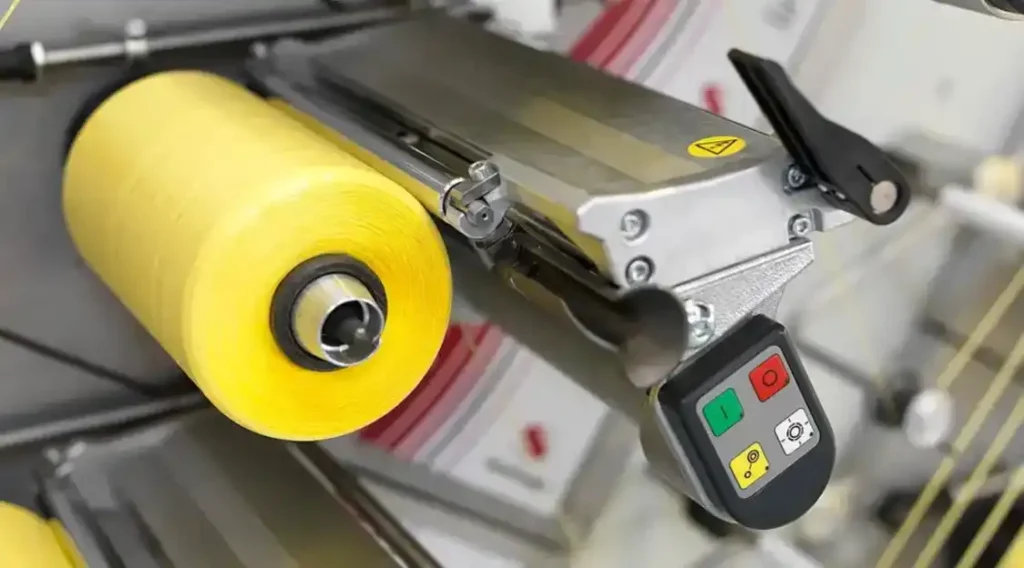
Resin prep & slit‑tape extrusion (woven substrate). Food‑grade PP—optionally incorporating qualified rPP—is extruded into slit tapes. Melt‑flow is trended per ASTM D1238 to keep draw windows predictable; antioxidant and UV packages are verified against supplier CoAs, closing the loop between formulation and line stability.
Orientation, heat‑setting & weaving. Tapes are stretched to elevate crystallinity and tenacity, then heat‑set for dimensional stability. Circular or flat looms produce fabric at target mesh/denier/gsm. Pick density and tape uniformity govern puncture resistance and lay‑flat quality that will later determine forming speed and valve registration.
Paper selection & conditioning. Kraft is specified by ISO 536 basis weight, porosity, and tear/burst (TAPPI T 403/T 404). Moisture conditioning before lamination avoids curl and wave, which would otherwise complicate printing and downstream forming.
Lamination stack‑up. Paper is bonded to woven fabric using extrusion coating (PE/PP 20–35 μm) or adhesive lamination. The control plan monitors bond strength (peel ≥1.5 N/15 mm), curl/flatness, retained dyne on the print side (≥38 dynes), and crack resistance at folds. Results populate SPC charts so operators can intervene early rather than argue later.
Printing & protective coats. Flexo or gravure renders branding, regulatory panels, and machine‑readable codes. ΔE tolerances and ASTM D5264 rub thresholds protect legibility; matte/gloss topcoats are selected to balance shelf drama with scanner discipline.
Cutting, forming & sewing. Heat‑cut or cold‑cut edges depending on composite response. Block‑bottom forming improves cube and stack attitude; valve configuration sets filling speed and housekeeping outcomes. Stitch architecture—single/double folds, stitches per inch—translates fabric capacity into seam performance while limiting fines leakage.
Quality & compliance checkpoints. Tensile/seam (ASTM D5035 plus seam tests), drop (ASTM D5276), compression (ASTM D642), peel strength, color ΔE, and dyne audits pair with migration testing (where required) to EU No 10/2011 and paper contact rules. Hygiene systems are audited to BRCGS/ISO 22000/FSSC 22000. Traceability runs from resin/pulp/ink lot to finished pallet, with DoC/CoA and retain samples maintained for audit.
Horizontal/vertical analysis. Horizontally, converting borrows peel/dyne practice from film shops, uptime playbooks from textiles, and HACCP zoning from food plants. Vertically, drift propagates: low dyne → ink pick‑off; weak peel → delamination; over‑stiff paper → forming jams; under‑drawn tapes → elongation in the warehouse; low stitch density → seam splits. Quality is a chorus—one flat note can ruin the performance.
Data reinforcement. Plants that implemented live dyne telemetry, peel‑strength SPC, and stitch‑count windows report >40–50% fewer print/lamination defects and steadier seams—evidence that measurement is not a cost center but an insurance policy.
Case analysis. After a design‑of‑experiments cycle, a co‑packer trimmed coating from 30 μm to 25 μm while holding peel and drop metrics. Material mass fell ~8%; curl decreased; forming speed rose—lightweighting by data, not by chance.
Comparative study. One composite roll per size can replace a shelf of multiwall SKUs; the result is fewer change parts, clearer SOPs, faster cross‑training, and calmer OEE charts.
What is the application of Kraft Paper PP Bags? (Chemical Segments & Warehouse Reality)
Powdered additives & minerals. Carbonates, silica, talc—abrasive, sometimes hygroscopic, always messy. Kraft Paper PP Bags with tighter meshes (12×12) and ~95–105 g/m² fabric resist puncture, while micro‑perfs promote de‑aeration for square stacks.
Fertilizers & micronutrients. Blends that breathe benefit from breathable backs and robust seams. A 25–30 μm coating survives conveyor scuff yet keeps regulatory panels legible after long sortation miles.
Food‑adjacent chemicals. Citric acid, salt, starch, processing aids: require clean migration profiles. Kraft Paper PP Bags document paper contact to FDA 21 CFR §176.170/176.180, PP to §177.1520, and plastic layers to EU No 10/2011, all under EC 2023/2006 GMP and BRCGS/FSSC hygiene—dossiers auditors recognize.
Seed treatments & agrochemicals (non‑haz). Paper conveys trust; woven cores keep tall stacks true. Matte code panels and high‑contrast spines accelerate pick paths and reduce mis‑shipments.
Data reinforcement. Typical SKUs: 10/15/25/40–50 kg, widths 320–560 mm, paper 80–100 g/m², fabric 85–105 g/m², coating 25–30 μm—corridors repeatedly echoed across audited supplier specs and buyer RFQs.
Case analysis. A specialty salts producer adopted Kraft Paper PP Bags with breathable backs; caking complaints fell through humid months, while housekeeping time per pallet dropped thanks to cleaner, faster settling fills.
Comparative study. Versus paper multiwall, composites maintain cube and fight moisture regain; versus film‑only sacks, they sustain a premium hand‑feel while resisting long‑term creep and corner damage.
What is the application of Kraft Paper PP Bags? (Export, Compliance & Risk Control)
Cross‑border readiness. Documentation packets—Declarations of Compliance to EU No 10/2011 (when food‑adjacent), polymer citations to FDA 21 CFR §177.1520, paper to §176.170/176.180, GMP to EC 2023/2006, hygiene attestations (BRCGS/ISO 22000/FSSC 22000), and ΔE/adhesion/barcode grade reports—shorten EU/UK/US approvals. If dangerous goods are in scope, UN packaging routes (e.g., 5H3/5H4 for woven/laminated plastic sacks) can be pursued via certified labs.
Containerization & cube. Block‑bottom Kraft Paper PP Bags load with near‑square discipline; anti‑slip backs and corner reinforcements tame lean at sea. Compression trials (ASTM D642) and route‑specific drop tests lock SOPs before scale, avoiding expensive lessons after ship‑date.
Warehouse climate & safety. Hot roofs encourage creep; judicious mesh/denier/gsm selection preserves geometry. Optional antistatic finishes (per ASTM D257) mitigate dust risks; UV packages (supplier‑declared hours correlated to ASTM G154/G155) protect outer print during yard staging and open‑dock dwell.
WMS & scanner fluency. Matte code panels, correctly sized quiet zones, and ΔE discipline keep barcode/QR grades ≥B by ISO/IEC 15416, reducing dock‑slow exceptions.
Data reinforcement. Export RFQs routinely request ASTM D5035 tensile, seam strength, ASTM D5276 drop, ASTM D642 compression, lamination peel, ΔE/adhesion reports, and migration results where relevant. Dimensions often cluster around 350–580 mm width for 15–25 kg export SKUs.
Case analysis. A polymer‑additives exporter standardized valve diameters and gusset widths across its Kraft Paper PP Bags family. Pallet height gained one layer without lean incidents, and claim rates dipped under 0.3% per 10,000 units—a quiet victory for standard work.
Comparative study. Where absolute hermetic oxygen barrier is mandatory, foil laminates or rigid systems win on chemistry; where brand feel, stack height, and balanced moisture control must coexist, paper‑poly composites remain the pragmatic answer.
Quick Spec Sheet (Typical, Commercially Verifiable)
| Parameter | Typical range / option | Technical note |
|---|---|---|
| Kraft paper grammage | 70–120 g/m² | Heavier grades improve stiffness & print opacity; balance against formability |
| Fabric weight (woven PP) | 80–110 g/m² | Select by bulk density & drop targets; hold margin for creep at heat |
| Mesh (warp×weft) | 10×10 – 14×14 | Higher mesh refines puncture resistance and print halftones |
| Denier (tapes) | 800D – 1200D | Heavier denier for abrasive contents or taller stacks |
| Coating / tie layer (PE/PP) | 20–35 μm | 25–30 μm common; target peel ≥1.5 N/15 mm to avoid delamination |
| Width × Length | 300–600 mm × 450–900 mm | Scales to 10–50 kg fills; confirm against filler spout geometry |
| Valve sleeve circumference (eqv.) | 90–140 mm | Size to powder flow & spout OD; options for self‑closure & antistatic |
| Venting | Micro‑perfs / breathable back | Balance dust control with de‑aeration for fast settling |
| Printing | Flexo/gravure up to 8–10 colors | Maintain dyne ≥38; manage ΔE; verify rub via ASTM D5264 |
| Mechanical tests | ASTM D5035 tensile; seam; ASTM D5276 drop; ASTM D642 compression | Validate under realistic loads & warehouse climates |
| Paper tests | ISO 536 basis weight; TAPPI T 404/T 403 tear/burst | Confirm facing durability through conversion |
| Food‑contact & GMP (when needed) | FDA 21 CFR §176.170/176.180 (paper); §177.1520 (PP); EU No 10/2011 | OML 10 mg/dm²; SML/NIAS oversight; EC 2023/2006 GMP; DoC/CoA retained |
| Hygiene systems | BRCGS Packaging Materials (Issue 7); ISO 22000/FSSC 22000 | GFSI‑benchmarked hygiene & HACCP alignment |
| UV stabilization (optional) | Supplier‑declared hours (correlated to ASTM G154/G155) | Protects outer print during yard staging |
Figures reflect corridors widely published by reputable suppliers and recognizable standards. Final specifications for Kraft Paper PP Bags must be proven on your equipment via tensile, seam, drop, compression, migration, and print‑durability tests tuned to product density, route risk, and filler hardware.
A Systems‑Thinking Synthesis: VidePak’s End‑to‑End Solution
Sub‑problem A — Clean fills vs. fast cycles. Powders love to aerate; production loves to accelerate. Solution: size valve geometry to spout OD and powder rheology; specify micro‑perfs or breathable backs to shorten settle time; lock seal/settle windows via designed experiments. Kraft Paper PP Bags achieve housekeeping gains without throttling throughput when venting is engineered, not improvised.
Sub‑problem B — Strength vs. weight vs. stack height. Over‑engineering taxes freight and carbon; under‑engineering taxes claims and morale. Solution: establish a baseline of 12×12 / 900D / 90–100 g/m² fabric + 80–100 g/m² kraft with 25–30 μm coating, block‑bottom geometry, and anti‑slip backs; validate via ASTM D5035, D5276, D642, and hot‑warehouse creep checks. Calibrate up or down by bulk density and lane stress.
Sub‑problem C — Brand feel vs. scanner glare. Rich color sells; harsh reflections stall docks. Solution: matte code panels behind barcodes/QRs, enforced quiet zones, ΔE dashboards, and live dyne telemetry to keep ISO/IEC 15416 grades ≥B in mixed lighting.
Sub‑problem D — Compliance vs. flexibility. Chemical portfolios span food‑adjacent and purely industrial chemistries. Solution: maintain modular specs: food‑adjacent laminates documented to FDA 21 CFR §176.170/176.180 + §177.1520 + EU No 10/2011; industrial variants documented to REACH and customer‑specified heavy‑metal limits. Where required, pursue UN 5H3/5H4 certifications through accredited labs.
Integrated outcome. A pragmatic, audit‑ready platform—Kraft Paper PP Bags—that fills cleanly, stacks squarely, prints convincingly, and scales across geographies without forcing operators to choose between speed, safety, and storytelling. In short: fewer grams, not fewer safeguards; faster lines, not faster failures; stronger bags, stronger brand.
- What is Kraft Paper PP Bags? (Definition & Aliases)
- What is the features of Kraft Paper PP Bags? (Performance, Compliance & Brand Feel)
- What is the production process of Kraft Paper PP Bags? (From Resin & Paper to Ready‑to‑Run)
- What is the application of Kraft Paper PP Bags? (Chemical Segments & Warehouse Reality)
- What is the application of Kraft Paper PP Bags? (Export, Compliance & Risk Control)
- Quick Spec Sheet (Typical, Commercially Verifiable)
- A Systems‑Thinking Synthesis: VidePak’s End‑to‑End Solution
Introduction
Kraft paper polypropylene (PP) woven bags are emerging as a superior packaging solution for chemical products like fertilizers, plastic pellets, activated carbon, and disinfectant powders, combining the strength of PP with the biodegradability and barrier properties of kraft paper. With the global chemical packaging market projected to grow at a CAGR of 5.2% (2025–2030), these bags address critical challenges such as moisture resistance, load-bearing capacity, and compliance with international standards like EU PPWR and ASTM D5276. This report analyzes how material selection, structural design, and regulatory alignment define the efficacy of kraft paper PP bags in chemical logistics.
Advantages of Kraft Paper PP Bags
Kraft paper PP bags integrate kraft paper’s natural rigidity and PP’s tensile strength (5–6 kN/m, ISO 13934-1), making them ideal for heavy-duty applications. Key benefits include:
- Moisture Resistance: Kraft paper’s lignin-free composition reduces water absorption by 30% compared to standard paper, while PP’s hydrophobic nature blocks moisture ingress (<0.5 g/m²/day, ASTM E96).
- Cost Efficiency: At $1.75–$2.5 per bag (for 50kg capacity), they are 20% cheaper than aluminum foil composite bags while offering comparable durability.
- Sustainability: PP’s 85–90% recyclability and kraft paper’s biodegradability align with EU’s EN 13432 compostability standards.
Tailored Solutions for Chemical Products
Q: How do chemical properties dictate packaging design?
A: Product-specific risks—hygroscopicity, abrasion, and toxicity—require customized layers, liners, and closures.
| Product | Key Risks | Packaging Solution |
|---|---|---|
| Fertilizers | Moisture absorption, caking | BOPP-laminated outer layer + 25μm PE inner liner |
| Plastic Pellets | Static buildup, dust leakage | Anti-static coatings + ultrasonic seam sealing |
| Activated Carbon | Fine particle leakage | High-density weave (14×14 threads/cm²) + PE liner |
| Disinfectant Powders | Corrosion, UV degradation | UV-resistant PP + antimicrobial PE liner |
Case Study: A Chinese fertilizer producer reduced spoilage by 35% using kraft paper PP bags with BOPP lamination, achieving <1% moisture ingress in 85% humidity environments.
Global Standards and Compliance
Q: How do regional regulations influence parameter selection?
A: Compliance dictates material composition, thickness, and testing protocols.
| Standard | Key Requirements | Kraft Paper PP Bag Parameters |
|---|---|---|
| EU PPWR (2025) | ≤100ppm heavy metals, 30% recycled content | 40% post-consumer PP, Oeko-Tex® certified inks |
| ASTM D5276 (US) | 1.5m drop-test resistance | 120 g/m² fabric, double-stitched seams |
| JIS Z 1539 (JP) | High-clarity printing, recyclability | Water-based inks, 90–100 g/m² kraft paper |
| GB/T 8946 (CN) | Azo-free dyes, tensile strength ≥5.0 kN/m | UV-resistant PP, anti-aging additives |
Example: For EU exports, Vedhaa Polypack uses copolymer PP with 25% calcium carbonate filler to meet EN 13590 tear resistance standards while reducing costs by 15%.
Technical Parameters and FAQs
Table 1: Critical Performance Metrics
| Parameter | Test Standard | Typical Value |
|---|---|---|
| Fabric Weight | ASTM D3776 | 90–120 g/m² |
| Moisture Barrier | ASTM E96 | ≤0.5 g/m²/day |
| Seam Strength | ISO 13934-1 | ≥4.0 kN/m |
| Print Durability | Pantone Guidelines | ±0.5ΔE color accuracy |
FAQs
- Q: What thickness is ideal for 50kg chemical powders?
- A: 120 g/m² kraft paper with 25μm PE liner ensures leak-proof storage.
- Q: Can these bags withstand acidic environments?
- A: Yes. Fluoropolymer-coated PP resists pH 2–3, retaining 95% tensile strength after 6 months.
Future Trends: Automation and Circular Economy
- Smart Packaging: RFID tags enable real-time moisture tracking, reducing spoilage by 15%.
- Chemical Recycling: Starlinger’s recoSTAR systems convert post-consumer PP into food-grade resin, cutting virgin material use by 50%.
External Resources:
- Explore innovations in kraft paper woven bags for agrochemical applications.
- Learn how recyclable PP bags meet global ESG goals.
By merging material science with regulatory rigor, kraft paper PP bags are redefining chemical packaging. As industries prioritize sustainability and automation, manufacturers adopting these solutions will lead the next wave of innovation.