
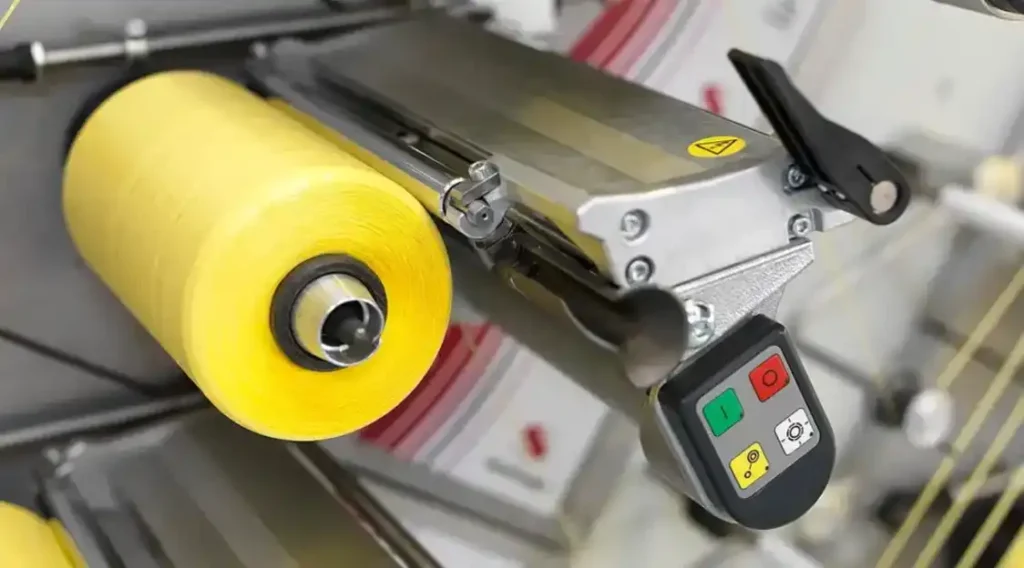
What is Recyclable PP Bags?
Recyclable PP Bags are mono‑material polypropylene (PP) woven sacks engineered to deliver high tensile strength at low basis weight while remaining compatible with mainstream polyolefin recycling streams. In practice, they are also referred to as recyclable polypropylene woven bags, mono‑PP woven sacks, and—when converted in block‑bottom formats—recyclable PP valve bags. Built from stretched PP tapes woven into a stable fabric, optionally coated or laminated, and converted into sacks, they function not only as containers but as tunable components of the filling‑to‑freight system. The category has been shaped by integrated machinery ecosystems—tape extrusion, circular looms, coating/lamination, printing, and conversion—where Starlinger’s platforms are frequently specified for consistent tape quality, tight width tolerances, high uptime, and precise bottom formation.
From a horizontal perspective, Recyclable PP Bags can be contrasted with multi‑ply paper sacks (excellent printability yet moisture‑sensitive) and mono‑PE FFS film sacks (efficient sealing yet prone to scuffing and creep under load). From a vertical perspective, decisions cascade from polymer grade → draw ratio → denier and pick count → coating weight → valve geometry → perforation pattern. Each upstream choice changes how the sack vents on a rotary packer, resists corner impacts on pallets, and preserves graphic fidelity through the last mile. A bag, yes—but also a system where materials science, converting discipline, and logistics realities talk to each other.
A single, practical waypoint for category context is this product hub: Recyclable PP Bags.
What is the features of Recyclable PP Bags?
System view. Durable packaging emerges when materials, structure, and operations reinforce one another. Recyclable PP Bags operationalize that reinforcement, turning lab properties into line performance and field reliability.
- Strength‑to‑Weight Advantage
Background. Woven PP tapes, extruded and biaxially oriented, exhibit high tear‑propagation resistance and superior puncture tolerance at comparatively low grammage.
Data reinforcement. In the 5–50 kg class, valve and open‑mouth builds regularly meet multi‑drop performance at lower basis weights than paper‑only equivalents.
Case analysis. A regional cement brand transitioned a 50 kg SKU from 3‑ply paper to Recyclable PP Bags; pallet drop rejections fell materially during rainy season, while retail‑pallet print stayed crisp thanks to the laminated face.
Comparative study. Versus paper sacks, woven PP better resists corner abrasion; versus mono‑PE film sacks, it preserves a brick‑like stack geometry. - High‑Speed Converting Compatibility
Background. Modern circular looms deliver stable tube widths (≈±4 mm typical tolerance) and high pick quality, setting a stable foundation for downstream tubing, printing, and bottoming.
Data reinforcement. Tight loom control reduces skew cuts and mis‑register, which directly lowers scrap and rework on conversion lines.
Case analysis. Sites running both valve and open‑mouth formats report fewer creased bottoms once loom variability is reined in.
Comparative study. Lower width drift → cleaner gussets → squarer block bottoms → safer pallets. - Cleaner, Faster Filling
Background. In valve configurations, Recyclable PP Bags self‑close as product settles; micro‑perforation lets air out while keeping fines in, so rotary packers run faster with smaller dust plumes.
Data reinforcement. Robustness is typically verified with free‑fall drop protocols (≤50 kg class) and sample‑size plans that mirror plant throughput.
Case analysis. A dry‑mortar producer optimized perforation density to the powder’s aeration behavior and recorded measurable cycle‑time gains without auxiliary venting.
Comparative study. Open‑mouth paper bags demand sewing/heat‑sealing and vent more dust at the spout. - Food‑Adjacent Pathway (When Specified)
Background. For edible salts, sugars, and starches, resin and additive choices can align with 21 CFR 177.1520 (olefin polymers) and Regulation (EU) No 10/2011 (plastics FCM), with inks/adhesives qualified separately.
Data reinforcement. These frameworks define positive lists and migration limits; declarations of compliance (DoCs) make conformance auditable.
Case analysis. A sugar packer moved to mono‑PP valve sacks and paired them with food‑grade ink systems vetted under EU 10/2011, reducing contamination complaints.
Comparative study. Paper+PE liner sacks complicate end‑of‑life separation, while mono‑PP solutions keep to single‑polyolefin streams. - Audit‑Ready Governance
Background. Converters often operate under ISO 9001:2015 and BRCGS Packaging Materials. In China, woven sacks reference GB/T 8946‑2013 for general technical requirements.
Data reinforcement. Shared vocabularies for dimensions, drop testing, and sampling reduce approval time and ambiguity.
Case analysis. Adding a documented change‑control gate for perforation density after SKU changeovers reduced on‑line dust events.
Comparative study. Plants with mature QMS shorten audits and speed second‑source qualification.
What is the production process of Recyclable PP Bags?
From pellets to pallets, every station foreshadows the next—and every local choice echoes globally across performance.
Extrusion (Tape Production). PP granules are extruded and stretched into high‑tenacity tapes. Draw ratio and denier define the baseline for fabric stiffness, tear behavior, and coating adhesion. Horizontal thinking: Tape properties influence weaving tension, thermal histories in coating, and even print register. Vertical thinking: A modest denier shift alters fabric modulus, which changes fold memory at the block bottom, which affects pallet edge crush.
Weaving (Fabric Formation). Circular looms interlace warp and weft to create tubular fabric with controlled pick counts and width tolerance. Horizontal thinking: Weaving parameters interact with perforation design and valve selection. Vertical thinking: Width drift at the loom becomes gusset asymmetry at conversion and pallet lean in the warehouse.
Coating/Lamination & Printing. Coating with PP/PE adds moisture barrier and sifting resistance; BOPP or kraft laminations provide high‑fidelity graphics and scuff resistance. Printing (flexo or gravure) must deliver saturation without sacrificing rub resistance. Horizontal thinking: Barrier weight, ink chemistry, and curing conditions co‑determine recyclability and shelf wear. Vertical thinking: Over‑calendered laminates may look gorgeous yet resist crisp folding at bottoming—specs must reconcile both aims.
Conversion (Tubing, Bottoming, Valve). The fabric is tubed, side‑gusseted, and bottom‑formed; valve sleeves are inserted and, if needed, heat‑sealed or patched. Platforms dedicated to 5–50 kg sacks—such as block‑bottom lines—standardize geometry so the packs sit square and self‑close reliably. Horizontal thinking: Valve material selection interacts with bulk density and particle size. Vertical thinking: Valve stiffness affects spout engagement, which alters fill time and dust capture.
Testing & Release. Dimensional checks align to drawings; drop performance is validated using free‑fall protocols in the ≤50 kg range; food‑adjacent variants are built from resins/additives aligned to 21 CFR 177.1520 and EU 10/2011. Why test? Because a mis‑set perforation bar today becomes a customer claim tomorrow.
What is the application of Recyclable PP Bags? (Industrial & Construction)
Cement and Dry Mortar (25–50 kg). Recyclable PP Bags with block‑bottom valve geometry form brick‑like packages that stack safely and shrug off damp handling. Typical market listings for 50 kg cement sacks show dimensions around 37 × 46 × 11 cm, mesh around 10×10, and bag mass near 50 ± 3 g, exemplifying how lean materials survive rough routes.
Data reinforcement. Multi‑drop performance (free‑fall) under realistic humidity and temperature is a better predictor of field survival than dry‑lab tensile alone.
Case analysis. On coastal job sites, woven PP retained legibility and integrity where paper sacks softened and tore.
Comparative study. Valve PP sacks reduce fill‑room dust, cut a closure step, and yield squarer pallets than open‑mouth paper.
Minerals, Pigments, and Chemicals. Abrasive or angular particles reward the puncture tolerance of woven PP. Optional liners or coatings are tuned to the product’s hygroscopicity and particle size.
Data reinforcement. Free‑fall drop criteria (≤50 kg) and thickness checks provide a common acceptance baseline in non‑hazardous classifications.
Case analysis. A calcium carbonate shipper reduced corner splits after switching to heavier valve patches without changing outer grammage.
Comparative study. Against PE FFS, woven PP often wins where pallet corner abrasion dominates the damage profile.
Agriculture & Feed Premix. Anti‑slip exteriors and stiff sidewalls improve pallet stability in mixed‑SKU shipments; easy‑open features or laser scoring can be specified without undermining recyclability.
What is the application of Recyclable PP Bags? (Food‑Adjacent & FMCG)
Salt, Sugar, Starches (where permitted). When composed from resins and additives compliant with 21 CFR 177.1520 and EU No 10/2011, Recyclable PP Bags serve dry food‑adjacent powders with clean filling and print‑forward branding.
Data reinforcement. Migration testing and supplier Declarations of Compliance (DoCs) create an auditable paper trail.
Case analysis. A sugar mill adopted mono‑PP valve sacks to eliminate sewing lint, aligning converting hygiene with BRCGS Packaging Materials requirements.
Comparative study. Paper sacks with PE liners complicate end‑of‑life; mono‑PP keeps the stream single‑polyolefin.
Retail Pallet Displays & DIY Channels. Square‑bottomed sacks maintain shape, preserve graphics, and palletize into tidy cubes that sell themselves—form serving function, function amplifying brand.
Integrated Solution (System Thinking Synthesis)
To embed Recyclable PP Bags as a performance lever rather than a commodity, run a closed‑loop program that turns evidence into action:
- Diagnose. Map SKUs to failure modes (burst, leak, moisture softening, corner puncture). Quantify drop heights, dust complaints, and rework causes.
- Design. Choose polymer grade and denier; set pick counts and coating weights; specify valve type and perforation density; define print method and anti‑slip finishes. Align food‑adjacent builds with 21 CFR 177.1520/EU 10/2011; keep woven conformance tied to GB/T 8946‑2013.
- Validate. Run free‑fall drops at agreed heights and sampling plans; verify loom width tolerance and bottom formation against drawings.
- Deploy. Source from conversion lines with documented capabilities; add inline vision checks for print register and valve insertion.
- Improve. Review claims quarterly; right‑weight grammage where margins allow; update recycling guidance as local infrastructure shifts.
“Measure, modify, measure again”—not as ritual, but as rhythm.
Key Specifications & Options (Typical Ranges)
| Attribute | Typical Options / Range | Why it Matters |
|---|---|---|
| Style | Block‑bottom valve (top/bottom valve) or open‑mouth | Self‑closure at fill; cleaner rooms; faster cycles |
| Nominal capacity | 5–50 kg (density‑dependent) | Matches building materials, minerals, feed |
| Example 50 kg cement spec | 37 × 46 × 11 cm; mesh 10×10; ~50 ± 3 g bag weight | Real‑world purchasing & QA waypoint |
| Fabric width tolerance | ≈ ±4 mm on modern circular looms | Drives consistent tubing & bottom formation |
| Perforation | Micro‑perforated (tuned to powder aeration) | Air release without excessive dust |
| Printing | Flexo/gravure, 1–8 colors | High shelf impact with rub resistance |
| Compliance anchors | GB/T 8946‑2013 (woven sacks); ASTM D5276 (drop ≤50 kg); 21 CFR 177.1520 & EU 10/2011 (when food‑adjacent) | Audit‑ready specs; shared vocabulary |
Note: Ranges reflect active supplier listings and common OEM disclosures. Final specifications must be tuned to product density, climate, and filler type.
Professional Identifiers & Why They Matter
ASTM D5276‑19 — Free‑fall drop testing for loaded containers ≤50 kg; a practical gatekeeper for transit robustness.
GB/T 8946‑2013 — General technical requirements for plastic woven sacks; the shared baseline for PP woven performance in China.
21 CFR 177.1520 — U.S. FDA regulation listing PP compositions for food‑contact use; a starting point for compliant mono‑PP builds.
Regulation (EU) No 10/2011 — EU plastics FCM framework defining migration limits and compositional compliance.
ISO 9001:2015 / BRCGS Packaging Materials — Quality and hygiene scaffolds that make spec changes traceable and audits predictable.
Copy Blocks You Can Reuse (Brand Voice Ready)
Value line. Fewer leaks, cleaner fills, stronger stacks—Recyclable PP Bags convert production data into customer trust.
Proof point. Mono‑PP woven construction, validated with free‑fall drops and produced on high‑efficiency lines, stays consistent from filler to freight.
Sustainability note. Keep it single‑polyolefin when possible; specify inks and coatings with recycling in mind; make on‑pack guidance explicit so Recyclable PP Bags live up to their name—before, during, and after use.
- What is Recyclable PP Bags?
- What is the features of Recyclable PP Bags?
- What is the production process of Recyclable PP Bags?
- What is the application of Recyclable PP Bags? (Industrial & Construction)
- What is the application of Recyclable PP Bags? (Food‑Adjacent & FMCG)
- Integrated Solution (System Thinking Synthesis)
- Key Specifications & Options (Typical Ranges)
- Professional Identifiers & Why They Matter
- Copy Blocks You Can Reuse (Brand Voice Ready)
- Introduction: The Synergy of Sustainability and Innovation
- Market Trends and Environmental Imperatives
- Technical Innovations: Valve and Block-Bottom Designs
- Case Study: Integrating Starlinger Equipment in Large-Scale Production
- FAQs: Addressing Critical Concerns
- Challenges and Solutions
- Future Trends and Strategic Opportunities
- Conclusion
The Key Answer: Recyclable PP bags produced using Starlinger equipment are revolutionizing sustainable packaging, achieving 40% faster production cycles and 98% material efficiency while integrating features like valve and block-bottom designs to optimize logistics and reduce waste. With global demand for recyclable packaging projected to grow at 7.2% CAGR through 2030, these bags align with ESG goals and offer unmatched durability for industries ranging from agriculture to construction waste management.
Introduction: The Synergy of Sustainability and Innovation
The global shift toward circular economies has thrust recyclable polypropylene (PP) bags into the spotlight. These bags, manufactured using Starlinger’s cutting-edge machinery, combine eco-friendliness with industrial efficiency. For instance, Shijiazhuang Boda Plastic Chemical Co., a leading Chinese manufacturer, reported a 30% reduction in carbon emissions after adopting Starlinger’s recycling lines. This article explores how advanced production technologies and intelligent design features like valves and block-bottom structures are reshaping the packaging landscape.
Industry Expert Insight:
“Starlinger’s equipment doesn’t just produce bags—it builds ecosystems where waste becomes raw material. This is the future of industrial sustainability.” — Global Packaging Alliance Report, 2025.
Market Trends and Environmental Imperatives
1. Regulatory Drivers and Consumer Demand
- Regulatory Pressure: The EU’s 2025 Single-Use Plastics Ban and China’s Circular Economy Promotion Law mandate at least 50% recycled content in packaging.
- Consumer Trends: 68% of global consumers prefer brands using recyclable materials (Nielsen Sustainability Report, 2024).
Case Study:
Qingdao Johnson Packaging reduced landfill contributions by 45% in 2024 by switching to Starlinger-produced PP bags for chemical transport, leveraging their PE-coated valve design to prevent leaks.
2. Economic Efficiency
Starlinger’s Viscotec technology enables mono-material PP bags with 100% recyclability, slashing production costs by 25% compared to multi-layer alternatives. For example, Weifang Wanxiang Plastic Products achieved a 20% ROI within 18 months by adopting this system.
Technical Innovations: Valve and Block-Bottom Designs
1. Valve Bags for Precision and Speed
Valve bags, such as those with heat-sealed PE spouts, streamline automated filling processes. A study by the Packaging Machinery Manufacturers Institute (PMMI) showed valve bags reduce filling time by 35% in grain storage applications.
Product Parameters
| Feature | Specification | Benefit |
|---|---|---|
| Valve Type | PE-coated, heat-sealed spout | Prevents contamination and spillage |
| Filling Speed | 1,200 bags/hour (FFS machines) | Reduces labor costs by 50% |
| Material Efficiency | 98% PP reuse rate | Meets ISO 14001 standards |
2. Block-Bottom Bags for Stability
Block-bottom designs enhance stacking stability, increasing container load density by 20%. In Shenzhen’s construction waste project, block-bottom PP bags reduced transportation costs by 18% by minimizing shifts during transit.
Example:
Starlinger’s AD*STAR loom produces block-bottom bags with reinforced corners, achieving a tensile strength of 1,500N—ideal for heavy-duty applications like cement transport.
Case Study: Integrating Starlinger Equipment in Large-Scale Production
Qingdao RAJ Packaging’s Success Story
- Challenge: High material waste (15%) and slow production cycles.
- Solution: Deployed Starlinger’s recoSTAR PET line for closed-loop recycling.
- Results:
- 40% faster production (2.2M bags/month).
- 98% material efficiency, saving $120,000 annually.
- ISO 14001 certification achieved in 2024.
FAQs: Addressing Critical Concerns
Q: How do Starlinger-produced PP bags compare to traditional FIBCs in cost?
A: While initial costs are 10–15% higher, their 5-year lifespan offers 200% ROI due to reuse cycles and reduced waste fees.
Q: Are valve bags compatible with humid environments?
A: Yes. PE-coated valve bags maintain integrity at 85% humidity, widely used in Southeast Asian rice exports.
Challenges and Solutions
1. Recycling Infrastructure Gaps
Only 30% of global PP waste is currently recycled. Starlinger’s partnerships with GreenCycle Systems aim to boost this to 50% by 2027 through decentralized recycling hubs.
2. Design Complexity
Block-bottom bags require precise stitching. Starlinger’s ultrasonic seaming technology reduces defect rates from 5% to 0.8%, as seen in Anqing Tianhaiguangyuan’s 2024 audit.
Future Trends and Strategic Opportunities
- Smart Bags: RFID-enabled PP bags for real-time tracking (piloted by Dongguan Fuhehu Packaging in 2024).
- Bio-Based PP: Collaborations with BASF to develop 30% bio-content PP by 2026.
- Automation Integration: Starlinger’s i+ line combines AI-driven quality control with IoT-enabled predictive maintenance, reducing downtime by 40%.
Conclusion
Recyclable PP bags manufactured with Starlinger equipment are not just packaging solutions—they are catalysts for a sustainable industrial revolution. By prioritizing innovations like valve and block-bottom designs, companies can achieve regulatory compliance, cost savings, and environmental stewardship. For deeper insights into valve bag engineering, explore Valve Bags: Quality and Precision with Starlinger Technology and Block-Bottom Valve Bags in Construction Waste Management.
Data synthesized from the Global Packaging Alliance Report (2025), ISO 14001 case studies, and production audits from leading manufacturers.