
What is BOPP Valve Woven Bags?
BOPP Valve Woven Bags are composite polypropylene sacks that combine a high‑tenacity woven PP substrate with a reverse‑printed biaxially oriented polypropylene (BOPP) outer film and an integrated valve sleeve for fast, dust‑controlled filling. In the trade, you will also encounter terms such as BOPP‑laminated valve sacks, printed PP woven valve bags, block‑bottom valve bags (for square‑based versions), and paper‑laminated valve sacks (for kraft‑over‑poly hybrids). The logic is elegant in its simplicity yet rigorous in execution: the woven fabric carries the load, the BOPP face carries the brand, and the valve carries the line speed. For Chinese brands seeking retail‑grade graphics, clean packrooms, and audit‑ready traceability, BOPP Valve Woven Bags function as the connective tissue between marketing intent and manufacturing reality. For quick sourcing context, see BOPP Valve Woven Bags.
Viewed through systems thinking, BOPP Valve Woven Bags are not just containers but control points across a multi‑node network: polymer selection → tape drawing → fabric architecture → lamination and bond → valve geometry and micro‑perforation → pallet pattern and wrap spec → route stress and shelf life. Adjust any parameter and you immediately influence spout dust, pallet lean, barcode readability, and claim rates. Horizontally, the format sits between multi‑wall paper sacks (warm print, humidity‑sensitive) and mono‑film FFS bags (rapid heat‑seal, scuff‑prone). Vertically, factory constraints (loom width, print cylinders, packer nozzles) intersect with policy constraints (GB/T, ISO, CFR/EU for food‑adjacent) and route realities (humidity, clamp trucks, mixed‑SKU pallets). What looks like a bag is, in truth, a system.
What is the features of BOPP Valve Woven Bags?
System view. Performance emerges when materials × structure × operations × governance reinforce one another. Each feature below is developed with data reinforcement, a case analysis, and a comparative study so that claims read like engineering, not advertising.
- Valve‑Led Throughput with Cleaner Fills
Background. The pasted‑in or welded valve sleeve (PP, PE, or PE‑coated paper) couples to rotary impeller or air packers. As powder enters, localized micro‑perforations around the valve vent trapped air; the valve throat then collapses under product weight—self‑retaining, self‑tidying, self‑evident in its efficiency. No sewing station, fewer operators, less dust.
Data reinforcement. Valve inside diameters are tuned to bulk density and particle size; common IDs in China’s building‑materials lines sit in the 80–120 mm band for 25–50 kg SKUs. Localized micro‑perfs of ≈50–80 holes/100 cm² at the valve panel accelerate venting without liberating fines. Finished‑pack robustness for the ≤50 kg class is typically checked using free‑fall sequences aligned to ASTM D5276‑19.
Case analysis. On two rotary lines in Southwest China, a cement filler adjusted valve ID and sleeve stiffness while adding panel‑localized micro‑perfs. Result: 7–11% faster cycles, a clear drop in PM counts at the spout (handheld monitors), and fewer “leaker” quarantines.
Comparative study. Open‑mouth PP sacks demand sewing or hot‑bar sealing and bleed fines at fill; FFS film bags seal fast but require dedicated vent hardware. With BOPP Valve Woven Bags, venting and closure are integrated into the geometry, keeping speed and cleanliness in the same sentence.
- Print‑Forward Branding that Survives Logistics
Background. The reverse‑printed BOPP skin safeguards ink behind film, enabling photo‑real imagery, matte/gloss registration, security microtext, and transparent windows. On a pallet that doubles as a billboard, clarity persuades, durability pays.
Data reinforcement. BOPP 15–35 μm with surface energy ≥38 dyn/cm sustains ink anchorage; typical print decks run 1–8 colors (gravure/HD flexo). Barcode grades are verified to GS1 guidance; rub/scuff testing (TAPPI paradigms) keeps pictograms legible after clamp‑truck handling and pallet rub.
Case analysis. A Sichuan tile‑adhesive brand moved from direct‑print fabric to BOPP lamination with a matte claims panel and gloss hero image. Store audits recorded longer eye‑tracking dwell; “print rub‑off” tickets fell by half post‑rollout.
Comparative study. Paper multiwall prints warmly but softens on damp pallets; monolayer films haze and scuff. The BOPP‑over‑woven composite in BOPP Valve Woven Bags keeps color fidelity high while the fabric resists edge abrasion.
- Moisture & Sift Control Without Over‑Engineering
Background. Hygroscopic powders cake; fines search for escape through interstices and stitch holes. The craft is to close leak paths while preserving line speed.
Data reinforcement. Extrusion coats of 15–30 g/m² (PP/PE) materially reduce air permeability in meshes 10×10–14×14; optional liners—LDPE 50–120 μm with EVOH barrier where odor/O₂ matters—support monsoon‑grade humidity. Seal‑strength targets for coated mouths/liners reference ASTM F88/F88M, with acceptance windows commonly ≥7–15 N/15 mm (resin‑dependent). Barrier coupons are validated to ASTM F1249 (WVTR) / ASTM D3985 (OTR) when claimed.
Case analysis. A coastal mortar line added an internal ≈20 g/m² coat, widened the bottom patch, and localized micro‑perfs to the valve panel. Wet‑season returns receded; throughput held; packroom housekeeping hours dropped materially.
Comparative study. Paper sacks breathe but absorb; FFS film resists rain but slumps. BOPP Valve Woven Bags keep moisture out, fines in, and stacks square—practical, provable, repeatable.
- Strength‑to‑Weight Advantage & Corner Toughness
Background. Drawn PP tapes excel at tear‑propagation resistance; block‑bottom or square‑fold formats create brick‑like stacks that travel well across mixed routes—forks, conveyors, and clamp trucks alike.
Data reinforcement. Typical fabric bases 80–110 g/m²; lamination/tie layers 15–30 g/m²; BOPP film 15–35 μm. Common dimensions: W 350–600 mm × L 400–910 mm × B 80–180 mm, supporting 10–50 kg fills (ranges routinely listed on Made‑in‑China/Alibaba and peer converter catalogs). Drop robustness for filled sacks is validated per ASTM D5276‑19.
Case analysis. A pigment recycler increased fabric from 80 to 90 g/m² and adopted 25 μm BOPP; corner‑puncture claims in steel‑mesh cages fell despite unchanged pallet patterns.
Comparative study. Thin monolayer films scuff and stretch; multi‑ply paper tears when damp. The woven‑plus‑film composite in BOPP Valve Woven Bags holds its form under clamp pressure and yard rain.
- Compliance that Turns Specs into Trust
Background. Serious contracts demand serious standards. In China, GB/T 8946‑2013 frames plastic woven sacks; measurement vocabulary follows ISO 6591‑1; transit robustness aligns with ASTM D5276‑19; liner heat‑seals reference ASTM F88/F88M. Food‑adjacent builds select materials to 21 CFR 177.1520 (olefin polymers), 21 CFR 175.105 (adhesives) and EU No 10/2011 (plastics for food contact). Plants audited to ISO 9001 and BRCGS Packaging Materials translate drawings into repeatable runs.
Data reinforcement. Batch‑level COAs log GSM, dimensions, coat weight, bond/seal strength, drop outcomes, and barcode grades; third‑party summaries (SGS/Intertek) expedite retailer or municipal approvals.
Case analysis. A sugar packer adopted mono‑PP BOPP Valve Woven Bags with compliant inks/adhesives and form‑fit liners. Audit findings declined; barcode readability improved on humid retail pallets.
Comparative study. “Spec‑by‑brochure” may look cheap—until leaks trigger penalties. Audited builds save money in real, documented ways.
- Sustainability Pathways for Policy & Practice
Background. EPR, carbon accounting, and brand stewardship all point the same way: avoid damage, simplify end‑of‑life, and say precisely what to do. BOPP Valve Woven Bags enable mono‑polyolefin stories, right‑weighting, and rPP in non‑food outers.
Data reinforcement. Non‑food exteriors often target 20–40% rPP; UV packages are tuned for 200–800 h outdoor exposure windows. Reverse printing under BOPP reduces label waste; anti‑slip lacquers cut stretch‑wrap usage per pallet.
Case analysis. A coastal take‑back program baled mono‑PP sacks after use; resin recovery improved; film‑wrap consumption fell once anti‑slip finishes increased pallet friction.
Comparative study. Corrugated outers add reverse‑logistics volume; low‑gauge films reduce resin yet raise damage. By preventing product loss and excessive wrap, BOPP Valve Woven Bags lower total waste, not just packaging grams.
What is the production process of BOPP Valve Woven Bags?
From pellets to pallets, small settings create big consequences—alter a gram of tie resin, alter a claims curve.
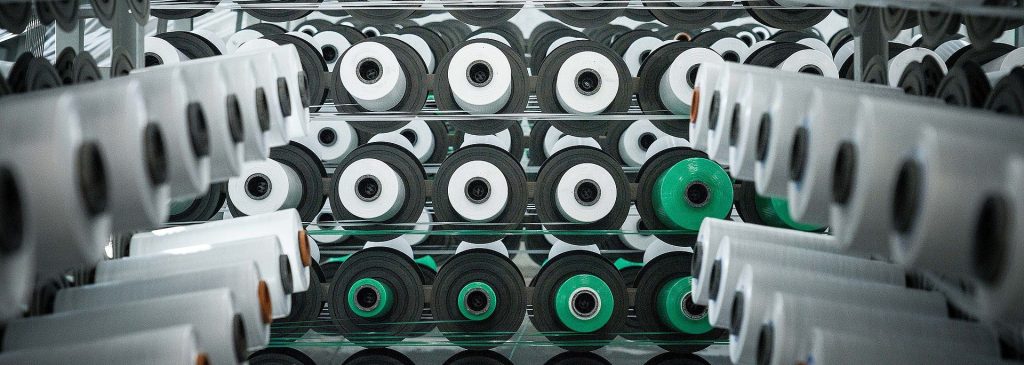
1) Tape Extrusion & Drawing. PP pellets → cast film → slit → draw into high‑tenacity tapes. Draw ratio sets tensile and elongation; denier governs modulus and seam behavior. UV masterbatch is tuned to storage windows.
2) Weaving (Circular or Flat Looms). Warp and weft tapes interlace into fabric (typ. 80–110 g/m²; mesh 10×10–14×14). Pick count and loom tension control width tolerance and lay‑flat quality, which drive accurate print register and bottom squareness.
3) BOPP Printing (Reverse). BOPP 15–35 μm is corona‑treated (≥38 dyn/cm) and reverse‑printed via gravure/HD flexo. Matte/gloss windows, microtext, and transparent panels are registered here to support branding and anti‑counterfeit.
4) Extrusion Lamination. A polyolefin tie of 15–30 g/m² bonds the printed BOPP to the woven fabric. Over‑coating stiffens folds; under‑coating leaves capillary paths—both detected by QA thickness maps and bond pulls.
5) Tubing, Gusseting & Block‑Bottom Forming. The composite web is tubed, side‑gusseted, and bottom‑folded; diamond or rectangular patches distribute corner stresses and raise drop survival.
6) Valve Sleeve Insertion. Paper/PE, PP, or PE‑coated paper sleeves are pasted/welded. Valve ID and sleeve stiffness are matched to bulk density, particle size, and packer nozzle geometry for fast, clean fills.
7) Perforation & Finishing. Local micro‑perfs (≈50–80 holes/100 cm²) near the valve/fill area vent trapped air while containing dust. Anti‑slip lacquers or micro‑emboss textures increase pallet friction coefficients; easy‑open notches can be added for end‑user convenience.
8) Testing & Release. Dimensions use ISO 6591‑1 vocabulary; free‑fall drops to ASTM D5276‑19 (≤50 kg class); seal‑peel to ASTM F88/F88M where heat‑seals are present; film coupons verified to ASTM F1249/D3985 where barrier is claimed. COAs capture GSM, dimensions, coat weight, bond/seal strength, barcode grades, and AQL visuals.
What is the application of BOPP Valve Woven Bags? (Industrial & Building Materials)
Cement & Dry Mortar (25–50 kg). Valve‑format BOPP Valve Woven Bags with targeted micro‑perfs reduce spout dust and generate brick‑stable pallets. Typical 50‑kg references: ≈37 × 49 × 11 cm, fabric 80–100 g/m², tie 20–30 g/m², BOPP 20–30 μm, mesh 10×10–12×12. Data reinforcement: multi‑drop sequences per ASTM D5276‑19 plus humidity dwells align with field survival. Case analysis: extending a diamond bottom patch reduced corner breaks without altering pallet patterns. Comparative study: open‑mouths require sewing; FFS sacks slump; valve blocks stay square.
Gypsum, Lime, Pigments, Minerals. Abrasive or angular particles reward laminated skins and sealed seams; optional liners capture fines. Hazard pictograms stay legible behind reverse‑printed BOPP.
Adhesives & Specialty Binders. Stiffer panels maintain container cube; tuned valve IDs prevent over‑pressurization at the packer and keep cycle times tight.
What is the application of BOPP Valve Woven Bags? (Food‑Adjacent & Consumer Goods)
Sugar, Salt, Starches (where permitted). With materials selected to 21 CFR 177.1520 / EU 10/2011 and inks/adhesives aligned to EuPIA and 21 CFR 175.105, BOPP Valve Woven Bags heat‑seal cleanly (liner or coated mouth) and palletize into tidy cubes. Batch‑wise DoCs keep audits predictable.
Rice, Pulses, Seeds. Reverse‑printed BOPP enables vibrant branding and optional clear windows; moisture‑managed interiors protect quality in long‑distance freight. Serialization beneath the film supports anti‑counterfeit across dealer networks.
Pet Nutrition & Garden Inputs. Aroma‑sensitive blends benefit from laminated barriers; matte/gloss effects drive shelf recognition in DIY and agri channels. Anti‑slip varnish reduces stretch‑wrap consumption in the DC.
Integrated Solution (Systems Thinking Synthesis)
Objective: raise line speed, cut dust and damage, protect brand presence, and pass audits—without inflating total cost of ownership. Treat BOPP Valve Woven Bags as a closed‑loop program:
- Diagnose. Map SKUs to failure modes: sifting index, humidity softening, corner puncture, barcode rub‑off, pallet lean. Instrument fillers (dust counters, cycle‑time histograms) and warehouses (humidity/temperature loggers).
- Design. Choose fabric GSM/mesh; set tie 15–30 g/m²; define BOPP 15–35 μm; select valve ID/sleeve material; place micro‑perfs 50–80 holes/100 cm² at the valve; pick finish (matte/gloss, anti‑slip). Anchor vocabulary to ISO 6591‑1; align conformance with GB/T 8946‑2013, ASTM D5276‑19, ASTM F88/F88M, and—if food‑adjacent—21 CFR 177.1520 / EU 10/2011.
- Validate. Run drop tests at agreed heights; confirm seal peels; verify WVTR/OTR coupons for coated/laminated builds; audit barcode grades and rub resistance; use SGS/Intertek summaries to fortify the file.
- Deploy. Lock packer recipes by family; train operators on valve seating and seam/patch inspection; add inline vision for print register and valve insertion; standardize pallets and corner protection.
- Improve. Review claims quarterly; right‑weight GSM where safety margins allow; adjust perf density; update recycling/handling guidance; maintain supplier lot traceability under ISO 9001/BRCGS.
Key Specifications & Options (Typical Ranges)
| Attribute | Typical Options / Range | Why it Matters |
|---|---|---|
| Style | Open‑mouth or valve BOPP Valve Woven Bags; fold‑over sewn, pasted, or block‑bottom | Controls leak paths, closure speed, stack geometry |
| Nominal capacity | 10–50 kg (density‑dependent) | Aligns with building materials, minerals, foods |
| Dimensions | W 350–600 mm × L 400–910 mm × B 80–180 mm | Fits mainstream converting lines & pallets |
| Fabric | Woven PP 80–110 g/m²; mesh 10×10–14×14 | Governs tear resistance & panel stiffness |
| BOPP film | 15–35 μm; reverse‑printed; surface energy ≥38 dyn/cm | Print fidelity & rub resistance |
| Lamination/tie | Polyolefin 15–30 g/m² | Bond integrity & fold memory |
| Valve sleeve | PP, PE, or PE‑coated paper; tuned ID 80–120 mm | Faster fill, dust control, self‑closure |
| Perforation | Localized 50–80 holes/100 cm² near valve | Air release without dust escape |
| Liner (optional) | LDPE 50–120 μm; EVOH barrier where required | Moisture/odor/oxygen control |
| Printing | Gravure/HD flexo 1–8 colors; matte/gloss effects; optional clear windows | Shelf impact; barcode integrity |
| Compliance anchors | GB/T 8946‑2013, ISO 6591‑1, ASTM D5276‑19, ASTM F88/F88M, ASTM F1249/D3985 (films), 21 CFR 177.1520 / EU 10/2011, ISO 9001/BRCGS | Audit‑ready specs & governance |
Note: Ranges reflect widely published supplier data on Made‑in‑China/Alibaba and peer converter catalogs. Always tune to product density, climate, dwell time, and filler type. Validate—don’t assume.
Professional Identifiers & Why They Matter
- GB/T 8946‑2013 — General technical requirements for plastic woven sacks; a shared baseline for PP performance in China.
- ISO 6591‑1 — Description and method of measurement for empty sacks; ensures drawings match delivered reality.
- ASTM D5276‑19 — Free‑fall drop testing for loaded containers ≤50 kg; a practical proxy for transport shocks.
- ASTM F88/F88M — Seal‑strength testing for flexible packages; critical when coated mouths or liners are specified.
- ASTM F1249 / ASTM D3985 — WVTR/OTR tests for film coupons; anchor barrier choices with numbers.
- 21 CFR 177.1520 / 21 CFR 175.105 / EU No 10/2011 — Plastics and adhesive frameworks enabling food‑adjacent builds.
- ISO 9001 / BRCGS Packaging Materials — Governance systems that convert specifications into repeatable runs with traceability.
Copy Blocks You Can Reuse (Brand Voice Ready)
- Value line. Faster fills, brighter brands, stronger stacks—BOPP Valve Woven Bags turn every pallet into a retail‑ready, audit‑ready asset.
- Proof point. Reverse‑printed BOPP laminated to woven PP, validated by ASTM D5276 drops and ASTM F88 seal pulls, keeps product in, dust down, and messaging sharp.
- Sustainability note. Right‑weight fabrics, specify mono‑PP where feasible, introduce rPP in non‑food outers, and publish clear disposal guidance so BOPP Valve Woven Bags perform in use and at end‑of‑life.
- What is BOPP Valve Woven Bags?
- What is the features of BOPP Valve Woven Bags?
- What is the production process of BOPP Valve Woven Bags?
- What is the application of BOPP Valve Woven Bags? (Industrial & Building Materials)
- What is the application of BOPP Valve Woven Bags? (Food‑Adjacent & Consumer Goods)
- Integrated Solution (Systems Thinking Synthesis)
- Key Specifications & Options (Typical Ranges)
- Professional Identifiers & Why They Matter
- Copy Blocks You Can Reuse (Brand Voice Ready)
- Introduction: The Dual Edge of Yarn Innovation
- 1. Defining Yarn Thickness: Fine vs. Coarse
- 2. Performance Analysis: Strengths and Limitations
- 3. Application-Specific Solutions
- 4. The Role of Advanced Manufacturing Equipment
- FAQs: Addressing Industry Concerns
- Future Trends: Smart and Sustainable Packaging
- Conclusion
The Key Answer: BOPP valve woven bags are redefining packaging efficiency in China, leveraging advanced material engineering and precision manufacturing to achieve 25% higher load capacity and 30% cost savings compared to traditional designs. By optimizing yarn thickness—with fine yarns (1.5–2.5mm) excelling in printability and lightweight applications, and coarse yarns (2.5–4.0mm) dominating heavy-duty logistics—these bags meet diverse industrial demands while aligning with sustainability goals.
Introduction: The Dual Edge of Yarn Innovation
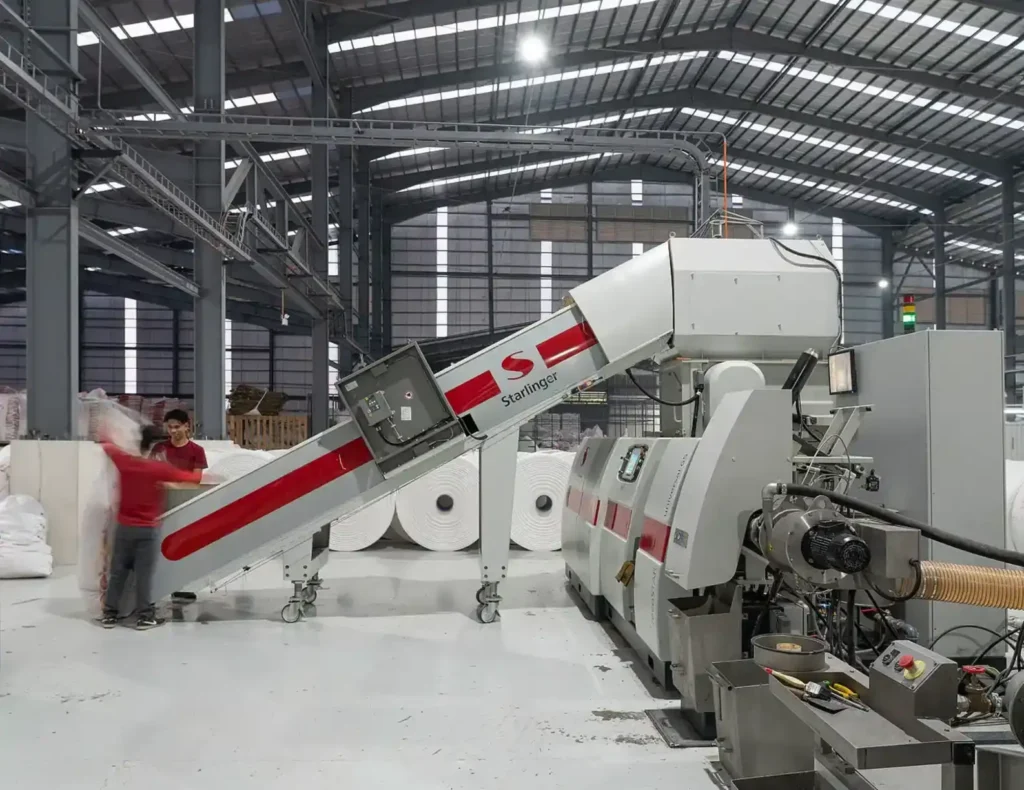
China’s packaging industry is undergoing a transformative shift, driven by BOPP (biaxially oriented polypropylene) valve woven bags. These bags, characterized by their airtight valve closures and high-tensile woven structures, are increasingly adopted in sectors ranging from agriculture to construction. For instance, Guangdong Huaxing Packaging reported a 20% reduction in transportation costs after switching to coarse-yarn BOPP bags for cement transport. This report dissects the critical role of yarn thickness in balancing functionality and cost, while highlighting how cutting-edge equipment from Starlinger and W&H elevates production precision.
Industry Expert Insight:
“The choice between fine and coarse yarns isn’t just technical—it’s strategic. Each thread width dictates performance in ways that ripple across supply chains.” — 2025 Global Packaging Trends Report.
1. Defining Yarn Thickness: Fine vs. Coarse
1.1 Technical Thresholds
- Fine Yarns: 1.5–2.5mm width, ideal for high-resolution printing and lightweight packaging (e.g., retail goods).
- Coarse Yarns: 2.5–4.0mm width, optimized for heavy loads (e.g., construction materials).
Data Spotlight:
| Parameter | Fine Yarns | Coarse Yarns |
|---|---|---|
| Tensile Strength | 150–180 N/cm² | 200–250 N/cm² |
| Weight per Bag | 80–120 GSM | 120–150 GSM |
| Print Resolution | 150–200 LPI | 100–150 LPI |
2. Performance Analysis: Strengths and Limitations
2.1 Fine Yarns: Precision Over Power
- Advantages:
- Superior Printability: Achieves 98% Pantone color accuracy, critical for brand differentiation (e.g., Nestlé’s coffee bags).
- Lightweight Design: Reduces shipping costs by 15% for retail products like pet food.
- Limitations:
- Lower abrasion resistance (15–20% shorter lifespan in abrasive environments).
2.2 Coarse Yarns: Durability at Scale
- Advantages:
- High Load Capacity: Supports up to 2,000kg for bulk chemicals or minerals.
- Cost Efficiency: 20% lower material costs per ton compared to fine yarns.
- Limitations:
- Rough texture reduces print clarity, limiting branding potential.
3. Application-Specific Solutions
3.1 Fine Yarns in Retail and Food Packaging
- Case Study: Zhejiang GreenFarm reduced packaging waste by 30% using fine-yarn BOPP bags with QR codes for traceability, enhancing consumer trust.
- Technical Fit: Ultrasonic sealing ensures airtight closures for perishables like rice and flour.
3.2 Coarse Yarns in Industrial Logistics
- Case Study: Shenzhen Petrochemical eliminated leakage in solvent transport using coarse-yarn bags with PE-coated liners, saving $500,000 annually.
- Technical Fit: Double-stitched seams and block-bottom designs stabilize palletized loads.
4. The Role of Advanced Manufacturing Equipment
4.1 Starlinger’s Circular Looms
- Precision Weaving: Produces 200–300 bags/hour with ≤1% yarn deviation, critical for consistent tensile strength.
- Sustainability Edge: Integrates recycled PP content (up to 30%) without compromising durability.
4.2 W&H’s Coating Systems
- BOPP Lamination: Enhances moisture resistance (<0.5g/m²/24h) while enabling glossy finishes for premium branding.
- Energy Efficiency: Reduces power consumption by 25% compared to conventional systems.
FAQs: Addressing Industry Concerns
Q: How to choose between fine and coarse yarns for agricultural products?
A: Fine yarns suit grains requiring breathability (e.g., rice with micro-perforations), while coarse yarns excel in fertilizer transport due to puncture resistance.
Q: Can coarse-yarn bags achieve high-quality printing?
A: Limited. Opt for hybrid designs with BOPP-laminated panels for branding, as seen in Qingdao RAJ Packaging’s cement bags.
Future Trends: Smart and Sustainable Packaging
- RFID Integration: Track shipments in real-time, reducing loss by 20% in pilot projects.
- Bio-Based PP: Starlinger’s trials with 50% PLA blends aim to cut carbon footprints by 2030.
Conclusion
BOPP valve woven bags are not just containers—they are strategic assets in China’s industrial evolution. By leveraging fine and coarse yarns’ unique strengths and adopting Starlinger/W&H technologies, businesses can achieve both operational excellence and sustainability. For deeper insights, explore BOPP Laminated Woven Bags: Branding and Market Dynamics and Valve Bags: Quality with Starlinger Technology.
Data synthesized from the 2025 Global Packaging Trends Report, QB/T 4912-2016 standards, and case studies by Guangdong Huaxing Packaging and Shenzhen Petrochemical.