
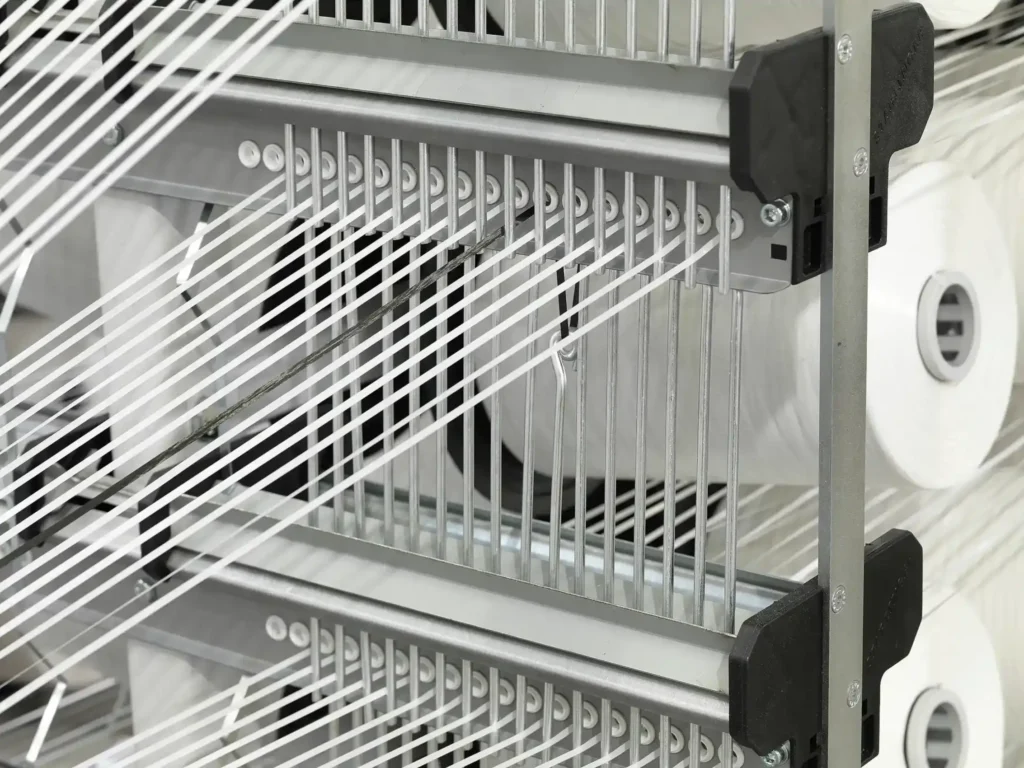
What is Woven Bags with PE Liner?
Woven Bags with PE Liner are engineered composite sacks that pair a load‑bearing polypropylene (PP) woven outer with a polyethylene (PE) inner liner to protect sensitive chemicals from moisture, odor transfer, and cross‑contamination. In everyday sourcing they are also called poly‑woven sacks with PE liner, liner‑insert PP woven bags, PE‑lined valve bags (when a valve sleeve is specified), or paper‑laminated PE‑lined woven sacks (for kraft‑over‑poly hybrids). In plain terms: the woven fabric carries the weight; the liner protects the product; the geometry carries the pallet. For taxonomy and procurement context, see Woven Bags with PE Liner.
Systems lens. Chemicals do not simply sit in a container; they travel—through hoppers, weighers, conveyors, forklifts, trucks, and climates that swing from coastal humidity to inland dryness. Woven Bags with PE Liner become the interface where polymer science (tape draw ratio, liner gauge), converting geometry (pick count, gusset ratio, block bottom), and operations (packer type, vent strategy, pallet pattern) meet and negotiate. Horizontally, compare them with multi‑wall paper sacks (appealing print, humidity‑sensitive) and mono‑film FFS bags (fast sealing, scuff‑prone). Vertically, trace causality: resin grade → tape tenacity → fabric GSM/mesh → coating weight → liner gauge and fold style → closure/vent strategy → test plan. What happens if you change one gram of coating, thicken the liner lip, or narrow a seam? The cascade is immediate—spout dust shifts, drop survival rises or falls, barcode readability holds or fades.
What is the features of Woven Bags with PE Liner?
System view. Performance emerges when materials × structure × operations are tuned to the chemistry and the route. To keep claims grounded, each feature below follows background → data reinforcement → case analysis → comparative study so the reasoning reads like engineering, not advertising.
- Barrier & Purity Management (Moisture, Odor, Sifting)
Background. Hygroscopic and deliquescent powders—soda ash, NaCl, NPK fertilizers, pigments—lose value by caking, clumping, or absorbing odors. A PE liner interrupts vapor ingress and stops fines from escaping through yarn interstices or stitch holes.
Multiwall Paper Bags with PE Liner
Chemical-grade packaging bags with PE liner for excellent moisture-proof and leak-proof performance.
Check More →PE Laminated Woven Bags Thickness
Custom thickness PE liner woven bags designed for safe and durable chemical material packaging.
Check More →PE Valve Bags for Chemical Packaging
Professional PE liner valve bags providing reliable protection for industrial chemical products.
Check More →PE Valve Bags Complete Guide
Comprehensive guide for PE liner woven bags optimized for chemical packaging safety standards.
Check More →Data reinforcement. Supplier‑standard gauges for liners commonly span LDPE/LLDPE 50–120 μm; puncture‑resistant options lean toward LLDPE; coextruded EVOH liners are used when oxygen or odor control matters. On the fabric side, extrusion coats of 15–30 g/m² (PP/PE) close capillaries. Liner seals are qualified to ASTM F88/F88M with typical acceptance ≥7–15 N/15 mm (resin‑dependent). Where barrier is specified, film coupons reference ASTM F1249 (WVTR) and ASTM D3985 (OTR).
Case analysis. A regional fertilizer blender moved urea SKUs into Woven Bags with PE Liner built with 90 μm LDPE liners and an internal coat near 20 g/m². During the wet season, caking complaints fell; bulk density stayed within spec after port dwell; sieve rework declined.
Comparative study. Multi‑wall paper breathes—but absorbs and softens in damp yards. Mono‑film FFS seals quickly—but pillows slump and scuff. Woven Bags with PE Liner block moisture ingress while keeping face stiffness and stack geometry.
- Strength‑to‑Weight Advantage & Damage Resistance
Background. Drawn PP tapes interlaced into 10×10–14×14 meshes deliver high tear‑propagation resistance at modest grammage; the liner decouples product from external abrasion and dust sources.
Data reinforcement. Typical fabric bases run 70–110 g/m²; common sack windows across international B2B catalogs list W 350–600 mm × L 400–910 mm × B 80–180 mm for 10–50 kg fills (density‑dependent). Finished‑pack robustness in the ≤50 kg class is frequently checked with free‑fall sequences aligned to ASTM D5276‑19.
Case analysis. A pigment processor upgraded from 3‑ply paper to Woven Bags with PE Liner at 90 g/m² fabric with 80 μm liners. Corner‑puncture incidents on steel‑mesh cages dropped despite unchanged pallet patterns, and warehouse claims decreased quarter‑over‑quarter.
Comparative study. Thin monolayer films stretch and scuff under clamp‑truck pressure; paper laminates tear when wet. The woven‑plus‑liner composite protects the product and preserves pallet cubes under mixed routes.
- Clean Filling, Venting & Leak Control
Background. Powder packs live on a knife‑edge: they must release air during filling yet remain dust‑tight in transit. Poor venting slows lines; sewing introduces stitch‑hole leaks; the right geometry balances both.
Data reinforcement. Localized micro‑perforations near the fabric fill panel—typically 50–80 holes/100 cm²—vent trapped air while the PE liner stays intact. Open‑mouth styles favor a liner turn‑back with hot‑bar sealing; valve versions use pasted‑in PP/PE sleeves that self‑retain as product settles. Seals reference ASTM F88/F88M; sack dimensions use ISO 6591‑1 vocabulary to keep drawings, samples, and deliveries aligned.
Case analysis. A dry‑mortar plant shifted to Woven Bags with PE Liner with fabric‑only micro‑perfs and a 70 μm liner hot‑sealed at the mouth. Packroom PM counts fell; cycle time held; QA quarantines for leakers nearly vanished.
Comparative study. Open‑mouth with sewing leaks through needle holes; FFS film formats need external vent tubes. Woven Bags with PE Liner let the fabric breathe where needed while the liner provides a clean, sealable barrier.
- Regulatory Marking, Traceability & Safety
Background. Chemical packaging must travel with its paperwork—in ink. GHS pictograms, lot IDs, and machine‑readable codes must survive moisture and abrasion, and the build must be auditable.
Data reinforcement. Outer prints via flexo/gravure 1–8 colors; barcode grades verified to GS1 guidance. Quality systems operate under ISO 9001:2015; where food‑adjacent or incidental contact is in scope, materials can be selected to 21 CFR 177.1520 (olefin polymers), 21 CFR 175.105 (adhesives) and EU No 10/2011 (plastics for food contact). For certain hazardous solids, UN performance packaging pathways (e.g., 5H3/5H4 woven‑plastic bag categories) are validated by third‑party labs.
Case analysis. A salt producer standardized Woven Bags with PE Liner with high‑contrast GHS icons and serialized barcodes. Receiving errors dropped; scanner hit‑rates rose; COAs and DoCs trimmed audit cycle times.
Comparative study. Self‑adhesive labels peel; soft films haze; kraft faces smudge in wet bays. PE‑lined woven exteriors hold barcode contrast and pictogram integrity through real handling.
- Sustainability & Circularity Pathways
Background. Extended Producer Responsibility is not a slogan but a spreadsheet—resin intensity, reuse options, and recycling pathways show up in tenders. Woven Bags with PE Liner fit mono‑polyolefin narratives and can run recycled PP (rPP) in the fabric for non‑food SKUs.
Data reinforcement. Non‑food programs often target 20–40% rPP in the woven layer; UV packages cover 200–800 h outdoor exposure windows. End‑of‑life statements reference ISO 18604 (material recycling). Right‑weighting GSM and liner gauge typically beats substrate switching on carbon per delivered ton.
Case analysis. An agro‑chemicals brand introduced rPP in the fabric while keeping virgin liners; resin intensity fell without compromising WVTR/OTR performance where barrier was required.
Comparative study. Paper de‑inks when dry yet collapses under humidity; multi‑polymer laminates struggle in mainstream recycling. Woven Bags with PE Liner can be baled as PP/PE when programs accept polyolefin streams.
What is the production process of Woven Bags with PE Liner?
From pellets to pallets, small settings write big outcomes—alter a fold angle, alter a claims curve.
- Tape Extrusion & Drawing (Outer Fabric). PP pellets → cast film → slit → draw into high‑tenacity tapes. The draw ratio sets tensile and elongation; denier governs modulus and seam behavior. UV masterbatch is tuned to yard exposure.
- Weaving (Circular or Flat Looms). Tapes interlace into fabric, typically 70–110 g/m² with 10×10–14×14 meshes. Pick count and loom tension hold width tolerance to millimeters so gussets register and bottoms square.
- Coating (Optional). An extrusion coat of 15–30 g/m² PP/PE on the inner face closes interstices and improves dust control and print holdout.
- PE Liner Extrusion. LDPE/LLDPE tubes or sheets are extruded at 50–120 μm. Thickness is checked to ASTM D6988; mechanics screened by ASTM D882 (tensile) and ASTM D1709 (dart impact) where relevant.
- Printing. Fabric exteriors print via flexo/gravure 1–8 colors, or a kraft/BOPP face is laminated for premium graphics. Pictograms and barcodes are proofed to GS1 criteria with rub targets.
- Tubing, Gusseting & Bottoming. The fabric is tubed, side‑gusseted, and formed—fold‑over sewn, pasted, or block‑bottom. Diamond/rectangular patches distribute corner stresses.
- Liner Insertion & Mouth Design. Liners are inserted as loose, tabbed, or form‑fit designs. Mouth options include liner turn‑back with hot‑bar sealing, fold‑over tape closures, or a pasted‑in valve sleeve when a valve format is specified.
- Perforation & Finishing. Local micro‑perfs (~50–80 holes/100 cm²) near the fabric fill zone vent air while preserving liner integrity. Anti‑slip lacquers or micro‑emboss textures improve pallet friction coefficients.
- Testing & Release. Dimensions use ISO 6591‑1 vocabulary; drop robustness follows ASTM D5276‑19 (≤50 kg class); seal‑peel is verified to ASTM F88/F88M; barrier coupons (if claimed) follow ASTM F1249/D3985. COAs log GSM, dimensions, coat weight, liner gauge, bond/seal strength, drop outcomes, and AQL visuals.
What is the application of Woven Bags with PE Liner? (Industrial & Chemical Materials)
Salts & Alkalis. Woven Bags with PE Liner protect sodium chloride and soda ash from humidity pickup and odor taint. Data reinforcement: liner 70–100 μm is a common window for coastal routes. Case analysis: a soda‑ash exporter reported fewer wet‑season sieving reworks after replacing unlined woven sacks. Comparative study: paper multiwall softened in damp yards; lined woven kept cube and cleanliness.
Fertilizers & Soil Amendments. Hygroscopic NPK blends benefit from vented fabric for fill plus PE‑lined interiors for storage. Anti‑slip faces reduce wrap consumption per pallet and stabilize mixed‑SKU stacks.
Pigments, Minerals & Additives. The liner confines fines; stiffer panels resist abrasion in steel cages. For static‑sensitive powders, anti‑static liners and earthing procedures reference IEC 61340 on the plant side.
Adhesives & Specialty Binders. Moisture‑managed interiors preserve rheology; liner turn‑back allows clean hot‑bar sealing that outperforms stitching on leak control and cleanliness.
What is the application of Woven Bags with PE Liner? (Agricultural, Food‑Adjacent & Household Chemicals)
Food‑Adjacent Salts & Additives (where permitted). With materials selected to 21 CFR 177.1520 and EU 10/2011, Woven Bags with PE Liner deliver purity and auditability; blue‑tinted liners aid foreign‑body detection. DoCs and migration dossiers simplify buyer audits and renewals.
Seeds & Treated Inputs. The PE liner stabilizes moisture profiles; outer panels carry seed‑treatment warnings and QR codes without label peel or rub‑off.
Household Chemicals (powder detergents, water‑treatment salts). Reverse‑printed panels remain legible in humid storerooms; block‑bottom formats create tidy end‑caps for retail pallets.
Integrated Solution (System Thinking Synthesis)
Objective: protect chemical quality, accelerate line speed, minimize claims, and win audits—without inflating total cost of ownership. Treat Woven Bags with PE Liner as a closed‑loop program:
- Diagnose. Map SKUs to failure modes—caking, sifting, corner puncture, barcode rub‑off, pallet lean. Instrument fillers (dust counters, cycle‑time histograms) and warehouses (humidity/temperature loggers).
- Design. Pick fabric GSM/mesh (70–110 g/m², 10×10–14×14); specify coat 15–30 g/m² where needed; set liner gauge 50–120 μm and mouth style (turn‑back hot seal vs. sewn); define micro‑perfs 50–80 holes/100 cm²; select anti‑slip finish; align dimensions W 350–600 mm × L 400–910 mm × B 80–180 mm. Anchor vocabulary to ISO 6591‑1; align conformance with GB/T 8946‑2013, ASTM D5276‑19, ASTM F88/F88M, and—if food‑adjacent—21 CFR 177.1520 / EU 10/2011.
- Validate. Run agreed‑height drop tests; confirm liner seal peels; verify WVTR/OTR where barrier is claimed; audit barcode A/B grades; compile COAs and DoCs (third‑party summaries by SGS/Intertek harden the file).
- Deploy. Lock packer recipes; train operators on liner turn‑back and seam/patch inspection; set pallet patterns and wrap specs tuned to anti‑slip friction; institute AQLs for perforation location and count.
- Improve. Quarterly reviews: right‑weight fabric and liner; fine‑tune perf density; update recycling/end‑of‑life guidance; maintain lot traceability under ISO 9001/BRCGS.
Key Specifications & Options (Typical Ranges)
| Attribute | Typical Options / Range | Why it Matters |
|---|---|---|
| Style | Open‑mouth or valve Woven Bags with PE Liner; fold‑over sewn, pasted, or block‑bottom | Controls closure speed, leak paths, and stack geometry |
| Nominal capacity | 10–50 kg (density‑dependent) | Aligns with fertilizers, salts, pigments, and additives |
| Dimensions | W 350–600 mm × L 400–910 mm × B 80–180 mm | Compatibility with converting lines & pallets |
| Fabric | Woven PP 70–110 g/m²; mesh 10×10–14×14 | Tear resistance & panel stiffness |
| Coating (optional) | PP/PE extrusion coat 15–30 g/m² | Closes interstices; improves dust control |
| PE liner | LDPE/LLDPE 50–120 μm; optional EVOH coex | Moisture/odor/oxygen control; clean heat‑seal |
| Perforation | Local 50–80 holes/100 cm² at fabric fill/valve panel | Air release without dust escape from liner |
| Printing | Flexo/gravure 1–8 colors; barcode per GS1 | Readable GHS icons; durable IDs |
| Compliance anchors | GB/T 8946‑2013, ISO 6591‑1, ASTM D5276‑19, ASTM F88/F88M, ASTM F1249/D3985 (films), ISO 18604, ISO 9001 / BRCGS | Audit‑ready specs & governance |
| DG option (scope‑dependent) | UN performance packaging pathways for 5H3/5H4 woven‑plastic bag categories | For certain hazardous solids under ADR/UN rules |
Note: Ranges reflect widely published supplier data and peer‑converter disclosures on international B2B platforms. Always tune to product density, climate, dwell time, and filler type. Validate—don’t assume.
Professional Identifiers & Why They Matter
- GB/T 8946‑2013 — Baseline technical requirements for plastic woven sacks in many APAC supply chains.
- ISO 6591‑1 — Common measurement vocabulary for empty sacks; ensures drawings match delivered reality.
- ASTM D5276‑19 — Free‑fall drop testing for loaded packages ≤50 kg; correlates with transport shocks in distribution.
- ASTM F88/F88M — Seal‑strength testing for flexible packages; critical for liner hot‑seals and coated mouths.
- ASTM F1249 / ASTM D3985 — WVTR/OTR tests for film coupons; anchor barrier choices in numbers.
- ISO 18604 — Material recycling framework; supports circularity statements for PP/PE builds.
- 21 CFR 177.1520 / 21 CFR 175.105 / EU No 10/2011 — Plastics and adhesive anchors for food‑adjacent or incidental‑contact builds.
- ISO 9001:2015 / BRCGS Packaging Materials — Quality & hygiene schemes that turn specifications into repeatable runs with traceability.
Copy Blocks You Can Reuse (Brand Voice Ready)
- Value line. Cleaner fills, drier product, stronger stacks—Woven Bags with PE Liner turn every pallet into a reliable, audit‑ready asset.
- Proof point. PE‑lined woven construction validated by ASTM D5276‑19 drops and ASTM F88/F88M seal pulls keeps moisture out, fines in, and labels legible.
- Sustainability note. Right‑weight GSM and liner gauge, specify mono‑polyolefin builds, and publish end‑of‑life guidance so Woven Bags with PE Liner perform in service and after use.
In industries where the safe and secure packaging of chemicals and raw materials is critical, Woven Bags with PE Liner offer an exceptional solution. These bags are designed to provide robust protection for products such as fertilizers, plastic granules, activated carbon, carbon black, and disinfectants. At VidePak, we understand the specific needs of the chemical industry and have perfected our production process to deliver high-quality bags that meet these demands.
The Role of Woven Bags with PE Liner
Woven Bags with PE Liner are crafted by integrating a polyethylene (PE) liner within the woven polypropylene fabric. This design combines the strength and durability of the woven fabric with the impermeability of the PE liner, creating a bag that is both strong and protective against moisture and contamination. The following features make these bags particularly suitable for chemical packaging:
- Moisture Resistance: The PE liner acts as a barrier to moisture, protecting the contents from humidity and water exposure, which is crucial for hygroscopic materials like fertilizers and certain chemicals.
- Containment: The liner prevents fine particles or powders from leaking out, ensuring that products like carbon black or plastic granules remain securely contained.
- Chemical Compatibility: PE liners are highly resistant to most chemicals, ensuring that the bag does not react with or compromise the integrity of the contents.
Applications in the Chemical Industry
The chemical industry requires packaging solutions that can handle a wide range of products, each with its own set of challenges. Woven Bags with PE Liner are ideal for several key applications:
1. Fertilizers
Fertilizers are highly susceptible to moisture, which can cause caking and reduce their effectiveness. Woven sacks with liner provide a moisture-proof environment, preserving the quality and potency of the fertilizer during storage and transportation. These bags are also strong enough to handle the weight and bulk of large quantities of fertilizer, ensuring they remain intact during handling.
2. Plastic Granules
Plastic granules, used as raw material in the production of various plastic products, require packaging that can keep them dry and free from contamination. Aluminum Liner Bags or Liner PE Bags offer the ideal solution, providing an additional layer of protection against environmental factors that could affect the quality of the granules. The robust construction of the woven fabric ensures that the bags can withstand the rigors of transport without tearing or spilling.
3. Activated Carbon and Carbon Black
Activated carbon and carbon black are fine, powdery substances that require secure packaging to prevent leakage and exposure to air. Woven bags with liner effectively contain these materials, preventing them from escaping through the woven fabric. The PE liner ensures that the contents are kept dry and free from contamination, which is essential for maintaining their chemical properties.
4. Disinfectants and Chemical Powders
Disinfectants and other chemical powders must be stored in bags that prevent any interaction with external moisture or contaminants. Woven Bags with PE Liner offer the perfect solution, combining the strength needed to carry heavy loads with the protective qualities of the liner. This ensures that the disinfectants remain potent and effective, even after extended periods of storage.
VidePak’s Manufacturing Excellence
As a leading manufacturer of Woven Bags with Liner, VidePak prides itself on the quality and reliability of our products. We have over 20 years of experience in producing woven bags, and our advanced manufacturing processes ensure that each bag meets the stringent demands of the chemical industry. Here’s how we achieve this:
Advanced Materials
We use high-grade polypropylene for the woven fabric, ensuring that it is strong, durable, and resistant to tearing. The PE liners are made from premium-grade polyethylene, which provides excellent moisture resistance and chemical stability. For specific applications, such as packaging highly sensitive chemicals, we also offer Aluminum Liner Bags, which provide additional protection against light and oxygen.
Precision Manufacturing
Our manufacturing process is highly automated, ensuring that each bag is produced with precision and consistency. This automation also allows us to produce bags in large quantities, meeting the needs of even the most demanding clients. We use state-of-the-art equipment sourced from Starlinger, a global leader in machinery for woven bag production, to ensure the highest quality standards.
Stringent Quality Control
At VidePak, we understand that the quality of our bags directly impacts the safety and effectiveness of our customers’ products. That’s why we implement a rigorous quality control process at every stage of production. This includes:
- Thickness Tolerance Testing: Ensuring that both the woven fabric and the liner meet our strict thickness specifications, providing the strength and protection needed for chemical packaging.
- Tensile Strength Testing: Verifying that the bags can withstand the heavy loads and handling typical in the chemical industry.
- Seam Integrity Testing: Checking the seams to ensure they are strong and secure, preventing any leaks or breaks during use.
- Moisture Resistance Testing: Confirming that the PE liner provides the necessary barrier against moisture, preserving the quality of the contents.
Customization and Flexibility
We understand that different chemicals have different packaging requirements. That’s why we offer a range of customization options for our Woven Bags with PE Liner. Whether you need a specific bag size, a particular liner thickness, or custom printing for branding, we can tailor our products to meet your exact needs.
Meeting Industry Standards
The chemical industry is highly regulated, and packaging solutions must comply with a range of standards and regulations. VidePak’s Woven Bags with PE Liner are designed and manufactured to meet or exceed these standards, ensuring that our customers can rely on our products for safe and compliant packaging.
Sustainability Considerations
In addition to meeting industry standards, we are committed to producing environmentally responsible packaging. Our bags are fully recyclable, and we continually seek ways to reduce waste and improve the sustainability of our manufacturing processes. This commitment to sustainability is part of our broader corporate responsibility strategy, which includes initiatives to support local communities and minimize our environmental footprint.
VidePak: A Partner You Can Trust
For over two decades, VidePak has been a trusted partner to companies in the chemical industry, providing reliable and high-quality packaging solutions. Our Woven Bags with PE Liner are designed to meet the unique challenges of chemical packaging, offering the strength, protection, and quality that our customers need. Whether you are packaging fertilizers, plastic granules, or chemical powders, you can trust VidePak to deliver bags that meet your needs and exceed your expectations.
By focusing on quality, innovation, and customer satisfaction, VidePak continues to lead the way in the production of Woven Bags with Liner, setting the standard for excellence in the industry.