
H2: What is Anti-Bulge FIBC Bags? Definition and Common Aliases
Anti-Bulge FIBC Bags occupy a distinctive niche within the ecosystem of Flexible Intermediate Bulk Containers: they are engineered not merely to hold mass but to shape it. In a typical bulk bag, gravity and granular physics conspire to push sidewalls outward as the product settles; the result is a bellied silhouette that disrespects pallets, crowds aisles, and destabilizes stacks. Anti-Bulge FIBC Bags interrupt that story. Their internal baffles—lightweight fabric partitions with carefully sized flow windows—curb lateral swell so that the filled container retains a near-cubic envelope. That cube is not an aesthetic ambition; it is the grammar of modern logistics, the geometry of pallets, and the tessellation logic of ISO containers.
Multiple market aliases—Q‑Bags, Baffle FIBC, Form‑Stable FIBC, Anti‑Swell FIBC, Form‑Retaining Big Bags—speak to the same promise from different angles. “Q‑Bag” hints at a quadrilateral footprint that survives the ordeal of filling. “Form‑Stable” signals predictability during storage and transit. “Anti‑Swell” draws attention to the very failure mode the product neutralizes. Beneath the semantics lies a convergence: for powdered minerals, fine chemicals, ingredients, and agricultural commodities alike, dimensional fidelity is a safety feature, a cost lever, and a planning aid.
Why do ordinary bags bulge in the first place? Particulate media generate lateral pressure that grows with head height and internal friction. Unlike liquids, which communicate pressure hydrostatically and predictably, granular materials form arches, bridge unpredictably, and relax in jerks. Sidewalls receive uneven loads; seams and stitches experience localized strain; the bag breathes outward. Anti-Bulge FIBC Bags respond with baffles that re-route stress paths and regulate internal flow. Their die-cut apertures allow material to equilibrate between quadrants while preventing mass migration into the corners. In effect, the baffle works as a flow governor and a structural rib at once.
Consider three adjacent disciplines to understand why the cube matters. From structural mechanics, we learn that flat faces align loads axially, reducing eccentric moments at seams and loop anchors. From operations research, we see that marginal shape deviation compounds across a pallet layer, across pallet layers, and across a container load—small deviations become big losses. From safety engineering, we are reminded that protrusions into aisles increase collision risk, demand more shrink‑wrap to restrain bellies, and invite stack lean. A bag that stays square does more than look tidy; it curates forces, reduces variance, and tames risk.
Is the effect only visible in pristine warehouses? Not at all. In tough environments—hot sheds, humid ports, dusty plants—dimensional fidelity is even more valuable because downstream systems are already stressed. When a forklift operator can trust that a palletized column will not surprise them with a hidden belly as they pivot, the entire choreography improves. When racking tolerances are tight, a square face is worth more than a slogan; it is a precondition for safe slotting. And when a shipper must document load plans for insurers, Anti-Bulge FIBC Bags provide not just mass but measure.
The marketplace reality is prosaic but telling: buyers who once tolerated bulge now quantify its cost. They compare pallet counts per container, stretch‑wrap consumption per pallet, rework events due to stack instability, and the administrative drag of non‑conformances. The analysis favors the bag that behaves. It is no accident that sectors obsessed with hygiene and consistency—starch, sugar, nutraceuticals—were early adopters. Nor is it surprising that combustible dust sectors—pigments, carbon black—pair baffle geometry with electrostatic strategies. The cube solves many problems at once, and in supply chains, a single intervention that quiets several pain points reliably earns a permanent place in the spec.
If you seek a succinct orientation to the broader FIBC category landscape while you evaluate baffle options, one practical starting point is here: Anti-Bulge FIBC Bags. Let this serve as a wayfinding link rather than a detour; the essence remains the same—the internal architecture enforces external order.
One might ask, do baffles always help? What about coarse, non‑sifting granules or very low stack heights? In those cases, the premium for baffle construction may be marginal against the gain. But as soon as a load faces containerization, high‑bay storage, tight aisle geometries, or combustible dust risks, the cost-benefit calculus tilts decisively. The bag that keeps its shape keeps its value.
H2: What is the features of Anti-Bulge FIBC Bags? A system view with data reinforcement, case analysis, and comparative study
Features are often presented as a checklist. That obscures cause and effect. A better lens is to view features as levers positioned along the chain of product physics → bag structure → handling method → logistics regime. Through that lens, the characteristic suite of Anti-Bulge FIBC Bags reveals a coherent logic rather than a random assortment.
Structural baffles as internal ribs. Baffles stitched into the corners or across panels function like stiffeners in an aircraft fuselage. Their first task is geometric: keep the faces flat. Their second is hydraulic in spirit: manage granular flow between quadrants. Aperture size reflects a trade: too small, and product bridges; too large, and the baffle becomes a decorative veil. The winning design calibrates window area to particle size distribution, moisture tendency, and fill velocity. Additives that change product cohesion—anti‑caking agents, for example—may warrant a different baffle aperture pattern even at the same bulk density.
Panel architectures for stress management. Circular‑woven bodies excel at material efficiency and smooth stress distribution, U‑panel bodies balance corner strength with cut pattern economy, and 4‑panel bodies deliver crisp edges and predictable faces. In Anti-Bulge FIBC Bags, 4‑panel bodies frequently appear because their seams create corner lines that align naturally with baffle placement, but circular bodies are not excluded; they simply demand careful stitching strategies to integrate baffles without puckering or biasing loads.
Loop geometry that anticipates reality. Loops are not merely grabbable straps. Cross‑corner loops present open throats for forks, accelerating engagement. Side‑seam loops can be advantageous on cranes with certain hook geometries. Loop width (often 5–10 cm) and bar‑tack patterns disperse forces to avoid stitch ripping under off‑axis lifts. In field conditions—uneven floors, hurried operators—those details are not pedantry; they are insurance policies.
Barrier strategies tailored to the commodity. Lamination closes pores to curb dusting and moisture ingress, while liners (food‑grade, barrier, or anti‑static) address product purity and electrostatic behavior. Yet each barrier introduces tradeoffs: lamination may impede breathability, liners can balloon if not restrained, and anti‑static films require careful selection to align with Type C or Type D bag strategies. The virtue of Anti-Bulge FIBC Bags is that the baffle principle plays well with any of these choices. The geometry is agnostic to the chemistry.
Dimensional and load parameters that anchor expectations. Typical size envelopes, such as 90×90×110 cm and 100×100×120 cm, map neatly to pallet standards. Safe Working Load (SWL) spans commonly cited between 500 and 2000 kg, with Safety Factor (SF) conventions of 5:1 (single‑trip), 6:1 (for UN‑coded applications), and up to 8:1 (for multi‑trip schemes). None of these figures are ornamental. SWL must correspond to batch sizes and lift capacities; SF must align with inspection programs; and dimensions must harmonize with rack depths, tunnel heights, and container rows. Specifications are promises, not poetry.
Data reinforcement in practice. Operators reporting 25–30% improvements in warehouse and container space utilization when substituting Anti-Bulge FIBC Bags for non‑baffle variants are not recounting miracles. They are observing the compound effect of flatter faces on layer counts and of faithful dimensions on pallet maps. Reduced stretch‑wrap usage often accompanies the swap, because the stack no longer needs a plastic corset to prevent encroachment.
Case anatomy: powdered minerals and fine chemicals. A titanium dioxide packout line illustrates the logic. With non‑baffle bags, corner sifting requires housekeeping, bulges demand over‑wrapping, and stacks lean under vibration during truck loading. With Anti-Bulge FIBC Bags, die‑cut windows modulate flow, corner leakage drops, aisle clearances remain consistent, and column loads pass more axially through the stack. The change is visible in the space and audible in the quiet—forklifts brake less abruptly; stretch‑wrap dispensers whine less often.
Comparative positioning vs rigid IBCs. Rigid IBCs excel with liquids and in closed‑loop logistics where reverse flows are guaranteed. Yet for dry flowables on one‑way lanes, Anti-Bulge FIBC Bags often deliver a superior cost‑to‑serve: lower tare weight, fewer return miles, similar cube fidelity if baffles are specified, and simpler disposal. The winning choice is not ideological; it is contextual. Measure your loop, test your product, choose your geometry.
Safety and electrostatics as co‑equal features. Because many powders are combustible, electrostatic classification is not optional. Types A/B/C/D (per established practice) exist to tame ignition risk. Type C uses conductive paths that must be grounded; Type D dissipates charge without an explicit ground cable. The presence of baffles does not interfere with these strategies, but plant procedures—ground checks, resistance thresholds, bonding—must keep pace. A square bag is safer to stack; a discharged bag is safer to fill. Together they reduce two different categories of catastrophe.
Summarizing without simplifying: the feature set of Anti-Bulge FIBC Bags is less a collection than a choreography. Baffles keep shape, panels carry stress, loops transmit force, barriers preserve purity, and dimensions negotiate with the built world of pallets and racks. Every element talks to the others. If the conversation is harmonious, operations sing.
H2: What is the production process of Anti-Bulge FIBC Bags? From resin to ready load
Manufacturing Anti-Bulge FIBC Bags is an exercise in turning polymer physics into supply‑chain performance. Every stage—extrusion, weaving, lamination, cutting, sewing, finishing, and testing—translates microscopic order into macroscopic reliability. Any shortcut along the way will reveal itself later as a seam failure, a dimensional drift, or an uncooperative liner.
Extrusion and tape drawing. Polypropylene pellets melt and are extruded through slits, then drawn into tapes whose molecular chains are oriented to boost tensile strength and reduce creep. Drawing ratios are tuned to the GSM target and expected loads; quench and anneal conditions manage crystallinity so that the tape neither necks under stress nor embrittles in cold rooms. A tape is a humble thing, but in a high‑SWL bag, its pedigree shows.
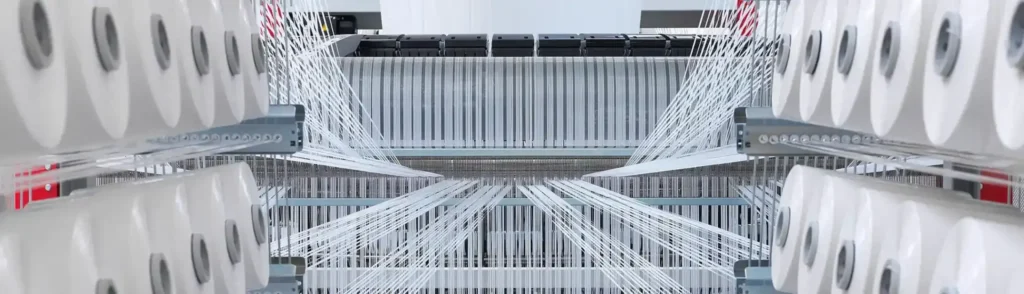
Weaving. Circular and flat looms convert tapes into fabric. Circular looms limit seam count, useful for uniform stress distribution; flat looms ease patterning for 4‑panel bodies and baffle inserts. Warp and weft tensions are calibrated to avoid bias stretch that would reveal itself as a parallelogram rather than a rectangle. UV stabilization can be introduced for applications that require outdoor staging; conversely, indoor‑only programs may forego UV to prioritize recyclability.
Lamination and liners. If a commodity is hygroscopic or dusty, lamination adds a barrier, but laminates should be specified with a view to end‑of‑life: some films complicate recycling or contaminate mono‑material streams. Liners—food‑grade, barrier, or static‑control—must be sized to prevent a blimp effect. Tabbed or glued points couple the liner to the host bag so that baffles keep authority over the final geometry. Otherwise, the liner forms its own balloon and defeats the purpose.
Cutting, baffle fabrication, and pattern control. Panels are cut to measured tolerances; baffles receive windows sized to the product’s particle size distribution and cohesiveness. This is the laboratory of shape. Too many windows and the face bows; too few and the corners deplete, creating hollow columns inside a seemingly full cube. Quality shops test several aperture patterns with the actual product before freezing the spec, because rheology seldom behaves the same way twice on paper and on the line.
Loop manufacture and attachment. Loop tape is produced with higher tenacity, then sewn using multi‑row bar‑tacks over reinforcement patches that spread load. Because forklifts and cranes impose different vector angles, stitching patterns anticipate the worst case. The design anticipates misuse—not to enable it, but to survive it long enough for training to catch up.
Closure systems. Tops—open, skirt/duffle, filling spout—are chosen for equipment compatibility and dust control. Bottoms—flat, discharge spout, star/safety petal—are selected for controlled emptying. In Anti-Bulge FIBC Bags, the role of closures extends beyond convenience: a correctly sized filling spout promotes symmetric fill profiles; a well‑tuned discharge spout prevents sudden voids that could kink faces during emptying. Closures tame the transient states where geometry is most vulnerable.
Quality and compliance testing. Dimensional checks verify that the cube on the drawing exists on the floor. Fabric and loop tensile tests, seam shear tests, and proof/stack tests confirm mechanical integrity. UN drop/topple/tear tests validate dangerous‑goods configurations. Electrostatic testing for Type C or Type D confirms that bags will not betray operators with an invisible spark. Food‑contact migration testing under EU 10/2011 and documentation aligned to FDA 21 CFR 177.1520 anchor hygiene claims. The upshot: trust is manufactured, not assumed.
Traceability and documentation. Because Anti-Bulge FIBC Bags are often used where safety and compliance audits are stringent, serialization and batch documentation add resilience. Resin lot numbers, test records, and work‑order trails enable corrective actions without paralyzing operations. In a world of recalls and regulatory inquiries, the paper trail is as real a product as the fabric cube.
H2: What is the application of Anti-Bulge FIBC Bags? Industry scenarios and selection logic
Applications are the final exam for any design theory. Anti-Bulge FIBC Bags pass by thriving in places where physics, policy, and practice intersect.
Food and agriculture. Starches, sugar, flour, and seeds demand cleanliness and predictability. Food‑grade liners and compliant resins protect purity; baffle geometry preserves stack stability in high‑bay storage. Consider a bakery supply chain where flour must move through humid ports. Laminated fabric plus a food‑grade liner mitigates moisture ingress. The baffle delivers flat faces so pallets occupy the racking depth they were promised. Aisles remain consistent; pick paths are unbroken; the risk of a collapsing column during a busy shift is dramatically reduced.
Chemicals and minerals. Pigments and fillers often present combustible dust risks. Here, Type C or Type D electrostatics integrate with baffle geometry. Grounding protocols and resistance checks sit side by side with dimensional checks and seam inspections. Why both? A square bag is less likely to lean and domino a stack; a discharged bag is less likely to flash. The two risk vectors are independent; controlling both is mature practice, not redundancy.
Construction and landscaping. Sand and gravel are not subtle, yet jobsite dynamics are. When gusts catch a suspended load, faces that stay flat reduce swing amplitude and side‑load surprises. On congested sites, cubes that respect their footprint allow narrower corridors and tighter staging. If one asks, “Does sand care about baffles?” the honest answer is that sand cares about schedule, and schedule cares about predictability. The baffle is a schedule ally as much as a geometry guardian.
Pharmaceuticals and additives. Here the stakes are microscopic yet huge. Anti‑sift seams and hygienic liners defend against cross‑contamination; baffles keep external dimensions consistent so that totes, hoppers, and downstream containers mate without improvisation. When deviations trigger deviation reports, square faces start to look like regulatory strategy, not just packaging.
Selection logic as a decision tree. Begin with rheology: is the product cohesive or free‑flowing, hygroscopic or stable, explosive or inert? Rheology guides baffle aperture area, lamination need, and liner type. Move to handling: forklifts only, or cranes, or vacuum lifts? Handling dictates loop style and reinforcement. Then compliance: food contact documentation, electrostatic type, hazardous‑goods coding. Finally, logistics: pallet sizes, container layouts, racking tolerances. Write these as four rows in your spec, and the correct Anti-Bulge FIBC Bags configuration emerges from the intersections.
Three short portraits. A sugar refiner facing tropical humidity standardizes on laminated fabric with food‑grade liners and baffles with moderate windowing. A pigments exporter working through combustible‑dust zones specifies Type C bags and installs grounding rails at fill points; baffles appease stack dynamics during intermodal transitions. A cement additives supplier running one‑way lanes opts for mono‑material PP constructions without lamination, seeing recycling ease and container payload gains as the main prize. Three industries, three constraints, one geometry: faces that keep faith with the drawing.
H2: Systems thinking in action: decomposing and recombining into a single solution
Systems thinking invites us to treat Anti-Bulge FIBC Bags as nodes in a web of interactions. Decomposition matters—structural design, safety and compliance, sustainability, operations—but synthesis is what the warehouse experiences: a bag behaving in a place among people and machines.
Subsystem A: Structural design. The body pattern determines how the bag accepts baffles; the baffle pattern determines how the product redistributes; the loop strategy determines how forces leave the bag; the GSM budget determines how much all of that can weigh before the benefits evaporate. Pull one lever, and another moves. Increase GSM to boost seam margins, and fold behavior changes; fold behavior alters how pallets settle; pallet settlement modifies layer counts. Causality is not linear; it is braided.
Subsystem B: Safety and compliance. Think in layers. Mechanical integrity keeps the bag intact; electrostatics keeps the plant intact; hygienic documentation keeps the brand intact; UN coding keeps the route intact. None can be borrowed from the others. The baffle’s square faces reduce toppling risk; the Type C’s grounding path reduces ignition energy; the food‑grade liner prevents migration; the UN mark unlocks routes with stricter carriers. If a system fails, it is usually because a layer was missing, not because the right layers argued.
Subsystem C: Sustainability and ESG. Cube fidelity is a carbon lever in disguise. More product per container slot equals fewer containers per ton shipped; fewer containers equals lower emissions. Mono‑material PP simplifies end‑of‑life; recycled PP content, when compatible with hygiene and performance, pushes the story further. But beware of false economies: over‑lamination can complicate recycling; exotic liners can outlast their welcome in downstream streams. In a good system, ESG is not an appendix; it is a design constraint.
Subsystem D: Operations. Design cannot survive a plant that resists it. Tops and bottoms must match hardware. SOPs must define pre‑lift checks. Training must teach operators what a healthy bag looks like. Grounding points must be present where Type C is specified; inspection intervals must respect the Safety Factor program. When operations are aligned, the bag stops being a variable and becomes part of the infrastructure.
Synthesis. Combine these subsystems into a family of SKUs that speak with one voice: 100×100×120 cm Anti-Bulge FIBC Bags, 4‑panel, 160–220 g/m², cross‑corner loops, liners where required, Type C where dust hazards persist, documentation bundled with each lot. The result is not a product but a policy encoded in fabric. Misalign any component—undersized spout, absent grounding rail, over‑wide baffle windows—and the policy leaks. Keep the pieces in tune, and logistics turns from firefighting into routine.
H2: Key parameters and technical anchors (text table)
The table below consolidates common parameters for Anti-Bulge FIBC Bags. Treat these not as commandments but as disciplined starting points; site trials should always confirm what paper proposes.
| Parameter | Typical / Options | Technical Anchor / Rationale |
|---|---|---|
| Dimensions (L×W×H) | 90×90×110 cm; 100×100×120 cm; widths 80–115 cm | Maps to pallet modules and container rows; minor drift can cascade into layer losses. |
| Volume | ~20–85 ft³, height‑dependent | Relates to intended stack height and aisle clearance policies. |
| SWL (Safe Working Load) | 500–2000 kg common; heavy variants up to ~4000–5000 lb | Selected to match batch sizes, lifting gear limits, and proof test outcomes. |
| Safety Factor (SF) | 5:1 single‑trip; 6:1 for UN‑coded; up to 8:1 multi‑trip | SF policy must pair with inspection cadence and retirement rules. |
| Fabric GSM | 120–250 g/m²; UV stabilization optional | Tuned to tensile and seam targets while managing fold behavior and cost. |
| Lifting Loops | Four loops, 5–10 cm width; cross‑corner or side‑seam | Bar‑tack patterns distribute stress; loop style aligns with handling method. |
| Top Closures | Full‑open, skirt/duffle, filling spout | Controls dust and fill symmetry, protecting cube integrity. |
| Bottom Closures | Flat, discharge spout, star/safety petal | Manages discharge surges; reduces sudden face deformation. |
| Electrostatic Type | A/B/C/D (Type C grounded; Type D passive dissipative) | Aligned to ignition risk scenarios; orthogonal to baffle geometry. |
| UN Codes (Hazardous) | 13H1/13H2/13H3/13H4 | Differentiates coating/liner states; validated by standardized tests. |
| Food Contact | FDA 21 CFR 177.1520; EU 10/2011 migration testing | Ensures migration limits under use‑relevant time–temperature exposure. |
| Space Utilization Gain | ~25–30% vs non‑baffle FIBCs (commonly reported) | Compound effect of flatter faces and dimensional fidelity. |
Numbers whisper the shape of a system. The shape whispers back in pallet counts, aisle clearances, and stress patterns that never appear in a spreadsheet but decide whether a shift ends calmly or in a scramble.
H2: Buyer‑ready configuration template (example)
Translating analysis into an order line is where many programs stall. The template below condenses experience into a practical configuration that most plants can implement with minimal friction.
Keyword. Anti-Bulge FIBC Bags (Q‑Bags, Baffle FIBC) — chosen where cubic discipline governs safety, pallet math, and emissions reporting more strongly than any single material parameter.
Size and form. 100×100×120 cm; 4‑panel body with stitched corner baffles; window apertures tuned to particle size distribution and fill rate. Body GSM in the 160–220 g/m² band, verified by tensile and seam shear tests. Where outdoor staging is expected, UV stabilization by design, not by hope.
Performance. SWL 1000 kg; Safety Factor 5:1 for single‑trip; upgrade to 6:1 for UN‑coded routes or 8:1 for controlled‑reuse schemes with inspection plans. Write retirement criteria; do not let them float as tribal knowledge.
Electrostatics. Type C with verified earth continuity during fill/empty where combustible dust atmospheres cannot be excluded. If grounding logistics are impractical and risk assessments allow, Type D may substitute. In both cases, run periodic checks; static electricity is invisible until it is unforgiving.
Hygiene. For edible goods, insist on resin and liner documentation consistent with FDA 21 CFR 177.1520 and EU 10/2011. Do not stop at certificates; request migration test conditions and results. Cleanroom practices for liner handling are not theater; they are cheap compared to a recall.
Operations. Filling spout diameter in the 35–40 cm range; discharge spout with star/safety petal. Cross‑corner loops at 10 cm for reliable tine capture. Standardize pallets at 1000×1200 mm to lock container tessellation. Train operators to recognize a healthy baffle face and to spot stitch anomalies before they become incidents.
ESG. Prefer mono‑material PP for end‑of‑life simplicity. Where hygiene and performance permit, specify recycled PP content under credible chain‑of‑custody frameworks. Quantify logistics CO₂ improvement traceable to cubic fidelity; otherwise, the geometry’s contribution vanishes in averages.
This is not a straitjacket. It is a scaffold. Plants with unusual product rheology or eccentric handling equipment can adapt each line while preserving the organizing principle: the shape must serve the system, and the system must return the favor.
H2: Closing message for VidePak customers
It is tempting to treat packaging as a quiet afterthought, a cost center to be shaved and forgotten. Yet time after time, the square bag proves noisier in its absence than in its presence. When stacks lean, when pallets creep, when aisles narrow themselves with plastic bellies, the whole line feels it. Anti-Bulge FIBC Bags are not miracle workers; they are simply good listeners to the physics they must host. They hold powders and granules, yes, but they also hold the line on geometry, on safety, on schedule. Specify once, standardize across lanes, and let the shape do what it was designed to do: keep faith with the drawing, keep grace under load, keep your operation free to think about something other than bulge.
- H2: What is Anti-Bulge FIBC Bags? Definition and Common Aliases
- H2: What is the features of Anti-Bulge FIBC Bags? A system view with data reinforcement, case analysis, and comparative study
- H2: What is the production process of Anti-Bulge FIBC Bags? From resin to ready load
- H2: What is the application of Anti-Bulge FIBC Bags? Industry scenarios and selection logic
- H2: Systems thinking in action: decomposing and recombining into a single solution
- H2: Key parameters and technical anchors (text table)
- H2: Buyer‑ready configuration template (example)
- H2: Closing message for VidePak customers
Introduction
The global logistics sector, valued at $10.6 trillion in 2024, faces mounting pressure to adopt sustainable packaging solutions that align with Environmental, Social, and Governance (ESG) mandates. Anti-bulge Flexible Intermediate Bulk Containers (FIBCs) have emerged as a critical innovation, combining load stability with eco-friendly materials to meet these demands. VidePak, a leader in woven bag manufacturing since 2008, leverages its 30+ years of expertise and Austrian Starlinger technology to produce FIBCs that exceed ISO 21898 safety standards while supporting circular economy goals. With 526 employees and $80 million in annual sales, the company operates 100+ circular looms and 30+ printing machines, enabling large-scale customization for clients in construction, agriculture, and retail. This report examines how VidePak’s anti-bulge FIBCs address ESG priorities through material excellence and logistics-focused design.
ESG Alignment: Material and Production Innovations
1. Recyclable PP Resins and Closed-Loop Systems
VidePak’s FIBCs use virgin PP resins from BASF and Sinopec, which retain 95% of their mechanical properties after recycling. Starlinger’s extrusion lines ensure precise melt flow indices (MFI: 8–12 g/10 min per ASTM D1238), minimizing material waste by 15% during production. The company’s closed-loop system recovers 98% of scrap PP, reducing reliance on virgin plastics and aligning with the EU’s Circular Economy Action Plan.
- Case Study: A 2024 project with a German chemical distributor demonstrated that switching to VidePak’s FIBCs cut annual plastic waste by 1,200 tons and CO₂ emissions by 3,800 tons.
2. Energy Efficiency and Carbon Neutrality
Starlinger’s iQ4.0-enabled machines reduce energy consumption by 30% compared to conventional systems. VidePak’s solar-powered facility in Jiangsu, China, offsets 40% of its energy needs, targeting full carbon neutrality by 2030.
FIBC Bulk Bags Versatility
High-performance anti-bulge FIBC bags designed to meet strict ESG standards and industrial requirements.
Check More →FIBC Bags Manufacturer
Professional ESG-compliant anti-bulge FIBC bags with sustainable production and excellent quality.
Check More →Reinforced FIBC Bags Durability
Anti-bulge FIBC bulk bags combining structural durability and ESG compliance for eco-friendly packaging.
Check More →FIBC Bulk Bags Global Market
ESG-aligned anti-bulge FIBC bags delivering competitive edge and sustainable packaging solutions.
Check More →Logistics-Centric Design: Enhancing Efficiency and Safety
1. Anti-Bulge Technology for Load Stability
Anti-bulge FIBCs prevent bag deformation under dynamic loads (e.g., 1,000–2,000 kg during shipping), reducing spillage risks by 50%. Key features include:
- Reinforced Seams: Ultrasonic bonding increases seam strength by 35% (ISO 2206:2002).
- Cross-Woven Grids: 12 threads/cm² density ensures uniform weight distribution.
Table 1: Performance Metrics of VidePak’s FIBCs
| Parameter | Standard | VidePak’s Performance |
|---|---|---|
| Tensile Strength | ISO 527-2 | 70–80 N/cm² |
| Load Capacity | ISO 21898 | 2,000 kg |
| Recyclability Rate | EN 13432 | 95% PP recovery |
| Moisture Resistance | ASTM E96 | <2% water vapor transmission |
2. Ergonomic Features for Streamlined Logistics
- Forklift-Friendly Loops: 10 cm-wide loops enable seamless palletization, reducing loading times by 20%.
- Anti-Slip Coating: Silicone-treated bases prevent shifting during transit, critical for stacking heights up to 7 meters.
- Customizable QR Codes: Blockchain-enabled tracking systems reduce supply chain disputes by 25%, as piloted in a 2024 partnership with a Dutch logistics firm.
FAQs: Addressing Industry Pain Points
Q: How do anti-bulge FIBCs compare to traditional bulk bags in cost efficiency?
A: While initial costs are 10–15% higher, VidePak’s FIBCs reduce long-term expenses through:
- Reusability: Up to 8 cycles without performance loss.
- Lower Waste Fees: 40% reduction in landfill costs due to recyclability.
Q: Are these bags suitable for hazardous material transport?
A: Yes. VidePak’s PE-lined FIBCs comply with UN 13H1/13H2 standards for chemicals, featuring UV-resistant coatings and anti-static threads.
Market Impact and Future Trends
The anti-bulge FIBC market is projected to grow at a CAGR of 6.8% through 2030, driven by ESG regulations like the EU’s Packaging and Packaging Waste Directive (PPWD). VidePak is piloting PP-PLA hybrid bags with 120-day compostability, targeting industries like organic agriculture. Additionally, AI-driven demand forecasting tools are being integrated to optimize inventory turnover by 18%.
Conclusion
VidePak’s anti-bulge FIBCs exemplify how innovation in material science and logistics design can harmonize profitability with planetary stewardship. By prioritizing recyclability, energy efficiency, and user-centric features, the company not only meets current ESG benchmarks but also sets new standards for the future. For industries seeking to reduce their environmental footprint without compromising operational efficiency, VidePak offers a proven, scalable solution.
Explore Further:
- Discover how anti-bulge FIBCs enhance protection in logistics.
- Learn about sustainable practices in bulk packaging.
This report synthesizes insights from industry benchmarks, regulatory frameworks, and VidePak’s operational data to provide actionable strategies for businesses transitioning to ESG-compliant packaging.