
In the competitive pet food market, packaging plays a crucial role in maintaining product quality and attracting consumers. Lightweight woven bags have emerged as a popular choice for pet food packaging due to their versatility and cost-effectiveness. At VidePak, we specialize in producing high-quality Lightweight PP Bags designed to meet the unique needs of the pet food industry. Our focus is on providing durable, functional, and environmentally friendly packaging solutions for products like dog food and cat food.
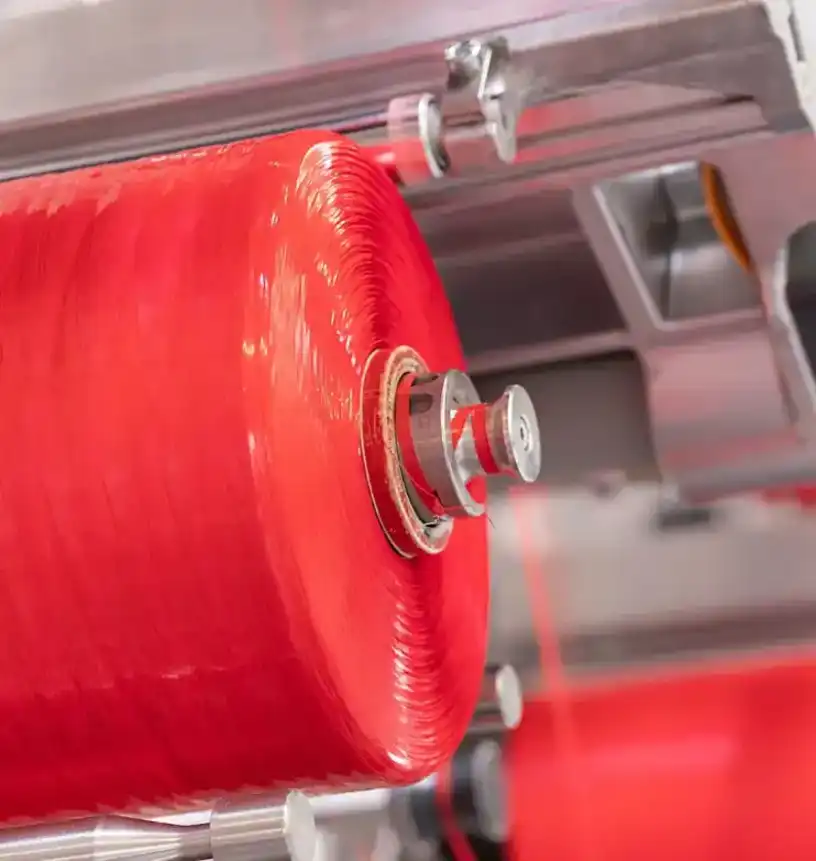
What is Lightweight Woven Bags for Pet Food Packaging?
Lightweight Woven Bags for Pet Food Packaging—also referred to across the trade as light‑gauge BOPP‑laminated woven PP pet food sacks, lightweight composite woven kibble bags, or low‑tare woven poly feed bags—are engineered containers that merge an oriented polypropylene (PP) woven substrate with a thin, printable film lamination and, where required, an internal liner. The term “lightweight” does not mean flimsy; it signals intentional material paring: just enough fabric GSM and tape denier to safely carry 2–25 kg loads while trimming unused mass that adds freight cost without adding function.
In practice, Lightweight Woven Bags for Pet Food Packaging operate less as a single SKU and more as a configurable platform. Fabric GSM and tape denier determine tensile reserve and mouth stiffness; lamination chemistry and thickness tune scuff resistance, gloss, and water‑vapor transmission rate (WVTR); optional liners set oxygen and aroma migration; seam architecture translates thread into structure; coefficient of friction (COF) and anti‑slip finishes stabilize pallets; while print systems (flexographic on coated fabric or gravure on film) decide whether a bag still looks premium after a week of cross‑dock handling. Adjust one variable and the others move—strength is relational, barrier is architectural, brand legibility is a mechanical property in disguise.
Why insist on “lightweight” for pet food? Because pet nutrition is fat‑bearing, aroma‑rich, and price‑sensitive. Reduce tare mass and you reduce transport emissions; preserve print integrity and you win the shelf; maintain barrier and you protect palatability; keep machinability and you unlock line speed. The design problem is multi‑objective: freshness, shelf impact, and cost must be true simultaneously, not sequentially. Lightweight Woven Bags for Pet Food Packaging are the compromise that refuses to compromise.
Standards convert promises into proof. For polymer contact layers (liners and inner films), converters reference FDA 21 CFR 177.1520 (polypropylene), 21 CFR 177.1630 (PET where relevant), and adhesive/ink frameworks such as 21 CFR 175.105 and EuPIA GMP. EU buyers look to Regulation (EU) No 10/2011 for plastics intended to contact food. Quality systems ground to ISO 9001:2015 and, in hygiene‑led facilities, FSSC 22000 or BRCGS Packaging Materials. Third‑party labs (SGS, Intertek, TÜV) typically witness overall migration, specific migration when specified, dart impact on laminates (ASTM D1709), COF (ASTM D1894), and abrasion rub (ASTM D5264). These codes are not decorative suffixes; they are the grammar of assurance.
One counter‑question sharpens the brief: “Aren’t paper pinch‑bottom sacks the premium default?” Sometimes. But paper absorbs grease and frays under rough handling unless heavily treated; pure PE films can slip on pallets; and mono woven PP without lamination can look industrial. Lightweight Woven Bags for Pet Food Packaging thread the needle: a tough woven chassis, a printable face, and an optional liner—retail‑ready outside, logistics‑ready inside.
What are the features of Lightweight Woven Bags for Pet Food Packaging?
A feature earns its place when it prevents a failure you actually see. For Lightweight Woven Bags for Pet Food Packaging, recurring risks cluster into five arenas: (1) mechanical integrity at lower GSM, (2) moisture/grease/odor management, (3) shelf impact and print durability, (4) machinability and line speed, and (5) end‑of‑life credibility. Each arena below follows a disciplined arc—background context → data reinforcement → case analysis → comparative study—to keep rhetoric moored to reality.
1) Mechanical integrity at lower GSM. Reducing fabric weight trims cost and carbon, but the package must still survive forks, conveyors, and retail backrooms. “Lightweight” is never “light‑duty.” The woven chassis redistributes point loads through interlaced tapes, while lamination prevents yarn pull‑out at scuff points and stiffens the mouth for better auto‑spout docking.
Data reinforcement. Typical fabric weights for pet‑food formats fall around 60–100 g/m² (GSM) compared with 80–120 g/m² for conventional sacks. Tape denier commonly spans 500–1000D. Dimensions widely listed for 2–25 kg pet food bags are width 300–450 mm, height 450–800 mm, and side‑gusset 80–180 mm. Seam strength is validated to ISO 13935‑2/ASTM D1683 analogues; line‑specific drop and compression checks confirm stack behavior.
Case analysis. A regional kibble brand moved from 90 g/m² fabric to a 72 g/m² build but raised stitch density and specified a 20 μm BOPP face. Results: zero increase in transit damage, a 7–9% tare reduction across 15–20 kg SKUs, and lower pallet lean due to a defined sack‑to‑sack COF window.
Comparative study. Multiwall paper can be strong but loses wet strength and shows corner crush; heavy PE film resists moisture but stretches and punctures at corners; woven PP dissipates point loads. The lightweight woven approach preserves structural advantage while eliminating grams that do not work for a living.
2) Moisture, grease, and odor management. Kibble contains fats and palatants; the package must resist grease staining, moderate oxygen ingress, and control aroma egress without turning into a rigid tin. Lamination adds oil resistance and scuff protection; liners add oxygen and aroma control; micro‑perforations permit deaeration at fill while curbing odor escape in stores.
Data reinforcement. BOPP/PE lamination thickness frequently sits at 15–25 μm for retail‑grade print and scuff resistance. LDPE liner gauges for dry pet food often run 50–90 μm; where higher barrier is needed, co‑ex liners with EVOH are deployed, with oxygen transmission (OTR) reductions well documented in packaging literature. WVTR and OTR are measured per ASTM E96 and ASTM D3985 (or ISO 15106/14663 equivalents). Inks/coatings comply with EuPIA GMP; food‑contact statements reference FDA 21 CFR 177.1520 and EU 10/2011.
Case analysis. A premium cat food series replaced a plain PE liner with a co‑ex LDPE/EVOH/LDPE structure inside Lightweight Woven Bags for Pet Food Packaging. Rancidity complaints—tracked by peroxide value drift—fell during hot‑season transit, with no penalty to fill speed because micro‑perfed valves managed trapped air.
Comparative study. Metallized pouches deliver excellent barrier but are cost‑intensive for 10–20 kg formats; paper sacks can breathe (helpful for steam‑treated goods) yet scuff and grease‑stain; woven with selective liner use is the engineer’s compromise, dialing barrier only as far as needed.
3) Shelf impact and print durability. Pet food is a shelf war fought at three meters. Lamination provides gloss and color density; corona treatment ensures ink anchorage; abrasion‑resistant over‑varnishes protect regulatory panels and QR codes. Light does not make graphics fade—poor ink systems do. Choose wisely and small dogs will sell big bags.
Data reinforcement. Flexo/gravure capability up to 6–8 colors is standard on laminated woven structures. ΔE targets (≤3–5 across brand blocks) govern cross‑lot color. Rub resistance is validated via ASTM D5264 double‑rub testing using loads representative of strapping and pallet slide. Barcode quality is verified to ISO/IEC 15416 grade C or better in warehouse lighting.
Case analysis. A mid‑market dog food label cut reprint quarantines by installing inline vision for plate registration and adding ΔE targets to supplier QC. Outcome: fewer print holds and a measurable lift in shelf‑read visibility during retailer line reviews.
Comparative study. Paper prints beautifully but scuffs and absorbs grease; pure films print well but can appear overly “plastic” in premium sets and slip on pallets; laminated woven hits a pragmatic middle: glossy, tough, and still stack‑worthy.
4) Machinability and line speed. Packages that look perfect on a white table but jam on a packer erode margin. Lightweight constructions must preserve mouth stiffness, lay‑flat width tolerance, and anti‑slip targets to flow through magazines and spout docks without micro‑stoppages.
Data reinforcement. Typical tolerances proven on automated lines: width/length within ±5–8 mm, mouth squareness within ±3 mm, and sack‑to‑sack COF within the 0.35–0.55 window (ASTM D1894). Capability (Cp/Cpk) above 1.33 on bag width is a reliable predictor of lower jam rates. Micro‑perforation patterns are tuned to fill rate and product flow.
Case analysis. Tightening lay‑flat width Cp from 1.05 to 1.45 by adding closed‑loop film‑slit control on extrusion halved magazine jams on a 30‑bags/min line—proof that specifications without capability are hopes by another name.
Comparative study. FFS PE is fast but sensitive to humidity blocking; paper feeds well but can mouth‑collapse after stacking; woven with a thin lamination maintains dockability over a broader climate range while holding stack shape.
5) End‑of‑life credibility. Lightweight should not mean greenwash. Designs that keep polymer families compatible—PP fabric + PP coating + PP liner—preserve mechanical recycling paths for post‑industrial trim. Clear resin labeling and pigment choices that avoid restricted substances (per REACH limits) make downstream sorting real rather than rhetorical.
Data reinforcement. Converters publish bale specifications and weights for post‑industrial recovery; buyers may request recycler certificates by batch. Where paper faces are used, mechanical delamination routes are documented. Sustainability claims align with the customer’s infrastructure rather than with generic icons.
Case analysis. Capturing trim from Lightweight Woven Bags for Pet Food Packaging and converting it into pallet top sheets generated a modest P&L benefit but a meaningful buffer during resin volatility—resilience that accountants can count.
Comparative study. Mixed‑material barrier films can clog recycling streams; heavy paper grades compost but fail in wet logistics; mono‑polypropylene composites keep options open without sacrificing shelf toughness.
What is the production process of Lightweight Woven Bags for Pet Food Packaging?
Production is not the art of making a bag; it is the science of making the next thousand the same. Each stage inoculates the product against a field failure that would otherwise surface on a loading dock, on a retail backroom floor, or in a customer complaint inbox. Below, each step states its mission, common pitfalls, and the control signals that separate intent from outcome.
1) Resin selection & compounding. PP homopolymers/copolymers are chosen for drawability and tensile performance. Masterbatches add UV stabilizers (for outdoor staging), antioxidants (for thermal history), slip and antistatic agents (for surface behavior). For food‑contact inner layers, declarations reference FDA 21 CFR 177.1520 and EU 10/2011; adhesives reference FDA 175.105. Lot traceability begins here with batch‑to‑roll mapping.
Data reinforcement. Melt flow index (MFI) windows balance tape draw latitude with extrusion throughput; UV packages are sized for staging exposure (e.g., 200–1000 h accelerated weathering per ASTM G154 / ISO 4892). Records link resin/masterbatch lots to finished bag identities.
Case analysis. A plant with variable mouth stiffness replaced a wide‑MFI resin with a tighter spec and recalibrated slip dosing. Outcome: steadier lay‑flat widths, fewer spout mis‑docks, and truer stacks.
Comparative study. Higher MFI accelerates output but may reduce draw toughness; lower MFI strengthens tapes but loads extruders. The right choice follows line speed and CTQ priorities, not folklore.
2) Tape extrusion & orientation. Film is extruded, slit into tapes, and drawn to orient polymer chains. Draw ratios and temperature profiles decide whether tapes fray at the loom or crack at folds in service. Inline gauges hold thickness/width within roughly ±5% to stabilize downstream GSM and seam capture.
Data reinforcement. Typical tape thickness windows: 18–35 μm pre‑draw for lightweight builds; denier targets matched to fabric GSM and pull‑out resistance. Edge sensors and closed‑loop control keep slit widths steady; SPC charts flag drift early.
Case analysis. Adding closed‑loop width control reduced tape wander that had been causing variable PPI and jam‑inducing width drift on cutting.
Comparative study. Under‑draw yields stretchy tapes and mouth collapse; over‑draw yields brittle folds and seam peel. The correct draw is a moving target set by climate, resin batch, and loom behavior—hence gauges, not guesses.
3) Weaving (circular or flat). Tapes become fabric with specified picks‑per‑inch (PPI) and GSM. Broken‑end detection and roll barcoding localize faults; loom chatter patterns signal preventive maintenance. For pet food SKUs that prioritize print registration, flat fabric simplifies graphics; circular looms shine on speed.
Data reinforcement. PPI windows typical for light pet‑food sacks: 10×10 to 14×14, tuned with GSM to balance sifting control and tensile. Loom efficiency and break rates are watched as early‑warning signals for resin or draw drift.
Case analysis. Tightening PPI and adjusting seam allowances improved seam strength without adding fabric weight on a 20 kg SKU, eliminating peel under pallet compression.
Comparative study. Flat fabric eases block‑bottom forming and precise artwork; tubular/circular construction reduces side‑seam steps. Choice follows packer interface and brand intent.
4) Surface treatment & lamination. Corona treatment primes surfaces for ink and adhesive wetting. Extrusion coating or film lamination—commonly 15–25 μm for light builds—adds scuff resistance, gloss, and a printable face. Process balance (web temperature, nip pressure, line speed) prevents curl and preserves lay‑flat width; bond uniformity is spot‑checked via T‑peel.
Data reinforcement. Dart impact (ASTM D1709) and COF (ASTM D1894) are monitored lot‑wise; WVTR/OTR targets are derived from fat content, shelf life, and climate. COF is tuned to conveyors and wrap schemes.
Case analysis. Increasing corona dose before gravure raised ink anchorage sufficiently to eliminate label bleed after rain‑exposed cross‑docks—without increasing lamination thickness.
Comparative study. Thicker laminations lower WVTR but can over‑stiffen the mouth; thinner films raise gloss yet may scuff. The correct answer is the minimum barrier that remains legible after the worst pallet ride of the week.
5) Printing & graphics. Flexo on coated fabric or gravure on BOPP applies brand blocks, nutrition panels (AAFCO/FEDIAF‑aligned content supplied by the customer), handling icons, batch IDs, and scannable codes. Color ΔE and plate maintenance keep graphics stable in real light, not just the light box.
Data reinforcement. ΔE ≤ 3–5 across brand colors; barcode grade ≥ C per ISO/IEC 15416; rub resistance via ASTM D5264. Where grease resistance is critical, over‑varnishes are specified to resist oil wicking.
Case analysis. Specifying a matte–gloss split (gloss for brand, matte for regulatory) improved scan success and elevated perceived premium quality in shopper tests—at identical ink cost.
Comparative study. Flexo is economical and quick on coated fabric; gravure yields photographic depth on film. The calculus is artwork ambition versus cost per impression, governed by ΔE guardrails.
6) Cutting, forming, and sewing. Hot‑knife or ultrasonic cutting restrains fray. Seam selection (chain, safety, overlock) and bar‑tack placement are matched to expected peel/shear regimes. Mouth shaping maintains auto‑spout docking; block‑bottom forming improves stack stability and shelf face.
Data reinforcement. Dimensional targets: width/length ±5–8 mm; mouth squareness ±3 mm. Seam pull benchmarks align to product density and pallet height to resist creep.
Case analysis. A 2 mm increase in seam allowance plus a denser stitch pattern eliminated pull‑out incidents reported in retail backrooms—without adding material.
Comparative study. Safety stitches resist peel; overlocks protect edges; chain stitches are quick but need allowance. Design joints backward from the worst lift you expect.
7) Liner handling & closure systems. Optional liners are inserted and tacked to avoid pleats; heat‑sealable valves are profiled to spout geometry. For consumer convenience on 2–5 kg packs, re‑closable zippers or hook‑to‑hook closures can be integrated into a laminated header; 10–25 kg SKUs emphasize tamper‑evident seals and carry handles.
Data reinforcement. Seal peel strength is sampled per lot; leak checks under compression simulate stacked transport; zipper opening force is profiled to consumer benchmarks so “easy‑open” is actually easy.
Case analysis. Switching to an antistatic valve film reduced nuisance shocks and stabilized powder plumes at the filler, improving operator comfort and weight control.
Comparative study. Ultrasonic valve sealing tolerates dust better than heat alone but requires training; heat sealing is fast and familiar. Choose for uptime, not habit.
8) Inspection, testing, and SPC. Visual AQL (ISO 2859‑1) is paired with mechanical tests (tensile ISO 13934‑1, seams ISO 13935‑2), dart impact (ASTM D1709), COF (ASTM D1894), and rub (ASTM D5264); where specified, WVTR/OTR is measured on representative film/liner structures. Test records are bound to serialized lots for forensic recall capability.
Data reinforcement. Capability indices (Cp/Cpk) are tracked on width/length, COF, and print ΔE, then correlated to packer KPIs—magazine jam rate, hook‑up success, fill‑time dispersion—so continuous improvement targets what end users actually feel.
Case analysis. A rise in leaning pallets traced to COF additive drift in coating. Restoring the window quelled complaints before peak season.
Comparative study. “Inspect more” is not a cure for unstable inputs. Stabilize the process and inspection becomes confirmation rather than a lottery.
What is the application of Lightweight Woven Bags for Pet Food Packaging?
Applications are the proving ground where pallets, weather, and shoppers conspire to reveal weaknesses. Pet‑food use cases pull the platform in different directions—yet patterns emerge that guide specification. Below, each scenario blends context with data, a field case, and a comparison to adjacent formats.
Dry kibble (dog/cat) — 2–25 kg. Requires grease resistance, odor control, and scuff‑proof graphics. Lightweight Woven Bags for Pet Food Packaging with 15–25 μm BOPP lamination and optional 60–80 μm LDPE liners offer a pragmatic balance. For 2–5 kg, reclose features win repeat handling moments; for 10–25 kg, prioritize carry comfort, mouth stiffness, and stack fidelity.
Mixed/working animal feeds (poultry, small ruminants). Heavier bulk densities and harsher yards reward tougher seams, gusset reinforcement, and higher COF targets. Block‑bottom forming widens the shelf face; gusset geometry tunes pallet cube and stability.
High‑fat or high‑palatant formulas. Co‑ex liners (LDPE/EVOH/LDPE) slow oxidation; micro‑perf patterns evacuate fill gas without aroma loss at retail. Regulatory panels must remain legible after condensation cycles in chilled transport legs.
E‑commerce and D2C. Parcels face abrasion in conveyors and courier vans. Laminated faces resist scuff; matte/gloss hybrids help scanning; handles and tear‑initiators on 5–10 kg SKUs improve unboxing without compromising seal integrity.
Export SKUs. Containers add “sweat” risk and long dwell times. UV‑stabilized constructions and abrasion‑resistant inks help; COF targets must match pallet wood species and wrap in destination markets to suppress stack creep.
Club and wholesale packs. High‑throughput environments punish weak mouths and slippery stacks. Specify tighter mouth squareness, higher stitch density at stress points, and anti‑slip finishes within the 0.35–0.55 COF band.
Data reinforcement. Representative ranges across exporter listings: fabric 60–100 g/m²; lamination 15–25 μm; liner 50–90 μm; bag sizes width 300–450 mm, height 450–800 mm, gusset 80–180 mm. Print up to 6–8 colors; barcode ISO/IEC 15416 ≥ C; sack‑to‑sack COF window 0.35–0.55.
Case analysis. After adopting Lightweight Woven Bags for Pet Food Packaging with a matte–gloss split and a marginally thicker mouth tape, a supermarket brand captured an extra face‑out per shelf bay (thanks to squarer stacks) and cut line jams by a third—small changes, big compounding effects.
Comparative study. Paper pinch‑bottom reads premium but demands indoor‑only logistics; heavy PE film is hermetic but slippery; laminated woven delivers “workhorse premium” that behaves on the packer and on the pallet.
Key technical parameters (typical ranges)
| Parameter | Typical Range / Options | Standards & Notes |
|---|---|---|
| Base material | PP woven fabric (lightweight) with BOPP/PE lamination | Food‑contact declarations for inner layers: FDA 21 CFR 177.1520; EU 10/2011 |
| Fabric weight (GSM) | 60–100 g/m² (light builds for 2–25 kg) | Lower tare with maintained seam pull‑out resistance |
| Tape denier | 500–1000D | Controls tensile and mouth stiffness |
| Lamination thickness | 15–25 μm BOPP/PE | Scuff resistance; WVTR per ASTM E96 / ISO 15106 |
| Optional liner | LDPE 50–90 μm; co‑ex LDPE/EVOH/LDPE for higher barrier | OTR via ASTM D3985; migration per EU 10/2011 |
| Bag sizes | Width 300–450 mm; Height 450–800 mm; Gusset 80–180 mm | Common across exporter listings for 2–25 kg SKUs |
| Printing | Flexo/gravure up to 6–8 colors; matte/gloss effects | ΔE ≤ 3–5; rub ASTM D5264; barcode ISO/IEC 15416 ≥ C |
| COF (anti‑slip) | Sack‑to‑sack 0.35–0.55 (specified) | Measured per ASTM D1894; tuned to pallet wood/wrap |
| Seams | Chain/overlock/safety stitch; bar‑tacks at stress points | Seam strength ISO 13935‑2 / ASTM D1683 analogues |
| UV & weathering | Additives sized to staging exposure | Accelerated aging ASTM G154 / ISO 4892 |
| Quality systems | ISO 9001:2015; FSSC 22000 or BRCGS Packaging (site‑dependent) | Third‑party audits; test witnessing by SGS/Intertek/TÜV |
Notes: Numerical ranges reflect values commonly published by exporters on Made‑in‑China and Alibaba, and by peer converter sites. Actual specification must be tuned to product fat content, bulk density, intended shelf life, filling equipment, and distribution climate. Always validate with migration tests, rub and dart impact testing, and packer line trials before market roll‑out. If packaging is a promise, Lightweight Woven Bags for Pet Food Packaging make a specific one: real‑world toughness, retail‑grade print, food‑contact compliance, and a lighter footprint—delivered as a coherent system rather than a collection of parts.
The Significance of Lightweight Woven Bags
Lightweight woven bags offer several advantages in the packaging of pet food products. Their lightweight nature reduces shipping costs and makes handling easier, while still providing the necessary protection and durability for the contents. Here’s why they are particularly well-suited for pet food packaging:
- Cost Efficiency: The reduced weight of these bags lowers shipping and storage costs, making them an economical choice for manufacturers and retailers. This cost efficiency is crucial in the highly competitive pet food market, where margins can be tight.
- Durability and Strength: Despite their lightweight nature, these bags are designed to withstand the rigors of transportation and handling. The woven structure provides significant tensile strength, ensuring that the bags can carry heavy loads without tearing or breaking.
- Breathability and Freshness: Lightweight woven bags offer a degree of breathability, which can help maintain the freshness of pet food. This is particularly important for products like dry dog food and cat food, which need to stay crisp and free from moisture.
Applications in Pet Food Packaging
In the pet food industry, Lightweight woven sacks are used for packaging a variety of products, including dry kibble, treats, and specialty foods. Here’s a closer look at how these bags are applied in the packaging of popular pet food items:
1. Dog Food
Dog food packaging requires durability to withstand the weight and bulk of the product. Lightweight PP Bags are ideal for this purpose, offering strength and protection while keeping the packaging costs low. These bags can be customized with resealable closures to maintain the freshness of the food and provide convenience for pet owners.
2. Cat Food
Cat food packaging often involves smaller quantities compared to dog food. Lightweight woven bags are perfect for this application, as they are easy to handle and store while still providing adequate protection. The bags can be designed with various features, such as easy-tear openings or zippers, to enhance usability.
3. Specialty Pet Foods
For premium or specialty pet foods, packaging can be a key differentiator. Lightweight woven sacks can be customized with high-quality prints and finishes to enhance the product’s visual appeal. Additionally, these bags can be designed with additional layers or coatings to provide extra protection if needed.
Features of VidePak’s Lightweight Woven Bags
At VidePak, we are committed to producing Lightweight woven bags that meet the highest standards of quality and performance. Our bags are designed with several key features to ensure they are well-suited for pet food packaging:
- High-Quality Materials: We use premium polypropylene (PP) granules that undergo rigorous testing to ensure they meet industry standards for strength and durability. This ensures that our lightweight bags provide reliable performance.
- Advanced Production Techniques: Our production process utilizes state-of-the-art equipment from leading suppliers like Starlinger. This technology allows us to produce woven bags with consistent quality and precision.
- Customizable Options: We offer a range of customization options for our lightweight woven bags, including various sizes, colors, and printing options. This flexibility allows us to create packaging solutions that meet the specific needs of our clients.
- Environmental Considerations: We are committed to sustainability and offer options for eco-friendly packaging. Our lightweight woven bags can be produced with recycled materials and designed for easy recycling at the end of their lifecycle.
Benefits of Lightweight Woven Bags for Pet Food
The use of Lightweight woven bags in pet food packaging provides several benefits that enhance both functionality and consumer appeal:
- Reduced Shipping Costs: The lightweight nature of these bags lowers transportation costs, which can be a significant advantage for manufacturers looking to optimize their logistics.
- Ease of Handling: The reduced weight makes the bags easier to handle and store, benefiting both manufacturers and retailers.
- Enhanced Freshness: The breathability of the bags helps maintain the freshness of the pet food, which is crucial for product quality and consumer satisfaction.
- Customization and Branding: The ability to customize the bags with high-quality prints and finishes helps brands stand out in a crowded market. This can attract consumers and convey a premium image for the product.
The VidePak Commitment
VidePak is dedicated to providing high-quality Lightweight woven bags that meet the diverse needs of the pet food industry. Our focus on quality, innovation, and customer satisfaction ensures that we deliver packaging solutions that support the success of our clients.
We continuously invest in advanced technology and sustainable practices to ensure that our products not only meet industry standards but also contribute to a more sustainable future. Our commitment to excellence drives us to provide packaging solutions that enhance product performance, reduce costs, and support effective branding.
As the pet food industry continues to evolve, VidePak remains at the forefront of packaging innovation, offering solutions that address the changing needs of manufacturers and consumers. Our Lightweight PP Bags are designed to deliver exceptional performance and value, helping our clients succeed in a competitive market.