

What is Kraft Paper Woven Bags for High Moisture Protection?
Kraft Paper Woven Bags for High Moisture Protection—sometimes listed as kraft–laminated PP woven sacks, paper–plastic composite woven bags, waterproof kraft–PP valve sacks, or moisture‑shield composite woven packaging—pair a high‑tensile polypropylene (PP) woven chassis with an exterior kraft paper face united by extrusion coating or film lamination. The hybrid purpose is precise: harness the tactile, printable warmth of paper while leveraging the tear resistance, puncture toughness, and dimensional stability of woven PP. In climates where drizzle becomes a downpour and humidity turns from whisper to shout, these bags are specified to repel liquid water, moderate water vapor, preserve label legibility, and maintain machinability from filling line to retail yard.
To understand Kraft Paper Woven Bags for High Moisture Protection as a system, imagine a set of interacting dials rather than a single switch. Fabric GSM and tape denier set the tensile reserve and mouth stiffness; kraft basis weight and coating thickness tune Cobb water absorption and scuff behavior; lamination chemistry and thickness regulate water‑vapor transmission rate (WVTR) and gloss; valve geometry and micro‑perforation manage filling kinetics and dust evacuation; anti‑slip finishes shape the coefficient of friction (COF) so stacks behave on wet boards; seam architecture turns thread into structure; and regulatory panels must remain readable after abrasion, condensation, and sunlight. Nudge one dial and others respond. Strength is relational. Waterproofing is architectural. Performance is emergent.
Terminology is not ornament here; it is operating language. Tensile is indexed to ISO 13934‑1. Seam strength follows ISO 13935‑2 (or ASTM D1683 analogues). Paper‑face hydrophobicity is checked by Cobb (ISO 535). Film behavior is tracked by WVTR (ASTM E96 / ISO 15106) and dart impact (ASTM D1709). Coefficient of friction is certified per ASTM D1894. Coated‑fabric hydrostatic head uses ISO 811 where required. When inner films touch food or feed, documentation aligns to FDA 21 CFR 177.1520 and EU 10/2011. Paper stewardship can be traced under FSC®/PEFC™. Quality management is rooted in ISO 9001:2015, and where hygiene zones are specified, converters often map to FSSC 22000. If dangerous goods enter the conversation, woven sacks reference UN 5H1–5H4 performance categories. Together these codes create a grammar of assurance that holds up in an audit as well as in a storm.
But is the hybrid necessary? Consider the conflicting imperatives at play: marketing teams ask for paper’s natural look and soft touch; operations demand sacks that resist hooks, tines, and rough decks; EHS insists that labels survive condensation cycles and abrasion; finance wants lower rewrap rates and fewer claims. Kraft Paper Woven Bags for High Moisture Protection reconcile these tensions by using paper for face value and polymer for backbone, then sealing the partnership with a moisture management strategy that behaves like a layered microclimate.
What are the features of Kraft Paper Woven Bags for High Moisture Protection?
A feature earns its keep only when it prevents a failure you actually see on the dock or in the yard. For Kraft Paper Woven Bags for High Moisture Protection, field risks tend to concentrate in five arenas. Below, each arena is treated as a mini‑system, with background context, data reinforcement, a targeted case analysis, and a frank comparative study so that the trade‑offs are explicit and the recommendations travel across regions, products, and seasons.
1) Moisture defense as a layered microclimate. Rain is binary; humidity is continuous. The paper face elevates print fidelity and brand feel; the polymer layer beneath it creates a low‑porosity shell that sheds rain and resists splashes. Inside, optional LDPE/PP liners form a controllable vapor boundary that throttles water‑vapor ingress without compromising fill speed. Valve designs with calibrated micro‑perforation let displaced air exit during high‑rate fills and are then heat‑sealed or ultrasonically closed to restore integrity. The goal is not merely to block water; it is to orchestrate moisture.
Data reinforcement. What do real numbers look like? Exporter listings and peer converter specs consistently show BOPP/PP lamination at 18–30 μm, liner gauges at 60–100 μm (LDPE or PP), and kraft outer faces at 60–80 g/m². Paper‑face Cobb results are validated to ISO 535; film WVTR is checked against ASTM E96 or ISO 15106; hydrostatic head on coated fabrics follows ISO 811. UV durability of the total construction is trended under ASTM G154/ISO 4892, with conditioning windows of 200–1000 hours depending on expected staging.
Case analysis. A coastal fertilizer distributor faced seasonal caking and label bleed. After adopting Kraft Paper Woven Bags for High Moisture Protection with a 25 μm BOPP film over 70 g/m² kraft and an 80 μm food‑grade LDPE valve liner, claims plummeted. Forklift exposures that once removed ink now left graphics intact; hopper flow at the farm recovered; and the reseller stopped over‑wrapping pallets in stretch film just to protect labels—an operational and environmental win.
Comparative study. Multiwall paper sacks breathe, which can be useful for curing products, yet they suffer in sustained rain. Heavy PE form‑fill‑seal (FFS) film creates a perfect hermetic boundary, but it is vulnerable to deck‑plate punctures and can slip on pallets without texturing. Uncoated woven PP is structurally tough yet porous and aesthetically industrial. The kraft‑laminated hybrid negotiates the middle path: abrasion‑tough exterior, premium paper presence, tunable WVTR, and a forgiving handling envelope.
2) Mechanical integrity without overbuilding. If moisture management is the orchestra conductor, the woven core is the stage. Tape denier and picks‑per‑inch decide how snag forces redistribute; seam geometry converts thread into load paths; anti‑slip back coats keep stacks obedient when forklifts brake on wet concrete. The art is to resist the temptation to “solve” every problem by simply adding grams. The system works because each gram is doing a job.
Data reinforcement. For 25–50 kg sacks, widely published ranges include fabric at 80–120 g/m², tape denier at 500–1200D, with common valve formats around 460×760–480×780 mm and open‑mouth formats near 500×900 mm. Strip tensile is assessed to ISO 13934‑1; seam strength to ISO 13935‑2 (or ASTM D1683 analogues); laminate dart impact to ASTM D1709; COF via ASTM D1894. These bands recur in Made‑in‑China and Alibaba listings as well as peer converter datasheets.
Case analysis. A cement exporter replaced uncoated woven sacks with Kraft Paper Woven Bags for High Moisture Protection featuring a sand‑grip backside. Deck‑plate punctures fell by double digits; pallet leaning nearly disappeared; and “emergency rewraps” during rain events became a rarity rather than a ritual. The bag didn’t merely survive abuse; it changed operator behavior because stacks stopped misbehaving.
Comparative study. Paper stacks square—until it meets a splash. PE FFS resists rain but stretches and tears under point loads. The kraft‑laminated woven structure distributes stress through the weave while keeping a moisture‑tolerant exterior, yielding two strengths in a single platform.
3) Cleanliness, dust control, and legible compliance. Fines are mercurial: in rain they become paste; in dry heat they become airborne. Coatings reduce fabric porosity and needle‑hole sifting; seam density and dovetailed valve lips control dust at the source; laminated faces resist scuff, protect color, and prevent label smearing. Regulatory panels, barcodes, and traceability codes are not decorative ink—they are legal and logistical devices that have to survive the logistics gauntlet.
Data reinforcement. Rub resistance is measured via ASTM D5264; barcode print quality to ISO/IEC 15416; visual AQL sampling per ISO 2859‑1 embeds cleanliness and print legibility checkpoints. For paper faces, scuff and Cobb values are trended together to avoid the trap of a water‑shedding sheet that still abrades into unreadability.
Case analysis. A seed blender running color‑coded SKUs adopted Kraft Paper Woven Bags for High Moisture Protection with tighter seam pick density and a redesigned valve lip. Cross‑contamination holds declined; inbound scanning accelerated because codes remained crisp under stretch‑wrap scuff; and warehouse dust monitors reported measurably cleaner air.
Comparative study. Drums isolate dust with elegance, yet they inflate freight and storage costs. Bare woven sacks are rugged, but the pores and needle holes become sieves at high rates. The kraft‑laminated woven configuration splits the difference: cleaner than uncoated PP, far more space‑ and cost‑efficient than rigid containers.
4) Throughput and brand—speed without smearing. The best‑looking bag is useless if it jams on an automatic packer. Kraft Paper Woven Bags for High Moisture Protection must hold mouth stiffness, maintain lay‑flat width tolerance, and “dock clean” on spouts at tempo. At the same time, they need a print face that refuses to smear under straps or dissolve under condensation. Rhythm is the KPI that unites brand and operations.
Data reinforcement. For automated lines, converters routinely hold width/length within ±5–10 mm, mouth squareness within ±3 mm, and sack‑to‑sack COF within 0.35–0.55 (per ASTM D1894). ΔE color targets (often ≤3–5) maintain cross‑lot consistency; inline vision systems arrest off‑center artwork at speed. Statistical capability (Cp/Cpk) of ≥1.33 on bag width correlates with fewer magazine jams and smoother staging.
Case analysis. A regional packer added ΔE guardrails and tightened lay‑flat control on Kraft Paper Woven Bags for High Moisture Protection. Misprint quarantines collapsed by over 90%, and container loading cadence improved. The surprising gain was not aesthetic; it was temporal: fewer pauses, smoother handoffs, faster trucks.
Comparative study. FFS PE can sprint, but humidity induces blocking that slows magazines. Paper stacks flat, but condensation scuffs and smears the panel. The kraft‑laminated woven solution keeps pace while staying readable and upright in real weather, not just in lab light.
5) End‑of‑life with credibility. Sustainability is a verb. Credible claims begin with compatible polymers: a PP fabric, a PP coating, a PP (or PP‑majority) liner. Kraft faces can sometimes be mechanically separated in regional streams, but the claim must match local infrastructure rather than a theoretical ideal. Certificates and reports should track bales, not merely intentions.
Data reinforcement. Resin identification uses ASTM D7611 (5—PP). Recovery claims align to ISO 18604/EN 13430. Environmental statements follow ISO 14021. Paper chain‑of‑custody may be documented under FSC® or PEFC™. Where recycled content (rPP) is introduced into non‑contact layers, traceability frameworks such as BS EN 15343 help maintain material identity across lots.
Case analysis. A blender consolidated to PP‑majority coatings and liners within its Kraft Paper Woven Bags for High Moisture Protection and documented paper separation routes with a regional recycler. Certificates tied to bale weights strengthened retailer ESG scorecards; more importantly, they shortened audit cycles because the bill of materials matched the plant’s actual PP and paper flows.
Comparative study. Mixed‑film laminates can clog recycling channels; paper‑only sacks compost nicely but struggle with wet logistics. The kraft‑laminated woven architecture—designed either for compatible separation or for PP‑majority recovery—keeps options open without sacrificing performance when the forecast turns ugly.
What is the production process of Kraft Paper Woven Bags for High Moisture Protection?
Production is not simply shaping paper and polymer; it is manufacturing predictability. Each stage inoculates the future bag against a specific failure that would otherwise surface on a wet ramp, at a dust‑sensitive hopper, or in a customs shed. Below, the chain is mapped from resin and paper to bale‑ready goods, with the relevant tests and controls that convert good intentions into repeatable outcomes.
1) Resin & paper selection, compounding, and compliance. Select PP homopolymer or copolymer with melt‑flow windows that support draw stability while protecting tensile reserve. Add UV stabilizers to anticipate outdoor staging, antioxidants to steward thermal cycles, and slip/antistat packages to tune film behavior. Choose kraft from FSC®/PEFC™ sources, typically 60–80 g/m² for exterior faces, with sizing calibrated for target Cobb values. When inner films contact product, compile declarations under FDA 21 CFR 177.1520 and EU 10/2011; where adhesives interface with food‑contact films, ensure suitability with 21 CFR 175.105 or equivalent EU frameworks.
Data reinforcement. Melt flow index (MFI) is balanced for draw range and extrusion throughput. UV packages are sized per expected exposure (e.g., 200–1000 h accelerated weathering under ASTM G154/ISO 4892). Certificates for paper chain‑of‑custody are attached to lots, and resin batches are mapped to finished bag IDs from the start to maintain traceability.
Case analysis. A plant experiencing fluctuating mouth stiffness resolved the issue by adopting a narrower‑MFI resin and adjusting slip dosing. The change stabilized lay‑flat width distribution and reduced spout mis‑docks on the line.
2) Tape extrusion & orientation. Film is extruded, slit into tapes, and drawn to orient polymer chains. Draw ratios and temperature profiles decide whether tapes fray at the loom or crack at folds later in service. Inline gauges control thickness and width within roughly ±5%, stabilizing downstream GSM and seam capture. Under‑draw invites stretch and mouth collapse; over‑draw invites brittle folds and peel‑outs.
Data reinforcement. Typical light‑to‑standard tape thickness windows before draw are 18–35 μm; denier targets are matched to fabric GSM and expected seam pull‑out resistance. Edge sensors and closed‑loop slit control maintain tape width constancy; SPC charts flag drift before it becomes downtime.
Case analysis. Installing closed‑loop width control reduced tape wander that had been producing variable PPI and jam‑inducing width drift on the cutting line. Jams fell and loom efficiency climbed without adding fabric weight.
3) Weaving (circular or flat). Tapes become fabric at specified picks‑per‑inch (often 10×10 to 14×14 for 25–50 kg builds) and GSM. End‑break detection and roll barcoding localize faults; operators monitor loom chatter patterns that automation sometimes overlooks. Flat fabric tends to simplify precise artwork and block‑bottom forming; circular tubes excel at speed and continuous runs. The choice should follow packer interface and the brand’s print ambitions.
Data reinforcement. Loom efficiency, break rates, and off‑loom GSM are tracked as early‑warning signals for upstream resin or draw drift. Seam allowances are sized against expected peel and shear regimes, often validated by ISO 13935‑2 seam tests.
4) Surface treatment & lamination. Corona treatment primes surfaces for ink and adhesive wetting. Extrusion coating or film lamination—commonly 18–30 μm for high‑moisture builds—unites kraft and PP fabric into a coherent shell. The triad of web temperature, nip pressure, and line speed is tuned to minimize curl and preserve lay‑flat width; bond uniformity is verified via T‑peel, while Cobb and WVTR are re‑checked post‑lamination to confirm that moisture behavior matches specification.
Case analysis. Increasing corona dose prior to gravure printing improved ink anchorage enough to eliminate label bleed after cross‑docks exposed to intermittent rain. Crucially, this upgrade did not require thicker lamination; it required better surface energy management.
5) Printing & graphics. Flexographic systems on coated fabric or gravure on film apply brand blocks, handling icons, regulatory panels, batch IDs, and scannable codes. Color ΔE targets keep brand blocks stable under daylight and fluorescent lighting alike. Over‑varnishes are chosen to resist oil wicking and strap scuffing on paper faces so that compliance remains readable when the pallet arrives in less‑than‑ideal conditions.
Data reinforcement. Typical capability includes 6–8 colors; ΔE ≤ 3–5; barcode grade ≥ C to ISO/IEC 15416; rub resistance validated per ASTM D5264. For export SKUs, adding machine‑readable lot IDs supports faster recalls and simpler EDI reconciliation.
6) Cutting, forming, and sewing. Hot‑knife or ultrasonic cutting reduces fray. Seam architectures (chain, safety, overlock) and bar‑tack placement are matched to load paths so that peel and shear are managed where they begin rather than where they end. Mouth geometry and valve construction are profiled to spout dimensions; optional block‑bottom forming improves cube, stack stability, and shelf face. Anti‑slip backs are applied where yard conditions and pallet woods demand higher COF.
Data reinforcement. Dimensional tolerance targets for automated lines include width/length at ±5–10 mm, mouth squareness at ±3 mm. COF windows (sack‑to‑sack) at 0.35–0.55 reduce stack‑creep; seam pull benchmarks are set against product density and pallet heights to avoid mid‑stack peel.
7) Valve closure & liner integration. For high moisture builds, valve lips are heat‑sealed or ultrasonically closed. Liners (typically 60–100 μm) are inserted and tacked to avoid pleats that trap product or compromise seal lines. Antistatic films dampen nuisance charge at the spout, improving fill weight stability and operator comfort in dry conditions.
Case analysis. Switching to an antistatic valve film inside Kraft Paper Woven Bags for High Moisture Protection eliminated operator shocks and stabilized fine‑powder plumes at the filler, reducing cleanup time and improving net weight accuracy.
8) Inspection & testing. Visual AQL (ISO 2859‑1) joins mechanical tests (strip tensile ISO 13934‑1, seam tensile ISO 13935‑2), laminate dart impact (ASTM D1709), COF (ASTM D1894), Cobb on paper faces (ISO 535), and, where specified, hydrostatic head (ISO 811). UV/weathering is screened per ASTM G154/ISO 4892. For dangerous goods where applicable, UN 5H1–5H4 drop/stack routines are executed and documented. Third‑party labs (SGS/Intertek/TÜV) often witness or perform these tests with reports tied to lot IDs.
9) SPC & capability linking. CTQs—lay‑flat width, length, mouth squareness, seam strength, COF, print registration, Cobb—are tracked with Cp/Cpk. Feedback from packers (magazine jams, hook‑up success, fill‑time dispersion) is integrated into supplier corrective actions. The guiding belief is simple: prevention replaces heroics; capability replaces inspection.
What is the application of Kraft Paper Woven Bags for High Moisture Protection?
Applications are where forklifts, weather, and auditors conspire to test promises. Different products pull on Kraft Paper Woven Bags for High Moisture Protection in different ways, yet pattern language emerges across sectors. By unpacking those patterns—what fails, what thrives, and why—we can align specifications with outcomes rather than hopes.
Fertilizers & soil amendments. Hygroscopic urea and NPK blends punish complacency. Laminated exteriors and PP/LDPE liners preserve flowability; anti‑slip backs protect stacks in monsoon depots; graphics must survive abrasion and condensation so batch IDs remain legible in the yard. For regulated solids, relevant UN 5H categories may apply, and grounding discipline at the packer (IEC 61340) curbs static risk in dry seasons.
Food ingredients & feed. Sugar, flour, starch, premixes: moisture moderation and hygiene are non‑negotiable. When inner films contact product, declarations align to FDA 21 CFR 177.1520 and EU 10/2011. Plants that serve feed and food customers often adopt FSSC 22000 practices (pest control, foreign matter management). Kraft faces offer brand warmth for consumer‑facing SKUs, while lamination stops panel smear during cold‑chain condensation cycles.
Minerals & construction. Cement, lime, TiO₂, silica: abrasive, stain‑prone, often staged outdoors. Laminated kraft faces and robust seams resist peel under stack compression; block‑bottom formats and optional internal baffles improve pallet cube, reduce bulging, and elevate warehouse presentation.
Chemicals & additives. Masterbatch pellets and pigments abrade; fine additives attract static. Coated exteriors guard graphics; antistatic valve films and IEC 61340 grounding discipline stabilize fills and improve operator comfort.
Retail‑facing blends. Garden centers and consumer soil mixes benefit from the “human” warmth of a kraft face. Kraft Paper Woven Bags for High Moisture Protection maintain that visual language while ensuring that a sudden rain in the car park doesn’t turn the package into a papier‑mâché project.
Regional nuance. In the EU, eco‑design scrutiny is high, and claims should align with EN 13430/ISO 18604. In North America, climate swings raise static risk in dry cold and condensation in shoulder seasons; barcode scannability (to ISO/IEC 15416) is a retailer expectation, not an option. Across the Middle East and parts of Africa, UV load and long inland hauls argue for generous UV packages and COF that resists truck vibration. In Latin America and ASEAN, humid ports and monsoon exposure make sealed valves and moisture‑resistant graphics non‑negotiable.
Key technical parameters (typical ranges)
| Parameter | Typical Range / Options | Standards & Notes |
|---|---|---|
| Base materials | Woven PP substrate + kraft paper face (composite design) | Resin ID 5—PP (ASTM D7611); paper chain‑of‑custody (FSC®/PEFC™) |
| Fabric weight (GSM) | 80–120 g/m² (25–50 kg sacks) | Tensile to ISO 13934‑1; foldability vs. tear trade‑off |
| Kraft basis weight | 60–80 g/m² exterior face | Cobb (ISO 535) balanced with scuff resistance |
| Lamination / coating | 18–30 μm BOPP/PP or extrusion‑coated PP/PE | WVTR via ASTM E96/ISO 15106; dart impact ASTM D1709 |
| Optional liner | LDPE/PP 60–100 μm; co‑ex with EVOH when oxygen control is needed | Food‑contact: FDA 21 CFR 177.1520, EU 10/2011; OTR via ASTM D3985 |
| Bag formats | Valve 460×760–480×780 mm; open‑mouth ~500×900 mm | Tolerance ±5–10 mm (Cp/Cpk ≥ 1.33); mouth squareness ±3 mm |
| COF window (anti‑slip) | Sack‑to‑sack 0.35–0.55 specified per use case | Measured to ASTM D1894; tuned to pallet wood & wrap pattern |
| Printing capability | Flexo/gravure up to 6–8 colors; matte/gloss effects possible | ΔE ≤ 3–5; rub ASTM D5264; barcode ISO/IEC 15416 |
| UV stability | Additive package sized to outdoor staging profile | Accelerated aging via ASTM G154 / ISO 4892 |
| Dangerous goods (if applicable) | UN 5H1–5H4 woven sack categories | Drop/stack per UN Model Regulations; ESD practice IEC 61340 |
| Quality systems | ISO 9001:2015; hygiene zones under FSSC 22000 as needed | Third‑party witnessing: SGS / Intertek / TÜV; lot‑bound reports |
Notes: The parameter bands above mirror values widely published by exporters on Made‑in‑China and Alibaba and by peer converter sites for kraft‑laminated woven sacks. Always validate against your actual blend properties (bulk density, particle morphology, hygroscopicity), packer equipment (spout geometry, fill rate, deaeration strategy), climate profile (monsoon, container sweat, UV), and regulatory context (food contact, UN categories, labeling).
Integrated systems solution for Kraft Paper Woven Bags for High Moisture Protection
Packaging becomes strategy when it is treated as a coherent system rather than a pile of parts. For Kraft Paper Woven Bags for High Moisture Protection, the system lens converts today’s weather, tomorrow’s audit, and everyday throughput into one specification that behaves predictably across geographies.
Design‑for‑use. Start with product behavior—bulk density, angle of repose, granule hardness, hygroscopicity, friability—and map those attributes to fabric GSM, tape denier, kraft basis weight, lamination thickness, seam architecture, and liner strategy. Specify spout/valve geometry and micro‑perfs to match fill rate and deaeration goals. Position compliance panels where strapping rub is lowest, and set COF windows to the pallet woods and wrap patterns you actually use, not those you hope to use.
Process capability. Lock CTQs (width/length tolerance, mouth squareness, seam strength, COF, ΔE, Cobb) with SPC; make Cp/Cpk visible to both converter and packer; connect those process indices to packer KPIs (magazine jams, hook‑up success, fill‑time dispersion). Inline vision closes the loop on registration and mouth centering so that quality is proofed at speed, not after the truck has left.
Compliance & traceability. Anchor to ISO 9001:2015; where hygiene is relevant, adopt FSSC 22000 controls for pest and foreign matter management. Document food‑contact layers under FDA 21 CFR 177.1520/EU 10/2011; document UV/weathering expectations under ASTM G154/ISO 4892. If dangerous goods are in scope, plan and document UN 5H sack tests. Serialize rolls and finished bags; bind tensile/seam/COF/WVTR/Cobb/rub results to lot IDs; and, where retail partners request it, have third‑party labs (SGS/Intertek/TÜV) witness critical tests.
Recovery reality. Prefer PP‑majority coatings and liners to simplify post‑industrial recovery; document kraft separation routes where regional partners accept such bales; mark resin and paper identities (5—PP, FSC®/PEFC™). Align recyclability claims to ISO 18604/EN 13430 and write environmental statements in ISO 14021 language so that what is on the label is what a recycler can do.
Rhetorical challenge. If a sack claims “moisture protection” but the label dissolves in a drizzle, is it protective or merely optimistic? If it promises “recyclable” but no local stream accepts its composite, is it circular or circular reasoning? By posing these questions at specification time, Kraft Paper Woven Bags for High Moisture Protection evolve from containers into commitments: commitments to agronomic performance, to dockside reality, and to the buyer whose brand equity is printed on the face.
Strategic payoff. When the system is tuned, weather stops dictating downtime, audits stop inducing dread, and throughput gains compound. You get safer lifts, faster fills, cleaner pallets, and labels that survive rain and rubber. In short, you get packaging that behaves like infrastructure: sturdy, predictable, and quietly indispensable.
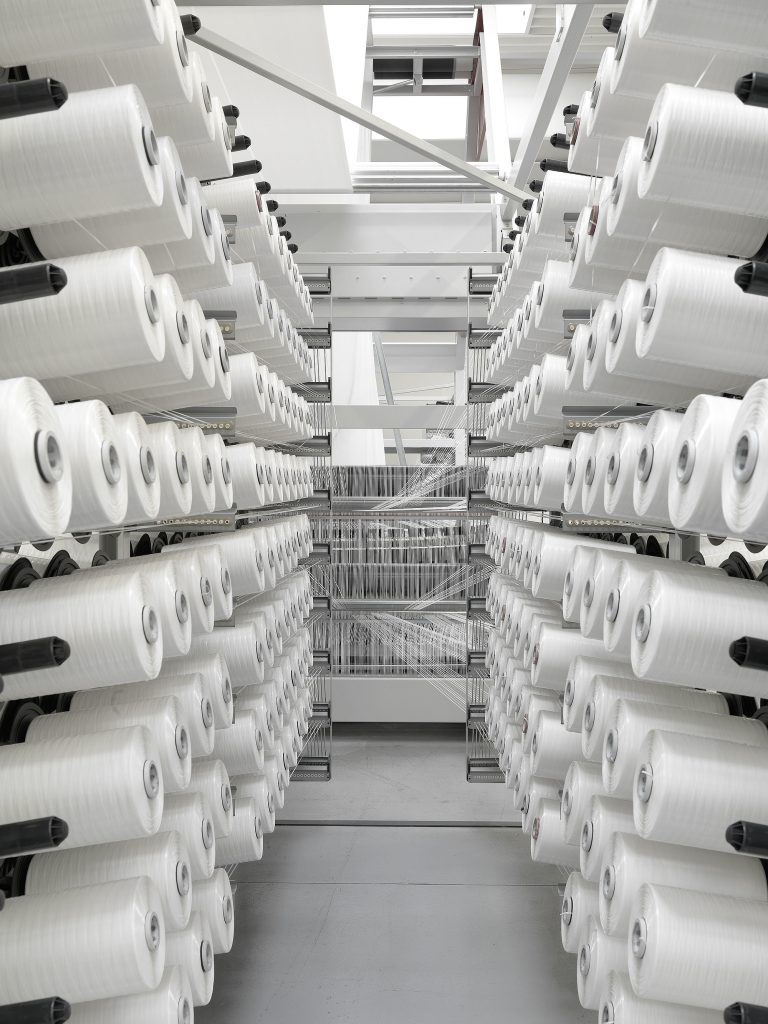
- What is Kraft Paper Woven Bags for High Moisture Protection?
- What are the features of Kraft Paper Woven Bags for High Moisture Protection?
- What is the production process of Kraft Paper Woven Bags for High Moisture Protection?
- What is the application of Kraft Paper Woven Bags for High Moisture Protection?
- Key technical parameters (typical ranges)
- Integrated systems solution for Kraft Paper Woven Bags for High Moisture Protection
“What makes kraft paper woven bags a game-changer for industries battling moisture damage?”
The answer lies in their unique structural adaptability: By integrating breathable, barrier, anti-static, and antimicrobial designs, these bags offer tailored solutions for diverse sectors like agriculture, food, chemicals, and pharmaceuticals. VidePak, leveraging 30+ years of expertise and cutting-edge Starlinger machinery, has positioned itself as a leader in this niche, delivering high-performance packaging that addresses critical moisture-related challenges.
1. Introduction to Kraft Paper Woven Bags
Kraft paper woven bags combine the strength of polypropylene (PP) woven fabric with the natural durability of kraft paper. This hybrid structure provides excellent tensile strength (up to 1,500 N/5 cm) while maintaining flexibility, making them ideal for heavy-duty applications. However, their true innovation lies in specialized modifications for moisture protection—a critical need for industries where humidity, condensation, or liquid exposure can compromise product integrity.
VidePak’s production capabilities, including 100+ circular looms and 30+ lamination machines, enable rapid customization of these bags. For instance, their multi-layered kraft paper liners (up to 120 gsm) are engineered to block external moisture while allowing controlled internal ventilation—a feature critical for grain storage and agricultural exports .
2. Design Innovations for Moisture Protection
2.1 Breathable Designs for Agriculture and Food
Agricultural products like rice, grains, and coffee beans require packaging that balances moisture resistance with airflow. VidePak’s micro-perforated kraft paper liners enable heat and humidity dissipation, reducing spoilage rates by up to 15% compared to non-ventilated alternatives. For example, a 2024 study by the Journal of Food Engineering highlighted that breathable packaging extended the shelf life of coffee beans by 20% under tropical conditions.
Case Study: A Southeast Asian rice exporter reported a 30% reduction in mold growth after switching to VidePak’s ventilated kraft paper bags. The design uses a 3-layer structure:
- Outer PP woven layer (UV-resistant)
- Middle kraft paper (90 gsm, perforated)
- Inner polyethylene (PE) coating (optional for additional moisture blocking)
2.2 Barrier Designs for Chemicals and Pharmaceuticals
For hygroscopic materials like fertilizers or pharmaceuticals, absolute moisture resistance is non-negotiable. VidePak employs lamination technologies to fuse kraft paper with aluminum foil or high-density polyethylene (HDPE), achieving water vapor transmission rates (WVTR) as low as 0.5 g/m²/day. This aligns with ASTM D7709 standards for moisture-sensitive cargo.
Key Data:
| Feature | Specification |
|---|---|
| WVTR (Aluminum foil) | ≤0.5 g/m²/day |
| Tensile Strength | 1,200–1,500 N/5 cm |
| Temperature Resistance | -20°C to 80°C |
These bags are widely used in ammonium nitrate packaging, where moisture absorption can trigger dangerous chemical reactions.
2.3 Anti-Static Designs for Hazardous Environments
In industries handling flammable powders (e.g., coal, metal dust), static electricity poses explosion risks. VidePak integrates carbon-based conductive fibers into the PP weave, reducing surface resistivity to 10⁶–10⁸ Ω/sq—well below the 10¹² Ω/sq threshold for anti-static materials. A 2023 incident report from a German chemical plant confirmed that switching to anti-static kraft paper bags reduced electrostatic incidents by 92%.
2.4 Antimicrobial Designs for Food and Healthcare
Bacterial growth in moist environments is a major concern for perishables and medical supplies. VidePak’s silver-ion coated kraft paper inhibits 99.9% of E. coli and Staphylococcus aureus, as validated by ISO 22196 testing. This innovation is critical for organic food exporters complying with EU Regulation (EC) No 1935/2004 on food-contact materials.
3. VidePak’s Competitive Edge
With annual sales of $80 million and a 526-member team, VidePak combines scale with agility:
- Customization: 12-color rotary printing supports brand-specific designs.
- Sustainability: 100% recyclable PP and FSC-certified kraft paper align with ESG goals.
- Technology: Starlinger’s AD*Star loom systems enable precision weaving at 200 rpm, ensuring seam uniformity critical for moisture sealing.
Production Capacity Snapshot:
| Equipment | Quantity | Output |
|---|---|---|
| Circular Looms | 100+ | 12M bags/month |
| Extrusion Lines | 16 | 800 tons/month |
| Lamination Machines | 30+ | 5M m²/month |
4. Market Applications and Case Studies
4.1 Agriculture: Ventilated Grain Bags
A Nigerian agro-export company reduced post-harvest losses by 25% using VidePak’s breathable bags, which feature 0.3 mm micro-perforations for airflow without compromising pest resistance.
4.2 Pharmaceuticals: Moisture-Blocked Vaccine Packaging
During the 2024 African vaccine rollout, VidePak’s HDPE-laminated bags maintained humidity levels below 10% RH, meeting WHO’s cold chain requirements.
5. FAQs
Q: What is the typical lead time for custom orders?
A: 15–20 days for designs under 10,000 units, leveraging VidePak’s in-house R&D and prototyping labs.
Q: How do anti-static bags compare in cost?
A: A 15–20% premium over standard bags, justified by hazard mitigation savings (e.g., $500k/year in reduced insurance claims for a U.S. coal distributor).
6. Conclusion
Kraft paper woven bags are evolving from generic packaging to engineered moisture-defense systems. VidePak’s fusion of Starlinger technology and sector-specific R&D exemplifies how innovation can transform a traditional industry. As climate change intensifies humidity challenges, these bags will remain pivotal in safeguarding global supply chains.
For further insights, explore how moisture-proof woven bags are revolutionizing logistics, or delve into the production techniques behind laminated designs.