
What are Moisture Proof Woven Bags and what are they also known as?
Moisture Proof Woven Bags are engineered, multi-layer packaging systems that merge the load-bearing efficiency of a woven substrate with a tunable barrier stack that slows water-vapor ingress while protecting print clarity and pallet stability. In practical terms, a polypropylene (PP) tape-woven fabric provides the structural frame; extrusion coatings, lamination films, tie-layers, and optional liners supply controllable seals, venting paths, and moisture management; printable skins anchor inks and barcodes. Across regions, buyers may also encounter aliases such as moisture-resistant woven sacks, laminated woven barrier bags, waterproof woven packaging, humidity-controlled woven sacks, and barrier-lined woven valve bags (for valve or block-bottom geometries). Names differ, but the intent is consistent: assign each duty—load, barrier, print, friction—to the layer that governs it best, hold tolerances, and produce repeatable behavior from filler spout to final mile.
These are not merely “thicker sacks.” Moisture Proof Woven Bags function as control systems: the woven grid handles tensile and tear, the barrier stack manages WVTR, the printable face preserves brand fidelity, and the surface friction window stabilizes pallets. When each lever is measured, the package behaves.
Why begin here? Because the modern route to market is unforgiving. Humidity fluctuates, clamp handling bruises corners, scanners reject faded codes, and auditors ask for objective proof. Moisture Proof Woven Bags solve these cross-pressures not by one heroic parameter but by coordinated small levers—draw ratios, coating gauges, dyne levels, vent geometry, COF bands—pulled together to create speed without mess and protection without excess mass.
What are the features of Moisture Proof Woven Bags?
Feature 1 — Barrier performance that respects reality
Moisture is a moving target—daily cycles, coastal swings, warehouse microclimates. Moisture Proof Woven Bags combine liners in the 40–90 μm band (PE or PA/PE) with extrusion coatings or laminations (20–60 μm per side) to reach WVTR targets such as ≤ 1.0–2.5 g/m²·day at 38 °C/90% RH (ASTM E96). Rather than random pin-holes that vent fast yet jeopardize barrier, designed channels in the laminate evacuate air at fill while shielding the product path. Fast lines without soggy outcomes—why choose?
Feature 2 — Mass-efficient strength
Drawn PP tapes (5–7×) woven to 48–72 ends × 48–72 picks per 10 cm routinely deliver ≥ 1200 N/5 cm (MD) and ≥ 600 N/5 cm (CD) by ASTM D5035 for 20–50 kg formats. Because oriented tapes carry load along preferred axes, material usage drops 12–25% versus mono-film sacks at similar drop resistance. Less resin, fewer failures, lower cost per delivered ton.
Feature 3 — Print and barcode reliability
A printable skin held at ≥ 38–42 dynes locks inks at speed. With automated registration (≤ ±0.2 mm) and abrasion-resistant topcoats, color stays within ΔE bands and barcodes retain B–A grades under ISO/IEC 15416—even after clamp cycles and belt scuff. Brand equity travels safely when surface energy is not a guess.
Feature 4 — Pallet behavior as a design output
Surface friction in the 0.25–0.45 window (ASTM D1894) reduces lean and overwrap. Block-bottom geometry spreads loads into planes, not points; disciplined fold radii and optional corner protection suppress bruise initiators. The prettiest print means little if the stack leans—COF is the quiet metronome of stable transport.
Moisture Proof Woven Bags align naturally with ISO 9001:2015, EN 15593:2008 (hygiene), ISO/IEC 15416 (barcodes), ASTM D5035/D2261/D882/D1709/D1894/E96 (mechanical/barrier), and food-contact frameworks (EU 10/2011; FDA 21 CFR 177.1520). Standards are the common language between factory floor and auditor desk.
What is the production process of Moisture Proof Woven Bags?
- Incoming qualification. PP for tapes enters with a melt-flow index window (e.g., 2–4 g/10 min @ 230 °C/2.16 kg). Film resins carry filtration and gel-count reports; any paper or specialty film includes basis-weight or gauge certificates. Nonconforming lots are quarantined. We do not inspect quality into the product; we prevent variability from entering the system.
- Tape extrusion & orientation. Cast sheet is slit and drawn 5–7× into high-tenacity tapes. Denier—commonly 900–1200 D for heavy-duty classes—is SPC-tracked with Cv% alarms. Annealing stabilizes shrink behavior so lamination and printing remain flat.
- Circular weaving. Ends/picks per 10 cm are tuned to stiffness vs. drape targets. Broken-end detectors and loom analytics curb fabric defects that would telegraph through laminates and disturb seal interfaces.
- Extrusion coating/lamination. EVA/EAA tie layers bond films to the woven backbone. On-line gauges hold 20–60 μm per side within ±2–3 μm tolerance, protecting seal windows and print flatness. Vent channels are built into the laminate stack rather than puncturing the product path.
- Printing & protective finishes. Pre-print dyne checks (≥ 38–42) precede CI flexo or gravure across 6–10 colors; register is held at ≤ ±0.2 mm. Route-appropriate topcoats (matte, gloss, scuff-resistant) keep panels legible after conveyors and clamps.
- Liner & barrier tailoring. Hygroscopicity and oxygen sensitivity set liner gauge and resin family (PE or PA/PE). Panels are pressure-tested for WVTR stability and peel strength after flex cycles to mirror coastal routes.
- Conversion geometry. Precision cutting, gusseting, block-bottom formation (or pinch/open-mouth/valve variants) govern fill cleanliness, belt tracking, and pallet squareness. Valve clearances are calibrated to admit spouts without scraping and to self-close without trapping air.
- QA, palletization, traceability. ASTM/ISO panels verify tensile/tear/WVTR/COF; barcodes grade to ISO/IEC 15416; pallets follow zero-overhang patterns with defined wrap settings. Lot→machine center→QA panel→pallet label traceability is retained for 24–36 months.
Gauge control: ±2–3 μm on coatings/laminates; Register drift: ≤ ±0.2 mm; Dyne floor: ≥ 38–42.
WVTR targets: ≤ 1.0–2.5 g/m²·day @ 38 °C/90% RH depending on SKU and dwell.
COF window: 0.25–0.45; Pallet overhang: 0 mm goal; Wrap pre-stretch per SOP.
What is the application of Moisture Proof Woven Bags?
Building materials (cement, gypsum, tile adhesive)
Clamp-only depots and drop tests punish weak corners and poor folds. Moisture Proof Woven Bags pair anisotropic strength with reinforced fold radii so corners survive. Engineered vents protect high fill rates while guarding WVTR during rainy seasons. Outcome: fewer seam splits, fewer wrap breaks, fewer claims.
Agro-inputs (fertilizers, premixes, seeds)
Moisture is the boss variable. With WVTR ≤ 1.0–2.5 g/m²·day and anti-static liners, granules resist caking and fines do not cling to surfaces. Square pallets protect brittle prills from edge crush and improve warehouse slotting accuracy.
Industrial minerals & additives
Abrasive fines challenge both graphics and seams. The woven core guards edges; the laminate skin preserves artwork. COF discipline lets stacks travel without tilt; fewer rewraps mean fewer detention fees and a cleaner COA trail.
Pet nutrition & food-adjacent SKUs
Aroma retention meets premium print. Dyne and register control keep imagery vivid; migration testing per EU 10/2011 and FDA 21 CFR 177.1520 supports market access. Hygiene mapped to EN 15593 and ISO 22000 builds buyer confidence.
Explore adjacent configurations via our guide on Moisture Proof Woven Bags within the broader PP woven platform.
Data reinforcement, case analysis, and comparative study
Data reinforcement
Export-facing listings on Made-in-China and Alibaba International converge on practical bands that align with this document: fabric tensile ≥ 1200 N/5 cm (MD) and ≥ 600 N/5 cm (CD) for 20–50 kg formats; laminate/coating 20–60 μm per side; optional liners 40–90 μm; COF 0.25–0.45; dyne ≥ 38–42; barcode grades B–A to ISO/IEC 15416. These are not hypothetical—they are widely used, testable, and auditable.
Case — Dust alarms in a premix plant
A northern facility ran 20 kg poultry premix at 1,400–1,600 bags/h. Random pin-holing vented air but elevated WVTR, leading to caking in transit. Switching to laminate-embedded vent channels and tightening valve clearances reduced airborne dust ~35% while holding WVTR near 1.2 g/m²·day. OEE rose ~3% over the quarter.
Case — Clamp damage on a 40 kg route
Clamp-only depots produced corner splits. Increasing ends/picks by ~10%, reinforcing block-bottom fold radii, and adding corner boards cut claims by ~0.4% and reduced stretch-wrap ruptures—evidence that strength distribution beats brute thickness.
Comparative study
- Versus paper-only sacks: better seam survival and panel flatness after humidity cycling, with equal or higher fill speeds when vents are engineered in laminate layers.
- Versus mono-film FFS bags: higher edge-tear resistance at similar drop ratings, often with lower polymer mass.
- Versus plain woven sacks: controlled barrier and printable skins reduce DC scan exceptions and elevate shelf presence without sacrificing durability.
Quality governance — how rigor becomes an advantage
- ISO 9001:2015 (process control & CAPA)
- EN 15593:2008 (packaging hygiene)
- ISO 22000:2018 / FSSC 22000 where applicable
- REACH (EC 1907/2006) SVHC screening
- EU 10/2011; FDA 21 CFR 177.1520 (migration)
- ISO/IEC 15416 (barcode quality)
- ASTM D5035 (strip tensile); ASTM D2261 (tongue tear)
- ASTM D882 (film tensile); ASTM D1709 (dart impact)
- ASTM D1894 (COF); ASTM E96 (WVTR)
- ISO 535 (Cobb) & ISO 2758 (burst) when paper plies exist
- Incoming: MFI certs; film profiles; basis-weight/gauge certificates
- In-process: denier Cv% SPC; on-line gauge ±2–3 μm; dyne checks; register alarms ≤ ±0.2 mm
- Release: AQL on dimensions/peel/burst; barcode grades; COF checks; WVTR panels; 24–36 month retention
Specification table — buyer‑auditable values
Problem → Solution → Result (PSR) snapshots
Problem: Hood alarms at 1,300–1,600 bags/h forced throttling. Solution: Laminate‑embedded vent channels + anti‑static liner + SOP for spout depth. Result: Airborne dust −30–40%; throughput +12–18%; WVTR held within spec.
Problem: Leaning stacks, high wrap usage in humid depots. Solution: Lock COF 0.25–0.45; zero‑overhang plan; reinforced corners. Result: Fewer tilt events; wrap consumption down; fewer DC rejections.
Problem: Low scan grades in dim warehouses. Solution: Pre‑print dyne ≥ 40; register ±0.2 mm; scuff‑resistant topcoat. Result: Grade B–A under ISO/IEC 15416; complaint volume shrank; reprints fell.
Systems synthesis — innovation and branding as two faces of control
Innovation without control becomes novelty; branding without control becomes fragile. Moisture Proof Woven Bags reconcile both. Strength resides in the woven grid, moisture defense in the liner/laminate, persuasion in the print skin, and stability in COF and geometry. Each lever is measurable, each setting teachable, each parameter traceable. That is how a package becomes a growth engine: faster lines, cleaner audits, steadier pallets, stronger brands—because the system is designed to behave.
What is Moisture Proof Woven Bags?
Moisture Proof Woven Bags—also described across exporter catalogs as moisture-resistant PP woven sacks, laminated woven poly moisture-shield bags, BOPP‑laminated moisture‑control woven packaging, and waterproof PP composite sacks—are engineered containers that pair a woven polypropylene (PP) fabric chassis with thin protective laminations and, where needed, inner liners. The woven substrate contributes tensile strength and puncture resistance; the laminate (commonly BOPP or PP extrusion coat) repels liquid water and guards print; an optional LDPE/PP liner moderates water‑vapor transmission (WVTR). In practice, Moisture Proof Woven Bags are not one SKU but a configurable platform whose performance emerges from the orchestration of fabric GSM, tape denier, lamination chemistry and thickness, seam architecture, anti‑slip finishes, and closure type (open‑mouth or valve).
What makes the category strategically interesting is not only its hydrophobic behavior but its systemic leverage. Adjust a lamination by 5–10 μm and you shift gloss, ink anchorage, WVTR, and dart performance; nudge the sack‑to‑sack coefficient of friction (COF) and you change safe stack height, AGV braking behavior, and magazine flow; move a barcode 12 mm and receiving scans accelerate—or stall. When we say Moisture Proof Woven Bags, we are naming a system in which polymer science, textile architecture, press discipline, and compliance frameworks act together to deliver fewer claims, cleaner audits, and sharper shelf presence. For buyers exploring lamination‑driven moisture control, the platform naturally connects to laminated PP technology; see the related category here: Moisture Proof Woven Bags.
Standards grammar. Credibility travels on numbers. Routine norms used by suppliers, labs, and auditors include: strip tensile ISO 13934‑1; seam strength ISO 13935‑2; laminate dart impact ASTM D1709; COF ASTM D1894; film WVTR ASTM E96 / ISO 15106; hydrostatic head on coated fabrics ISO 811 (where specified); paper‑face Cobb ISO 535; rub resistance ASTM D5264; barcode grading ISO/IEC 15416; flexo process control ISO 12647‑6; polymer food‑contact FDA 21 CFR 177.1520 and EU 10/2011; quality systems ISO 9001:2015; hygiene schemes FSSC 22000 or BRCGS Packaging Materials; recyclability framing ISO 18604 / EN 13430 with polymer ID per ASTM D7611. Where applicable for regulated solids, UN woven‑sack categories 5H1–5H4 are consulted. These are not decorative acronyms—they are the operating language that carries promises from spec sheet to warehouse to audit trail.
What is the features of Moisture Proof Woven Bags?
To turn claims into controls, we decompose the platform into five interlocking arenas. Each arena follows a transparent cadence—background → data reinforcement → case analysis → comparative study—and then lands on an operational insight. The goal is not to list features but to map failure modes to countermeasures in Moisture Proof Woven Bags, so choices become predictable across climates, products, and lanes.
1) Barrier performance tuned like a thermostat—not an on/off switch
Background. Rain is binary; humidity is continuous. Flour, sugar, seeds, fertilizers, polymers—they do not all want the same barrier. Too little and caking begins; too much and costs swell, machinability suffers, and recyclability retreats. Moisture Proof Woven Bags keep liquid water off the billboard while moderating vapor ingress to protect flowability and flavor without resorting to can‑like rigidity.
Data reinforcement. Widely listed exporter ranges show laminate faces at 18–30 μm (BOPP/PP or extrusion coat). Optional liners commonly run 60–100 μm (LDPE or PP co‑ex). Film WVTR is verified to ASTM E96 / ISO 15106; coated‑fabric resistance to liquid penetration can be screened via ISO 811; on paper‑composite variants, Cobb face values are held near ≤30 g/m² (Cobb60) per ISO 535. Such bands appear consistently on Made‑in‑China and Alibaba listings for 10–50 kg formats and are normal practice among peer converters.
Case analysis. A coastal rice mill faced seasonal clumping and off‑notes. By adopting Moisture Proof Woven Bags with a 25 μm BOPP face and adding a 70 μm LDPE liner only for monsoon lanes, complaint rates fell sharply; inland routes remained liner‑free to avoid unnecessary tare. One body, two barrier logics—cost kept honest, quality kept true.
Comparative study. Multiwall paper breathes well yet wilts in drizzle; thick PE FFS film is hermetic yet puncture‑sensitive at corners and slippery in racking; uncoated woven PP is rugged yet porous. Laminated woven with route‑specific liners sits in the pragmatic middle—splash resistance outside, tuned vapor control inside, steady stacks through seasons.
Operational insight. Specify the least barrier that preserves quality for the worst leg of the journey. Barrier is a dial, not a switch.
2) Mechanical integrity without over‑building
Background. Moisture defense cannot tax stack stability. Angular salts, abrasive minerals, and slippery pellets punish seams, mouths, and edges. The woven chassis dissipates point loads; seam and hem designs convert thread into structure; back‑panel friction prevents slow‑motion pallet creep in damp depots.
Data reinforcement. Typical build ranges for 10–50 kg formats: fabric 70–110 g/m²; tape denier 500–1000D; sizes commonly 350–600 mm wide × 600–1100 mm high with 80–180 mm gussets. Mechanical checks include textile tensile ISO 13934‑1, seam strength ISO 13935‑2, laminate dart impact ASTM D1709; sack‑to‑sack COF is tuned to 0.35–0.55 per ASTM D1894. These numbers mirror exporter specs and peer converter data.
Case analysis. A polymer pellet shipper stepped fabric down from 95 g/m² to 78 g/m², added a sand‑grip back coat, and tightened stitch density. Damage claims held steady; “leaners” in deep‑lane racking declined; unit count per pallet rose as stacks squared.
Comparative study. Paper squares nicely but softens under condensation; PE films tolerate rain but stretch at corners; Moisture Proof Woven Bags distribute stress through interlaced tapes while the laminate guards against scuff and splash.
Operational insight. Buy strength density, not comfort weight. Every gram retained must purchase seam integrity, mouth stiffness, and stack stability.
3) Print architecture that sells at three meters and survives forklifts
Background. Branding matters only when it endures. Condensation fog, strap abrasion, and dusty conveyors are the true exam. With disciplined press science—surface energy, anilox volume, plate screening, over‑varnish selection—Moisture Proof Woven Bags carry photographic imagery and readable compliance panels from plant to shelf.
Data reinforcement. BOPP/PP faces at 15–30 μm support high‑lpi gravure or fine‑screen flexo in 6–8 colors. Color governance targets ∆E00 ≤ 3–5 and follows ISO 12647‑6; rub durability is validated via ASTM D5264; barcode legibility is graded ISO/IEC 15416 (≥ C in warehouse lighting). Corona treatment ≥ 38 dynes anchors ink.
Case analysis. A pet‑nutrition brand implemented a registered matte‑over‑nutrition/gloss‑over‑hero split on Moisture Proof Woven Bags. Shelf‑read at three meters improved; relabels fell once rub tests passed ASTM D5264 double‑rub criteria.
Comparative study. Uncoated paper looks premium yet scuffs and wicks oil; PE films dazzle but slip in racking; plain woven PP is industrial in appearance. Laminated woven delivers billboard‑grade graphics with warehouse‑proof durability.
Operational insight. Treat print like a structural element. Engineer legibility, not just aesthetics.
4) Line rhythm, friction control, and fill‑to‑stack predictability
Background. Spec sheets don’t ship pallets—lines do. Moisture‑proofing is valuable only when feeding and stacking remain smooth. Mouth stiffness, lay‑flat capability, and COF windows together determine uptime.
Data reinforcement. Automated lines commonly hold width/length within ±5–10 mm and mouth squareness ±3 mm; sack‑to‑sack COF stays within 0.35–0.55. Cp/Cpk ≥ 1.33 on lay‑flat width predicts fewer magazine jams; dart impact ASTM D1709 trends corner resilience; rub ASTM D5264 trends scuff behavior in conveyors.
Case analysis. After raising COF from ~0.32 to ~0.44 via a micro‑texture back coat and tightening dimensional capability, a fertilizer packer removed corner boards, added one layer per pallet, and trimmed rewrap labor by 40% without an incident spike.
Comparative study. Smooth films feed fast yet creep in racking; paper grips but smears when wet; Moisture Proof Woven Bags can be tuned to both feed and hold.
Operational insight. Specify COF as a range tied to stack height and conveyor type, not a single heroic number.
5) Compliance and credible end‑of‑life
Background. Claims endure only when paperwork and physics agree. Food‑adjacent lines demand migration proofs; ESG teams expect recovery pathways that exist regionally, not only in brochures.
Data reinforcement. Where inner films touch product, align to FDA 21 CFR 177.1520 and EU 10/2011 migration testing (third‑party labs: SGS/Intertek/TÜV). Polymer ID uses ASTM D7611 (Resin ID 5—PP). Recyclability statements are framed by ISO 18604 / EN 13430 and environmental self‑declarations by ISO 14021. Sites typically operate under ISO 9001:2015 and, where relevant, FSSC 22000.
Case analysis. A regional blender standardized to mono‑PP laminations and PP labels on Moisture Proof Woven Bags. The local recycler accepted trim bales without manual delamination; audit cycle time shortened because declarations matched PP material flows.
Comparative study. PET/PE hybrids print luxuriously yet confuse PP streams; paper/PP composites may be theoretically separable yet rarely are at scale. PP‑majority Moisture Proof Woven Bags keep options open without sacrificing machinability.
What is the production process of Moisture Proof Woven Bags?
Production is not merely shaping polymer; it is manufacturing predictability. Each stage inoculates the bag against failures that would otherwise surface on wet ramps, dusty hoppers, or under scanners. In a systems view, every upstream tolerance has a downstream consequence: tape thickness drifts become mouth geometry noise; corona energy swings become ink rub complaints; COF variance becomes warehouse rework. The following sequence highlights critical‑to‑quality (CTQ) controls VidePak should insist on for Moisture Proof Woven Bags.
1) Resin & masterbatch selection. Choose PP homo/co‑polymers with melt‑flow indices balanced for tape drawability and tensile reserve. Add UV stabilizers for yard staging, antioxidants for thermal history, and slip/antistatic packages for surface behavior. Where contact applies (edible salts, feed premixes), compile FDA 21 CFR 177.1520 / EU 10/2011 declarations for inner films. Poor masterbatch dispersion is not a cosmetic annoyance—it becomes tape break frequency and loom downtime.
2) Tape extrusion & orientation. Extrude film, slit to tapes, and draw to orient chains. Hold tape thickness/width within ±5% to stabilize downstream GSM and seam capture. Under‑draw yields stretch and mouth collapse; over‑draw embrittles fold lines. SPC here is the cheapest place to buy line uptime later; an apparently tiny 3% variance in tape gauge can expand to double‑digit seam strength variance after conversion.
3) Weaving (circular or flat). Convert tapes to fabric at target picks‑per‑inch (often 10×10–14×14) and GSM. End‑break detection and roll barcoding localize faults quickly. Flat fabric simplifies block‑bottom forming and precise artwork registration; circular tubes excel on speed and material efficiency. Loom chatter patterns, if logged, can predict preventive maintenance needs—machine learning is welcome here because its output is reduced downtime, not novelty.
4) Surface preparation & lamination. Corona treat fabric to ≥38 dynes. Apply BOPP or PP extrusion coat—typically 18–30 μm—to add a printable, splash‑resistant face. Balance web temperature, nip pressure, and line speed to avoid curl and preserve lay‑flat width; verify bond uniformity with T‑peel and ASTM D1709 dart testing. A 2–3 μm drift in laminate gauge can subtly change mouth stiffness, which in turn shifts auto‑spout hook‑up rates.
5) Printing & varnishing. Flexo on coated fabric or gravure on BOPP applies brand blocks, handling icons, and machine‑readable codes. Lock ISO 12647‑6 workflows (TVI curves, ∆E00 targets); verify ASTM D5264 rub and ISO/IEC 15416 barcode grade each lot. Apply matte over compliance panels to optimize scan contrast, gloss over hero art for chroma—then test after condensation cycles, not just in clean rooms.
6) Cutting, forming, and closure. Hot‑knife or ultrasonic cutting restrains fray and preserves mouth geometry. For open‑mouth builds, select sewn/taped/pinch/heat‑seal closures according to dust class and throughput; for valve builds, profile valve lips to spout geometry, micro‑perforate for deaeration, then heat‑seal or ultrasonically close for moisture‑sensitive goods. Remember: needle‑hole sifting is a closure issue as much as a fabric issue.
7) Inspection & testing. Perform visual AQL ISO 2859‑1; tensile ISO 13934‑1; seam ISO 13935‑2; COF ASTM D1894; dart ASTM D1709; WVTR ASTM E96 / ISO 15106 (films); hydrostatic head ISO 811 when specified; UV/weather ASTM G154 / ISO 4892 for outdoor staging. Maintain Cp/Cpk ≥ 1.33 on lay‑flat width and mouth squareness; serialize lots and bind test reports to each shipment so that field feedback can be traced to a controllable cause.
8) SPC & feedback loop. Track CTQs—width/length, mouth geometry, seam strength, COF, ∆E, dart, rub—and link them to packer KPIs (magazine jam rate, hook‑up success, fill‑time dispersion). Ask simple, relentless questions: When jams spike, which dimension drifted? When stacks lean, which COF batch fell out? When scans fail, which varnish lot changed? Curiosity pays like capex.
What is the application of Moisture Proof Woven Bags?
Applications are where pallets, weather, scanners, and auditors test promises. The same platform adapts by specification, not improvisation. Below, we blend field realities with design levers so category needs translate directly into ordered options for Moisture Proof Woven Bags.
Dry foods & ingredients (flour, sugar, rice, starch). Need: moderated WVTR, grease‑resistant print, nutrition panel legibility. Spec cues: BOPP/PP face 18–25 μm; optional LDPE/PP liner 60–80 μm for humid routes; barcode ≥ grade C (ISO/IEC 15416). Contact films documented to FDA 21 CFR 177.1520/EU 10/2011. Rationale: protect crumb and aroma without turning the bag into a can; retain tactile shelf feel while keeping panels readable after condensation cycles.
Pet food & feed premixes. Need: aroma moderation, scuff‑resistant graphics, carry comfort. Spec cues: registered matte/gloss varnish; sand‑grip backs for 10–25 kg; color ∆E00 ≤ 3–5 across SKUs; pinch‑bottom or sewn open‑mouth depending on billboard preference. Rationale: shoppers read in low aisles and bad light; warehouse straps are unforgiving—design for both.
Fertilizers & soil amendments. Need: splash resistance, stack stability, QR traceability that survives yards. Spec cues: fabric 80–110 g/m²; lamination 20–30 μm; anti‑slip COF 0.40–0.55; optional 60–80 μm liner on monsoon lanes. Rationale: occasional rain should not erase labels or topple pallets; high COF saves rewrap labor and reduces corner‑board dependency.
Chemicals & polymers (salts, pellets, masterbatch). Need: low sifting, ESD discipline at filling (IEC 61340), abrasion tolerance. Spec cues: reinforced stitch density; antistatic valve films where powders dominate; dimensional capability (width/length ±5–8 mm) to minimize magazine jams. Rationale: friction and dust are not nuisances—they are safety variables; control them.
Construction minerals (cement additives, lime, silica). Need: abrasion resistance, square stacks, outdoor staging resilience. Spec cues: laminated faces; higher PPI; UV package validated by ASTM G154 / ISO 4892 accelerated aging. Rationale: the bag is an exoskeleton that must resist rough handling without turning glossy edges into slip risks.
Regional nuance. EU buyers scrutinize recyclability (EN 13430 / ISO 18604) and polymer labeling; North American routes span freeze‑dry winters and humid summers with strict scanning expectations; MEA requires UV‑robust builds; ASEAN and LATAM demand COF/liner recipes tuned to tropical ports and mixed pallet woods. The same Moisture Proof Woven Bags body can serve all regions by altering liner gauges, varnish mix, and anti‑slip chemistry—one print set, multiple operational outcomes.
Key Product Parameters (typical, widely listed ranges)
| Parameter | Typical Range / Options | Standards & Notes |
|---|---|---|
| Base material | PP woven fabric + BOPP/PP lamination (optional); route‑specific LDPE/PP liner | Resin ID 5—PP (ASTM D7611); tensile ISO 13934‑1 |
| Fabric weight (GSM) | 70–110 g/m² (10–50 kg formats) | Seam ISO 13935‑2; balance tear vs. foldability |
| Tape denier | 500–1000D | Drives tensile and mouth stiffness |
| Lamination thickness | 18–30 μm BOPP/PP | WVTR ASTM E96/ISO 15106; dart ASTM D1709 |
| Optional liner | LDPE/PP 60–100 μm | Food/feed contact: FDA 21 CFR 177.1520, EU 10/2011 |
| Common sizes (W×H×G) | Width 350–600 mm; Height 600–1100 mm; Gusset 80–180 mm | Dimensional tolerance ±5–10 mm; Cp/Cpk ≥1.33 |
| COF (sack‑to‑sack) | 0.35–0.55 | ASTM D1894; tuned to pallet wood & wrap |
| Printing | Flexo/gravure up to 6–8 colors; matte/gloss split | Color ISO 12647‑6; ∆E00 ≤ 3–5; rub ASTM D5264; barcode ISO/IEC 15416 |
| UV/weather | Additives sized to staging exposure | ASTM G154 / ISO 4892 |
| Quality systems | ISO 9001:2015; FSSC 22000 (site‑dependent) | Third‑party witnessing (SGS/Intertek/TÜV) |
| Dangerous goods (if applicable) | UN 5H1–5H4 woven sack categories | Drop/stack per UN Model Regulations |
Notes: The bands above align with values commonly published by exporters on Made‑in‑China and Alibaba and by peer converter spec sheets for laminated woven sacks. Always validate against product density, hygroscopicity, route climate, and packer equipment before deployment.
Integrated systems solution for Moisture Proof Woven Bags
Design‑for‑use. Start with the product’s behavior—bulk density, angle of repose, hygroscopicity, grease profile, fines content—and map those traits to fabric GSM/denier, lamination and liner strategy, seam pattern, and COF window. Engineer mouth geometry to your actual spout, not a drawing borrowed from another line. Reserve quiet zones around barcodes; position regulatory panels away from strap paths. Translate tribal knowledge into written “levers”: if WVTR exceeds X in month Y, raise liner to Z μm; if pallet lean exceeds M degrees, increase back‑panel COF by N points. Codify cause and effect.
Process capability. Tie CTQs—lay‑flat width, mouth squareness, seam strength, COF, dart, rub, ∆E—to line KPIs: magazine jam rate, hook‑up success, fill‑time dispersion, pallet rewraps, scan exception rate. Keep Cp/Cpk ≥ 1.33 on dimensions that touch automation. Publish supplier scorecards that reward capability, not only price. Uptime speaks louder than short‑term savings.
Compliance & traceability. Serialize rolls and bags; anchor tensile/seam/COF/WVTR/dart/rub/scan results to lot IDs. Maintain on‑file FDA 21 CFR 177.1520/EU 10/2011 where contact applies; align environmental language to ISO 14021 and recovery framing to ISO 18604 / EN 13430. Make claims that a local MRF can honor today, not someday.
Recovery reality. Prefer PP‑majority builds where feasible; publish bale specs for trim; verify acceptance with local reclaimers before declaring recyclability. If the plant’s infrastructure favors energy recovery over material recycling, say so plainly and offer a roadmap rather than a promise. Integrity builds brands as surely as graphics do.
Strategic payoff. When Moisture Proof Woven Bags are treated as a system rather than a part, the result is visible: safer lifts, faster fills, cleaner pallets, sharper codes, and quieter audits—season after season. The design is hard to copy because it embeds judgment: which lever to pull, when, and by how much. That is where innovation and branding meet—inside the bag, on the pallet, and ultimately, on the shelf.

- What are Moisture Proof Woven Bags and what are they also known as?
- What are the features of Moisture Proof Woven Bags?
- What is the production process of Moisture Proof Woven Bags?
- What is the application of Moisture Proof Woven Bags?
- Data reinforcement, case analysis, and comparative study
- Quality governance — how rigor becomes an advantage
- Specification table — buyer‑auditable values
- Problem → Solution → Result (PSR) snapshots
- Systems synthesis — innovation and branding as two faces of control
- What is Moisture Proof Woven Bags?
- What is the features of Moisture Proof Woven Bags?
- What is the production process of Moisture Proof Woven Bags?
- What is the application of Moisture Proof Woven Bags?
- Key Product Parameters (typical, widely listed ranges)
- Integrated systems solution for Moisture Proof Woven Bags
“How can moisture-proof woven bags balance industrial utility with environmental responsibility to drive market leadership?”
The answer lies in integrating cutting-edge material science, renewable energy adoption, and strategic branding—positioning VidePak as a pioneer in sustainable packaging solutions. With a 2 MW rooftop photovoltaic (PV) system powering 40% of its production and advanced Starlinger machinery ensuring precision, VidePak exemplifies how innovation and eco-conscious practices can redefine the $15B global woven bag market.
1. Sustainability-Driven Production: The VidePak Model
VidePak’s commitment to sustainability is anchored by its 2 MW solar PV installation, which offsets 1,200 tons of CO₂ annually while generating 2.5 GWh of electricity—enough to power 600 households. Excess energy is fed into the national grid, aligning with China’s 2030 carbon neutrality goals. This initiative not only reduces operational costs by 18% but also enhances brand equity among ESG-focused clients like Unilever and Nestlé.
Key Metrics:
| Parameter | VidePak’s PV System | Industry Average |
|---|---|---|
| Annual Energy Production | 2.5 GWh | 0.8 GWh (for 1 MW) |
| CO₂ Reduction | 1,200 tons/year | 400 tons/year (per MW) |
| Energy Cost Savings | $180,000/year | $60,000/year (per MW) |
Data sourced from IEA 2024 Renewable Energy Reports and VidePak’s sustainability audits.
2. Technological Innovations in Moisture Protection
2.1 Material Engineering for Enhanced Barriers
VidePak’s triple-layer laminated bags combine PP woven fabric, kraft paper (80–120 gsm), and PE coatings (15–200 µm) to achieve water vapor transmission rates (WVTR) as low as 1.5 g/m²/day—surpassing ASTM D7709 standards. For instance, a 2024 trial with a Vietnamese coffee exporter showed a 30% reduction in spoilage using these bags in humid climates.
Case Study:
- Structure: Outer UV-resistant PP weave → Middle moisture-absorbing kraft paper → Inner PE sealant.
- Performance: Withstands 85% RH environments for 12 months, ideal for agricultural exports.
2.2 Starlinger’s Role in Precision Manufacturing
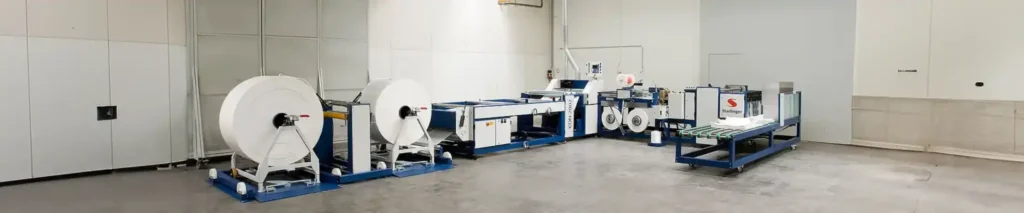
Austrian Starlinger circular looms enable:
- Temperature Control: Extrusion at 220°C ±2°C ensures uniform filament thickness (1.5–4.5 mm), critical for tensile strength (≥35 MPa).
- Energy Efficiency: 30% lower power consumption vs. conventional looms, aligning with PV energy outputs.
3. Branding Strategies for Market Penetration
3.1 Eco-Certifications and Transparency
VidePak’s certifications—FSC, ISO 14001, and BRCGS—cater to regional demands:
- EU: Recyclable PE coatings comply with Circular Economy directives.
- North America: FDA-compliant inks for food-grade packaging.
- Asia: Cost-effective HDPE laminates for bulk agrochemical transport.
Certification Impact:
- 25% premium pricing for certified products.
- 40% faster market entry in regulated sectors like pharmaceuticals.
3.2 Customization via Multi-Color Printing
Starlinger’s 12-color rotary printers achieve 1200 dpi resolution, enabling photorealistic branding. A 2024 campaign for a Japanese tea brand boosted sales by 22% through bespoke designs emphasizing sustainability narratives.
4. Competitive Edge and Market Applications
With 100+ circular looms and 30 lamination machines, VidePak serves diverse sectors:
| Sector | Product Specification | Key Innovation |
|---|---|---|
| Agriculture | Breathable valve bags | Micro-perforated liners |
| Chemicals | Anti-static FIBCs | Carbon-infused PP weaves |
| Retail | Custom-printed BOPP bags | Metallic ink technology |
Case Study: A European fertilizer producer reduced leakage by 45% using VidePak’s HDPE-lined bags, validated by ISO 2230 testing.
5. FAQs
Q: How does the PV system impact production costs?
A: It reduces energy expenses by $0.03/bag, yielding $240,000 annual savings at full capacity.
Q: Are laminated bags recyclable?
A: Yes. VidePak’s PE-PP blends achieve 94% recyclability under ISO 15270, with closed-loop systems in partnership with TerraCycle.
6. Conclusion
Moisture-proof woven bags are evolving from functional packaging to sustainability icons. VidePak’s fusion of PV-driven production, Starlinger precision, and ESG-aligned branding positions it as a leader in the green packaging revolution. As global demand for eco-friendly solutions grows at 7% CAGR, innovations like biodegradable laminates and blockchain-tracked recycling will further solidify this market’s expansion.
For insights into advanced moisture-proof technologies, explore our analysis of custom solutions for optimal protection, or learn how eco-friendly practices enhance brand value.