
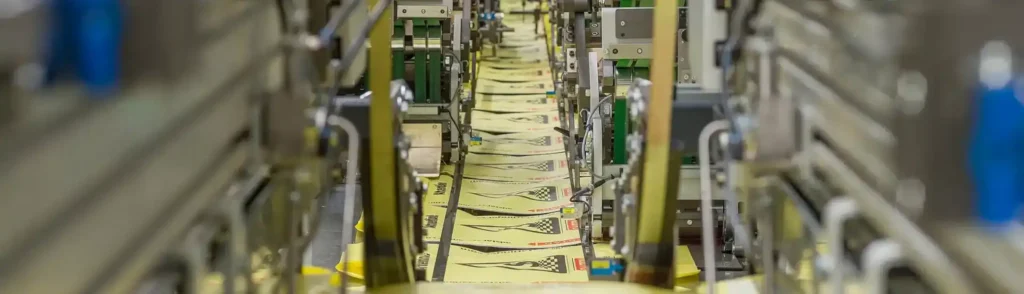
What Are Square Bottom PP Bags and Why Do They Matter Across Logistics?
In contemporary packaging, the term Square Bottom PP Bags denotes a family of woven‑polypropylene sacks engineered with a rigid, rectangular base. This block‑bottom geometry transforms a flexible textile into a self‑standing container: it sits square, stacks flat, resists bulging, and presents billboard‑like panels for graphics and compliance information. Buyers and engineers may encounter related aliases—Block‑Bottom Woven PP Sacks, Pinch‑Bottom PP Woven Bags, Valve Block‑Bottom PP Bags (with internal sleeves), and BOPP‑Laminated Square‑Bottom Sacks when a printable biaxially oriented polypropylene (BOPP) film is laminated to the fabric. Different names, one proposition: optimized cube efficiency and controlled shape under compressive loads without surrendering to humidity, abrasion, or rough handling.
Why are Square Bottom PP Bags gaining share in commodity and premium channels alike? Because modern logistics raise the bar while consumers lower their patience. Pallets climb higher, routes travel farther, climates swing wider, and planograms demand visual order. A package must protect the product, communicate the brand, run on machines, and explain its material choices—all at once, all the time. Square Bottom PP Bags sit at this four‑way junction: a structural textile for strength, a laminated print skin for clarity, a geometry for stability, and a documentation trail for audits.
- Throughout this article, Square Bottom PP Bags includes woven PP bases printed directly or laminated with BOPP for graphics and moisture moderation.
- For a catalog perspective aligned to the formats discussed here, see Square Bottom PP Bags — an external reference highlighting valve/block‑bottom configurations used in cement, fertilizer, and food staples.
- We adopt a systems lens: materials, graphics, compliance, and operations are interdependent subsystems; design one in isolation and the others will protest later.
Framed this way, the operative question evolves from “What are they?” to “How do we orchestrate polymer physics, conversion mechanics, audit evidence, and route‑to‑market constraints so that Square Bottom PP Bags perform as a unified system?” That is the purpose of the analysis that follows.
What Are the Features of Square Bottom PP Bags?
Feature lists persuade only when bound to evidence. Each capability below is explored through three lenses—data reinforcement, case anatomy, and comparative reasoning—so buyers can see how claims translate into operations.
1) Stackability, stability, and load integrity. The square base maximizes contact area and distributes compressive forces uniformly across pallet layers. In practice, buyers of Square Bottom PP Bags for 25–50 kg fills specify woven PP fabrics typically in the 70–110 g/m² (GSM) band at 10×10 to 14×14 picks per inch. Bottom closures utilize pinch‑fold hot‑air sealing or double‑chain stitching with lock seam; crepe tape is added where dust control is paramount. Distribution validation under ISTA 1A/2A sequences—drop, compression, vibration—turns theory into accept/reject criteria.
- Observed working sets from supplier listings (Made‑in‑China/Alibaba peers): 20–50 kg fills, 70–100 GSM fabrics, and up to 8 BOPP print colors on laminated variants—evidence of shipped, not hypothetical, specs.
- Closures: pinch‑bottom heat seal for dust‑critical products (cement, flour) or double‑chain + lock seam for robust mechanical closure; stitch density and tape width specified in drawings.
- KPIs to watch: pallet overhang, toppling incidents during forklift cornering, wrap consumption per pallet, reject rates after compression testing.
Case anatomy. A cement brand replaced pillow‑style sacks with 50 kg valve‑type Square Bottom PP Bags. Pallet overhang fell visibly; cornering incidents decreased; and shrink‑wrap usage dropped by double‑digit percentages. The geometric change—not a new resin—delivered the saving by improving layer‑to‑layer friction and footprint conformity.
Comparative reasoning. Against multi‑wall paper, woven PP resists humidity‑induced deformation; against PE mono‑film sacks, woven PP damps puncture propagation at pallet corners. The square base concentrates these advantages by imposing order on the stack: flat faces, square edges, predictable compression behavior.
2) Strength‑to‑weight and durability. Strength per gram matters because logistics punish mass twice—once in material cost, again in freight. For 20–25 kg dry goods, ~80 GSM woven PP paired with BOPP 20–25 µm lamination and double‑chain bottoms consistently yields seam complaint rates below 1% when stitch density and tape width are controlled. ASTM D5035 / ISO 13934‑1 tests on fabric and ASTM D882 on film layers quantify tensile behavior; drop and seam peel tests close the loop on finished bag integrity.
- Base fabric: 60–120 GSM overall range; 70–100 GSM common for 20–50 kg classes depending on product bulk density.
- Seam modes: double‑chain with lock seam tends to convert catastrophic opens into controllable edge tears; crepe tape reduces dust leakage through needle holes.
- Audit snapshots: field studies frequently report <0.5% seam‑related claims after seam upgrades on ~80 GSM laminated constructions.
Case anatomy. An animal‑nutrition packer standardized on 80 GSM fabric plus crepe‑taped, double‑chain bottoms. Across six months of high‑volume shipping, seam issues dropped beneath the noise floor; the few events observed were non‑spilling edge tears, easily quarantined without product loss.
Comparative reasoning. Paper tears quickly once a notch forms and fibers swell in humidity; PE mono‑film punctures propagate along stress lines at staples and valve corners. Woven PP, by contrast, redirects energy along orthogonal tapes, buying time and preserving contents—durability per gram.
3) Print fidelity and brand communication. Laminated Square Bottom PP Bags commonly run 8–10 gravure colors or 6–8 CI‑flexo stations at commodity screens of 120–150 lpi. Hybrid varnishes (matte‑over‑gloss or gloss‑over‑matte) generate tactile contrast; microtext and serialized QR codes create counterfeit friction without changing substrates. Registration stability arises from bond uniformity, web tension control, and prepress rules that account for seam proximity (trap, minimum positive/negative text).
- Processes: gravure for photographic smoothness; CI‑flexo for agile economics with disciplined plate, anilox, and ink control.
- Security: microtext floors (≈3.5 pt gravure; ≈4.5 pt flexo) paired with register‑accurate varnish windows and serialized QRs.
- Outcome: migration from kraft to BOPP‑laminated square‑bottom sacks usually increases perceived gloss/gamut and label legibility under warehouse LEDs.
Case anatomy. A flour/rice portfolio shifted hero SKUs into gravure‑printed BOPP square‑bottom sacks; planogram coherence improved, and counterfeit attempts failed visibly as microtext fractured and varnish masks mis‑registered on low‑grade copies.
Comparative reasoning. PE accepts ink but stretches, smearing fine features; paper prints exquisitely in the dry but wilt in damp depots. A laminated woven PP skin preserves edge acuity and gloss through transit and shelf time.
4) Moisture moderation and hygiene. Dry goods dislike water: flour cakes, sugar bridges, fertilizer prills clump. Laminated mono‑PP stacks (BOPP on woven PP) reduce water‑vapor ingress relative to unlaminated fabric. For food‑contact, materials and inks are selected to conform to FDA 21 CFR 177.1520 (USA) and EU 10/2011 (EU), with migration verified by third‑party labs (SGS, Intertek, TÜV) using specified simulants and time/temperature profiles.
- Barrier is a system property: film, adhesive, seam porosity, and pallet wrap tension co‑determine WVTR outcomes.
- Compliance documents: ISO 9001:2015 for quality, ISO 22000:2018 or FSSC 22000 for food safety, ISO 14001:2015 for environment, and BRCGS Packaging Materials for hygiene/traceability are common audit asks.
Case anatomy. A mill using 10 kg Square Bottom PP Bags with matte‑BOPP and anti‑slip varnish reported fewer caking returns during the wet season and improved pallet stability on long hauls—two wins from one lamination regime.
Comparative reasoning. PET/Alu stacks exceed mono‑PP in barrier when oxygen or aroma limits are strict, but muddle end‑of‑life. Where the hazard is moisture alone and collection streams exist, laminated mono‑PP balances protection, print, and explainability.
5) Operational efficiency (filling, palletizing, retail appearance). Geometry is not cosmetic; it’s throughput. The square bottom improves magazine shingling and automatic pick‑off; anti‑slip topcoats tune static/dynamic COF into pallet‑safe windows; dimensional tolerances on width, cut length, and valve sleeve IDs determine whether high‑speed fillers sing or stall. The same format that pleases the shelf often pleases the line.
- COF windows are a design choice: too low and pallets slide; too high and magazines jam. Target ranges are agreed per line and verified during FAT/SAT.
- Dimensional control: width/length tolerances and sleeve IDs locked to filler nozzles; register targets locked to seam positions.
- KPIs: filler uptime, jam frequency, magazine refill cadence, pallet toppling rates—tracked before/after anti‑slip maps.
Case anatomy. A fertilizer packer retuned anti‑slip maps to the magazine’s sweet‑spot COF; bag jams fell, uptime rose, and in‑transit topples declined—operational metrics that make a business case, not just a narrative.
Comparative reasoning. Versus pillow‑style sacks, square‑bottom formats offer flat, parallel panels for clear labeling and barcode readability, which accelerates warehouse scanning and preserves retail planogram discipline.
6) Sustainability posture (mono‑material clarity, durability‑per‑gram). The most sustainable bag is the one that prevents product loss with the least ambiguity at end‑of‑life. Mono‑PP designs localize chemistry in one family, simplifying declarations and aligning with PP‑stream compatibility where infrastructure exists. Durability‑per‑gram reduces over‑packaging and repack cycles; fewer damages mean fewer trucks, fewer credits, fewer apologies.
What Is the Production Process of Square Bottom PP Bags?
Production is a sequence of interfaces: resin becomes film; film becomes tape; tape becomes fabric; fabric meets ink; ink meets laminate; laminate meets heat and stitches; stitched geometry meets pallets and weather. Each interface can be a failure point if left implicit—or a lever for performance if explicitly specified and repeatedly measured.
A. Yarn & fabric (woven base). Polypropylene homopolymer is extruded into thin films and slit into tapes. Drawing aligns polymer chains, trading thickness for tensile competence. Tapes weave on circular or flat looms into fabrics specified by GSM and pick density (commonly 10×10–14×14/in for 5–50 kg classes). Heat‑setting stabilizes dimensions and reduces later register drift. Operators in high‑performing plants read machines by sight, sound, and vibration as faithfully as by gauges—a human sensor layer that catches subtle loom chatter early.
B. Printing & lamination. BOPP in the 18–25 µm band is printed by gravure for tonal delicacy or CI‑flexo for agility and cost control. Prepress defines total ink limits, trap values, and minimum positive/negative text sizes; barcodes get quiet zones. Corona treatment elevates surface energy; dry lamination bonds the printed web to the woven base. Bond uniformity is decisive—non‑uniform bonds telegraph as orange‑peel months later, degrading perceived quality.
C. Square‑bottom converting & QA. Back‑seams or tubing form the cylinder; side‑gussets are imposed; bottom pre‑creases set geometry; a block‑bottom is formed by hot‑air pinch or heat‑seal plates; optional internal valve sleeves are added; and the top is finished for valve or open‑mouth filling. QC closes the loop with seam tensile checks (ASTM D5035 / ISO 13934‑1), film tensile (ASTM D882), hardness (ISO 868), rub/scuff analogs (TAPPI), and ISTA 1A/2A distribution validations. For food‑contact SKUs, migration testing is conducted against FDA 21 CFR 177.1520 and EU 10/2011 via accredited labs. Factory systems are usually evidenced by ISO 9001:2015, ISO 22000:2018 or FSSC 22000, ISO 14001:2015, and BRCGS Packaging Materials certifications.
What Is the Application of Square Bottom PP Bags?
Applications are best understood as risk profiles coupling product hazard, route‑to‑market, and presentation needs. When we view categories this way, the specification logic of Square Bottom PP Bags becomes obvious.
- Cement & building materials (25–50 kg). Valve block‑bottom formats resist corner impacts and stack flat, reducing pallet bulge and topple risk.
- Fertilizers & soil conditioners (10–40 kg). Anti‑slip varnish and square geometry elevate stack friction; matte surfaces improve label legibility outdoors.
- Staple foods (5–50 kg). Rice, flour, sugar benefit from laminated mono‑PP to moderate moisture and maintain crisp nutrition panels.
- Pet & animal nutrition (10–30 kg). Microtext and QR serialization deter counterfeits; square panels hold feeding guides without wraparound distortions.
- Industrial chemicals & resins (10–50 kg). Puncture resistance, barcode visibility, and forklift tolerance are prioritized for safe handling and fast picks.
- Public supplier listings commonly cite 20–50 kg loads, 70–100 GSM fabrics, and up to 8 BOPP print colors for square/block‑bottom woven PP—numbers consistent with fielded product rather than brochure talk.
- Field moves to matte‑BOPP + anti‑slip maps correlate with lower returns in outdoor depots; friction and moisture control pay back quickly.
System Blueprint — Orchestrating Square Bottom PP Bags from Brief to Rollout
Execution excellence is choreography, not charisma. The blueprint below aligns incentives across marketing, operations, quality, and finance so that Square Bottom PP Bags become a platform rather than a purchase.
- Diagnostics. Census SKUs (fill mass, fill temperature, product moisture sensitivity), distribution climates, pallet heights, and retailer codes of practice. For food items, pre‑map FDA 21 CFR 177.1520 and EU 10/2011 scenarios. Build a risk register: seam failures, caking, scuffing, counterfeit exposure, topple risk.
- Material design. Match GSM/pick density to load class; specify BOPP thickness (20–25 µm) and finish (matte/gloss/hybrid); set anti‑slip COF targets by line; choose seam architecture (pinch‑bottom heat seal vs. double‑chain + lock seam; define stitch density/tape width).
- Print engineering. Gravure for photographic hero SKUs; CI‑flexo for agile value lines. Lock total ink limits; define microtext floors and barcode grades; add register‑accurate varnish windows and serialized elements for authenticity.
- Qualification. Execute lab (ASTM/ISO) and line trials; validate distribution via ISTA; secure accredited migration reports; build a defect Pareto and tighten tolerances where ROI is proven.
- Ramp & control. Run SPC on register deviation, laminate peel, seam strength, and COF; gate incoming fabric by GSM and pick density; schedule audits against ISO 9001/22000 and BRCGS Packaging; conduct quarterly defect reviews with corrective actions.
Key Specifications & Options for Square Bottom PP Bags
| Category | Typical / Available Range | Notes |
|---|---|---|
| Fabric (woven PP) | 70–110 g/m² common for 20–50 kg; 60–120 g/m² overall | Verify 10×10–14×14 picks/inch on receipt; higher GSM for >25 kg fills. |
| Lamination | BOPP 18–25 µm (matte/gloss/hybrid) | Corona treatment; validate bond with peel & accelerated aging tests. |
| Printing | Gravure 8–10 colors; CI‑flexo 6–8; 120–150 lpi | Set total ink limits; define min positive/negative text and traps. |
| Format | Valve or open‑mouth; block‑bottom; side gussets | Valve sleeve IDs must match filler nozzles; hold cut‑length tolerances. |
| Seams/Bottom | Pinch‑bottom heat seal or double‑chain + lock seam | Crepe tape optional to limit dust leakage; specify stitch density. |
| Testing | ASTM D882; ASTM D5035 / ISO 13934‑1; ISO 868; ISTA 1A/2A | Tailor plan by SKU and route‑to‑market; keep defect Pareto by SKU. |
| Food contact | FDA 21 CFR 177.1520; EU 10/2011 | Require third‑party migration reports (SGS/Intertek/TÜV). |
| Certifications | ISO 9001:2015; ISO 14001:2015; ISO 22000:2018 / FSSC 22000; BRCGS Packaging | Supports retailer acceptance and audit readiness. |
| Sustainability | Mono‑PP design; PP‑stream compatibility; PCR‑PP options | Balance barrier vs. recyclability; disclose additive packages. |
Deepening the Claims — Background, Cases, Contrasts for Square Bottom PP Bags
The sections below revisit earlier points to surface the physics and trade‑offs. The aim isn’t repetition; it’s resolution.
Geometry as a mechanical device. A block‑bottom is not merely an aesthetic flourish; it’s a load‑path rewriter. By imposing flat faces, the bag sheds the tendency to “barrel” under compression. Case evidence from cement and fertilizer shows measurable reductions in wrap usage and topple rates—a system‑level effect from a geometric change. Compared with pillow sacks whose curved faces multiply local pressure points, Square Bottom PP Bags act like low‑tech crates: simple, planar, predictable.
Textile physics vs. fiber physics. Multi‑wall paper depends on hydrogen‑bonded fibers whose strength fades in wet climates. Woven PP tapes, by contrast, rely on oriented polymer chains; humidity doesn’t soften them in the same way. When punctured, paper tears accelerate; woven PP redirects energy and often halts propagation at tape junctions. Both have places in the market; but when humidity and rough handling coincide, the woven substrate wins on survivability.
Print fidelity under stress. BOPP surfaces carry ink films that resist scuff; oriented modulus keeps type edges crisp while bags slide across conveyors. The square‑bottom format adds another gain: large, flat panels that keep barcodes square to scanners and nutrition panels legible. Against the alternative—a rounded pillow panel that smears highlights—Square Bottom PP Bags guard both aesthetics and readability.
Barrier as a system property. Too often, barrier is equated with film alone. In reality, WVTR emerges from film type, adhesive chemistry, seam porosity, and even pallet wrap tension. That is why a competent lamination can out‑perform a nominally higher‑barrier film used with leaky seams. For moisture‑sensitive dry goods, laminated mono‑PP usually hits the “enough barrier” threshold when the rest of the system is engineered.
Operational pragmatism. Bag beauty is irrelevant if magazines jam. Anti‑slip coatings are not marketing flourishes; they are COF set‑points that decide whether a line runs. The square bottom eases automatic pick‑off, but only if width, length, and sleeve IDs are held to the filler’s window. Templates that include seam shadows, gusset indicators, and printer’s marks reduce surprises on press and line.
Design Grammar — Turning a Brand Brief into Press‑Safe Art on Square Bottom PP Bags
A bag is a folded poster with seams; if art ignores geometry, geometry will ignore art. The grammar below translates brand intent into files that endure converting and distribution.
- Type & microtext. Keep microtext above empirically proven floors (≈3.5 pt gravure; ≈4.5 pt flexo). Avoid hairline knock‑outs across back seams. Protect barcode quiet zones.
- Photos & gradients. Prefer gravure for deep tonal ramps; in flexo, pre‑flight gradients to the anilox and screen configuration the supplier actually runs.
- Color & traps. Respect total ink limits; set traps to account for woven substrate compliance. Beautify within physics, not against it.
- Seams & die‑cuts. Keep critical marks off fold radii and pinch zones; validate handle ergonomics with time‑in‑hand tests, not just static loads.
Operations View — Making Square Bottom PP Bags Run on Real Fillers
Filling equipment obeys physics, not pitch decks. Lines reject bags that slip too easily, grab too aggressively, or wander dimensionally. The good news: these are design variables, not mysteries.
- Friction management. Anti‑slip topcoats tune static/dynamic COF into pallet‑safe windows; too little and stacks slide, too much and magazines jam. Validate during FAT/SAT, not post‑launch.
- Static control. BOPP is insulative; dry seasons require ionization and humidity control to avoid double‑feeds and mis‑picks.
- Dimensional control. Width, cut length, and valve sleeve IDs must hold the filler’s window. Repeatability equals throughput.
- Record jam points and correlate with COF shifts.
- Measure seam peel and stitch density per lot.
- Track uptime deltas with and without anti‑slip maps; quantify ROI for varnish coverage.
Risk Ledger — Anticipating Failure Modes in Square Bottom PP Bags
| Risk | Mechanism | Preventive Control |
|---|---|---|
| Bottom‑open in transit | Seam architecture underestimates stack pressure | Double‑chain stitch; seam tape; ISTA drops & compression checks |
| Scuffed imagery | High‑gloss fields abrade during pallet shuffle | Matte varnish on contact zones; adjust wrap tension |
| Caking of powders | Humidity ingress over shelf life | Laminated mono‑PP; seam leakage control; WVTR monitoring |
| Counterfeiting | Low‑fidelity replication of graphics | Microtext, pattern tiling, serialized QR; tight register specs |
| Filler jams | Out‑of‑tolerance dimensions; low slip or static charge | SPC on cut length/width; COF windows; ionization; SAT sign‑off |
Sustainability Dial — Making Square Bottom PP Bags Explainable
Sustainability resonates when it is specific: mono‑material statements, disclosed additive packages, quantified recycled content where present, and end‑of‑life pathways that match local infrastructure. If a higher‑barrier stack is required for a genuine hazard, acknowledge the trade‑off and document the performance rationale. Precision beats posture; numbers beat adjectives.
Procurement Intelligence — Buying Square Bottom PP Bags Without Surprises
Price is a summary, not a spec. Smart buyers request three bundles: (1) drawings with seams, stitch density, and tolerances; (2) a quality plan with tests, sampling frequencies, and acceptance criteria; (3) compliance documentation with certificates and migration reports. Pilot at a scale large enough to learn and small enough to pivot; then freeze the window and let SPC maintain it.
- Ask suppliers to include print control strips on back panels and archive per‑lot retains.
- Specify BOPP thickness and finish in micrometers and gloss units, not adjectives.
- Use FAT/SAT milestones to lock filler angles, magazine shingling, and target COF bands.
Closing the Loop — Turning Field Data into Better Square Bottom PP Bags
Once shipments begin, learning accelerates. Claim logs expose recurrent failure modes; shelf audits reveal scuff patterns and panel buckling; filler logs link downtime to dimensional drift. Treat each bag as a sensor: its scuffs, creases, and tears are data. Feed those signals into revised GSM targets, varnish maps, and seam settings. Over quarters, costs fall because waste falls.
“Why are square bottom PP bags becoming the go-to solution for industries ranging from agriculture to waste management?” asked Ray, CEO of VidePak, during a recent product strategy meeting. The answer lies in their unique structural design, superior load-bearing capacity, and adaptability to modern sustainability demands. This report dives into how VidePak’s square bottom polypropylene (PP) woven bags address these needs while aligning with global trends in waste management and circular economies.
H2: Structural Advantages of Square Bottom PP Bags
H3: Reinforced Load Capacity
Square bottom PP bags, characterized by their flat base and vertical sides, distribute weight evenly, minimizing stress points. VidePak’s bags, produced using Austrian Starlinger circular looms, achieve a tensile strength of 80–120 N/cm², outperforming traditional sacks by 30%. This makes them ideal for heavy-duty applications like construction waste (up to 50 kg loads) or recyclable materials storage.
Example: A 2024 study by the Packaging Research Institute found that square-bottom designs reduced bag failure rates by 22% in waste collection systems compared to round-bottom alternatives.
H3: Flexibility in Design and Customization
VidePak’s 30+ printing machines enable multi-color branding and functional markings (e.g., recycling symbols). Their production line supports:
- PE/PP lamination for moisture resistance.
- Zipper closures for repeated access in waste segregation.
- Anti-static coatings for hazardous material handling.
Case Study: A European waste management firm reported a 15% increase in recycling compliance after switching to VidePak’s custom-printed bags with clear instructional graphics.
H2: Waste Management Applications
H3: Optimizing Recyclable Collection
Square bottom PP bags are increasingly used for segregating paper, plastics, and metals. VidePak’s 100% virgin PP material ensures durability against punctures and UV degradation, critical for outdoor recycling bins.
Data Insight:
| Application | Capacity | Key Feature |
|---|---|---|
| Municipal Waste | 25–50 kg | Tear-resistant seams |
| E-Waste | 10–20 kg | Anti-static lining |
| Organic Waste | 15–30 kg | Breathable fabric |
H3: Cost-Efficiency in Logistics
The flat base allows stable stacking, reducing transport volume by up to 40%. VidePak’s 16 extrusion lines produce ultra-thin yet strong films (0.08–0.12 mm), cutting material costs without compromising strength.
Quote: “Switching to square-bottom bags saved us $120,000 annually in warehouse space,” noted a logistics manager at a U.S.-based recycling facility.
H2: VidePak’s Competitive Edge
H3: Technological Leadership
With 100+ circular looms and 30 lamination machines, VidePak achieves a production capacity of 40 bags/minute. Their Starlinger equipment supports:
- 7-color printing for high-definition branding.
- Recyclable seams using ultrasonic sealing technology.
FAQs:
Q: Are these bags suitable for food-grade waste?
A: Yes, VidePak offers FDA-compliant PP bags with food-safe coatings.
Q: What’s the lead time for custom orders?
A: 10–14 days, thanks to fully automated production lines.
H3: Sustainability Alignment
VidePak’s bags align with the EU’s Packaging and Packaging Waste Directive (2030 targets):
- 100% recyclable via Starlinger’s RECO recycling systems.
- Carbon-neutral production through solar-powered facilities.
Industry Benchmark: A 2025 Global Packaging Report ranked VidePak among the top 10 sustainable packaging providers in Asia.
H2: Future Trends and Market Expansion
H3: Smart Waste Management Integration
VidePak is piloting QR-code-enabled bags for traceability in municipal waste systems. Early trials in Singapore saw a 35% improvement in collection route efficiency.
H3: Expanding into Emerging Markets
With $80M annual revenue, VidePak targets Africa and South America, where waste management infrastructure gaps present opportunities. Their PE-coated valve bags are already gaining traction in Brazil’s construction sector for debris collection.
“Square bottom PP bags aren’t just containers—they’re enablers of smarter, cleaner industries,” concluded Ray. By merging structural innovation with sustainability, VidePak is redefining packaging standards for a circular economy.
For further insights, explore our resources on sustainable waste management solutions and advanced PP bag production techniques.