
What are Mesh PP Bags and why do they matter?
On active building sites, packaged materials are rarely static: they are lifted, dragged, rained on, stacked, audited, and sometimes forgotten until the weather changes. In this restless world, Mesh PP Bags—also called PP leno mesh sacks, ventilated polypropylene mesh bags, or open‑weave PP sacks—stand out as an intentionally porous solution. They are woven from oriented polypropylene tapes in leno or raschel configurations to create a stable grid of apertures. Those apertures are not defects; they are the point: they let air pass, fines shake out, and the contents remain visible. Are they strong enough? Can they breathe? Will they integrate with existing workflows? The answer, surprisingly often, is yes, yes, and yes.
Think of them as the jobsite’s “lung”: the woven skeleton carries the load; the apertures exchange moisture and heat; the whole assembly communicates what’s inside without cutting seals or guessing. When aggregates need to dry, when damp demolition waste must off‑gas, when stock visibility matters, Mesh PP Bags offer a practical equilibrium between robustness, breathability, and handling speed.
What are the features of Mesh PP Bags?
Features are not a checklist; they are a set of interacting levers. Tune one and the others respond. A useful lens groups the behavior of Mesh PP Bags into three intertwined outcomes: mechanical performance, ventilation and dust behavior, and field usability.
- Tensile and elongation of woven PP tapes commonly benchmarked by ISO 13934‑1 or ASTM D5035; slit‑film construction and draw ratio set strength.
- Edge tear behavior assessed with ISO 13937 methods on fabric swatches representative of final weave density.
- Surface wear compared using Martindale (ISO 12947) or ASTM D4970; jobsite abrasion is not theoretical—it is daily.
- UV durability screened per ASTM G154 / ISO 4892‑3; PP tapes are often stabilized to ~200–300 kLy for outdoor phases.
Do these numbers matter in the field? They do when pallets slip, when seams burst, when wet sand clumps. The virtue of Mesh PP Bags is not a single metric but a pattern of adequacy across several stresses at once.
What is the production process of Mesh PP Bags?
Production is a chain. Strength, hand‑feel, and appearance emerge from the links: resin and additives, tape extrusion, weave parameters, stabilization, cutting and stitching, and finally quality gates. Break a link, and the chain fails where you least expect it—often on a wet Monday morning.
- Tape extrusion and orientation. Polypropylene resin is melted, cast into film, slit into tapes, and drawn to align molecules. Draw ratio and cooling regime set tensile properties; stabilization packages (UV absorbers, antioxidants) tune outdoor life.
- Mesh weaving. Leno or raschel machines interlock threads so apertures stay regular and yarns do not migrate under load. Ends‑per‑inch and picks‑per‑inch are chosen to hit both aperture size and mechanical targets; tracer yarns can be inserted for color coding.
- Fabric stabilization. Heat setting and edge treatments reduce fraying at cut lines; channels may be formed for drawstrings at this stage.
- Cutting, stitching, and closure. Common dimensions include 45×75 cm and 50×80 cm for 25–50 kg fills. Overlock seams are standard; double‑turned bottoms resist drag. Tops may be heat‑cut, hemmed, or drawstring‑ready.
- Quality assurance. Routine tests: tensile/tear (ISO 13934‑1/ISO 13937), seam efficiency via adapted fabric seam tests, drop simulations using ISO 2206/2248 orientations, and UV screens per ASTM G154. Visual audits catch aperture irregularities and missed overlocks.
What is the application of Mesh PP Bags?
The use‑cases are unified by two needs: let air move and let eyes see. With Mesh PP Bags, crews stage, sort, and move materials with less uncertainty and less mess.
- Aggregates and damp materials. Washed gravel and wet sand benefit from passive drying. A narrower moisture window on arrival improves batching accuracy for mortar and concrete.
- Demolition waste and sorting. The open weave shows content at a glance—brick vs. concrete vs. timber—reducing re‑sorting at skips.
- Consumables and supplies. Teams can track dwindling stock (chalk, wedges, rope offcuts) without opening bags.
- Landscaping and housekeeping. Yard waste and leaves vent odors better than in sealed film sacks.
System view: mapping causes, constraints, and trade‑offs
Failures are rarely singular. They arise from interactions: wet seasons, abrasive rubble, hurried dragging, slick pallets. A workable specification for Mesh PP Bags acknowledges those interactions, then balances them.
- Increase denier → higher puncture resistance and stiffness → may require anti‑slip planning and revised fold memory.
- Increase aperture → better drying → higher risk of fines escape → consider partial liners or a tighter weave.
- Double‑turn bottom → better drag tolerance → slightly higher mass and unit cost → validate on long drags.
- Add UV stabilizer → longer outdoor life → verify colorfastness of tracer yarns after exposure.
Specifications that travel well
| Parameter | Typical Range / Option | Method / Note |
|---|---|---|
| Bag capacity | 10–50 kg nominal (common 25/40/50 kg) | Site SOP; drop orientation checks aligned to ISO 2206/2248 adaptations |
| Dimensions | 45×75 cm; 50×80 cm; custom by task | Measured flat; ±10 mm typical |
| Mesh aperture | ~2–6 mm (retention vs airflow) | Visual gauges; uniformity ±10% |
| Tape denier | 600D–1000D warp/weft | ISO 2060 equivalence for tapes |
| Weave style | Leno or raschel | Impacts yarn slippage resistance |
| UV stabilization | Target 200–300 kLy | ASTM G154 / ISO 4892‑3 screens |
| Seam type | Overlock; double‑turned bottom optional | Benchmarked vs strip strength |
| COF (bag/pallet) | ~0.4–0.6 typical | ASTM D1894 analogue on fabric |
Standards, certifications, and governance
Good bags come from good systems. Production aligned to ISO 9001:2015 (quality), ISO 14001:2015 (environment), and ISO 45001:2018 (occupational health and safety) signals discipline beyond the loom. Regulatory anchors include the EU Packaging Directive 94/62/EC on heavy metals (<100 ppm total of Pb, Cd, Hg, Cr6+) and REACH (EC) No. 1907/2006 for chemicals management. For UV‑stabilized outdoor use, suppliers should declare stabilizer systems and provide accelerated exposure evidence. Documentation is not bureaucracy; it is the history of why your bags do not fail.
- Certificates: ISO 9001/14001/45001; compliance statements for 94/62/EC and REACH SVHC.
- Test records: tensile/tear, seam efficiency, COF, and drop orientation data on your target size.
- Change control: triggers for materials, denier, stabilizer packages, or stitch programs.
Tradeoffs in context: comparisons that clarify choice
Why not use tight‑weave PP sacks everywhere? Why not default to heavy PE rubble sacks? Because context decides. With wet materials, drying speed and odor control matter more than maximum barrier; with abrasive loads, seam design and denier carry the day; with indoor dust controls, a hybrid approach (mesh body + partial liner) beats absolutes. Against FIBCs, Mesh PP Bags own the 10–50 kg niche where forklifts are not always available and manual handling dominates.
Implementation roadmap for crews and buyers
- Define the load. Particle size, moisture %, and abrasion risk.
- Pick the mesh. Aperture for retention vs airflow; denier for abrasion; choose leno vs raschel for slippage behavior.
- Select closures. Drawstring for speed; cable tie for security; heat‑cut for cost—validate with gloves.
- Code the site. Tracer yarns and label pockets keyed to waste or route streams; make it obvious at a glance.
- Validate. Run drop and drag trials; measure COF on your pallets; conduct a short UV exposure screen for outdoor phases.
- Lock change control. Freeze dimensions, denier, aperture, seam program, and stabilizer package with clear approval thresholds.
Questions that put the spec on solid ground
- What is the seasonal humidity profile of your lane, and how does it correlate with caking or odor complaints?
- Which is costlier in your plant: a seam failure or a mis‑sorted skip? Design for the more expensive error.
- Do you drag bags more than you lift them? If yes, bottom design and seam program matter more than you think.
- How often do pallets slip on your conveyors? Measure COF and stop arguing anecdotally.
- Are bags stored outside between shifts? Then UV stabilization is not optional; it is insurance.
Narratives from practice
Riverside sand hauls in peak summer. A contractor swapped opaque PE sacks for Mesh PP Bags. After two‑hour hauls, crews reported fewer clumps and faster shoveling. Drivers also rejected fewer loads at the gate because contaminants were visible through the mesh before unloading.
Demolition corridors with concrete and brick. Seam wear at the bottom corners was the failure point. Double‑turned bottoms and heavier thread (tex 60) made the difference, lengthening bag life by a quarter without changing the workflow.
Refurbishment inside a hospital. Route codes stitched to mesh bags aligned materials with the right skips; mis‑routes fell sharply in the first month because visibility served as a second check.
Why this category keeps gaining ground
Construction is moving toward tighter scheduling, sharper cost tracking, and stricter environmental controls. In that movement, Mesh PP Bags thrive because they prevent waste before it starts: less moisture variability, fewer mis‑routes, fewer slips. They do not pretend to be everything for everyone; they are specific, and specificity is power. When the job calls for breathable strength with instant visibility, this mesh architecture is not merely adequate—it is apt.
- What are Mesh PP Bags and why do they matter?
- What are the features of Mesh PP Bags?
- What is the production process of Mesh PP Bags?
- What is the application of Mesh PP Bags?
- System view: mapping causes, constraints, and trade‑offs
- Specifications that travel well
- Standards, certifications, and governance
- Tradeoffs in context: comparisons that clarify choice
- Implementation roadmap for crews and buyers
- Questions that put the spec on solid ground
- Narratives from practice
- Why this category keeps gaining ground
- H2: Technical Advantages of Mesh PP Bags
- H2: Packaging Innovations for Global Supply Chains
- H2: Market Positioning and Competitive Edge
- H2: Future Trends and Challenges
“Why are mesh PP bags becoming the backbone of modern construction logistics?” asked Ray, CEO of VidePak, during a recent industry conference. The answer lies in their unique balance of breathability, load capacity, and cost-efficiency—enabling up to 30% higher container utilization compared to traditional packaging methods. This report explores how VidePak’s mesh polypropylene (PP) woven bags, combined with advanced 200-ton balers and palletized wrapping systems, are redefining material handling in the construction sector.
Sewn Open Mouth PP Bags
Durable mesh PP bags ideal for construction material handling, ventilation and heavy-load use.
Check More →Laminated PP Woven Bags
High-strength PP woven bags compatible with construction material storage and transportation.
Check More →Polypropylene Woven Bags China
Industrial-grade mesh PP bags designed for efficient construction material handling.
Check More →PP Woven Fabric Bags Analysis
Professional analysis of mesh PP bags for construction, strength and durability testing.
Check More →H2: Technical Advantages of Mesh PP Bags
H3: Optimized Design for Construction Materials
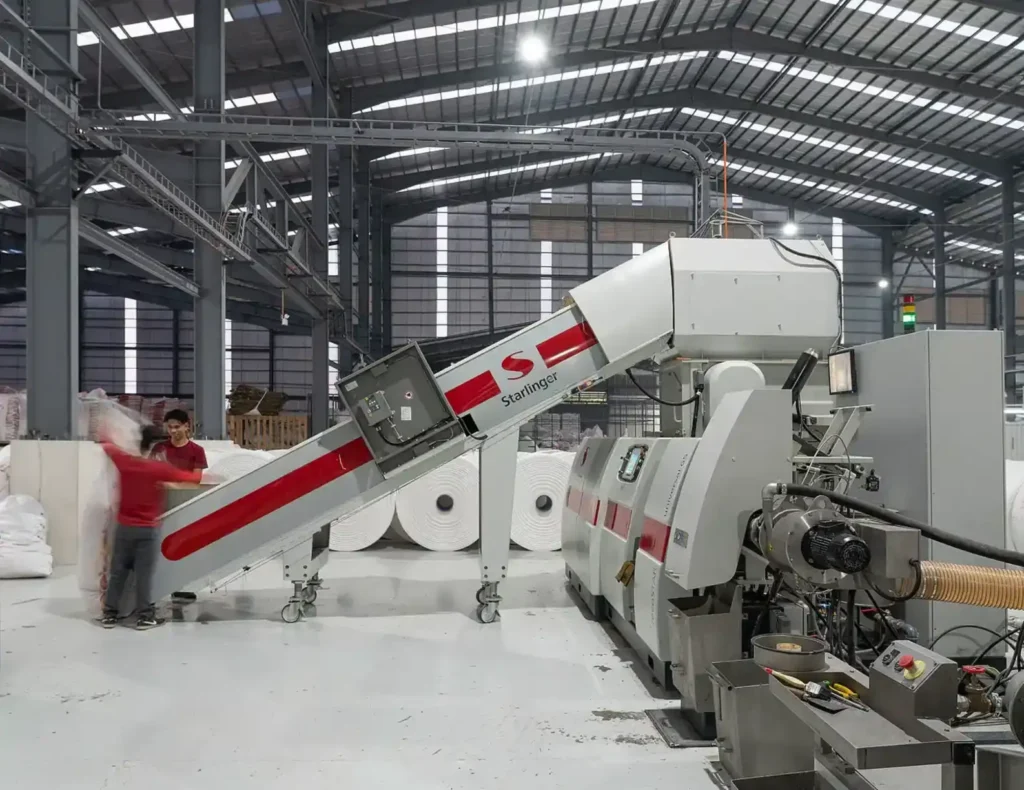
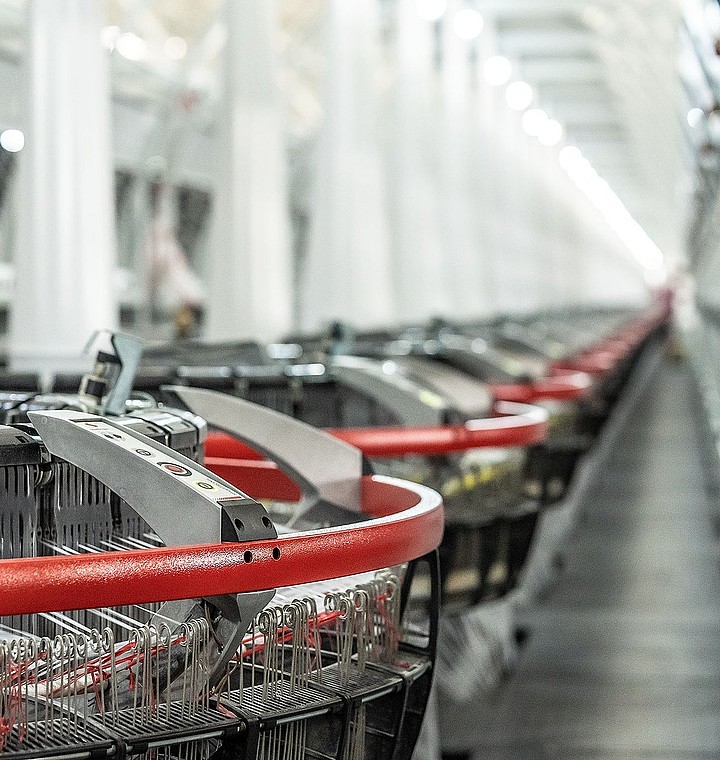
Mesh PP bags feature open-weave structures that allow airflow, critical for preventing moisture buildup in materials like sand, gravel, and cement. VidePak’s bags, produced using Austrian Starlinger circular looms, achieve tensile strengths of 80–120 N/cm² while maintaining a grammage of 90–120 g/m². This ensures durability without compromising breathability, reducing material degradation during storage by up to 25% .
Case Study: A Saudi Arabian construction firm reported a 40% reduction in cement hardening during monsoon transit after switching to VidePak’s mesh bags, saving $150,000 annually in waste costs.
H3: Enhanced Logistics Efficiency
VidePak’s integration of 200-ton hydraulic balers compresses bulk materials into dense bales, increasing container capacity by 35%. Combined with automated pallet wrapping systems, this reduces shipping costs and minimizes handling damage.
Key Parameters:
| Feature | Specification | Test Standard |
|---|---|---|
| Load Capacity | 1–2 tons | ASTM D5264 |
| Mesh Size | 5×5 mm to 10×10 mm | ISO 9001 |
| UV Resistance | 1,500 hours | DIN 53387 |
H2: Packaging Innovations for Global Supply Chains
H3: High-Capacity Balers and Palletization
Traditional packaging methods often leave 20–30% of container space unused. VidePak’s 200-ton balers compress materials into uniform bales, enabling tighter stacking. For example, a standard 40-foot container can hold 1,200 mesh PP bags (vs. 800 with loose filling), reducing freight costs by $1,200 per shipment .
FAQs:
Q: How does pallet wrapping enhance durability?
A: Stretch film wrapping prevents shifting during transit, reducing tear incidents by 50% .
Q: Are these bags reusable?
A: Yes, VidePak’s UV-stabilized PP withstands 5+ cycles, aligning with EU circular economy goals .
H3: Quality Assurance and Compliance
VidePak’s 16 extrusion lines produce PP films with ≤0.5% moisture permeability, critical for humidity-sensitive materials like gypsum. Third-party testing by JW Froehlich Maschinenbau confirmed leak-proof seals under 2-bar pressure, exceeding ISO 22435 standards .
H2: Market Positioning and Competitive Edge
H3: Cost Leadership Through Scalability
With 100+ Starlinger looms and 30 lamination machines, VidePak achieves a production speed of 40 bags/minute—20% faster than competitors. This scalability allows a 10–14 day lead time for orders up to 10M units, backed by a global logistics network covering 50+ countries .
H3: Sustainability Initiatives
- Recycled PP: 30% post-consumer content in 2025 production batches.
- Solar-Powered Facilities: 2MW rooftop panels reduce CO₂ emissions by 1,200 tons/year.
Industry Benchmark: A 2025 Global Packaging Report ranked VidePak among Asia’s top 5 sustainable manufacturers.
H2: Future Trends and Challenges
H3: Smart Packaging Integration
VidePak is piloting IoT-enabled mesh bags with QR codes for real-time tracking of material conditions (e.g., humidity, temperature). Early adopters in Germany saw a 20% improvement in inventory turnover .
H3: Tariff Mitigation Strategies
To offset rising U.S. tariffs (up to 25%), VidePak is expanding production in Vietnam, cutting delivery times to North America by 30% .
“In construction logistics, every square inch counts,” emphasized Ray. By merging technical innovation with sustainability, VidePak is setting new benchmarks for efficiency and reliability.
For further insights, explore our resources on high-capacity baler integration and sustainable construction packaging solutions.
Appendix: Product Comparison Table
| Parameter | Traditional Bags | VidePak Mesh Bags | Improvement |
|---|---|---|---|
| Container Utilization | 70% | 95% | +35% |
| Moisture Resistance | Low | High (PE lamination) | +50% |
| Reusability | 1–2 cycles | 5+ cycles | +150% |
FAQs
Q: How do mesh bags handle sharp materials like gravel?
A: VidePak’s 120 g/m² bags with double-stitched seams resist punctures, tested to ASTM D1709 standards.
Q: Can these bags be customized for branding?
A: Yes, 8-color printing supports logos and safety labels, compliant with global regulations.