
What are Self Opening Sacks?
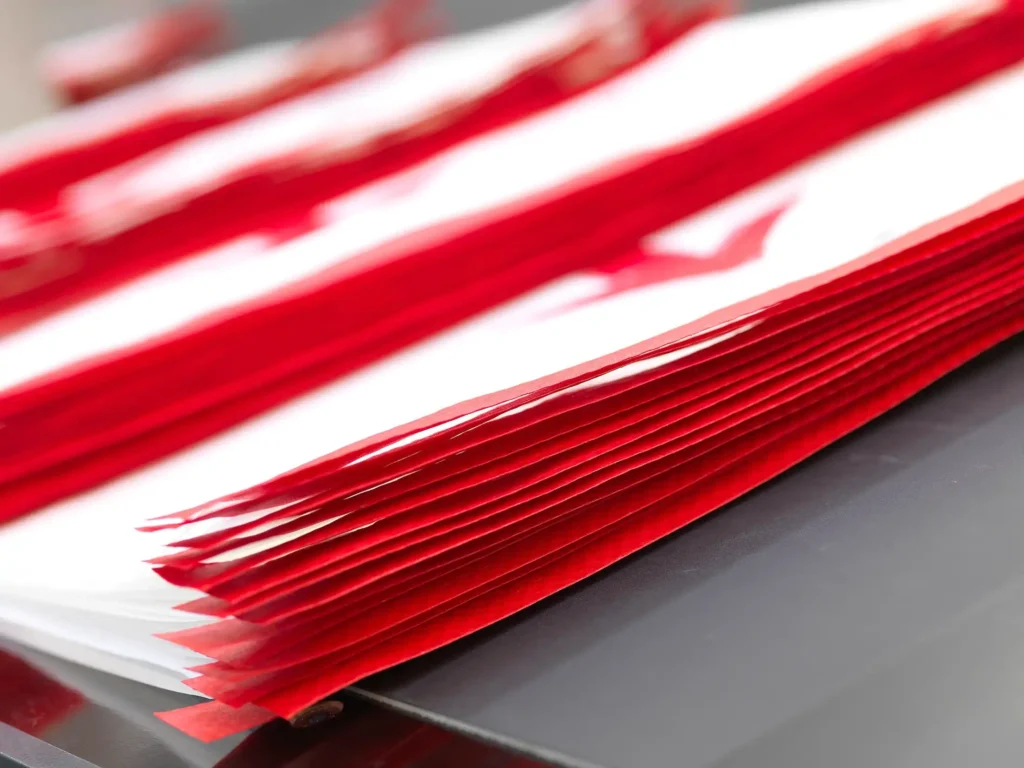
Self Opening Sacks—abbreviated as SOS bags and also referred to as self‑opening square paper bags, square‑bottom grocery sacks, and block‑bottom kraft SOS—are paper‑based carriers designed to pop open instantly on counters and packing lines. Their pasted block bottom and pre‑creased side gussets allow the bag to stand on its own, receive product in a stable posture, and close by tape, tin‑tie, fold‑over adhesive, or heat‑seal patches. In industrial formats, multi‑ply kraft constructions may be paired with PE, PP, or bio‑based film liners for moisture moderation. Everyday appearances include bread bags, flour bags, takeaway sacks, and seed pouches from sub‑kilogram scales up to ~25 kg.
In essence, Self Opening Sacks replace wobble with stability, cluttered labels with broad printable faces, and slow two‑handed bag prep with a one‑handed, pop‑open workflow. The result is a package that behaves like a lightweight carton and communicates like a billboard—while still folding flat for logistics.
What are the features of Self Opening Sacks?
Viewed as a system, the value of Self Opening Sacks spans four interlocking pillars: structural stability, product protection, operational speed, and brand communication. Move one pillar and the others shift—winning specifications balance all four against product risk, line hardware, climate, and channel strategy.
1) Structural stability
Context. Bags must survive conveyors, counters, couriers, and the last mile. A format that stands quickly and cubes neatly upstream prevents chaos and damage downstream.
- Square base geometry. Pasted block‑bottom construction spreads load and resists rolling; pallet cube and shelf blocking improve compared with pillow‑style sleeves.
- Kraft selection. Sack kraft within ~70–120 gsm provides tear energy, crease memory, and print holdout. Bleached or natural faces are chosen to match brand tone and grease‑resistance needs.
- Gusset engineering. Side gussets (≈60–140 mm on retail sizes) act as expansion joints; sharp pre‑creases create a dependable pop‑open action.
Data reinforcement. Basis weight (TAPPI T 410), tear (TAPPI T 414), and burst (TAPPI T 403) characterize paper; filled‑bag drops at realistic heights (0.5–1.0 m for 5–10 kg) follow ISO 2206/2248; stacked compression and creep on corrugated trays reference ASTM D642.
2) Product protection
Context. For foods and near‑food fills, grease, steam, and aroma must be managed without suffocating the product or fogging the brand.
- Linings by risk. PE or co‑ex liners around 20–50 μm moderate moisture and grease migration; glassine or grease‑resistant papers protect bakery surfaces; EVOH co‑exes serve aroma‑critical SKUs.
- Vent strategy. Micro‑vents near the headspace release steam while protecting printed areas; no‑vent zones are designated for dry powder fills.
- Food‑contact governance. Paper, inks, and adhesives are documented to FDA 21 CFR 176.170/176.180 and EU 1935/2004; in the China market, GB 4806.8‑2016 (food contact paper) and GB 9685‑2016 (additives) establish the baseline.
Data reinforcement. Grease resistance via TAPPI T 559 KIT; WVTR of film elements via ASTM F1249; Cobb water absorption on paper faces via ISO 535; overall migration limits for plastics per (EU) 10/2011 where applicable and GB 31604 series in China.
3) Operational speed
Context. Throughput = margin. If the bag opens itself, staff spend time on quality and interaction rather than wrestling packaging.
- Pop‑open architecture. Pre‑creased gussets and a pasted base enable one‑handed loading on counters or weigh‑fill funnels.
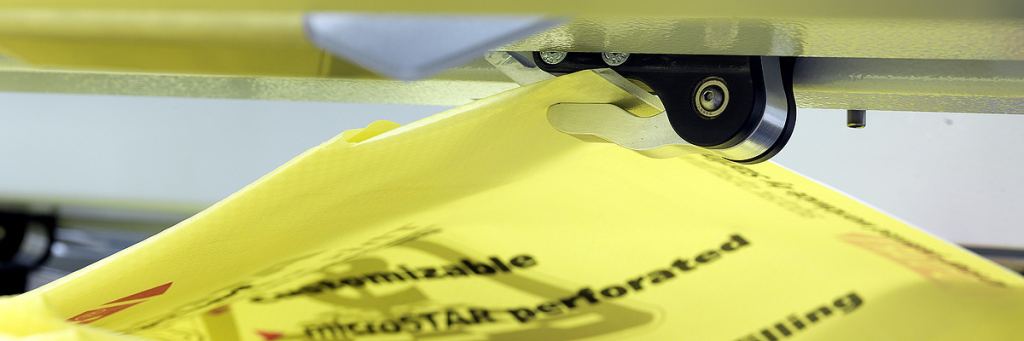
- Closure options. Tape, tin‑tie, fold‑over adhesive, hook‑and‑loop, or heat‑seal patches; in semi‑industrial flows, stitch lines or ultrasonic patches can be added while preserving open‑mouth speed.
- Machine compatibility. Format plays well with vertical FFS scales and manual counters; fewer misfeeds than floppy sleeves.
Data reinforcement. Time‑to‑open and fill cycle studies in seconds per bag; seal strength per ASTM D903 peel for patches; tape adhesion via ASTM D3330.
4) Brand communication
Context. Omnichannel China retail—offline experiential + livestream flash sale—rewards packaging that photographs well and scans cleanly.
- Print real estate. Two broad panels accept large typography, sustainability marks, and nutrition tables; matte varnish keeps glare low for scanners.
- Color governance. ISO 12647 process control and ΔE SPC maintain brand hues on Tmall, Douyin, and in stores.
- Traceability zones. GS1 barcodes, QR, and anti‑counterfeit elements (microtext, variable data) render crisply on bleached or clay‑coated faces.
Data reinforcement. Barcode grading to ISO/IEC 15416 with target grade ≥3.0; rub resistance per ASTM D5264.
What is the production process of Self Opening Sacks?
From reels to retail‑ready, quality emerges from a sequence: paper selection → printing → tubing & gusseting → bottom pasting → optional lining/venting → finishing → QA. Each step constrains the next, so the process is engineered as an end‑to‑end chain.
- Paper selection. Sack kraft 70–120 gsm; grease‑resistant options and glassine where oil is present; bleached for color fidelity; natural for organic cues.
- Printing. Flexo or offset on the outer ply; matte or silk‑matte varnish; water‑based inks with low odor for food adjacency; spot‑color drawdowns controlled to ΔE targets.
- Tubing & gusseting. Plies glued into a tube; gussets pre‑creased; width/height tolerances held within ±2–3 mm for line fit.
- Bottom pasting. Pasted block‑bottom via hot‑melt or water‑based adhesives; base squareness validated on nest tests and shake‑stand checks.
- Optional lining & vents. Insert PE or co‑ex liners (≈20–50 μm retail); laser/mechanical micro‑vents above headspace for steam release.
- Finishing. Add tin‑ties, tape strips, windows, die‑cut handles; place batch codes in designated traceability windows.
- Quality assurance. Basis (TAPPI T 410), tear (T 414), Cobb (ISO 535), peel (ASTM D903 on patches), rub (ASTM D5264), barcode grade (ISO/IEC 15416), and migration testing (GB/EU overlays) are recorded with retained samples linked to lot codes under ISO 9001 traceability.
What is the application of Self Opening Sacks?
Self Opening Sacks excel anywhere fast, tidy loading must meet legible branding:
- Bakery & foodservice. Bread, pastries, fried snacks—grease‑resistant inner; micro‑vents to release steam; tin‑tie or fold‑over closures.
- Staple foods & ingredients. Flour, rice, grains—liners to moderate humidity; large matte nutrition panels and clear barcodes.
- Specialty retail. Coffee, tea, pet treats—windowed variants; anti‑counterfeit microtext; QR for loyalty and provenance.
- Agri‑inputs & seeds (lightweight SKUs). Clay‑coated print faces; stitched pockets for planting guides and lot codes.
| Parameter | Typical Range / Option | Method / Note |
|---|---|---|
| Capacity | 0.5–10 kg retail; up to ~25 kg industrial SOS | ISO 2206/2248 drop at realistic heights |
| Paper face | Sack kraft 70–120 gsm; bleached or natural; grease‑resistant grades | TAPPI T 410 (basis); T 414 (tear); ISO 535 (Cobb) |
| Liner (optional) | PE or co‑ex 20–50 μm; glassine inner for bakery | ASTM F1249 (WVTR) |
| Bottom style | Pasted block‑bottom (self‑standing) | Adhesive bond checks; compression on stacks |
| Gusset width | ≈60–140 mm (retail) | Dimensional tolerance ±2–3 mm |
| Printing | Flexo/offset; matte varnish; ΔE SPC on spot colors | ISO 12647 (process); ASTM D5264 (rub) |
| Venting | Laser/mechanical micro‑vents above headspace | Visual + fill‑rate timing |
| Compliance | GB 4806.8‑2016; GB 9685‑2016; FDA 21 CFR 176.170/176.180; EU 1935/2004; ISO 22000/FSSC 22000 | Certificates & DoC packs |
From headline to action — Navigating growth and branding in China
The phrase Self Opening Sacks: Navigating Growth and Branding in China’s Market invites three questions: why SOS now, how to scale supply while protecting brand, and what system turns packaging into measurable growth? We decomposed the challenge into five sub‑problems and then recomposed a plan that connects engineering, operations, and marketing.
A) Demand signals and channel fit
China’s blended retail mixes chain bakery expansion, convenience formats, and livestream commerce. Self Opening Sacks align with counter‑fill workflows and camera‑friendly aesthetics. Unified sizing simplifies shelf blocking and ingredient pre‑packs; standardized dielines give every photo a consistent “standing bag” look.
B) Brand distinctiveness without complexity creep
ΔE color drift across printers undermines omnichannel consistency. With ISO 12647 targets, drawdown books, and matte varnish, Self Opening Sacks keep the brand’s red the same red on Tmall, Douyin, and physical shelves—while resisting scuff in delivery totes.
C) Food‑contact governance for China + export
Maintain dual documentation: GB 4806/9685 for domestic assurance, plus FDA/EU overlays for cross‑border promos. Lot‑linked CoAs and retained samples tighten traceability. For facilities handling edible lines, align to ISO 22000:2018 or FSSC 22000.
D) Cost, lead time, and risk pooling
Biggest cost sink? Rework from poor fit or scuff—not grams of paper. Two standard footprints across SKUs reduce plate changes and makeready; national paper buys combined with regional print split logistics risk while holding price.
E) Measurement that drives continuous gains
Pick operational KPIs that ladder to sales: seconds per bag at the counter, barcode grade at pick‑pack, color ΔE, return rate, and complaint taxonomy. Review quarterly with suppliers; iterate.
- Fix two SOS footprints to cover 80% of volumes; keep dielines constant.
- Govern the press: ISO 12647 targets, ΔE thresholds, matte code zones, and barcode grade ≥3.0.
- Pick protection by product: dry bakery → unlined + vents; oily/humid → grease‑resistant or 20–30 μm PE; aroma‑critical → co‑ex with EVOH.
- Document once, sell twice: GB + export DoCs; retained samples per ISO 9001.
- Measure what matters: cycle time, scan grade, return rate, color ΔE; review quarterly.
For buyers comparing allied formats, see the relationship between paper SOS and woven options here: Self Opening Sacks (contextual link).
Why VidePak
- Engineering‑first. We treat Self Opening Sacks as a system—paper, liner, vents, print—tuned to product physics, climate, and channel.
- Brand‑savvy. We design bags that photograph well, scan cleanly, and survive last‑mile realities.
- Audit‑ready. Our documentation aligns with GB 4806/9685, FDA/EU, ISO 22000, and ISO 9001 so border checks and retail audits are predictable.
Call to action
Share your product moisture/oil profile, fill workflow, and priority channels (offline bakery, quick commerce, livestream). We will return a Self Opening Sacks specification—paper grade, liner/vent plan, size set, print program, and QA matrix—ready to pilot on your current line without disruption.
- What are Self Opening Sacks?
- What are the features of Self Opening Sacks?
- What is the production process of Self Opening Sacks?
- What is the application of Self Opening Sacks?
- From headline to action — Navigating growth and branding in China
- Why VidePak
- Call to action
- 1. Introduction: The Rise of Self-Opening Sacks in China
- 2. Understanding ESG and Its Relevance to Packaging
- 3. VidePak’s Market Positioning and Technological Edge
- 4. Strategic Branding in China’s ESG-Driven Market
- 5. Challenges and Future Outlook
- 6. Conclusion: Leading the Charge in Sustainable Packaging
“Why are self-opening sacks gaining traction in China’s competitive packaging industry?”
The answer lies in their operational efficiency, alignment with ESG (Environmental, Social, Governance) standards, and VidePak’s strategic integration of sustainable practices and advanced automation. As a leader in woven bag manufacturing, VidePak leverages cutting-edge technology and ESG-driven policies to meet the demands of a market increasingly prioritizing sustainability and brand differentiation.
1. Introduction: The Rise of Self-Opening Sacks in China
Self-opening sacks, designed for rapid filling and automated handling, have become indispensable in industries like agriculture, chemicals, and construction. Their popularity in China stems from the country’s push for high-quality manufacturing and sustainable industrial practices. VidePak’s adoption of ESG-aligned production methods positions it as a pioneer in this evolving market.
Key Insight:
“Self-opening sacks aren’t just about convenience—they’re a statement of a brand’s commitment to innovation and responsibility. At VidePak, we’ve embedded ESG into every stitch.”
— Ray, CEO of VidePak
2. Understanding ESG and Its Relevance to Packaging
ESG frameworks evaluate a company’s environmental stewardship, social responsibility, and governance rigor. In China, ESG compliance is no longer optional; it’s a competitive necessity. Regulatory bodies and consumers alike demand transparency in supply chains, ethical labor practices, and carbon footprint reduction.
2.1 VidePak’s ESG Commitments
- Environmental: A 2 MW rooftop solar system powers 70% of VidePak’s operations, reducing annual CO2 emissions by 1,200 tons—equivalent to planting 50,000 trees. Recyclable polypropylene (PP) materials are prioritized, with 98% of production scraps reused.
- Social: The company funds education programs for laborers’ children in rural regions, partnering with 12 schools to provide scholarships and infrastructure upgrades.
- Governance: Implementation of 5S workplace organization (Sort, Set, Shine, Standardize, Sustain) ensures safety, efficiency, and ISO 14001 certification compliance.
3. VidePak’s Market Positioning and Technological Edge
Founded in 2008, VidePak operates 100+ circular looms, 16 extrusion lines, and 30+ lamination/printing machines, producing 5 million sacks monthly. Its global reach ($80M annual revenue) is bolstered by:
- Automation: Starlinger equipment enables precision in sack dimensions (tolerance <0.5mm) and tensile strength (>45 N/cm²).
- Customization: 20+ ink colors and bespoke designs cater to brands like agricultural cooperatives and chemical exporters.
| Product Type | Material | Load Capacity | ESG Certification |
|---|---|---|---|
| BOPP Self-Opening Sacks | Virgin PP | 25–50 kg | ISO 14001, BRCGS AA+ |
| Kraft Paper Sacks | Recycled PP | 10–30 kg | FSC Certified |
| Valve Sacks | PE-Coated PP | 50–100 kg | EU Ecolabel |
4. Strategic Branding in China’s ESG-Driven Market
China’s packaging sector is projected to grow at 6.2% CAGR, driven by green policies and e-commerce. VidePak’s branding strategy focuses on:
- Sustainability Storytelling: Highlighting solar energy adoption and carbon neutrality roadmaps (target: 2030) in marketing campaigns.
- Partnerships: Collaborating with ESG-focused platforms like the China International Import Expo (CIIE) to showcase innovations.
FAQs:
- How does ESG compliance improve product quality?
Rigorous governance (e.g., 5S) reduces defects by 30%, while sustainable materials enhance durability. - Can self-opening sacks handle abrasive materials?
Yes—VidePak’s PE-lined sacks withstand chemicals and sharp-edged aggregates, tested up to 10,000 fill cycles.
5. Challenges and Future Outlook
While demand surges, challenges persist:
- Cost Pressures: Solar infrastructure requires $2M+ upfront investment, though ROI is achieved within 5 years via energy savings.
- Regulatory Hurdles: Compliance with China’s evolving Extended Producer Responsibility (EPR) laws demands agile adaptation.
Innovation Roadmap:
- Smart Sacks: Integrating RFID tags for supply chain transparency, piloted with a European pharmaceutical client.
- Bio-Based PP: Partnering with resin suppliers to develop 30% plant-derived materials by 2026.
For deeper insights into sustainable packaging trends, explore our guides on ESG-aligned production and automation in sack manufacturing.
6. Conclusion: Leading the Charge in Sustainable Packaging
VidePak’s self-opening sacks exemplify how ESG principles can drive both profitability and positive impact. By prioritizing solar energy, ethical labor practices, and precision manufacturing, the company not only meets market demands but sets benchmarks for the industry.
Final Perspective:
“In China’s packaging revolution, sustainability isn’t a buzzword—it’s the blueprint. VidePak’s journey proves that green innovation is the ultimate brand differentiator.”
— Journal of Sustainable Manufacturing, 2025