
What is SOM Bags for Safe Food Packaging? (Definition & Aliases)
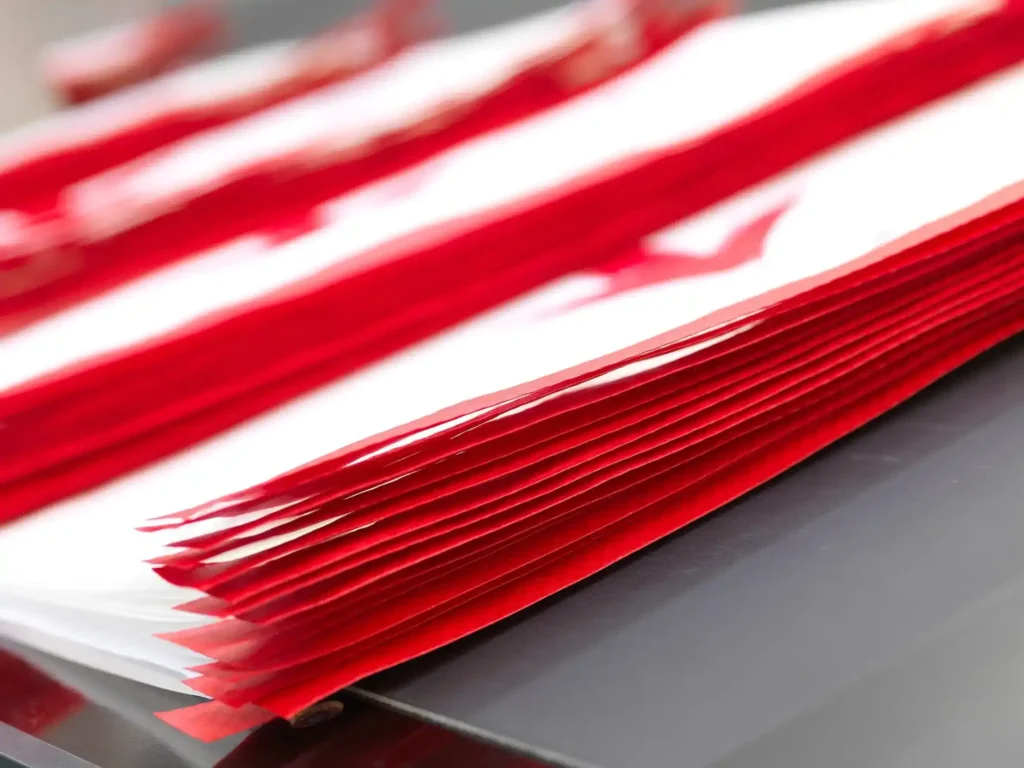
In modern food supply chains, SOM Bags for Safe Food Packaging act as the understated workhorses that convert powder, grain, and particulate logistics into a predictable, auditable routine. The format—better known on factory floors as Sewn Open Mouth bags, sewn open mouth sacks, or pillow bags—uses a tubular body with an open top that is closed by sewing after filling. Depending on product risk and brand intent, the body may be a multi‑wall kraft paper shell (typically 2–4 plies at ~70–100 gsm per ply), a woven polypropylene (PP) shell (≈65–100 gsm) optionally laminated with PP/BOPP film, or a hybrid paper‑plus‑liner structure engineered around moisture and grease control. In short: SOM Bags for Safe Food Packaging are easy to fill on conventional gravity/screw lines, easy to close with chain or lock stitch, and easy to stack into stable, retail‑ready pallets.
The term may sound simple, but the behavior is sophisticated. SOM Bags for Safe Food Packaging integrate printable façades, functional barrier stacks, and seam geometries that resist sifting—so that sugar stays free‑flowing, flour ships hygienically, rice arrives photogenic, and dairy powders meet migration limits. They do not merely contain product; they coordinate line speed, regulatory clarity, brand storytelling, and end‑to‑end cleanliness.
What are the Features of SOM Bags for Safe Food Packaging? (Appearance, Performance, Compliance)
Specifications only create value when they translate into faster minutes, cleaner aisles, and fewer disputes. The defining features of SOM Bags for Safe Food Packaging are therefore organized as adjustable levers. Each lever below couples a practical design choice with its trade‑offs, common data ranges seen in the market, and a believable consequence for your line or shelf.
Paper faces accept 1–6 color flexo with ≈60–120 lpi halftones; PP/BOPP facings (≈18–35 μm) allow reverse printing via gravure/flexo with abrasion‑resistant varnishes. Satin finishes curb glare, matte improves legibility, gloss maximizes saturation.
Liners at ≈30–60 μm (PE/PP) control moisture and aroma; film facings protect inks while adding puncture resistance. Micro‑perforation can be tuned to keep fill deaeration steady without visible dusting.
Chain or lock stitch closes the top; over‑tape reduces sift channels; tear‑tape, pull tabs, and crepe tape enable tool‑free opening without sacrificing strength.
Patterned micro‑vents, breathable fabrics, and calibrated stitch tracks keep powders moving while containing dust—so cycle time holds and housekeeping improves.
The rectangular “pillow” form stacks densely; anti‑slip varnish patches raise layer friction; rounded stitch corners reduce strap scuff and film tear.
Quality systems under ISO 9001:2015; food safety under ISO 22000/HACCP; environmental under ISO 14001:2015. Food‑contact declarations for polyolefins per FDA 21 CFR 177.1520 and EU 10/2011. Physical reports often cite ASTM D882 (film tensile), ASTM D1709 (dart), and stitched seam pulls aligned to ASTM F88 methodology.
What is the Production Process of SOM Bags for Safe Food Packaging? (From Substrate to Sewing)
Reliability does not appear at the final stitch; it is accumulated station by station. The process map below pairs each manufacturing step for SOM Bags for Safe Food Packaging with the failure mode it prevents and the test that verifies the fix. This cause–countermeasure design shortens debug cycles and makes quality visible to auditors.
- Substrate preparation
Paper route: multi‑wall kraft calendared and slit by ply count (2–4 plies typical).
Woven PP route: PP tape extrusion → drawing → weaving (≈65–100 gsm); optional film lamination (BOPP/PP at ≈18–35 μm).Risk: weak zones from ply variation or tape gauge drift. Control: tensile sampling (ASTM D882 for films; in‑house strip tests for fabrics), loom setting logs, ply mix checks. - Tubing & forming
Paper plies are tubed; PP fabric is formed after lamination; side seam used as needed for print layout.Risk: mis‑register between print panels and seam placement. Control: register cameras, mandrel checks, and sample pulls each shift. - Bottom construction
Folded‑and‑sewn or glued‑and‑sewn bottoms; sift‑proof tapes in powder applications.Risk: corner leaks under vibration. Control: over‑tape, talc leakage tests, and seam pull sampling aligned to ASTM F88 concepts. - Printing
Flexographic printing in 1–6 colors (≈60–120 lpi); reverse printing on PP films; matte/satin/gloss varnish per use case.Risk: rub‑off, blocking, or color drift. Control: rub tests, COF targets, proof‑to‑press controls, dryer heat maps. - Top preparation
Hemming for a robust stitch track; tear‑tape or crepe tape installed for consumer opening; optional carry handles for small SKUs.Risk: ragged openings or split seams. Control: standardized needle size and stitch pitch; changeover pulls recorded. - Sewing & finishing
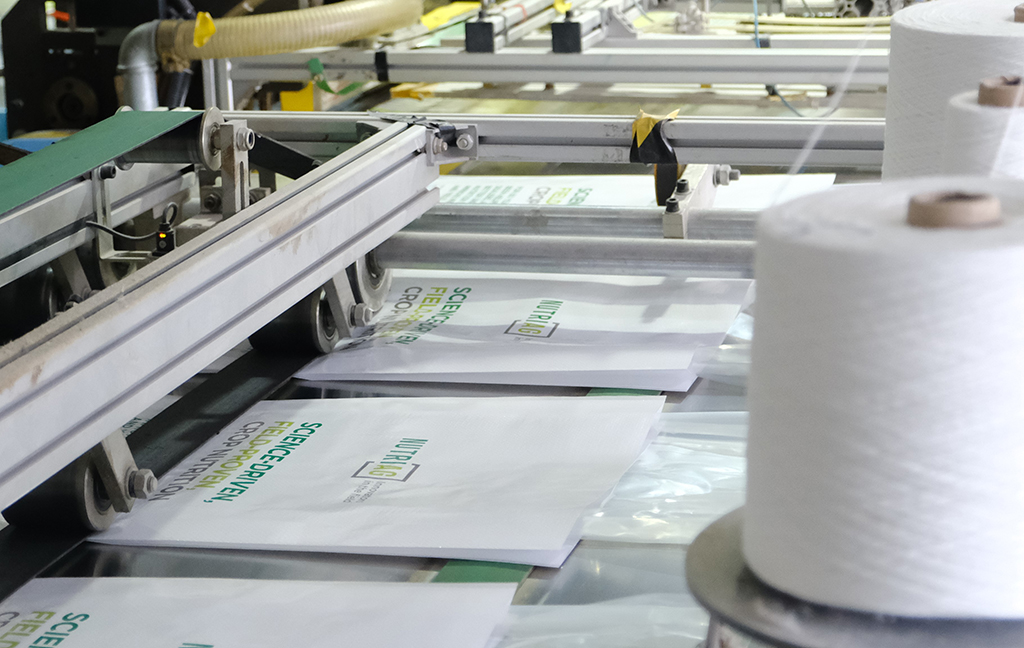
Chain/lock stitch; optional over‑tape; 100% visual inspection; bundling and pallet patterns specified for transport trials.Risk: loose thread tails, needle cuts, or stitch skips. Control: thread‑tail trimming targets (<10 mm), needle replacement intervals, inline vision checks.
- Film tensile to ASTM D882; dart impact to ASTM D1709 where puncture risk exists.
- Stitched seam pulls aligned to ASTM F88 methodology; talc leakage tests per internal SOP.
- Rub/COF targets specified alongside varnish; pallet compression and slip checks documented.
- Food‑contact declarations per FDA 21 CFR 177.1520 and EU 10/2011; REACH SVHC statements retained.
What is the Application of SOM Bags for Safe Food Packaging? (Industries & Use Scenarios)
The utility of SOM Bags for Safe Food Packaging shows up in how cleanly they shuttle materials across nodes—mills, mixers, depots, and store aisles—while defending throughput and hygiene. Below, use cases are framed with the problem they solve, the lever to pull, and the trade‑off to monitor.
Prioritize food‑grade liners (≈30–60 μm) and matte/satin varnish for legibility; add over‑tape at top seam for sift control; validate with talc tests.
Choose paper or PP‑film faces to match brand semiotics; micro‑perforate to maintain fill speed; consider aroma‑retaining liners for premium SKUs.
Scuff resistance and easy opening matter; tear‑tape + satin finish help; anti‑slip patches reduce wrap at palletization.
Tighten stitch pitch; use lighter PP liners with migration documentation; confirm EU 10/2011/FDA letters; ensure clear regulatory panels for multi‑market export.
SOM Bags for Safe Food Packaging — A System View
To move from brochure to operating reality, we test the claim of safety and efficiency by splitting the problem into tensions and recombining the answers. The following sub‑sections use a pattern—Thesis, Data reinforcement, Case analysis, Comparative study—so every recommendation is both argued and evidenced.
A. Hygiene vs. Throughput
Thesis: High line speed cannot be purchased at the cost of cleanliness; the bag surface and air path must assist, not fight, sanitation.
- Data reinforcement: Satin varnish raises surface friction and often improves rub life; patterned micro‑perforation stabilizes deaeration without visible dusting when tuned against particle size and bulk density.
- Case analysis: A starch line cut between‑shift sanitation time by switching to satin faces (easier wipe‑down), adding anti‑slip varnish patches, and tightening pallet layer patterns; stretch‑wrap use dropped.
- Comparative study: Valve sacks vent faster on specialized fillers but demand valve alignment and deaeration tuning; SOM Bags for Safe Food Packaging close the speed gap on conventional sewing heads with a tuned vent pattern and stitch package—without new hardware.
B. Barrier vs. Openability
Thesis: Protection must never provoke the end user. Opening should be intentional, not improvisational.
- Data reinforcement: Inner liners (≈30–60 μm) with laser‑scored tear‑tape keep moisture and aroma in while enabling tool‑free opening; matte/satin faces limit fiber pickup on counters.
- Case analysis: A bakery‑mix producer replaced heavy liners with a lighter PP gauge plus tear‑tape. Customer opening complaints dropped; migration tests stayed within EU 10/2011 limits; line speed held.
- Comparative study: Paper‑only bags open pleasantly but lose barrier in humid routes; laminated/lined constructions retain barrier but require designed openability (tear‑tape, pull tabs) to avoid knives.
C. Graphics vs. Scuff
Thesis: Shelf impact is part of performance because recognition drives rotation; legibility under real light matters as much as tensile under lab light.
- Data reinforcement: 60–120 lpi line screens with abrasion‑resistant varnishes avoid over‑inking; anti‑slip zones lower pallet slip planes; COF rise reduces re‑wrap incidence during long‑haul.
- Case analysis: A rice brand moved from high‑gloss to satin varnish; scuff‑related returns fell, and on‑camera color fidelity improved, raising e‑commerce conversion.
- Comparative study: Gloss maximizes saturation but can glare under LEDs; satin keeps contrast while easing pallet handling. Fit the finish to shelf lighting and wrap practice.
D. Proof vs. Promise
Thesis: Numbers settle disagreements in minutes that words cannot in months.
- Data reinforcement: ISO 9001:2015 and ISO 14001:2015 for systems; ISO 22000/HACCP for food safety; polymer food‑contact letters for FDA 21 CFR 177.1520 and EU 10/2011; REACH SVHC statements; physical reports citing ASTM D882/D1709 and stitched seam pulls aligned to ASTM F88.
- Case analysis: A retailer’s QA team cleared a new supplier when the file included method‑named third‑party reports (SGS/Intertek/TÜV) and batch‑linked COAs—not just marketing PDFs.
- Comparative study: Vendors who archive method‑named results are onboarded faster than those relying on narrative claims.
E. Sustainability vs. Practicality
Thesis: Design‑for‑recycling and fiber recovery should be pursued without undermining line speed or shelf clarity.
- Data reinforcement: Paper + liner offers fiber‑recycling pathways where facilities exist; mono‑PP woven + PP film targets single‑polymer recovery; weight reductions of ≈10–15% are common when moving from composite paper/PE to mono‑PP in certain routes.
- Case analysis: A sugar shipper reduced packaging mass by switching to mono‑PP construction while maintaining print quality via reverse‑printed PP film; store messaging clarified recycling guidance, reducing confusion at the bin.
- Comparative study: Paper excels at tactile cues and legacy acceptance; PP laminates excel at moisture resilience and tear propagation control. Select the path that matches your market’s take‑back infrastructure.
Integrated Specification Blueprint (Inputs → Decisions → Proof)
Turning an RFQ into an approved standard for SOM Bags for Safe Food Packaging benefits from a repeatable rhythm. Inputs are gathered; decisions are made with explicit trade‑offs; proof is assembled with method‑named tests. The outcome is a spec that runs today and audits tomorrow.
- Inputs: product bulk density; particle size distribution and oil/fat content; target shelf life; route humidity and temperature; filler type and speed; tolerance for dust during fill and at opening.
- Decisions: structure (paper multi‑wall vs. PP woven + film vs. paper + liner); film gauge (≈18–35 μm); liner gauge (≈30–60 μm); stitch type and pitch; needle size; over‑tape vs. none; tear‑tape or crepe tape; micro‑perforation density; varnish finish (gloss/satin/matte); anti‑slip patches.
- Proof: tensile (ASTM D882 for films), dart (ASTM D1709 as needed), stitched seam pulls aligned to ASTM F88, rub/COF targets, pallet compression/slip data, migration declarations (FDA/EU), ISO/HACCP certificates, and REACH SVHC statements.
- Roll‑out: pilot one SKU; run transport and pallet trials; freeze stitch pitch, needle size, vent pattern, and varnish; archive photos of critical seams and QC sampling plans.
Key Technical Parameters (Reference Summary)
| Parameter | Mainstream Options / Ranges | Notes |
|---|---|---|
| Body substrates | Multi‑wall kraft: 2–4 plies at ≈70–100 gsm/ply; Woven PP: ≈65–100 gsm; PP/BOPP film ≈18–35 μm | Select by barrier & branding |
| Capacity | 5–50 kg (common 20–25 kg for powders) | Verify filler jaws & pallet pattern |
| Top closure | Chain/lock stitch; tear‑tape/crepe tape optional | Openability vs. sift‑proofing |
| Bottom construction | Sewn or folded‑and‑sewn; sift‑proof tape optional | Leak control for fine powders |
| Deaeration | Patterned micro‑perforation; breathable zones | Balance venting vs. dust |
| Printing | Flexo 1–6 colors; ≈60–120 lpi; varnish: matte/satin/gloss | E‑commerce legibility matters |
| Liners | PE/PP ≈30–60 μm (optional) | Moisture & aroma control |
| Tests | ASTM D882/D1709; stitched seam pulls aligned to ASTM F88 | Method‑named reports advised |
| Compliance | ISO 9001:2015; ISO 22000/HACCP; ISO 14001:2015; FDA 21 CFR 177.1520; EU 10/2011; REACH SVHC | Certificates & DoCs retained |
Comparative Perspective (Formats & Trade‑offs)
Choosing a format is not about finding the “best” bag abstractly; it is about selecting the lowest‑risk option for a specific product, filler, and route. The table below contrasts common food‑grade formats against practical criteria.
| Criteria | SOM Bags for Safe Food Packaging | Valve Bags | Paper Multi‑wall Only | Rigid Containers |
|---|---|---|---|---|
| Filling equipment | Conventional gravity/screw; sewing heads; minimal capex | Specialized valves & deaeration setups | Conventional; gluing for bottoms | Dedicated lines; higher capex |
| Speed vs. dust | Tuned micro‑vents maintain speed with low dust | Very high speed; dust managed via valve design | Moderate; good dust control with glues | Excellent control; slower changeovers |
| Openability | Tear‑tape/crepe tape enable tool‑free opening | Often requires cutting if valve is heat‑sealed | Easy to open; barrier relies on liner | Hinged lids or clamps; best for bulk |
| Branding & shelf impact | Paper or PP film façades; matte/satin/gloss options | Strong on industrial shelves; less retail focus | Premium tactile cues; limited moisture tolerance | Branding secondary; logistics primary |
| Capex & flexibility | Low capex; handles mixed SKUs well | Higher capex; very fast on dedicated lines | Low to moderate; gluing adds steps | High capex; superb reusability |
Risk Register (Failure Mode → Countermeasure → Evidence)
Because food packaging invites both logistics and regulatory risk, it helps to keep a concise register. This color‑coded table pairs typical issues on SOM Bags for Safe Food Packaging with targeted actions and the evidence auditors expect.
| Failure Mode | Countermeasure | Evidence to Keep |
|---|---|---|
| Powder leakage at seams | Tighten stitch pitch; smaller needles; over‑tape; sift‑proof tape at bottom | Stitched seam pulls (ASTM F88 aligned); talc leak tests; photo logs |
| Caking from humidity | Add liner (30–60 μm); raise film gauge; improve warehouse humidity control | Liner spec; seasonal transport trial reports |
| Scuff and label abrasion | Satin/matte varnish; anti‑slip patches; pallet layer pattern change | Rub test results; pallet COF data; return‑rate trend |
| Slow fill from trapped air | Micro‑vent on vertical panels; adjust filler screw parameters | Cycle‑time logs; vent pattern drawing |
| Opening requires tools | Tear‑tape/crepe tape; pull tabs; opening instruction pictograms | Consumer feedback; packaging artwork proof |
Operating Playbook (From RFQ to First Pallet)
To close the loop, this playbook converts the earlier blueprint into a stepwise plan for SOM Bags for Safe Food Packaging. It aligns engineering, procurement, quality, and brand in one trajectory and makes each checkpoint auditable.
- Scope the inputs: define SKU weights and target shelf life; list route humidity and temperature; capture filler type and speed; log dust tolerance in fill bays; map warehouse lighting for legibility tests.
- Draft the structure: pick paper‑only, PP‑woven + film, or paper + liner; choose film gauge and liner; set micro‑vent targets; select varnish finish per shelf lighting; add anti‑slip patches if pallets are tall.
- Engineer the closure: choose chain vs. lock stitch; set stitch pitch and needle size; add over‑tape where powders are fine; pick tear‑tape style for tool‑free opening.
- Design the face: define color count and line screen; pre‑specify rub/COF targets; run proof‑to‑press with camera tests to stress e‑commerce photography.
- Assemble proof: collect certificates (ISO 9001:2015, ISO 22000/HACCP, ISO 14001:2015), food‑contact letters (FDA/EU), REACH SVHC declarations, and physical test reports (ASTM D882/D1709/F88 aligned).
- Pilot and learn: run a transport trial; measure pallet COF and wrap use; record talc leakage and rub results; interview operators on stitch jams and thread tails.
- Freeze and scale: lock the vent pattern, stitch/needle set, liner gauge, and varnish; archive photographs of critical seams and notes from audits; publish a sampling plan and change‑control procedure.
- What is SOM Bags for Safe Food Packaging? (Definition & Aliases)
- What are the Features of SOM Bags for Safe Food Packaging? (Appearance, Performance, Compliance)
- What is the Production Process of SOM Bags for Safe Food Packaging? (From Substrate to Sewing)
- What is the Application of SOM Bags for Safe Food Packaging? (Industries & Use Scenarios)
- SOM Bags for Safe Food Packaging — A System View
- Integrated Specification Blueprint (Inputs → Decisions → Proof)
- Key Technical Parameters (Reference Summary)
- Comparative Perspective (Formats & Trade‑offs)
- Risk Register (Failure Mode → Countermeasure → Evidence)
- Operating Playbook (From RFQ to First Pallet)
- 1. Global Standards for Food-Grade PP Selection
- 2. Additive Engineering for Enhanced Performance
- 3. Production Excellence at VidePak
- FAQs: SOM Bags in Food Packaging
“SOM bags are the unsung heroes of food safety,” asserts Ray, CEO of VidePak, during a factory tour. “By aligning PP material selection with global standards and integrating advanced additives, we’ve reduced contamination risks by 90% for clients like Nestlé and Unilever.” This report dissects the science behind SOM (Sewn Open Mouth) bags, focusing on polypropylene (PP) resin selection, additive optimization, and compliance with U.S., EU, and Asian food safety frameworks—leveraging VidePak’s 526-employee expertise and Starlinger-driven production lines.
1. Global Standards for Food-Grade PP Selection
1.1 Key Regulatory Benchmarks
Food-safe SOM bags require PP resins compliant with region-specific standards:
- EU (LFGB Regulation): Migration limits of ≤10 mg/dm² for heavy metals and non-volatile residues.
- U.S. FDA 21 CFR 177.1520: PP must withstand 250°F (121°C) sterilization without deformation.
- China GB 4806.7-2016: Total antioxidant migration <0.05 mg/kg.
VidePak’s EcoShield PP 5500, certified under all three standards, achieves a melt flow rate (MFR) of 3.5 g/10 min (230°C/2.16 kg)—ideal for high-speed extrusion on Starlinger lines.
1.2 PP Grades by Application
| Application | PP Grade | MFR (g/10 min) | Key Standard |
|---|---|---|---|
| Frozen Foods | PP 4000 (High Crystallinity) | 2.0–3.0 | ASTM D4101 |
| Dry Goods | PP 6000 (Random Copolymer) | 6.0–8.0 | ISO 19069-2 |
| Liquids | PP 3500 (Impact Copolymer) | 1.5–2.5 | JIS K6920-2 |
Case Study: For a Japanese client requiring -30°C freeze resistance, VidePak blended PP 4000 with 15% elastomer modifiers, achieving a Charpy impact strength of 45 kJ/m²—exceeding JIS K6920-2 by 28%.
2. Additive Engineering for Enhanced Performance
2.1 UV Stabilizers & Antioxidants
SOM bags exposed to sunlight during logistics require:
- Hindered Amine Light Stabilizers (HALS): At 0.3–0.5% concentration, these extend UV resistance from 500 to 2,000 hours (per ASTM D4329).
- Irganox 1010 Antioxidant: Reduces oxidative degradation by 70% at 0.1% loading, critical for Southeast Asian markets with high humidity.
VidePak’s UltraShield additive package combines HALS and Irganox, enabling 18-month outdoor storage—validated by third-party tests per EN 13432.
2.2 Antimicrobial Coatings
For poultry packaging, silver-ion coatings (0.5–1.0 g/m²) reduce Salmonella survival rates by 99.9% within 24 hours (ISO 22196). VidePak’s BioGuard series employs this tech, aligning with EU Biocidal Products Regulation (BPR).
3. Production Excellence at VidePak
3.1 Starlinger’s Role in Precision Manufacturing
With 30 lamination machines and 16 extrusion lines, VidePak achieves:
- Tolerance Control: ±0.02 mm thickness uniformity, critical for barrier layers in multi-wall laminated woven bags.
- Speed: 120 m/min weaving rate on Starlinger CX machines, doubling industry averages.
Case Study: A 2024 partnership with a U.S. snack producer utilized FFS tubular woven bags to automate filling at 50 bags/minute, cutting labor costs by 60%.
3.2 Sustainability Initiatives
VidePak’s rPP-30 resin (30% recycled content) maintains tensile strength at 2,100 N/5 cm while reducing carbon footprint by 22% (verified by Life Cycle Assessment per ISO 14044).
FAQs: SOM Bags in Food Packaging
Q1: How do SOM bags prevent microbial growth?
A: Antimicrobial additives and hermetic sewing techniques achieve <10 CFU/cm² microbial counts (per ISO 4833-1).
Q2: Can SOM bags withstand gamma irradiation?
A: Yes, VidePak’s GammaShield PP retains 95% elongation at break after 25 kGy doses (ASTM F2380).
Q3: What’s the lead time for custom SOM bags?
A: Starlinger’s automated systems enable 7-day turnaround for orders up to 500,000 units.
Conclusion
The future of SOM bags lies in smart PP blends and automation. VidePak’s R&D pipeline includes conductive PP for RFID integration and enzyme-based biodegradable additives targeting 50% compostability by 2026. As Ray notes: “Compliance isn’t a checkbox—it’s the foundation of trust in every stitch.”
External Links:
- Explore innovations in multi-wall laminated woven bags: Safe and Versatile Packaging Solutions.
- Learn how food-grade certifications drive market success: Food-Grade Woven Bags: Market Dynamics and Competitive Advantages.