
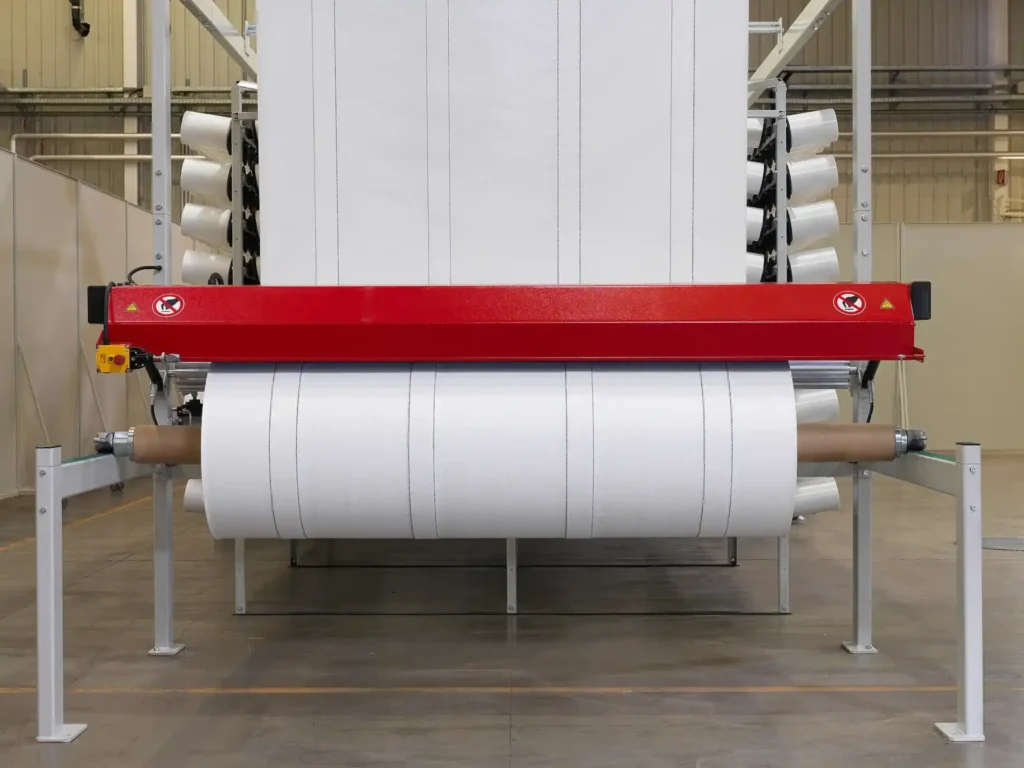
Multiwall Laminated Woven Bags: Innovations and Global Comparisons

What are Multiwall Laminated Woven Bags and what else are they called?

**Multiwall Laminated Woven Bags** describe a family of reinforced flexible containers engineered by layering woven polyolefin fabrics with one or more functional plies and a surface laminate that carries graphics and protection. In commerce and on factory floors you may also hear: laminated multi‑ply woven sacks, laminated PP multiwall bags, BOPP‑laminated woven sacks, block‑bottom laminated woven bags, and—when a patented block‑bottom valve construction is referenced—AD*STAR‑type laminated PP sacks. The naming varies; the engineering intent does not: combine the ruggedness of oriented tapes with the cleanliness, printability, and barrier tuning of films or coatings.
Callout — Why this format matters in 2024–2025
Shippers are under pressure to prove three things at once: product protection, brand presentation, and credible end‑of‑life. **Multiwall Laminated Woven Bags**—when specified with discipline—can hit all three: fewer tears and spills, higher shelf conversion via photographic print, and design‑for‑recycling roadmaps for mono‑PP builds where local programs allow.

At first glance, the format looks simple: woven chassis, printed film, neat closure. Yet every layer, every seam, every dyne of surface energy shows up months later as fewer complaints, faster filling, or tighter pallets. That is the quiet lesson from the last year: the difference between a good laminated woven sack and a great one is rarely visible to the eye, but it is measurable in KPIs.

The material of Multiwall Laminated Woven Bags: what each layer is, what it does, what it costs

Purposeful layering sits at the heart of this format. Below, each component is treated not as a catalog part but as a lever: a small change in gauge, chemistry, or geometry that moves strength, barrier, machinability, or spend.

1) Woven polypropylene fabric (structural backbone)

Polypropylene pellets are melted, slit‑cast into tapes, drawn to align chains, and woven on circular or flat looms. Typical fabrics for sacks span ~70–140 g/m². Draw ratio and weave density jointly determine tensile, tear, and puncture behavior. Tighter weaves restrict sifting of fine powders; slightly more open weaves accelerate de‑aeration on high‑speed packers.

  • Where it sits: body plies and reinforcement patches at mouth and base; crease memory aids crisp block‑bottom formation.
  • Why it’s prized: high specific strength, humidity tolerance, and toughness against point loads from granules or pallet splinters.
  • Cost levers: resin index, draw ratio (yield vs. brittle break), loom uptime, gsm, and UV packages for outdoor storage.
2) Paper or paper‑like ply (optional)

Some multiwall variants add a kraft sheet to lift tactile appeal, stiffness, and print warmth. Newer paper‑like polyolefin skins and mineral‑hybrid coatings mimic haptics while preserving mono‑material claims. Paper brings its own risks—wet handling and repulp/recycle trade‑offs—but done judiciously, it can be the difference between commodity and premium.

3) Functional laminate (film or dispersion)

BOPP (15–35 μm) is common for print fidelity and abrasion resistance; cast PP or PE serves when sealability is primary; dispersion coatings contribute grease/moisture resistance with repulpability aspirations. Metallized films and EVOH coex liners appear in aroma‑sensitive foods—but raise end‑of‑life complexity and must be justified by data, not habit.

4) Adhesives and tie layers (invisible performance)

Extrusion lamination (PP/PE melt curtains) and solvent‑free polyurethane/water‑borne acrylic adhesives keep film and fabric moving as one composite through flexing and vibration. Cure windows affect bond strength and odor; lax control yields tunneling and print pickoff months later.

5) Liners, valves, closures (functional modules)

Liners (LDPE/LLDPE 60–120 μm; optional EVOH) supply seal integrity and moisture/aroma control. Valve sleeves—paper, PE, or PP—turn powder filling into a clean, high‑rate operation. Closures—pinch‑bottom hotmelt, heat‑seal, sewing, ultrasonic—determine leak rates and rework on the line.

6) Anti‑slip, varnishes, micro‑perforations (the complaint killers)

Anti‑slip coats raise static/dynamic friction; protective varnishes shield high‑rub print; micro‑perfs vent trapped air to prevent “pillow” formation. These small touches curb the most common field complaints: collapsed pallets, scuffed brands, and dusty trucks.

Tip for spec writers: if your product is moisture‑sensitive but not oxygen‑sensitive, resist the urge to specify metallized films or EVOH. Spend those grams—and dollars—on anti‑slip and seam geometry. The former prevents real damage; the latter reduces real downtime.

What are the features of Multiwall Laminated Woven Bags?

Logistics geometry that behaves

Block‑bottom and gusseted builds cube like bricks. Pallets stabilize, wrap use drops, and mixed‑modal journeys—forklift, truck, rail, ship—suffer fewer leaning stacks. Inter‑bag friction is engineered, not wished for.

Strength‑to‑weight efficiency

Oriented tapes carry remarkable loads per gram, shrugging off pallet splinters and granular point loads. Reinforced bottoms and mouth patches blunt the predictable blows.

Brand‑forward surfaces

Gravure or HD‑flexo on BOPP delivers photographic graphics. Matte and gloss interplay tells a premium story while varnishes defend it across kilometers of conveyance and hand‑stacking.

Hygiene and food‑contact pathways

With low‑migration inks and compliant liners, food staples and pet nutrition move safely. Wipe‑clean exteriors keep dealer aisles and store shelves presentable.

Fill and discharge velocity

Valve sleeves and tuned micro‑perfs speed de‑aeration; conical bases minimize heel for cohesive powders. Heat‑seal windows aligned to existing jaws keep rate and quality high.

Traceability real estate

Large panels fit QR‑linked certificates, batch IDs, and safe‑handling pictograms. When audits intensify, bags that carry proof pass faster.

What is the production process of Multiwall Laminated Woven Bags?

Conversion is choreography. A dyne too low on film, a millimeter off in a valve sleeve—small numbers that later become downtime or claims. Below are the stations where capability pays rent.

  1. Tape extrusion and drawing. Cast sheet → slit tapes → reheated draw. Control tape width/thickness, draw ratio, gel counts, and shrink/anneal. Add antioxidants, UV stabilizers, slip agents as exposure demands.
  2. Weaving and fabric inspection. Circular or flat looms establish gsm and permeability. Sensors catch broken ends and missed picks. Off‑loom defect maps predict seam outliers later.
  3. Film printing and surface prep. BOPP is corona‑treated or primed, then printed via gravure (long runs) or HD‑flexo (agility). Manage dyne levels, register, cross‑hatch adhesion, and wet‑rub indices.
  4. Lamination. Extrusion curtains of PP/PE or solvent‑free PU/water‑borne adhesives marry film to fabric. Bond strength, coatweight uniformity, and flatness are the watchwords.
  5. Slitting, tubing, bottoming. Multi‑ups are slit; tubers form side seams; bottomers produce pinch‑ or block‑bottoms; valve sleeves are inserted for powder SKUs. Squareness and seam integrity decide stacking later.
  6. Features and varnishes. Micro‑perfs, anti‑slip coats, easy‑open notches, reclose zippers; protective varnish on high‑rub zones (pallet corners, forklift interfaces).
  7. QA, testing, release. Dimensions, seams, bonds, drops on filled samples; legibility after wet rub; where relevant, migration and electrostatic documentation. Retain samples, tie CoAs to lot codes, and close the loop on nonconformances.

What is the application of Multiwall Laminated Woven Bags?

Selection starts with physics (particle size, bulk density, hygroscopicity, minimum ignition energy), moves through line realities (filling rate, de‑aeration, sealing), and ends with context (sun/rain, retail scuff, reuse ambitions).

  • Food staples and grains. Matte BOPP plus form‑fit liners protect rice, pulses, flour; optional windows balanced against end‑of‑life goals.
  • Pet food and animal nutrition. Grease resistance, puncture tolerance, and premium graphics; zippers or tin‑ties for consumer UX.
  • Seeds and fertilizers. Robust exteriors for abrasives; low‑dust valves and UV packages for seasonal outdoor storage.
  • Cement and mineral powders. Valve + micro‑perf architectures for clean, fast filling and cube‑stable pallets.
  • Chemicals and additives. Moisture risks handled by BOPP skins; oxygen/aroma risks push toward lined variants—with disciplined claims about disassembly and recycling.
  • E‑commerce and retail logistics. Anti‑slip stacks, scuff‑resistant exteriors, QR‑enabled returns/traceability.
Internal link for further reading: Explore structures adjacent to Multiwall Laminated Woven Bags to compare film‑laminated options in the same family.

Multiwall Laminated Woven Bags: innovations and global comparisons (2024–2025)

The last year’s story circles three vertices—regulation, operations, branding—and the edges between them.

  1. Mono‑material bias and design‑for‑recycling. BOPP + PP fabric + PP tie layers are preferred to mixed stacks that confound sorting. De‑inkable inks and wash‑off primers are graduating from pilot to practice. Claims are geographically scoped to reflect uneven collection of flexible PP.
  2. Capability‑driven downgauging. Inline cameras and coatweight sensors let converters trim grams from film, fabric, and varnish without sacrificing drop or rub KPIs. Less resin, same performance.
  3. Cleaner chemistries, lower odor. Solvent‑free PU lamination and high‑solids, low‑odor inks reduce VOCs and complaints in food/pet categories, aligning ISO 9001, ISO 14001, and—where relevant—FSSC 22000/ISO 22000.
  4. Short‑run agility and late‑stage personalization. HD‑flexo foundations with digital accents (regional codes, promotion overlays) cut obsolescence and speed launches.
  5. Documentation as a feature. RFQs ask for a live dossier—drawings, BoM, drop/seam data, WVTR/OTR where relevant, migration declarations, and CO₂ per bag and per tonne moved—accessible via QR on the pack.
Regional contrasts
  • Europe: Extended producer responsibility fee modulation nudges specs toward high recyclability grades; downgauging is conservative but validated.
  • North America: Retail pilots expand store‑drop/curbside for flexibles; claims are retailer‑specific; food brands push hard on low‑odor inks/adhesives.
  • Asia‑Pacific: Fastest SKU cycles and high‑volume lines; aggressive downgauging where SPC proves stability; exporters prepare multi‑region artworks.

Systems thinking for Multiwall Laminated Woven Bags: break the problem down, then recombine

Subsystem A — Functional performance

Problem: meet barrier/strength targets without over‑engineering. Pattern: moisture only → BOPP skin; oxygen/aroma → lined; cube stability → anti‑slip & block‑bottom before heavier fabrics.

Portfolio: mono‑PP standard; food‑grade lined; enhanced‑barrier lined.

Subsystem B — Compliance & auditability

Map every raw material to identifiers (EU 10/2011 with EN 1186; FDA 21 CFR 177.1520 & 175.105). Keep recyclability claims bound to local collection options. Harmonize icons for grounding, lifting, and disposal.

Subsystem C — Cost & carbon

Downgauge where capability allows; swap to solvent‑free or high‑solids systems to cut oven energy; prefer block‑bottom geometries for pallet density. Track kg CO₂e per bag and per tonne moved—decide with those numbers visible.

Subsystem D — Brand & UX

Use matte‑plus‑tactile for a paper‑like feel; add selective gloss for premium cues. Specify tear notches or zippers to cut tool dependence. Validate legibility after simulated distribution cycles.

Standards, certifications, and test methods you’ll actually cite

  • ISO 9001 (quality), ISO 14001 (environment).
  • FSSC 22000 / ISO 22000 and GMP (EC) 2023/2006 for food‑contact operations.
  • EU 10/2011 with EN 1186 migration (OML ≤ 10 mg/dm²; SMLs per substance); FDA 21 CFR 177.1520 (olefin polymers) & 21 CFR 175.105 (adhesives).
  • ASTM F1249 / ASTM D3985 for WVTR/OTR when barrier liners are used.
  • ISO 7965‑2 / ISO 2248 for filled sack drops; IEC 61340‑4‑4 if static‑managed sacks are specified.

A colorful comparison at a glance

Parameter Mono‑PP Standard (BOPP//PP) Food‑Grade Lined Enhanced‑Barrier Lined
Fabric weight (g/m²) 70–100 80–110 90–120
BOPP film (μm) 15–25 20–30 (matte/gloss) 25–35 (often matte)
Liner (μm) 60–120 LDPE/LLDPE 80–120 with optional EVOH
WVTR (g/m²·day @38°C/90%RH) 5–15 2–8 0.5–5
OTR (cc/m²·day @23°C/50%RH) N/A 500–1,500 (liner dependent) 2–10 (with EVOH)
Typical uses Minerals, fertilizers Rice, grains, pet feed Aroma‑sensitive foods

Worked examples that translate requirements into structures

25 kg white cement (export)

Objective: minimal dust, high fill rate, pallet stability.
Build: 100 g/m² fabric; 20 μm gloss BOPP; micro‑perfs; block‑bottom valve; anti‑slip.
Targets: ISO 7965‑2 drop @1.2 m; valve leak < 0.5% mass; stable through intermodal cycles.

10 kg premium basmati rice (retail)

Objective: shelf appeal and moisture control.
Build: 85 g/m² fabric; 25 μm matte BOPP; 80 μm LDPE form‑fit liner; pinch‑bottom; easy‑open notch.
Targets: WVTR ≤ 5 g/m²·day; no seal leaks @200 mm water column.

15 kg dry dog food (grease/aroma)

Objective: grease resistance, controlled aroma, durable print.
Build: 95 g/m² fabric; 25 μm matte BOPP; 90 μm LLDPE liner; zipper; anti‑scuff varnish.
Targets: no grease strike‑through; consumer‑friendly opening force; OTR minimized by liner.

Procurement & qualification checklist for Multiwall Laminated Woven Bags

  1. Define physics: particle size, bulk density, cohesion/abrasiveness, moisture/oxygen sensitivity, minimum ignition energy.
  2. Map the line: fill method, rate, de‑aeration, sealing tech, pallet pattern.
  3. Pick the platform: mono‑PP; food‑grade lined; enhanced‑barrier lined; specify anti‑slip/baffles as needed.
  4. Demand the stack: layer‑by‑layer gauges and coatweights; valve materials; liner specs.
  5. Request proof: drop & seam data, bond peel, WVTR/OTR (if relevant), CoF, wet‑rub indices, food‑contact declarations.
  6. Pilot: measure fill time, dust loss, discharge completeness, pallet stability, scuffing, operator interventions.
  7. Lock & monitor: freeze drawings/BoMs; set KPIs (returns, breakage, complaints); control changes via ECNs.

Risk register and practical mitigations

  • Delamination under stress: maintain dyne; hold adhesive cure; routine peel tests.
  • Pallet slip: specify anti‑slip; verify static/dynamic friction angles on filled bags.
  • Scuff/print loss: protect high‑rub zones with varnish; validate wet‑rub indices.
  • Valve dust leakage: tighten sleeve tolerances; trial self‑sealing valves; tune micro‑perfs.
  • Over‑claiming recyclability: scope claims to actual collection; provide disassembly instructions for lined builds.
  • Food‑contact misses: maintain substance registers; run migration tests; tie declarations to lot codes.

Multiwall Laminated Woven Bags are essential in industries requiring high-performance packaging solutions, particularly where moisture and waterproofing are crucial. These bags, often featuring advanced multi-layer films, provide enhanced protection and durability, making them ideal for various applications. This article explores the advancements in Multiwall Laminated Woven Bags, focusing on the seven-layer co-extrusion film technology, and compares the practices and standards of different countries in the production of these specialized bags.

Advancements in Multiwall Laminated Woven Bags

Multiwall Laminated Woven Bags are renowned for their robustness and protective features. The innovation of seven-layer co-extrusion film technology has significantly improved these bags’ performance in terms of moisture resistance and overall durability. This technology involves layering multiple films to enhance strength, barrier properties, and aesthetic qualities.

  1. Seven-Layer Co-Extrusion Technology:
    The seven-layer co-extrusion process involves the simultaneous extrusion of multiple layers of different polymers. This technique provides exceptional barrier properties against moisture and other environmental factors. Each layer serves a specific function, such as enhancing the bag’s resistance to punctures, improving its durability, or adding a protective barrier against chemical contaminants.
  2. Enhanced Aesthetic Performance:
    Multiwall laminated bags can be produced with various surface finishes, including matte, glossy, or textured appearances. This flexibility allows for customization based on customer requirements and enhances the visual appeal of the bags. The advanced lamination techniques used ensure that the printed designs and colors are vibrant and durable, maintaining their appearance throughout the product’s life cycle.
  3. Applications Requiring High Performance:
    These bags are particularly suitable for applications where high levels of moisture protection are essential. They are used in industries such as agriculture, chemicals, and construction, where the contents need to be shielded from environmental factors to maintain their quality and effectiveness.

Comparative Analysis of Global Practices

Europe

In Europe, the production of Multiwall Laminated Woven Bags is characterized by a high level of technological sophistication and stringent quality standards. European manufacturers are known for their advanced co-extrusion technologies, which often include multi-layer films for enhanced performance. European companies prioritize environmental sustainability, often integrating eco-friendly materials and recycling practices into their production processes.

European manufacturers also focus on aesthetic customization, providing a range of finishes and printing options to meet diverse customer needs. Brand differentiation is significant in Europe, with companies investing in high-quality materials and innovative technologies to stand out in the competitive market.

United States

In the United States, the industry for Multiwall Laminated Woven Bags is driven by a combination of technological innovation and regulatory compliance. American manufacturers frequently adopt cutting-edge technologies, including advanced co-extrusion processes and high-performance laminations. The focus is on meeting stringent industry standards and regulations, ensuring that products are safe and reliable.

The U.S. market places a strong emphasis on customization and branding. Manufacturers offer a variety of surface finishes and printing options to cater to specific market demands. Additionally, there is a growing trend towards sustainability, with many companies exploring recyclable and biodegradable materials.

India

India’s market for Multiwall Laminated Woven Bags is expanding rapidly, with increasing adoption of advanced technologies. Indian manufacturers are investing in modern co-extrusion equipment to enhance product performance and meet the growing demand for high-quality packaging solutions. However, the level of technological adoption can vary, with some manufacturers still using older equipment and processes.

The focus on branding and customization is growing, but many Indian companies still prioritize cost-efficiency over aesthetic considerations. Efforts are being made to improve quality standards and introduce more advanced materials and technologies into the market.

Southeast Asia

Southeast Asia presents a diverse landscape for Multiwall Laminated Woven Bags production. Manufacturers in the region are progressively adopting new technologies, including multi-layer co-extrusion films. The level of technological sophistication and quality standards varies widely across different countries and companies.

In Southeast Asia, there is an increasing emphasis on meeting international standards and improving product performance. The market is also seeing a rise in demand for customized and aesthetically appealing bags, driven by both local and global market trends. Sustainability is becoming a focus, with more companies exploring environmentally friendly materials and production practices.

Future Trends and Industry Outlook

The future of Multiwall Laminated Woven Bags is likely to be shaped by several key trends:

  1. Technological Advancements:
    Continued innovation in co-extrusion and lamination technologies will enhance the performance of multiwall bags. New materials and processes will improve barrier properties, durability, and aesthetics, making these bags even more suitable for demanding applications.
  2. Sustainability:
    There is a growing emphasis on sustainability across the global packaging industry. Manufacturers are increasingly focusing on using recyclable and biodegradable materials, as well as adopting eco-friendly production practices.
  3. Customization and Branding:
    The demand for customized and branded packaging solutions is expected to rise. Companies will continue to offer a variety of finishes and printing options to meet diverse customer preferences and differentiate their products in the market.
  4. Global Standards and Compliance:
    Adherence to international quality standards and regulations will become increasingly important. Manufacturers will need to ensure that their products meet global requirements for safety, performance, and environmental impact.

The Path Forward

As the market for Multiwall Laminated Woven Bags evolves, companies will need to stay ahead of technological advancements and market trends. Emphasizing innovation, sustainability, and customization will be crucial for success in a competitive global landscape.

VidePak’s commitment to using state-of-the-art technology and high-quality materials positions us as a leader in the industry, setting standards for excellence in multiwall laminated packaging solutions. By focusing on continuous improvement and meeting diverse market needs, we aim to drive the future of Multiwall Laminated Woven Bags.

Multiwall Laminated Woven Bags

Multiwall Laminated Woven sacks

Laminated Woven Bags

Multiwall Woven Bags

Leave a Comment

Your email address will not be published. Required fields are marked *

Scroll to Top