
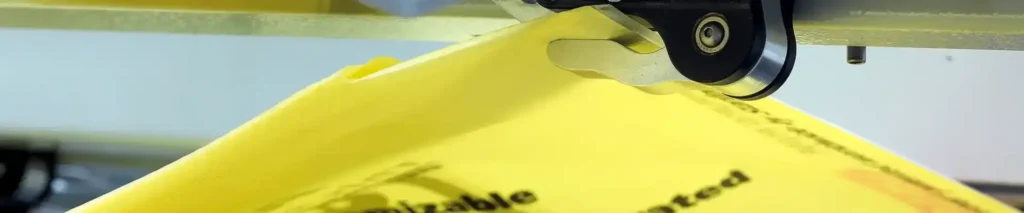
What are Kraft Paper Laminated Woven Bags?
Kraft Paper Laminated Woven Bags are multi-layer flexible packages that marry a woven polyolefin substrate (most commonly polypropylene fabric) with one or more plies of sack kraft and a functional bonding system. The hybrid composition aims to reconcile two packaging worlds that often pull in different directions: the print warmth, fold memory, and approachable handfeel of paper on the one hand; the tensile efficiency, puncture diffusion, and moisture moderation of woven plastic on the other. In procurement notes and plant-floor shorthand, you may see adjacent names—paper‑laminated PP woven sacks, kraft‑face laminated woven bags, laminated multiwall woven sacks, block‑bottom paper‑laminated woven bags, and valve‑type laminated AD*STAR sacks. The vocabulary varies; the engineering intent does not.
During 2024–2025, buyers have been asked to do four things at once: curb dust in the filling hall, accelerate changeovers, document food‑contact or hygiene pathways, and keep end‑of‑life claims honest. Kraft Paper Laminated Woven Bags have risen to that multi-constraint brief with tighter lamination control, smarter seam designs, better coatings, and QR‑linked documentation that travels with the pack. The result is not merely a nicer‑looking sack; it is a more auditable, more predictable packaging component that plays well with modern, high‑throughput lines.
The Materials of Kraft Paper Laminated Woven Bags — Composition, Properties, and Cost Levers
In this format, every layer must earn its keep. When you specify Kraft Paper Laminated Woven Bags, you are trading grams for outcomes: drop survival per gram of substrate; WVTR gain per micron of film; rub‑fastness per coatweight of varnish; line speed per degree of sealing latitude. The bill of materials below is not a shopping list; it is a set of levers—with performance and cost anchored to each lever.
1) Woven Polypropylene Fabric (inner structural layer)
What it is. Polypropylene is melt‑processed into a cast sheet, slit into tapes, then drawn to orient chains. Tapes 2.5–5 mm wide are woven on circular or flat looms. Draw ratio and pick density co‑determine tensile, tear, and puncture response. Why it matters. The woven lattice provides high specific tensile strength with low creep, keeping cubes square during stacking and transport. Where it goes. Inner body ply, mouth and base reinforcements. Cost levers. Resin index, draw ratio (yield vs. split risk), loom uptime, fabric gsm, and UV packages for outdoor depots.
2) Kraft Paper Plies (outer face and stiffness builder)
What they are. Sack kraft engineered for tensile energy absorption (TEA), cross‑direction tear, and burst. Basis weight per ply commonly 70–110 g/m². Bleached grades lift shelf aesthetics; unbleached grades favor rugged industrial routes. What they do. They bring the tactile paper look, contribute puncture diffusion, and provide fold memory so block bottoms stay crisp. Porosity can be tuned to vent air in valve filling while controlling dust. Cost levers. Grammage, fiber source, mill energy context, and any chain‑of‑custody (FSC/PEFC) requirements.
3) Lamination/Tie System (the invisible hinge)
What it is. A coupling layer between paper and fabric—either an extrusion melt curtain (PP/PE) that bonds and can also create a seal face, or a solvent‑free PU/water‑borne acrylic adhesive for controlled bonds at lower temperatures. Tie resins (anhydride‑modified polyolefins) enhance fiber adhesion. Why it matters. It prevents tunneling and delamination through vibration, bending, and drop shocks. Cost levers. Coatweight, nip load, oven energy and cure, plus QA cadence for peel testing. The best “gram saved” is the one lamination stability allows you to remove elsewhere.
4) Functional Coatings (barrier without bulk)
Aqueous dispersion barriers (polymer/mineral hybrids) lift KIT grease resistance and reduce WVTR while keeping the paper face repulpable. Heat‑seal coats enable mono‑paper sealed seams in specific builds, avoiding separate films. Anti‑slip and anti‑scuff varnishes are the low‑mass insurance policy for pallet integrity and print legibility. Cost levers include dry add‑on, solids %, drying energy, and passes.
5) Films and Liners (use when physics demands)
In‑ply LDPE/LLDPE (10–30 µm) adds moisture control and dust suppression; selective BOPP faces (15–25 µm) push wet‑rub durability and photographic print. Loose or form‑fit liners (60–120 µm LDPE/LLDPE) deliver robust seals; optional EVOH coex liners are reserved for aroma/oxygen‑sensitive goods with data‑justified shelf‑life targets. Every gram here must be justified against end‑of‑life friction; when used, publish disassembly guidance.
6) Valves, Mouths, and Closures (where loss is born or avoided)
Valve sleeves—paper, PE, or PP—match nozzle geometry for fast, clean fills; self‑closing flaps reduce secondary sealing; heat‑sealable valves approach near‑hermetic outcomes for moisture‑sensitive products. Open‑mouth designs rely on pinch‑bottom hotmelt, heat‑seal tops, or sewing with crepe tape; in high‑fines powders, thermal or ultrasonic assists close stitch paths to curb sifting. The most economical mass reduction often lives here—in sleeve tolerance and seam architecture—not in heavier papers or fabrics.
What are the Features of Kraft Paper Laminated Woven Bags?
Feature lists matter only if they move the numbers buyers watch: line rate, reject rate, pallet incidents, complaint volume, audit friction. Reframed through that lens, Kraft Paper Laminated Woven Bags excel in six practical dimensions.
What is the Production Process of Kraft Paper Laminated Woven Bags?
Conversion is choreography. A single dyne point too low on a film, a millimeter off in a valve sleeve, a coatweight light by one gram per square meter—all small numbers that can become big outcomes in the field. The stages below highlight control points that most reliably predict performance.
- Paper selection & conditioning. Choose grammage, porosity, and sizing to match de‑aeration and print goals. Condition reels to moisture equilibrium to prevent curl and stabilize color. For food‑adjacent runs, verify chain‑of‑custody and hygiene prerequisites prior to print.
- Printing on paper (flexo dominant). Use water‑based inks and low‑odor varnishes on CI or stack presses. Control register and dot gain via anilox/viscosity management; test wet‑rub before lamination to lock predictable durability.
- Lamination (paper ⇄ fabric). Extrusion lamination with PP/PE melt curtains or solvent‑free PU/water‑borne adhesives bonds paper to fabric. Tune nip pressure, coatweight, and chill temperature; peel strength and flatness are your early‑warning indicators.
- Tubing & valve insertion. Tuber folds/pastes side seams into a continuous tube. Insert valve sleeves with tight tolerances on diameter and position to match filler nozzles; micro‑perforate the valve region for de‑aeration if required.
- Bottoming (block or stepped end). Fold, glue, and compress to form a rectangular footprint. Glue patterns define sift‑proof integrity; compression dwell and temperature prevent spring‑back.
- Feature application & finishing. Add anti‑slip coats, heat‑seal patches, handle cut‑outs (small formats), and on‑pack codes (QR/Datamatrix). For hybrid builds, place in‑ply films before bottoming if moisture targets demand.
- QA, testing, & release. Dimensional checks, seam/bond pulls, filled‑bag drop tests, rub indices. For food SKUs, archive migration dossiers alongside CoAs tied to lot codes; retain samples for later audits.
What is the Application of Kraft Paper Laminated Woven Bags?
Applications begin with physics—particle size, bulk density, hygroscopicity—and end with human realities—how the bag is filled, stacked, moved, and opened. The most common sectors are below, with the specification logic that tends to hold up in practice.
- Cement, gypsum, and minerals. Valve filling on rotary packers; micro‑porosity to vent; anti‑slip faces; strong mouth patches. In humid routes, add a thin PE in‑ply or dispersion barrier to curb moisture pickup.
- Fertilizers and soil amendments. Abrasive granules demand robust exteriors and reinforced seams; outdoor storage argues for UV packages and anti‑slip. Optional liners for tropical depots prevent caking in rainy seasons.
- Food ingredients and milling products. Flour, sugar, starches, premixes: specify low‑migration inks and compliant coatings; where needed, liners provide a continuous seal surface; bleached outer plies plus matte varnish elevate shelf presence.
- Animal feed and pet nutrition. Grease resistance + puncture tolerance + high‑coverage print. Reclose features enter at lighter weights; block‑bottoms keep retail pallets tidy and easy to face.
- Chemicals and additives (non‑dangerous goods). Clean handling and label legibility rule. Moisture control via selective films or liners; static is addressed via process controls and grounding at fill.
Kraft Paper Laminated Woven Bags: Comprehensive Quality Control and Global Practices
Quality in 2024–2025 is broader than tensile and tear. It is documentation, hygiene, downgauging with proof, and region‑true end‑of‑life claims. The most useful way to make sense of this is to use a systems lens: decompose the problem, analyze the levers, recombine into a portfolio that stays stable under audit and under stress.
Professional Standards, Certificates, and Test Methods
Audits run on identifiers. A credible Kraft Paper Laminated Woven Bags program references norms that buyers and regulators recognize, then attaches lot‑specific data to those norms:
- ISO 7965‑2 — Filled sacks: drop test; ISO 2248 — Transport packages: vertical impact (drop).
- EN 15593 — Packaging hygiene management (foodstuffs); FSSC 22000 / ISO 22000 — food‑safety management systems when liners or hygiene zones apply.
- FDA 21 CFR 176.170 — Paper and paperboard in contact with aqueous/fatty foods; FDA 21 CFR 177.1520 — olefin polymers in films/liners; 21 CFR 175.105 — adhesives.
- EU 10/2011 + EN 1186 — Plastics for food contact; overall/specific migration testing for plastic layers.
- ASTM F88/F88M — Seal/laminate peel; ASTM F1249 / ASTM D3985 — WVTR/OTR for liners.
- ISO 9001 / ISO 14001 — Quality and environmental management systems.
Comparative Specification Tables
Worked Examples — From Requirements to Structures
Procurement & Qualification Checklist
- Define physics. Particle size, bulk density, hygroscopicity, cohesion/abrasiveness, oxygen/odor sensitivity.
- Map the line. Filler type, target rate, de‑aeration, sealing tech, pallet pattern, downstream handling.
- Pick the platform. Repulpable paper‑forward; hybrid paper//PE; enhanced‑barrier lined—decide by data, not habit.
- Engineer seams/valves. Valve geometry; pinch/stepped‑end parameters; seam tensile/leakage acceptance bands.
- Demand the stack. Layer‑by‑layer gauges/coatweights; valve materials; anti‑slip specs; print finish; hygiene requirements.
- Request proof. Drop/seam tests; peel values; WVTR/grease (if relevant); CoF; wet‑rub; migration dossiers tied to lots; certificates (ISO 9001/14001; EN 15593 or FSSC 22000).
- Pilot on your line. Measure fill time, dust loss, discharge completeness, pallet stability, scuffing, operator interventions; capture photos/videos.
- Lock & monitor. Freeze drawings/BoMs; set KPIs (returns, breakage, pallet incidents); review quarterly; enable QR‑linked living dossiers.
Risk Register and Practical Mitigations
Strategic Outlook for 2025 — A Cohesive Playbook
Programs that outperform in the next cycle will do four things well and repeatedly. First, they will platform the portfolio into three architectures—repulpable paper‑forward; hybrid paper//PE; barrier‑lined—then assign SKUs by physics and route. Second, they will instrument the process: print cameras, coatweight sensors, seam pull/leak testing—capability‑driven downgauging rather than wishful thinking. Third, they will treat printing and labeling as safety features as much as branding: legible icons, QR‑linked dossiers, durable varnishes. Fourth, they will document everything: BoMs, change control, hygiene certificates, migration dossiers. The payoff is simple: faster approvals, fewer claims, stronger pallets, and packaging that earns trust by carrying proof.
Kraft Paper Laminated Woven Bags have become a vital component in various industries due to their durability, versatility, and excellent barrier properties. These bags, combining kraft paper with PP woven fabric, are designed to meet the demanding requirements of packaging materials, particularly for products like chemicals, foodstuffs, and industrial goods. In this article, we will delve into the comprehensive quality control measures essential for these bags and explore how global practices reflect these standards.
Comprehensive Quality Control for Kraft Paper Laminated Woven Bags
Ensuring the highest quality for Kraft paper laminated woven bags involves a detailed and rigorous quality control process. This process is crucial to meet industry standards and customer expectations. Here are the key aspects of quality control for these bags:
1. Thickness Tolerance
- Purpose: Ensuring that the thickness of the kraft paper and PP woven fabric meets the specified requirements is essential for maintaining the structural integrity and performance of the bags.
- Method: Thickness measurements are taken at multiple points on each bag to ensure uniformity and adherence to standards. Advanced equipment, such as micrometers and calipers, is used for precise measurements.
2. Cut Edge Quality
- Purpose: Clean and precise cut edges are vital to prevent issues such as fraying or weakening of the bag’s structure.
- Method: Inspection of cut edges is conducted to ensure they are smooth and free from defects. Automated cutting machines with quality control sensors help achieve consistent results.
3. Edge Fraying Detection
- Purpose: Preventing fraying at the cut edges is important for the bag’s durability and overall appearance.
- Method: Bags are inspected for any signs of fraying or rough edges. Techniques such as edge sealing or ultrasonic cutting can be used to minimize fraying.
4. Color Difference Testing
- Purpose: Consistent color quality is essential for aesthetic and branding purposes.
- Method: Color difference is assessed using color measurement tools like spectrophotometers to ensure that the bags meet color consistency standards.
5. Grammage Testing
- Purpose: The grammage or weight per unit area of the paper and fabric affects the bag’s strength and capacity.
- Method: Sample bags are tested for grammage using precision weighing scales and comparing them against the required specifications.
6. Tensile Strength and Elongation Testing
- Purpose: Evaluating the tensile strength and elongation of raw materials and finished products ensures that the bags can withstand stresses and strains during handling and transportation.
- Method: Tensile testing machines measure the force required to stretch the material to its breaking point and the extent to which it elongates.
7. Impact Resistance Testing
- Purpose: Assessing the impact resistance of the bags helps in understanding their ability to withstand sudden forces and impacts.
- Method: Impact tests are performed using equipment that simulates dropping or striking the bags to measure their resistance to damage.
8. Aging Resistance Testing
- Purpose: The ability of the bags to resist aging effects ensures long-term usability and durability.
- Method: Bags are subjected to accelerated aging tests, including exposure to high temperatures and humidity, to evaluate how they perform over time.
9. UV Resistance Testing
- Purpose: UV resistance is crucial for bags exposed to sunlight or UV light during storage or use.
- Method: Ultraviolet exposure tests measure how well the bags withstand UV light and prevent degradation of materials.
10. Environmental Performance Testing
- Purpose: Assessing the environmental impact of the bags ensures compliance with eco-friendly standards and regulations.
- Method: Environmental tests include evaluating the biodegradability, recyclability, and overall environmental footprint of the bags.
Global Practices and Trends
Europe
In Europe, the emphasis on quality control for Kraft paper laminated woven bags is driven by stringent regulations and high consumer expectations.
- Advanced Quality Control:
European manufacturers often use sophisticated technology for quality control, including automated testing systems and real-time monitoring. - Sustainability Focus:
There is a strong focus on environmental sustainability. Many European manufacturers adopt eco-friendly materials and processes, ensuring that their bags meet high environmental standards. - Regulatory Compliance:
Compliance with European standards and regulations, such as REACH and CE marking, is essential for manufacturers. These regulations ensure that the bags are safe, durable, and environmentally friendly.
United States
In the United States, the focus is on innovation and meeting diverse market needs.
- Innovation in Testing:
U.S. manufacturers often lead in developing new testing methodologies and technologies to ensure the highest quality of Kraft paper laminated woven bags. - Customization and Branding:
Customization and branding are key trends. Companies invest in advanced printing and design techniques to meet specific customer needs and enhance brand visibility. - Regulatory Standards:
Compliance with U.S. regulations, including those related to food safety and chemical handling, is crucial. Manufacturers must ensure that their products meet all applicable standards.
India
India’s growing market for Kraft paper laminated woven bags reflects increasing attention to quality and efficiency.
- Cost-Effective Quality Control:
Indian manufacturers focus on cost-effective solutions for quality control. While traditional methods are common, there is a growing interest in adopting advanced testing technologies. - Market Expansion:
The expanding market drives manufacturers to improve product quality and meet international standards. Increased investment in quality control processes helps enhance competitiveness. - Environmental Considerations:
There is a growing awareness of environmental issues, leading to the adoption of eco-friendly materials and practices.
Southeast Asia
Southeast Asia is characterized by diverse practices in Kraft paper laminated woven bag production.
- Varied Quality Control Practices:
The adoption of quality control practices varies across the region. While some countries use advanced technologies, others rely on traditional methods. - Regulatory Differences:
Regulatory requirements differ between countries, affecting how manufacturers approach quality control and compliance. - Customization and Innovation:
There is an increasing demand for customized and innovative packaging solutions. Manufacturers are exploring new materials and technologies to meet market demands.
The Future of Kraft Paper Laminated Woven Bags
As the demand for Kraft paper laminated woven bags continues to grow, manufacturers must stay ahead by adopting advanced quality control measures and embracing global best practices. The integration of new technologies and a focus on sustainability will drive the future of these bags, ensuring they meet the evolving needs of industries and consumers worldwide. VidePak’s commitment to comprehensive quality control and adherence to global standards positions us as a leader in delivering high-quality Kraft paper laminated woven bags that meet the highest performance and environmental criteria.