
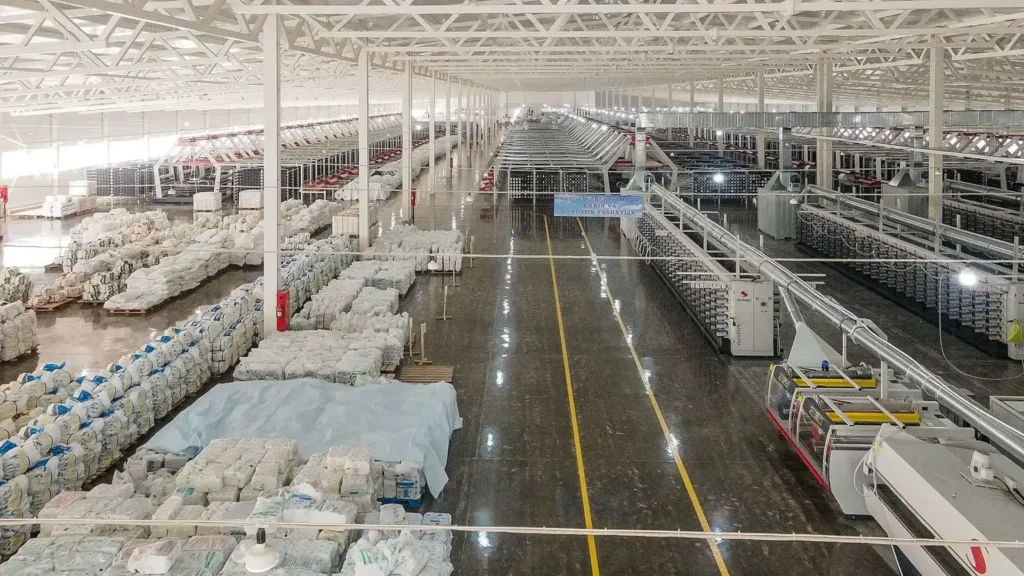
What are Custom Woven Bags?
Custom Woven Bags are engineered sacks made from woven polyolefin fabrics—predominantly polypropylene (PP) and, for specific performance envelopes, high-density polyethylene (HDPE). They are converted into open-mouth or valve formats, paired with closures, liners, and surface finishes tuned to the physics of the packed chemical. In commercial language, they are also called custom PP woven sacks, chemical‑grade woven poly bags, laminated woven chemical sacks, block‑bottom woven bags, and AD*STAR‑type valve sacks. Names vary; the engineering core does not: a lattice of oriented tapes supplies mechanical strength; optional films or coatings deliver barrier and print fidelity; the seam architecture and mouth or valve geometry align with the filler and de‑aeration needs of powders and granules.
Why does this format matter now? Across the last year, procurement, EHS, and operations teams converged on four non‑negotiables that Custom Woven Bags can satisfy when properly specified: predictable line speed with low dust loss; legible, abrasion‑resistant labeling through maritime and road exposure; documented conformance to food/feed and hygiene frameworks where relevant; and credible reductions in resin intensity without sacrificing drop tolerance or pallet stability. Put plainly, these bags should be engineered, not merely purchased.
The Materials of Custom Woven Bags — Composition, Properties, Cost Levers
Designing Custom Woven Bags is an exercise in purposeful layering. Each component must earn its keep by moving a measurable KPI: drop survival per gram, WVTR/OTR improvement per micron of film, line speed per sealing window, legibility per rub cycle. The elements below are the building blocks of robust chemical‑grade specifications.
1) Polypropylene (PP) Woven Fabric
What it is. PP pellets are melted and cast into a thin sheet, slit into tapes (≈2.5–5 mm), then reheated and drawn (≈4–7×) to align polymer chains. The tapes are woven on circular or flat looms into fabrics commonly 70–140 g/m² for sacks.
Why PP. High specific tensile, good puncture diffusion, low creep at warehouse temperature, crisp fold memory for block‑bottoms, and a wide lamination window to BOPP for premium print. UV packages extend outdoor life in depots.
Cost levers. Resin index (propylene + energy), draw ratio (yield vs. brittleness), loom uptime, scrap rate, fabric grammage. Process capability often saves more cost than recipe changes.
2) HDPE Woven Fabric
What it is. HDPE tapes are slit/drawn from higher‑density resin with more crystalline lamellae, yielding higher modulus and lower elongation at break at a given draw.
Why HDPE. Stiffness and cold‑route dimensional stability for dense mineral salts; enables mono‑HDPE claims in programs targeting simplified recycling streams.
Trade‑offs. Narrower operating window; risk of tape splits if anneal/draw are not disciplined. Surface printability is modest; films or coatings help.
3) Clear or Printed Films
BOPP. 15–30 µm; high clarity; supports rotogravure or HD‑flexo; scuff resistant; corona/primer dyne ≥38 dyn/cm. Ideal for brand‑forward labeling and durable safety icons.
CPP / PE. Slightly lower clarity; opens soft‑seal options and mono‑material aims. PE also supports pinch‑top heat seals in open‑mouth builds.
Cost levers. Film gauge, finish (matte/gloss), ink coverage (curing energy, rub index), lamination route (extrusion vs. adhesive), line speed.
4) Functional Coatings & Primers
Extrusion coatings. 8–20 g/m² PP/PE melt curtain as tie or seal face; low haze grades preserve semi‑transparent windows.
Aqueous primers/varnishes. Low‑odor adhesion aids and protective layers; anti‑slip varnish raises CoF to tame pallets; wet‑rub improvements protect icons.
Controls. Dyne stability, coatweight uniformity, haze, rub resistance after full cure.
5) Liners
LDPE/LLDPE. 60–120 µm; loose or form‑fit; deliver seal integrity, moisture control, and clean discharge.
Barrier coex (EVOH). Only where oxygen/odor sensitivity is documented by shelf‑life data; adds end‑of‑life complexity; justify explicitly.
Additives. Antistatic for dusty fills; slip for insertion; clarity if codes must be read through windows.
6) Valves, Mouths, Closures
Valve sleeves. Paper, PE, or PP; self‑closing or heat‑sealable; geometry (diameter, taper, length) drives fill speed and leak rates.
Open‑mouth options. Pinch‑bottom hotmelt; heat‑seal via sealant face or liner; sewing (legacy) with crepe tape; ultrasonic assists to close stitch paths.
Seam consumables. High‑tenacity PP/PET threads (210–450 denier); hot‑melt ribbons; clear anti‑sift tapes that preserve window aesthetics.
What are the Features of Custom Woven Bags for Chemicals?
Features are meaningful only when tied to outcomes—line speed, cleanliness, pallet stability, audit friction, and end‑user trust. Reframed that way, Custom Woven Bags excel on six fronts.
- High‑speed, low‑dust filling. Valve sleeves with tuned micro‑perforation ventilate trapped air while product flows. On open‑mouth lines, a sealant face or liner allows heat‑sealing to eliminate sift‑back through needle holes.
- Brick‑like stacking. Block‑bottom geometry produces a near‑rectangular prism; anti‑slip treatments increase static/dynamic CoF, keeping pallets intact during braking, cornering, or maritime sway.
- Strength‑to‑weight efficiency. Oriented tapes distribute loads across warp and weft; reinforced mouth/base patches tolerate repeated drops at the most abused interfaces.
- Durable, legible print. BOPP faces or printable coatings carry high‑coverage safety labeling (pictograms, UN numbers, handling icons) and branding; protective varnish preserves legibility through abrasion and condensation cycles.
- Hygiene pathways where relevant. In food/feed‑adjacent chemicals, low‑migration inks/adhesives, compliant liners, and audited hygiene systems enable smooth approvals.
- Traceability real estate. Large panels host QR‑linked dossiers—drawings, BoMs, test data, certificates, and disposal guidance—accelerating checks at borders and customer QA gates.
Outcome‑linked metric
Line speed correlates with a clean, repeatable sealing window and de‑aeration rate. Track seconds per bag, rejects per thousand, and valve‑sleeve insertion torque.
Distribution reality
Pallet survival improves more from anti‑slip + squareness audits than from heavier fabrics. Specify CoF acceptance bands on filled bags, not just films.
Compliance comfort
Legible labels are a safety device. Wet‑rub indices, icon contrast ratios, and QR scanability are as critical as tear and tensile.
What is the Production Process of Custom Woven Bags?
Conversion is choreography; minor deviations become major outcomes in the field. The stations below consistently predict performance for Custom Woven Bags.
- Tape extrusion & drawing. Melt PP/HDPE; cast sheet; slit; reheat; draw; anneal. Add antioxidants, UV stabilizers (for outdoor exposure), slip/antiblock for loom traction. Controls: tape width/thickness CV%, draw ratio, shrink/anneal behavior, gel count, surface finish.
- Weaving & fabric inspection. Circular/flat looms interlace tapes at target pick densities; weave openness balances de‑aeration and sifting. Controls: gsm, pick density, air permeability, defect mapping; dimensional stability predicts crisp block‑bottoms.
- Printing & surface preparation. Films (BOPP/CPP/PE) are corona‑treated/primed and printed by rotogravure or HD‑flexo. Controls: dyne ≥38 dyn/cm before/after print; cross‑hatch adhesion; wet‑rub resistance; register tolerance; low odor for food/feed‑adjacent SKUs.
- Lamination or coating. Extrusion lamination lays a PP/PE melt curtain; adhesive lamination uses solvent‑free PU or water‑borne acrylic; dispersion coats add WVTR/grease resistance. Controls: bond peel (ASTM F88/F88M), coatweight uniformity, curl/flatness, residual solvent (if any), line speed.
- Slitting, tubing, valve integration. Slit laminated webs; form tubes by hot air/hotmelt/ultrasonic seams; insert valve sleeves to tight geometry tolerances; add micro‑perfs near the valve to manage de‑aeration. Controls: seam shear/T‑peel, circumference tolerance, sleeve position/diameter, perforation density.
- Bottoming & features. Form block‑bottom or pinch‑bottom; apply anti‑slip, easy‑open features, optional reclose devices; reinforce high‑wear interfaces. Controls: base squareness, compression integrity, CoF, varnish cure, optical clarity on transparent panels.
- QA, testing, release documentation. Dimensional checks; seam/bond pulls; filled‑bag drop tests; wet‑rub indices; CoAs with dyne, peel, seam, and CoF data; migration and hygiene dossiers for food/feed‑adjacent chemicals. Controls: sampling plans, retained samples, lot‑coded documentation; change control on inks/films/fabrics.
What is the Application of Custom Woven Bags?
Application logic starts with physics (particle size, bulk density, hygroscopicity, minimum ignition energy for dust), passes through line realities (filler type, de‑aeration, sealing), and ends with route context (outdoor storage, intermodal shocks, audit frequency). Typical sectors include:
- Mineral salts & inorganic powders. Soda ash, potash, calcium carbonate, titanium dioxide, silica, kaolin. Valve fills with micro‑perfs, anti‑slip faces, reinforced mouths; moisture moderation via thin PE faces or liners prevents caking.
- Fertilizers & soil amendments. Urea, NPK blends, micronutrients. Abrasive granules and tropical storage argue for UV‑stabilized fabrics, anti‑slip, and optional liners. Hazard pictograms and batch codes must endure long cycles outdoors.
- Polymer additives & masterbatches. Antioxidants, slip/antiblock, pigments. Lined open‑mouth bags with pinch‑seals improve cleanliness; BOPP‑faced panels safeguard labels.
- Food/feed‑adjacent ingredients. Citric acid, starches, premixes: compliant liners, low‑migration inks/adhesives, audited hygiene systems; matte faces reduce glare for scanners.
- Retail chemicals & household inputs. Pool chemicals, water‑softener salts, de‑icing pellets: brand‑forward print, wipe‑clean films, easy‑open features; anti‑slip preserves retail pallets.
Custom Woven Bags: Tailored Solutions for Chemical Products — Structured Thinking
Cross‑functional teams think in first principles: goal, constraints, levers. The problem can be reframed as deliver a bag that fills fast, ships safely, presents clearly, audits cleanly, and ends responsibly. Constraints include product physics (hygroscopic vs. inert; cohesive vs. free‑flowing), route stress (humidity, vibration), regulatory envelope (food/feed adjacency, dangerous‑goods proximity), and cost/carbon targets. Levers are fabric gsm, film/coat gauge, seam architecture, valve geometry, liner presence, anti‑slip, and print/varnish systems. With those on the table, Custom Woven Bags can be platformed into a portfolio rather than managed as one‑off SKUs.
Platformed Portfolio
- Mono‑polyolefin standard (BOPP//PP or PE‑on‑PP). For mineral salts and robust granules; prioritize anti‑slip and seam integrity.
- Food/feed‑grade lined. PP fabric + LDPE/LLDPE liner; low‑migration inks/adhesives; hygiene certificates; best for edible acids, starches, premixes.
- Enhanced‑barrier lined (EVOH optional). Only with oxygen/odor sensitivity proven by shelf‑life data; claims scoped to end‑of‑life realities.
Failure‑Mode Logic
- Sifting/leaks. Increase stitch density at corners; add stitch + hot‑air or ultrasonic assist; apply clear anti‑sift tape; refine valve sleeves.
- Pallet collapse. Specify anti‑slip; verify CoF under route‑realistic humidity and dust; optimize pallet pattern and wrap.
- Print scuff/illegibility. Protective varnish; define wet‑rub indices; place critical icons in low‑contact zones.
- Delamination. Control coatweights and cure; verify peel; monitor residual solvent on adhesive lines.
- Greenwashing risk. Scope recyclability claims by geography; publish liner‑removal guidance; avoid ambiguous logos.
Systems Approach — Decompose Each Subsystem, Then Recombine
A resilient program for Custom Woven Bags emerges when four subsystems are designed deliberately and then integrated: performance, compliance, cost/carbon, and brand/UX.
Subsystem A — Functional Performance
Problem: Hit moisture/oxygen targets and drop tolerance while maintaining line speed.
Analysis: Moisture‑only risks favor thin faces or liners; oxygen sensitivity justifies EVOH only with shelf‑life data. Seam upgrades often solve dust complaints better than heavier fabrics. Block‑bottom geometry plus anti‑slip beats extra grams for pallet stability.
Solution: Define a decision tree that routes SKUs to Standard, Lined, or Barrier‑Lined; encode acceptance bands for drop height, seam tensile, and WVTR/OTR.
Subsystem B — Compliance & Auditability
Anchors (identifiers): ISO 9001; ISO 14001; FSSC 22000 / ISO 22000 or EN 15593; FDA 21 CFR 177.1520 (olefin polymers) and 21 CFR 175.105 (adhesives); EU 10/2011 + EN 1186 (migration); ISO 7965‑2 and ISO 2248 (drop); ASTM F88/F88M (peel); ASTM F1249 / ASTM D3985 (barrier metrics).
Solution: Keep a per‑SKU dossier with drawings, BoM, test reports, migration declarations, hygiene certificates, and environmental metrics (kg CO₂e per bag and per tonne moved). Print a QR code on the bag that routes to the dossier.
Subsystem C — Cost & Carbon
Problem: Reduce delivered cost and resin intensity without breaking KPIs.
Analysis: Capability‑driven downgauging—backed by inline print cameras and coatweight sensors—removes grams from films, fabrics, and varnishes while maintaining performance. Solvent‑free adhesive lamination lowers oven energy and odor.
Solution: Two‑column approvals for any change: Cost (€/1,000) and Carbon (kg CO₂e/1,000; kg CO₂e/tonne moved). If one metric worsens, show compensating improvement elsewhere (e.g., seam upgrade allows fabric reduction).
Subsystem D — Brand & User Experience
Problem: Preserve legibility and usability through harsh distribution.
Analysis: Print is a safety feature: clear pictograms reduce incidents. Matte/gloss balance controls scanner glare. Reclose features help partial‑use chemicals in retail.
Solution: Standardize finish libraries (matte GU 20–40; gloss GU 70–90), rub indices, iconography packs; validate with distribution simulations before rollout.
Professional Standards, Certification Identifiers, and Test Methods
A credible Custom Woven Bags program references standards that auditors recognize. Below is a quick reference with typical uses in chemical packaging.
| Identifier | Scope | Packaging Relevance |
|---|---|---|
| ISO 7965‑2 | Filled sacks: drop test | Defines acceptance height/mass; validates seam and laminate integrity. |
| ISO 2248 | Transport packages: vertical drop | Confirms pallet‑level robustness when combined with stacking tests. |
| ASTM F88/F88M | Seal/laminate peel strength | Monitors bond integrity in extrusion/adhesive laminations. |
| ASTM F1249 / ASTM D3985 | WVTR / OTR of films/liners | Used for moisture/oxygen targets in food/feed‑adjacent chemicals. |
| FDA 21 CFR 177.1520 / 175.105 | Olefin polymers; adhesives | U.S. food‑contact citations when liners or coatings touch product. |
| EU 10/2011 + EN 1186 | Plastics for food contact; migration | Overall/specific migration tests for EU markets. |
| EN 15593 / FSSC 22000 / ISO 22000 | Packaging hygiene / food‑safety systems | Hygiene management when chemicals are food/feed‑adjacent. |
Technical Tables — Parameters & Targets (Illustrative)
| Layer / Feature | Typical Options | Indicative Range | Purpose |
|---|---|---|---|
| Fabric (gsm) | PP or HDPE woven | 70–110 (retail/food), 90–140 (minerals) | Tensile, drop, puncture |
| Film face | BOPP gloss/matte; CPP/PE | 15–30 µm | Print, scuff, visibility |
| Coating add‑on | PP/PE extrusion; aqueous varnish | 8–20 g/m² | Tie, seal window, CoF control |
| Liner | LDPE/LLDPE; EVOH‑coex optional | 60–120 µm | Moisture/aroma barrier, seal |
| Anti‑slip | Varnish; micro‑emboss | 1–3 g/m² | Pallet stability |
| Dimension | Method | Indicative Target / Rationale |
|---|---|---|
| Bond peel | ASTM F88/F88M | >2.0 N/15 mm typical; tougher routes demand more |
| Drop survival | ISO 7965‑2 / ISO 2248 | No rupture/leak at specified mass/height |
| CoF (static/dynamic) | ASTM D1894 | Tuned to route to prevent pallet slip |
| WVTR (38°C/90%RH) | ASTM F1249 (film/liner) | ≤5–10 g/m²·day for moisture‑sensitive goods |
| OTR (23°C/50%RH) | ASTM D3985 (barrier liners) | Set by shelf‑life data; 2–10 cc/m²·day typical with EVOH |
Worked Scenarios — Translating Requirements into Structures
Scenario A — 25 kg Calcium Carbonate (Export)
Objective. Fast valve fill, low dust, cube‑stable pallets.
Structure. 100 g/m² PP fabric; 20 µm gloss BOPP face for scuff; micro‑perfs near valve; block‑bottom valve; stitch + hot‑air seam assist; anti‑slip varnish.
Why it works. Valve + micro‑perfs speed de‑aeration; seam assist closes stitch paths; BOPP resists pallet rub; anti‑slip prevents collapse.
Scenario B — 20 kg Polymer Masterbatch (Pellets)
Objective. Clean discharge, zero fines leakage, legible labeling.
Structure. 90 g/m² PP fabric; printable PE sealant face; LDPE form‑fit liner; pinch‑bottom; easy‑open notch; matte varnish on print panels.
Why it works. Liner provides sealing; PE face enables pinch seal; matte reduces glare for scanners; pellets slide without snags.
Scenario C — 10 kg Food‑Adjacent Citric Acid
Objective. Food‑contact pathway, moisture control, retail‑grade safety labels.
Structure. 85 g/m² PP fabric; 25 µm matte BOPP; 80 µm LDPE liner; low‑migration inks/adhesives; hygiene certificate; QR‑linked dossier; pinch‑bottom.
Why it works. Liner + matte film ensures moisture control and legible print; documentation accelerates audits.
Global Practices — The Last‑Year Playbook
Buyer expectations sharpened in three areas that intersect Custom Woven Bags: design‑for‑recycling (mono‑polyolefin stacks; documented wash‑off/de‑inking where printed films are used); capability‑driven downgauging (inline cameras and SPC, not hope); and documentation as a product feature (QR‑linked dossiers per SKU). Regions differ, so claims must be scoped to geography.
- Europe. EPR fee modulation nudges specs toward mono‑material builds and solvent‑free chemistries; downgauging is conservative but thorough; clarity in recyclability claims is emphasized.
- North America. Retail pilots for film collection expand; claims are retailer‑specific; odor and migration documentation dominate for food/pet‑adjacent chemicals.
- Asia‑Pacific. Fastest SKU cycles; aggressive downgauging where SPC is strong; exporters maintain multi‑region artworks to keep claims true.
Procurement & Qualification Checklist
- Define physics — particle size, bulk density, cohesion/abrasiveness, moisture and oxygen sensitivity, MIE if dust is combustible.
- Map the line — filler type, target rate, de‑aeration, sealing method, pallet pattern.
- Pick the platform — mono‑polyolefin standard; food/feed‑grade lined; enhanced‑barrier lined; decide by data.
- Engineer the seam — stitch architecture, assist (hot‑air/ultrasonic), anti‑sift tape; acceptance bands for seam tensile/leakage.
- Demand the stack — layer gauges/coatweights; valve geometry; anti‑slip; print/finish specs; hygiene requirements.
- Request proof — drop/seam tests; peel; CoF; WVTR/OTR (if relevant); migration dossiers; certificates (ISO 9001/14001; EN 15593/FSSC 22000).
- Pilot on your line — log fill time, dust loss, discharge completeness, pallet stability, scuffing, scanner readability.
- Lock and monitor — freeze drawings/BoMs; set KPIs (returns, breakage, pallet incidents, dust complaints); review quarterly; keep QR‑linked dossiers live.
Risk Register & Mitigations
- Valve dust leakage. Tighten sleeve tolerances; trial heat‑sealable sleeves; add micro‑perfs; stitch + thermal assist.
- Pallet slip/collapse. Specify anti‑slip; verify CoF in route‑realistic conditions; optimize pallet pattern and wrap.
- Delamination or seam failure. Control glue temperature and dwell; validate coatweights; routine peel/shear tests; needle tracking + metal detection for food/feed shipments.
- Print scuffing/illegibility. Protective varnish in high‑rub zones; wet‑rub validation; safe‑zone artwork near forklift interfaces.
- Food‑contact non‑conformance. Maintain substance registers; migration tests tied to lots; hygiene certificates current.
- Greenwashing on recyclability. Constrain claims to regions with collection/sorting; publish liner‑removal guidance; avoid ambiguous symbols.
A Practical Narrative — From RFQ to First Stable Shipment
- Discovery. Multi‑disciplinary kick‑off: product physics, line constraints, route map, compliance scope. Agree on KPIs and methods.
- First‑principle spec. Choose platform architecture; define the materials stack; draft drawings and acceptance bands; plan trials.
- Pilot run. Short build; instrument the line; capture dust loss, fill time, discharge completeness, pallet stability; photo/video evidence.
- Decision gate. Compare KPIs to acceptance bands. If gaps: iterate the seam (fastest win) before increasing fabric mass.
- Documentation. Finalize dossier (drawings, BoM, CoAs, migration/hygiene certificates). Print QR; freeze change control.
- Scale. Move to full build with SPC on laminate coatweight, print register, seam tensile, CoF; begin downgauging only after capability is stable.
- Feedback loop. Quarterly review of returns, breakage, dust complaints, pallet incidents; adjust anti‑slip or seam assists first.
In today’s diverse industrial landscape, Custom Woven Bags play a critical role in packaging a wide array of products, particularly in the chemical industry. These bags, designed for packaging chemical products and raw materials such as fertilizers, plastic pellets, activated carbon, carbon black, and disinfectants, are essential for maintaining product integrity and ensuring safe transportation. This article explores the significance of custom woven bags in the chemical sector, their features, and how global practices and trends influence their development and application.
The Importance of Custom Woven Bags in Chemical Packaging
Custom woven bags offer tailored solutions for the packaging needs of various chemical products. Their design and construction address specific requirements for durability, safety, and functionality, making them ideal for handling a range of chemicals and raw materials.
Key Features of Custom Woven Bags
- Durability and Strength
- Material Quality: Custom woven bags are typically made from polypropylene (PP) or polyethylene (PE), known for their strength and durability. These materials ensure that the bags can withstand the weight and abrasiveness of chemical products.
- Construction: The weaving process creates a robust fabric that resists tearing and punctures, essential for packaging chemicals that may be coarse or heavy.
- Customization Options
- Design and Size: Custom woven bags can be tailored to specific dimensions and capacities, accommodating various types and quantities of chemical products.
- Printing and Branding: Custom printing options allow for the inclusion of brand logos, product information, and handling instructions. This not only enhances brand visibility but also provides crucial information for safe handling.
- Protection and Safety
- Barrier Properties: For chemicals sensitive to moisture, UV light, or contaminants, custom woven bags can be designed with additional layers or coatings to provide enhanced protection.
- Sealing and Closure: The bags can be equipped with various closure types, such as heat-sealed or sewn tops, to prevent spillage and contamination.
Applications in Chemical Packaging
Custom woven bags are widely used in the chemical industry due to their versatility and effectiveness in packaging a variety of products:
- Fertilizers
- Packaging Needs: Fertilizers often come in granular or powder form, requiring durable and moisture-resistant packaging. Custom woven bags can be designed to withstand the physical demands of handling and transportation.
- Features: Enhanced barrier properties and secure closures help maintain the quality and efficacy of the fertilizer.
- Plastic Pellets
- Packaging Needs: Plastic pellets are typically used in manufacturing processes and require packaging that prevents contamination and maintains product integrity.
- Features: Custom woven bags with strong seams and protective coatings ensure that the pellets are delivered in optimal condition.
- Activated Carbon and Carbon Black
- Packaging Needs: These materials are used in various industrial applications and need packaging that can handle their abrasive nature and potential for dust generation.
- Features: The durability of custom woven bags and their ability to prevent dust leakage make them suitable for these products.
- Disinfectants
- Packaging Needs: Disinfectants and other chemicals may require packaging that is resistant to chemical reactions and leakage.
- Features: Custom woven bags can be designed with specialized coatings and reinforced seams to ensure safe and secure packaging.
Global Practices and Trends
Europe
In Europe, the packaging industry has a strong emphasis on environmental sustainability and compliance with stringent regulations.
- Sustainability Focus:
- Eco-Friendly Materials: European manufacturers are increasingly using recyclable and biodegradable materials for custom woven bags. This aligns with the EU’s environmental directives and consumer preferences for sustainable packaging.
- Regulatory Compliance: Adherence to regulations such as REACH (Registration, Evaluation, Authorisation, and Restriction of Chemicals) ensures that packaging materials meet safety and environmental standards.
- Innovation and Technology:
- Advanced Printing Technologies: European companies often utilize cutting-edge printing technologies for high-quality, durable prints that enhance branding and product information.
United States
In the United States, the focus is on customization and meeting diverse industry needs.
- Customization and Branding:
- Tailored Solutions: U.S. manufacturers offer a wide range of customization options for custom woven bags, including varied sizes, colors, and printing techniques to meet specific industry requirements.
- Branding Opportunities: Enhanced printing capabilities allow for detailed and vibrant branding, improving product visibility and consumer recognition.
- Regulatory Standards:
- Compliance with FDA and Other Regulations: For chemicals used in food or pharmaceuticals, compliance with FDA regulations and other industry standards is crucial.
India
In India, the growing demand for chemical products drives the need for high-quality, cost-effective packaging solutions.
- Cost-Effective Solutions:
- Affordable Customization: Indian manufacturers focus on providing cost-effective custom woven bags while maintaining quality. This balance is crucial for meeting the needs of both domestic and international markets.
- Local Production: The emphasis on local production helps reduce costs and supports rapid response to market demands.
- Adapting to Market Needs:
- Increasing Innovation: As the Indian market grows, manufacturers are adopting new technologies and materials to enhance the performance and appeal of custom woven bags.
Southeast Asia
Southeast Asia presents a diverse market with varying practices and needs.
- Diverse Requirements:
- Varied Applications: The region’s diverse industries demand a range of custom woven bag solutions, from basic to highly specialized designs.
- Regional Differences: Manufacturing practices and quality control standards vary across countries, influencing the types of custom woven bags available.
- Emerging Trends:
- Focus on Quality and Innovation: As the market matures, there is a growing emphasis on quality control and innovative solutions to meet the evolving needs of the chemical industry.
The Future of Custom Woven Bags
The future of custom woven bags lies in continued innovation and adaptation to industry trends. Advances in materials, printing technologies, and customization options will drive the development of more effective and sustainable packaging solutions. As global markets evolve, manufacturers like VidePak are well-positioned to meet the demands of the chemical industry with high-quality, customized woven bags that offer durability, safety, and functionality.