
What Are Kraft Paper Woven Bags? Scope, Synonyms, and Why the Hybrid Exists
Kraft Paper Woven Bags are engineered hybrids that pair a textile-strength internal skeleton with a paper-forward exterior. The inner skeleton is a woven polyolefin fabric—most commonly polypropylene tapes drawn for high orientation—while the outer skin is sack-grade kraft paper chosen for friction, print quality, and familiar, brand-friendly aesthetics. In procurement notes you may also see: paper‑laminated woven PP sacks, paper‑poly woven bags, kraft‑laminated valve sacks, block‑bottom paper‑woven bags, paper‑sleeved circular‑woven sacks, and (less frequently) paper‑sleeved FIBCs. The hybrid exists for a reason: pure paper excels at print and grip but struggles in humid, abrasive chains; pure woven poly is strong and moisture‑tolerant but can be slippery and visually “industrial.” Kraft Paper Woven Bags aim to combine the best of both without paying the full penalty of either.
The format has become a staple in fertilizers, seeds, animal nutrition, construction powders, and selected food ingredients where a paper look is preferred but a textile backbone is prudent. It supports open‑mouth or valve filling, block‑bottom or pillow geometries, removable liners, and graphics ranging from minimal compliance panels to retail‑grade branding. Critically, the stack is more than the sum of layers: the interfaces—paper‑to‑poly bonds, seam architectures, sealing windows—decide whether the design delivers on speed, cleanliness, and safety.
The Material Stack of Kraft Paper Woven Bags: Resin, Paper, Bonds, Liners, and What Each Part Contributes
Designing Kraft Paper Woven Bags is an exercise in orchestration. Each component has a job, a cost, and a failure mode. Aligning those realities with product physics and route climates is where engineering earns its keep.
Woven Substrate — The Load‑Bearing Core
- Polypropylene tapes (PP‑H / PP‑R): slit‑film tapes drawn 5–8×; PP‑H brings stiffness and a ~160–165 °C melt range; PP‑R adds low‑temperature toughness. Density ≈0.90–0.91 g/cm³ yields excellent strength‑per‑gram.
- Selective HDPE tapes: used when slightly lower moisture permeability or higher modulus is wanted; PP remains dominant for recyclability in PP streams and process latitude.
- Fabric basis weight: 85–140 gsm for 20–50 kg bags; 160 gsm in rough chains or high drop‑height specs. Picks‑per‑inch and denier tune planarity and sifting control.
Kraft Paper Facings — Grip, Graphics, and Human Factors
- Sack kraft grades: unbleached 70–90 g/m² for strength and natural look; bleached for vivid color reproduction.
- Surface friction (COF): paper typically achieves ≥0.4 dynamic, enhancing layer‑to‑layer stability and manual handling.
- Ink holdout: papers offer crisp compliance panels and QR/barcodes without the plastic sheen of films.
Bonding & Tie Layers — Where Systems Succeed or Fail
- Extrusion coats: polyolefin coats (12–30 g/m²) create sift‑proofness and heat‑seal windows while bonding paper to fabric.
- Adhesive laminations: hot‑melt or water‑based systems for lower thermal stress on paper or when delamination‑for‑recycling is desired.
- Uniformity: bond variation causes corner delamination and print scuff; target consistent coat mass and peel strength.
Liners, Inners, and Contact Layers
- LDPE/LLDPE: 50–120 μm for hygroscopic powders; form‑fit variants reduce pleat residue.
- PP liners: preserve mono‑polyolefin inners; sealing windows differ from PE and must be validated.
- Barrier coextrusions: EVOH/PA where aroma/oxygen sensitivity demands; keep removable and clearly labeled.
Key Features of Kraft Paper Woven Bags: How the Hybrid Behaves in the Real World
Features trade off. More barrier can mean less breathability; more friction can slow chutes. The craft is in choosing the right settings for the product, the plant, and the route. Below, the attributes that tend to decide outcomes.
Strength at Modest Mass
Oriented tapes distribute load across warp and weft, so a 95–130 gsm body can pass 0.8–1.2 m drop tests (orientation and product hardness matter) when seams translate fabric capacity into system capacity. Paper spreads surface stress and shields tape edges from scuff‑initiated cuts.
Friction and Squareness
Paper faces raise COF, supporting taller safe stacks and reducing hood film use. Block bottoms produce brick‑like units; interlocked patterns resist vibration. In forklifts and on trucks, fewer slide‑outs mean fewer claims.
Print Real Estate That Endures
Four flat faces carry detailed compliance text, QR/GS1 codes, and branding. Paper’s ink holdout keeps small fonts legible after conveyor abrasion. Reverse‑printed film panels are optional but often unnecessary.
Moisture & Condensation Control
Internal poly layers and liners manage WVTR for hygroscopic powders. Where night‑day cycles cause condensation, micro‑perforated paper fields and anti‑wick hems help moisture escape without inviting dust.
Clean Filling and Dust Discipline
Valves sized to the spout and product rheology contain fines at source. Ultrasonic patches lock mouths under internal product pressure, keeping warehouse air clearer and labels readable.
Designed Recyclability
Mono‑PP inners, PP threads/labels, polyolefin tie layers, and removable liners support PP‑stream recovery where available. Alternatively, paper‑forward delamination strategies can be specified for paper‑dominant regions.
Production Flow: From Pellets and Pulp to Pallet‑Ready Kraft Paper Woven Bags
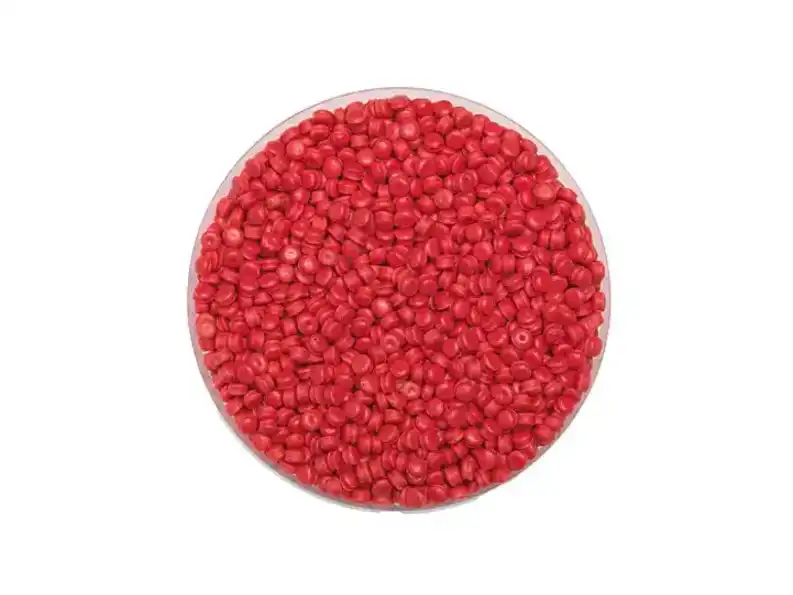
- Tape extrusion & drawing. PP pellets (with UV, slip, color) are cast as sheet, slit to tapes, and drawn 5–8×. The draw profile governs tensile, elongation, and creep—decisive under top‑load.
- Weaving. Circular or flat looms interlace tapes to target gsm and picks‑per‑inch. Flat fabrics ease block‑bottom folding; circular fabrics are gusseted for squareness.
- Heat setting. Thermal stabilization locks dimensions and reduces shrink at lamination and sealing temperatures.
- Lamination or extrusion coating. Polyolefin coats bond paper to fabric and add sift‑proofness; adhesive laminations reduce thermal load on paper or enable intentional delamination pathways.
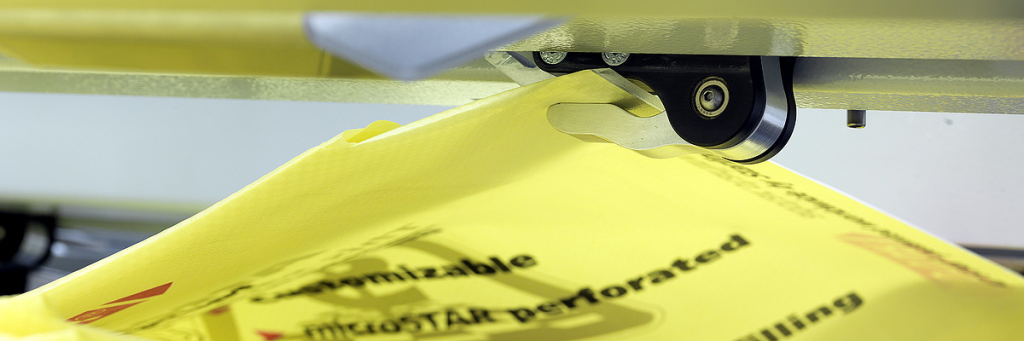
- Printing. Flexographic inks on kraft create compliance panels and branding. Registration accounts for fold lines and valve positions; inks target low odor and scuff resistance.
- Conversion. Cutting to register, gusseting, block‑bottom forming, valve sleeve installation, and mouth finishing. Ultrasonic anti‑sift patches are added where powders demand.
- QA & release. Dimensional checks (±2–3 mm), bond peel, seam efficiency pulls, drop/stack tests, WVTR (if specified), COF (outer paper vs. inner poly), and print scuff tests. Food‑adjacent programs add migration documentation for any contact layers.
- Palletization & labeling. Bundles are strapped and wrapped; pallet labels tie lots to raw‑material COAs and test results. Moisture‑sensitive shipments may include shrouds or desiccant.
Use Cases: Where Kraft Paper Woven Bags Outperform
- Fertilizers & amendments: NPK, urea, potash, gypsum—valves for speed, paper for grip, woven for strength.
- Seeds & grains: surface protection avoids kernel scuff; liners protect germination viability.
- Animal nutrition: clear feed‑law panels; clean sealing; abrasion‑resistant faces.
- Construction powders: cement, mortar, tile adhesive—dust discipline plus durable labeling.
- Food ingredients (selected): sugar, rice, coarse salts, starches—paper look with linered moisture control where hygiene demands.
- Retail‑facing industrial goods: charcoal, pellets, firewood—premium appearance plus rugged handling.
Title‑Driven Analysis: Strategic Material Selection for Global Compliance and Performance
The title is a roadmap. Strategic implies deliberate trade‑offs between strength, moisture control, machinability, branding, and end‑of‑life. Material selection recognizes that the stack—not any single layer—determines outcomes. Global compliance introduces region‑specific obligations (food‑contact migration, dangerous‑goods performance, EPR reporting). Performance binds everything to measurable KPIs: speed, dust, pallet stability, and claims rate. In short: form (skeleton), function (barrier & friction), figure (graphics & labels), fate (recyclability). The sections below use this lens to structure decisions.
Systems Thinking: Break the Problem Apart, Then Re‑compose It
Subsystem A — Product–Package Interaction
Background: hygroscopicity, particle hardness, and residual heat drive caking and condensation. Levers: coat mass, breathable paper zones, liner choice, anti‑wick hems, vent geometry. Metrics: moisture gain %, caking index, WVTR, leak‑down at seals.
Subsystem B — Filling & Valve Optimization
Background: gravity/air, impeller, and auger fillers stress mouths differently. Levers: sleeve length/angle, low‑slip outer films, ultrasonic anti‑sift patches, spout tolerances. Metrics: net‑weight SD, dust mg/m³, speed bags/min, seal leak rate.
Subsystem C — Palletization & Transport
Background: many lanes cube out before they weigh out; COF and squareness rule. Levers: paper finish, friction bands, gusset dimensions, pattern (interlock vs. column), hood film thickness. Metrics: stack lean mm after vibration, layer slip angle °, safe layer count.
Subsystem D — Compliance & Documentation
Background: food‑adjacent programs need migration documents; dangerous goods invoke UN performance; quality and environment systems underpin audits. Levers: DoCs, migration test reports, label templates, change control. Metrics: audit scores, CAPA closure time, pass rate on drop/stack and OML/SML tests.
Subsystem E — Circularity & EPR
Background: mixed articles challenge sorters; economics depend on bale density and contamination. Levers: mono‑PP inners, PP labels/threads, polyolefin ties, removable liners, delamination approaches for paper‑stream regions. Metrics: recovered kg/1,000 bags, bale contamination %, recycler acceptance notes, CO₂e per delivered ton vs. baseline.
Standards, Certifications, and the Evidence Buyers Expect (2024–2025)
Technical files for Kraft Paper Woven Bags are strongest when they cite current frameworks and include primary evidence (certificates, test reports, Declarations of Compliance). A representative roster:
- ISO 9001:2015 — quality management; document control and CAPA.
- ISO 14001:2015 — environmental management; solvent/ink control and scrap recovery.
- ISO 45001:2018 — occupational health & safety at weaving, coating, printing, sealing, sewing, palletization.
- FSSC 22000 v6.0 or BRCGS Packaging Materials Issue 6 — hygiene and foreign‑matter control when food‑adjacent or direct contact (liners/contact layers).
- EU Regulation No 10/2011 and FDA 21 CFR 177.1520 — plastics for food contact; OML/SML and DoCs for liners and internal coats.
- ISO 21898:2024 — FIBC for non‑dangerous goods; its lift/stack/drop philosophy informs safety margins even for smaller sacks.
- IEC 61340‑4‑4 — electrostatics for bulk analogs; principles guide antistatic practice for dusty powders.
- UN performance packaging (49 CFR 178; ADR/RID/IMDG) — woven plastics codes 5H1–5H4 and 13H series where dangerous goods apply.
- APR / RecyClass (2024–2025 guidance) — design‑for‑recycling recommendations: mono‑polyolefin components, removable liners, polyolefin‑compatible inks/labels.
Specification Tables for Kraft Paper Woven Bags
Arguments That Usually Decide the Specification
- Bond quality is destiny. A strong fabric with a weak paper‑to‑poly bond fails at corners and creases. Prioritize uniform coat mass and peel strength before chasing downguage.
- Barrier vs. breathability is a landscape, not a switch. Write WVTR and (if used) air‑permeability targets into the spec and validate against route climates to prevent caking or condensation.
- Paper friction is free pallet stability—until it throttles line speed. Tune inner vs. outer COF to keep chutes happy and trucks safer.
- Valves are process tools. Sleeve length, angle, and surface energy govern dust and net‑weight SD; test on the actual filler, not just on drawings.
- Circularity is earned operationally. Mono‑PP inners, PP labels/threads, removable liners, and measured bale density/contamination decide recycler acceptance.
Composite Case Cards
Case A — NPK Fertilizer, Tropical Coast
Challenges: monsoon humidity, condensation, dust, pallet slip. Spec: 110 gsm PP fabric; 80 g/m² unbleached kraft; 20 g/m² PP tie coat; block‑bottom valve with ultrasonic anti‑sift patch; UV target 600 h; COF ≥0.45; removable 70 μm LDPE liner. Outcome: reduced caking and topple; cleaner fills; stronger bales after liner removal.
Case B — Refined Sugar, Wholesale Clubs
Challenges: moisture, brand face, conveyor abrasion. Spec: 100 gsm PP; bleached kraft 80 g/m²; internal PP coat 20 g/m² for open‑mouth heat seal; anti‑wick hems. Outcome: chamber shelf‑life met; scuff‑resistant graphics; reliable seals with low odor inks.
Case C — Tile Adhesive, Inland Dry Route
Challenges: heavy handling, fine dust, label legibility. Spec: 120 gsm PP; 90 g/m² kraft; reinforced valve; seam density 3.0 stitches/cm; COF ≥0.42. Outcome: lower dust exposure; dependable pallets; scan‑clean labels at retail yards.
Risk Register and Practical Controls
Implementation Roadmap: From RFQ to SOP to Quarterly Review
- Define payload & climate: particle size, hygroscopicity, residual heat; map route temperatures and RH swings.
- Choose architecture: fabric gsm/PPI/denier; kraft grade; tie‑layer type and mass; valve vs. open‑mouth; liner policy; recyclability pathway.
- Engineer closures & seams: sealing windows (temperature × time × pressure) or sewing parameters; target ≥80% seam efficiency on real product and orientations.
- Tune friction & handling: outer COF via paper finish; inner COF via films/additives; confirm pallet stability and line speed on trials.
- Author the compliance pack: DoCs, migration tests, artwork templates with mandatory text and GS1; current ISO/FSSC/BRCGS certificates.
- Pilot & measure: capture throughput, dust mg/m³, net‑weight SD, leak rates, stack lean; adjust under change control.
- Operationalize circularity: print material IDs + QR; design removable liners; bale density ≥250 kg/m³; contracts with reprocessors; record acceptance and contamination.
- Launch with KPIs: moisture gain %, caking index, claims PPM, recovery %, bale purity %, CO₂e per delivered ton; review quarterly.
Glossary: A Short Guide to Terms Used Here
Block bottom — folded base that creates a rectangular brick for squarer stacks. COF — coefficient of friction; governs machinability and pallet stability. HALS — UV stabilizers for PP. PPI — picks per inch; weave density and planarity indicator. WVTR — water vapor transmission rate; central to shelf‑life. DoC — Declaration of Compliance for food‑contact. SWL — safe working load; more common in bulk formats; small sacks emulate its safety‑factor thinking in QA.
- What Are Kraft Paper Woven Bags? Scope, Synonyms, and Why the Hybrid Exists
- The Material Stack of Kraft Paper Woven Bags: Resin, Paper, Bonds, Liners, and What Each Part Contributes
- Key Features of Kraft Paper Woven Bags: How the Hybrid Behaves in the Real World
- Production Flow: From Pellets and Pulp to Pallet‑Ready Kraft Paper Woven Bags
- Use Cases: Where Kraft Paper Woven Bags Outperform
- Title‑Driven Analysis: Strategic Material Selection for Global Compliance and Performance
- Systems Thinking: Break the Problem Apart, Then Re‑compose It
- Standards, Certifications, and the Evidence Buyers Expect (2024–2025)
- Specification Tables for Kraft Paper Woven Bags
- Arguments That Usually Decide the Specification
- Composite Case Cards
- Risk Register and Practical Controls
- Implementation Roadmap: From RFQ to SOP to Quarterly Review
- Glossary: A Short Guide to Terms Used Here
H1: Introduction
“Kraft paper woven bags are more than just packaging—they’re a fusion of sustainability and engineering precision,” emphasizes Ray, CEO of VidePak, during a 2025 industry summit. The critical success factors for these bags lie in three pillars: selecting PP resins aligned with international standards, optimizing additive formulations for durability, and leveraging advanced manufacturing to meet regional certification requirements. This report explores how VidePak’s 30+ years of expertise and Starlinger-driven production lines address these challenges, focusing on applications in agriculture, construction, and food logistics.
H2: PP Resin Selection Based on Global Standards
Kraft paper woven bags combine the strength of polypropylene (PP) weaving with the eco-friendliness of kraft paper. The choice of PP resin directly impacts compliance and performance across markets:
H3: Regional Standards and PP Grade Requirements
| Standard | Key Metrics | Recommended PP Grades |
|---|---|---|
| US ASTM D5265 | Burst strength ≥350 kPa | High-MFI PP (e.g., ExxonMobil PP 3155) |
| EU EN 277 | Moisture barrier ≤5 g/m²/day | Nucleated PP with 2% talc filler |
| JIS Z 1539 | Stacking height ≥8 meters | High-tenacity PP (e.g., Prime Polymer BC03B) |
| GB/T 17685-2021 | Tensile strength ≥35 MPa | Broad MWD PP for extrusion stability |
| BS EN 13432 | Biodegradability in industrial composting | PP blended with 20% PLA |
For instance, VidePak’s Starlinger extrusion lines process high-melt-flow-index (MFI) PP (12 g/10 min) to achieve uniform fiber diameters (1.8–2.3 mm), ensuring compliance with JIS Z 1539 stacking requirements.
H3: Additive Systems for Enhanced Performance
- UV Stabilizers: RQT-X-1 UV absorber (290–400 nm coverage) reduces PP degradation by 70% after 1,000-hour ASTM G154 testing, critical for outdoor storage in Australia (AS 2074).
- Antioxidants: Irganox 1010 at 0.3% concentration extends PP lifespan by 50% in high-humidity environments (e.g., Southeast Asia).
- Compatibilizers: Maleic anhydride-grafted PP (MAH-PP) improves adhesion between kraft paper and PP layers, achieving peel strength ≥4 N/cm per EN 277.
H2: Case Study: VidePak’s EU-Compliant Fertilizer Bags
A 2024 project required bags to withstand coastal humidity and EU recycling mandates:
- Design: 3-layer structure (kraft paper/MAH-PP/UV-stabilized PP).
- Material: Prime Polymer BC03B PP + 2% carbon black.
- Certification: Passed EN 13432 biodegradability tests (90% degradation in 24 months).
- Outcome: 30% reduction in returns due to moisture damage, aligning with EU Circular Economy goals.
H2: Technical Parameters and Cost Optimization
H3: Critical Product Parameters
| Parameter | US Market | EU Market | Asia Market |
|---|---|---|---|
| PP Grammage | 120–150 g/m² | 110–130 g/m² | 100–120 g/m² |
| Additive Cost | $0.15–0.20/kg | $0.20–0.30/kg | $0.10–0.15/kg |
| Lamination | BOPP 20 µm | PE-coated kraft | Uncoated kraft |
H3: Cost-Benefit Analysis of UV Stabilizers
- RQT-X-1 UV Absorber: Adds $0.12/kg but extends bag lifespan by 3 years in UV-intensive regions (ROI: 18 months).
- Carbon Black PP: Reduces UV stabilizer cost by 40% but limits printability (suitable for industrial use).
H2: FAQs on Material Selection
Q1: Why choose high-MFI PP for the US market?
High MFI (12 g/10 min) ensures smooth extrusion on Starlinger looms, achieving ASTM D5265 burst strength ≥400 kPa.
Q2: How does MAH-PP enhance kraft-PP adhesion?
MAH groups bond with cellulose fibers in kraft paper, increasing peel strength by 60% vs. standard PP.
Q3: Is biodegradable PP cost-effective for EU markets?
Yes. PLA-blended PP costs 25% more but qualifies for tax rebates under EU Green Deal policies.
H2: Sustainability and Future Trends
- Recycled PP: VidePak’s 2025 target of 30% post-consumer PP reduces carbon footprint by 1.8 kg per bag.
- Smart Additives: Pilot trials with pH-sensitive dyes (changes color upon moisture ingress) enhance QC transparency.
H2: Conclusion
Kraft paper woven bags demand a strategic balance of material science and regulatory compliance. VidePak’s Starlinger-powered production and R&D focus position it as a leader in high-performance, sustainable solutions. For global businesses, aligning PP grades with regional standards and investing in advanced additives are non-negotiable for market success.
External Links:
- Discover how UV-stabilized PP resins enhance outdoor durability.
- Explore multi-layer lamination techniques for kraft-PP hybrids.
This report synthesizes data from ASTM, EN, and JIS standards, alongside VidePak’s operational insights, to guide decision-making for packaging engineers and sustainability officers.