
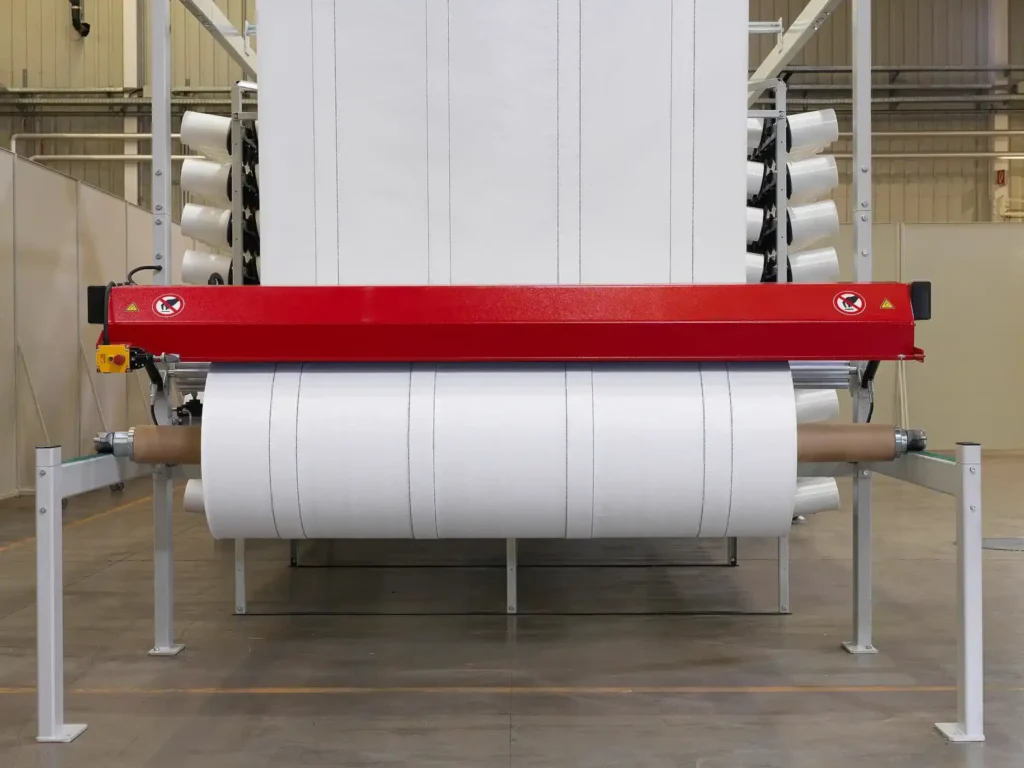
Definition, Scope, and Everyday Names
In the marketplace of flexible packaging, Poly-BOPP Bags occupy a special place: they are clear when clarity sells, opaque when opacity persuades, and rugged when logistics demand it. When professionals say Poly-BOPP Bags, they typically refer to two converging families: mono‑material display sleeves made from biaxially oriented polypropylene (BOPP), and laminated sacks marrying printed BOPP film to woven polypropylene (PP) fabric. In retail they might be called polypropylene display bags; on industrial loading docks they are often known as BOPP‑laminated woven sacks. The chemistry is consistent; the performance envelope is wide. Why does this dual identity matter? Because the same polymer backbone—polypropylene—can be tuned through orientation, lamination, and finishing to satisfy both shelf aesthetics and heavy‑duty storage.
Material Architecture: Layers, Additives, Roles
At the heart of Poly-BOPP Bags is BOPP—biaxially oriented polypropylene—paired, where needed, with cast polypropylene (CPP) sealants and woven PP substrates. Think of the construction as a purposeful stack: a printable outer skin for brand storytelling; a sealable inner skin for pack integrity; and, for high‑load applications, a woven backbone for strength. Each layer brings a skill set. Each additive has a job description. Together they deliver the mix of clarity, durability, and machinability that retail lines and storage environments require.
Print surface; high gloss; abrasion resistance; available in clear, white/pearlescent, or metallized finishes.
Heat‑sealable skin; low‑temperature seal (LTS) options; anti‑block and slip modifiers for fast packing lines.
Tape‑woven reinforcement that enables 5–50 kg sacks, resists puncture, and tolerates pallet handling.
Additives support function rather than decorate the spec sheet. Slip agents manage the coefficient of friction; anti‑fog keeps produce visible; UV stabilizers protect outdoor inventories; primers or corona treatment elevate surface energy for ink anchorage. The cost logic is equally systematic: the fewer microns you need, the less resin you buy; the sharper your print, the less you rely on multilayer complexity; the better your sealing window, the higher your line efficiency. In practice, Poly-BOPP Bags let you trade microns for modulus, art for shelf impact, and process control for throughput.
From Physics to Features: What the Structure Enables
What makes Poly-BOPP Bags compelling is not a single magic property but the ensemble: clarity that persuades; stiffness that protects; barrier that preserves; print quality that differentiates. The physics of orientation reduces haze and improves tensile balance; the chemistry of polypropylene resists moisture; the engineering of sealing layers stabilizes conversion; the art of printing—reverse, protected under film—delivers scuff‑resistant branding.
- Shelf persuasion: clear BOPP shows color and texture as they are; white or pearlescent films provide a bright canvas for ink without sacrificing stiffness.
- Mechanical assurance: orientation elevates tensile strength and tear resistance; woven laminations, when specified, take load cases into industrial territory.
- Moisture stewardship: low water vapor transmission helps keep crispy products crisp; metallized options add oxygen/light barrier for sensitive dry goods.
- Sealing discipline: coextruded sealants activate at lower temperatures, expanding the processing window and trimming energy use.
- Finish and feel: matte‑gloss combination varnishes, tactile lacquers, and high‑definition plates turn a commodity bag into a premium touchpoint.
Manufacturing Flow: Resin, Film, Print, Laminate, Convert
Production for Poly-BOPP Bags follows a disciplined choreography. First, resin selection: homopolymer PP if stiffness and clarity dominate; random copolymer when impact and low‑temperature performance matter. Second, film formation and orientation: cast a sheet, quench it, stretch it in machine direction and transverse direction to the target ratios. Third, treat the surface—corona or plasma—to raise surface energy so inks and adhesives hold. Fourth, print: reverse printing for abrasion resistance; rotogravure for photo realism; high‑definition flexo when agility and cost‑in‑use are priorities. Fifth, laminate where required: extrusion‑bond printed BOPP to woven PP or to a CPP sealant film. Finally, convert to bags: slit, seal, sew or weld, add features like micro‑perforations, valves, easy‑open notches, or zipper reclosures.
Choose PP grade; add masterbatches for slip, anti‑block, anti‑fog, opacity.
Stretch MD then TD; dial modulus, haze, and gauge profile.
Reverse under film; manage solvents; verify color targets.
Wicketing, sealing, sewing/welding, and finishing features.
Use Cases: Where the Bags Earn Their Keep
The versatility of Poly-BOPP Bags shines across categories. For dry foods and snacks, clarity signals freshness; for produce, anti‑fog visibility leads to confident selection; for pet food and agricultural inputs, laminated woven structures balance branding with brute strength. In apparel and hard goods, the combination of transparency and tidy shape control reduces returns and protects perceived value during e‑commerce journeys.
- Dry foods and confections where gloss and crinkle telegraph crispness and care.
- Fresh produce that benefits from tailored humidity exchange via micro‑perforation.
- Pet food, seeds, fertilizers, and soil amendments in 1.5–25 kg formats requiring UV‑resistant graphics and puncture resistance.
- Construction materials and pigments that demand tear resistance and clean palletization.
- Apparel, craft kits, and household hardware presented with neat visibility and optional hang features.
Interdisciplinary Lens: Physics, Chemistry, Graphics, and Operations
Packaging decisions rarely live in silos. Physics insists on tensile balance; chemistry manages migration and aging; graphics drive brand equity; operations chase uptime. In Poly-BOPP Bags, those domains converse. Reduce haze and shelf signaling improves; select low‑migration inks and regulatory risk drops; optimize COF and lines run smoother; specify matte‑gloss contrasts and premium cues rise without structural complexity. The connections are tight: change one variable and two more answer back. This is why engineering reviews, color proofs, and machine trials belong in the same room.
| Discipline | Key Lever | Effect on Poly-BOPP Bags |
|---|---|---|
| Physics | Orientation ratios (MD/TD) | Modulus, shrink behavior, haze; stiffness enables down‑gauging. |
| Chemistry | Sealant formulation & surface energy | Seal window width, ink adhesion, migration profile. |
| Graphics | Reverse print & finishing | Scuff resistance, premium cues via matte/gloss contrast. |
| Operations | COF tuning & machine settings | Throughput, reject rates, operator ergonomics. |
Standards, Testing, Evidence: The Numbers Behind the Claims
Specifications transform opinion into obligation. For Poly-BOPP Bags, quality teams lean on well‑known test methods for mechanics (ASTM D882), seal strength (ASTM F88/F88M), slip (ASTM D1894), haze and gloss (ASTM D1003, ASTM D2457), and barrier (ASTM F1249 for WVTR; ASTM D3985 for OTR). Food‑contact compliance routes typically include FDA 21 CFR §177.1520 for olefin polymers and the EU plastics framework with an overall migration limit of 10 mg/dm², documented via Declarations of Compliance. Management systems—ISO 9001 for quality and FSSC 22000 for food‑safety culture—anchor consistency from incoming resin to outgoing pallet.
| Property | Display film bag | BOPP‑laminated woven | Comment |
|---|---|---|---|
| Thickness | 20–40 μm (BOPP) | 20–35 μm film + 60–120 g/m² fabric | Opacity and print coverage may nudge thickness up. |
| Tensile (MD/TD) | ≈120–240 / 150–300 MPa | governed by woven fabric | Orientation improves modulus and shape retention. |
| WVTR (38°C/90% RH) | ~1–3 g/m²·day | similar body; seam‑dependent | Seal quality often dominates pack performance. |
| OTR (23°C/0% RH) | ≈100–2000 cc/m²·day (clear) | lower with metallized film | Select based on product sensitivity to oxygen and light. |
Design Levers: How to Tune Performance Without Over‑Engineering
Three questions guide specification for Poly-BOPP Bags: what must the customer see, what must the product survive, and what must the line achieve? If the product itself sells the product—cookies with visible inclusions, herbs with a living green—choose clear film and restrain ink coverage. If the supply chain bruises merchandise, prioritize seam design, COF tuning, and cushion features. If the line is the bottleneck, invest in seal initiation at lower temperatures and verify COF windows for your exact conveyance.
- Clarity versus barrier: visibility favors clear BOPP; shelf life may mandate metallization—pick the right compromise and test it.
- Seal performance: heat‑seal maps prevent brittle or whitening seals; dwell, temperature, and pressure form a three‑way negotiation.
- Machinability: too little friction slips; too much stalls. Target a kinetic COF that suits your HFFS or VFFS design.
- Down‑gauging: slimmer gauges save mass and cost; verify drop, stack, and compression before scaling.
- Print durability: reverse print under film, optionally with abrasion‑resistant varnish for high‑scuff channels.
Operations & Cost: The Total‑Cost Logic
For Poly-BOPP Bags, savings accrue from mass reduction, speed stability, and reject avoidance. Orientation creates stiffness that substitutes for thickness; low‑temperature seals shorten dwell; well‑tuned COF maintains registration. Freight favors PP’s low density; inventory favors bags that nest and stack; sustainability favors mono‑material architectures that can re‑enter PP streams where infrastructure exists.
Down‑gauge without losing hand‑feel; specify white film to replace extra inks when opacity is needed.
Stabilize heat‑seal curves; avoid set‑off through adequate drying and spacing.
Leverage cube efficiency; protect corners with seam design; maintain pallet discipline.
Risk, Compliance, Documentation: Getting to “Release for Sale”
Release decisions for Poly-BOPP Bags rest on documentation. Map intended use to relevant food‑contact rules; gather supplier Declarations of Compliance tied to batch; execute migration tests with appropriate simulants and time/temperature regimes; keep organoleptic panels ready for sensitive categories like tea and spices. Layer in ISO 9001 for process control and FSSC 22000 for packaging‑site food safety, then enforce change control on resin, ink, and adhesive systems. Traceability completes the loop: imprint roll/bag and ink batch IDs so withdrawals can be targeted rather than total.
Sustainability & Circularity: Practical Moves, Not Slogans
Bold claims are easy; measurable steps win. For Poly-BOPP Bags, practical circularity begins with mono‑material design—BOPP with PP sealants and PP labels—followed by down‑gauging, controlled ink coverage, and waste minimization during print and conversion. Where rPP is viable, use it for non‑food features like handles or reinforcement; where advanced recycling pilots exist, track them but confirm odor/taint risk before any food‑contact claims. Above all, measure: mass per package, scrap rate, transport efficiency, recovery pathway.
- Prefer mono‑PP stacks to protect sortability.
- Use white BOPP for opacity instead of extra lamination layers.
- Adopt digital color management and automatic register control to cut waste.
- Report PP recovery options realistically by region; avoid blanket assumptions.
Procurement Template: A Starting Point You Can Edit
Below is an editable sketch to anchor conversations with suppliers of Poly-BOPP Bags. Values are illustrative and must be validated on your line.
Intended use: retail snacks at ambient conditions, direct food contact.
Structure: BOPP print web // coex BOPP sealant, 30 μm nominal; wicketed side‑weld; laser notch; optional zip.
Targets: haze ≤2.0%; gloss ≥90 GU; OTR ≤1500 cc/m²·day; WVTR ≤2.5 g/m²·day; kinetic COF 0.20–0.35; SIT ≤110°C; seal strength ≥4.0 N/15 mm.
Compliance: FDA 21 CFR §177.1520; EU plastics OML 10 mg/dm²; DoC required; ISO 9001 + FSSC 22000 certificates current.
Troubleshooting: Signals, Causes, Correctives
Every defect tells a story. In Poly-BOPP Bags, whitening seals whisper of excessive dwell or mis‑matched sealant; blocking stacks point to residual solvent or inadequate slip; poor adhesion calls out dyne decay or insufficient treatment. Diagnose, don’t guess. Verify the failure mode—cohesive in sealant, adhesive at interface, or mechanical tear—before prescribing the fix.
Likely cause: dyne level drift, storage time, or wrong primer
Action: re‑treat or specify primer; check adhesion with crosshatch.
Likely cause: excessive heat or pressure; crystalline sealant
Action: reduce SIT via LTS coex; rebuild seal window.
Likely cause: residual solvent; high ink coverage; low slip
Action: extend drying; increase slip; use interleaf powder.
Likely cause: stitch density or cut profile
Action: modify stitch; consider hot‑air weld; add edge tape.
Market Signals: What Changed and What Endures
While materials science marches forward, certain truths hold for Poly-BOPP Bags. Clear film continues to dominate categories where visibility sells; metallized film retains its role in oxygen‑sensitive formats like nuts and select coffees; high‑definition flexo narrows the gap with gravure on shorter SKUs; retailers scrutinize food‑safety documentation more closely, pushing converters toward stronger systems and clearer Declarations of Compliance. The broader trend is consolidation around mono‑PP designs for recyclability, with localized exceptions where infrastructure lags.
Thought Experiments: Framing the Big Decisions
Ask yourself: if the product were invisible, would you still choose a clear window? If oxygen were irrelevant, would metallization still earn its keep? If the line speed doubled, which variable would fail first—seal integrity, registration, or handling? By posing these questions, you turn Poly-BOPP Bags from a catalog item into a configured solution.
- What fails first when COF drifts by ±0.05—registration or stacking stability?
- How much OTR headroom do you actually need for your category and logistics model?
- Could a white film reduce ink load without sacrificing vibrancy?
- Where can a zipper add consumer value without complicating machinability?
In the fast-paced world of retail and grocery stores, packaging plays a crucial role in product presentation, protection, and preservation. Poly-BOPP Bags have emerged as a game-changing solution for packaging a wide range of products, including rice, flour, starch, pet food, and more. These bags, known for their durability and versatility, have transformed the way goods are stored and sold. This article explores the features and benefits of Poly-BOPP Bags, their applications in retail and storage, and how they compare to other packaging solutions such as BOPP Woven Bags, Laminated Woven Bags, Waterproof Woven Bags, and Leakproof Woven Bags.
Understanding Poly-BOPP Bags
Poly-BOPP Bags are made from a combination of polypropylene (PP) and biaxially oriented polypropylene (BOPP). This blend offers several advantages over traditional packaging materials:
- Enhanced Strength and Durability: The BOPP film used in Poly-BOPP Sacks provides excellent tensile strength and durability. This makes the bags resistant to tearing and punctures, ensuring that the contents are well-protected during handling and transportation.
- Versatile Applications: Poly-BOPP Bags are highly versatile and can be used for a variety of products. They are commonly found in supermarkets and stores for packaging items such as rice, flour, starch, and pet food. Their adaptability makes them a popular choice for both retail and storage purposes.
- Improved Aesthetic Appeal: The BOPP coating gives these bags a glossy finish, enhancing the visual appeal of packaged products. This makes Poly-BOPP Bags particularly effective for attracting consumer attention and improving product presentation on store shelves.
- Cost-Effective Solution: Despite their advanced features, Poly-BOPP Bags are relatively cost-effective. They provide a balance between performance and affordability, making them an attractive option for both manufacturers and retailers.
Applications in Retail and Storage
Poly-BOPP Bags have a wide range of applications in the retail and storage sectors:
- Supermarkets and Grocery Stores: In supermarkets, Poly-BOPP Bags are commonly used to package staple goods such as rice, flour, and starch. Their durability ensures that these products remain intact and free from contamination during transport and display. The glossy finish of the bags also helps in showcasing the product’s quality.
- Pet Food Packaging: Pet food bags made from Poly-BOPP are designed to keep the contents fresh and secure. The strong, moisture-resistant properties of the bags help maintain the quality of pet food, protecting it from external factors that could lead to spoilage.
- Food Packaging: Poly-BOPP Bags are also used for various food packaging applications. Their ability to create a barrier against moisture and air helps in preserving the freshness of food items. The laminated finish can further enhance the bags’ protective qualities, ensuring that food remains safe and consumable.
Comparative Analysis with Other Packaging Solutions
When evaluating Poly-BOPP Bags, it’s useful to compare them with other packaging solutions such as BOPP Woven Bags, Laminated Woven Bags, Waterproof Woven Bags, and Leakproof Woven Bags:
- Poly-BOPP Bags vs. BOPP Woven Bags:
While both Poly-BOPP Bags and BOPP Woven Bags utilize BOPP film for enhanced durability and aesthetics, the primary difference lies in their construction. Poly-BOPP Bags are typically made from a single layer of BOPP film, offering a glossy finish and good strength. In contrast, BOPP Woven Bags are made from woven polypropylene coated with BOPP film, providing greater strength and load-bearing capacity. Poly-BOPP Bags are more suited for lighter products and retail packaging, while BOPP Woven Bags are ideal for heavier and bulkier items. - Poly-BOPP Bags vs. Laminated Woven Bags:
Laminated Woven Bags combine a woven polypropylene base with a laminated coating, which offers excellent resistance to moisture and other environmental factors. While Poly-BOPP Bags provide a glossy finish and are cost-effective, Laminated Woven Bags offer superior protection against moisture and are often used for more demanding applications. The choice between the two depends on the specific requirements for strength and protection. - Poly-BOPP Bags vs. Waterproof Woven Bags:
Waterproof Woven Bags are designed specifically to resist water and moisture, making them suitable for applications where exposure to wet conditions is a concern. Poly-BOPP Bags, although resistant to moisture to some extent, may not offer the same level of waterproofing as specialized Waterproof Woven Bags. For products that require strict moisture protection, Waterproof Woven Bags are the preferred choice. - Poly-BOPP Bags vs. Leakproof Woven Bags:
Leakproof Woven Bags are engineered to prevent leaks and spills, making them ideal for packaging liquids or granular materials that could cause contamination. While Poly-BOPP Bags provide good protection against environmental factors, they may not be as effective in preventing leaks compared to Leakproof Woven Bags. The selection of packaging depends on the nature of the product and the risk of leakage.
Industry Trends and Future Directions
The packaging industry continues to evolve, with several trends influencing the development and application of Poly-BOPP Bags:
- Sustainability Initiatives:
As environmental concerns grow, there is an increasing demand for sustainable packaging solutions. Manufacturers are exploring ways to produce Poly-BOPP Bags using recycled materials or developing biodegradable options to reduce environmental impact. - Technological Advancements:
Advances in packaging technology, such as improved lamination techniques and additive formulations, are enhancing the performance and functionality of Poly-BOPP Bags. These innovations aim to improve durability, strength, and overall efficiency. - Customization and Branding:
Retailers and manufacturers are increasingly seeking customized packaging solutions to differentiate their products and strengthen brand identity. Poly-BOPP Bags can be easily customized with high-quality printing, allowing for effective branding and marketing. - Regulatory Compliance:
As regulations around packaging materials and food safety become stricter, manufacturers must ensure that Poly-BOPP Bags comply with industry standards and certifications. This includes adhering to guidelines for food safety, environmental impact, and material performance.
In summary, Poly-BOPP Bags represent a significant advancement in packaging technology, offering a blend of strength, flexibility, and visual appeal. Their applications in supermarkets and stores for packaging products like rice, flour, and pet food highlight their versatility and effectiveness. By comparing Poly-BOPP Bags with other packaging solutions such as BOPP Woven Bags, Laminated Woven Bags, Waterproof Woven Bags, and Leakproof Woven Bags, it becomes clear that each type of bag has its unique advantages and applications. As the packaging industry continues to evolve, ongoing innovations and trends will shape the future of Poly-BOPP Bags and their role in retail and storage.