

Definition and Naming — What are PP Bags?
In global packaging, PP Bags are the chameleons of polyolefin engineering: strong enough for bulk commodities, clean enough for foods, light enough for e‑commerce, and versatile enough for healthcare and hygiene articles. The expression covers a family of formats—open‑mouth woven sacks, BOPP‑laminated display bags, valve bags for powders, non‑woven carry and hygiene pouches, and thin‑gauge poly‑bags for apparel—united by one chemistry: polypropylene. In procurement language these are also labeled polypropylene woven sacks, poly woven bags, BOPP‑laminated PP sacks, and FFS (form‑fill‑seal) PP bags.
Why do PP Bags matter for health and safety? Because they arbitrate three tensions that define responsible packaging in 2024–2025: product protection versus material simplicity; high line speed versus robust sealing; vivid branding versus legible safety information. A single polymer—polypropylene—can take multiple roles in the same design: a stiff printable film for artwork, a high‑tenacity woven fabric for structure, and a compliant sealant or liner for hygiene. When a brand speaks of “PP Bags,” it signals a platform rather than a single SKU, a palette rather than a color.
Material Architecture — From Resin to Web to Bag
Materials determine destiny. The property envelope of PP Bags is built from a compact kit of parts—base resin, oriented films, woven substrates, coatings/laminates, liners, and functional additives. Each part has a physics story, a cost story, and a health‑and‑safety story.
Homopolymer PP delivers modulus and heat resistance for oriented films; random copolymer improves low‑temperature toughness; impact copolymer adds puncture resistance in thicker parts. Density near 0.90 g/cm³ gives a mass advantage over PET or PVC, which compounds into freight and carbon savings when designs are downgauged.
Key levers: melt flow index for processability; isotacticity for stiffness; antioxidants and HALS (hindered amine light stabilizers) for thermal and UV stability; nucleators for clarity and cycle time. As a commodity polymer, PP pricing follows propylene monomer, but the dominant economic lever remains grams per bag.
Biaxially oriented polypropylene (BOPP) contributes the gloss and stiffness associated with retail‑ready PP Bags. Coextruded LTS (low‑temperature seal) skins widen the sealing window; white/pearlescent BOPP creates opacity without paper; metallized BOPP suppresses oxygen ingress for aroma‑sensitive goods. Cast polypropylene (CPP) often plays the inner sealant role in laminations.
Extruded PP tapes are slit and drawn (≈6–8×), then woven on circular looms into tubular fabrics with typical basis weights of 60–120 g/m². The weave is the mechanical backbone—carrying tensile loads, resisting puncture, and controlling bulging under compression. Fabric GSM is the first and largest cost lever in heavy‑duty PP Bags.
Extrusion coating lays down molten PP to reduce porosity and provide a print‑friendly surface. For premium graphics, a printed BOPP film (≈20–35 μm) is laminated with a PP tie. Uniform coat weight narrows WVTR spread and reduces dusting—practical hygiene benefits often worth more than incremental film‑barrier gains.
LDPE/LLDPE or PP liners (20–60 μm) are specified when moisture, dust, or contamination control is critical. Gusseted liners in block‑bottom designs create stable cuboids; cuff‑sealing under sew lines suppresses edge‑wicking, a frequent cause of bag‑level moisture ingress.
HALS/UV absorbers extend outdoor life and protect graphics; slip/anti‑block packages tune coefficient of friction (COF) for packer uptime and safe stacks; anti‑fog supports chilled produce visibility; antistatic reduces sparks and dust cling in high‑speed filling; pigment masterbatches balance opacity, branding, and migration rules.
Feature Set — Turning Pain Points into Performance
Each feature exists to resolve a practical hazard to health, safety, or quality. When the feature set of PP Bags is written in the language of outcomes, it reads like this: less caking and clumping, fewer pallet slumps, fewer knife injuries at opening, fewer label disputes, fewer product withdrawals.
- Moisture stewardship: Laminations and liners tune bag‑level WVTR to keep hygroscopic goods below their critical relative humidity. Seams are engineered—via tape‑under‑sew or hot‑air weld—to block edge‑wicking.
- Mechanical resilience: Balanced weave and well‑drawn tapes deliver MD/TD tensile strength; corners and forklift interactions are survived by puncture‑resistant coatings and reinforced bottoms.
- Stack stability: Screen‑printed anti‑slip stripes or micro‑embossed bands raise pallet friction to permit taller stacks without over‑reliance on interleaves.
- Machinability: LTS sealants and tuned COF keep HFFS/VFFS lines running fast. Heat‑seal maps define safe operating windows; dyne maintenance guards print and adhesive anchorage.
- Print and label durability: Reverse printing under BOPP preserves artwork and safety panels; UV‑stable pigments prevent fade; lot and date codes remain scannable after transport abrasion.
- Security and authenticity: Under‑laminate serialization (QR/Datamatrix) deters counterfeiting and tightens recall precision.
- Sustainability pathway: Mono‑PP stacks improve sortability in #5 PP streams; downgauging offers immediate mass and carbon savings; rPP content is routed to non‑food elements where appropriate.
Safer stacks
MechanismAnti‑slip placement at true contact zones; COF corridors validated wet/dry.
Cleaner fills
MechanismValve sleeves matched to nozzle geometry; low‑dust laminations; antistatic packages.
Traceable lots
MechanismUnder‑film serialization; durable print; scannable codes after abrasion.
Process Map — How PP Bags Are Manufactured
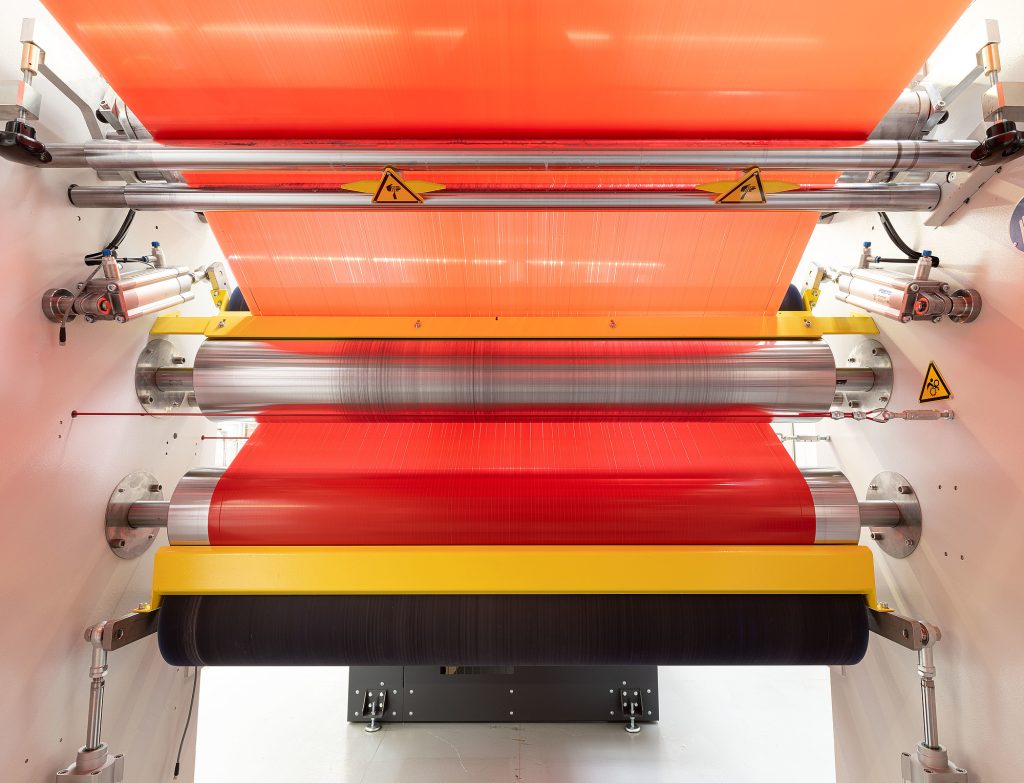
Manufacturing is where design becomes discipline. The process chain for PP Bags—extrude & draw → weave → coat/laminate → print → convert → integrate features → test—imposes its own physics. Every step affects the health and safety promise of the final package.
- Tape extrusion & drawing: Resin plus masterbatch becomes a cast sheet; the sheet is slit into tapes and drawn over heated rolls. Inline gauges capture width and draw; tenacity targets prevent seam variability.
- Weaving: Circular looms set pick density and tension. Weave balance determines bulging control and drop performance.
- Coating/lamination: Extrusion coat for porosity and dust control; laminate printed BOPP for graphics and modest WVTR gains. Coat‑weight maps predict bag‑level moisture behavior.
- Printing: Rotogravure or HD‑flexo with reverse printing under film; color managed via spectrophotometry (ΔE); abrasion qualified by rub tests.
- Conversion: Cut length, form bottoms, hem or insert valve sleeves, add liners (pre‑inserted or tube‑extruded), apply easy‑open features.
- Feature integration: Anti‑slip bands, die‑cut handles, perforations, laser scores, serialization, and block‑bottom forming as needed.
- Quality control & documentation: GSM, coat weight, adhesion, WVTR (ASTM F1249), COF (ASTM D1894), tensile (ASTM D882), seal strength (ASTM F88/F88M), dart impact (ASTM D1709), UV weathering where relevant; batch traceability with Declarations of Compliance for sensitive uses.
Application Landscape — Where Health and Safety Are at Stake
Because PP Bags touch food, farm inputs, construction materials, and medical disposables, their application logic spans hygiene, ergonomics, and risk management.
- Food staples: moisture control; reverse‑printed nutrition and allergen panels; seal integrity through the cold chain.
- Fresh produce: anti‑fog wicket bags with tuned micro‑perforation to balance respiration and dehydration.
- Animal feeds & pet foods: BOPP‑laminated woven sacks with optional reclosures; puncture resistance to survive pallets and retail handling.
- Fertilizers & soil amendments: laminated woven sacks plus liners; UV‑stabilized prints for open‑yard storage; strict WVTR and seam strategies.
- Construction materials & pigments: valve formats for TiO₂ or cement; dust control and seam efficiency dominate; anti‑slip for warehouse safety.
- Healthcare & hygiene: non‑woven PP pouches; cleanroom handling and legible labeling; integrity of lot/expiry codes.
- E‑commerce & apparel: thin‑gauge poly‑bags with peel‑and‑seal; print legibility and seal reliability at low gauge.
Systems Thinking — Making “Comprehensive Solutions with PP Bags: Ensuring Health and Safety in Packaging” Real
A solution is comprehensive when its parts reinforce each other. To turn the promise of PP Bags into lived safety and quality, consider five interlocking loops.
- Materials loop: draw ratio → stiffness → downgauging → mass reduction → lower freight/energy → budget for better QC. Over‑draw and seams embrittle; manage with inline tenacity sensors.
- Moisture‑barrier loop: uniform coat weight → tighter bag‑level WVTR → less caking → fewer claims → funds for UV packages and anti‑slip optimization.
- Machinability loop: COF corridor → packer uptime → lower scrap → lower cost → reinvestment in seal‑window tuning and dyne control.
- Security loop: serialization → traceability → counterfeit deterrence → price integrity → stewardship programs (take‑back pilots) get funded.
- End‑of‑life loop: mono‑PP architecture → sortability → higher recycling access (where infra exists) → regulatory goodwill → simpler compliance under EPR.
Standards, Certifications, and Test Methods — Credible Safety
Health and safety claims for PP Bags must be auditable. That’s why converters align with recognized frameworks: FDA 21 CFR §177.1520 for olefin polymers in food contact; Regulation (EU) No. 10/2011 with the 10 mg/dm² overall migration limit and any SMLs; GMP baselines under 21 CFR §174.5 and EU 2023/2006; FSSC 22000 (Version 6) for packaging manufacturing on shared food‑packaging sites; ISO 9001:2015 for quality, ISO 14001:2015 for environment, and ISO 45001:2018 for occupational health and safety.
Testing methods translate intent into numbers: ASTM D882 (tensile of thin plastic sheeting), ASTM D1894 (COF), ASTM F88/F88M (seal strength), ASTM F1249 (WVTR via MOCON), ASTM D3985 (OTR for oxygen‑sensitive goods), ASTM D1709 (dart impact). Whole‑bag drop protocols and wet/dry COF validation complete the evidence chain for logistics safety.
| Property | Typical Range | Why It Matters |
|---|---|---|
| Fabric GSM (woven) | 60–120 g/m² | Primary lever for tensile and seam efficiency; over‑spec adds cost and stiffness. |
| BOPP print film | 20–35 µm | Protects inks; improves scuff resistance; modest WVTR impact. |
| Extrusion coat weight | 18–30 µm | Controls porosity and dust; correlates with bag‑level WVTR. |
| Liner thickness | 20–60 µm | Barrier and dust control; fit and cuff‑sealing drive outcomes. |
| WVTR (38 °C/90% RH, bag‑level) | ≤ 2.5 g/m²·day (target) | Aligns with CRH of hygroscopic fills. |
| COF (kinetic, face/face) | 0.25–0.40 | Balances pallet stability and conveyor flow. |
| Mechanical/Conversion | Target | Test/Remark |
|---|---|---|
| Drop resistance (25–50 kg) | ≥ 5 drops @ 1.2 m | Internal distribution simulation. |
| Seam efficiency | ≥ 70% of fabric strength | Stitch density, thread spec, weld quality. |
| Seal strength (liners) | ≥ 4.0 N/15 mm | ASTM F88/F88M; confirm peel mode. |
| Valve fill rate | ≥ 10–20 bags/min | Packer geometry and dust control. |
Design Playbook — From Questions to Choices
Clarity or opacity? Moisture or oxygen risk? Line speed or seal strength? In PP Bags specification, the sharpest question usually points to the simplest layer change.
- If the product is chosen by appearance, bias toward clear BOPP and restrained ink coverage; if not, white film reduces ink mass and boosts billboard effect.
- If moisture is the enemy, buy uniform coating and seam strategy before exotic films; verify at the bag level, not just the film level.
- If stoppages dominate cost, widen the seal window and tune COF; also re‑check dyne after storage.
- If warehouse incidents persist, place anti‑slip bands at real pallet contact zones; test wet/dry stack height; reinforce bottom seams.
- If counterfeiting erodes trust, serialize under laminate; combine with microtext or taggants where risk justifies.
Field Diagnostics — Failure Patterns and Fixes
Field failures instruct. The recurring patterns in PP Bags map to specific mechanisms—and therefore to specific remedies.
Mechanism: seam leakage or poor liner cuffing
Fix: bag‑level humidity chamber tests; tape under sew; shift to hot‑air weld.
Mechanism: COF collapses when wet
Fix: denser anti‑slip; validate wet COF; interleaf sheets for tall stacks.
Mechanism: inadequate UV dose or surface‑print scuff
Fix: reverse print under BOPP; upgrade pigments; right‑size HALS.
Mechanism: sleeve/nozzle mismatch; cut variance
Fix: audit geometry; trial self‑closing valves; tighten cut control.
Operations & Cost — The TCO View for 2024–2025
Total cost hides in rejects and downtime, not just resin invoices. PP Bags create leverage when they trade grams for stiffness wisely, when they widen seal windows for uptime, and when they preserve print so relabeling disappears from rework logs.
Down‑gauge via orientation; specify white film to trim ink mass; avoid gratuitous metallization.
Reverse print for scuff immunity; automate register control; map heat‑seal windows.
Block‑bottom for cube efficiency; anti‑slip placement for safe height; validate wet/dry COF.
Worked Example — A Coherent Safety‑First Specification
Use case: a 25 kg fortified grain SKU for tropical distribution, mixed pallets, and smallholder retail. Objectives: protect against humidity, ensure legible nutrition panels, enable traceable recalls, and keep pallets stable without excessive interleaves.
Structure: white BOPP print web 25 μm (reverse print) // PP tie 18 μm // woven PP fabric 85 g/m²; optional PP‑based liner 30 μm, gusseted and cuff‑sealed; open‑mouth, double‑fold chain stitch; anti‑slip stripes at 30% and 70% bag height.
Targets: WVTR (bag‑level) ≤ 2.5 g/m²·day @ 38 °C/90% RH; COF 0.30–0.35; drop ≥ 5 drops @ 1.2 m; seam efficiency ≥ 70%; print rub pass at defined load; minimum x‑height and contrast for nutrition; serialization under laminate.
Compliance set: FDA 21 CFR §177.1520 (where direct food contact applies); EU 10/2011 OML/SML logic for export; GMP per 21 CFR §174.5 and EU 2023/2006; site certifications ISO 9001, ISO 14001, ISO 45001; FSSC 22000 v6 for shared food‑packaging operations.
Forward Signals — What Shifted in the Last Year
Buyers are awarding points for published energy‑per‑thousand‑bags and scrap ratios in RFQs; mono‑polyolefin designs see preference as EPR frameworks solidify; digital serialization under laminate spreads to deter diversion; registered matte/gloss finishes migrate from consumer goods to agro‑inputs, offering premium looks without paper or foil.
Putting It Together — A System, Not a Part
When conversation shifts from parts to patterns, PP Bags emerge as a system: materials deliver strength and sealability; manufacturing builds repeatability; hygiene programs secure contact safety; ergonomics reduce injuries; end‑of‑life choices align with policy. The best specifications do not try to maximize everything; they balance the few things that matter for the specific product, climate, route, and machine—and document those balances with the standards and tests that survive audit.
- Definition and Naming — What are PP Bags?
- Material Architecture — From Resin to Web to Bag
- Feature Set — Turning Pain Points into Performance
- Process Map — How PP Bags Are Manufactured
- Application Landscape — Where Health and Safety Are at Stake
- Systems Thinking — Making “Comprehensive Solutions with PP Bags: Ensuring Health and Safety in Packaging” Real
- Standards, Certifications, and Test Methods — Credible Safety
- Design Playbook — From Questions to Choices
- Field Diagnostics — Failure Patterns and Fixes
- Operations & Cost — The TCO View for 2024–2025
- Worked Example — A Coherent Safety‑First Specification
- Forward Signals — What Shifted in the Last Year
- Putting It Together — A System, Not a Part
H1: Introduction
“In the feed packaging industry, safety isn’t a luxury—it’s a necessity. By integrating food-grade PP materials, advanced lamination technologies, and rigorous quality control, VidePak’s woven bags ensure both nutritional integrity and logistical efficiency, reducing spoilage risks by up to 40% while complying with global safety standards.” — Ray, CEO of VidePak.
The global animal feed packaging market is projected to grow at a CAGR of 5.1% through 2030, driven by rising demand for contamination-resistant and durable solutions. VidePak, a leader in woven bag manufacturing since 2008, leverages Austrian Starlinger machinery and certified PP resins to produce feed bags that excel in load capacity, microbial resistance, and sustainability. This report explores why PP woven bags dominate feed packaging and how to optimize product parameters for diverse applications, supported by technical data, case studies, and industry benchmarks.
H2: Why PP Woven Bags Excel in Feed Packaging
H3: Superior Mechanical and Safety Performance
- Load-Bearing Capacity: VidePak’s PP bags achieve tensile strengths of 45–50 MPa (vs. industry average of 35–40 MPa), supporting loads up to 50 kg without rupture. Starlinger’s circular looms ensure uniform weave density (12×12 strands/inch), reducing seam failures by 25%.
- Antimicrobial Properties: Food-grade PP resins inhibit bacterial growth, achieving 98.5% microbial barrier efficiency under ISO 22442 standards. A 2024 trial with COFCO demonstrated a 30% reduction in feed mold incidents compared to jute sacks.
- Moisture and UV Resistance: BOPP-laminated bags reduce moisture permeability to <3 g/m²/day (vs. 8–10 g/m²/day for non-laminated alternatives), critical for humid climates. UV-stabilized PP retains 95% tensile strength after 12 months of outdoor storage.
H3: Cost Efficiency and Sustainability
- Recyclability: VidePak’s closed-loop system recovers 92% of production waste, converting it into FDA-compliant recycled PP pellets. This reduces carbon emissions by 18% per ton.
- Customization: Multi-color flexographic printing supports brand differentiation, while valve designs enable 1,500 bags/hour automated filling, cutting labor costs by 40%.
Table 1: Key Performance Metrics for Feed Packaging
| Parameter | VidePak Standards | Industry Average |
|---|---|---|
| Tensile Strength | 45–50 MPa | 35–40 MPa |
| Moisture Permeability | <3 g/m²/day | 8–10 g/m²/day |
| Microbial Barrier | 98.5% | 85–90% |
| Load Capacity | 50 kg | 30–40 kg |
H2: Optimizing Product Parameters for Feed Applications
H3: Material Thickness and Grammage
- Thickness: For poultry feed (low abrasion), 85–100 GSM PP suffices. For abrasive livestock feed (e.g., cattle), 120–150 GSM laminated PP prevents punctures.
- Inner Liners: PE liners (150–200 kJ/m² impact resistance) suit dry feeds, while aluminum foil liners (oxygen transmission <5 cm³/m²/day) protect hygroscopic ingredients like fishmeal.
H3: Design Configurations
- Valve vs. Open-Mouth: Valve bags reduce spillage during automated filling but cost 15–20% more. Open-mouth designs are ideal for manual loading in small farms.
- Lamination Choices: BOPP coatings enhance UV resistance for outdoor storage, while PE lamination balances cost and moisture protection.
FAQs: Addressing Key Concerns
- Q: How does grammage affect bag durability?
A: Higher GSM (e.g., 150 GSM) increases tear resistance but raises material costs by 10–15%. VidePak’s Starlinger looms optimize weave patterns to balance strength and cost. - Q: Are recycled PP bags safe for feed storage?
A: Yes, VidePak’s recycled PP meets FDA and EU No. 10/2011 standards, with contaminant levels <0.01 ppm.
H2: Case Studies: Industry-Specific Solutions
H3: Pet Food Packaging
A 2024 partnership with Nestlé utilized transparent BOPP bags (85 GSM) to showcase kibble quality while achieving <0.5% leakage rates during transport. UV coatings extended shelf life by 6 months.
H3: Livestock Feed in Tropical Climates
VidePak’s PE-lined PP bags (120 GSM) reduced mold growth by 35% for CP Group’s maize feed in Thailand, validated under 50°C/80% RH conditions.
H3: Aquafeed with Aluminum Foil Liners
For shrimp feed requiring oxygen barriers, aluminum foil liners maintained nutrient integrity for 18+ months, cutting waste by 22% in a 2023 trial with Cargill.
H2: VidePak’s Competitive Edge
H3: Advanced Manufacturing Ecosystem
With 100+ Starlinger circular looms and 30 lamination machines, VidePak produces 8 million bags/month, maintaining a defect rate below 0.2%. Their ISO 9001/14001 certifications ensure compliance with global food safety regulations.
H3: ESG Alignment
VidePak’s 30% recycled PP initiative aligns with EU Circular Economy goals, reducing water usage by 15% compared to virgin PP production. A 2024 SGS audit confirmed 0% heavy metal contamination in final products.
H2: Conclusion
PP woven bags are indispensable for modern feed packaging, combining durability, safety, and sustainability. VidePak’s expertise in material science and precision manufacturing positions it as a global leader, offering tailored solutions that address industry-specific challenges—from pet food aesthetics to livestock feed durability. As regulations tighten and demand grows, VidePak’s commitment to innovation ensures it remains at the forefront of packaging excellence.
External Links for Further Reading:
- Explore how moisture-proof designs enhance feed storage.
- Learn about sustainable practices in PP bag production.
This report integrates data from ISO standards, peer-reviewed studies, and VidePak’s operational insights to provide a comprehensive analysis of PP woven bags’ role in ensuring health and safety in feed packaging.