
What are Breathable Woven Bags and why do they matter now?
Breathable Woven Bags are packaging formats constructed from interlaced polymer tapes or yarns that intentionally allow controlled air and vapor exchange while preserving the mechanical strength, abrasion resistance, and stack stability expected of industrial sacks and retail carriers. In practice they are also described as ventilated woven sacks, aerated raffia bags, mesh‑window poly bags, leno‑weave produce carriers, or permeable woven packagings. Each name gestures at the same principle: porosity by design. Instead of maximizing barrier at all costs, these formats manage permeability as a functional variable—enough to evacuate field heat, release entrained air at the filler, or equalize moisture during storage, yet not so much that product escapes, dehydrates, or becomes contaminated.
Why does this matter now? Because supply chains in food, agriculture, and materials handling are under simultaneous pressure to protect quality, reduce waste, and improve throughput. Cooling produce faster, densifying powders sooner, preventing condensation before mold forms—these are not luxuries but line‑level necessities. Breathable Woven Bags step into this tension with a simple promise: move air where physics demands it, keep structure where logistics require it, and surface information where people need it.
The material system of Breathable Woven Bags: from load‑bearing tapes to vent‑setting interfaces
Materials determine what breathability can safely achieve. The bill of materials (BOM) for Breathable Woven Bags can be pictured as four cooperating layers: the woven core that carries load; the interface that sets airflow (open weave, mesh, or micro‑perforated skins); the joining architecture that converts fabric into structure; and the finishing chemistry that stabilizes optics, friction, and weatherability. Each layer has engineering levers and economic consequences.
| Layer | Typical Options | Key Properties | Cost Notes |
|---|---|---|---|
| Core fabric | PP raffia; HDPE raffia; leno monofilament | High tensile:mass; low moisture uptake; stable apertures (leno) | Resin indices drive swings; rPP/rPE add savings with color care |
| Vent interface | Open weave; mesh window; micro‑perforated film | Permeability tuning; condensation control; print compatibility | Window insertion adds conversion time; payoff in product quality |
| Seams & bindings | Heat‑cut edges; stitched/pasted block‑bottom; bound windows | Seam efficiency; fray control; shape retention | Precision folding costs less than rework or collapsed stacks |
| Finishes | Anti‑slip lacquer; UV stabilization; low‑odor inks | Pallet friction; yard durability; organoleptic safety | Gauge and chemistry tune both performance and unit cost |
Feature set of Breathable Woven Bags: airflow, mechanics, hygiene, and identity
Features matter only when they move needles in the real world. The defining attributes of Breathable Woven Bags cluster into five domains: engineered airflow, mechanical durability, hygiene and product quality, legibility and traceability, and circularity.
- Engineered airflow — Permeability is specified in L/m²·s at a defined ΔP, not left to intuition. Vent maps, window areas, and weave counts are tuned to commodities and climates.
- Mechanical durability — Drawn tapes, bound transitions, and corner‑aware folds give high tensile:mass and long stack life. The aim is to keep seams ≥80% of base fabric tensile and avoid first‑failure corners.
- Hygiene and quality — Venting lowers condensation and microbial risk in organics while allowing powders to densify without dust storms. Low‑odor inks and adhesives protect flavor/odor profiles.
- Identity and data — Opaque panels carry brand art, safety icons, and variable data; QR lot links give instant access to permeability and mechanical certificates.
- Circularity by design — Monomaterial PP‑on‑PP or PE‑on‑PE paths, recycled content targets, and NIR‑readable pigments prepare bags for a second life.
Production process of Breathable Woven Bags: converting polymer into permeable performance
Conversion is choreography: resin stabilization, tape orientation, fabric construction, vent creation, structural assembly, and verification. Each step has controls that stop tiny drifts from becoming pallet‑level failures.
- Resin conditioning & extrusion — PP or PE (with rPP/rPE as specified) is stabilized; film is extruded and slit into tapes; draw ratios are logged to keep modulus and tensile in range.
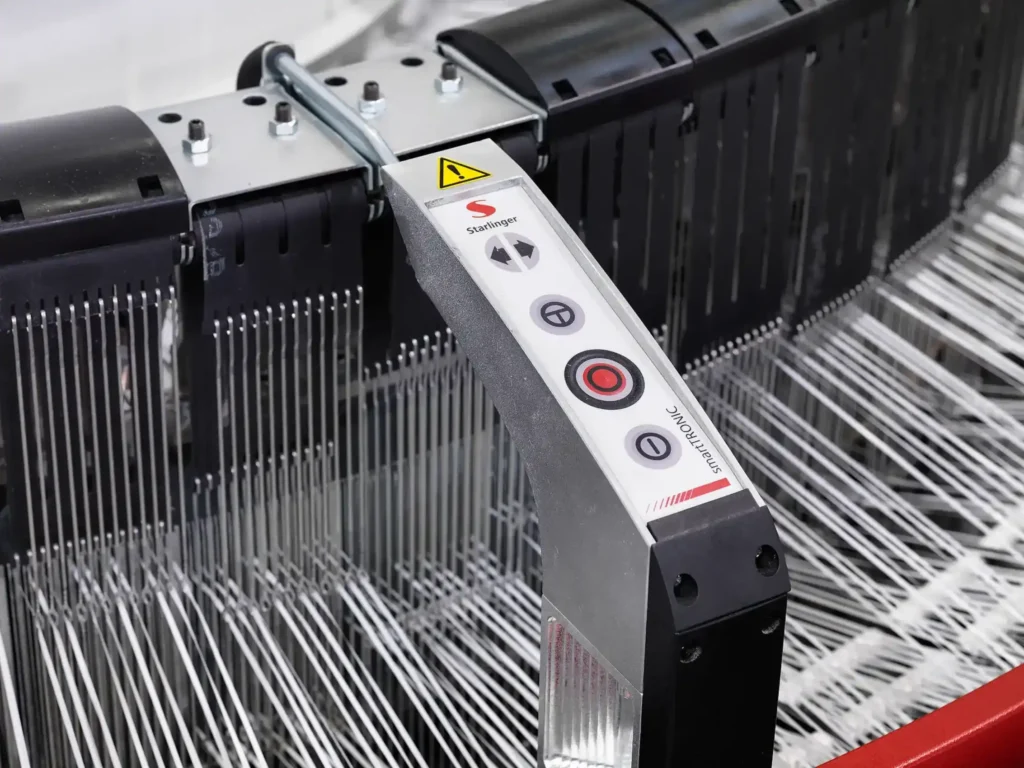
- Weaving/leno — Plain or twill weaves for base panels; leno for stable apertures in produce formats. Ends/picks per inch target seam bite without bulk.
- Surface treatment — Corona/plasma elevates surface energy for print/adhesive reception, critical around hybrid windows.
- Vent creation — Mesh windows are sewn or pasted; micro‑perforation maps are cut by needle or laser; open weave counts are validated for airflow.
- Cutting, binding, and folding — Heat‑cut edges; apply bindings; form gussets or block‑bottoms; control fold radii to avoid stress risers.
- Finishing & coding — Anti‑slip lacquers where pallet friction matters; lot/QR coding connects the bag to certificates and test data.
- Inspection & testing — Air permeability fixtures; fabric tensile (ASTM D5034 / ISO 13934‑1); seam strength (ISO 13935‑2); tear (ISO 13937‑2); drop simulations (ISTA‑aligned); ΔE color and registration for printed zones.
Applications of Breathable Woven Bags: where airflow earns its keep
From harvest sheds to powder fillers, from charcoal yards to pet‑care aisles, Breathable Woven Bags convert airflow into fewer rejects, cleaner lines, and more predictable storage.
- Fresh produce — Potatoes, onions, citrus, and root vegetables cool faster; condensation risk falls; visibility improves for inventory control.
- Agriculture & feed — Fertilizer and premix densify quickly; net‑weight accuracy tightens; dust stays within housekeeping limits when vents are mapped, not guessed.
- Charcoal & firewood — Moisture equilibrates; burn performance stabilizes; odor accumulation in warehouses decreases.
- Industrial powders — Starches, mineral fillers, cement alternatives de‑aerate at the filler; block‑bottom breathable sacks stack more reliably than pillow sacks.
- Seafood & bait — Drainage and airflow reduce mess; reinforced seams prevent tear under wet loads.
- Retail & e‑commerce — Pet litter or garden substrates benefit from odor moderation and better shelf presentation with hybrid print/breathe panels.
Thinking from the headline: technology, materials, and future trends as a design map
The headline is a set of prompts: Which technology controls breathability? Which materials make it dependable? Which trends will reshape the design space? A practical map treats airflow like fluid dynamics, structure like mechanical engineering, and compliance like applied chemistry—then connects them with business metrics.
- Technology — Aperture geometry, perforation physics, vent zoning. The goal is predictable permeability with minimal dust escape and maximal cooling or de‑aeration effect.
- Materials — PP for stiffness and print flatness; PE for cold‑chain toughness; rPP/rPE for footprint reduction; stabilizers and pigments that remain NIR‑readable.
- Process capability — SPC on draw ratios, weave counts, and vent densities; inline airflow checks; optical alignment for window insertion.
- Use phase — Handle cycles, pallet friction, UV exposure, and hygiene requirements define the survivability envelope.
- Trends — Odor‑controlled recycled streams; delaminatable hybrid panels; programmable perforation; digital identity with QR and watermarks; policy moves on labeling and EPR.
Systematic analysis of Breathable Woven Bags: sub‑arguments and synthesis
Break the promise into testable statements; analyze each with the right discipline; rebuild a specification that survives both audits and forklifts.
Sub‑argument A — Breathability must be quantified
“Breathable” without numbers is theater. Specify permeability in L/m²·s at a defined pressure (e.g., 150–300 at 200 Pa), validated with calibrated fixtures. Tie acceptance to process capability indices so lots are comparable across seasons and shifts.
Sub‑argument B — Mesh transitions are structural events
Where fabric meets mesh, loads concentrate. Heat‑cut edges, binding tapes, and stitch density are not decoration; they are failure prevention. Window placement should avoid corner load paths; bindings of 8–15 mm typically distribute stress effectively without visual clutter.
Sub‑argument C — Perforations must vent air, not product
Perforation density and location steer airflow. Near filler contact points, stagger maps to reduce jetting; use micro‑melt rims to resist tear initiation; audit dust emissions alongside weight stability to tune vent designs.
Sub‑argument D — Monomaterial paths raise end‑of‑life credibility
Align film, fabric, threads, and labels to one polymer family; print polymer ID and recycled content; partner with local recyclers for bale specs. Where PET meshes are indispensable, design snap‑in windows for removal and label the exception plainly.
Sub‑argument E — Data transparency shortens problem‑solving
QR lot pages that expose permeability, tensile, seam, tear, recycled content, and site certificates turn disputes into diagnostics. Time saves money; data saves time.
Reference specification for multi‑sector Breathable Woven Bags
- BOM: PP woven base; PP/PE monofilament mesh window with bound edges; optional micro‑perforated PP print panel; PP threads/bindings; anti‑slip lacquer on load faces.
- Airflow: 150–300 L/m²·s @ 200 Pa (commodity‑dependent); window area and placement per drawing; audit with ASTM D737‑style fixtures (adapted for sacks).
- Mechanics: Grab tensile ≥ 400–600 N (ASTM D5034 / ISO 13934‑1); seam efficiency ≥ 80% (ISO 13935‑2); tear per ISO 13937‑2; ISTA‑aligned drop.
- Chemistry: OEKO‑TEX® STANDARD 100 Annex 4/6; ZDHC MRSL v3.1 alignment for inks/adhesives; food‑adjacent SKUs to 21 CFR and EU (EC) 1935/2004 with GMP (EC) 2023/2006 migration testing.
- Environment: rPP/rPE 20–60% where mechanics permit (GRS/RCS verified); sites to ISO 14001/50001; NIR‑readable pigments; on‑pack polymer ID and recycled content %.
- Traceability: QR lot codes linked to COAs, permeability curves, and mechanical test charts; retention ≥ 5 years.
Standards, test methods, and verification for Breathable Woven Bags
Programs run on norms: quality (ISO 9001), environment (ISO 14001), energy (ISO 50001), worker safety (ISO 45001), recycled inputs (GRS/RCS), restricted substances (OEKO‑TEX® STANDARD 100; ZDHC MRSL), recyclability by design (ISO 18604), and—where relevant—food‑contact (21 CFR; EU (EC) 1935/2004; GMP (EC) 2023/2006). Independent laboratories—SGS, TÜV, Intertek, Bureau Veritas—translate requirements into tensile, seam, tear, permeability, and migration numbers that live with the lot code.
| Domain | Standard | What it proves | Notes |
|---|---|---|---|
| Mechanics | ASTM D5034 / ISO 13934‑1; ISO 13935‑2; ISO 13937‑2; ISTA | Fabric tensile; seam efficiency; tear; transport robustness | Cyclic lift tests mirror reality better than static pulls |
| Airflow | ASTM D737‑style fixtures (adapted); Gurley methods (where relevant) | Permeability at defined ΔP | Calibrate fixtures against reference media monthly |
| Chemistry | OEKO‑TEX® STANDARD 100; ZDHC MRSL v3.1 | Restricted substances below limits | Spot GC‑MS audits keep suppliers honest |
| Food contact | 21 CFR; EU (EC) 1935/2004; GMP (EC) 2023/2006 | Migration safety under intended conditions | Select simulants by commodity; retain reports with lot |
| Recycling & inputs | ISO 18604; GRS/RCS | Design for recycling; verified recycled content | Print polymer ID and % on pack where permitted |
Technical parameters and planning tables for Breathable Woven Bags
Use these tables as conversation starters. Validate locally before mass production.
| Commodity | Suggested Permeability (L/m²·s @ 200 Pa) |
Preferred Strategy | Notes |
|---|---|---|---|
| Potatoes | 250–350 | Leno mesh with bound edges | Balance airflow with light protection; UV‑stable pigments |
| Onions | 300–450 | Full leno or large windows | Higher respiration; watch dehydration and skin loss |
| Charcoal | 100–200 | Open weave with micro‑perforated print panel | Control dust; anti‑slip for pallet stability |
| Fertilizer (powder) | 150–250 | Open‑weave with zoned vents | Tune to bulk density; manage housekeeping limits |
| Starch | 120–200 | Micro‑perforated film panel + open side seams | Faster densification; maintain print fidelity |
| Parameter | Typical Target/Range | Method/Note | Why it matters |
|---|---|---|---|
| Fabric density | 9–14 × 9–14 EPI × PPI | Seam bite vs. mass; permeability baseline | Controls weight and cut‑edge behavior |
| Tape denier | 900–1400 D | Tune to payload and puncture risk | Balances strength and mass per unit |
| Binding width (windows) | 8–15 mm | Heat‑cut before binding; stitch density tuned | Spreads stress and prevents fray |
| Outer COF | ≥ 0.3 static | Anti‑slip lacquers | Prevents pallet slippage and stack failures |
| Seam efficiency | ≥ 80% of fabric tensile | ISO 13935‑2 | Predicts drop performance and stack life |
Failure modes and prevention for Breathable Woven Bags
- Fray at mesh interface — Mitigate with heat‑cutting, binding width control, and stitch density matched to thread Tex and tape denier.
- Panel bowing — Increase denier, add low‑stretch reinforcements, tune weave density, and manage humidity during storage.
- Dust egress at vent zones — Stagger perforation maps; reduce hole density near high‑velocity regions; add localized baffles.
- UV degradation — Upgrade stabilizer packages; rotate outdoor stock; set maximum yard exposure times on PO.
- Odor transfer — Specify low‑odor rPP/rPE; solvent‑free inks/adhesives; age‑test with realistic commodities.
Environmental accounting for Breathable Woven Bags: choosing the right unit of comparison
Impact should be compared per functional service unit, not per empty bag. For produce: kilograms cooled to target temperature without spoilage; for powders: kilograms filled to spec at a defined line rate and dust limit; for charcoal: cords delivered within moisture range. Directionally, a 10–25 kg breathable PP woven bag sits in a similar embodied‑carbon band as an opaque woven sack of equal mass; differences hinge on window materials and recycled content. Big levers remain recycled inputs, renewable electricity, first‑pass yield, and ship/rail over air logistics. End‑of‑life prospects improve when monomaterial paths are designed and recyclers pre‑agree bale specs and contamination limits.
User experience and human factors in retail‑facing Breathable Woven Bags
No one reuses a bag that fights them. Handle width (25–38 mm) prevents hand cut‑in; tear tapes make opening graceful; re‑closables support pantry reuse; label placement near, not on, structural folds keeps data visible without stressing seams. In produce, visibility aids first‑in first‑out rotation; in pet‑care, ventilated zones temper odor without broadcasting dust.
Risk management and quality control across the line
Quality is risk written in numbers. Incoming QC: MFI, moisture, pigment dispersion checks. In‑process: draw ratio charts, loom tension maps, perforation density logs, lamination nip/temperature windows, peel strengths, and inline vision for window alignment. Finished goods: dimensional checks, air permeability verification, seam pulls, tear tests, drop simulations, odor screening, AQL sampling. Records live with lot codes and remain accessible for audits for at least five years.
Procurement checklist for Breathable Woven Bags
- Define the functional unit and airflow target: permeability range and ΔP; cooling or de‑aeration objective; acceptable dust level.
- Choose base polymer and weave: PP for stiffness/print; PE for cold/wet handling; leno for aperture stability.
- Decide on breathability delivery: open weave, mesh windows, micro‑perforated panels, or hybrid.
- Lock mechanics: tensile, seam, tear, drop; binding width; fold radii for block‑bottoms.
- Set chemistry: OEKO‑TEX® STANDARD 100; ZDHC MRSL; food‑contact norms where needed; prohibit PVC inks.
- Plan sustainability: rPP/rPE targets; NIR‑readable pigments; on‑pack polymer ID and recycled content %.
- Demand traceability: QR lots linking to permeability, mechanics, chemistry, and recycled content; retain ≥ 5 years.
- Validate on line: filler trials for densification rate and dust; cold room or yard trials; accelerated UV aging.
- Agree logistics: pallet patterns, COF targets, wrap policies, maximum stack heights.
- Prepare end‑of‑life: take‑back options, bale specs, contamination limits, and user guidance.
Scenario logic for Breathable Woven Bags: three illustrative programs
Regional potato cooperative: replaces closed laminated sacks with leno‑window hybrids. Field heat leaves faster; condensation rejects fall; UV‑stabilized pigments protect outdoor stacks; QR lots tie batches to permeability checks and harvest blocks.
Fertilizer blender: adopts breathable block‑bottom woven PP with micro‑perforated print panels and zoned vents. Packs per minute rise; weight accuracy tightens; dust readings drop; monomaterial PP with 30% rPP satisfies operational and policy goals.
Charcoal brand: moves to open‑weave PP with perforated branding panels. Moisture equilibrates, burn performance stabilizes, and pallet slides decline thanks to anti‑slip lacquers.
2024–2025 outlook for Breathable Woven Bags: practical advances ahead
Expect odor‑controlled high‑MFI rPP/rPE streams to expand recycled content without organoleptic penalties; delaminatable hybrid panels to ease recycling while holding in use; programmable perforation that varies density across the panel to match cooling gradients or powder flow patterns; digital identity (QR + watermarking) that persists under abrasion and moisture; and policy harmonization on polymer ID and recycled content labeling. None of these alone is decisive; together they make breathability not just a feature but a platform for better storage and transport.
In the ever-evolving world of packaging, Breathable Woven Bags have emerged as a crucial solution for industries requiring effective ventilation and protection for their products. These bags, also known as Breathable Woven Sacks, are designed to allow air circulation, which is vital for preventing moisture buildup and ensuring product quality. This article explores the historical advancements in Breathable Woven Bags, focusing on technological innovations, material developments, cost control, and future trends in automation. We will also compare these developments with other packaging solutions to provide a comprehensive overview.
Historical Development of Breathable Woven Bags
Breathable Woven Bags have evolved significantly over the years, driven by technological advancements and increasing demands for effective packaging solutions. Here’s a look at the key developments:
- Early Innovations:
- The concept of Breathable Woven Sacks emerged as industries recognized the need for packaging that could manage air flow and moisture. Initially, these bags were made from simple woven fabrics with limited breathability, designed to offer basic protection and ventilation for products like grains and seeds.
- Material Advancements:
- Over time, the materials used in Breathable Woven Bags have evolved. The introduction of polypropylene (PP) and polyethylene (PE) fabrics marked a significant improvement in durability and breathability. These materials provided better moisture control and resistance to environmental factors, enhancing the overall performance of the bags.
- Technological Improvements:
- Technological advancements in weaving techniques and coating applications have led to the development of more sophisticated Breathable Woven Sacks. Innovations such as micro-perforation and specialized laminates have improved the breathability and protection of the bags, making them suitable for a wider range of applications.
Technical and Material Aspects
The development of Breathable Woven Bags involves several key technical and material considerations:
- Weaving Techniques:
- Modern weaving techniques have enabled the production of Breathable Woven Bags with enhanced air permeability. The use of advanced weaving machinery allows for precise control over the fabric’s structure, resulting in improved ventilation and moisture management.
- Material Types:
- Breathable Woven Bags are commonly made from polypropylene (PP) and polyethylene (PE) materials, which offer excellent durability and breathability. Recent developments include the use of recycled materials and biodegradable options, aligning with environmental sustainability goals.
- Coating and Laminates:
- The application of coatings and laminates can affect the breathability and functionality of the bags. For example, micro-perforated coatings allow for controlled air flow while providing moisture resistance. Advances in coating technology continue to improve the performance and versatility of Breathable Woven Sacks.
- Cost Control:
- Effective cost control in the production of Breathable Woven Bags involves optimizing material usage, streamlining manufacturing processes, and reducing waste. Innovations in automation and production efficiency contribute to cost savings and enhanced competitiveness in the market.
Polypropylene Woven Bags
Premium PP woven bags with breathable structure, ideal for agricultural and bulk material packaging.
Check More →PP Woven Fabric Bags Analysis
In-depth analysis of materials, breathability and structural advantages of woven fabric bags.
Check More →PP Woven Bags Manufacturer
Custom breathable woven bags with advanced production technology and eco-friendly materials.
Check More →BOPP & PP Woven Bags Solutions
Integrated woven packaging solutions featuring breathable design and innovative material upgrades.
Check More →Future Trends and Automation
The future of Breathable Woven Bags is shaped by ongoing advancements in technology and automation:
- Automation and Smart Manufacturing:
- The integration of automation and smart manufacturing technologies is transforming the production of Breathable Woven Bags. Automated weaving machines, robotic handling systems, and real-time monitoring are improving production efficiency, reducing labor costs, and ensuring consistent quality.
- Enhanced Materials:
- Future developments in materials science are expected to bring new options for Breathable Woven Sacks. Innovations such as advanced breathable fabrics, self-healing materials, and enhanced moisture barriers will likely improve the performance and durability of the bags.
- Sustainability and Eco-Friendly Solutions:
- With increasing environmental awareness, the focus is shifting towards sustainable and eco-friendly packaging solutions. Future Breathable Woven Bags may incorporate recycled or biodegradable materials, reducing the environmental impact of packaging waste.
- Customization and Functional Features:
- The demand for customized and functional packaging solutions is on the rise. Future trends may include customizable Breathable Woven Bags with features such as integrated sensors for monitoring moisture levels or adjustable breathability settings to meet specific requirements.
Comparison with Other Packaging Solutions
When comparing Breathable Woven Bags with other packaging options, several factors come into play:
- Breathability and Moisture Control:
- Unlike conventional plastic bags, Breathable Woven Sacks provide superior ventilation and moisture control. This is particularly important for products like grains, seeds, and fertilizers, which require careful management to maintain quality.
- Durability and Strength:
- Breathable Woven Bags offer strong and durable packaging solutions, but alternatives such as rigid containers or laminated bags may provide different levels of protection. Comparing these options involves evaluating the specific needs of the product and the advantages of each packaging type.
- Cost and Efficiency:
- Breathable Woven Bags are generally cost-effective due to their efficient manufacturing processes and material usage. However, the choice of packaging should consider the overall cost, including factors such as transportation and handling, as well as the potential benefits of other options.
- Environmental Impact:
- The environmental impact of Breathable Woven Bags is influenced by material choices and disposal practices. Comparing the sustainability of these bags with other options, such as biodegradable or reusable packaging, can help in making more eco-friendly decisions.
Industry Impact and Considerations
The advancements in Breathable Woven Bags have had a significant impact on various industries, including agriculture, chemicals, and food processing. By improving moisture control, durability, and cost efficiency, these bags contribute to better storage and transport solutions for bulk materials.
In summary, Breathable Woven Bags have seen considerable advancements in technology, materials, and cost control over the years. The future promises further innovations in automation, sustainability, and customization, enhancing the functionality and performance of these versatile packaging solutions. By understanding these developments and comparing them with other packaging options, businesses can make informed choices to optimize their packaging strategies and meet their specific needs.