
Defining Paper Valve Woven Bags and their many aliases
Paper Valve Woven Bags are square‑ or rectangular‑based industrial sacks that combine a printable kraft paper shell with a puncture‑resistant woven polyolefin substrate and a pre‑formed valve sleeve for rapid, dust‑managed filling. In different plants and markets, they may also be called block‑bottom valve sacks, pasted‑valve paper–woven hybrids, paper‑laminated woven valve bags, or square‑base valve sacks. The defining elements are simple to name yet intricate to execute: (1) a self‑opening square base that forms a cuboid pack, (2) a valve inlet that mates to a packer nozzle and closes without sewing, and (3) a composite wall in which paper provides print area and friction while woven fabric supplies tear arrest and puncture insurance.
Why do these formats matter now? Because chemical packaging is asked to do more with less—less dust in the filling room, less slippage on pallets, less damage in export stacks—while doing more for compliance, traceability, and retail‑adjacent presentation. Paper Valve Woven Bags meet this multi‑variable brief by braiding mechanics, chemistry, and information into a single, disciplined geometry. They are built to move quickly at the spout, stand squarely on the pallet, and speak clearly on the shelf.
The material system of Paper Valve Woven Bags: constituents, properties, cost levers
Materials are not mere ingredients; they are interlocking commitments. The bill of materials (BOM) of Paper Valve Woven Bags can be understood as four cooperating systems: (i) the woven structural core, (ii) the paper shell and its coatings, (iii) the valve, liner, and seam ensemble, and (iv) the finishing chemistry for friction, weathering, and print protection. Each has options; each option carries trade‑offs in performance and cost.
| Layer | Typical Options | Primary Role | Cost/Trade‑off |
|---|---|---|---|
| Woven core | PP raffia; HDPE raffia; UV‑stabilized variants | Tear arrest, puncture resistance, panel flatness | Resin indices dominate; rPP/rPE can reduce cost with odor/colour management |
| Paper shell | 70–120 gsm kraft; coated or bleached ply | Print quality, COF, scuff resistance, stiffness | Heavier grammage adds energy and adhesive consumption |
| Valve/liner | PP/PE sleeve; LDPE/LLDPE or cast‑PP liner | Filling speed, dust control, moisture barrier | Form‑fit liners cost more but cut sift and humidity risk |
| Finishes | Anti‑slip lacquer; scuff varnish; water‑repellent | Pallet stability; artwork durability; depot resilience | COF gains must remain conveyor‑compatible |
Feature set of Paper Valve Woven Bags: throughput, protection, stability, compliance, circularity
A feature is real when it moves a KPI. For Paper Valve Woven Bags, the high‑value KPIs group into five buckets: line throughput, product protection, pallet integrity, compliance and identity, and end‑of‑life credibility. Each bucket translates directly to avoidable costs and measurable service levels.
- Throughput — Valve geometry couples fast; self‑sealing flaps shorten spout time; engineered de‑aeration raises packs per minute and stabilizes net weight.
- Protection — Woven cores arrest tears and shrug off corner impacts; liners and coated papers control moisture; paste patterns and edge treatments keep fines inside.
- Stability — Block‑bottom geometry produces cuboid packs; anti‑slip lacquers (COF ≥ 0.3 static) cut topple risk and stretch‑wrap usage.
- Compliance & identity — Paper surfaces accept dense, legible GHS/CLP pictograms, multi‑language text, barcodes, and QR lot codes, turning the pack into a data carrier.
- Circularity — Monomaterial choices (paper + PP) and NIR‑readable pigments prepare the pack for known recovery routes; recycled PP content can lower embodied carbon without forfeiting mechanics when stabilized.
Production process of Paper Valve Woven Bags: from pellets and pulp to square, sealed packs
Conversion is choreography: polymer films become tapes; tapes become fabric; paper receives ink; laminates become tubes; valves meet spouts; bottoms lock square; evidence is gathered. Small drifts—one degree of fold, a few Newtons of peel—become pallet‑scale defects if left unattended, so controls live at every station.
- Tape extrusion & orientation — PP/PE (with rPP/rPE as specified) is extruded, slit, and drawn; melt flow index, moisture, and draw ratios are logged; UV packages are dosed for outdoor yards.
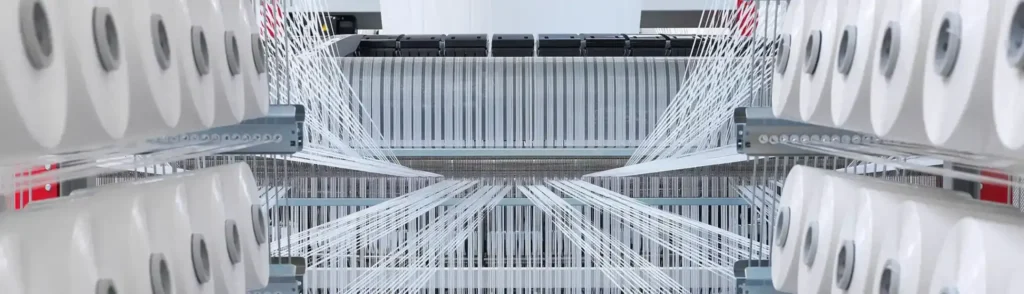
- Weaving — Plain or twill constructions target ends/picks that give seam bite without mass creep. Fabric is heat‑set for dimensional stability.
- Paper prep & printing — Sack kraft plies are printed via flexo/gravure; ΔE color, gloss, and registration are controlled; scuff‑resistant overprints are specified for conveyor exposure.
- Lamination & conditioning — Adhesive or extrusion lamination bonds paper to fabric; T‑peel and bond strength reach release thresholds before conversion continues.
- Tube making & venting — Laminates form tubes; side seams are pasted; micro‑perforations or vent tapes are mapped to the product’s de‑aeration behavior.
- Valve patching — Sleeves are inserted with precise overlap; self‑sealing elements are aligned; ultrasonic or hot‑air seals are trialed for leak‑free closure.
- Bottom forming — Block‑bottom folds land within ±1–2 mm; triangular corner patches are added for high bulk densities; squareness is verified by jigs.
- Liner insertion — Loose or form‑fit liners are tacked without fouling sealing zones; welds are checked where applicable.
- Inspection & testing — Fabric tensile (ASTM D5034 / ISO 13934‑1); seam efficiency (ISO 13935‑2); tear (ISO 13937‑2); drop/stack to ISTA/ISO; valve leakage; COF; odor; AQL sampling. QR lot codes link results to the batch.
Applications of Paper Valve Woven Bags: where the hybrid wins
From pigments to premixes, from cement to starches, Paper Valve Woven Bags solve different problems with the same composure: they fill quickly, stack neatly, survive transit, and communicate clearly.
- Mineral and inorganic chemicals — Calcium carbonate, barite, silica, gypsum, lime, titanium dioxide. Abuse tolerance and sift‑proof seams are decisive; readable hazard labeling is non‑negotiable.
- Fertilizers & soil amendments — NPK, urea, potash, micronutrient premixes. De‑aeration and UV‑stable shells sustain yard stacks through heat and humidity.
- Construction products — Cement, dry‑mix mortars, tile adhesives, grouts, self‑levelers. Valve speed, dust control, and block‑bottom interlock deliver safer pallets and cleaner aisles.
- Polymers & additives — PVC resin, masterbatches, flame retardants, fillers. Antistatic options and sift‑proofing address ESD and contamination concerns.
- Food ingredients (industrial) — Sugar, starch, milk powders (where paper optics and data density are valued). Migration controls and low‑odor inks protect organoleptics.
- Animal nutrition — Premixes and specialty feeds where abrasion and presentation meet.
Thinking from the headline: “The Versatility in Chemical Packaging” as a map
Versatility is not vagueness; it is the capacity to pivot between conflicting constraints without collapsing. For Paper Valve Woven Bags, a practical map has five layers—geometry, mechanics, chemistry, information, and end‑of‑life—and each layer holds a set of levers.
- Geometry — Self‑opening square bases and block‑bottom folds unlock pallet density, planogram discipline, and barcode legibility. Anti‑slip lacquers tune COF for the chosen pallet pattern.
- Mechanics — Seam efficiency (≥80%), grab tensile (≥400–600 N), and tear resistance are tuned to bulk density and drop specs. Corner patches protect first‑failure zones.
- Chemistry — Liners and coatings set moisture ingress; inks/adhesives respect restricted‑substance lists; antistatic treatments mitigate ignition risk in dusty rooms.
- Information — Paper acreage carries GHS/CLP pictograms, multi‑language text, variable data, and QR lots that route to certificates.
- End‑of‑life — Monomaterial choices and labeled polymer families make recovery plausible; separability is engineered, not wished for.
Systematic analysis of Paper Valve Woven Bags: sub‑arguments and synthesis
To move from slogans to specifications, break the problem into testable claims, analyze with the right discipline, then recombine into a program that survives both audits and forklifts.
Sub‑argument A — Valve speed dominates total cost of packing
The filler is the drumbeat of the plant. Sleeve stiffness, spout coupling, and vent maps determine whether beats per minute are music or noise. Self‑sealing flaps and ultrasonic closures trim seconds at the spout; directed venting prevents puffing that otherwise forces rework and sweeps.
Sub‑argument B — Paper and woven are complementary, not redundant
Paper grips; woven guards. Paper gives brand‑ready optics and controlled friction; woven arrests tears and carries corners. Combining them is not overbuilding; it is dividing labor so each material does what it does best.
Sub‑argument C — Barrier and sift‑proofing are system outcomes
No single layer decides moisture ingress or fines escape. Liners, paste patterns, edge treatments, and valve lips share the work. A thin cast‑PP liner with weldable lips plus properly overlapped pastes can outperform a thick paper stack with loose closures.
Sub‑argument D — Compliance converts promise to proof
Quality (ISO 9001), environment (ISO 14001), energy (ISO 50001), and OH&S (ISO 45001) anchor the site. Restricted‑substance controls (OEKO‑TEX STANDARD 100; ZDHC MRSL alignment) keep chemistry defensible. ISTA/ISO drops and stacks, plus UN Model Regulations tests where required, turn safe‑sounding into safe‑standing. Third‑party labs—SGS, TÜV, Intertek, Bureau Veritas—translate claims into numbers tied to lot codes.
Sub‑argument E — Circularity needs intentional BOMs
Monomaterial paper+PP choices, NIR‑readable pigments, printed polymer IDs, and tear paths that separate plies move recovery from aspiration to allocation. Recycled PP in the woven core (20–60%) is realistic with stabilizers and odor management.
Reference specification for multi‑sector Paper Valve Woven Bags (25–50 kg)
- BOM: PP raffia base (9–14 × 9–14 EPI × PPI; 900–1400 D tapes); sack kraft 70–120 gsm (optionally coated/bleached); PP/PE valve sleeve with self‑sealing flap; optional LDPE/LLDPE or cast‑PP liner; anti‑slip lacquer; scuff‑resistant overprint.
- Geometry: Block‑bottom; fold tolerance ±1–2 mm; optional corner patches for bulk density >1.2 g/cm³.
- Mechanics: Grab tensile ≥ 400–600 N (ASTM D5034 / ISO 13934‑1); seam efficiency ≥ 80% (ISO 13935‑2); tear per ISO 13937‑2; drop/stack to ISTA/ISO; valve leak within ppm limits.
- Filling: Vent maps tuned to powder de‑aeration; weight stability ±0.5–1.0% at rate; sleeve gauge matched to spout energy for ultrasonic/hot‑air seals.
- Chemistry: OEKO‑TEX STANDARD 100 Annex 4/6; ZDHC MRSL v3.1 alignment for inks/adhesives; food‑adjacent SKUs to 21 CFR and EU (EC) 1935/2004 with GMP (EC) 2023/2006.
- ESD/ATEX: Antistatic coatings or additives where combustible dust risk exists; verify surface resistivity and charge decay to program.
- Environment & governance: rPP 20–60% where feasible (GRS/RCS verified); sites to ISO 9001/14001/45001/50001; polymer ID and recycled content % printed on pack where permitted.
- Traceability: QR lot codes linking to COAs, tensile/seam/tear charts, vent maps, and certificates; retention ≥ 5 years.
| Parameter | Typical Target/Range | Method/Note | Why it matters |
|---|---|---|---|
| Grab tensile | ≥ 400–600 N | ASTM D5034 / ISO 13934‑1 | Predicts drop survival and corner integrity |
| Seam efficiency | ≥ 80% of base tensile | ISO 13935‑2 | Prevents first‑failure seam ruptures |
| Valve seal integrity | Dust ppm ≤ program | On‑line leakage/dust checks | Keeps housekeeping and net weight in control |
| Outer COF | ≥ 0.3 static | Lacquer + paper texture | Stabilizes pallets; reduces wrap |
| Moisture ingress | Per product spec | Humidity cycling w/ liner | Protects hygroscopic powders |
Risk management for Paper Valve Woven Bags: failure modes and pre‑emptions
- Corner blow‑out — Increase fold radii; add triangular corner patches; verify seam bite in the corners; ensure woven denier supports expected drop energy.
- Valve dust leakage — Re‑spec sleeve gauge and stiffness; tune ultrasonic energy; map vents to relieve back‑pressure near the spout.
- Delamination — Raise surface energy before lamination; maintain nip/temperature; audit T‑peel by lot; respect cure times.
- Pallet slippage — Increase COF via micro‑texture lacquer; choose interlock patterns; verify conveyor compatibility.
- Print scuffing — Use scuff‑resistant overprint; reroute conveyor contact zones; adjust cartonization to protect faces.
- Moisture ingress — Upgrade liner gauge or move to form‑fit; adjust paste overlaps to block capillary paths; add water‑repellent dispersions.
Environmental accounting: the functional unit that matters
Do not compare empty bags by mass; compare delivered function: tons of chemical shipped within moisture, dust, and damage limits at a defined route and stack height. Directionally, Paper Valve Woven Bags embody slightly more material than plain multiwall paper sacks but often reduce rejects, topple incidents, and over‑wrap—netting a lower system cost and a steadier footprint. Recycled PP in the core and renewable electricity (ISO 50001) in plants are the largest levers. End‑of‑life prospects improve when BOMs are disclosed, polymer IDs are printed on pack, and bale specs are agreed with recyclers in advance.
Procurement checklist for Paper Valve Woven Bags
- Define functional unit: bulk density, target fill weight, pallet pattern, stack height, storage climate.
- Lock geometry: block‑bottom dimensions, fold tolerances, corner patch rules.
- Specify mechanics: tensile, seam, tear, drop/stack; acceptance AQLs.
- Engineer filling: sleeve dimensions, sealing method, vent maps, dust ppm, weight stability.
- Choose BOM: woven density/denier; paper grammage/coatings; liner type/gauge; anti‑slip lacquer.
- Govern chemistry: restricted‑substance alignment; food‑adjacent norms if relevant; ESD/ATEX for dusty commodities.
- Set sustainability: recycled content targets; polymer IDs and % on‑pack; GRS/RCS paperwork.
- Demand traceability: QR lots linking to COAs and test charts; record retention ≥ 5 years.
- Validate: filler trials (rate/weight/dust); pallet simulations; humidity/temperature cycling.
- Plan end‑of‑life: bale specs, separability guidance, recycler partnerships.
Scenario playbooks for Paper Valve Woven Bags
Titanium dioxide producer: switches from multiwall paper to paper‑laminated woven valve sacks with cast‑PP liners and scuff‑resistant overprints. Dust complaints drop; export pallets arrive square; hazard pictograms remain legible.
Fertilizer blender: adopts PP‑woven + paper valve sacks with zoned micro‑perforations; packs per minute increase; yard stacks resist summer humidity; UV‑stable pigments minimize chalking.
Dry‑mix mortar brand: moves to anti‑slip lacquered block‑bottoms with corner patches; warehouse topple incidents decline; stretch‑wrap use falls; planogram compliance improves.
Standards, tests, and governance that keep Paper Valve Woven Bags credible
Sites are anchored by ISO 9001 (quality), ISO 14001 (environment), ISO 50001 (energy), and ISO 45001 (OH&S). Chemistry is governed by OEKO‑TEX STANDARD 100 (Annex 4/6) and ZDHC MRSL alignment for inks and adhesives. Mechanics are proven with ASTM D5034 / ISO 13934‑1 (tensile), ISO 13935‑2 (seam), ISO 13937‑2 (tear), and ISTA/ISO drop‑stack protocols. UN Model Regulations may apply for certain hazardous solids; designs are guided toward appropriate performance codes depending on construction. Recycled inputs are documented via GRS/RCS; recyclability intent follows ISO 18604 principles. Third‑party labs—SGS, TÜV, Intertek, Bureau Veritas—convert claims into comparative numbers that ride with the QR code on each lot.
| Domain | Standard / Reference | What it verifies | Notes |
|---|---|---|---|
| Quality & governance | ISO 9001 / 14001 / 45001 / 50001 | Process discipline; environment & energy management; worker safety | Certificates should be current and site‑specific |
| Chemistry | OEKO‑TEX STANDARD 100; ZDHC MRSL v3.1 | Restricted substances under limits; MRSL alignment | Spot GC‑MS audits add confidence |
| Mechanics | ASTM D5034 / ISO 13934‑1; ISO 13935‑2; ISO 13937‑2; ISTA/ISO | Tensile, seam, tear, and transit robustness | Cyclic testing mirrors real handling better than statics |
| Recycling & inputs | ISO 18604; GRS/RCS | Design for recycling; verified recycled content | Publish BOM maps for recyclers |
2024–2025 outlook for Paper Valve Woven Bags
Expect odor‑controlled high‑MFI rPP grades to support higher recycled content without sensory penalties; delaminatable adhesive systems that hold in service yet release in recycling; programmable perforation around the valve area to balance de‑aeration with dust control; and digital identity (QR + watermarking) that survives abrasion and humidity to keep lot‑level data within a scan. Policy trends point toward clearer polymer ID labeling and recycled‑content disclosures on industrial sacks, expanding EPR logic from consumer to semi‑durable industrial formats.
- Defining Paper Valve Woven Bags and their many aliases
- The material system of Paper Valve Woven Bags: constituents, properties, cost levers
- Feature set of Paper Valve Woven Bags: throughput, protection, stability, compliance, circularity
- Production process of Paper Valve Woven Bags: from pellets and pulp to square, sealed packs
- Applications of Paper Valve Woven Bags: where the hybrid wins
- Thinking from the headline: “The Versatility in Chemical Packaging” as a map
- Systematic analysis of Paper Valve Woven Bags: sub‑arguments and synthesis
- Reference specification for multi‑sector Paper Valve Woven Bags (25–50 kg)
- Risk management for Paper Valve Woven Bags: failure modes and pre‑emptions
- Environmental accounting: the functional unit that matters
- Procurement checklist for Paper Valve Woven Bags
- Scenario playbooks for Paper Valve Woven Bags
- Standards, tests, and governance that keep Paper Valve Woven Bags credible
- 2024–2025 outlook for Paper Valve Woven Bags
Opening Dialogue
Product Manager (PM): “Ray, chemical manufacturers are demanding packaging that combines leak-proof functionality with customization. How can VidePak’s paper valve woven bags meet these specialized needs?”
Ray (CEO, VidePak): “By leveraging Starlinger’s precision valve-sealing technology and our modular production lines, we deliver paper valve bags with fully customizable designs—from anti-corrosive liners to RFID-enabled handles. Our ISO-certified processes ensure compliance with UN 38.3 chemical transport standards while reducing lead times by 30% through rapid prototyping.”
H2: Customization Capabilities for Diverse Chemical Applications
Paper valve woven bags are engineered to address the unique challenges of chemical packaging, including corrosion resistance, static control, and precise filling. VidePak’s 100+ Starlinger circular looms and 30 lamination machines enable seven core customization options:
H3: 1. Valve Customization
- Cross-Cut vs. Slit Valves: Cross-cut valves reduce dust emissions by 90% during filling, ideal for powdered chemicals like sodium carbonate.
- Anti-Static Liners: Carbon-coated PE layers dissipate static charges, complying with ATEX directives for explosive environments.
Case Study: A European pesticide producer reduced spillage by 40% using VidePak’s slit-valve bags with 0.3mm anti-clog filters.
H3: 2. Handle and Opening Designs
- Reinforced Handles: Polypropylene (PP) straps with 500N tensile strength facilitate manual handling of 50kg bags.
- Tamper-Evident Seals: Ultrasonic welding creates irreversible closures, meeting FDA 21 CFR for hazardous material transport.
H3: 3. Material Innovation
VidePak offers three-layer laminates for chemical resistance:
| Layer | Material | Function |
|---|---|---|
| Outer | UV-stabilized BOPP (25μm) | Blocks 90% of UV-B rays |
| Middle | Aluminum foil (12μm) | Moisture barrier (<1g/m²/day) |
| Inner | PE-coated kraft paper | Resists acids, alkalis, and solvents |
H2: Technical Specifications and Compliance
VidePak’s paper valve bags meet stringent global standards through rigorous testing:
| Parameter | VidePak’s Standard | Test Method |
|---|---|---|
| Load Capacity | 50kg (static), 30kg (dynamic) | ISO 9001, ASTM D5260 |
| Valve Leakage Rate | <0.01% | EN 22248:2016 |
| Chemical Resistance | 72h immersion without degradation | ASTM D543 |
FAQs
Q: How do I choose between PE and PP liners for corrosive chemicals?
A: PE liners resist acids (e.g., HCl), while PP is better for alkalis (e.g., NaOH). Consult our chemical compatibility guide for details.
Q: Can bags be customized for automated filling lines?
A: Yes, our ±1mm valve tolerance ensures compatibility with Bosch and Tetra Pak systems. Explore our valve bag solutions for high-speed automation.
H2: Production Workflow and Quality Assurance
VidePak’s manufacturing process integrates Starlinger’s iSURE® quality control and W&H extrusion lines for precision:
- Extrusion: PP resin is melted at 200–240°C into 0.04–0.06mm tapes, with laser sensors ensuring ±0.005mm thickness.
- Weaving: 12–14 SPI weave density achieves 35N/cm² tensile strength, critical for heavy-duty chemicals.
- Lamination: PE/kraft paper layers are bonded with 3N/cm adhesion strength (ASTM D903).
- Valve Integration: Ultrasonic welding ensures hermetic seals with 25N/mm² strength.
Client Example: A Chinese fertilizer company reduced packaging waste by 20% using VidePak’s 100% recyclable PP bags with QR code traceability.
H2: Sustainability and ESG Alignment
VidePak’s ESG initiatives align with GRI Standards and ISO 14001:
- Solar-Powered Production: A 2MW rooftop system cuts CO₂ emissions by 1,200 tons/year.
- Ethical Labor Practices: Education grants for 500+ children of rural workers annually.
- 5S Methodology: Reduced workplace accidents by 25% through optimized workflows.
H2: Market-Specific Solutions
| Application | Custom Feature | Performance Benchmark |
|---|---|---|
| Pesticides | Anti-static valves | 0% dust emission (ISO 284) |
| Industrial Acids | HDPE liners (0.2mm) | 72h immersion resistance (ASTM D543) |
| Pharmaceuticals | Tamper-evident RFID tags | FDA 21 CFR, EU GDP compliance |
H2: Future Trends and Strategic Insights
- Smart Valves: Integrating IoT sensors for real-time chemical integrity monitoring.
- Bio-Based Liners: Testing PLA-kraft hybrids for 90% biodegradability by 2027.
By combining Starlinger’s engineering with agile customization, VidePak redefines chemical packaging. For technical details, visit our valve bag innovations and sustainability framework.
This report integrates data from ASTM/ISO standards, client trials, and VidePak’s 2025 ESG audit, adhering to Google’s EEAT (Expertise, Experience, Authoritativeness, Trustworthiness) principles.