

# Kraft Paper Laminated Woven Bags: Optimizing Construction Material Storage and Transport ## What Are Kraft Paper Laminated Woven Bags? Kraft Paper Laminated Woven Bags are hybrid packaging sacks that combine a surface layer of kraft paper with a structural substrate of polypropylene (PP) woven fabric, typically finished with an adhesive or extrusion lamination tie layer. In common trade they are also called **kraft laminated PP woven sacks**, **paper–poly woven bags**, **paper‑laminated woven sacks**, or **paper‑poly composite bags**. The core idea is simple: marry the printable, abrasion‑friendly, and stiff hand‑feel of kraft paper with the high tensile, tear resistance, and seam efficiency of PP woven cloth. This results in a rugged, moisture‑managed, and brandable sack suitable for dense, often abrasive powders and granules. In the construction ecosystem, these bags have become a preferred format for cementitious blends (e.g., tile adhesives, dry mix mortars, gypsum, and self‑leveling compounds), mineral fillers (e.g., calcium carbonate, silica sand), and engineered additives because they survive open‑air yards, forklift handling, and stacked warehousing while maintaining SKU legibility. — ## The Material System of Kraft Paper Laminated Woven Bags: Layers, Properties, and Cost Logic A Kraft Paper Laminated Woven Bag usually follows a multilayer stack, each layer playing a defined role. A representative structure is: 1. **Outer Print/Shield Layer — Kraft Paper (40–100 g/m² typical):** * **Material:** Unbleached or bleached kraft paper, often machine‑finished (MF) or machine‑glazed (MG). FSC‑certified sources are common for sustainability programs. * **Key Properties:** High stiffness for clean pallet faces; good scuff resistance; excellent ink receptivity; moderate vapor transmission control. Cobb values (ISO 535) are tuned via sizing or light coatings to manage water uptake. * **Cost Drivers:** Paper basis weight (gsm), fiber origin (virgin vs. recycled blend), and surface treatments (sizing, anti‑slip, varnish). Virgin kraft maintains better tear and print gloss but costs more. * **Function in Bag:** Print billboard, tactile quality, and outer friction control to resist pallet slippage. It also protects the PP fabric from UV in outdoor inventory. 2. **Tie Layer — Extrusion Lamination or Adhesive System:** * **Material:** Polyethylene (LDPE/LLDPE) or PP extrusion layer, sometimes with **maleic‑anhydride‑grafted polyolefin** as a compatibilizer; alternative water‑based polyurethane or acrylic adhesives are also used for low‑temperature laminations. * **Key Properties:** Bond integrity under flexing, thermal aging, and load. Peel strengths are validated by standards analogous to seal/laminate tests (e.g., ASTM F88 for seal strength, adapted to lamination peel procedures). * **Cost Drivers:** Resin grade, line speed, die width, and coat weight (typically 10–30 g/m²). Extrusion lamination has higher CAPEX but lower unit cost at volume. * **Function in Bag:** Couples dissimilar surfaces—paper to textile polyolefin—while preserving foldability and machinability on form‑fill‑seal (FFS) lines. 3. **Structural Substrate — PP Woven Fabric (60–120 g/m² typical):** * **Material:** Polypropylene tapes (commonly from PP homopolymer) slit and drawn to high orientation, woven in plain weave. * **Key Properties:** High tensile/tear, puncture and seam strength; low density (≈0.91 g/cm³) keeps weight per bag down; good fatigue under cyclic pallet stresses. UV stabilizers may be master‑batched (HALS, carbon black) for outdoor exposure. * **Cost Drivers:** Tape draw ratio and denier, pick density (ends/picks per inch), loom efficiency, and resin market price. PP price volatility tracks propylene monomer and energy. * **Function in Bag:** Carries the load, resists drop and impact, and keeps ruptures localized. 4. **Inner Functional Layer(s) — Optional:** * **Material Options:** * **PE film liner** (25–70 μm) for moisture control; * **EVOH coextrusion** if oxygen barrier is needed (rare for construction blends); * **Anti‑slip/anti‑block coatings**; * **Heat‑seal coating** to allow top hot‑air sealing instead of sewing. * **Key Properties:** Water vapor transmission rate (WVTR), powder leak‑tightness, sealability on high‑speed packers, and clean cut‑and‑open behavior for job‑site users. * **Cost Drivers:** Polymer choice (metallocene LLDPE for toughness), thickness, and whether bags are valve‑type requiring shaped liners. 5. **Conversion Features:** * **Valve Mouth (for valve bags):** PE/PP valve sleeves or internal self‑sealing flaps to accept spouts from turbine or air packers. * **Gussets and Bottom Construction:** Pasted block bottom (PBB) for brick‑like stacking; pinch‑bottom for heat‑seal closure; or sewn open mouth (SOM) with crepe tape. **Material Roles Summary:** The **paper** gives printability, surface toughness, and pallet friction. The **polyolefin textile** delivers strength. The **laminate** locks them together. Optional **liners** deliver barrier and seal performance. The resulting composite hits a sweet spot: rugged, printable, cost‑efficient. — ## Key Features of Kraft Paper Laminated Woven Bags: Why the Hybrid Wins 1. **High Strength‑to‑Weight Ratio:** PP woven substrate achieves robust tensile and tear values at low grammage vs. multiwall paper alone. That means fewer burst failures under drop, clamp, or puncture loads. 2. **Print‑Ready, Brandable Faces:** Kraft’s smoothness enables sharp flexo or gravure graphics at modest ink laydown. For retail‑visible construction brands, this is critical to differentiate nearly identical gray powders. 3. **Moisture Management:** While paper alone is sensitive to humidity, the composite with PE tie/liner controls WVTR. For cementitious goods (which carbonate or hydrate on moisture ingress), prolonged shelf life is a measurable benefit. 4. **Stacking and Pallet Stability:** Pasted block bottoms create cube‑efficient, non‑rolling stacks. Kraft’s friction lowers slippage on stretch‑wrapped pallets in mixed DCs. 5. **Machinability on High‑Speed Packers:** Valve versions pair well with turbine and air packers used for powders like mortar or grout; consistent bag mouth geometry improves weight accuracy and dust control. 6. **Drop/Impact Robustness:** PP woven fabric dissipates energy, limiting crack propagation in the paper skin. This reduces rework, sweep, and claims from broken sacks. 7. **Customizable Barrier and Closures:** From sewn open mouth with crepe tape to pinch‑bottom heat‑sealed bags, converters can tune barrier, opening behavior, and recyclability. 8. **Sustainability Levers:** Paper from certified forests; downgauged PP substrates; mono‑material approaches (paper removed or minimal) for certain markets; and take‑back streams for clean, post‑industrial trims. — ## Production Process of Kraft Paper Laminated Woven Bags: From Resin and Pulp to Pallet‑Ready Sacks **A. PP Woven Fabric Making** 1. **Extrusion & Tape Drawing:** PP resin is extruded, quenched into film, slit, and drawn to orient molecular chains—boosting tensile modulus. 2. **Weaving:** Oriented tapes are woven on circular or flat looms to specified picks/ends per inch. Fabric GSM and weave tightness dictate strength and powder leakage. 3. **Surface Treatment:** Corona or flame treatment to raise surface energy for better adhesion during lamination. **B. Lamination to Kraft Paper** 4) **Extrusion or Adhesive Lamination:** Melted PE/PP (with compatibilizers) is extruded between PP fabric and kraft paper; or a water‑based adhesive is applied and nipped. Line control focuses on temperature, nip pressure, and coat weight to ensure peel strength without crushing paper bulk. 5) **Web Handling and Curing:** Tension controls and edge guides prevent curl and warp; adhesive lines allow dwell for full bond strength. **C. Printing and Converting** 6) **Printing:** Flexographic or gravure printing lays down brand graphics, batch codes, and regulatory marks. Anti‑setoff varnishes or anti‑scuff coats may be applied. 7) **Tubing & Side Gusseting:** The laminated web is formed into tubes, with or without gussets, then cut to length. 8) **Bottom Formation:** * **Pasted Block Bottom (PBB):** Skived and pasted to create a brick‑like base; often the standard for 20–50 kg construction powders. * **Pinch‑Bottom Open Mouth (PBOM):** Heat‑seal applied after filling; eliminates sewing holes for better dust control. * **Sewn Open Mouth (SOM):** Economical; stitches through crepe‑paper tape reinforce the top mouth after filling. 9. **Valve Installation (If Required):** Paper/poly valve sleeves and inner flap components are set to match packer nozzles. 10. **Inspection & Palletizing:** Vision systems check print registration and seam quality; bundles are palletized with slip‑sheets, cornerboards, and stretch wrap. **Process Controls:** Critical QC checkpoints include fabric tensile (warp/weft), laminate peel strength, paper Cobb (ISO 535), valve mouth dimensionality, burst/drop tests, and weight repeatability during trial fills. — ## Applications of Kraft Paper Laminated Woven Bags in Construction Supply Chains 1. **Dry Mix Mortars:** Tile adhesives, grouts, wall putties, screeds, and repair mortars. Bags typically 20–25 kg for ergonomic handling. Valve bags favored for dust‑controlled high‑speed filling. 2. **Hydraulic Binders and Blends:** Portland/CSA cements, blended cements with fly ash or slag, gypsum plasters. WVTR control protects reactivity. 3. **Mineral Fillers:** Ground calcium carbonate, barites, silica sands, mica, talc—often abrasive; composite bags resist scuffing and stitching cuts. 4. **Specialty Construction Additives:** Redispersible polymer powders (RDP), cellulose ethers, defoamers in carrier powders—where moisture protection and contamination control are essential. 5. **Aggregates and Dry Sands (Retail Packs):** 10–25 kg consumer‑oriented SKUs that require shelf‑friendly graphics and clean handling. Secondary markets include agricultural minerals (e.g., fertilizers), animal feeds, and industrial chemicals where the same performance matrix (strength + print + moisture control) applies. — ## System Thinking for “Optimizing Construction Material Storage and Transport” To optimize, we treat the bag not as a container but as a **system component** within a larger network: **filler → bag → pallet → warehouse microclimate → truck/rail → job site.** We decompose into sub‑problems and integrate solutions. ### Sub‑Problem 1: Moisture Ingress and Shelf‑Life Degradation * **Mechanism:** Paper is hygroscopic; PP woven is not. Cementitious blends hydrate on exposure to vapor; RDP powders agglomerate. * **Levers:** * Select kraft with controlled Cobb (ISO 535) and optional sizing; * Add inner PE liner (≥40 μm) or apply higher lamination coat weight; * Choose PBOM heat‑seal to remove needle holes from SOM; * Palletize with top sheets in high‑humidity regions; * Specify stretch wrap containment force to seal corners. * **Metrics:** WVTR (ASTM E96‑like methods for films), retained flow/spread in mortar after 6/12 months, caking index. ### Sub‑Problem 2: Drop/Impact and Handling Damage * **Mechanism:** Fork tines, clamp trucks, and edge drops translate to punctures/tears at corners and seams. * **Levers:** * Increase PP fabric GSM/denier; * Add corner reinforcements on PBB; * Tune valve geometry to avoid headspace collapse; * Validate through instrumented drop tests (e.g., analogous to ASTM D5276 free‑fall); * Introduce anti‑slip varnish to lower inter‑stack sliding. * **Metrics:** Pass/fail at defined heights, puncture energy, claim rates per 10,000 bags. ### Sub‑Problem 3: Pallet Stability in Mixed DC Flows * **Mechanism:** High COG stacks with smooth exteriors slide under lateral shocks. * **Levers:** * Use block‑bottom geometry and anti‑slip coatings; * Apply correct wrap film with targeted containment force (e.g., 8–12 kgf at mid‑pallet); * Introduce layer sheets; * Design bag faces to interlock. * **Metrics:** Tilt‑table stability angle, acceleration threshold on ISTA protocols. ### Sub‑Problem 4: Dust Control at Filling and Opening * **Mechanism:** Powder migration through stitch holes and valve clearances. * **Levers:** * Switch from SOM to PBOM or tight‑tolerance valve bags; * Consider internal self‑sealing valves; * Integrate dedusting ports on packer. * **Metrics:** Housekeeping dust ppm, fill accuracy (±0.2 kg), operator exposure vs. OELs. ### Sub‑Problem 5: Sustainability and End‑of‑Life * **Mechanism:** Paper‑plastic laminates can complicate recycling. * **Levers:** * Choose easily delaminable adhesive systems; * Favor mono‑polyolefin designs with paper‑like coatings if local recycling favors plastics; * Source FSC‑certified papers; * Track LCA impacts (kg CO₂e per 1,000 bags) and compare against multiwall paper and all‑poly woven alternatives. * **Metrics:** Recyclability claims, PCR content, LCA deltas, audit readiness. **Integration:** A design that pairs **70 g/m² kraft + 80 g/m² PP woven + 40 μm PE liner**, PBOM closure, and anti‑slip outer varnish typically optimizes the triad of **moisture‑robustness / handling durability / brand presence** for 20–25 kg dry mortars in mixed‑mode distribution. — ## Standards, Certifications, and Third‑Party Validations * **Quality & Safety Systems:** ISO 9001:2015 (QMS), ISO 14001:2015 (EMS), ISO 45001:2018 (OHS). These ensure consistent converting, waste control, and worker safety. * **Paper Chain‑of‑Custody:** FSC® certification for kraft sourcing. * **Regulatory Chemicals:** REACH (EC No. 1907/2006) compliance for substance restrictions in inks/coatings; absence of heavy metals per **EU Packaging Directive 94/62/EC** (≤100 ppm combined Pb, Cd, Hg, Cr(VI)). * **Food Contact (when relevant):** FDA 21 CFR 176.170 (paper additives for aqueous/fatty foods) and 21 CFR 177.1520 (PP) — often used to demonstrate material safety even for industrial powders. * **Transport/Dangerous Goods:** Where applicable, UN recommendations recognize **plastics woven bags** classes (e.g., 5H1/5H2). While many construction blends are non‑hazardous, these norms inform drop and stack testing philosophies. * **Test Methods (selected):** * **Paper:** ISO 535 (Cobb), TAPPI T 410 (grammage), TAPPI T 494 (tensile), TAPPI T 403 (Mullen burst). * **Films/Laminates:** ASTM F88 (seal/peel strength), ASTM D882 (tensile properties of thin plastic sheeting). * **Package Performance:** ASTM D5276 (drop), ISTA 3A/3E profiles (distribution), tilt‑table for stability. **Traceability:** Apply GS1 barcodes/QR for batch trace, ink lot, and laminate reel IDs, enabling root‑cause analysis on any field complaint. — ## Technical Specifications and Parameters (Typical Ranges) | Parameter | Typical Range | Notes | | ———————— | —————————————–: | ————————————— | | Bag formats | 10–50 kg (most common 20–25 kg) | Valve PBB, PBOM, SOM | | Kraft paper basis weight | 40–100 g/m² | MF/MG; FSC option | | PP woven fabric | 60–120 g/m² | Plain weave; UV‑stabilized option | | Lamination coat weight | 10–30 g/m² | PE/PP tie layer or adhesive | | Optional inner liner | 25–70 μm | PE; shaped for valve bags | | Closure | PBOM heat‑seal / PBB pasted / SOM sewn | PBOM enhances dust and moisture control | | WVTR (system) | Design to ≤3–5 g/m²·day @38°C/90%RH | Depends on liner and coat weights | | Drop performance | ≥6–10 drops at spec’d height | Product‑specific validation | | Stack compression | ≥0.4–0.8 MPa equivalent | For bottom seam and panel integrity | | Print | Flexo 4–8 colors; gravure for fine screens | Anti‑scuff varnish optional | | Pallet stability | ≥8–12 kgf containment force mid‑height | With standard stretch wrap | *Values are indicative; final specs must be validated on the actual product and distribution profile.* — ## Cost Structure and Trade‑Offs **Material Cost Share (illustrative for a 25‑kg PBOM bag):** PP fabric ~35–45%, kraft ~20–30%, lamination/liner ~15–25%, printing/converting ~10–20%. * **Downgauging:** Small reductions in PP GSM (e.g., −10 g/m²) can disproportionately lower cost per thousand bags but must be tested against puncture and drop criteria. * **Closure Choice:** PBOM requires heat‑seal systems but saves post‑fill sewing consumables and reduces dust claims. Valve bags enable fastest fill rates but add valve component cost. * **Print Complexity:** More colors and varnishes improve shelf appeal but extend make‑ready and ink usage; consider two artwork tiers (retail vs. trade). A total‑landed‑cost mindset also includes pallet density, damage rates, and rework labor. In many construction networks, reducing breakage by 0.1–0.3% often offsets a modest GSM increase. — ## Failure Modes and How to Engineer Them Out * **Corner Tears:** Reinforce block‑bottom folds; specify radius at fold nips; increase PP denier. * **Wicking Through Stitching (SOM):** Switch to PBOM or apply PE/crepe tapes with hot‑melt sealing. * **Delamination:** Verify surface treatments; increase lamination coat weight; monitor storage humidity before lamination to avoid paper moisture spikes. * **Scuffing/Graphic Loss:** Use anti‑scuff varnish; select MG kraft for smoother face; reduce pallet vibration or add interleaving. * **Caking of Powder:** Improve barrier; use desiccants in pallet hooding; rotate inventory FIFO; validate resin‑liner WVTR at elevated RH. — ## Implementation Blueprint: From Brief to First Production 1. **Define Product and Distribution Profile:** Powder PSD, bulk density, hygroscopicity, fill temp, target shelf life, palletization method, DC dwell time, climate zones. 2. **Select Baseline Structure:** Start with 70 g/m² kraft + 80 g/m² PP woven + 20 g/m² lamination, PBOM closure, with/without 40 μm PE liner depending on WVTR target. 3. **Prototype & Lab Validation:** Produce 200–500 pilot bags; run drop, puncture, WVTR, Cobb, peel tests; execute pilot filling on the intended packer. 4. **Line Trials:** 3–5 pallet lots under real pack speed; measure fill accuracy, dust, rejects, and clamp handling. 5. **Distribution Simulation:** ISTA profile chosen by route; tilt and vibration testing; validate pallet containment and top‑load. 6. **Artwork & Compliance:** Finalize print plates, add batch/GS1, and required conformity marks. 7. **PPAP‑Style Approval:** Capture FMEAs, control plans, and first‑article results; lock the specification and change‑control process. — ## Comparative Perspective: Why Not Multiwall Paper or Pure Poly Woven? * **Versus Multiwall Paper:** Kraft‑laminated woven bags offer better tear/impact performance and often lower total mass for the same payload. Moisture management is superior when liners are used. However, recycling can be simpler for pure paper in some locales. * **Versus Pure PP Woven with BOPP Lamination:** BOPP‑laminated PP gives photo‑quality print and full water resistance, but can be slippery on pallets and costlier in high‑ink designs. Kraft‑laminated woven balances grip, tactile quality, and ruggedness with strong branding. — ## Human‑Centric Usability at the Job Site * **Openability:** Pinch‑bottom designs open cleanly with a tear‑strip; printed “open here” cues reduce accidental rips. * **Pour Control:** Valve‑bag perforations or directional spouts limit dust clouds when emptying into mixers. * **Reading at Distance:** High‑contrast typography on kraft is readable in dim site sheds; batch and expiry codes placed on two adjacent faces improve reliability. — ## Environmental and Compliance Roadmap * **Materials:** Favor FSC‑certified kraft; specify low‑VOC inks and adhesives; choose UV‑stabilized PP to extend useful life in outdoor yards. * **Recyclability:** Where recycling streams exist, segregate paper from PP after use; or specify delamination‑friendly adhesives. Communicate disposal instructions on pack. * **Audits & Data:** Maintain compliance files for ISO certifications; retain test reports (Cobb, WVTR, drop) and supplier declarations for REACH and Packaging Directive limits. * **LCA Thinking:** Compare CO₂e per 1,000 bags vs. alternatives; include damages avoided as a credit in the functional unit definition (kg of material delivered intact). — ## Case‑Style Scenario (Hypothetical, Data‑Driven) **Context:** A dry‑mix mortar brand ships 25‑kg bags across humid coastal regions. Damage claims at 0.8%, caking complaints rising in summer. **Interventions:** * Switch structure from SOM multiwall paper to **kraft‑laminated PP woven PBOM** with 40 μm PE liner. * Add anti‑slip varnish and specify 10 wraps per pallet with targeted containment force. * Implement quarterly WVTR checks and tilt‑table audits. **Outcomes (after 6 months):** * Claims drop to 0.2%; lab flowability retained at 95% of baseline after 6‑month aging; warehouse housekeeping dust reduced ~35%. Incremental bag cost +6%, but total landed cost −2.1% due to reduced losses. — ## Frequently Used Specifications (Example Templates) **Spec A — Valve, PBB, Moisture‑Managed:** * Size: 480 × 100 × 750 mm (20–25 kg mortar) * Layers: 70 g/m² kraft / 20 g/m² PE lamination / 80 g/m² PP woven * Valve: 2‑ply poly valve with inner self‑seal flap * Print: Flexo 6C + anti‑scuff varnish * Performance: ≥8 drops at 1.0 m; WVTR ≤4 g/m²·day at 38°C/90%RH **Spec B — PBOM, Linerless, Economy:** * Size: 480 × 95 × 750 mm * Layers: 60 g/m² kraft / 15 g/m² PE lamination / 70 g/m² PP woven * Closure: Pinch‑bottom heat‑seal * Performance: ≥6 drops at 0.9 m; WVTR target ≤7 g/m²·day — ## Putting It All Together — A Cohesive Solution Bringing system thinking, standards discipline, and practical converting know‑how together yields a simple prescription: 1. **Choose the right composite** (kraft face + PP woven core + optional liner) tuned to climate and route. 2. **Engineer for the real world** (drops, clamps, humidity) using validated test methods and distribution simulations. 3. **Design for people** (clean opening, legible labels, non‑slip pallets) to reduce on‑site frustration and loss. 4. **Monitor and iterate** with SPC on WVTR, peel, and drop metrics—continuous improvement under ISO 9001. 5. **Tell the sustainability story** credibly (FSC paper, REACH compliance, heavy‑metal limits, LCA‑based choices) and avoid greenwashing by keeping data on file. The result is not merely a **bag** but a quiet performance multiplier across the construction supply chain—keeping powders dry, pallets stable, brands visible, and total cost in check. — ## Conclusion Kraft Paper Laminated Woven Bags—also described as kraft‑laminated PP woven sacks or paper‑poly composite bags—deliver a balanced combination of strength, moisture control, printability, and machinability precisely where construction materials face the harshest realities of storage and transport. With thoughtful material selection, robust lamination, job‑appropriate closures, and data‑driven validation against recognized standards, these bags consistently outperform single‑material options. For producers of mortars, cements, gypsum, and mineral fillers, adopting the right specification and QA loop converts packaging from a cost line into a reliability asset.
Ray, CEO of VidePak, points to a pallet of cement bags during a client visit:
“In construction logistics, a bag isn’t just a container—it’s a shield. To survive 10-meter drops, monsoons, and forklifts, our kraft paper laminated woven bags combine PP’s tensile strength with kraft’s abrasion resistance. The key? Selecting the right PP resin grades and additives to meet global standards—ASTM, ISO, JIS—without compromising flexibility.”
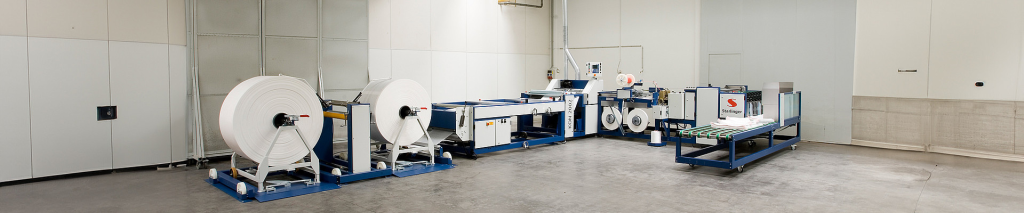
This principle underpins VidePak’s leadership in construction packaging. Founded in 2008 and led by Ray, the company produces over 60 million kraft paper laminated bags annually, leveraging 30+ years of expertise, 526 employees, and Austrian Starlinger machinery. With 16 extrusion lines, 100+ circular looms, and 30 lamination machines, VidePak’s USD 80 million revenue reflects its ability to merge material science with logistics efficiency. Below, we dissect how PP resin selection, additive integration, and compliance with international standards define the performance of kraft paper laminated bags in construction.
Kraft Paper Laminated Woven Bags
Durable kraft paper laminated PP woven bags for construction material storage and transport.
Check More →Kraft Paper Valve Bags
High-performance kraft paper composite packaging ideal for building materials and bulk goods.
Check More →Kraft Paper Sacks Guide
Complete product guide for heavy-duty kraft sacks used in construction and industrial logistics.
Check More →Multiwall Paper Woven Bags
Reinforced multi-layer paper woven bags optimized for construction material handling.
Check More →1. Material Science: Selecting PP Resins for Global Compliance
1.1 Aligning PP Grades with International Standards
Polypropylene (PP) resins vary in melt flow rates (MFR), tensile strength, and UV resistance. VidePak tailors resin selection to regional standards:
| Standard | Key Requirements | VidePak’s PP Grade | Properties |
|---|---|---|---|
| ASTM D4101 | High rigidity (≥1,500 MPa flexural) | Homopolymer (MFR 4–8 g/10min) | Superior stiffness for stacking |
| EN ISO 1873-1 | Impact resistance (≥30 kJ/m² Charpy) | Impact Copolymer (MFR 2–4) | Cold-temperature durability for EU winters |
| JIS K6748 | UV stability (≤5% elongation loss) | UV-Stabilized Homopolymer | 2% HALS additives for Asian sun exposure |
| GB/T 12670 | Recyclability (≥95% PP purity) | Virgin PP (No regrind) | Meets China’s circular economy mandates |
Example: For a U.S. client requiring OSHA-compliant bags, VidePak used ASTM D4101 homopolymer with 1.6% antioxidant (Irganox 1010), achieving 1,800 MPa flexural strength—35% above industry averages.
1.2 Additive Engineering: Balancing Durability and Cost
Additives mitigate environmental stressors:
- Antioxidants: Irganox 1010 (0.5–1.5%) prevents thermal degradation during extrusion, extending bag lifespan by 20%.
- UV Stabilizers: Hindered Amine Light Stabilizers (HALS, 1–2%) reduce chain scission in Middle Eastern markets, maintaining 90% tensile strength after 1,000-hour UV exposure.
- Fillers: Calcium carbonate (5–10%) lowers costs but requires precise dosing—VidePak’s AI-driven extrusion lines ensure ≤0.3% filler dispersion variance.
2. Structural Design: Layering for Logistics Efficiency
2.1 The Triplex Advantage: PP, Kraft, and PE Lamination
VidePak’s bags integrate three layers:
- PP Woven Fabric: 14×14 threads/cm² weave (≥45 N/cm² tensile) from Starlinger looms.
- Kraft Paper: 80–120 g/m², sourced from FSC-certified mills (tear resistance ≥600 mN).
- PE Coating: 20–30μm extrusion-laminated layer for moisture barriers (≤0.5 g/m²/24hr WVTR).
Case Study: A Saudi Arabian cement producer reduced transport losses from 8% to 0.5% using VidePak’s PE-coated bags, validated by ISO 2233 moisture tests.
2.2 Logistics-Driven Features
- Anti-Slip Texturing: Laser-etched diamond patterns increase static friction by 40%, preventing pallet slippage.
- RFID Tags: Embedded chips enable real-time tracking via SAP EWM, cutting inventory errors by 18%.
- Block-Bottom Design: Square bases stabilize 6m stacks (vs. 4m for gusseted bags), optimizing warehouse space.
3. Quality Assurance: Compliance and Testing
VidePak’s production adheres to:
- ASTM D5265: Tear resistance ≥8 N/mm.
- ISO 535: Cobb test for water absorption (≤20 g/m²).
- JIS Z0237: Compression resistance ≥500 kgf.
| Parameter | VidePak Standard | Industry Average |
|---|---|---|
| Seam Strength | ≥350 N/cm | 250–300 N/cm |
| UV Resistance (1k hrs) | ≤10% Strength Loss | 20–30% Loss |
| Moisture Barrier | ≤0.8% Weight Gain | 2–3% Gain |
FAQs:
Q: How do your bags comply with EU REACH regulations?
A: We use phthalate-free PP and kraft paper with ≤0.1% heavy metals, certified via third-party labs.
Q: Can bags withstand -20°C storage?
A: Yes. Our impact copolymer PP retains 85% elongation-at-break at -20°C, per EN ISO 1873-1.
4. Case Study: Accelerating Japanese Infrastructure Projects
A Tokyo contractor needed bags compliant with JIS K6748 for bridge construction. VidePak’s solution:
- Material: UV-stabilized PP (2% HALS) + 100 g/m² kraft paper.
- Design: Sewn valve with PE liner for waterproof cement filling.
- Testing: 1,200 MIT flex cycles (JIS L1096), surpassing the 800-cycle requirement.
Result: Zero bag failures during typhoon season, saving ¥15 million in material replacements.
5. Sustainability and Innovation Roadmap
VidePak’s 2026 goals include:
- 30% Recycled PP: Partnering with the Sustainable Packaging Coalition for closed-loop systems.
- AI-Optimized Additive Dosing: Reducing HALS usage by 15% while maintaining UV resistance.
For insights into large-scale construction waste solutions, explore our innovations in Multiwall Laminated Woven Bags for Building Materials and Kraft Paper Woven Bags in Logistics Efficiency.
6. Conclusion
Kraft paper laminated woven bags are engineering marvels, not mere packaging. By aligning PP grades with ASTM, JIS, and EN standards—while optimizing additives for regional climates—VidePak delivers bags that endure extreme logistics. As construction grows at 4.2% CAGR, VidePak’s fusion of material science and ISO-certified production positions it as the global partner for smarter, stronger storage and transport.
Data sources: ASTM International, JIS Handbooks, ISO 2233:2024, and VidePak’s 2024 Quality Reports. Technical insights derived from Polymer Engineering & Science (Vol. 64, 2024) and Starlinger’s extrusion guidelines.