
In the construction and building materials industry, the need for durable and reliable packaging solutions is paramount. BOPP Laminated Woven Bags have emerged as a favored choice due to their exceptional strength, resistance to environmental factors, and versatile applications. These bags are particularly well-suited for packaging materials such as cement, joint compound, gypsum powder, and other building supplies. This article delves into the benefits of BOPP Laminated Woven Bags, their application in the building materials sector, and how they compare to other packaging solutions in the industry.
What are BOPP Laminated Woven Bags, and what are they also called?
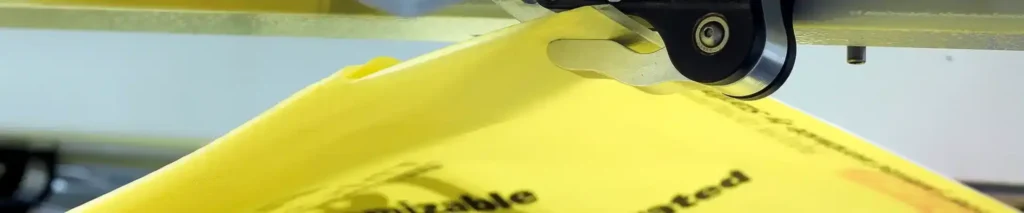
BOPP Laminated Woven Bags are composite sacks built by bonding a biaxially oriented polypropylene film (BOPP) to a woven polyolefin substrate—most commonly polypropylene (PP) tape fabric—then converting that laminate into open‑mouth or pinch‑bottom formats for powders and granules. In procurement catalogs and logistics paperwork they may be listed as BOPP‑laminated PP woven sacks, laminated woven poly sacks, laminated block‑bottom polywoven bags, or simply BOPP woven bags. The name captures the structure: a high‑fidelity print skin (BOPP) married to a tensile backbone (woven PP). The result is a package that looks like retail and works like industrial equipment—a curious, deliberate duality.
Why does that duality matter? Because building materials live two lives. On one day a pallet gets strapped, forked, and jolted across a concrete yard; on another day a contractor drags a bag through dust into the jobsite and reads mixing ratios in poor light. The same package must survive abrasion, communicate instructions, resist splash and humidity, and stay stackable. BOPP Laminated Woven Bags meet these demands by combining a glossy, scuff‑tolerant exterior with a rugged fabric interior, then finishing the mouth and bottom to suit the filling line. Not every sack format can say as much, or say it with such economy of mass.
Material architecture: from polymer to property to performance
The materials inside BOPP Laminated Woven Bags are not mere ingredients; they are performance contracts. Thinking in a chain—polymer → tape → fabric → coating/laminate → adhesive → liner → seam—clarifies where strength originates, where graphics live, where moisture is managed, and where costs accumulate. Below, each layer earns its place not by tradition but by measurable contribution.
| Layer | Typical materials | Key properties & metrics | Cost & trade‑offs |
|---|---|---|---|
| Woven substrate (shell) | PP homopolymer or random copolymer raffia tapes (2–4 mm wide, 25–60 µm thick after drawing); antioxidants; HALS | Tensile/tear strength; low creep under stacking; abrasion tolerance; basis weight 50–110 g/m² | Largest mass and cost share; GSM reductions save resin but demand controlled draw ratio and PPI |
| BOPP film (print carrier) | Biaxially oriented PP 18–35 µm; matte or gloss; cavitated white for opacity or clear for reverse print | Photographic graphics; scuff resistance; modest moisture moderation; stiffness for crisp faces | Adds conversion steps; requires bond uniformity; complicates recycling unless mono‑polyolefin design is kept |
| Adhesive/tie layer | Polyolefin hot‑melt, extrusion lamination with PP/PE tie resins, or solventless polyurethane adhesive | Durable bond through folds; resistance to delamination; compatibility with inks and corona level | Cure time and nip settings affect speed; solventless systems reduce VOCs but demand precise metering |
| Fabric coating (optional) | LDPE/LLDPE thin coat for bond uniformity and COF tuning | Smooths fabric roughness; stabilizes lamination; minor moisture moderation | Adds energy use; may be unnecessary with optimized adhesive laydown |
| Inner liner (optional) | LDPE/LLDPE 25–70 µm; antistatic grades; micro‑perfs for venting; occasional HDPE blend for stiffness | Moisture and dust control; smooth product flow; hygiene; surface resistivity 10⁹–10¹² Ω/sq when antistat used | 5–20% of bag cost; excessive barrier can slow filling without proper vent pattern |
| Closure system | Chain‑stitch or double‑lock; PE‑coated or crepe tape over seam; pinch‑bottom hot‑melt for square faces | Seam integrity under vibration; dust containment; shelf appearance | Double‑lock improves security; pinch‑bottom enables retail geometry at higher conversion cost |
What makes BOPP Laminated Woven Bags stand out for building materials?
Building materials are unforgiving. Powders cake, pallets lean, graphics smear, and customers complain. The format must do more than contain; it must perform. The following traits explain why BOPP Laminated Woven Bags remain the benchmark where abrasion, moisture, and brand visibility converge.
How are BOPP Laminated Woven Bags produced?
Consistency is not luck. It is choreography. Each station in the line imprints a property on the final bag; each setting expands or narrows the margin for error. The route from pellet to pallet looks simple, feels complex, and rewards discipline.
- Tape extrusion and drawing — PP is melted, cast as a thin sheet, slit into tapes, and drawn. Draw ratio sets modulus; MFR compatibility prevents breaks; chill roll and take‑up smooth surfaces. Poor control here becomes split tapes and uneven GSM downstream.
- Weaving — Circular or flat looms convert tapes into fabric. Picks‑per‑inch, warp/weft tension, and loom alignment define porosity and GSM. Mis‑tension later becomes weak seams or skewed prints.
- Pretreatment/coating (optional) — Thin PE or PP/PE coat levels roughness and provides a COF/adhesion substrate. Corona treatment raises surface energy when needed.
- BOPP printing — Reverse printing sets graphics beneath film. Dyne checks ensure ink anchorage; registration is validated for small text and microfeatures.
- Lamination — Extrusion lamination or solventless adhesive bonds film to fabric. Nip temperature/pressure and coat weight control bond uniformity; web alignment wards off wrinkles and edge lift.
- Conversion — The laminate is cut, gusseted, and finished as open‑mouth sewn or pinch‑bottom hot‑melt. If a liner is specified, it is inserted and tacked to prevent telescoping.
- Varnish/surface effects (optional) — Spot matte/gloss for brand accents; additional rub resistance where needed by channel.
- Inspection & palletization — Dimensions, color ΔE, rub resistance, COF, seam integrity, and lamination bond are checked; pallets are labeled to link back to fabric rolls and resin lots.
Where do these bags work best, and how does context change the spec?
BOPP Laminated Woven Bags shine where materials are dusty, abrasive, or moisture‑sensitive—and where packaging is both a tool and a billboard. Yet context changes everything. Requirements in a humid coastal yard differ from those at high altitude; contractor channels differ from retail showrooms. The spec should move with the context, not against it.
- Dry mortar & grout — Moisture moderation via liner and coat, high‑legibility mixing instructions, and square faces for pallet displays.
- Tile adhesives — Very fine powders favor double‑lock seams with tape‑over‑seam; antistatic liners limit dust ignition risk.
- Cement and gypsum — Drop durability at 25–40 kg; UV‑stabilized fabrics for short‑term outdoor dwell; COF tuned for long routes.
- Lime and sanded mixes — Abrasion resistance and puncture tolerance dominate; graphics must still survive rub to remain readable.
- Specialty additives — Anti‑counterfeit microtext and serialized codes join moisture and dust control at the top of the priority list.
Reasoning from the phrase: Ideal Solutions for Building Materials
“Ideal” is a strong word. It implies that the design answers a specific set of pains—fast filling, tidy pallets, resilient graphics, controlled moisture, and verifiable identity—without excess material or fragile complexity. When evaluated against those pains, BOPP Laminated Woven Bags earn the claim by triangulating five levers: GSM/draw (strength), adhesive window (bond), liner/perf (environment), COF/geometry (stack), and print/varnish (communication). Shift one lever and the others respond; the art is in the balance.
A quick provocation:
What is a bag? A surface with seams? Or the visible interface of a complex system? When a sack fills without dust, stacks without leaning, travels without scuffing, and sells without shouting—was that chance, or choreography?
Systems thinking: decompose the pains, then reconnect the fixes
Optimizing a single element—graphics, seam, GSM—without regard for the rest invites unintended consequences. The remedy is straightforward: break the problem into sub‑problems, define observable symptoms, pick levers that move those symptoms, and then synthesize. Below, common failure modes in BOPP Laminated Woven Bags are mapped to controllable levers.
| Sub‑problem | Symptoms | Likely causes | Levers that work |
|---|---|---|---|
| Graphic rub‑off | Unreadable icons or batch codes after transit | Low dyne on BOPP; under‑cured adhesive; rough pallet contact | Verify ≥38 dynes/cm before reverse print; confirm adhesive cure; add rub‑resistant varnish only where the channel demands |
| Moisture ingress & caking | Clumping powders; set‑time drift; off‑spec flowability | Thin/no liner; insufficient coat; exposed seam path | Thicker liner (e.g., 40–60 µm) with localized micro‑perfs; tape‑over‑seam; pallet top covers in outdoor yards |
| Drop‑induced corner splits | Open corners after 1.0–1.2 m free‑fall at 25–40 kg | Low GSM; under‑drawn tapes; weak fold geometry | Raise draw ratio within ductility window; redesign fold; add localized reinforcement; enforce GSM SPC bands |
| Delamination at folds | Whitening/film lift along creases | Low bond coat; wrong nip temperature/pressure; ink/adhesive incompatibility | Restore lamination window; verify dyne/cure; run peel/shear tests by lot and hold on failures |
| Pallet leaning & slips | Tilted stacks; wrap failures; damage in transit | Exterior COF out of window; inconsistent cube; weak wrap spec | Tune COF to ~0.30–0.45; gusset where needed; standardize pallet pattern and wrap with corner boards |
Standards, certifications, and methods that make claims auditable (2024–2025)
Claims are durable when anchored to recognized frameworks. In packaging plants that produce BOPP Laminated Woven Bags for building materials, auditors and customers commonly look for the following identifiers to structure specifications and quality gates.
- Quality & environment: ISO 9001:2015 for process control and document governance; ISO 14001:2015 for energy/emissions on extrusion, coating, and lamination lines.
- Health & safety: ISO 45001:2018 for loom noise, dust controls, and ergonomics in conversion areas.
- Food‑adjacent variants (where applicable): FSSC 22000 v6.0 (ISO 22000:2018 + ISO/TS 22002‑4) and BRCGS Packaging Materials (current to 2025) for hygiene, supplier approval, and traceability stress tests.
- Food‑contact & chemicals (when claimed): FDA 21 CFR 177.1520 for PP/PE; EU 10/2011 and EC 1935/2004 for migration and documentation; REACH (EC 1907/2006) for substances of concern in inks/adhesives.
- Performance & material testing: ASTM D5035 (strip tensile), ASTM D2261 (tongue tear), ASTM D1894 (COF), ASTM D1709 (dart impact for films), ASTM D5264 (Sutherland rub), ISO 4892 (UV exposure). Add internal drop tests and lamination bond peel/shear with hold‑and‑release criteria.
| Parameter | Illustrative window | Purpose |
|---|---|---|
| Fabric GSM | 50–110 g/m²; ±3% SPC alarms | Strength‑to‑cost lever; drop performance anchor |
| BOPP thickness | 18–35 µm (matte/gloss) | Graphic fidelity, scuff resistance, face stiffness |
| Liner thickness | 25–70 µm; antistat optional | Moisture/dust control tuned to climate |
| Exterior COF | ~0.30–0.45 | Pallet stability vs. handling effort |
| Corona level (BOPP) | ≥38 dynes/cm before reverse print | Ink anchorage and bond integrity |
| Drop test (filled) | 1.0–1.2 m at 25–40 kg; multiple orientations | Distribution robustness and corner integrity |
| UV stability (if exposed) | Specify QUV hours per storage profile | Short‑term outdoor dwell resilience |
Cost behavior and levers that actually move the needle
Budgets dislike surprises; plants dislike rework; brands dislike claims. The cost logic of BOPP Laminated Woven Bags sits at the intersection of polymer mass, conversion energy, scrap control, and avoided defects. The most effective savings come from engineered moves, not blunt cuts.
- Right‑weight GSM with designed experiments, not single‑point guesses. Coordinate draw ratio, PPI, and coat weight; require drop/seam/bond/dust parity before release.
- Match graphics method to channel: where premium shelf presence pays back, lamination earns its keep; where it does not, high‑screen flexo on coated fabric can substitute with modest loss in fidelity.
- Meter kWh/kg at extrusion, coating, and lamination. Small efficiency gains compounded across annual tonnage outpace many material tweaks.
- Pay quality costs early (traceability, testing, supplier audits) to avoid claims that erase thin savings multiple times over.
Data discipline: what to track, how to react
Improvement without measurement is wishful; measurement without reaction is theatre. A brief but potent dashboard for BOPP Laminated Woven Bags keeps attention where it reduces risk fastest.
Scenarios that sharpen judgment
Short, realistic cases align teams faster than lectures. Each scenario below shows where to tighten specs and where to loosen them—because restraint is a form of expertise.
- Humid coastal distribution of dry mortar — Choose a 60 µm LLDPE liner with mouth‑proximate micro‑perfs; moderate coat weight; reverse print on 25 µm BOPP with rub‑resistant varnish; tune COF to ~0.38; add pallet top sheets. Validate with humidity conditioning, drop tests, and Sutherland rub.
- Very fine tile adhesive on high‑speed lines — Double‑lock stitch with tape‑over‑seam; antistatic liner 10⁹–10¹² Ω/sq; spout‑to‑mouth fit gauges; vibration dust testing before release.
- Cement blend under cost pressure — Right‑weight GSM via DOE while raising draw ratio; switch selected SKUs to high‑screen flexo on coated fabric; document drop/leak parity; meter kWh/kg; recover waste heat on lamination.
- Gypsum stored in open yards — UV‑stabilized fabric and inks; slightly increased coat weight; exterior COF ~0.42; gusseted formats; corner boards and controlled wrap tension.
A buyer’s specification outline (ready to copy)
- Capacity & dimensions — Mass target; width × length × gusset; block/pinch‑bottom yes/no.
- Materials — Fabric GSM and PPI; BOPP thickness and finish; adhesive system; liner thickness and antistat target; dyne level before print.
- Printing — Reverse print colors; ΔE tolerance; rub resistance grade; icons and regulatory text; lot/batch coding.
- Closures — Chain‑stitch or double‑lock; tape‑over‑seam spec; pinch‑bottom parameters where used.
- Performance — Drop height/orientations; lamination bond peel/shear; COF window; QUV hours; dart impact for films.
- Compliance & QMS — ISO 9001/14001/45001; FSSC 22000 scope if food‑adjacent; declarations for FDA 21 CFR 177.1520 and EU 10/2011 where applicable; REACH statement.
- Palletization — Pattern; stack height; wrap spec; corner protection; label content; mock recall clock.
Failure modes and effects snapshot (FMEA‑style)
| Failure mode | Effects | Root causes | Preventive controls |
|---|---|---|---|
| Corner split on drop | Product loss; claims; rebagging | GSM too low; under‑drawn tapes; weak fold | DOE on fold geometry; increase draw ratio; local reinforcements; SPC on GSM |
| Delamination at folds | Graphic damage; leak path | Low bond coat; wrong nip; ink/adhesive incompatibility | Restore lamination window; verify dyne and cure; bond tests by lot |
| Seam leakage | Dust; hygiene issues | Chain‑stitch only; no tape‑over‑seam; liner misfit | Double‑lock + tape‑over‑seam; liner length gauges; vibration qualification |
| Ink rub‑off | Label loss; unreadable icons | Low dyne; weak ink system; abrasion | ≥38 dynes/cm before print; rub‑resistant varnish; edge guards |
| Pallet lean/slip | Collapse risk; damage | COF out of window; poor cube; weak wrap | Tune COF; gusset; wrap spec + corner boards |
Design heuristics that shorten debates
- If the product is hygroscopic and dusty, protect moisture first (liner, coat), manage dust second (tape‑over‑seam, localized venting), then confirm drops—failures cascade in that order.
- If brand presence drives revenue, validate high‑screen flexo on coated fabric before defaulting to lamination; some channels cannot see the difference, but the P&L can.
- If pallets lean, check COF and gusseting before adding GSM; geometry and friction solve what mass often cannot.
- If costs creep, audit change history; legacy “safety factors” tend to accrete long after the original incident is forgotten.
The Strength of BOPP Laminated Woven Bags
BOPP (Biaxially Oriented Polypropylene) Laminated Woven Bags are known for their durability and performance. These bags are made by combining woven polypropylene fabric with a BOPP film layer, which is laminated to the fabric. This process enhances the bag’s properties and makes it suitable for various demanding applications.
Key Benefits:
- Enhanced Durability: The lamination process provides additional strength to the woven fabric, making Laminated Woven Bags highly resistant to tearing, punctures, and abrasions. This is crucial for packaging heavy and potentially abrasive materials like cement and gypsum powder.
- Moisture and UV Resistance: The BOPP layer offers excellent protection against moisture and UV rays, which helps prevent degradation of the bag and its contents. This is particularly important for building materials that need to be stored in varied environmental conditions.
- High-Quality Printing: The BOPP film allows for high-resolution printing and attractive graphics. This feature not only enhances the visual appeal of the bags but also helps in branding and providing essential product information.
- Cost-Effective: Despite their high performance, BOPP Woven Bags are cost-effective compared to other types of laminated bags, offering a balance between durability and affordability.
Applications in the Building Materials Industry
BOPP Laminated Woven Bags are extensively used in the building materials sector due to their ability to handle the rigorous demands of packaging heavy and powdery substances. Here’s a closer look at their application:
1. Cement Packaging
Cement is one of the most critical components in construction, and its packaging requires robustness and reliability. Block BOPP Bags are often used to package cement due to their strong structure and resistance to moisture. The BOPP lamination helps protect the cement from absorbing moisture, which can lead to clumping or degradation of the product.
2. Joint Compound Packaging
Joint compound, used for finishing drywall seams, requires packaging that can withstand handling and environmental stress. BOPP Laminated Woven Bags provide the necessary strength and moisture resistance to ensure that the compound remains in good condition from manufacturing through to application.
3. Gypsum Powder Packaging
Gypsum powder, another essential building material, is typically packaged in multi-wall woven bags with BOPP lamination to prevent moisture ingress and maintain the powder’s integrity. The laminated layer also helps in preventing dust leakage and provides a clean and professional appearance.
4. Other Building Materials
BOPP Woven Bags Supplier often provides customized solutions for other building materials, including plaster and adhesives. The laminated structure ensures that these materials are protected during transportation and storage, maintaining their quality and effectiveness.
Comparative Analysis with Competitors
In the competitive landscape of packaging solutions, understanding how BOPP Laminated Woven Bags compare with other options can help in making informed decisions.
Standard Woven Bags
Standard woven polypropylene bags offer basic durability but lack the additional protective features provided by lamination. They are suitable for less demanding applications but may not be ideal for materials sensitive to moisture or environmental conditions.
Paper Bags
Paper bags are another alternative, often used for their eco-friendly properties. However, they generally offer less durability and protection compared to laminated woven bags. They are also less effective at handling heavy or abrasive materials and can be more susceptible to moisture damage.
Plastic Laminated Bags
Plastic laminated bags, such as those made with LDPE (Low-Density Polyethylene), offer strong moisture resistance but might lack the same level of mechanical strength as BOPP Woven Bags. They can be more expensive and may not always provide the high-quality printing capabilities offered by BOPP lamination.
Multi-Wall Bags
Multi-wall woven bags provide excellent strength and protection but can be bulkier and more expensive than BOPP laminated options. They are often used for very heavy or high-value materials where maximum durability is required.
The Role of BOPP Bags Manufacturers
Choosing the right BOPP Bags Manufacturer is crucial for ensuring the quality and reliability of the bags. A reputable manufacturer will offer:
- High-Quality Materials: Ensuring that the polypropylene and BOPP films used are of the highest quality.
- Advanced Manufacturing Processes: Employing state-of-the-art machinery to ensure consistent lamination and bag construction.
- Customization Options: Providing various sizes, strengths, and printing options to meet specific customer needs.
- Stringent Quality Control: Implementing rigorous quality checks to maintain product standards and performance.
At VidePak, we pride ourselves on being a leading BOPP sacks Manufacturer with a commitment to quality and innovation. Our BOPP Woven Bags are designed to meet the demanding needs of the building materials industry, offering a blend of strength, protection, and aesthetic appeal. Our state-of-the-art manufacturing processes and quality control measures ensure that every bag we produce meets the highest standards.
Conclusion
BOPP Laminated Woven Bags offer a superior solution for packaging building materials like cement, joint compound, and gypsum powder. Their combination of strength, moisture resistance, and aesthetic appeal makes them an ideal choice for various applications in the construction industry. By choosing a reputable BOPP Woven Bags Supplier, businesses can ensure they receive high-quality packaging solutions that provide both performance and value.
As the demand for durable and effective packaging solutions continues to grow, Sewn Open Mouth Bags with BOPP lamination will remain a key player in the industry. Their ability to meet the specific needs of building materials and other bulk products ensures they will continue to be a preferred choice for manufacturers and distributors alike.