
What are Tubular Woven Bags?
Tubular Woven Bags are heavy-duty packaging sacks produced by weaving polypropylene (PP) tapes on circular looms to form a seamless tube of fabric. That tube is then coated, optionally laminated, printed, and cut to length before one end is closed or the tube is supplied as rollstock for automated vertical or horizontal form-fill-seal (FFS) systems. In specifications and tenders you may see several aliases—tubular PP woven sacks, circular-woven PP bags, seamless woven poly sacks, FFS woven rollstock—but the core identity remains constant: a high-strength woven substrate paired with a heat-sealable surface that closes hermetically at industrial line speeds.
Because there is no side seam, these sacks eliminate a classic leak path, hold a more consistent rectangular profile under load, and simplify both artwork registration and pallet cubing. For operators transitioning from traditional open-mouth sewn sacks to automated FFS, Tubular Woven Bags offer a hybrid proposition: automated, repeatable sealing like film packaging, yet rugged handling and stack stability closer to stitched woven sacks. If your application straddles warehouse efficiency and branded shelf presence—think fertilizers, salts, polymer pellets, grains, seeds, and retail-facing dry foods—the format aligns both priorities instead of forcing a trade-off.
The Materials of Tubular Woven Bags — Composition, Cost Drivers, and Why They Matter
Every Tubular Woven Bag is a layered system. Understanding the function of each layer—from structural tapes to sealing skins—turns a list of ingredients into a set of levers for performance, cost, and compliance. Below, the composition is explained from the fabric core outward, linking polymer choices to the physics of forming, filling, sealing, storage, and display.
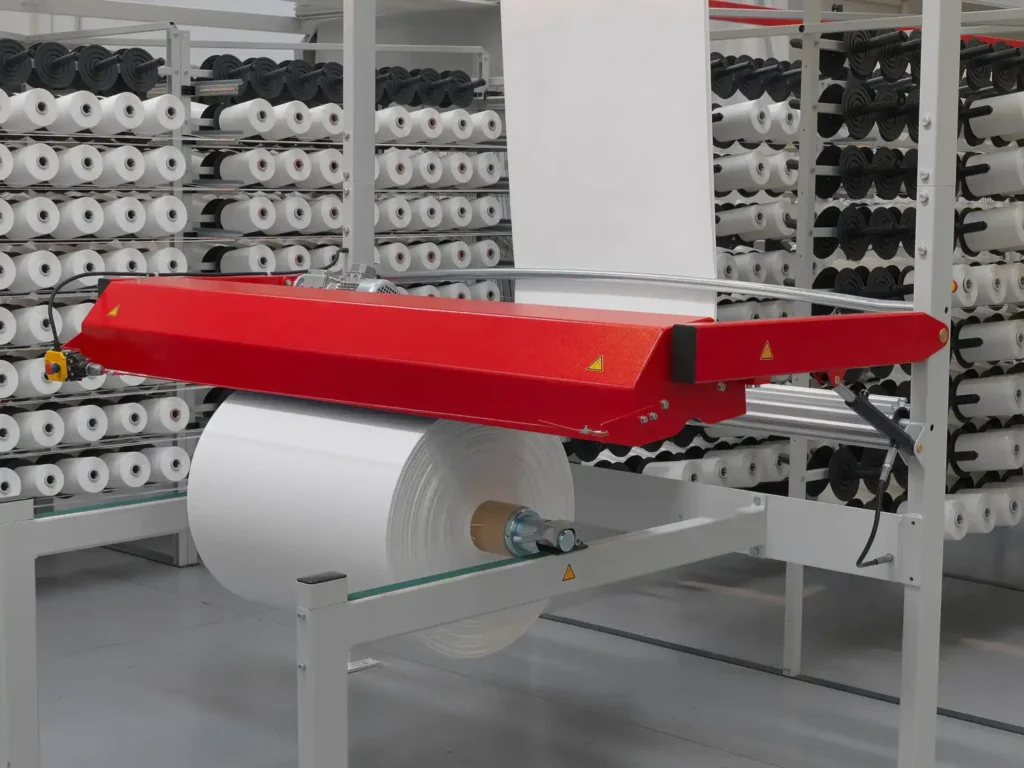
Polypropylene homopolymer is extruded into thin films, slit into tapes, and drawn to orient polymer chains. Orientation multiplies tensile strength and modulus at low mass. The circular loom creates a seamless tube—no side seam, fewer sifting risks, better mouth geometry repeatability. Typical fabric GSM: 60–110 g/m²; tape denier: 600–1200; PPI: 8–14.
A PP or PE extrusion coating (≈15–40 µm) creates a smoother, more printable plane and—if formulated as a sealant—enables hermetic closure on FFS jaws. For retail art and scuff immunity, reverse-printed BOPP (12–25 µm) is laminated to the fabric, adding mouth stiffness that improves denesting and sensor registration.
Sealant blends (e.g., PP with metallocene LLDPE) are engineered for a broad hot‑tack plateau and controlled peel strength. The goal: fast seals over woven topography without crushing the tube. The right blend absorbs minor temperature/pressure drift and protects line speed.
Cost logic. Resin mass (fabric GSM + coating/laminate thickness) usually dominates ex‑works cost; conversion scales with draw ratio, loom uptime, PPI, and printing complexity. Artwork choice is the swing factor: gravure cylinders and BOPP lamination carry higher fixed costs but deliver photo-grade, scuff‑proof branding; high‑rub flexographic printing on coated fabric reduces fixed costs and suits industrial SKUs or shorter runs. Additives—UV stabilizers, slip/antiblock, antistat, antioxidants—account for a few percent by weight yet prevent expensive failures (pallet creep, dust attraction, color fade, brittle tape).
What are the Features of Tubular Woven Bags?
Users often describe Tubular Woven Bags as a “balanced” format—balanced between automation and resilience, between brand impact and warehouse pragmatism. That balance is built from several features whose interactions matter as much as their stand‑alone performance.
- High-speed FFS compatibility. With sealant-enabled coatings, the woven tube feeds and closes on VFFS/HFFS systems at rates close to film-only webs. Lamination stiffens the mouth, stabilizing denesting and eye-mark sensing.
- Strength-to-weight efficiency. Drawn PP tapes achieve high tensile strength at low GSM. With correct gusseting, filled sacks stack safely without inflating pack mass.
- Tunable barrier and breathability. Uncoated fabric releases headspace air for agricultural commodities; coated/laminated structures add moisture and dust resistance. Liners address migration or aroma control where necessary.
- Branding latitude. High‑rub flexographic systems support bold brand blocks on coated fabric; reverse‑printed BOPP delivers photographic gravure while protecting inks from scuff.
- Logistics stability. Anti‑slip textures, predictable circumference, and seamless sides improve magazine feeding, pallet stability, and shelf blocking. Safety and neatness reinforce each other.
- Outdoor endurance. UV packages (e.g., HALS) preserve mechanical integrity under yard exposure, important for fertilizers, salts, and minerals.
- Mono-material potential. All‑PP stacks streamline end‑of‑life handling where PP5 collection exists.
What is the Production Process of Tubular Woven Bags?
The process appears linear on a flow chart, yet the output quality is cumulative: a small drift in draw ratio becomes a large drift in tensile strength; a small drop in dyne becomes an ink-rub complaint; a tiny weave defect becomes a leak path. Discipline upstream equals uptime downstream.
- Tape extrusion and drawing. PP pellets are melted, cast into a thin sheet, slit into tapes, and drawn to orient chains. Operators monitor tape width/thickness, tensile/elongation, and draw ratio to keep GSM on target.
- Circular weaving. Tapes feed circular looms that produce seamless tubes. PPI and tape count set GSM and balance tensile with breathability. Circumference repeatability keeps forming shoulders happy.
- Surface preparation. Corona treatment raises surface energy (≥38 dyn/cm) for ink/adhesive anchorage; treatment decay is managed by minimizing time-to-print/laminate.
- Coating and/or lamination. Extrusion coating applies PP/PE skins; sealant blends are chosen for hot‑tack. If branding demands, reverse‑printed BOPP is laminated, with peel strength and optics validated.
- Printing. Coated fabric uses high‑rub flexo; BOPP uses gravure on the film’s inside face. Color (ΔE) and barcode grade are verified under realistic glare and wrap conditions.
- Conversion to rollstock or sleeves. FFS formats favor rollstock with eye marks; sleeves or pre‑gusseted options exist. Splice quality and roll build affect line stops more than most spec sheets admit.
- QA and packing. Dyne, CoF, seal-peel, circumference, and visual checks are recorded; rolls are moisture-guarded and labeled by machine direction and lot.
What is the Application of Tubular Woven Bags?
The use cases concentrate where high throughput collides with rough handling and strict shelf expectations. Below, the archetypes are expressed as practical scenarios that map material choices to operational realities.
Outdoor exposure and abrasive flow demand UV packages, medium‑to‑high GSM, anti‑slip finishes, and generous sealing windows. Seamless sides reduce sifting; anti‑slip varnish reduces rewraps.
Hygroscopic contents justify moisture‑tolerant coatings and consistent seals. The woven substrate resists punctures from crystalline edges better than film-only gauges.
Antistats calm dust; tuned CoF prevents double‑picks and pallet creep. Barcode zones benefit from matte bands for consistent scans under glare.
BOPP laminates deliver retail‑grade art; liners govern hygiene and aroma; mouth stiffness supports high denesting rates for club/e‑commerce volumes.
Impact tolerance, stack stability, and reduced breakage are non‑negotiable. FFS speed aligns with batching peaks; matte anti‑slip reduces pallet topples.
Tubular Woven Bags: Optimizing Storage and Efficiency with the FFS System
Optimization means treating storage and efficiency as a coupled system. Stack stability and pallet friction define how tightly you can wrap; mouth stiffness, CoF, and registration define how fast you can run. The best programs choose parameters that make both sides better at once.
Efficiency lens: OEE on the packer
Tubular Woven Bags excel on FFS when the sealant layer exhibits a broad hot‑tack window, when CoF is in a narrow target band, and when mouth stiffness supports single-pick feeding. Registration marks belong in low‑stress, low‑curl fields; gusset symmetry minimizes skew. A practical rule: if line speed stalls, measure CoF and seal hot‑tack before changing fabric GSM.
Storage lens: pallet stability and outdoor life
Seamless bodies reduce sifting (less housekeeping, fewer claims). Anti‑slip varnish cuts rewraps and improves stack height. UV packages graded for 6–24 months preserve tensile; moisture‑tolerant coatings prevent caking in salts and fertilizers. Warehouse data links these to fewer damaged returns.
Intersection: parameters that pay twice
- Lamination stiffness → better denesting and crisper pallets.
- Matte texture bands → reliable scans and higher inter-bag friction.
- Circumference SPC → fewer magazine tweaks and fewer mixed‑height pallets.
Systems Thinking — Breaking the Problem Down and Reassembling It
Instead of a long list of options, this section groups decisions into subsystems that can be optimized locally and integrated globally. Each subsystem ends with a concise action you can implement tomorrow.
- Polymer & additive subsystem. Choose PP grades for draw stability; engineer sealant blends with forgiving hot‑tack plateaus; dose HALS UV packages by storage exposure; set antistat and slip levels for dust and denesting. Action: Lock resin MFR windows and sealant recipes before artwork lock to avoid late-stage reproofing.
- Fabric architecture subsystem. Fix denier, PPI, and GSM for drop/stack targets with margin; prioritize circumference repeatability on circular looms. Action: Create a circumference SPC chart posted at weaving and at incoming inspection.
- Surface & laminate subsystem. Decide coated‑fabric flexo (lower fixed cost) versus BOPP lamination (retail art, scuff‑proof). Action: For code readability, reserve matte fields and quiet zones in the art brief.
- Printing & codes subsystem. Set ΔE tolerances; barcode grading targets (ANSI/ISO grade C or better through wrap); register eye marks away from crease lines. Action: Adopt a barcode-in-glare test under store lights, not just lab lights.
- Sealing interface subsystem. Define jaw temps/dwell/pressure and jaw face radii to bridge woven topography. Action: Add a hot‑tack curve to qualification alongside standard peel strength.
- Handling & ergonomics subsystem. Tune CoF for denesting and pallets; standardize mouth width and gusset dimensions. Action: Put CoF bands on incoming rolls and on the pallet wrap spec so both sides match.
- Compliance & hygiene subsystem. Map materials to US 21 CFR §177.1520 and EU 10/2011 where food contact applies; operate under an FSMS such as FSSC 22000. Action: Maintain up‑to‑date Declarations of Compliance linked to artwork versions.
- Cost & risk subsystem. Standardize tube circumferences and gussets across families; cluster SKUs for plate/cylinder reuse; dual‑source resins and inks; keep a spare set of cylinders for top sellers. Action: Publish a bill‑of‑materials matrix showing shared components across SKUs.
Standards, Certifications, and Identifiers (for 2024–2025 Programs)
- US food contact for PP: 21 CFR §177.1520 — olefin polymers (use where the bag or liner touches food).
- EU plastics for food contact: Commission Regulation (EU) No. 10/2011 under EC 1935/2004 — DoC and migration testing where in scope.
- Food Safety Management: FSSC 22000 (Version 6), typically alongside ISO 9001:2015 and ISO 14001:2015.
- Mechanical & package tests: ASTM D5034/D5035 (textile tensile), ISO 13935‑2 (seam strength), ISO 6383‑2 (film tear), ASTM D5276 (drop), ASTM D4577 (stack), ASTM D1894 (CoF), ASTM D1003 (haze/gloss), ISO 4892‑2 (UV weathering).
- Color and barcode references: ISO 12647 family (process control) and ANSI/ISO barcode grading (target grade C through stretch wrap).
Technical Tables — Parameters, Printing Choices, and QA Mapping
Cross-Functional Trade-offs — And How to Turn Them into Wins
Do we choose speed or strength, art or abrasion, breathability or moisture control? The trick is to arrange choices so one parameter improves two outcomes at once.
- Brand impact vs. scuff resistance: Reverse-printed BOPP shelters inks behind film—no compromise required. If glare threatens barcode readability, allocate matte bands around codes.
- Stiffness vs. machinability: Lamination stiffens the mouth for denesting; if curl appears, adjust laminate thickness, hem geometry, and jaw radii rather than raising GSM.
- Breathability vs. moisture control: Use uncoated zones or micro‑perfs for grains; deploy coatings/liners where moisture is the enemy. Mixed strategies often beat binary choices.
- Light‑weighting vs. safety margin: Reduce GSM only when sealant dwell and gusset geometry maintain drop/stack targets; verify with ASTM D5276 and D4577, not assumptions.
- Cost vs. speed: Gravure cylinders add fixed cost but unlock retail velocity and price realization for long‑running SKUs. For industrial or short runs, high‑rub flexo is rational.
Case-Style Implementations — Translating Spec into Outcomes
90 g/m² tubular fabric; 30 µm PP coat; 20 µm matte BOPP; mLLDPE-rich sealant; UV class 12–18 months; anti‑slip varnish band. CoF tuned to smooth floors; barcode grade verified through wrap; hot‑tack plateau validated for diurnal swings. Outcome: faster denesting, fewer rewraps, robust outdoor life.
75 g/m² fabric; 18–20 µm PP coat; 20 µm BOPP (matte front, gloss gussets); 35 µm LDPE liner stitched post‑fill. Laminate stiffness stabilizes mouth; QR/EAN graded under glare; aroma migration addressed via liner. Outcome: photo‑grade branding with warehouse‑proof durability.
70 g/m² fabric; 20 µm PP coat; high‑rub flexo; PP/PE sealant at lower sealing temperatures; antistat package. Outcome: smooth feeding, low dust adhesion, stable pallets without UV adders.
Procurement and Supplier Governance
- Dual‑source PP grades within overlapping melt‑flow windows to stabilize tape‑line performance.
- Approve two ink vendors for brand colors; keep ΔE masters and shade standards.
- Standardize tube circumferences and gusset depths; keep cut lengths variable per SKU.
- Regrind policy: internal trims only, capped at validated percentages; exclude visual specks from artwork fields.
- Spare cylinders/plates for top‑velocity SKUs to shield against pressroom downtime.
- SPC dashboards: GSM, PPI, circumference, mouth width, dyne, CoF, seal peel; weekly supplier reviews.
From Spec to Day‑One Settings
Great specs die without great setpoints. Converting design intentions into operator‑ready numbers protects both speed and quality.
- Tape line: temperature bands, draw ratios, width/thickness gauges, tensile/elongation per shift.
- Circular looms: PPI setpoints, tension settings, circumference checks each roll, defect logging.
- Coating/lamination: coat weight, nip pressure, chill roll temperature, peel sampling, dyne checks just before print/lamination.
- Printing: press speeds, anilox/line counts, ΔE targets, rub counts (if surface‑printed), barcode grading protocol under realistic lighting.
- FFS jaws: temperature/dwell/pressure windows, jaw face radii, hot‑tack validation, peel test frequency.
- Handling: CoF test frequency, conveyor-speed matching, magazine angle/pressure, pallet wrap recipes matched to anti‑slip levels.
Frequently Overlooked Details (and Quick Fixes)
- Inconsistent circumference → magazine mis‑picks. Fix: tighten loom SPC; verify circumference per roll before adjusting forming shoulders.
- Under‑treated surfaces → ink rub or delam. Fix: press-side dyne checks; minimize time between treatment and conversion.
- Over‑slippery laminates → pallet creep. Fix: light anti‑slip textures; tune slip additives; match pallet wrap film CoF.
- Sharp jaw edges → tape damage. Fix: radius/polish jaw faces; verify uniform pressure; ensure sealant fills interstices.
- Code failures under glare. Fix: matte fields and quiet zones; test through stretch wrap under store lighting.
Master Specification Template (VFFS-Ready Tubular Woven Bag)
Purpose: 20–25 kg dry granular/powder products on vertical FFS.
Stack: Woven PP tube + PP coating (sealable) + optional BOPP laminate + optional PE liner.
- Fabric: 800–1000 den tapes; PPI 10–12; GSM 70–90 g/m²; circumference C ± 2 mm; ovality ≤ 1 mm.
- Surface & sealing: 20–30 µm PP coat with hot‑tack plateau ±20 °C; if laminated, 20 µm BOPP reverse‑printed; peel ≥ target N/15 mm; haze/gloss per brand brief; dyne ≥ 38 dyn/cm.
- Printing & codes: Flexo (coated fabric) or gravure (BOPP); ΔE ≤ 2.0; rub ≥ target cycles (surface‑printed); barcode grade ≥ ANSI/ISO C through stretch wrap; quiet zones observed.
- FFS supply: Rollstock with eye marks; A‑class splices; edge guidance marks; roll build per runout spec; optional pre‑gusset.
- QA & tests: ASTM D5034/D5035 (tensile), ISO 13935‑2 (seam), peel ≥ value, ASTM D5276 (drop), ASTM D4577 (stack), ASTM D1894 (CoF), ASTM D1003 (haze/gloss).
- Compliance: If food‑contact scope, US 21 CFR §177.1520 and/or EU 10/2011 DoC; site certified to FSSC 22000 (V6).
- Handling: Anti‑slip varnish band; pallet wrap recipe matched; UV package shelf‑life declared for outdoor SKUs.
- What are Tubular Woven Bags?
- The Materials of Tubular Woven Bags — Composition, Cost Drivers, and Why They Matter
- What are the Features of Tubular Woven Bags?
- What is the Production Process of Tubular Woven Bags?
- What is the Application of Tubular Woven Bags?
- Tubular Woven Bags: Optimizing Storage and Efficiency with the FFS System
- Systems Thinking — Breaking the Problem Down and Reassembling It
- Standards, Certifications, and Identifiers (for 2024–2025 Programs)
- Technical Tables — Parameters, Printing Choices, and QA Mapping
- Cross-Functional Trade-offs — And How to Turn Them into Wins
- Case-Style Implementations — Translating Spec into Outcomes
- Procurement and Supplier Governance
- From Spec to Day‑One Settings
- Frequently Overlooked Details (and Quick Fixes)
- Master Specification Template (VFFS-Ready Tubular Woven Bag)
- 1. Market Dynamics: The Demand for Efficient Packaging Solutions
- 2. Technical Innovations: Tubular Woven Bags and FFS Integration
- 3. Customization for Warehouse Management
- 4. Sustainability and Cost Efficiency
- 5. VidePak’s Competitive Edge
- FAQs: Addressing Key Client Concerns
- 6. Future Trends: IoT and Bio-Based Materials
“How can manufacturers balance sustainability, storage efficiency, and operational agility in modern supply chains?”
Ray, CEO of VidePak, gestures emphatically during a 2025 packaging conference. “The answer lies in two innovations: tubular woven bags for space-saving durability and the Form-Fill-Seal (FFS) system for automated precision. At VidePak, we’ve engineered these solutions to reduce warehouse costs by 25% while aligning with global sustainability mandates.”
This bold assertion underscores the transformative potential of tubular woven bags and FFS technology in industries where packaging integrity and logistics efficiency are paramount. With the global flexible packaging market projected to reach $358 billion by 2030, these innovations are critical for businesses seeking to optimize storage density, reduce waste, and enhance supply chain transparency.
1. Market Dynamics: The Demand for Efficient Packaging Solutions
The rise of e-commerce and stringent sustainability regulations has driven demand for tubular woven bags and FFS systems. Key drivers include:
- Space Optimization: Tubular designs increase pallet density by 20% compared to flat-bottom sacks, as demonstrated by a Brazilian coffee exporter who reduced warehouse space costs by 15%.
- Regulatory Compliance: The EU’s 2024 Circular Economy Action Plan mandates 65% recyclability for packaging, which VidePak achieves through 98% recyclable polypropylene (PP) materials.
- Automation Needs: FFS systems reduce labor costs by 30% and minimize human contact in food-grade packaging, critical for FDA and FSSC 22000 compliance.
2. Technical Innovations: Tubular Woven Bags and FFS Integration
VidePak’s EcoTubular line combines structural ingenuity with automated efficiency:
2.1 Tubular Woven Bags: Design and Performance
- Seamless Construction: Tubular bags eliminate side seams, reducing weak points and enhancing burst strength (≥60 N/cm² vs. 40 N/cm² for sewn alternatives).
- Material Efficiency: Ultra-thin 85gsm PP fabric cuts raw material use by 15% while maintaining tensile strength (≥55 N/cm²).
Case Study: A Southeast Asian rice supplier reduced spillage by 90% using VidePak’s 120µm laminated tubular bags, which withstand 50kg dynamic loads during monsoon shipping.
2.2 Form-Fill-Seal (FFS) Systems
- High-Speed Automation: Starlinger’s FFS machines produce 200 bags/minute with ±1g filling accuracy, ideal for pet food and agricultural products.
- Customizable Printing: Integrated 8-color flexographic printers apply UV-resistant inks (≤5% fade over 12 months) for Pantone-matched branding.
Technical Specifications:
| Parameter | Tubular Bags | FFS System |
|---|---|---|
| Material Thickness | 85–120gsm | 50–80µm PE laminate |
| Production Speed | 12M units/month | 200 bags/minute |
| Load Capacity | 25–50kg | N/A |
| Recyclability | 98% | 95% |
3. Customization for Warehouse Management
VidePak’s SmartLabel system enhances inventory control through:
- Color-Coded Strips: Blue for chemicals, green for agriculture, red for hazardous materials. A German chemical distributor reduced mislabeling incidents by 90% using this system.
- QR Code Integration: Scannable codes linked to SAP or Oracle WMS provide real-time data on batch numbers and expiration dates, cutting audit times by 40%.
Warehouse-Optimized Features:
- Stackable Design: Interlocking flat bottoms increase pallet density by 20%.
- Anti-Static Coatings: Surface resistivity <10⁶ Ω prevents dust adhesion in electronics storage.
4. Sustainability and Cost Efficiency
VidePak’s closed-loop systems align with the Ellen MacArthur Foundation’s circular economy principles:
- Material Recovery: 95% of post-consumer bags are pelletized into new PP fabric, reducing virgin material use by 40%.
- Solar-Powered Production: Facilities in Vietnam offset 10,000 tons of CO₂ annually, validated by SBTi targets.
5. VidePak’s Competitive Edge
With 526 employees and $80M annual revenue, VidePak combines scale with agility:
- Production Capacity: 100+ Starlinger circular looms and 30 lamination machines produce 15 million bags monthly.
- Certifications: ISO 14064, BRCGS AA+, and FDA-compliant liners for food safety.
- Speed-to-Market: 10-day lead time for custom orders of 500,000 units, supported by AI-driven prototyping.
FAQs: Addressing Key Client Concerns
Q: How do tubular bags compare to FIBCs for bulk storage?
A: For loads under 1 ton, tubular bags offer 30% lower shipping costs and eliminate pallet requirements, while maintaining 50kg load capacity.
Q: Can FFS systems handle hygroscopic powders like flour?
A: Yes. PE-coated FFS bags achieve <0.1% moisture permeability, validated in 2024 Mumbai monsoon trials.
Q: Are color-coded labels cost-effective for SMEs?
A: VidePak’s modular pricing allows 5,000-unit orders with 2-color strips at $0.15/bag—60% cheaper than traditional tagging.
6. Future Trends: IoT and Bio-Based Materials
VidePak’s 2026 roadmap includes:
- Smart Packaging: RFID tags monitor real-time humidity and load stress, reducing spoilage by 20%.
- 30% Bio-PP: Sugarcane-derived resin trials show identical strength (≥55 N/cm²) with a 25% lower carbon footprint.
Conclusion
Tubular woven bags and FFS systems are redefining packaging through structural efficiency, automated precision, and circular sustainability. As Ray summarizes, “Our solutions don’t just store products—they optimize entire supply chains.” For businesses seeking compliance and agility, innovations like high-speed FFS automation and smart tubular designs offer a roadmap to future-ready operations.
This report integrates data from ASTM/ISO testing protocols, industry whitepapers, and VidePak’s production logs. For technical validation, refer to EN 15507:2024 and GB/T 8946-2013 standards.