
In the competitive landscape of packaging, Leakproof Woven Bags have carved out a niche by combining robust functionality with aesthetic appeal. These bags are designed to prevent leaks and contamination, making them an ideal choice for a variety of applications. The integration of advanced printing technologies and customization options further enhances their utility, particularly in sectors where visual differentiation and product integrity are crucial.
What Are Leakproof Woven Bags, Really?
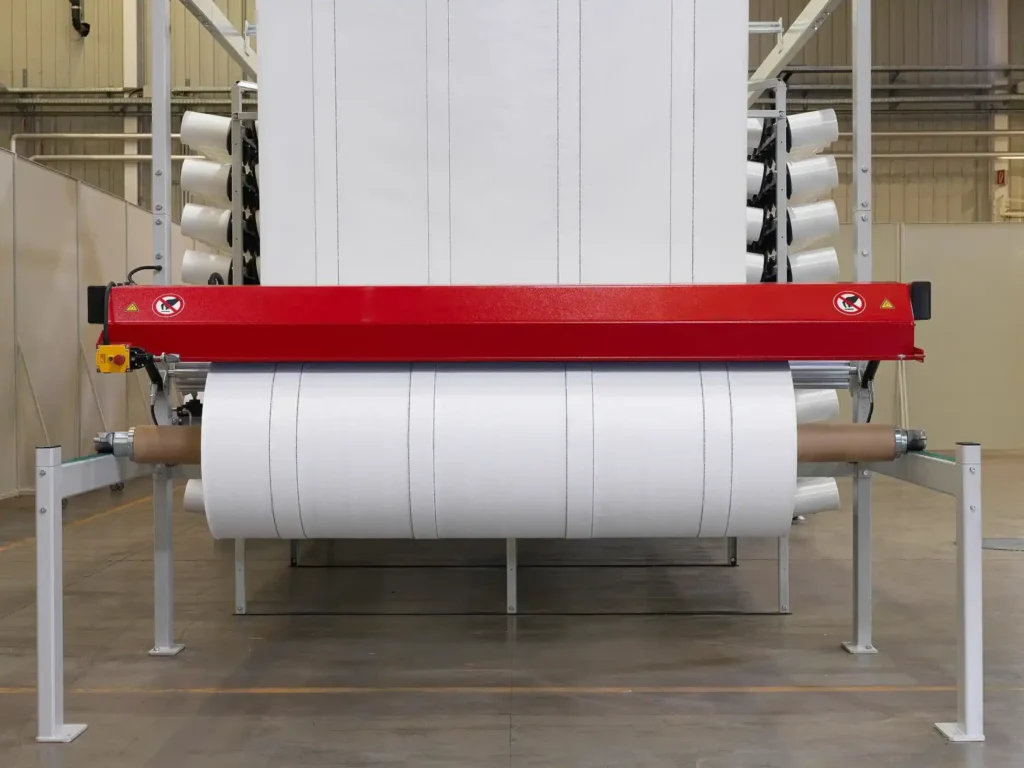
Ask a packaging engineer to define Leakproof Woven Bags, and you will hear a careful answer: a family of woven‑polyolefin sacks and roll webs whose structure, seams, and closures have been deliberately engineered to prevent fines from escaping and moisture from intruding under real‑world handling. Not just a bag; a system. Not merely a fabric; a tuned interface among fabric, barrier skin, seam geometry, and closure logic. In procurement lists and plant jargon, these solutions are also labeled leak‑tight woven sacks, sift‑proof PP bags, fusion‑seam FIBCs, anti‑sift valve sacks, or dust‑tight FFS woven sacks. The aliases vary; the intent does not—contain product, protect operators, satisfy auditors, and keep pallets clean.
Where film pouches chase hermeticity with continuous polymers, Leakproof Woven Bags pursue containment through architectural restraint: a woven lattice that arrests tear, a sealable skin that bridges knuckles, a seam that blocks stitch pathways, and a closure that locks the last open door. As a result, the metric that matters—grams of dust on belts and floors, moisture pickup on voyages, returns for caking—drops to levels that operations can live with and regulators can accept. That is the promise; the practice depends on materials, machining, and method.
Materials and Architecture of Leakproof Woven Bags
The performance of Leakproof Woven Bags rises or falls with the bill of materials (BOM). Four pillars carry the load: the woven substrate, the sealable skin, the seam and closure architecture, and, where needed, an internal liner. Their dialogue—not their existence—creates containment.
Woven Substrate (Structural Backbone)
The structural layer is typically isotactic polypropylene (PP) extruded into tapes, then drawn to align polymer chains. Orientation raises tensile strength and yield modulus while reducing creep under pallet compression. Tapes are interlaced on circular or flat looms to meshes commonly between 10×10 and 12×12 per 10 cm for 10–50 kg sacks (≈70–95 g/m²), and 13×13 to 14×14 for FIBC‑class fabrics at ≈160–220 g/m². Why PP? Density near 0.9 g/cc for lighter tare, chemical inertness for food and salts, and polyolefin affinity for mono‑material end‑of‑life options. Costs concentrate here: a +5 g/m² change across millions of units is a P&L event, so right‑weighting through drop/compression validation is mandatory.
Sealable Skin (Barrier + Machinability)
Two routes dominate. Extrusion coating lays down ≈20–30 µm of PP or PE to close porosity, calm dust, and enable heat seals. BOPP lamination bonds a reverse‑printed 25–35 µm oriented PP film to the fabric using a PP tie, yielding a glossy, scuff‑resistant face with exceptional print. The skin must knit into the fabric’s relief under heat so the seal becomes continuous rather than a series of islands at the knuckles. Gauge control here shapes both seal latitude and pallet friction; gloss that delights marketing can, if unmanaged, frustrate warehouse safety.
Seams and Closures (Where Leaks Begin—and End)
Containment fails at transitions: panel to panel, shell to valve, liner to mouth. Three families of seam technology matter. First, chain‑stitch seams upgraded with dense filler cords, blocking stitch perforations that otherwise act as capillaries for fines. Second, hot‑melt or extrusion‑sealed seams that fuse edges and remove needle holes entirely. Third, ultrasonic or fusion seams that weld coated/laminated panels without thread, creating a continuous, clean interior and suppressing fiber shedding. Closures mirror this logic: internal valves reduce puffing during fill and seal the final pathway; hot‑melt patches clamp the valve post‑fill; tamper‑evident easy‑open adds consumer utility without creating loose threads.
Liners and Additives (Conditional Enhancers)
Hygroscopic salts and sugars, odor‑sensitive fats and flavors, and very fine powders often justify a polyethylene (PE) liner: LDPE or LLDPE in the 25–60 µm range for sacks; 50–120 µm form‑fit for FIBCs. Antistatic treatment in liners or fabrics mitigates nuisance ESD and improves powder flow. On the skin, slip/antiblock additives tune COF for filling and palletizing; UV stabilizers defend yard storage; pigments and varnishes deliver brand and scuff resistance. In food channels, low‑migration selections are a must; in dust‑hazard areas, dissipative pathways move from “nice” to “necessary.”
Features That Distinguish Leakproof Woven Bags
With filler cords, hot‑melt or ultrasonic seams, Leakproof Woven Bags suppress sifting of powders below 150 µm to housekeeping‑friendly levels. Less dust means fewer slips, fewer reworks, fewer claims.
Coated/laminated skins slow vapour ingress; liners add a clean barrier. In monsoon/coastal routes, small gauge bumps usually pay back through reduced caking.
Oriented tapes yield high tensile performance at low tare, outlasting many paper or monolithic‑film analogs in fork‑truck reality.
Valve and open‑mouth formats, gravity and auger fillers, pre‑made sacks and FFS roll webs—all are on the table when COF and layflat are tuned.
BOPP faces carry photo‑real graphics and crisp barcodes without sacrificing scuff resistance. In retail, shelf wins; in warehouses, scans read first time.
With disciplined materials and PRPs, designs assemble into clean declarations and audit‑ready files for food and feed ingredients.
Production Flow of Leakproof Woven Bags
- Resin intake and qualification — Approve PP/PE with documented suitability; check MFR, moisture, and appearance; lock recipes for slip/antistat masterbatches.
- Extrusion and tape drawing — Sheet → slit → draw. Orientation sets tensile ceiling and creep floor; dosing discipline prevents COF drift later.
- Weaving — Interlace tapes to target mesh/GSM; tight looms reduce knuckle height, improving downstream sealing and print lay.
- Surface finishing — Choose extrusion coat for cost‑balanced sealing or BOPP lamination for premium print and scuff control. Verify coat weight, dyne, bond strength.
- Printing — Flexo on coated fabric; gravure or high‑spec flexo/EB on BOPP. Low‑migration sets; disciplined drying/curing; shade control.
- Slitting and winding — Trim edges for straightness; tension‑control wind; add splices/leader cards for quick changeovers on the line.
- Cutting and conversion — Hot‑knife edges; bottoms sealed by filler‑cord stitching, hot‑melt, or ultrasonics; tops hemmed; valves installed and patched; FIBCs built with stitchless product zones where needed.
- Liner production and insertion — Blown‑film liners sized and inserted (loose/cuff/form‑fit); antistat tuned for product and line.
- Hygiene controls and release — Clean areas, filtered air, foreign‑matter screens, metal detection; wrap clean; assemble mechanical, COF, bond, WVTR, and—if applicable—migration results into a release dossier and Declaration of Compliance.
Applications of Leakproof Woven Bags
- Food ingredients — Flours, starches, rice, pulses, sugar, and salt move cleanly when linered designs limit dust and humidity pickup; BOPP graphics support retail‑visible formats.
- Specialty chemicals and minerals — Fine powders (catalysts, silica, pigments) demand antistatic controls, robust seams, and sometimes conductive FIBC pathways.
- Animal feeds and seeds — Dust control plus UV stabilization; breathable yet dust‑tight builds balance respiration and cleanliness.
- Construction materials — Dry mortar and tile adhesives punish packaging; woven lattices shrug off puncture while micro‑vents manage trapped air during filling.
- Water‑treatment salts — Dense, abrasive crystals benefit from higher GSMs and sealed bottoms to minimize sifting in transit.
Leakproof Woven Bags: Innovations in Printing and Performance
What has changed lately? Three advances stand out. First, stitchless seams move from curiosity to capability. Ultrasonic modules on conversion lines now weld coated or laminated woven panels to produce thread‑free seams; the product side becomes smoother and cleaner, and the dominant leak path vanishes. In bulk formats, fusion‑style FIBCs aim for the same—no stitching inside the product zone, fewer fiber sheds, fewer sift trails. Second, low‑migration printing systems mature. Water‑based flexo on optimized BOPP achieves retail‑grade density and dot fidelity with controlled drying; electron‑beam (EB) flexo or offset cures without photoinitiators and leaves negligible residuals. Third, machinability gets engineered into the face. Matte OPVs, micro‑embossed anti‑skid patches, and COF‑stabilized skins reconcile a marketer’s gloss with a warehouse manager’s traction. The net effect is straightforward: prettier packs, cleaner lines, safer pallets.
From chain‑stitch with filler cords → hot‑melt/extrusion weld → ultrasonic/fusion. Each step removes a leak path and a housekeeping headache.
Low‑migration water‑based or EB‑cured systems deliver color without compromising declarations. Graphics that sell, paperwork that passes.
COF bands, matte lanes, and eye‑mark fidelity sustain high OEE; web runs quiet, pallets exit stable.
System Thinking: Five Interlocking Subsystems
Break the challenge into five subsystems; solve each; then reassemble. That is how Leakproof Woven Bags become dependable rather than decorative.
Objective: Zero visible sifting; floor grams below threshold.
Levers: Fusion/ultrasonic seams, valve patches, liner cuff seals.
Controls: Sift tests with talc; instrumented drops; transport vibration.
Objective: No caking, no odour pick‑up.
Levers: BOPP gauge, liner gauge, seam geometry.
Controls: WVTR at 38 °C/90% RH; humidity soaks; seal microscopy.
Objective: Survive shocks and compression.
Levers: GSM/mesh, bottom design, anti‑skid zones.
Controls: Tensile, seam pull, drop/creep, pallet compression.
Objective: Color that sells; margins that pass.
Levers: Water‑based or EB inks; OPVs; controlled curing.
Controls: OML and SML as applicable; odour/taint panels; barcode grades ≥ C.
Objective: Safe handling of low‑MIE powders.
Levers: Antistatic dosages; dissipative liners; grounding for FIBC types.
Controls: Surface resistivity; earthing checks; spark tests under real fills.
Tables — Parameters, Mechanisms, and Machine Windows
| Use case | Fabric GSM / Mesh | Surface / Barrier | Liner | Notes |
|---|---|---|---|---|
| Fine flour & starch | 75–90 / 11×11–12×12 | BOPP 25–35 µm + matte OPV | LDPE 30–50 µm | Ultrasonic bottom; internal valve |
| Sugar & salt | 80–95 / 11×11 | PP/PE coat 20–30 µm | LDPE 40–60 µm | Sift‑proof seams; valve patch |
| Pet food (5–25 kg) | 75–90 / 10×10–12×12 | BOPP 30–35 µm | Optional 25–40 µm | Easy‑open; reclose tape |
| Additives & minerals | 85–100 / 12×12 | BOPP 30 µm + anti‑skid patch | LLDPE 40–60 µm (antistat) | Ultrasonic seams; dissipative liner |
| Leakproofing tech | How it blocks leaks | Best use | Residual risk |
|---|---|---|---|
| Filler cord stitching | Cord packs stitch tunnel | Commodity sacks | Low–moderate |
| Hot‑melt/extrusion seam | Fuses panel edges | Laminated sacks | Low |
| Ultrasonic/fusion seam | Continuous weld, no thread | Premium containment; clean interiors | Very low |
| Liner cuff seal | Locks liner to shell | Hygroscopic goods | Very low |
| Machine parameter | Typical target | Why it matters |
|---|---|---|
| Gauge tolerance | ±2% | Stabilizes dwell heat and bag length |
| COF (MD/CD) | 0.30–0.45 | Balances filling speed and pallet stability |
| Dyne level | ≥38 dynes | Ink anchorage and code legibility |
| Layflat tolerance | ±2–3 mm | Prevents re‑threading and tube ovality |
Professional Anchors: Certifications, Regulations, Test Methods
Credibility does not come from adjectives; it comes from documents. For designs that touch food or feed ingredients, the paperwork behind Leakproof Woven Bags should reference current program versions and legal texts. In the last 12 months, several anchors matter to specifiers and auditors alike:
- BRCGS Packaging Materials Issue 7 — published late 2024 with audits commencing April 28, 2025; sites transitioning from Issue 6 should carry gap plans and refreshed training.
- FSSC 22000 Version 6 — upgrade audits completed by early 2025; packaging sites must align prerequisite programs and change control to the latest scheme.
- ISO 22002‑4:2025 — updated prerequisite programs (PRPs) for food and feed packaging manufacturing; harmonized with ISO 22002‑100.
- EU plastics framework update — Commission Regulation (EU) 2025/351 amends EU 10/2011 (plastics for food contact) and 2022/1616 (recycled plastics) and refreshes GMP expectations via 2023/2006, sharpening documentation and quality control.
- U.S. polymer listings — 21 CFR Part 177, notably §177.1520, continues to anchor PP/PE legality for food‑contact use under defined conditions.
Worked Mini‑Blueprints You Can Trial
80 g/m², 11×11 mesh; BOPP 30 µm reverse‑print (water‑based flexo); LDPE liner 40 µm with antistat; ultrasonic bottom; internal valve with hot‑melt patch; matte OPV. Validate WVTR at 38 °C/90% RH, odour/taint, seam sift, barcode grade.
PP‑coated woven 85 g/m²; antistatic masterbatch; no liner; low‑slip friction lanes; tube/bottom seals tuned for high rate. Validate abrasion zones and pallet tilt.
90–95 g/m² coated woven; LDPE liner 50–60 µm; chain‑stitch + filler cord or hot‑melt seam; tight valve patch. Validate humidity soaks and sift metrics post‑truck vibration.
180–220 g/m² fabric; fusion‑style stitchless product zone; form‑fit liner 70–120 µm; dissipative pathways per Type C where required. Validate spout dust control and earthing.
Troubleshooting Atlas: Symptom → Likely Causes → Fix
| Symptom | Likely causes | Practical fixes |
|---|---|---|
| Powder trails at seam | Stitch tunnels; underfilled filler cord; poor hot‑melt flow | Increase cord density; raise melt temperature; consider ultrasonic seam |
| Caking after voyage | Low barrier; venting in humid route | Bump liner gauge; reduce micro‑perfs; improve wrap |
| Pallet slip events | COF too low; gloss at contact zones | Add matte lanes; change wrap pattern; revise slip dosage |
| Barcode misreads | Low dyne; ink spread; scuff | Re‑treat surface; adjust plates/anilox; add scuff‑resistant OPV |
| Odour/taint complaints | High residuals in print/primer | Tune drying or move to EB cure; verify OML/SML margins |
ROI Model and Changeover Economics
Suppose a vertical FFS line fills 25 kg flour. With legacy film sacks, the line runs 1,200 bags/hour, four roll changes per shift at 12 minutes, and 1.2% seal‑related rejects. After switching to tuned Leakproof Woven Bags with splice‑ready rolls, cycle time improves to 1,350 bags/hour; changeovers fall to five minutes; rejects halve to 0.6%. Over 300 days, that yields ~140 additional production hours, more saleable units, and fewer cleanups. Material may cost slightly more, but the OEE uplift and scrap savings commonly outpace the premium within months. Numbers vary; the mechanism—fewer stoppages, tighter seals, sturdier pallets—does not.
Comparative Lens: Alternatives vs Leakproof Woven Bags
- Versus PE film sacks — Excellent sealing and transparency, but more vulnerable to puncture and corner wear at equal mass. Woven lattices trade a little noise for a lot of toughness.
- Versus pre‑made sewn woven sacks — Simple conversion, yet stitch holes can be leak paths; fusion or hot‑melt seams remove them and improve housekeeping.
- Versus paper multiwall — Neat stacks in dry climates, but humidity and abrasion are unforgiving. Laminated woven builds maintain stack discipline with better moisture resilience.
Implementation Checklist (One Internal Link Included)
- Scope explicitly names Leakproof Woven Bags; list jurisdictions and whether direct food contact is in scope.
- Construction is fixed: GSM/mesh, skin type/gauge, liner gauge, seam technology, valve spec, COF window, dyne level.
- Machine integration is mapped: layflat tolerance, eye‑mark repeat, roll length/diameter for changeover cadence, splice kit details.
- Compliance pack is complete: Declaration of Compliance with updated references; migration tests for intended use; packaging‑GMP certificate; traceable job/roll IDs.
- Validation is real: drop/stack/humidity simulations; sift tests; OEE before/after; barcode grades; pallet tilt; operator feedback captured.
- Change control is defined: what triggers re‑validation (ink set change? resin supplier switch? seam method update?), who signs off, and how the DoC version increments.
Leakproof Woven Sacks are especially valued in industries that require high-performance packaging solutions. These include the packaging of powders, grains, and liquids, where containment and prevention of leakage are essential. The use of high-quality materials and innovative design features ensures that these bags meet rigorous standards of durability and functionality.
The Role of Advanced Printing Technologies
The printing of Leakproof PP Bags has evolved significantly, thanks to advancements in printing technologies provided by industry leaders like Starlinger. Their latest printing machines offer unparalleled clarity and color vibrancy, enhancing both the visual appeal and functionality of the bags.
Leakproof Woven Sacks can be customized with a variety of printing options. Single-color prints are often used for basic branding and labeling, while multi-color and full-color prints allow for more intricate designs and detailed graphics. This flexibility is crucial for companies looking to create distinct, eye-catching packaging that stands out on the shelves.
One of the key advantages of using advanced printing technology is the high resolution and rich color saturation it delivers. This is particularly important for Leakproof Poly Bags that are used in consumer-facing applications, where the appearance of the packaging can significantly influence purchasing decisions.
Customization and Surface Finishes
Leakproof Woven Bags can be tailored to meet specific requirements, including custom labels and color bands. Adding color bands, such as blue, red, or green stripes, helps differentiate between various product categories. This is particularly useful in warehouse management, where quick identification of products can streamline operations and reduce errors.
The surface finish of Leakproof Woven Sacks can also be customized to meet aesthetic and functional needs. Matte and glossy finishes offer distinct visual effects and can enhance the bag’s durability. A Matte Finish provides a non-reflective surface that is often preferred for a more sophisticated, understated look. On the other hand, a Glossy Finish adds a shiny, reflective quality that can make the packaging appear more vibrant and appealing.
The Impact of Advanced Printing on the Market
The incorporation of high-quality printing and customization in Leakproof Woven Bags not only enhances their functionality but also their market appeal. Companies that invest in these advanced printing technologies are able to produce packaging that not only meets performance standards but also aligns with branding and marketing strategies.
Leakproof Woven Sacks from leading manufacturers are designed to withstand rigorous handling and environmental conditions. By utilizing state-of-the-art printing techniques, these manufacturers ensure that the bags retain their visual integrity even in challenging conditions.
Comparative Analysis
When compared to traditional packaging solutions, Leakproof PP Bags with advanced printing and customization options offer several advantages. Traditional bags may lack the durability and visual appeal of modern, high-quality woven bags. The enhanced printing capabilities allow for better branding and product differentiation, which can be a significant competitive edge in the market.
Furthermore, the ability to customize both the printing and surface finish of Leakproof Poly Bags provides added value. This customization not only improves the functionality of the bags but also enhances their role in marketing and product presentation.
In conclusion, the integration of advanced printing technologies and customization options in Leakproof Woven Bags represents a significant advancement in packaging solutions. By leveraging high-quality materials and innovative design features, manufacturers can deliver products that excel in both performance and visual appeal. As the market continues to evolve, these innovations will play a crucial role in meeting the diverse needs of various industries while enhancing brand visibility and product differentiation.