
In the competitive world of packaging, Custom Woven Bags have emerged as a crucial tool for businesses looking to enhance their brand influence and stand out in the marketplace. With the ability to be tailored to specific needs, these bags—whether Custom Woven sacks, Printed Woven Bags, or Printed PP Bags—offer a significant edge in terms of brand recognition and product differentiation. This article explores the characteristics of the woven bag market in various countries, the unique attributes of woven bag manufacturers around the world, and the advantages of Chinese manufacturers in the global landscape.
What are Custom Woven Bags and why do they matter now?
At their core, Custom Woven Bags are engineered packaging made by weaving oriented polymer tapes—most often polypropylene (PP), sometimes polyethylene (PE)—into a fabric that is later coated or laminated, printed, converted, and closed to a brand’s exact brief. They appear under multiple aliases (PP woven bags, BOPP‑laminated woven bags, raffia sacks, woven poly bags, and, at the bulk end, FIBCs). The qualifier “custom” is not decorative; it signals that dimensions, weave counts, coatings, laminates, print technologies, additives, and even sustainability pathways (recycled content or mass‑balance certified resins) are all specification levers the brand can pull. Why do these bags matter now? Because they merge three agendas that rarely align—protection, persuasion, and compliance—into one controllable platform.
- Heavy or abrasive goods (grain, fertilizer, resin pellets, pet food) need structure, not just a film pouch.
- Retail visibility requires high‑fidelity graphics that survive shipping, stacking, and handling.
- Regulatory and sustainability constraints tightened in 2024–2025, rewarding pack formats that document, not just claim, compliance.
Taxonomy and aliases of Custom Woven Bags
In commercial conversations, teams often talk past each other because they mix terms. A practical taxonomy helps. Base fabrics come from woven PP or PE tapes (sometimes called “raffia”). Surfaces are either uncoated (breathable), extrusion‑coated (polyolefin layer to cut porosity and improve print holdout), or laminated with BOPP film (for photo‑quality graphics and scuff resistance). At larger capacities, the same tape‑woven technology defines FIBCs (“big bags”). Packaging engineers therefore treat Custom Woven Bags as a family: same skeletal architecture, different skins and closures.
Material science behind Custom Woven Bags: resins, tapes, laminates, additives
Why polypropylene? Density ~0.90–0.91 g/cm³ means more coverage per kilogram; orientation raises tensile and tear; chemical resistance suits fertilizers and salts; fatigue behavior supports stitching and fold‑over seams. PE variants (HDPE/LLDPE) add low‑temperature toughness and sealability. The woven tape—slit from an extruded film and stretched—is the true load carrier. Weave counts (e.g., 10×10 to 14×14 per inch) and basis weight (55–120 g/m² for retail sacks) tune strength and print flatness. Above the skeleton sits the skin: an extrusion coating (15–40 µm) for moisture and dust control, or a biaxially oriented polypropylene (BOPP) laminate (18–35 µm) for gloss/matte optics, abrasion resistance, and ink laydown quality.
Additives are not afterthoughts. UV stabilizers (HALS/UVA) defend against photodegradation for outdoor storage; anti‑slip textures target a pallet COF window; antistats tame powder handling and fast fill; CaCO₃ masterbatch moderates cost and opacity; TiO₂ lifts whiteness and screens UV; functional tie resins improve lamination bonds. Liner options (LDPE/LLDPE 25–80 µm) insert a barrier for hygroscopic or odorous products. Closures—double‑fold stitching, heat‑cut, ultrasonic sealing, EZ‑open tapes—finalize the system. Put together, the materials form a scaffold‑and‑skin architecture that balances physics with graphics.
Feature map of Custom Woven Bags: from physics to persuasion
Strength‑to‑weight efficiency; moisture and sifting control; high‑definition print fidelity; pallet stability; dimensional flexibility; certified compliance paths—these are the headlines. But each hides trade‑offs. A higher GSM boosts ruggedness yet risks heavier cost‑to‑ship; a glossy BOPP finish dazzles on shelf yet may glare under photography lights, whereas matte looks premium and hides scuffs but can mute colors. Anti‑slip raises COF, helping DC safety, yet too high a COF fouls automatic depalletization. The art is in the window: enough of each attribute to fit the category’s hazards and selling moments.
Engineer asks: Will tapes creep under 8‑week stacking? Marketer asks: Will the hero pet image keep its vibrancy after a thousand miles? Regulator asks: Are inks and adhesives governed by the right GMP and lists? All three questions target the same object—Custom Woven Bags—but with distinct success metrics. The win comes when the same spec satisfies all three.
Process flow for Custom Woven Bags: polymer → tape → fabric → surface → print → bag
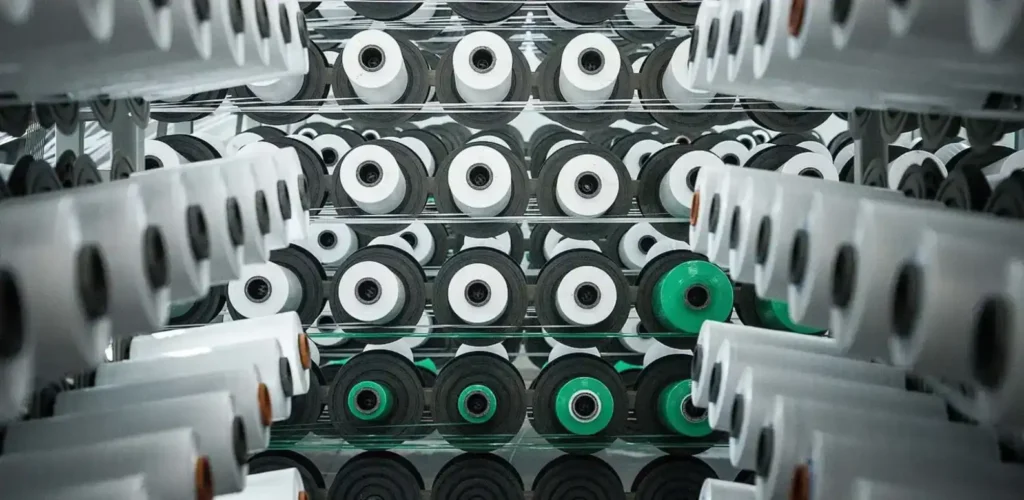
It begins with compounding and tape extrusion. Pellets are melted, filtered, extruded into a thin film, slit into tapes, and oriented to raise tensile properties. Circular or flat looms weave the tapes into fabric; loom settings (pick rate, tension, shuttle count) control density and defects. Surface preparation elevates energy (corona or flame) to improve coating or lamination bonds. Extrusion coating lays down a polyolefin skin; adhesive or extrusion lamination bonds BOPP. Printing is rotogravure for photographic fidelity or HD‑flexo for agile SKUs. Conversion cuts, gussets, valves, and forms; seams are stitched or sealed; liners are inserted; EZ‑open tapes are applied. Quality then interrogates the result: tensile (ASTM D882), dart (ASTM D1709), COF, seam, scuff, UV exposure, and, where relevant, overall/specific migration testing to support Declarations of Compliance.
Where Custom Woven Bags compete: sector‑by‑sector logic
Agriculture and feed prize moisture control and ruggedness; fertilizer and agrochemicals need UV stability and sifting control for safety and labeling; building materials demand abrasion resistance; specialty retail (pet food, bird seed, garden) values shelf impact; industrial powders require valve compatibility and antistatic behavior; and at the bulk end, FIBCs move 500–2,000 kg with codified lift and stack protocols. The same skeleton adapts to each theater of use through surface, liner, print, and closure choices.
| Sector | Dominant hazards | Spec accents for Custom Woven Bags |
|---|---|---|
| Agriculture & feed | Humidity cycling, abrasion, sifting | Coated or laminated surface; liner for flour/rice; anti‑slip; matte/gloss mix for retail clarity |
| Fertilizer & agrochemicals | UV exposure, dust, hazard labeling | UV‑stabilized tapes; valve options; high COF target for pallet safety |
| Building materials | Abrasion, puncture | Higher GSM fabric; reinforced seams; scuff‑resistant BOPP |
| Pet care & garden | Retail image, repeated handling | 8‑color gravure; matte/gloss interplay; EZ‑open; odor barrier liner |
| Industrial powders | Static, fast fill, dust control | Antistatic agents; valve mouth; sealed seams or tight stitch density |
Brand influence and competition through Custom Woven Bags
What converts a bag into a brand asset? First, optics that last. BOPP laminates preserve print vibrancy and resist scuffs; matte/gloss combinations cue tiering and touch. Second, operational confidence—pallets that do not telescope, seams that do not unzip, valves that do not leak. Third, compliance proof: documented food‑contact status (21 CFR §177.1520; Commission Regulation (EU) No 10/2011), ink governance (EuPIA GMP; Swiss Ordinance 817.023.21), and site certifications (FSSC 22000 v6; BRCGS Packaging Materials Issue 6). When a competitor struggles with any of the three, the shelf becomes a scoreboard.
A commodity woven sack carries weight; a brand‑engineered woven pack carries the category. Which would you rather place on a premium endcap?
System thinking applied to Custom Woven Bags
Break the decision into sub‑problems—physics, graphics, compliance, sustainability, cost, continuity—then recombine. Physics: define drop heights, stack time, humidity cycles, and UV hours; map those to weave/GSM, coatings, liners. Graphics: choose gravure for hero SKUs, HD‑flexo for high‑mix variants; control color station counts. Compliance: maintain Declarations of Compliance, migration data, and ink GMP documentation. Sustainability: mono‑polyolefin first; recycled content via mechanical PCR where feasible or mass‑balance via ISCC PLUS when performance demands virgin‑like properties. Cost: tune GSM, film thickness, ink coverage, and color counts; protect throughput. Continuity: dual‑source resins/films/inks; keep plate/cylinder spares and surge capacity.
Testing and documentation for Custom Woven Bags
Lab tests speak the truth your eyes can’t catch. Film tensile per ASTM D882; dart impact per ASTM D1709; COF for pallet behavior; scuff and print adhesion for shelf aesthetics; seam strength and bag‑level drop/stack tests for real‑world abuse. For FIBCs, ISO 21898:2024 defines lift and stacking; for regulated goods in smaller woven bags, 49 CFR §178.518 lays out codes (5H1–5H3). Documentation completes the circle: EU 10/2011 DoCs; 21 CFR statements; EuPIA GMP letters; BRCGS/FSSC certificates; ISCC PLUS or GRS chain‑of‑custody for recycled or mass‑balance claims.
| Document / Test | Identifier | Purpose for Custom Woven Bags |
|---|---|---|
| Food‑contact polymer status (US) | 21 CFR §177.1520 | Establishes PP/PE suitability for food‑adjacent layers |
| Food‑contact framework (EU) | Commission Regulation (EU) No 10/2011 | DoC + migration testing for plastics |
| Ink governance (EU/CH) | EuPIA GMP; Swiss Ordinance 817.023.21 | GMP controls for non‑contact print; permitted substances |
| Site food‑safety management | FSSC 22000 v6; BRCGS PM Issue 6 | GFSI‑benchmarked assurance for converters |
| Mechanical tests | ASTM D882; ASTM D1709; COF; scuff; seam | Quantifies film durability and handling |
| Bulk bag standard | ISO 21898:2024 | Defines FIBC materials, stacking, lifting |
| Dangerous goods woven codes | 49 CFR §178.518 (5H1–5H3) | Specifies woven bag types for regulated transport |
Economics of Custom Woven Bags: cost drivers and total cost of ownership
Unit price is not destiny. BOM levers—GSM, film thickness, ink coverages, color count, lamination method, additive loadings—shape cost. But total cost lives downstream: pallet stability reduces stretch wrap and damage; UV stability protects colorways and lowers returns; consistent seams minimize line jams; robust scuff resistance preserves sellable appearance. Brands that quantify the hidden line items often discover that a seemingly pricier BOPP‑laminated spec lowers total delivered cost per sellable unit.
- GSM and weave count
- BOPP thickness and finish
- Ink coverage and colors
- Fill rate and rejects
- Pallet stability and wrap
- Damage in transit
- Documentation readiness
- EPR data capture
- Retailer approval speed
Sustainability pathways within Custom Woven Bags
Design for recyclability prefers mono‑polyolefin structures (PP fabric + PP or PE surface + PE liner only when needed). Where performance permits, mechanical PCR content can be introduced into tapes or films; where optical clarity or food‑contact status is essential, ISCC PLUS mass‑balance resin lets brands claim circular feedstock substitution while keeping virgin‑like performance. EPR regimes (e.g., California SB 54; Colorado HB22‑1355; Oregon RMA; Maine) elevate the need for precise material reporting by SKU. The right Custom Woven Bags spec not only fits in today’s system but also documents a path into tomorrow’s rules.
Printing choices for Custom Woven Bags: gravure vs. HD‑flexo
Rotogravure renders photographic panels, smooth vignettes, and large solids with repeatable density—ideal for flagship SKUs. HD‑flexo wins when agility matters: faster plate changes, lower prepress costs, regional variants. Many portfolios mix both: gravure on the hero, HD‑flexo on the long tail. Either way, ink systems adhere to EuPIA GMP for the non‑food‑contact print side, and color stations are capped (often at eight) to balance fidelity with uptime.
A reference spec for retail‑grade Custom Woven Bags
| Attribute | Typical range | Rationale |
|---|---|---|
| Base fabric | PP 70–90 g/m²; weave 10×10–12×12 | Strength vs. print flatness trade‑off |
| Laminate | BOPP 25 µm, matte or gloss | Scuff resistance + shelf impact |
| Liner | LLDPE 40 µm (optional) | Moisture/odor barrier for sensitive goods |
| Printing | Gravure 8 colors (alt: HD‑flexo) | Photographic fidelity vs. agility |
| Treatments | Corona ≥ 38 dyn/cm; anti‑slip | Ink wetting; pallet safety |
| Additives | UV target 800 h; antistat as needed | Outdoor color hold; dust control |
| Closure | Double‑fold stitch; EZ‑open | Consumer convenience; seam integrity |
Worked example: upgrading Custom Woven Bags for a 20 kg pet food SKU
Problem: six‑color coated fabric scuffs; artwork dulls; EPR reporting begins. Target spec: PP base 80 g/m²; BOPP 25 µm matte; 8‑color gravure; anti‑slip; UV 800 h; liner 40 µm; EZ‑open. Compliance: FSSC 22000 v6; BRCGS Issue 6; 21 CFR §177.1520; EU 10/2011; EuPIA/Swiss ink governance; ISCC PLUS mass‑balance resin for tapes and BOPP. Performance: COF 0.5–0.6; drop 1.2 m; stack to retailer spec; scuff under set rub cycles. Commercial outcome: velocity lift from shelf impact and fewer returns; cleaner EPR dataset.
Worked example: value‑engineered Custom Woven Bags for regional fertilizer
Objective: defend margin without denting durability. Moves: shift from 90 g/m² to 75 g/m² base with tighter weave; keep extrusion coating (not BOPP) to control sifting; maintain UV stabilization; reduce color stations from eight to five using bold vector graphics; specify higher COF for yard handling; validate drop and stack to local conditions. Net: lower BOM yet steady field performance.
Specification checklist for sourcing Custom Woven Bags
- Base fabric GSM & weave
- Surface: coated vs. BOPP
- BOPP finish: gloss/matte/pearl
- Color stations and coverage
- Ink system & GMP letters
- Corona level >= 38 dyn/cm
- UV stabilization target (h)
- Antistatic and anti‑slip specs
- Valve or open‑mouth design
- Liner gauge & attachment
- Seam design & stitch density
- EZ‑open requirements
- Drop/stack test protocols
- COF targets (static/kinetic)
- Certificates: FSSC/BRCGS
- Food‑contact DoCs (US/EU)
- Chain‑of‑custody: ISCC PLUS/GRS
- Artwork handoff & proofing
- Spare cylinders/plates policy
- Surge capacity & lead times
Common trade‑offs when specifying Custom Woven Bags
Gloss dazzles but shows scratches; matte feels premium but can mute saturation. Higher GSM strengthens but taxes freight; tighter weave improves print but can cost more. Liners add barrier but complicate recyclability; no liner simplifies end‑of‑life but may raise product loss risk. Antislip boosts safety yet may hinder automated depalletizing. The best choice is contextual, not absolute.
Measuring the marketing effect of Custom Woven Bags
Track movement at shelf after a print upgrade; run A/B image tests on e‑commerce thumbnails; scrape review language for “bag quality” signals; compute returns due to packaging damage before and after UV/anti‑slip changes. The bag is a silent salesperson; give it a quota and measure it.
Internal link for foundational context on Custom Woven Bags
For a concise primer on the base technology, see Custom Woven Bags.
A short Q&A to stress‑test Custom Woven Bags specs
Q: If pallets spend weeks outdoors, what fails first—print or polymer?
A: Without UV stabilization, polymer embrittlement and color fade arrive together. Specify UV hours and pigment/TiO₂ strategies; verify via exposure tests.
Q: Does anti‑slip ever backfire?
A: Yes—overly high COF can snag on automated conveyors. Target a COF window that fits your DC equipment.
Q: When is a liner indispensable?
A: For hygroscopic or odorous goods, or when regulatory hygiene expectations demand it. Otherwise, consider liner‑free for mono‑material design.
From specification to market share with Custom Woven Bags
Turn the spec into a growth lever: make hero panels unmissable; engineer pallets to behave; build a sustainability ladder (mass‑balance now, mechanical PCR later); codify the spec to prevent vendor drift; tie changes to retail KPIs. When packaging is designed as a system—physics, persuasion, compliance, cost—the bag stops being a container and becomes a strategy.
The Global Market for Custom Woven Bags
The global market for Custom Woven Bags is diverse, with each region presenting its own unique set of characteristics and trends. Understanding these regional dynamics is essential for businesses seeking to leverage the benefits of customized woven bags effectively.
- North America:
In North America, Printed Woven Bags are predominantly used in the agricultural, retail, and construction sectors. The market is characterized by a high demand for high-quality, durable bags with custom branding. Companies in the U.S. and Canada value bags that not only meet functional requirements but also enhance brand visibility through sophisticated printing techniques. This region’s focus is on premium quality and custom solutions that can withstand various environmental conditions. - Europe:
Europe’s market for Custom Woven sacks reflects a strong emphasis on sustainability and environmental responsibility. European consumers and businesses are increasingly looking for eco-friendly options, leading to a rise in demand for Printed PP Bags made from recycled materials. European manufacturers often integrate advanced printing technology to produce high-quality, customizable bags that also meet strict environmental standards. The competition is fierce, with an emphasis on innovation and sustainable practices. - Asia-Pacific:
The Asia-Pacific region, particularly countries like China and India, is a major hub for the production of Custom Woven Bags. The market here is characterized by cost-effective manufacturing and a high volume of production. In these countries, manufacturers focus on providing a range of customization options at competitive prices. The demand for BOPP Bags with Custom Printing is growing, driven by the region’s expanding retail and agricultural sectors. This market is highly competitive, with a strong emphasis on cost efficiency and bulk production. - South America:
In South America, the use of Custom Woven Bags is prevalent in sectors such as agriculture and food packaging. The market tends to prioritize functionality and cost-effectiveness over advanced customization. However, there is a growing trend towards incorporating custom branding and printed designs to differentiate products in a crowded marketplace. Brazilian and Argentine manufacturers are increasingly adopting modern printing techniques to meet these demands. - Africa:
The African market for Custom Woven Bags is diverse, with a focus on agricultural and construction applications. There is a rising interest in customizing woven bags to enhance brand visibility and meet specific regional needs. Manufacturers in Africa are gradually adopting more sophisticated printing and customization technologies to compete with international standards. The emphasis is on providing durable, cost-effective solutions that can handle the demands of the local environment.
Characteristics of Woven Bag Manufacturers
The characteristics of woven bag manufacturers vary significantly across different countries, influencing their market positioning and competitive strategies.
- North American Manufacturers:
North American manufacturers are known for their focus on quality and innovation. They often use advanced printing technologies to produce high-quality Printed Woven Bags with intricate designs. These manufacturers invest in research and development to create bags that offer superior durability and performance. They also prioritize customer service and custom solutions, which are crucial in a market that values premium products. - European Manufacturers:
European manufacturers are distinguished by their commitment to sustainability and environmental standards. They often use eco-friendly materials and processes to produce Custom Woven sacks that align with stringent regulations. Innovation in printing technology is also a key feature, enabling the production of high-quality, customizable bags that support brand differentiation and environmental responsibility. - Asian Manufacturers:
Manufacturers in the Asia-Pacific region, especially in China and India, are known for their cost-efficiency and high production volumes. They offer a wide range of customization options for BOPP Bags with Custom Printing at competitive prices. These manufacturers leverage advanced automation and production techniques to maintain low costs while meeting the growing demand for custom solutions. The focus is on providing value for money and scalability in production. - South American Manufacturers:
South American manufacturers tend to emphasize functionality and cost-effectiveness. While there is growing interest in custom printing and branding, the focus remains on producing durable and affordable bags. Manufacturers are gradually adopting new technologies to enhance their offerings and compete with global standards. - African Manufacturers:
African manufacturers are characterized by their adaptability and focus on local needs. They often work with limited resources and prioritize durability and practicality in their Custom Woven Bags. The market is evolving, with manufacturers increasingly investing in technology to improve product quality and customization capabilities.
Advantages of Chinese Manufacturers
Chinese manufacturers have established themselves as key players in the global market for Custom Woven Bags. Their strengths lie in several critical areas:
- Quality:
Chinese manufacturers produce Custom Woven Bags with high-quality standards, thanks to advanced machinery and production techniques. Many manufacturers use state-of-the-art equipment to ensure that their bags meet international quality standards. The ability to maintain consistent quality across large production volumes is a significant advantage in the global market. - Price:
Cost efficiency is a major strength of Chinese manufacturers. By leveraging economies of scale, access to affordable raw materials, and efficient production processes, Chinese companies can offer competitive prices for Custom Woven sacks and Printed Woven Bags. This cost advantage allows businesses around the world to source high-quality custom bags at lower prices, making it an attractive option for bulk orders. - Lead Times:
Chinese manufacturers excel in meeting tight deadlines due to their well-established production infrastructure and efficient supply chain management. Quick turnaround times for custom orders, including Printed PP Bags, are possible thanks to advanced production technologies and streamlined processes. This responsiveness is crucial for businesses that need to adapt quickly to market demands and maintain stock levels. - Global Supply Chain:
China’s extensive logistics network and experience in international trade give its manufacturers a strong advantage in global supply chain management. Chinese manufacturers are adept at handling complex logistics and shipping arrangements, ensuring that BOPP Bags with Custom Printing reach their international destinations on time. This capability is essential for companies that operate in multiple countries and require reliable and timely delivery of their packaging solutions.
Competitor Analysis and Market Dynamics
While Chinese manufacturers have distinct advantages, they face competition from other regions with their own strengths. North American and European manufacturers focus on high-quality, innovative solutions with a strong emphasis on sustainability and customer service. In contrast, Asian competitors, including those in China, offer cost-effective options with a focus on scalability and efficiency.
South American and African manufacturers are working to enhance their offerings by adopting modern technologies and improving product customization capabilities. As these regions develop their manufacturing capabilities, they may present increasing competition in specific market segments.
In summary, the global market for Custom Woven Bags is characterized by diverse regional demands and manufacturing strengths. Chinese manufacturers stand out due to their cost efficiency, quality, and robust global supply chain capabilities. As the market continues to evolve, businesses must navigate these dynamics to leverage the benefits of custom woven bags effectively and stay competitive in an ever-changing landscape.