
Multiwall Paper Bags have become a crucial element in modern packaging, offering a blend of durability and environmental friendliness. As we delve into the role of these bags, it is essential to explore their social and economic impacts, especially how they contribute to environmental sustainability. This article will focus on Multiwall Paper Sacks, the advantages of using Kraft Paper Woven Bags and Kraft Paper PP Bags, and the innovative trends shaping the future of packaging. We’ll also highlight how VidePak, a leading manufacturer in this field, is contributing to these advancements.
What are these bags and why do they matter now?
Among industrial packaging formats that move powders and granular goods through modern supply chains, Multiwall Paper Bags occupy a distinctive niche. They are not mere envelopes of fiber. They are engineered systems—multi‑ply assemblies of sack kraft paper, optional barriers, valves or open‑mouth closures, graphics surfaces, and quality controls—that converge to protect commodities and high‑value ingredients alike. When we speak of Multiwall Paper Bags in 2024–2025, we are speaking about a platform that evolves alongside regulations on chemicals of concern, expectations for circularity, efficiency pressures on automated filling lines, and brand demands for legible, print‑rich surfaces.
Different contexts call them by different names: multi‑wall paper sacks, sack kraft paper bags, industrial paper sacks, pasted‑valve stepped‑end formats, pinch bottom open‑mouth constructions, block‑bottom open‑mouth layouts, or sewn open‑mouth variants. The labels vary; the underlying purpose is stable—reliably moving 10–50‑kilogram loads while balancing speed, strength, moisture management, and end‑of‑life options. The question is not whether Multiwall Paper Bags exist, but how they are specified: which plies, which barriers, which closures, which tests, which trade‑offs.
Materials, structures, and the logic of layer-by-layer design
Materials determine performance, but performance is the outcome of interactions between layers. In Multiwall Paper Bags, the baseline is sack kraft—typically a virgin softwood‑based sheet whose long fibers confer strength at modest basis weight. Around this core, converters add or subtract layers to match the risk profile of a product and route. A single decision—say, choosing a thin polyethylene liner—can transform water‑vapor transmission rate, sifting behavior at seams, recycling pathways, and even operator ergonomics at the filler. Conversely, opting for novel water‑based or bio‑derived coatings may preserve a monomaterial fiber identity while delivering the moisture or grease resistance required by flours, sugars, or certain cement grades.
Long‑fiber sheets, commonly 70–100+ g/m² per ply, engineered for high tensile and tear values, calibrated porosity, and folding endurance. Outer plies may be white or bleached for print quality; inner plies may be food‑contact qualified.
Thin PE liners or extrusion coat, water‑ or bio‑based coatings, specialty hybrid laminations. Each route shifts WVTR/OTR, grease resistance, and recyclability scenarios in different ways.
Pasted valve stepped‑end (for speed and self‑sealing options), pinch bottom open‑mouth (for hermetic, food‑grade control), block‑bottom open‑mouth (for shelf presence), and sewn open‑mouth (for rugged legacy lines).
Water‑based flexographic systems dominate; low‑migration sets for food sacks; starch and synthetic adhesives balance bond strength and repulpability; overprints improve rub resistance and readability.
Cost is never just a materials line on a spreadsheet; it is a moving system. Paper prices reflect pulp markets and energy inputs; coatings rely on specialty chemistries; liners track polymer indices. Therefore, specifiers of Multiwall Paper Bags weigh more than dollar‑per‑thousand units—they weigh the total cost of protection, speed, rejects, and compliance over a product’s journey.
Features that separate workhorse sacks from precision instruments
Some bags merely contain; others enable. Multiwall Paper Bags enable. They marry high strength‑to‑weight ratios with predictable opening behavior on automated lines, controlled de‑aeration so powders densify quickly, dimensional stability so pallets remain bricks rather than domes, and graphic surfaces so brands communicate handling, hazard, and authenticity. They can be tuned to resist rain splash in yard operations, to reduce grease strike‑through in fattier ingredients, or to meet transport identifiers in regulated contexts.
- Rapid, clean filling via tuned porosity and valve geometries that vent air without ejecting dust.
- Moisture management ranging from coated fiber‑only to hybrid thin‑liner constructions, depending on lane humidity and dwell time.
- Stackability assisted by block or pinch bottoms and stiffness that stays within a cube.
- Print legibility for brand, barcodes, variable data, and compliance marks.
- Compatibility with fiber recycling when designs avoid inseparable films or adopt liner‑separation features.
Is the aim speed? Then a pasted‑valve configuration with self‑sealing sleeves might remove a manual station. Is the aim a hermetic, food‑forward closure? Then pinch bottom open‑mouth with heat‑seal capability often shines. The same platform, tuned for different outcomes. That duality—one structure, many expressions—makes Multiwall Paper Bags resilient in an era of shifting compliance and consumer narratives.
From pulp to pallet: how the converting chain really works
Manufacturing is choreography. Paper mills tune basis weights and porosity; printers lay down color with water balance and registration control; converters laminate plies, form tubes, and fold ends; quality teams measure tensile, tear, drop, burst, and water‑vapor behavior. Each station is a gate, and each gate is a chance to confirm the bag that leaves the plant will behave on the customer’s filler.
Virgin softwood pulp processed via the kraft method becomes sack sheets. Machine settings dial in pore structure for air release during filling, a subtle but decisive variable for line speed.
Outer plies take graphics, handling icons, and batch identifiers. Plate design and ink selection affect rub resistance and de‑inkability when sacks enter recycling streams.
Plies are glued into a tube; ends are pasted for valve formats or folded for pinch/block bottoms. Line integration allows insertion of free‑film liners or the application of coatings.
Vision systems check registration; labs run drop and stack tests; valves are gauged for fit and seal dwell; moisture behavior is profiled to lane climates.
Where the bags go: sectors, stresses, and selection logic
Multiwall Paper Bags serve construction powders, food ingredients, agricultural inputs, specialty chemicals, minerals, and some retail bulk goods. But the use case is never just the product; it is the journey. A 25‑kilogram cement blend palleted in a tropical yard confronts monsoon cycles and forklifts; a dairy powder bound for export faces long dwell and oxidation stress; a flour brand in a temperate domestic market prioritizes cleanliness, print quality, and fiber‑only claims. One platform; many lanes; different risks.
Sustainability and economics: two sides of one engineering coin
Too often, environmental and financial goals are cast as rivals. With Multiwall Paper Bags, they are co‑authors of the same specification. A fiber‑dominant structure can flow into familiar recycling systems. A mono‑material design shortens mill processing. A right‑sized barrier keeps the product dry without over‑engineering plastic mass. Meanwhile, the economic wins show up in fewer rejects, faster filling, reduced cleanup, and minimized damage in transit. Save a sack and you save a few cents. Save the product inside and you save dollars—and embodied carbon.
Lower WVTR via coatings or liners reduces spoilage; stronger corners cut pallet collapse; faster de‑aeration trims labor. These are environmental effects and cost effects at once, not in sequence.
Regulatory momentum matters as well: PFAS restrictions invite innovation in coatings; extended producer responsibility fees push designs toward recycling clarity; transport identifiers require demonstrable drop and stack performance. The right specification simplifies audits tomorrow by thinking rigorously today.
An eight-piece decision framework for practical specification
Designing Multiwall Paper Bags benefits from a system lens. Break the decision into eight parts, work each part, then recombine.
Fine, cohesive powders demand porosity for de‑aeration; fatty contents push for grease‑resistant barriers; abrasive minerals argue for extra ply or localized reinforcement.
Spout diameter, valve sleeve length, heat‑seal modules, sewing heads—line hardware sets boundaries and opportunities for speed.
Targets for drop, stack, creep, and tear guide basis weights, ply counts, and fiber orientation in the web to resist propagation.
Aim for the lowest total environmental cost while meeting WVTR/OTR needs: coated fiber‑only if climate permits; thin film if maritime humidity dictates.
Food‑contact declarations, low‑migration inks, documentation for hazardous powders, and correct markings where required.
Design for recycling and clear labeling helps navigate producer fees and improves consumer perception.
For tropical routes, water‑resistant outer plies and pallet hoods; for temperate routes, aggressive fiber‑only testing might win you speed and cost.
Readable barcodes, variable data zones, covert marks, and anti‑skid varnishes that also protect graphics from scuff.
When recombined, these pieces yield a coherent spec: the bag that runs, protects, signals, and recycles with as little drama as possible.
Vocabulary and adjacent terms used naturally
To keep discourse precise without resorting to jargon for its own sake, practitioners often work with an adjacent semantic field. In context with Multiwall Paper Bags, you will hear talk of industrial paper sacks, sack kraft packaging, pasted‑valve stepped‑end designs, pinch bottom open‑mouth or block‑bottom layouts, water‑resistant variants suitable for yard handling, paper cement sacks, recyclable bulk packaging, PFAS‑free grease‑resistant coatings, fiber‑only monomaterial strategies, optimized liners with particular water‑vapor transmission targets, and regulated identifiers for certain transport situations. Each phrase marks a lever in the specification process.
Numbers, tests, and what they actually mean on a loading dock
| Metric | Typical Range | Interpretation | Practical Lever |
|---|---|---|---|
| Basis weight per ply | 70–100+ g/m² | Higher numbers improve scuff and tear but increase mass. Outer plies may shift for print fidelity. | Select heavier outer ply for rough yards; keep inner ply smooth for hygiene. |
| Ply count | 2–6 | More plies distribute load and resist puncture; diminishing returns after a point. | Start at three for 20–25‑kilogram fills; climb for abrasion or fat content. |
| Water‑vapor transmission (WVTR) | <1 to ~15 g/m²·day | Lower means drier interior; coatings handle mid‑range, films reach ultra‑low numbers. | Test coated fiber‑only in temperate lanes; add thin liner for tropical export. |
| Drop & stack performance | 0.8–1.2 m; 24–72 h | Replicates warehouse handling and pallet creep; tunes basis weight and folds. | Add corner reinforcement or anti‑skid varnish to stabilize tall stacks. |
| De‑aeration behavior | Qualitative curve | Controls dust clouds and cycle time; directly linked to porosity and valve geometry. | Adjust paper pore structure; trial micro‑perfs only if absolutely needed. |
Metrics are the language we use to talk about risk. But the dialect is the loading dock: does the bag open, fill, seal, stack, and arrive? In that order, at that speed, every time?
Economics of making and running the specification
What costs the most is not always what you think. Materials dominate the bill, yes. But throughput, rejects, cleanup time, and damage in transit amplify quietly until they drown margins. In practice, tuning valve geometry, porosity, and outer‑ply friction can buy a three‑to‑five percent speed increase. That speed compounds into labor savings, uptime buffers, and happier operators. Meanwhile, right‑sizing barriers can shave pennies without risking moisture‑driven write‑offs.
- Materials often account for roughly half to two‑thirds of unit cost: paper, coatings, liners, inks, adhesives.
- Conversion captures printing, tubing, bottoming, valve insertion, and quality checks.
- Overheads—energy, scrap, downtime, freight—complete the picture.
Against that baseline, a designer of Multiwall Paper Bags pursues leverage: fewer plies with better fibers, coatings instead of films when the climate allows, standardized footprints across SKUs, and clean sealing that resists sifting without slowing operators.
Choosing among alternatives without turning choice into ideology
Comparisons are not contests of belief; they are exercises in context. Woven polypropylene sacks can thrive where extreme moisture or reusability is the brief; rigid pails and drums impose cubic penalties yet deliver recloseability; heavy‑duty polyethylene bags achieve extraordinary moisture barriers but may complicate recycling narratives. Multiwall Paper Bags counter with fiber‑loop participation, fast venting for air‑laden powders, and excellent print real estate. Which wins? The lane decides. The product decides. The risk tolerance decides.
When the route is humid and long, lean on thin liners and water‑resistant outer plies. When the route is temperate and short, push into coated fiber‑only to simplify recycling and possibly reduce cost.
Specification checklist that teams can actually use
powder or granule; fat percent; moisture sensitivity; particle distribution; bulk density. pasted valve, pinch bottom, block bottom, or sewn open‑mouth. outer white kraft, structural middle, optional barrier, inner food‑contact ply. self‑sealing valve, heat‑sealed pinch, or sewn plus tape. drop height and orientations; WVTR target; stack duration. de‑inkable inks; batch and QR. recycling guidance; liner separation if present.
Formats, materials, and where each shines
| Format | Plies | Closure / End | Barrier Options | Best For | Operating Note |
|---|---|---|---|---|---|
| Pasted valve stepped‑end | 2–4 | Valve sleeve; self‑seal optional | Coated kraft; thin PE liner; hybrid | Cement, flour, sugar, powders that trap air | Highest fill rates; predictable de‑aeration |
| Pinch bottom open‑mouth | 2–4 | Heat‑sealed pinch | Coated kraft; optional thin liner | Food ingredients; premium chemicals | Hermetic‑capable; clean mouth; excellent shelf stance |
| Block‑bottom open‑mouth | 2–4 | Block fold | Similar to pinch bottom | Retail‑visible sacks; selected pet foods | Great pallet cube; benefits from anti‑skid varnish |
| Sewn open‑mouth | 2–6 | Sewn seam with tape | Liner optional | Agricultural and mineral products | Versatile on legacy lines; add hot‑melt to cut sifting |
| Water‑resistant variant | 3–4 | Any of the above | Water‑resistant outer plus inner barrier | Outdoor yards; humid or maritime routes | Spec anti‑wick pastes; consider pallet hoods |
Four scenarios to make the abstract specific
Three‑ply pasted valve with water‑resistant outer and a tuned valve sleeve. Optional liner for monsoon season. Outcome: speed on the filler, fewer breakages, stable pallets.
Three‑ply pinch bottom with a high‑performance water‑based coating. Outcome: fiber‑only messaging, hermetic seal, crisp graphics.
Four‑ply pinch bottom with a thin inner film and food‑contact inner ply. Outcome: shelf‑life headroom and control of grease strike‑through.
Four‑ply sewn open‑mouth with heavier outer kraft and crepe tape. Outcome: rugged performance on legacy equipment at manageable cost.
From audit to launch without tripping at the last step
- Collect inputs: product properties, destinations, climate exposure, line speed goals, compliance scope.
- Run material trials: ply matrices (basis weight × porosity) and barrier matrices (coating vs. film).
- Pilot on the filler: adjust valve fit, sealing temperature and dwell; measure dust and rejects.
- Validate: drop, stack, and moisture behavior; migration and odor where relevant; identifiers where regulated.
- Approve graphics: ink set, rub resistance, legibility; add variable data zones and traceability marks.
- Label for end‑of‑life: clear recycling guidance; liner‑separation instructions if present.
- Keep an alternate: a film‑free variant ready for markets with tighter restrictions.
Rhetorical interlude: questions that sharpen specifications
What fails first—the seam, the corner, or the coating? If speed rises by five percent but rejects grow by one percent, is that a win? When the route is humid in theory but dry in practice, do we over‑engineer by habit? If a bag prevents a single spoilage event in a container, how many grams of film did it just justify? Questions like these turn planning into engineering. They expose trade‑offs that numbers alone conceal.
A single link for context, placed like an unobtrusive footpath
For readers who want to compare fiber‑dominant industrial sacks with adjacent options, see this concise overview of kraft paper sacks, which touches formats often used as outer plies in Multiwall Paper Bags and clarifies how paper‑based designs differ from woven polymer alternatives.
Language, variety, and the human ear
Variety keeps attention. Short sentences carry certainty. Long sentences carry nuance, qualifiers, and context—the scaffolding of judgment. Active voice cuts through fog; passive voice places emphasis on outcomes. Interrogatives invite scrutiny; declaratives convey responsibility. Good specifications use all of these. Good specifications sound like the people who will live with them on a Monday morning at the plant.
A closing loop without a formal conclusion
When the job is moving powders safely and quickly, Multiwall Paper Bags are a credible first answer. Not always the only answer, not always the final answer, but a resource‑efficient, brand‑friendly, regulation‑aware, operator‑tested answer. They scale from cement to cocoa. They respect existing recycling infrastructures when designed with care. They give teams knobs to turn—ply counts, barrier choices, closures, graphics—so the package fits the lane rather than the other way around. If the supply chain is a symphony of constraints, these bags are the rhythm section: unglamorous, indispensable, and best appreciated by those who have listened closely for a long time.
Understanding Multiwall Paper Bags and Their Benefits
Multiwall Paper Bags are constructed from multiple layers of paper, providing exceptional strength and durability. Typically used for packaging bulk products like grains, chemicals, and building materials, these bags are a staple in various industries due to their ability to hold substantial weights without compromising integrity. The primary materials used in these bags are kraft paper, which offers excellent tear resistance and durability.
The Multiwall Paper Sacks are particularly favored in industries where the packaging needs to withstand rough handling and transport conditions. These sacks can be customized to meet specific requirements, such as incorporating additional barriers to protect contents from moisture, dust, or light.
Kraft Paper Woven Bags are another variation that combines the durability of woven fabric with the sustainability of kraft paper. These bags are often used for agricultural products, providing both strength and a more eco-friendly option compared to traditional plastic packaging.
Kraft Paper PP Bags incorporate polypropylene (PP) into the kraft paper structure, enhancing the bag’s strength while maintaining its recyclable nature. The PP layer adds an extra level of protection against environmental factors, ensuring the contents remain safe and secure.
Environmental Impact and Sustainability
One of the most significant advantages of Multiwall Paper Bags is their environmental impact. Traditional plastic bags contribute substantially to global pollution, but paper-based alternatives like kraft paper and PP-infused kraft paper offer a more sustainable option.
Kraft Paper Woven Bags and Kraft Paper PP Bags stand out for their recyclability and biodegradability. Kraft paper is derived from wood pulp, which is a renewable resource. When these bags are disposed of, they break down naturally, reducing the burden on landfills and minimizing environmental harm. Moreover, kraft paper can be recycled multiple times before its fibers degrade, making it a highly sustainable choice.
The inclusion of PP in Kraft Paper PP Bags provides additional protection for the contents but also raises concerns about recyclability. However, advancements in recycling technologies are making it easier to process these bags. Many Multiwall Paper Bags Manufacturers are working towards improving the recyclability of these materials and reducing the environmental footprint of their products.
Social and Economic Benefits
The social and economic benefits of Multiwall Paper Bags are considerable. From an economic perspective, paper bags can be cost-effective compared to other materials, especially when considering their recyclability and lower environmental impact. The paper bag industry supports numerous jobs, from manufacturing to recycling, contributing positively to the economy.
On a social level, the shift towards eco-friendly packaging materials reflects growing consumer awareness and demand for sustainable products. Companies that adopt these materials often enhance their brand image and attract environmentally conscious consumers. This trend also aligns with broader societal goals of reducing plastic waste and promoting responsible consumption.
Future Trends in Packaging
As the world becomes more focused on sustainability, the packaging industry is evolving to meet these demands. Several innovative trends are shaping the future of packaging, including:
- Development of Advanced Recycling Systems: Efficient recycling systems for multiwall paper and paper-plastic composite bags are being developed. These systems aim to streamline the recycling process, making it easier to process and reuse materials.
- Introduction of Biodegradable Materials: New materials are being researched and developed to replace traditional plastics. Biodegradable options that break down more quickly and safely are becoming more viable. For instance, innovative materials like plant-based polymers are being tested for their effectiveness in creating sustainable packaging solutions.
- Increased Use of Recycled Paper: The use of recycled paper in manufacturing Multiwall Paper Bags is becoming more common. This practice not only conserves resources but also reduces the environmental impact associated with paper production.
- Enhanced Customization and Functionality: Advances in printing and bag design are allowing for more customized solutions that meet specific consumer needs while maintaining environmental benefits. Customizable options like multi-color prints and specialized features for product protection are increasingly available.
VidePak’s Role in Advancing Sustainable Packaging
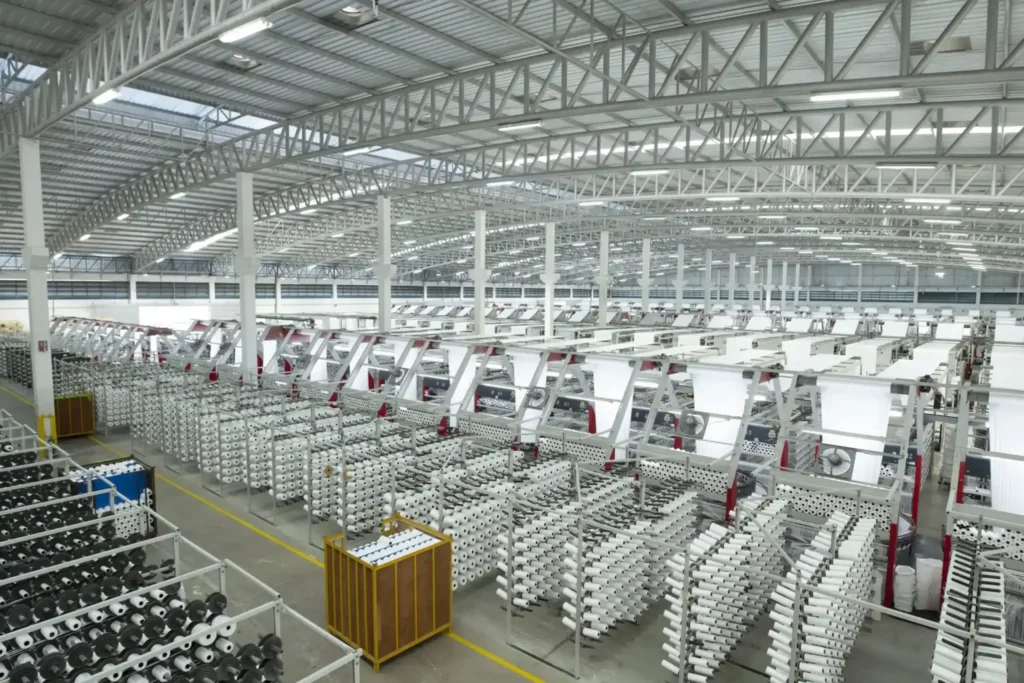
VidePak, a leader in the production of woven bags and sacks, has made significant strides in integrating sustainability into its operations. Established in 2008, VidePak benefits from a seasoned team with over 30 years of industry experience. The company excels in producing a wide range of packaging solutions, including Multiwall Paper Bags, Kraft Paper Woven Bags, and Kraft Paper PP Bags.
VidePak is committed to using high-quality, globally recognized equipment from Starlinger, ensuring that their products meet rigorous standards of durability and environmental performance. The company emphasizes the use of new PP materials and supports various customization options, including multi-color printing and custom openings, to cater to diverse market needs.
In alignment with environmental goals, VidePak is focused on enhancing the sustainability of its products. The company is actively involved in developing and implementing advanced recycling systems for its bags, ensuring that they contribute to a circular economy. Additionally, VidePak is exploring innovative materials and processes to further reduce the environmental impact of its packaging solutions.
With an annual sales volume of $80 million and a strong presence in global markets, including China, North America, Europe, and Southeast Asia, VidePak continues to lead the industry in providing eco-friendly and high-quality packaging solutions.
Conclusion
Multiwall Paper Bags and their variations, including Multiwall Paper Sacks, Kraft Paper Woven Bags, and Kraft Paper PP Bags, represent a significant advancement in sustainable packaging. Their environmental benefits, coupled with their economic and social advantages, make them a preferred choice for many industries. As the packaging industry evolves, innovative trends and advancements will continue to shape the future of sustainable packaging.
VidePak’s commitment to quality and sustainability underscores its role as a leader in the packaging industry, driving positive change through the use of eco-friendly materials and practices. As we look to the future, the continued development of advanced recycling systems and biodegradable materials will further enhance the sustainability of packaging solutions, benefiting both the environment and the economy.