
What are Printed BOPP Woven Bags?
Printed BOPP Woven Bags are engineered packaging formats that fuse a woven polypropylene (PP) fabric—responsible for tensile strength and dimensional stability—with a biaxially oriented polypropylene (BOPP) film that carries reverse‑printed artwork and protects it from abrasion, humidity, and routine scuffs. The union of these two polyolefin layers through extrusion or adhesive lamination yields a rugged, automation‑ready sack that tolerates stacked compression, drop events, and conveyor abrasion while upholding photographic graphics for shelf impact and regulatory legibility.
Because polyolefin tapes in a woven lattice deliver exceptional strength at very low mass, and the BOPP face enables high‑fidelity printing without sacrificing durability. Together they create a package that is simultaneously structural, communicative, and compatible with form–fill–seal lines.
Also known as (aliases):
- BOPP laminated PP woven sacks
- Printed woven polypropylene bags
- BOPP film laminated woven packaging
- High‑graphics woven FFS sacks
- Photo‑quality woven PP bags
- Polyolefin mono‑material laminated woven bags
- Retail‑display BOPP woven bags
The Material System Behind Performance
Specifying Printed BOPP Woven Bags is less a single choice and more an orchestration of layers. Each layer—tapes, fabric, film, ink, adhesive, seam, and seal—acts as a design lever. Tune one lever and you will inevitably shift the others. The following breakdown clarifies how material decisions govern strength, barrier behavior, print fidelity, cost, and after‑use potential.
Woven Substrate
Drawn PP tapes interlaced on circular or flat looms create the structural lattice. Weave density (ends × picks per 10 cm) and tape width control tensile strength, permeability, and surface flatness for lamination.
BOPP Facestock
Reverse‑printed film (12–25 μm) protects inks, enhances scuff resistance, and defines the visual tone (matte for glare control; gloss for saturation). The facestock is the brand canvas.
Bond Line
Extrusion or adhesive lamination turns two layers into one mechanical system. Coat weight, nip pressure, and temperature profile drive peel strength and curl behavior.
Closures & Seals
Heat‑seals, stitching, or ultrasonics close the package. Seam geometry and seal windows determine dust control, hermeticity, and drop performance.
Polypropylene Tapes: Homopolymer vs. Copolymer
Homopolymer PP provides high modulus and strong drawability, ideal for lightweighting. Random or impact copolymers sacrifice a little stiffness for low‑temperature toughness and seam‑zone resilience. Choosing between them depends on climate exposure, conveyor geometry, and reuse expectations.
Weave Geometry and Breathability
Denser fabrics (e.g., 12×12 to 14×14 per 10 cm) improve tensile and produce a smoother lamination surface but reduce permeability, sometimes necessitating micro‑perforated BOPP for fast filling. Lighter counts maintain breathability for powders that require air release at the fill head.
BOPP Film: Thickness and Finish
Thinner films reduce mass and conform more closely to the underlying fabric texture, while thicker films elevate gloss, stiffness, and scuff resistance. Matte variants damp glare and offer a paper‑like tactility; gloss variants maximize color depth and photographic contrast.
Ink, Coating, and Color Management
Solvent gravure remains the benchmark for photo‑quality, while water‑based flexo serves simpler art and regulatory marks, improving year by year in adhesion on treated films. Anti‑scuff and anti‑slip topcoats balance shelf optics against pallet stability. A global color library with ΔE tolerances keeps cross‑plant runs visually consistent and scanner‑friendly.
Adhesives, Ties, and Peel Strength
Extrusion lamination eliminates solvent drying but demands tight thermal control to avoid curl or fabric shrink. Polyurethane or polyolefinic adhesive systems enable low coat weights and rapid cures, with higher‑solids mixes reducing energy use. Peel strength after humidity and temperature cycling is the key acceptance metric for the bond line.
Closures, Seams, and Valve Geometry
Heat sealing relies on crisp temperature–time–pressure windows; stitching is forgiving but introduces needle holes; ultrasonic welds remove holes and are ideal for fine powders. Valve sleeves regulate air release and fill speed, while gussets improve cube efficiency and shelf stance.
Signature Features and Why They Matter
At their best, Printed BOPP Woven Bags function as structural guardians, brand billboards, and production accelerators in a single bill of materials. This section translates engineering traits into operational value.
- Mechanical durability. Oriented tapes distribute load, resisting puncture and controlled tear propagation. BOPP faces absorb scuff energy, keeping graphics legible after long hauls.
- Moisture moderation. The laminate slows vapor ingress relative to bare fabric, helping protect hygroscopic products from clumping or caking.
- Graphics and legibility. Reverse‑printed BOPP supports high line screens, precise brand colors, and crisp microtext for regulatory icons and QR codes.
- Automation readiness. Stable lay‑flat widths, low curl, and predictable seal windows raise FFS throughput and reduce jams.
- Circularity potential. All‑polyolefin stacks support compatibility with PP recovery streams where available; lightweighting reduces resin and freight emissions per filled unit.
Looking for a primer adjacent to this topic? See the explainer on laminated BOPP woven bags for additional perspectives on facestock choices and finishing options.
From Pellets to Pallets: The Production Journey
Process discipline turns raw polymers into consistent performance. The manufacturing chain below emphasizes the control points that most strongly influence strength, print fidelity, seal integrity, and throughput.
- Resin handling and melt filtration. Condition PP pellets; dose color, slip, UV, and antistatic masterbatches; filter melts to minimize gels that would become weak points.
- Tape extrusion and orientation. Slit a cast sheet into ribbons, draw under tightly managed temperatures to align chains; instrument width and thickness to narrow tolerance for reliable weaving and seam behavior.
- Weaving. Circular or flat looms interlace tapes to a target ends × picks; closed‑loop let‑off/take‑up reduce tension spikes and breakage, enabling denser counts at speed.
- BOPP film production. Biaxial orientation sets thickness, haze, and finish. Stability here pays dividends in print register and later curl control.
- Printing. Reverse‑print artwork via gravure for photo‑quality or flexo for simpler art; maintain a color library and ΔE tolerances across plants.
- Lamination. Extrusion or adhesive lamination bonds film to fabric; monitor coat weight, nip load, and thermal profile; audit bond peel after humidity/temperature cycling.
- Conversion. Cut, gusset, insert valve sleeves (where used), and close with stitching, heat sealing, or ultrasonics. Engineer seal windows at true line speed.
- Quality assurance and traceability. Test fabric tensile, seam strength, drop/burst, creep, scuff resistance, bond peel, and when applicable OTR/MVTR; log QR/Datamatrix for lot‑level transparency.
Key Failure Modes
- Seam‑initiated tears from aggressive stitch patterns
- Film‑to‑fabric peel due to under‑cured adhesive
- Curl‑induced jams at forming shoulders
- Heat‑seal burn‑through at narrow process windows
Preventive Controls
- Closed‑loop web tension and zonal heating
- Higher‑solids adhesive systems
- Inline color/register scanning
- Ultrasonic top seals for fine powders
Where Printed BOPP Woven Bags Are Used
The practical reach of Printed BOPP Woven Bags spans commodity powders and premium retail alike. What unites these use‑cases is the need to combine rugged handling with high‑visibility information.
- Agriculture and agri‑inputs. Fertilizers, seeds, and feed mixes demand puncture resistance and stack stability with clear regulatory panels.
- Animal nutrition and pet food. Photo‑quality faces, optional aroma liners, and dust‑tight ultrasonic tops pair shelf persuasion with operational hygiene.
- Food ingredients and staples. Flour, sugar, rice, and specialty grains benefit from moisture moderation and clean labeling.
- Minerals and construction. Cement and gypsum need sift‑proof seams and abrasion‑tolerant exteriors; valve woven sacks accelerate FFS cycles.
- Retail totes and club‑store formats. Durable woven cores with turned hems and comfortable handles enable reuse while showcasing campaigns.
- Chemicals and resin pellets. Robust puncture resistance and traceability panels support industrial compliance.
Environmental Benefits: Five Lenses
Environmental performance for Printed BOPP Woven Bags becomes clear when viewed through five lenses—material intensity, logistics efficiency, product protection, after‑use options, and data transparency.
- Material intensity and lightweighting. High specific strength supports down‑gauging of tapes and films, cutting grams per unit and upstream emissions.
- Logistics efficiency. Pallet stability and anti‑slip faces raise cube utilization, lower wrap, and reduce in‑transit losses.
- Product protection. Moisture moderation and scuff‑tolerant exteriors reduce waste from clumping, contamination, or container breach.
- After‑use pathways. All‑polyolefin stacks are compatible with PP recovery where access exists; reusability extends service life in tote formats.
- Data transparency. QR‑tied lots enable honest reporting of resin intensity and recycled content, feeding continuous improvement.
Economic Implications: Beyond Unit Price
Calculating the economics of Printed BOPP Woven Bags means adding throughput, waste, logistics, and sell‑through to the usual cost stack of resin, printing, and lamination.
- Throughput & OEE. Predictable seal windows, low curl, and stable lay‑flat widths keep FFS at speed and reduce rework.
- Waste & returns. Scuff‑resistant faces and strong seams lower shelf damage and transit losses.
- Logistics. Better cube and fewer pallet failures translate into lower freight per unit and fewer credits.
- Brand conversion. Photo‑quality graphics and tactile finishes improve on‑shelf selection and post‑purchase satisfaction.
Cost Levers
Resin dominates, followed by color count and lamination route. Higher‑solids adhesives can reduce energy; standardized laminate families compress changeovers.
Risk Levers
Seal burn‑through, curl‑induced jams, color drift, and insufficient peel strength. Each has a paired preventive control in the production section above.
Systems Thinking: From Sub‑Problems to a Coherent Spec
Complex packaging succeeds when small solutions are integrated. This section decomposes common dilemmas and recombines them into practical recipes for Printed BOPP Woven Bags.
| Sub‑Problem | Analysis | Integrated Response |
|---|---|---|
| Strength vs. mass | Increase draw within safe windows; denser ends × picks; seam geometries that move failure away from closures. | Pair thinner tapes with anti‑slip textures; validate via drop/creep testing across temperatures. |
| Barrier vs. recyclability | Favor all‑polyolefin stacks; use detachable liners only where oxygen barrier is essential. | Publish local disposal guidance with QR; track recycled content and grams per bag. |
| Throughput vs. dust | Engineer valve sleeves and micro‑perfs; adopt ultrasonic tops to remove stitch holes. | Audit seal windows at speed; align forming shoulders; close the loop on rejects. |
| Graphics impact vs. cost | Reserve reverse‑printed BOPP for hero SKUs; use water‑based flexo on treated fabric for simpler SKUs. | Standardize laminate thickness/finish; instrument ΔE and register with inline scanners. |
| Global SKU vs. local infrastructure | Limit non‑polyolefin components; keep fabric and seal recipes constant; vary only liners and micro‑perfs. | Publish region‑specific claims; tie field performance back to lot data via QR/Datamatrix. |
Technical Tables
| Construction | Outer Face | Fabric & Weave | Closure | Primary Uses | Notes |
|---|---|---|---|---|---|
| Unlaminated woven PP | Corona‑treated woven fabric | 8×8 to 12×12/10 cm | Stitched or ultrasonic | Grains, sand, emergency | Economical; breathable; limited print fidelity |
| BOPP‑laminated woven PP (gloss) | Reverse‑printed BOPP | 10×10 to 14×14/10 cm | Heat‑seal or stitch | Pet food, retail, fertilizers | Premium graphics; high scuff resistance |
| BOPP‑laminated woven PP (matte) | Reverse‑printed BOPP | 10×10 to 14×14/10 cm | Heat‑seal or stitch | Premium food, staples | Paper‑like look; glare control |
| Valve woven FFS sack | BOPP or unlaminated | Circular‑loom tube | Valve sleeve + sealed top | Cement, gypsum | Fast FFS; controlled dust |
| Woven FFS tubular roll | Laminated tube | Seamless circular‑loom fabric | Heat‑sealed | Resin pellets, additives | High throughput; hermetic options |
| Metric | Typical Target Guidance | Why It Matters |
|---|---|---|
| Tensile (warp/weft) | Scaled to loom count and tape gauge | Prevents tearing under lift and drop |
| Elongation at break | Balanced for shock absorption | Avoids brittle failures in cold logistics |
| Seam strength | ≥ defined fraction of fabric tensile | Prevents seam‑initiated tears |
| Drop test (loaded) | Meets specified heights | Transit reliability |
| Creep under load | Acceptable deformation after 24–72 h | Pallet stability |
| Bond peel (film‑to‑fabric) | Exceeds spec after humidity/temperature cycles | Protects graphics and laminate integrity |
| OTR/MVTR (if liners) | Product‑specific thresholds | Shelf life and caking/oxidation control |
| Lever | Effect on Cost | Effect on Performance |
|---|---|---|
| Tape gauge reduction | Lower resin use | Tighter draw control; puncture margin tightens |
| Weave density increase | Slight energy increase | Higher tensile; smoother print face |
| BOPP thickness change | Film cost up/down | Shifts scuff resistance and stiffness |
| Adhesive solids increase | Often neutral after energy savings | Maintains bond in humidity; faster curing |
| Ultrasonic vs. stitch | Higher capital expense | Seals without holes; cleaner for powders |
A Practitioner’s Checklist
- Define a failure hierarchy—moisture, puncture, pallet collapse, scuff—and design to the worst credible case.
- Lock a laminate family (thickness + finish) to stabilize color and reduce changeovers across plants.
- Engineer seams that move failure away from closures; consider ultrasonic tops for dusty SKUs.
- Validate seal windows at true line speed; bench seals can mislead.
- Publish grams‑per‑bag and recycled content; match disposal guidance to regional PP recovery access.
- Instrument lines with color/register scanning and QR/Datamatrix for lot‑level learning.
- What are Printed BOPP Woven Bags?
- The Material System Behind Performance
- Signature Features and Why They Matter
- From Pellets to Pallets: The Production Journey
- Where Printed BOPP Woven Bags Are Used
- Environmental Benefits: Five Lenses
- Economic Implications: Beyond Unit Price
- Systems Thinking: From Sub‑Problems to a Coherent Spec
- Technical Tables
- A Practitioner’s Checklist
Introduction
In the global packaging industry, printed BOPP (biaxially oriented polypropylene) woven bags are emerging as a sustainable powerhouse, balancing ecological responsibility with cost efficiency. These bags, renowned for their durability, recyclability, and high-quality printability, now account for 22% of the flexible packaging market, driven by demand in agriculture, construction, and retail sectors. For manufacturers like VidePak, which integrates ESG (Environmental, Social, and Governance) principles into every production phase, the success of BOPP woven bags lies in their ability to reduce carbon footprints, enhance supply chain transparency, and deliver customizable branding solutions .
Ray, CEO of VidePak, remarks: “When a European fertilizer brand reduced packaging waste by 30% using our UV-printed BOPP bags, it wasn’t just about sustainability—it was proof that eco-friendly solutions can drive profitability and brand loyalty simultaneously.”
1. Understanding ESG Reporting and VidePak’s Commitments
ESG reporting evaluates a company’s adherence to environmental stewardship, social equity, and ethical governance. For VidePak, ESG compliance is not a checkbox but a strategic framework embedded in operations:
- Environmental: A 2MW solar power system offsets 1,200 tons of CO₂ annually, covering 40% of energy needs. Recycled PP materials achieve a 95% recyclability rate, aligning with the EU’s Circular Economy Action Plan .
- Social: Partnerships with NGOs fund education for 200+ children of low-income workers, reducing school dropout rates by 15% in rural China.
- Governance: 5S workplace management (Sort, Set, Shine, Standardize, Sustain) cuts workplace accidents by 30%, validated by ISO 45001 certification.
2. Environmental Benefits of BOPP Woven Bags
2.1 Reduced Plastic Pollution
Globally, 500 billion plastic bags are produced annually, with most ending in landfills or oceans, taking up to 1,000 years to decompose . BOPP woven bags, however, offer a viable alternative:
- Recyclability: Mono-material PP construction allows seamless recycling into new bags or non-woven textiles, diverting 500+ tons/year from landfills.
- Durability: Tensile strengths of 12–14 N/mm² (25% higher than industry averages) enable 5–7 reuse cycles, slashing single-use demand .
| Parameter | Traditional Plastic Bags | VidePak BOPP Bags |
|---|---|---|
| Decomposition Time | 100–1,000 years | 3–5 years (recycled) |
| Carbon Footprint | 1.5 kg CO₂/bag | 0.8 kg CO₂/bag |
| Recyclability Rate | <10% | 95% |
2.2 Energy Efficiency
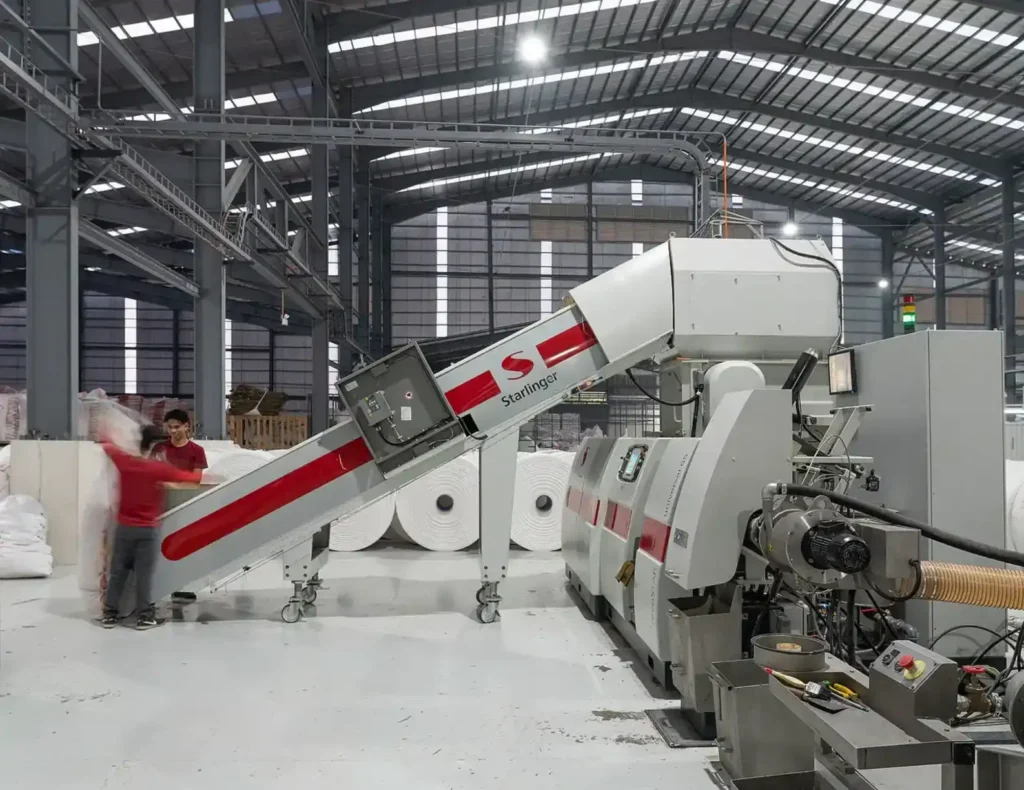
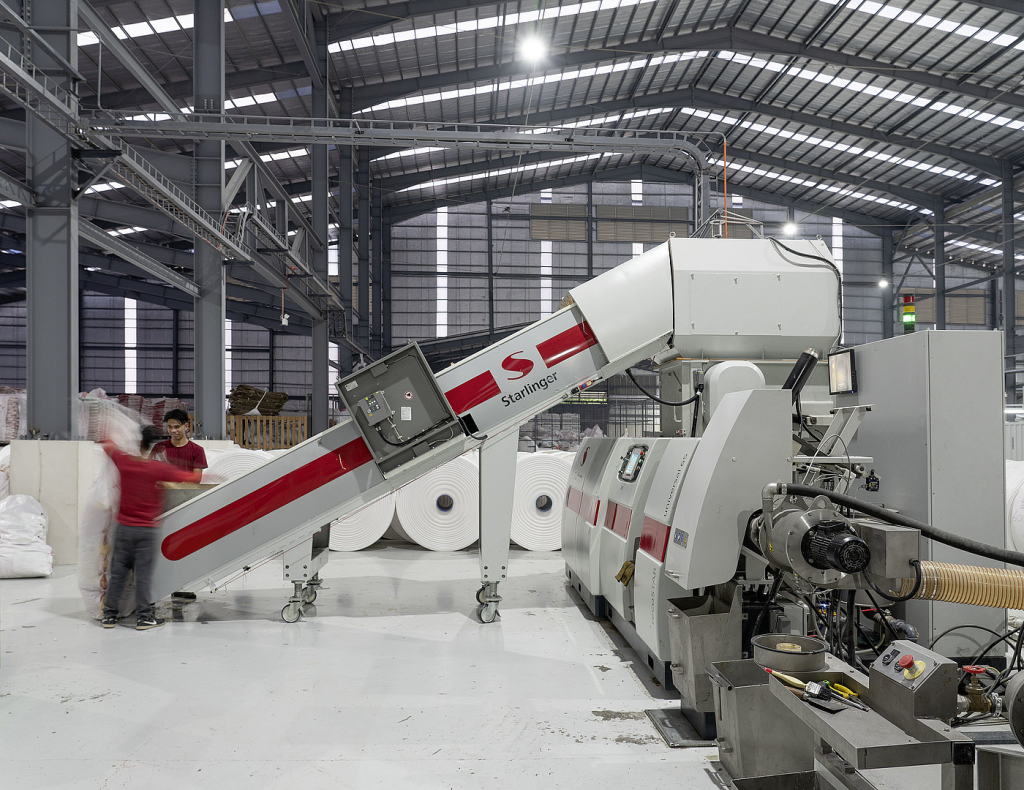
VidePak’s Austrian Starlinger machinery reduces energy consumption by 20% through precision extrusion and lamination. Co-extrusion lines blend 30% post-consumer PP waste with virgin materials, cutting reliance on fossil fuels .
3. Economic Implications: Cost Savings and Market Growth
3.1 Supply Chain Efficiency
- Custom Printing: High-resolution CMYK/Pantone prints boost brand visibility, as seen in a U.S. pet food company’s 25% sales increase after adopting VidePak’s block-bottom BOPP bags.
- Automation Compatibility: Valve designs enable filling speeds of 1,200 bags/hour, reducing labor costs by 40% in chemical logistics .
3.2 Market Expansion
The global BOPP packaging market is projected to grow at a CAGR of 6.5% from 2025 to 2030, driven by e-commerce and regulatory bans on single-use plastics. VidePak’s $80 million annual revenue reflects its dominance in Asia and Europe, with 30% of exports serving EU clients compliant with REACH standards .
4. Case Study: ESG-Driven Success in Agriculture
A Brazilian coffee exporter reduced spillage losses by $150,000/year using VidePak’s PE-coated BOPP bags with QR-code tracking. The bags’ moisture-resistant layers extended bean shelf life by 20%, while ESG-aligned production secured partnerships with Fair Trade-certified brands.
5. FAQs: Addressing Key Industry Concerns
Q1: How do BOPP bags compare to paper bags in cost efficiency?
A: While BOPP bags have 15% higher upfront costs, their reusability reduces long-term expenses by 40% compared to single-use paper alternatives .
Q2: Are BOPP bags suitable for food-grade applications?
A: Yes. FDA-approved PE liners and ISO 22000 processes ensure safety for grains, coffee, and pharmaceuticals.
Q3: Can small businesses afford custom-printed orders?
A: VidePak’s 30+ printing machines support orders from 1,000 units, with Pantone color matching and biodegradable ink options.
6. Future Trends: Innovation and Policy Alignment
- Smart Packaging: Blockchain-enabled traceability and IoT moisture sensors will dominate by 2030, demanded by 75% of Fortune 500 firms.
- Bio-Based PP: Algae-derived resins aim to replace 50% of virgin PP, reducing carbon footprints by 40% .
External Resources
- Explore how BOPP laminations enhance branding: BOPP Laminated Woven Bags
- Learn about compliance with ESG standards: PP Bags Meeting Regulatory Standards
By harmonizing material innovation with ESG accountability, BOPP woven bags exemplify how industries can reconcile profitability with planetary stewardship. As global regulations tighten, solutions like these will remain pivotal in shaping a circular economy.