
Waterproof woven bags have become an essential component in various industries due to their durability and effectiveness in protecting goods from moisture and environmental elements. This article explores the evolution of waterproof woven bags, focusing on technological advancements, material innovations, and cost control measures. Additionally, we will look into future trends, including advancements in automation and emerging technologies. VidePak’s contributions in this area will also be highlighted, showcasing our commitment to quality and innovation.
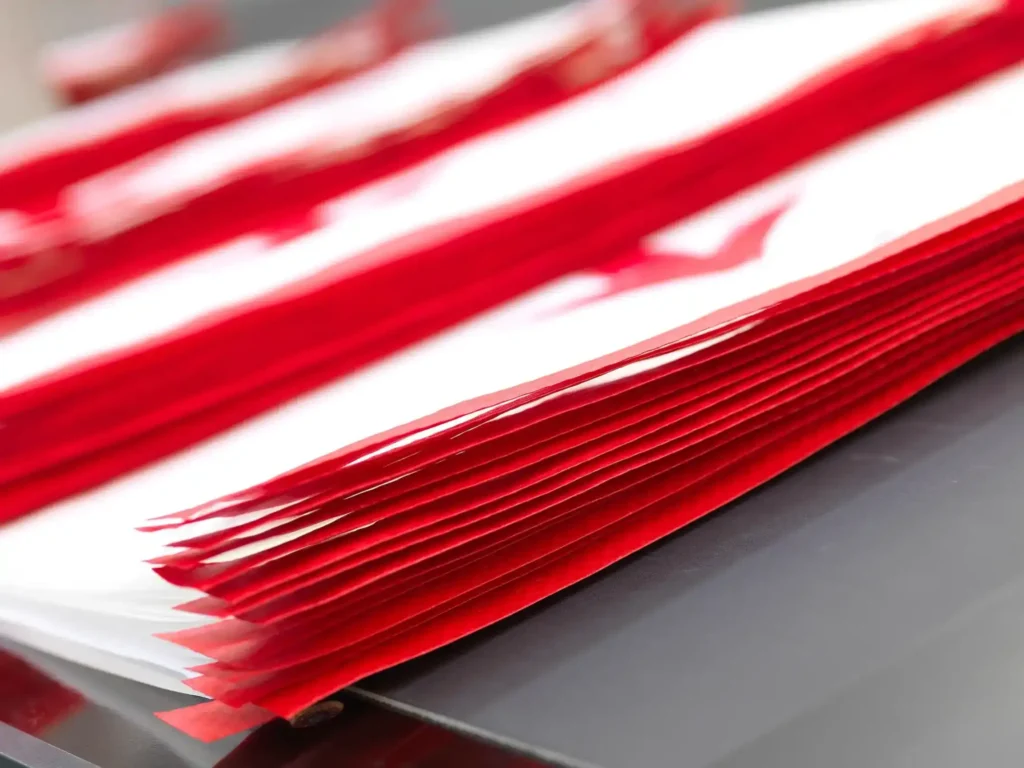
What are Waterproof Woven Bags? Definition, Scope, and Common Aliases
Waterproof Woven Bags are engineered packaging systems that start with a high‑strength woven substrate—most frequently a lattice of oriented polypropylene (PP) tapes—and then gain liquid‑water resistance through lamination, extrusion coating, or advanced sealing. Unlike dense monolithic film pouches, these containers preserve the desirable mechanics of woven textiles (tensile efficiency, puncture tolerance, controlled tear) while adding hydrophobic defenses that withstand rain, wash‑down spray, splashes, and condensation cycles. A well‑specified build will block liquid ingress across seams and cut edges, maintain graphics legibility after wet handling, run cleanly on automated form‑fill‑seal (FFS) lines, and keep end‑of‑life options open via mono‑polyolefin design choices.
Also known as (aliases):
- Water‑resistant woven PP bags
- Laminated woven polypropylene sacks
- Moisture‑proof woven packaging
- Weatherproof woven bags
- Hydrophobic woven PP sacks
- Rain‑safe woven bags
- Water‑blocking woven containers
Key idea: the fabric supplies the muscles; the laminate or coating provides the raincoat; the bond line is the handshake that keeps them acting as one under shock, flex, and pallet compression.
The Materials of Waterproof Woven Bags: Substrates, Barriers, Bonds, and Closures
Specifying Waterproof Woven Bags is a systems exercise. Four domains make or break the outcome: (1) the woven shell, (2) the waterproofing stack, (3) the bond mechanics between layers, and (4) the closures and seam architecture. Each domain contains levers for cost, performance, automation, and circularity.
1) Woven substrate (structural backbone)
- Polypropylene (PP) tapes. A cast PP sheet is slit into ribbons and drawn to align polymer chains. The orientation step multiplies modulus and creep resistance while keeping density low (~0.90 g/cm³). Typical counts run 8×8 to 14×14 tapes per 10 cm; basis weights of 60–120 g/m² cover small sacks, with heavier shells for bulk formats.
- HDPE or PP‑rich blends (select builds). Where extra surface hardness or puncture bias is useful—e.g., angular mineral products—designers may blend HDPE, accepting tighter seal windows and a closer look at PP‑centric recycling claims.
- Geometry choices. Circular‑loom tubes remove one side seam (a common leak path). Flat‑loom panels allow broad gussets and specialty profiles when presentation or pallet cube dominates.
2) Waterproofing stack (the barrier)
- BOPP film lamination. Biaxially oriented polypropylene laminated to the fabric adds a smooth, scuff‑resistant, water‑blocking face. Reverse printing protects artwork. Common gauges: 12–25 μm. Gloss for saturation; matte for glare control and a paper‑like hand.
- Extrusion coatings (PP/PE blends). A molten polyolefin layer cast onto the fabric seals the interstices and maintains a mono‑material story. Tie‑layers may be co‑cast to raise peel under wet cycling.
- Coextruded or detachable liners. For demanding vapor control, detachable LDPE/LLDPE form‑fit liners with tab fixation deliver WVTR performance without permanently complicating recyclability of the shell.
- Functional topcoats. Hydrophobic and anti‑scuff lacquers mitigate wet rub and pallet abrasion while preserving scanner legibility.
3) Bond line (adhesion mechanics)
- Extrusion lamination. Polyolefin melt between film and fabric; robust wet‑strength; no solvent drying. Requires careful thermal profiling to prevent curl or fabric shrink.
- Adhesive lamination. Polyurethane or polyolefinic systems at low coat weights. High‑solids and reactive hot‑melts reduce energy and cure times while maintaining bond after humidity and temperature cycling.
4) Closures and seam design (keeping water out)
- Heat‑seal tops. Predictable seal windows (temperature/time/pressure) deliver hermeticity on FFS machines for rain‑exposed routes.
- Ultrasonic welds. For fine powders, ultrasonic closures remove needle holes and stitch wicking, common culprits in leakage.
- Valve sleeves and gussets. Valve sacks balance fill speed with minimized leak paths; gussets improve cube and stack stability.
Fabric
Oriented PP tapes; counts tuned to tensile, puncture, and permeability needs.
Barrier
BOPP lamination or extrusion coating; optional liners for vapor control.
Bond & Closures
Extrusion/adhesive lamination plus heat or ultrasonic top seals to stop wicking.
What are the Features of Waterproof Woven Bags?
Features are more than a checklist; they are cause‑and‑effect linkages from materials to measurable outcomes. For Waterproof Woven Bags, six groups dominate real‑world performance.
A) Liquid water exclusion
- Hydrostatic holdout at rain‑relevant heads and pressures.
- Edge‑wick protection via sealed tops, welded seams, and anti‑wick treatments along cut edges.
B) Moisture‑vapor moderation
- Polyolefin laminations slow WVTR vs. bare fabric; detachable liners provide higher barrier for hygroscopic contents without giving up shell recyclability.
C) Mechanical resilience
- Oriented tapes distribute load in warp and weft; laminated faces absorb abrasion; seam architecture prevents crack initiation at stitch lines.
- Creep control preserves pallet columns during heat/rain cycles.
D) Print and brand experience
- Reverse‑printed BOPP enables photographic artwork; matte/gloss mixing drives shelf cues while keeping codes readable.
E) Automation readiness
- Stable lay‑flat widths and curl limits keep forming shoulders smooth; predictable seal windows reduce rework and burn‑through.
F) Circularity and resource use
- Mono‑polyolefin stacks (woven PP + BOPP + polyolefin ties) align with PP recovery where available; lightweighting reduces grams per protected kilogram.
Callout—design trade: a tougher raincoat does not have to mean a heavier bag. Better draw control, denser—but thinner—tapes, and optimized seams often beat simply adding grams.
What is the Production Process of Waterproof Woven Bags?
From pellets to pallets, each station adds precision—or variability. The best converters treat the line as a control loop rather than a sequence of isolated steps.
- Resin conditioning. PP pellets plus masterbatches (UV, slip, antistatic, color) are dried/tempered; melt filtration removes gels.
- Tape extrusion and draw. Cast film → slit → multi‑stage draw → relaxation; inline gauges keep width/thickness in tolerance.
- Weaving. Circular or flat looms; ends × picks, tension, and fray control determine tensile, permeability, and lamination smoothness.
- Film orientation (if in‑house). BOPP lines deliver gloss/matte faces with tuned stiffness and surface energy for printing.
- Printing. Reverse printing via gravure for photo‑quality or flexo for simpler art; color libraries and ΔE rules protect brand continuity.
- Lamination or coating. Extrusion lamination/coating or adhesive lamination bonds the stack; profiles target high peel after humidity cycling and minimal curl.
- Conversion. Gusset forming, valve sleeve insertion, and cut‑to‑length performed with hot knives to seal edges.
- Sealing. Heat or ultrasonic tops are validated at line speed for waterproof signatures.
- QA and palletization. Tensile, seam, peel, hydrostatic, drop, wet‑rub, WVTR (where relevant), and creep tests; pallets built with anti‑slip sheets and corner boards for wet‑yard stability.
What is the Application of Waterproof Woven Bags?
Agriculture and agri‑inputs
Fertilizers, seeds, and soil amendments face rain exposure in fields and yards. Waterproof Woven Bags reduce caking, protect nutrient labels, and maintain pallet integrity under storms.
Minerals and construction materials
Cement, gypsum, and silica favor laminated valve sacks for dust control and rain resilience. Aggregates and sand benefit from coated shells during outdoor storage seasons.
Animal nutrition and pet food
Premium feeds exploit reverse‑printed BOPP for grease resistance and outdoor handling proofing; detachable liners serve aroma/oxygen control in specific SKUs.
Chemicals and polymer pellets
Puncture‑tough shells plus sealed tops prevent moisture pickup and spills; machine‑friendly graphics support traceability in automated DCs.
Retail reusable totes
Water‑resistant woven totes with reinforced handles survive drizzle and cleaning while carrying campaigns on matte/gloss finishes.
Pro tip: when the contents are truly vapor‑sensitive, waterproof shells are necessary but not sufficient—pair them with well‑specified liners and an honest storage protocol.
Innovations in Technology, Materials, and Future Trends
Film engineering
- Low‑noise matte faces that hide weave texture and improve line screens without banding.
- Stiffness tuning to resist telescoping in stacks while remaining compliant on forming shoulders.
- Surface‑energy controls that keep ink adhesion stable through wet rub and time.
Lamination/coating chemistry
- High‑solids adhesives and reactive hot‑melts that cut drying energy and sustain peel after humidity cycling.
- Extrusion coat‑in tie layers for cleaner mono‑material claims and better wet‑peel.
- Targeted anti‑wick edge treatments on cut lines.
Sealing science
- Ultrasonic top seals with improved sonotrode geometries for uniform energy distribution through laminate stacks.
- Hybrid pinch‑tops that combine mechanical back‑up with hermetic heat‑seal layers.
- Inline seal‑signature logging (temperature/pressure or energy/time) tied to lot codes.
Data and process control
- QR/Datamatrix links that bind resin intensity, adhesive family, seal recipe, and QA outcomes to field performance.
- Inline color/register analytics that keep ΔE within tolerances and guard legibility after rain exposure.
Future trends
- Stronger push for mono‑polyolefin stacks with detachable liners for true barrier needs.
- Thinner, stronger tapes via better draw control; down‑gauging without losing drop/creep safety margins.
- Hydrophobic/oleophobic nano‑topcoats that resist wetting and rub while staying recycling‑friendly.
- Computer‑vision inspection for stitch anomalies, curl, and seal wrinkles before conversion proceeds.
Systems Thinking: From Sub‑Problems to an Integrated Specification
To translate innovation into reliable operation, break the challenge into sub‑problems and recombine them into a cohesive bill of materials and process recipe.
Sub‑problem A — Rain holdout vs. seal speed
Question: Can we sustain hermetic tops without slowing FFS lines? Levers: seal‑layer chemistry, ultrasonic vs. thermal closure, laminate stiffness, forming‑shoulder geometry. Answer: choose a laminate family with a wide seal window; use ultrasonic energy profiles for fine powders; standardize lay‑flat tolerances.
Sub‑problem B — Barrier vs. recyclability
Question: How much vapor barrier is really needed? Levers: BOPP + polyolefin ties, extrusion coatings, detachable liners. Answer: keep shells mono‑polyolefin; add detachable liners for true barrier cases; publish grams‑per‑bag and liner presence on each spec sheet.
Sub‑problem C — Strength vs. mass
Question: Can we reduce grams while holding drop/creep and puncture safety? Levers: draw ratio, weave density, tape gauge, anti‑slip. Answer: combine thinner tapes with denser counts and tuned friction; validate in wet‑stack conditions at temperature extremes.
Sub‑problem D — Print vividness vs. wet rub
Question: How do we keep artwork readable through rain and pallet rub? Levers: reverse‑print BOPP, matte/gloss balance, anti‑scuff varnish, ΔE controls. Answer: reverse‑print behind film; standardize finishes; log ΔE inline; consider hydrophobic topcoats where exposure is routine.
Sub‑problem E — Automation uptime vs. SKU flexibility
Question: How many change parts are truly necessary across a family? Levers: shared seal recipes, common lay‑flat widths, universal valve geometries. Answer: design an 80/20 matrix—three film gauges, two finishes, one seal window—cover most volume; move outliers to slower cells.
Technical Tables: Parameters, Metrics, and Levers
| Construction | Outer Face | Fabric & Weave | Closure | Primary Uses | Notes |
|---|---|---|---|---|---|
| Unlaminated woven PP (baseline) | Corona‑treated fabric | 8×8 to 12×12 tapes/10 cm | Stitched or ultrasonic | Grains, sand | Economical; minimal rain defense |
| BOPP‑laminated woven PP (gloss) | Reverse‑printed BOPP | 10×10 to 14×14 tapes/10 cm | Heat‑seal or ultrasonic | Pet food, fertilizers | Premium graphics; good liquid holdout |
| BOPP‑laminated woven PP (matte) | Reverse‑printed BOPP | 10×10 to 14×14 tapes/10 cm | Heat‑seal or ultrasonic | Premium staples, display sacks | Paper‑like look; glare control |
| Extrusion‑coated woven PP | Polyolefin coating | 8×8 to 12×12 tapes/10 cm | Heat‑seal or stitched | Minerals, outdoor storage | Mono‑material; robust waterproofing |
| Valve‑style laminated FFS sack | BOPP or coated face | Circular‑loom tube | Valve sleeve + sealed top | Cement, gypsum | Fast FFS; reduced dust & rain ingress |
| Metric | Typical Target Guidance | Why It Matters |
|---|---|---|
| Tensile (warp/weft) | Scaled to loom count and tape gauge | Prevents tearing under lift and drop |
| Seam strength | ≥ defined fraction of fabric tensile | Avoids seam‑initiated leaks/tears |
| Hydrostatic holdout | Pass at specified head/pressure | Verifies rain/splash waterproofing |
| WVTR (if barrier demanded) | Product‑specific thresholds | Limits moisture pickup and caking |
| Bond peel (film‑to‑fabric) | Exceeds spec after humidity/temperature cycles | Keeps laminate intact in wet handling |
| Lever | Effect on Cost | Effect on Performance |
|---|---|---|
| Tape gauge reduction | Lower resin use | Needs tighter draw control; puncture margin narrows |
| Weave density increase | Slight energy increase | Raises tensile; lowers permeability; smoother lamination/printing |
| BOPP thickness change | Film cost up/down | Shifts scuff resistance, optics, stiffness |
| Adhesive solids increase | Often neutral after energy savings | Higher wet‑peel; faster cure |
| Ultrasonic vs. stitch | Capital increases | Eliminates needle holes; cleaner for rain holdout and powders |
Practical Guidance for Specifiers
- Define the failure hierarchy: liquid ingress, caking, puncture, pallet collapse, or scuffed graphics—and design to the worst credible case.
- Lock a laminate/coating family with shared thicknesses and finishes to protect OEE and color consistency.
- Engineer closures: use ultrasonic or hybrid pinch‑tops to move failure away from the seal; validate at speed and under rain exposure.
- Stabilize web handling with tight lay‑flat tolerances, curl limits, and splice flags.
- Instrument the line: capture seal signatures, ΔE, and peel strength by lot, linking QA to QR codes for field feedback.
- Plan end‑of‑life honestly: favor polyolefin‑only stacks and detachable liners; publish grams‑per‑bag and liner presence per SKU.
For background on woven PP platforms and laminated constructions, see this internal reference‑style link: laminated BOPP woven bags.
Keyword Plan and Long‑Tail Usage
Primary keyword woven throughout: Waterproof Woven Bags. Complementary phrases appear naturally to match real search behavior: water‑resistant woven PP bags; laminated woven polypropylene sacks; moisture‑proof woven packaging; weatherproof woven bags; hydrophobic woven PP sacks; rain‑safe woven bags; waterproof laminated FFS sacks; waterproof valve woven bags; waterproof polypropylene woven packaging.
Understanding Waterproof Woven Bags
Waterproof woven bags are specially designed to offer protection against moisture, making them ideal for storing and transporting goods in adverse conditions. These bags are commonly used in industries such as agriculture, construction, and chemical manufacturing, where moisture resistance is crucial.
Waterproof woven sacks and waterproof PP bags are popular types of these bags, often used interchangeably depending on the specific requirements of the application. The primary function of these bags is to provide a barrier against water and humidity, ensuring that the contents remain dry and undamaged.
Historical Development of Waterproof Woven Bags
Waterproof woven sacks have a rich history of development, evolving significantly over the decades. Early versions of these bags were simple woven structures with basic waterproofing capabilities. They were primarily made from woven polypropylene (PP) or polyethylene (PE) and treated with coatings to enhance their water resistance.
Waterproof PP bags and waterproof poly bags became more popular as the technology for waterproofing advanced. Initially, these bags were coated with a basic layer of polymer to provide water resistance. However, advancements in materials and manufacturing processes have led to the development of more sophisticated waterproofing techniques.
Technological Innovations and Material Advancements
The technological progress in manufacturing waterproof woven bags has been driven by several key factors:
- Advanced Coating Technologies: Modern waterproof woven bags often feature advanced coating technologies that provide superior protection against moisture. These coatings can include polyethylene (PE) or polypropylene (PP) laminates, which are applied to the bag’s surface to enhance water resistance.
- Material Innovations: The use of high-quality materials has significantly improved the performance of waterproof woven bags. Innovations in polymer technology have led to the development of more durable and flexible materials that offer better resistance to water and environmental factors.
- Enhanced Weaving Techniques: Advances in weaving technology have also contributed to the improved performance of waterproof woven bags. Modern weaving techniques produce tighter and more consistent weaves, which help to prevent water infiltration and ensure that the bags maintain their integrity even under challenging conditions.
- Cost Control Measures: As with any product, cost control is crucial in the production of waterproof woven bags. Manufacturers have adopted various strategies to manage costs while maintaining quality. These strategies include optimizing raw material usage, improving manufacturing efficiency, and leveraging automation to reduce labor costs.
Future Trends and Technological Progress
The future of waterproof woven bags is set to be shaped by several emerging trends and technological advancements:
- Increased Automation: Automation is expected to play a significant role in the future of waterproof woven bag production. Automated systems for weaving, coating, and quality control will enhance production efficiency and consistency, leading to higher-quality products at lower costs.
- Sustainability and Eco-Friendly Materials: There is a growing emphasis on sustainability and the use of eco-friendly materials in the production of waterproof woven bags. Innovations in biodegradable and recyclable materials are expected to become more prevalent, reducing the environmental impact of these products.
- Smart Technology Integration: The integration of smart technologies, such as sensors and RFID tags, into waterproof woven bags could offer enhanced tracking and monitoring capabilities. This technology would enable better inventory management and ensure that products are stored and transported under optimal conditions.
- Enhanced Performance Features: Future developments may focus on further enhancing the performance features of waterproof woven bags. This includes improving their resistance to extreme temperatures, UV radiation, and other environmental factors.
VidePak’s Role and Achievements
At VidePak, we are committed to advancing the field of waterproof woven bags through innovation and quality. Our efforts include:
- State-of-the-Art Technology: We utilize the latest technology and equipment to produce high-quality waterproof woven bags. Our manufacturing process incorporates advanced coating technologies and precision weaving techniques to ensure that our products meet the highest standards of performance and durability.
- Sustainable Practices: We are dedicated to sustainability and actively work on incorporating eco-friendly materials and practices into our production processes. Our commitment to reducing the environmental impact of our products aligns with the broader industry trend towards sustainability.
- Customization and Quality Assurance: VidePak offers a range of customizable options for waterproof woven bags, including different sizes, coatings, and printing options. Our rigorous quality assurance processes ensure that each product meets our strict quality standards.
- Innovation and Research: We continuously invest in research and development to stay at the forefront of technological advancements. Our collaboration with leading research institutions and technology partners enables us to incorporate the latest innovations into our products.
In summary, waterproof woven bags have evolved significantly over the years, driven by technological advancements and material innovations. The future of these products will be characterized by increased automation, sustainability, and enhanced performance features. VidePak is proud to be a leader in this field, dedicated to delivering high-quality, innovative, and environmentally friendly solutions.