
What Is Kraft Paper Laminated Woven Fabric? A Practical Definition With Common Aliases
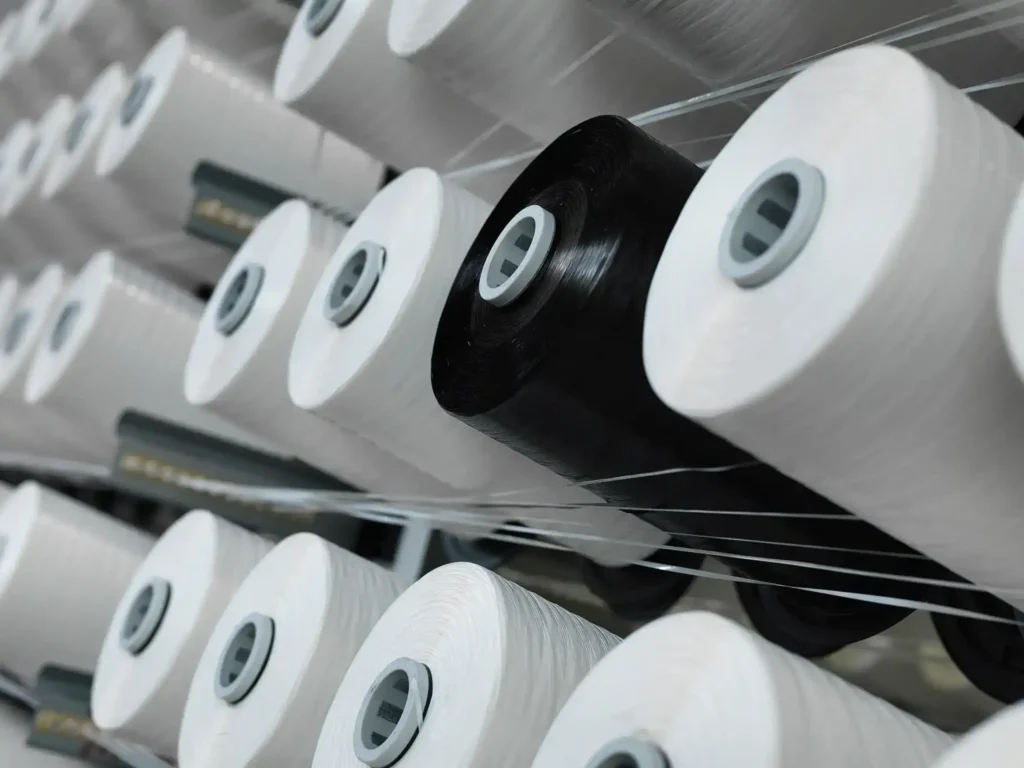
Kraft Paper Laminated Woven Fabric is a composite packaging substrate that fuses a high‑tenacity woven polyolefin fabric—most commonly polypropylene (PP) tape cloth—with an exterior kraft paper layer through extrusion coating or adhesive lamination. By pairing a structural lattice with a print‑friendly paper face, the laminate delivers drop resistance, tear control, and creep stability while achieving the tactile optics and ink receptivity of paper. In converting, it runs on high‑speed fill lines, accepts gussets and valve sleeves, and maintains stack integrity during long‑haul logistics and warehouse dwell.
- Paper‑laminated PP woven fabric
- Kraft‑laminated woven polypropylene
- Paper‑faced woven sack material
- Woven polyolefin with kraft face
- Kraft‑coated woven packaging substrate
- Laminated paper woven composites
- Paper‑poly woven laminates
These labels spotlight the same architecture but stress different outcomes: print fidelity and shelf optics (paper‑faced), mechanical reliability (woven), or process route (laminated/coated). Whatever the alias, the intent remains: merge paper’s communicative surface with woven PP’s strength‑to‑weight efficiency.
The Material System of Kraft Paper Laminated Woven Fabric
The performance envelope of Kraft Paper Laminated Woven Fabric arises from a stack of interdependent layers. Each layer—woven substrate, paper facestock, bond line, inks and coatings, and closures—acts as a lever. Adjust one lever and the others respond. The goal is not just to choose materials, but to orchestrate a system that meets tensile, creep, print, moisture, and automation targets at the lowest practical mass.
1) Woven Substrate
PP homopolymer tapes are slit from a cast sheet and drawn to align chains, raising modulus and creep resistance. Typical sack laminates sit between 80–160 g/m²; heavy‑duty builds run higher. Ends × picks (warp × weft) govern tensile, elongation, and permeability, while also setting the surface smoothness that influences lamination quality.
PP random/impact copolymers are introduced when cold‑weather toughness and flex‑fatigue are critical—northern winters, cold chain, or repeated loop bending. Copolymers trade slight stiffness for crack resistance at seam and loop roots.
Geometry: circular‑loom tubes remove a side seam—one fewer leak path—while flat‑loom sheets suit wide formats and deep gussets.
2) Kraft Paper Facestock
Basis and finish: machine‑finished (MF) and machine‑glazed (MG) kraft in the 50–90 g/m² range are common. MF grades favor uniform ink laydown; MG adds a soft sheen and improved compressive feel. Virgin kraft offers long fibers and tear strength; recycled content adds sustainability claims with tighter process control.
Color & chemistry: bleached kraft supports vivid campaigns; natural kraft signals authenticity and hides scuffs. Wet‑strength and sizing packages curb edge wicking and protect graphics in damp yards.
3) Bond Line & Tie Layers
Extrusion coating/lamination casts a molten polyolefin (LDPE/LLDPE/PP) between kraft and fabric, yielding robust bonds and clean moisture holdout. Adhesive lamination with polyurethane or polyolefinic systems enables lower coat weights and lower thermal stress; high‑solids and reactive hot‑melts reduce energy and cure time.
Edge‑wick countermeasures—hot‑knife trims, edge lacquers—are crucial because edges are where water invades first.
4) Inks, Varnishes, Print Enablers
Water‑based flexo remains the practical workhorse on kraft; hybrid or solvent sets support dense panels. Over‑varnishes—matte, soft‑touch, anti‑scuff—preserve legibility through pallet rub. Color libraries with ΔE tolerances keep tones consistent across plants and seasons.
5) Closures & Accessories
Stitched bottoms are rugged; heat‑enabled pinch‑tops deliver hermeticity for powders. Valve sleeves accelerate filling on cement, gypsum, and fertilizer lines. Gussets and Q‑baffles square stacks and improve cube utilization.
6) Cost Levers
Mass on both sides—paper gsm and woven gsm—drives unit cost. Printing coverage and effects are discretionary levers. Down‑gauging works only if bond peel and wet‑rub performance remain inside spec.
Reference link (encyclopedic style): For the woven substrate background, see PP woven bags (substrate fundamentals). This internal link behaves like a neutral knowledge anchor and helps readers explore base‑fabric mechanics.
Key Features That Differentiate Kraft Paper Laminated Woven Fabric
The distinctive value of Kraft Paper Laminated Woven Fabric emerges from the coupling of a rugged woven core with a paper‑native print surface. Below, features are mapped to operational outcomes so specifiers can translate material choices into line speed, shelf impact, and risk reduction.
- Mechanical strength at low mass. Oriented tapes deliver tensile and creep resistance; the woven lattice localizes tears instead of allowing catastrophic propagation. This enables grams‑per‑bag reduction without surrendering drop performance.
- Paper‑native printability. Kraft accepts water‑based flexo with clean solids, crisp microtext, and familiar tactile feedback. Over‑varnishes maintain legibility through pallet rub and humid handling.
- Moisture moderation. Compared with raw fabric, the kraft face and polymer tie reduce wetting and slow vapor ingress. Edge‑wick control protects print during dew and drizzle exposure.
- Pallet stability. Paper faces increase surface friction over glossy films, reducing stack slippage. Q‑baffles create square profiles for container cube efficiency.
- Conversion compatibility. Tight lay‑flat control, curl limits, and moisture conditioning of kraft enable reliable forming, sealing, and stitching at speed.
- Circularity narratives. While mixed material complicates single‑stream recycling, mono‑polyolefin on the polymer side, design‑for‑disassembly, and transparent mass disclosure provide credible end‑of‑life pathways.
From Resin and Pulp to Pallet: The Production Process
Variation stacks quickly when paper (hygroscopic) meets thermoplastic webs (thermally sensitive). A disciplined process for Kraft Paper Laminated Woven Fabric minimizes rejects and protects color, curl, and bond integrity:
- Resin handling & tape extrusion. Condition PP pellets and masterbatches; cast, slit, and draw tapes with inline gauges to control width and thickness. Target draw raises modulus without brittle failure.
- Weaving. Run flat or circular looms with stable tension, ends × picks per spec, and loom data logging for traceability.
- Kraft acclimation. Bring rolls to plant humidity ranges; document moisture to avoid post‑lamination curl and print mottle.
- Lamination (extrusion or adhesive). Instrument coat weight, nip pressure, and temperature. Apply edge lacquers or hot‑knife trims for wick prevention.
- Printing & varnishing. Flexo on kraft for regulatory text and large solids; consider pre‑lamination print on polymer for photo islands. Apply matte/soft‑touch over‑varnish tuned for wet‑rub counts.
- Conversion. Cut‑to‑length, form gussets or valve sleeves, stitch or heat‑enable tops/bottoms, and integrate Q‑baffles where stacking demands square geometry.
- Quality assurance. Verify fabric tensile, bond peel (dry/wet), drop and creep, rub resistance, edge wick, and color ΔE. Run pallet stability tests on representative stacks.
Applications: Where the Laminate Works Hard
Use cases for Kraft Paper Laminated Woven Fabric concentrate where paper optics, rugged handling, and moisture moderation intersect:
- Dry food ingredients and staples. Flour, rice, sugar, and grains benefit from paper aesthetics and label space with woven tear control in rough logistics.
- Agriculture and seeds. Seed and feed concentrates combine natural kraft branding with seam toughness; liners add aroma and moisture control when required.
- Animal nutrition and pet food. Premium programs use kraft faces for storytelling; optional photo islands (BOPP windows) cover hero imagery without sacrificing paper majority.
- Cementitious powders and minerals. Valve‑style kraft‑laminated sacks minimize dust, tolerate outdoor staging, and stack cleanly in export containers.
- Retail totes and promotional sacks. Paper‑forward look with multi‑trip woven durability suits club‑store and gift campaigns.
Advancements in Materials and Printing Techniques (Latest Cycle)
A) Smarter Kraft
Wet‑strength chemistries and surface sizing raise edge‑wick resistance and preserve line art after dew or drizzle. Higher‑bulk, lower‑gsm grades maintain stiffness for down‑gauging.
B) Cleaner, Faster Bonds
High‑solids/Reactive hot‑melts cut drying energy while securing peel strength through humidity cycles. Extrusion coat‑in tie layers simplify stacks and limit odor concerns.
C) Rub‑Resistant Finishes
Modern matte and soft‑touch varnishes deliver higher wet‑rub counts with stable low gloss—maintaining a premium paper feel under pallet friction.
D) Color & Register Analytics
Inline scanners enforce ΔE and registration windows, cutting rework and aligning multi‑plant outputs. Fixed anilox/plate libraries compress changeover time.
E) Hybrid Graphics
Brands blend large kraft fields (natural look) with selective film islands for photo‑quality imagery, sustaining runnability while elevating storytelling.
Systems Thinking: Break the Problem Down, Then Recombine
Effective specifications for Kraft Paper Laminated Woven Fabric require aligning print impact, mechanical reliability, moisture behavior, and automation speed. Each sub‑problem below includes the lever set and an integrated response.
Sub‑Problem 1 — Print Impact vs. Rub Resistance
Question: How do we keep color vivid and microtext readable through pallet rub and humidity?
Levers: ink set (water‑based/hybrid), kraft finish (MF/MG), over‑varnish choice, edge‑wick controls.
Integrated response: Specify MF kraft for uniform ink laydown; adopt a matte over‑varnish with proven wet‑rub counts; apply edge lacquers on cut faces; lock a brand palette with ΔE tolerances.
Sub‑Problem 2 — Strength vs. Mass
Question: Can we down‑gauge and still pass drop and creep targets?
Levers: tape draw ratio, ends × picks, kraft gsm, baffle geometry, seam style.
Integrated response: Increase draw to raise modulus; keep slightly denser picks for puncture; shift to higher‑bulk kraft at lower gsm; reinforce seams locally rather than adding global mass.
Sub‑Problem 3 — Moisture Behavior vs. Recyclability
Question: What waterproofing is essential, and how does it affect end‑of‑life?
Levers: extrusion vs. adhesive lamination, hydrophobic varnishes, detachable liners, layer‑mass disclosure.
Integrated response: Favor polyolefin ties; avoid permanent non‑polyolefin barriers unless critical; disclose per‑layer grams; deploy liners only for hygroscopic SKUs.
Sub‑Problem 4 — Automation Speed vs. Curl/Lay‑Flat
Question: How do we keep forming shoulders stable at speed?
Levers: kraft moisture conditioning, nip and temperature profiles, winding tension, splice management, curl limits.
Integrated response: Acclimate kraft; instrument coat weight and nip; set curl/lay‑flat tolerances; mark splices; standardize winding windows; validate against actual packer dwell/pressure.
Sub‑Problem 5 — Edge Integrity vs. Paper Aesthetics
Question: How do we prevent edge wicking and fray without plasticizing the look?
Levers: hot‑knife trims, edge lacquers, reinforced folds, pinch‑top glues.
Integrated response: Use hot‑knife where polymer edges are available; apply clear lacquers to kraft edges; bury edges in pinch‑top folds.
Color Tables: Parameters, Targets, Trade‑offs
| Construction | Kraft Face | Woven & gsm | Bond Route | Closure | Primary Uses | Notes |
|---|---|---|---|---|---|---|
| Standard kraft‑laminated woven | MF kraft 70–80 g | PP woven 100–140 g/m² | Extrusion lamination | Stitch or heat‑enabled top | Staples, agri, minerals | Balanced cost/print/ruggedness |
| Premium kraft‑laminated woven | MG kraft 60–70 g | PP woven 120–160 g/m² | Adhesive lamination | Pinch‑top + varnish | Pet food, premium staples | Paper‑like optics; wet‑rub strength |
| Hybrid kraft + film window | MF kraft 60–70 g | PP woven 100–140 g/m² | Mixed (adh/extrusion) | Stitch or ultrasonic | High‑storytelling SKUs | Photo island; majority kraft |
| Valve‑style kraft‑laminated sack | MF kraft 65–75 g | Circular‑loom 120–160 g/m² | Extrusion coating | Valve top + pasted bottom | Cement, gypsum, fertilizers | Fast FFS; dust & moisture control |
| Q‑baffle kraft‑laminated woven | MF kraft 65–75 g | PP woven 160–200 g/m² | Extrusion lamination | Stitch + reinforced corners | Export; warehouse cube | Square stacking; payload stability |
| Metric | Typical Target/Method | Why It Matters |
|---|---|---|
| Tensile (warp/weft) | Scaled to ends × picks & tape gauge | Prevents tearing in lift/drop |
| Creep under load | 24–72 h set; pass within deformation band | Maintains pallet columns |
| Bond peel (dry/wet) | Spec after humidity/temperature cycles | Keeps kraft face attached |
| Rub resistance (dry/wet) | Pass wet‑rub counts | Protects legibility |
| Edge wick | Below capillarity threshold | Prevents staining/delamination |
| Color ΔE | Within brand tolerance | Cross‑plant consistency |
| Lever | Effect on Cost | Effect on Performance |
|---|---|---|
| Lower kraft gsm (higher bulk) | Reduces paper mass | Maintains stiffness; risk of show‑through |
| Higher tape draw ratio | Neutral to lower resin | Raises tensile; watch puncture margin |
| Extrusion tie vs. adhesive | Higher capex (coater) | Strong wet peel; simpler stack |
| Matte/soft‑touch varnish | Slight ink/varnish increase | Higher wet‑rub; premium feel |
Callouts: Quick Guidance for Specifiers
Define your primary risk: moisture stains, rub‑off, drop splits, pallet telescoping, or color drift. Design to the worst credible scenario; do not chase every edge case equally.
Lock a laminate family for 80% of SKUs (kraft gsm + bond route). Use a premium variant only for hero SKUs to protect OEE and color stability.
Engineer closures: choose seam stitches that avoid cut‑through or adopt heat‑enabled pinch‑tops where hermeticity matters; validate at line speed.
Control moisture & curl: acclimate kraft; define roll moisture windows; instrument nip and coat weight; specify curl/lay‑flat tolerances.
Title‑Led Reasoning: Advancements in Materials and Printing Techniques
The phrasing of the topic invites two guiding questions: what has changed in the material stack? and what has matured in print and finishing? Material changes—bulkier wet‑strength kraft, tighter draw on thinner tapes, cleaner tie systems—permit mass reduction without giving up drop or rub performance. Printing advances—matte/soft‑touch chemistries, plate/anilox libraries, inline ΔE—deliver consistent, premium optics with fewer rejects. When these tracks are integrated into a standard laminate family, the outcome is lighter, faster, and cleaner.
One‑Page Starter Spec (Editable)
- Product: Kraft Paper Laminated Woven Fabric, valve‑style sack for mineral powders
- Size & lay‑flat: To packer shoulder; curl ≤ specified limit; splices flagged
- Woven: PP woven 120–160 g/m²; ends × picks per performance target
- Kraft: MF kraft 65–75 g/m²; wet‑strength option for damp logistics
- Bond: Extrusion lamination with polyolefin tie; dry/wet peel spec
- Print: Water‑based flexo, brand palette with ΔE ≤ 2.0; matte/soft‑touch over‑varnish
- Top/Bottom: Valve top; pasted or heat‑enabled pinch‑top; reinforced bottom seam
- Additives: UV stabilizers on woven side; anti‑slip varnish as needed
- QA: Tensile, creep, peel (dry/wet), drop, rub (dry/wet), edge wick, color ΔE
- Palletization: Anti‑slip sheets; corner protection; stack/cube validation
Keyword Layout and Long‑Tail Phrasing
Primary keyword woven throughout: Kraft Paper Laminated Woven Fabric. Natural variants appear contextually to mirror real search habits and technical discussions: paper‑laminated PP woven fabric; kraft‑laminated woven polypropylene; paper‑faced woven sack material; laminated paper woven composites; kraft‑coated woven packaging substrate; paper‑poly woven laminates.
- What Is Kraft Paper Laminated Woven Fabric? A Practical Definition With Common Aliases
- The Material System of Kraft Paper Laminated Woven Fabric
- Key Features That Differentiate Kraft Paper Laminated Woven Fabric
- From Resin and Pulp to Pallet: The Production Process
- Applications: Where the Laminate Works Hard
- Advancements in Materials and Printing Techniques (Latest Cycle)
- Systems Thinking: Break the Problem Down, Then Recombine
- Color Tables: Parameters, Targets, Trade‑offs
- Callouts: Quick Guidance for Specifiers
- Title‑Led Reasoning: Advancements in Materials and Printing Techniques
- One‑Page Starter Spec (Editable)
- Keyword Layout and Long‑Tail Phrasing
- 1. Technological Innovations in Material Engineering
- 2. Applications in the Building Materials Industry
- 3. Material Advantages: Why Polypropylene Dominates
- 4. Selecting Optimal Product Parameters
- 5. Case Study: FIBC Bags in Construction Waste Management
- 6. FAQs: Addressing Key Client Concerns
- 7. Future Trends: Smart Packaging and ESG Integration
Introduction
In the evolving landscape of industrial packaging, kraft paper laminated with woven fabric has emerged as a game-changer, combining eco-friendliness, durability, and advanced printability to meet the rigorous demands of sectors like construction and chemical storage. These hybrid materials, reinforced with polypropylene (PP) woven layers, are redefining packaging standards by offering unparalleled strength, moisture resistance, and customization capabilities. For companies like VidePak—equipped with Austrian Starlinger machinery and a commitment to ESG principles—the integration of high-resolution printing and sustainable material engineering positions them as a leader in delivering solutions that balance performance with environmental responsibility.
Ray, CEO of VidePak, remarks: “When a cement manufacturer reduced packaging waste by 30% using our laminated kraft bags, it wasn’t just about cost savings—it was proof that innovation in material science and precision printing can drive both efficiency and sustainability.”
1. Technological Innovations in Material Engineering
1.1 Composite Structure and Functional Benefits
Kraft paper laminated with PP woven fabric combines the biodegradability of paper with the tensile strength (12–14 N/mm²) and tear resistance of polypropylene. Key advancements include:
- Multi-Layer Lamination: PE or aluminum foil coatings enhance waterproofing (WVTR <5 g/m²/day) and corrosion resistance, critical for cement and chemical packaging.
- Ultrasonic Seaming: Ensures airtight closures for hygroscopic materials like gypsum powder, reducing spillage by 50% compared to traditional stitching.
1.2 Printing Techniques
VidePak’s high-definition flexographic printers achieve 300 dpi resolution, supporting Pantone and CMYK color systems. UV-cured inks ensure fade resistance for 18+ months, even under direct sunlight, while QR-code integration enables supply chain traceability.
2. Applications in the Building Materials Industry
2.1 Cement and Concrete
- Moisture Control: PE-laminated bags prevent hydration during storage and transit, extending cement shelf life by 20%.
- Load Capacity: PP-reinforced kraft bags withstand weights up to 2,000 kg, reducing rupture risks in bulk transport.
2.2 Putty Powder and Gypsum
- Anti-Static Properties: Essential for fireproof putty powders, VidePak’s Type C FIBC bags dissipate static electricity, complying with OSHA safety standards.
- Breathability: Mesh-lined designs reduce condensation, preventing clumping in humid environments.
2.3 Chemical and Adhesive Storage
- Chemical Resistance: HDPE coatings protect against acidic or alkaline substances, widely used in epoxy resin packaging.
3. Material Advantages: Why Polypropylene Dominates
| Property | PP Woven Fabric | Traditional Materials |
|---|---|---|
| Tensile Strength | 12–14 N/mm² | 8–10 N/mm² (paper) |
| Recyclability Rate | 95% | 70% (non-laminated paper) |
| Moisture Resistance | <5 g/m²/day | 10–15 g/m²/day |
| Cost Efficiency | $0.08–$0.12/bag | $0.15–$0.20/bag (HDPE) |
PP’s dominance stems from its balance of strength, flexibility, and compatibility with recycling systems. VidePak’s 30% post-consumer recycled PP blends reduce carbon footprints by 40% while maintaining performance.
4. Selecting Optimal Product Parameters
4.1 Thickness and Grammage
- Cement Bags: 150–180 GSM with 0.3–0.5 mm thickness for heavy loads.
- Putty Powder: 100–120 GSM with breathable liners to prevent moisture retention.
4.2 Design Customization
- Outer Layer: Matte or pearlescent laminations for branding; aluminum foil for UV protection.
- Inner Liners: PE for waterproofing; anti-static coatings for flammable powders.
5. Case Study: FIBC Bags in Construction Waste Management
A Shanghai-based demolition firm reduced landfill costs by $150,000/year using VidePak’s PE-coated FIBC bags with RFID tracking. The bags’ 12 N/mm² tensile strength and 95% recyclability aligned with China’s 2060 carbon neutrality goals, while QR codes streamlined inventory management.
6. FAQs: Addressing Key Client Concerns
Q1: How does laminated kraft paper compare to pure PP bags in cost?
A: While laminated bags cost 10–15% more upfront, their reusability (5–7 cycles) reduces long-term expenses by 30%.
Q2: Are these bags suitable for maritime transport?
A: Yes. PE coatings and UV-resistant inks ensure integrity during 60-day shipments.
Q3: Can small orders accommodate custom prints?
A: VidePak’s MOQ starts at 1,000 units, with rapid prototyping via 30+ printing machines.
7. Future Trends: Smart Packaging and ESG Integration
- IoT Sensors: Embedded humidity monitors for real-time quality control in adhesive storage.
- Bio-Based PP: Algae-derived resins aim to replace 50% of virgin PP by 2030, cutting carbon emissions by 40%.
External Resources
- Explore multi-layer laminated solutions: Multi-wall Laminated Woven Bags
- Learn about sustainable material innovations: Recyclable PP Bags
By merging cutting-edge material science with a commitment to sustainability, VidePak is setting new benchmarks in the packaging industry. As global demand for eco-conscious solutions grows, these innovations will remain pivotal in shaping the future of construction and chemical logistics.