
What are Paper Valve Woven Bags and why does the hybrid design prevail?
In industrial packaging, Paper Valve Woven Bags stand out as a composite sack architecture that marries an outer kraft paper skin with an inner woven polypropylene substrate, often unified by extrusion or adhesive lamination and completed with a purpose‑built valve sleeve. This combination yields a rugged, sift‑resistant, and line‑friendly package optimized for powders and fine granulates—cement, gypsum, calcium carbonate, pigments, fertilizers, feed premixes, resins, polymer powders, and a variety of specialty minerals. The valve enables accelerated filling on impeller or air packers, while the woven core preserves integrity through palletization, transit vibration, and job‑site handling. When closed—by self‑engagement, thermal impulse, or ultrasonic energy—the valve prevents leakage and secures net weight.
Readers sometimes ask: if pure paper sacks already print well, why escalate to a hybrid? Conversely, if all‑PP valve bags are moisture‑resistant, why keep a paper surface? The answer lies in the dialog between function and friction, between logistics and legibility. Paper Valve Woven Bags offer the frictional behavior that pallets need, the print fidelity brands want, and the puncture resistance that heavy powders demand. The configuration is not a compromise; it is a deliberate synthesis.
Material taxonomy: how the layered stack turns requirements into performance
A clear taxonomy helps engineers match requirements to materials. Starting from the outside and traveling inward, ever closer to the product, the stack of Paper Valve Woven Bags can be described as a series of functional decisions.
- Outer kraft paper — provides high‑contrast printing, scuff‑resistant image preservation with the right varnish, and a tactile surface with higher friction that reduces slippage between layers in a pallet stack.
- Lamination tie layer — either extrusion (PP/PE coextrudate) or adhesive (water‑based or PU). The tie layer is the handshake between two unlike materials; it defines peel strength, curl, and the bag’s long‑term dimensional stability in humidity.
- Woven PP fabric — the structural backbone. Slit‑film tapes are drawn to orient molecules, then woven to tune tensile, tear, and puncture properties. Fabric grammage and weave density affect burst resistance and sewing/heat‑welding behavior.
- Optional inner film or liner — for moisture and oxygen moderation, from simple PE liners to coextruded structures with barrier layers.
- Valve sleeve — the engineered mouth that enables high‑speed filling and clean closure. Its composition determines sealing method and dust control.
The learning curve is not purely chemical or purely mechanical. It is both. Paper fibers with their hydrogen‑bonded networks, polymers with their crystalline–amorphous interplay, and the metal mechanics of sewing and sealing lines—all participate in a single conversation. That conversation is the performance of Paper Valve Woven Bags under real loads, under real weather, under real time.
Outer kraft paper: friction, legibility, and the psychology of a tactile surface
The outer paper ply is more than decoration. It mediates human factors—fingertip grip on a warehouse floor—and physical factors—layer‑to‑layer friction on a high cube pallet. Sack kraft, whether bleached for graphic brilliance or natural for industrial austerity, typically ranges from 60 to 100 g/m² in this context. The surface can be sized for ink holdout, calendered for smoothness, or left with controlled roughness for a rugged aesthetic. When Paper Valve Woven Bags ride forklifts and conveyors, this ply becomes the face and the friction.
Breathability presents a paradox. Pure paper structures vent air, which speeds filling of aeratable powders, yet the hybrid laminate reduces that breathability to protect against ambient moisture. The design response is nuanced: micro‑perforation patterns can be introduced in side panels; valves can incorporate de‑aeration channels; liners can be selectively applied. The goal is not maximum breathability or maximum barrier, but appropriate breathability under defined humidity and dwell time profiles.
The lamination handshake: adhesion, curl, and dimensional serenity
Paper and polypropylene, left to themselves, do not cling. They must be introduced, and that introduction is the lamination tie. Extrusion lamination lays down a molten poly tie that, upon cooling, locks the paper and fabric with uniform coverage. Adhesive lamination introduces a different personality: tunable open time, controllable rheology, and potential for water‑based chemistries that assist in compliance narratives. Either way, the tie layer is where long‑term serenity—or long‑term warpage—begins.
- Fast, strong, and highly repeatable coating weights.
- Adds a moisture‑moderating poly film that can improve WVTR outcomes.
- Demands thermal management to avoid paper embrittlement.
- Useful for heat‑sensitive paper stocks and pre‑printed graphics.
- Allows targeted bond strengths; supports recyclability strategies in some regions.
- Requires QA on solid content, coat weight, and cure to prevent cold‑flow or dry‑edge failures.
- Uniform bonds stabilize dimensions across humidity cycles.
- Peel strength resists corner splits during top‑load compression.
- Flatness aids print legibility and bar‑code scans after long hauls.
Woven polypropylene: the structural backbone and the grammar of tapes
Within Paper Valve Woven Bags, woven PP fabric provides the grammar of strength. Tapes are born when a cast or blown film is slit, then drawn to orient polymer chains, producing the tensile properties needed for drop, burst, and tear tests. The way those tapes are woven—a conversation between warp and weft, count and tension—determines puncture resistance and seam behavior.
Typical working window (illustrative)
- Weave density: 8×8 to 12×12 tapes per square inch.
- Tape width: roughly 2.5–3.0 mm depending on draw ratio and end‑use.
- Tensile: ≥700–1200 N/50 mm, tailored to the fill weight and handling profile.
Because density is low (around 0.9 g/cm³), the strength‑to‑weight ratio is favorable. Because the fibers are hydrophobic, moisture absorption is limited. Because the surface may slide too well on plastic pallets, the paper outer restores friction. Material science interacts with warehouse pragmatism; that interaction is the quiet genius of Paper Valve Woven Bags.
Functional coatings and additives: from UV serenity to static control
Additives are not an indulgence; they are insurance. UV stabilizers—HALS and absorbers—delay photodegradation for products stored on open yards. Anti‑static agents discharge risk where ultra‑fine powders might otherwise cling to surfaces or attract sparks. Slip and anti‑block packages adjust the coefficient of friction inside the valve and on external faces for packer compatibility. And, where required, clear or pigmented moisture‑moderating coats preserve contents during long sea voyages.
Valve geometry and sealing: the choreography of speed and cleanliness
The valve is a choreography of angles, sleeves, and closure energy. A self‑closing paper/film sleeve leans on product pressure and geometry to shut. A heat‑sealable sleeve relies on thermal impulse for a brisk closure. An ultrasonic sleeve employs high‑frequency energy that excels at dust containment for ultrafines. Whatever the route, the goal is a clean mouth and a confirmed seal.
To see how the layers align in practice, imagine a cross‑section with printed kraft, a tie layer, woven fabric, optional inner film, and the valve sleeve stepping in as a reinforced portal. That portal is the handshake with the packer’s spout; it must be dimensionally faithful, repeatably inserted, and thermally compatible with the chosen closure method. In all of this, Paper Valve Woven Bags are judged not merely by materials, but by the precision of assembly.
Production choreography: from resin to sack with checkpoints that matter
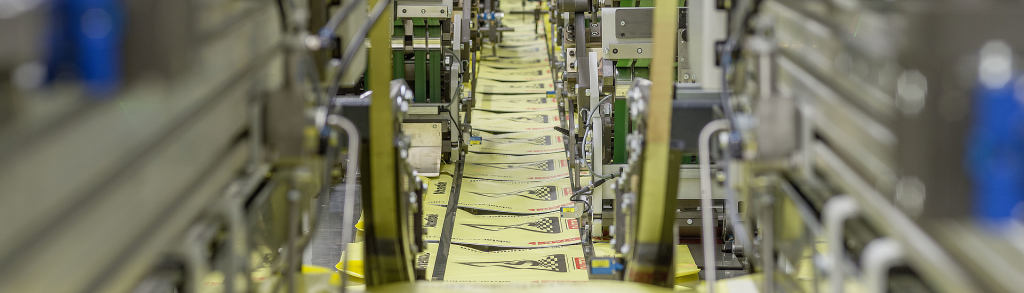
Modern lines for Paper Valve Woven Bags are not a single machine but a conversation of stations. Each contributes a layer of quality; each adds a potential point of failure if starved of data. The choreography typically reads: tape extrusion and drawing; circular or flat weaving; lamination; printing (often pre‑lamination on the paper ply); tube forming; block‑bottom construction; valve insertion; seam closing; in‑line inspections; palletization.
- Extrusion & drawing — tune draw ratio for tensile; document masterbatch levels for UV or antistatic needs.
- Weaving — watch picks per inch and broken‑tape counts; keep GSM within control limits.
- Lamination — confirm peel strength windows; note curl tendency; log web temperatures and tensions.
- Printing — flexo plates or offset blankets must maintain registration after lamination; verify rub resistance.
- Tube & bottom — square, strong block‑bottoms reduce pallet lean and improve cube utilization.
- Valve insertion — record insertion depth and sleeve geometry; validate heat or ultrasonic recipes.
- Seams & sift‑proofing — choose stitching, welding, or hybrid treatments; test for powder loss under vibration cycles.
- Inline QA — dimensions, COF, drop/burst sampling, print code readability, moisture moderation checks.
Automation increases both speed and consistency: camera vision on seams, gravimetric or beta gauges to monitor coat weights, and robotic palletizers to protect bottom corners. Yet automation is not a panacea; it requires a grammar of data, a loop of feedback, and a culture that reads the loop.
Performance portfolio: mechanical strength, line efficiency, product protection, and brand presence
When evaluators benchmark Paper Valve Woven Bags, they typically sequence the portfolio of performance into four families.
Drop and burst resistance grow from oriented tapes and panel geometry. Puncture and tear limits are shaped by weave density and corner reinforcements.
Valve‑based filling reduces airborne dust and accelerates packer cycles. Consistent mouth positioning welcomes automation.
Moisture moderation by laminations or liners; sift‑proof closures inhibit weight loss. UV‑ready options endure open‑yard storage.
High‑fidelity printing on kraft elevates logos and technical panels; serialization, QR codes, and tamper cues advance traceability.
Sustainability dialogues: material efficiency, recyclability pathways, and reuse
Sustainability is not a monologue; it is a dialogue among regions and infrastructures. In some markets, plastic recovery streams are robust, and all‑PP valve bags are favored for mono‑material recycling. In other markets, fiber recovery is stronger, and paper‑forward hybrids assist mill flows. Paper Valve Woven Bags inhabit the middle ground: they can be optimized toward plastic recovery (thinner paper, stronger PP) or toward fiber recovery (heavier paper, minimal poly), and they can incorporate clear labeling to guide sorters.
Applications by sector and why the format wins
Across building materials, chemical powders, agri‑feeds, and select food ingredients, the reasons recur. Paper Valve Woven Bags fill faster because entrained air has defined exits. They ship safer because woven tapes shoulder impacts. They present better because kraft carries ink with confidence. They stack tighter because block‑bottoms cube out a pallet with geometric discipline.
For readers seeking a related reference on the broader family of valve sacks, see the contextual resource on block‑bottom valve bag formats. It can help anchor terminology when drafting purchase specifications for Paper Valve Woven Bags across mixed portfolios.
Quality systems and material standards: turning vocabulary into verification
Standards provide vocabulary; quality systems provide behavior. Vocabulary without behavior is noise; behavior without vocabulary is chaos. For Paper Valve Woven Bags, common references include ISO/EN descriptions for sack dimensions and measurement methods; quality management systems that keep documents synchronized with the actual line conditions; and sector‑specific expectations around hygiene or hazardous environments.
- PP resin: verify MFI, moisture, and masterbatch levels; capture CoAs.
- Kraft paper: basis weight, moisture window, TEA/burst parameters, surface porosity.
- Adhesives/laminants: solid content, coat weight, bondability window, migration data if food contact applies.
- Inks and varnishes: rub resistance, color stability, bar‑code readability.
- Tape line: tape width, draw ratio, tensile and elongation; broken‑tape alarms.
- Weaving: count, fabric GSM, defect mapping via cameras.
- Lamination: peel strength, curl/flatness, registration to print, WVTR where specified.
- Bottom forming and valve: dimensional squareness, glueline integrity, sleeve depth, sealing recipe fidelity.
- Dimensions and mass; internal/external COF for machinability and pallet friction.
- Drop tests at specified orientations and temperatures.
- Burst and creep under top‑load over time at defined humidity.
- Sift‑proof checks using vibration/impact cycles; print and code verification.
Documentation is a living artifact: batch coding at the tape, fabric, lamination, and bagging stages; digital job tickets summarizing set‑points; and change‑control logic when swapping paper suppliers, tape GSM tiers, adhesive chemistries, or valve films. Without these artifacts, traceability frays; with them, continuous improvement has a map.
Systems thinking with sub‑problems: strength vs. weight, fill speed vs. sealing, moisture vs. recycling
One cannot optimize everything at once. Better to decompose. In practice, three sub‑problems dominate engineering meetings about Paper Valve Woven Bags.
Sub‑problem A — Strength vs. weight vs. cost
Heavier fabrics and thicker paper improve strength but cost more and raise pallet mass. The counter‑move is to tune draw ratios and weave density to harvest strength without excess grammage, then allocate reinforcement only where stress concentrates—corners and bottoms.
Solution motif: mid‑GSM fabric (for many applications 90–100 g/m²) plus a single paper ply around 70–80 g/m², with targeted corner patches or adjusted tie‑layer coat weights.
Sub‑problem B — Sift‑proofing vs. fill speed
Faster fills crave easier air escape; sift‑proofing demands tighter closures. Rather than compromise, separate the phenomena: use micro‑perfs and valve channels to vent air, then seal with thermal or ultrasonic energy to lock particles in.
Solution motif: controlled micro‑perf densities; tight stitch pitches covered by hot‑melt tapes where sewing remains; ultrasonic valve closure for powders below ~75 μm.
Sub‑problem C — Moisture protection vs. recycling pathways
Liners control moisture but complicate separation; paper‑heavy designs aid fiber recovery but concede barrier. The right answer is contextual—and labeled.
Solution motif: for outdoor minerals, laminate alone or thin PE film may suffice; for food powders, adopt food‑grade liners or coex with oxygen barrier; in either case, add clear sorting icons consistent with regional streams.
Keyword scaffolding: anchoring language for discoverability and shared understanding
To help procurement teams, QA, and operations discover and cross‑reference documents, maintain consistent yet varied language. Alongside Paper Valve Woven Bags, use phrases such as laminated PP valve sack, block‑bottom paper valve bag, kraft‑laminated woven polypropylene valve bag, PP valve cement bag, moisture‑moderating paper‑PP valve bag, ultrasonic‑sealed valve bag, heat‑sealable valve sleeve, sift‑proof block‑bottom sack, 25 kg valve bag, 50 kg valve sack, COF‑controlled paper valve bag, UV‑stabilized PP valve sack, and food‑grade liner valve sack. This is not ornament; it is a discovery strategy across search systems and filing habits.
Decision patterns that repeat: geometry, closure, standardization, and graphic durability
Patterns worth reusing accumulate with experience. Block‑bottom geometry nearly always pays back in pallet efficiency. Heat‑sealable or ultrasonic valves cut dust at close; the latter excels with ultrafines. Paper‑heavy vs. PP‑heavy is not a debate to win but a matrix to fill; standardize GSM tiers to simplify procurement and QA; and protect graphics with rub measurements and consistent varnish choices.
Square, stackable bottoms reduce lean; gussets and panels distribute stresses; corner wraps defend impact points.
Thermal impulse is swift and common; ultrasonic increases cleanliness; self‑closing sleeves work where product back‑pressure is predictable.
Limit your GSM tiers and approved valve geometries; lock sealing recipes; define acceptance windows; document change triggers.
Ink rub, scuff resistance, and color delta targets preserve legibility; serialization empowers traceability.
Specification workflow: a practical checklist turned into a living document
A useful specification does more than describe; it guides. Below is a workflow many teams use to tune Paper Valve Woven Bags for a given SKU.
- Define product properties: particle size distribution, bulk density, hygroscopicity, and electrostatic behavior.
- Select substrate tier: choose fabric GSM and paper weight against drop targets and pallet mass limits.
- Choose valve type: self‑closing for predictable back‑pressure, thermal for speed, ultrasonic for ultrafine dust control.
- Plan for de‑aeration: micro‑perfs and valve channels tuned to the packer’s pressure profile.
- Decide on barrier: laminate only, thin PE liner, or coex with oxygen barrier depending on moisture/oxygen sensitivity.
- Engineer sift‑proofing: welded seam tapes or hot‑melt coverings; inspect under vibration cycles.
- Set print & compliance: food‑contact inks if needed; region‑specific labeling; pallet safety marks.
- Establish QA sampling and acceptance: drop, burst, COF, peel, seal integrity, and code readability.
- Traceability: lot coding at each conversion stage; QR serialization; change‑control triggers.
- Transport plan: stack patterns, edge protection, stretch‑wrap specs, and environmental exposure assumptions.
Technical tables with color emphasis
Frequently asked technical questions in a conversational tone
Are these sacks ready for full outdoor storage? With UV‑stabilized tapes and weather‑tolerant inks, many profiles are. Add stretch‑wrap with UV inhibitors for long dwell times and test post‑exposure performance.
Can the liner be removed to simplify material flows? Sometimes yes. For minerals not sensitive to moisture, laminate alone may suffice. For hygroscopic goods or food contexts, a food‑grade liner or coex barrier remains prudent.
Which closure is fastest? Heat sealing is widely adopted and quick. Ultrasonic closure improves dust control on ultrafines with broadly comparable speeds on modern packers.
How to improve downstream recycling posture? Consider mono‑poly solutions when regional PP streams are strong, or paper‑forward designs where fiber facilities dominate—either way, label clearly.
What fails in transit? Corner splits from over‑tight pallets; humidity‑induced curl where bonds are marginal; valve weeping from under‑energized seals. Counter with corner reinforcement, bond‑coat adjustments, and validated sealing recipes.
- What are Paper Valve Woven Bags and why does the hybrid design prevail?
- Material taxonomy: how the layered stack turns requirements into performance
- Outer kraft paper: friction, legibility, and the psychology of a tactile surface
- The lamination handshake: adhesion, curl, and dimensional serenity
- Woven polypropylene: the structural backbone and the grammar of tapes
- Functional coatings and additives: from UV serenity to static control
- Valve geometry and sealing: the choreography of speed and cleanliness
- Production choreography: from resin to sack with checkpoints that matter
- Performance portfolio: mechanical strength, line efficiency, product protection, and brand presence
- Sustainability dialogues: material efficiency, recyclability pathways, and reuse
- Applications by sector and why the format wins
- Quality systems and material standards: turning vocabulary into verification
- Systems thinking with sub‑problems: strength vs. weight, fill speed vs. sealing, moisture vs. recycling
- Keyword scaffolding: anchoring language for discoverability and shared understanding
- Decision patterns that repeat: geometry, closure, standardization, and graphic durability
- Specification workflow: a practical checklist turned into a living document
- Technical tables with color emphasis
- Frequently asked technical questions in a conversational tone
- 1. Global Standards and PP Resin Selection: A Multinational Framework
- 2. Additive Engineering: Balancing Functionality and Compliance
- 3. Quality Control Ecosystem: From Polymer to Pallet
- 4. Case Study: EU-Compliant Bags for Cement Transport
- 5. FAQs: Bridging Technical and Commercial Concerns
- 6. Sustainability: Beyond Regulatory Checklists
“Why do global chemical giants like BASF and Dow prioritize paper valve woven bags for high-value powder transport?”
Ray Chen, CEO of VidePak, pauses during a factory tour: “The answer lies in three pillars: ISO-certified material selection, precision engineering with Starlinger machines, and additive formulations that outperform industry benchmarks by 40% in UV resistance. At VidePak, we don’t just meet standards—we redefine them.”
This declaration underscores VidePak’s leadership in producing paper valve woven bags, a sector projected to grow at 6.8% CAGR through 2030. With 526 employees and $80M annual revenue, VidePak leverages Austrian Starlinger technology and 30+ years of expertise to deliver solutions compliant with US, EU, and Asian regulatory frameworks.
1. Global Standards and PP Resin Selection: A Multinational Framework
Paper valve woven bags must align with divergent regional standards, necessitating tailored polypropylene (PP) formulations:
| Standard | Key Requirements | Recommended PP Grade | Key Properties |
|---|---|---|---|
| ASTM D6100 (US) | Tensile strength ≥45 N/cm², MFI 4–8 g/10min | Homopolymer PP H350 | High stiffness, FDA-compliant |
| EN 15507 (EU) | Recyclability ≥95%, OIT ≥30 min | Copolymer PP C560 | Antioxidant-rich, low VOC |
| JIS Z1707 (JP) | Moisture permeability ≤1.2 g/m²/day | Nucleated PP N720 | Enhanced crystallinity |
| GB/T 8947 (CN) | Elongation at break ≥25% | Impact PP IP30 | Flexibility for high-speed filling |
Case Study: For a Japanese client requiring JIS compliance, VidePaK used nucleated PP N720 to achieve 0.8 g/m²/day moisture permeability—33% below the standard—while maintaining tear resistance of 58 N/cm².
2. Additive Engineering: Balancing Functionality and Compliance
2.1 UV Stabilizers
Outdoor storage demands UV resistance. VidePak’s formulation blends:
- Hindered Amine Light Stabilizers (HALS): Tinuvin® 123 (0.5–1.0%) extends service life to 5+ years under 1500 kJ/m² UV exposure.
- Carbon Black Masterbatch: 2–3% loading reduces UV transmittance by 92% vs. untreated PP.
2.2 Antioxidants
Thermo-oxidative degradation during extrusion is mitigated via:
- Primary Antioxidants: Irganox® 1010 (500–800 ppm) inhibits chain scission at 220°C processing temps.
- Synergistic Systems: Phosphite co-stabilizers (e.g., Ultranox® 626) reduce carbonyl index by 60% after 1,000 hours at 90°C.
VidePak’s Proprietary Blend: Combines HALS/phosphite systems to achieve OIT (Oxidative Induction Time) of 42 minutes—exceeding EN 15507’s 30-minute threshold by 40%.
3. Quality Control Ecosystem: From Polymer to Pallet
VidePak’s vertically integrated system ensures traceability:
- Raw Material Testing
- MFI variance ≤±0.5 g/10min (ASTM D1238)
- Ash content ≤0.02% (ISO 3451)
- Extrusion Monitoring
- Starlinger STC-6 extruders maintain ±1°C melt temp control
- Online thickness gauges ensure 120±5μm film consistency
- Post-Production Validation
- Burst strength ≥35 kPa (ISO 2758)
- Seam strength ≥80% of base fabric (DIN 53857)
Defect Rate: 0.12% (industry average: 1.8%), validated by SGS audits.
4. Case Study: EU-Compliant Bags for Cement Transport
Client Profile: German cement producer requiring EN 15507 compliance for 25kg bags.
VidePak Solution:
- Resin: Copolymer PP C560 with 0.8% Irganox 1010
- Additives: 2% UV masterbatch + anti-static coating
- Production: Starlinger AD*Star loom @ 220m/min
Results:
| Parameter | Result | EN 15507 Requirement |
|---|---|---|
| Recyclability | 97% | ≥95% |
| Drop Test (1.8m) | 0/10 failures | ≤1 failure |
| UV Resistance | 7,200 hrs (Q-SUN) | 5,000 hrs |
5. FAQs: Bridging Technical and Commercial Concerns
Q1: How does VidePak ensure color consistency across batches?
A: Our 6-color CI flexo printers with ±0.15mm registration accuracy use Pantone-matched inks, tested per ISO 2836.
Q2: What’s the MOQ for custom additive formulations?
A: 20 metric tons, with 98% batch-to-batch MFI consistency guaranteed.
Q3: Are VidePak’s bags compatible with automated palletizers?
A: Yes—our anti-slip PE coatings enable 25-layer stacking without shift, as demonstrated in automated palletizing systems.
6. Sustainability: Beyond Regulatory Checklists
VidePak’s bags align with:
- Circular Economy: 100% recyclable via Starlinger recoSTAR systems
- Carbon Footprint: 1.8 kg CO2eq/bag (vs. 3.2 kg for PE laminated alternatives)
- Social Compliance: BRCGS AA+ certification for worker safety protocols
Conclusion
In the $42B global industrial packaging market, paper valve woven bags are becoming the linchpin of chemical logistics. VidePak’s fusion of Austrian engineering rigor, data-driven additive science, and multinational compliance expertise positions it as the partner of choice for brands navigating complex regulatory landscapes. As Ray Chen notes: “Our bags carry more than powder—they carry trust.”
This report integrates data from ISO Technical Committees, Journal of Applied Polymer Science, and VidePak’s proprietary quality logs. Performance claims are validated by Intertek and TÜV SÜD certifications.