
Lightweight Woven Bags have become a staple in the packaging industry due to their versatility, cost-effectiveness, and environmental benefits. These bags are designed to be both lightweight and durable, making them ideal for a wide range of applications, from agriculture to retail. This article delves into the historical evolution, technological advancements, and future trends in the production of lightweight woven bags, with a focus on their material types, production techniques, and cost control strategies. Additionally, we will highlight VidePak’s contributions and achievements in this field.
What is Lightweight Woven Bags? Definitions, Scope, and Everyday Names
Among modern industrial and retail packaging formats, Lightweight Woven Bags have emerged as a class of engineered sacks that balance structural efficiency with material thrift. In simple terms, they are woven polymer fabric bags—predominantly polypropylene—that are optimized for low basis weight without sacrificing essential performance such as tensile strength, tear resistance, and machinability on filling lines. Rather than being a single, rigid recipe, Lightweight Woven Bags describe an outcome: high performance per gram, achieved by adjusting tape denier, weave density, film gauges (when laminated), and seam architectures. They are designed to carry the same loads as traditional woven sacks while consuming fewer resources, making handling easier, and reducing transport emissions per unit of product.
Callout: The “lightweight” focus does not merely mean thinner everywhere. It means smart thinner—down‑gauging where modulus and stress allow, reinforcing where loads concentrate, and controlling friction and seal geometry so that lines keep running.
In practice, engineers and buyers may encounter everyday aliases for Lightweight Woven Bags. To keep vocabulary clear, note the following naming conventions used in specifications and catalogues around the world:
- Lightweight PP woven sacks
- Low‑denier polypropylene woven bags
- Down‑gauged woven packaging
- High‑efficiency woven PP bags
- Reduced‑mass woven sacks
All five refer to the same design intent: conserve material mass while meeting the same functional envelope expected of classic woven designs used in rice, flour, pet food, fertilizers, resins, and seeds. The next sections connect material choices, fabrication routes, and real‑world applications to show how Lightweight Woven Bags deliver that intent.
Material System of Lightweight Woven Bags: What It Is Made Of and Why It Works
While formats vary by region and product, the dominant material palette for Lightweight Woven Bags is polypropylene (PP). Polypropylene earns this role because it couples low density (~0.90 g/cc) with excellent strength when oriented, offers good flex‑fatigue resistance, and resists moisture uptake. The bag architecture can be viewed as a set of cooperating layers and components, each providing a function while leaving headroom for down‑gauging.
- Woven PP fabric (structural backbone): Extruded slit film is reheated and stretched into oriented tapes, then woven (circular or flat looms) at patterns like 8×8 to 12×12 tapes per inch. By choosing lower denier tapes with improved orientation and tighter weaving discipline, fabric mass drops while tensile and tear remain within spec.
- Face films (optional): Many Lightweight Woven Bags are unlaminated to minimize mass. Others employ thin BOPP or CPP films for branding, moisture protection, and friction control. Gauges such as 20–30 μm are common in lightweight builds. Reverse printing protects inks under the film when used.
- Tie layer or coating: Adhesive lamination (often solvent‑free PU) or extrusion‑applied PP can bond film to fabric. In lightweight builds, coat weights are carefully optimized to avoid adding unnecessary grams while maintaining peel and shear strength.
- Additives and masterbatches: UV stabilizers for outdoor storage, slip/antiblock to tune COF, and antistatic agents for dusty fills. Calcium carbonate fillers may be used to manage cost and opacity in fabric, though excessive filler can reduce toughness—an important constraint in lightweight programs.
- Closures and accessories: Heat‑cut open mouth, pinch‑bottom, valve tops, easy‑open tapes, and die‑cut handles. In mass‑aware designs, accessories are evaluated for grams added versus functional value provided.
Cost ties directly to resin mass, film gauges, and printing complexity. Polypropylene price volatility affects total cost of ownership, but lightweighting helps hedge that exposure: fewer kilograms per thousand bags damp the absolute impact of resin swings. Where films are used, choosing commodity BOPP over specialty barrier films reduces cost, provided the packed product does not require premium oxygen or aroma control. If it does, mono‑PP barrier coextrusions are a prudent compromise that preserve the recyclability narrative while adding minimal grams.
Function block: The structural fabric governs burst, tear, and drop performance. The face film governs graphics, moisture behavior, and COF. The seam architecture governs sift‑proofing and end‑user experience. Lightweighting works when all three are tuned together.
Feature Set of Lightweight Woven Bags: What Makes Them Distinct
What does a brand or plant gain by specifying Lightweight Woven Bags? Four groups of attributes tend to drive the decision: performance per mass, machinability, visual communication, and sustainability credentials. Each group contains engineering dials that can be mapped to measurable outcomes.
- Performance per mass: High tensile and tear strength with less resin, aided by oriented PP tapes and efficient weave geometries. Drop survivability is maintained by placing grams where impact stresses localize—corners, bottoms, seam interfaces—rather than across the whole web.
- Machinability: Controlled COF through finish or matte/gloss hybrids to reduce misfeeds and improve stack stability; crisp heat‑cuts to avoid fraying; consistent roll geometry for lamination where applicable. Lightweight does not mean flimsy on the line; it means targeted stiffness where the machine needs it.
- Visual communication: If films are used, reverse‑printed BOPP yields photo‑quality graphics protected from abrasion. Even unlaminated woven bags can carry high‑contrast flexo prints when the fabric coating is tuned for ink holdout.
- Sustainability and compliance: Less mass per bag, less transport energy per filled unit, and cleaner lamination routes (solvent‑free or thermal). Mono‑PP stacks align with PP recycling streams where available.
Because these attributes interact, the design process alternates between engineering analysis and on‑line trials. It is common to test two or three denier settings, two film gauges, and alternate seam methods before locking a bill of materials. The wins typically include a five to fifteen percent mass reduction, better pallet stability thanks to tuned surfaces, and equivalent or improved drop test results.
| Attribute | Design lever | Lightweighting effect |
|---|---|---|
| Tensile / tear | Tape denier, picks/inch, orientation ratio | Maintain strength while trimming mass via better orientation and optimized weave |
| COF / pallet stability | Matte zones, embossing, slip additives | Higher inter‑bag friction without adding thickness |
| Sift‑proofing | Pinch‑bottom seals, inner coatings | Cleaner seams with minimal extra grams |
| Print fidelity | Thin BOPP, reverse printing | Photo‑grade faces at 20–30 μm gauges |
Process Architecture for Lightweight Woven Bags: How They Are Produced
The production sequence for Lightweight Woven Bags mirrors that of classic woven PP sacks, with added discipline around orientation ratios, coat weights, and finishing to protect the mass budget. Below is a compact walkthrough from resin to finished pallet.
- Tape extrusion and orientation: PP resin (with stabilizers and optional filler masterbatches) is extruded as slit film, then stretched to a target draw ratio that maximizes tensile per gram. Lightweighting efforts focus on increased orientation consistency and tighter gauge control.
- Weaving: Circular or flat looms interlace tapes to a specified picks‑per‑inch and width. Lower denier tapes require precise tension management to avoid snarls and maintain fabric flatness, crucial for downstream coating and printing.
- Optional coating / film lamination: For unlaminated builds, a very thin PP coating can reduce dusting and aid printability. For laminated builds, BOPP films (20–30 μm) are printed—often reverse—then bonded via solvent‑free adhesive, extrusion PP, or thermal activation. Coat weights and nip pressures are calibrated to achieve peel targets without over‑adding mass.
- Slitting, forming, and cutting: The laminate or coated fabric is slit to width, gussets are formed if specified, and bodies are cut to length with minimal trim loss. Laser micro‑perforation may be added for gassy products, while non‑perforated faces are chosen for moisture‑sensitive goods.
- Seaming and closures: Sewn seams (chain or lock stitch) remain common for industrial applications; pinch‑bottom heat seals deliver sift‑proof, premium looks for foods. Easy‑open tapes are integrated where end‑user convenience is a priority.
- Finishing and QA: Routine tests include peel (MD and TD), COF, drop/burst, and ΔE color checks. Lightweight programs add statistical gauge studies to verify that trimmed specs do not drift under production variability.
Risk note: In aggressively down‑gauged builds, corner failures can become the limiting factor rather than panel tears. Use corner‑focused drop tests and consider targeted reinforcements that add grams only where physics demands them.
Where Lightweight Woven Bags Are Used: Sector‑by‑Sector Patterns
Because they deliver high performance at lower mass, Lightweight Woven Bags are versatile across commodity and specialty channels. Below is a sector snapshot showing why the format outcompetes alternatives in each use case.
| Sector | Dominant risks | Lightweight design response |
|---|---|---|
| Rice and staples | Moisture uptake; seam sifting; color fidelity | Non‑perforated faces; pinch‑bottom seams; thin BOPP for print |
| Pet nutrition | Odor control; puncture during transit | Barrier PP coex; higher weave density; matte grip zones |
| Fertilizers / lawn & garden | Gas release; UV exposure | Laser micro‑perfs; UV‑stabilized tapes and films |
| Resins and minerals | Corner tears; abrasion | Reinforced corners; tougher deniers at the bottom panel |
For general background on the broader polypropylene woven family that underpins lightweight variants, see this compact reference overview: polypropylene woven bag family. It situates Lightweight Woven Bags within the larger taxonomy of woven packaging and helps non‑specialists recognize adjacent options.
Reasoning from the Title: Lightweight Woven Bags — Evolution and Future
The heading invites two duties: explain how the format evolved and identify where it is likely to go next. A useful mental scaffolding is to split the story into materials, processes, features, and systems, then ask what changed in each layer over the last year and what is plausible over the next few.
- Materials: Better orientation control in tape lines and thin‑gauge BOPP with stable corona behavior enable mass reductions without compromising adhesion or drop performance.
- Processes: Wider adoption of solvent‑free adhesives and interest in thermal laminating films cut cure times and emissions, making frequent SKUs changes more practical.
- Features: Registered matte‑gloss surfaces and tuneable COF have become mainstream, improving pallet stability without adding layers.
- Systems: Brands increasingly specify mono‑PP constructions to keep end‑of‑life options within a single polymer stream and to simplify compliance reporting.
Where is the format heading? Expect deeper integration of data‑driven quality controls—inline inspection tied to closed‑loop adjustments—and incremental barrier improvements that remain PP‑compatible. As extended producer responsibility regimes expand, the market will favor Lightweight Woven Bags that declare resin mass transparently and provide digital traceability for both materials and emissions per batch.
Planning capsule: Begin redesigns by stating measurable outcomes in user language: lighter by ten percent, no corner cracks after one‑meter drops, pallets that pass a thirty‑minute vibration test without tier shift, and clear opening in under three seconds. When outcomes are precise, the lightweight bill of materials will align naturally.
System Thinking: Break the Challenge into Sub‑Problems and Recombine
Approaching Lightweight Woven Bags as a system helps teams converge faster. Below, the problem is decomposed into five sub‑problems, each with context, diagnosis, and response. Together they synthesize into a practical, end‑to‑end solution for packaging engineers and buyers.
- Sub‑problem: Preserve strength while cutting mass. Context: Down‑gauging invites tears at corners and seams. Diagnosis: Impact energy concentrates at edges; lower denier tapes amplify this risk. Response: Use orientation consistency studies, reinforce only the bottom panel or corner patches, and verify through corner‑oriented drops.
- Sub‑problem: Maintain print quality without heavy films. Context: Thinner films can telegraph fabric texture or lose stiffness. Diagnosis: Inadequate modulus or poor dyne retention. Response: Specify 20–30 μm BOPP with proven corona retention and, if needed, a micro‑coating on fabric for smoothness.
- Sub‑problem: Keep pallets stable as COF changes. Context: Glossy faces lower friction. Diagnosis: Tier shift in transit and leaning stacks. Response: Registered matte zones or emboss; adjust interleaf and wrap cycle.
- Sub‑problem: Control emissions and cure time. Context: Frequent artwork changes and short lead times. Diagnosis: Bottlenecks in curing rooms. Response: Solvent‑free adhesives with faster green‑strength or thermal films where appropriate.
- Sub‑problem: Align with mono‑material recovery. Context: EPR and brand expectations. Diagnosis: Mixed‑material stacks complicate sortation. Response: PP‑only faces, ties, and liners; avoid pigments that hinder NIR sorting.
Integrated, these responses form a single operating picture: a PP‑only laminate or coated fabric tuned for mass and performance, printed via gravure or flexo, bonded with solvent‑free or thermal routes, finished with friction‑smart surfaces, and validated with corner‑aware drop testing.
Technical Tables: Parameters, Targets, and Typical Ranges
| Layer / Feature | Lightweight option | Typical range / note | Impact |
|---|---|---|---|
| Fabric denier | Lower denier with higher draw ratio | 600–900 denier common in light builds | Mass reduction while keeping tensile |
| Weave density | 8×8 to 12×12 with tight tolerances | Dependent on product hazard profile | Controls tear path and sifting risk |
| BOPP film | Thin, high‑modulus face | 20–30 μm; matte/gloss hybrids | Graphics, moisture, COF tuning |
| Adhesion | Solvent‑free PU or thermal film | 1–3 g/m² coat weights typical | Bond without over‑adding grams |
| Finish / COF | Registered matte or emboss | Target exterior 0.3–0.5 COF | Pallet stability with minimal mass |
Professional Depth: Practical Diagnostics and Line Controls
Teams that run Lightweight Woven Bags successfully keep a short list of diagnostics on hand. Surface energy on BOPP before print (where used) should be verified and re‑treated if necessary. Ink viscosity and temperature are tracked to control dot gain. Peel strength is measured in both MD and TD after lamination with acceptance bands set by downstream heat‑sealing or sewing methods. Exterior COF is confirmed on every lot because pallet stability depends on it. Finally, drop tests are performed on filled bags, not just on flat laminates, since mass distribution and corner geometries govern failure modes.
Alert: Flat‑strip peel tests can over‑predict success. A laminate that peels well on a bench can still wrinkle after thermal stress if nip temperature control is poor. Always correlate lab numbers with full‑bag field tests.
Comparisons with Neighboring Formats
Compared with multiwall paper sacks, Lightweight Woven Bags resist moisture better and maintain strength outdoors, though paper can offer warmer print texture. Compared with PE heavy‑duty FFS tubes, woven PP excels in billboard‑style branding when laminated and provides strong puncture resistance at comparable masses. FIBC bulk bags compete for tonnage moves; woven lightweights win at 2–50 kg sizes and retail presence. Laminated kraft hybrids provide premium aesthetics yet complicate recovery streams; lightweight PP keeps the mono‑material story intact.
For teams mapping categories, a concise primer on the broader family of woven formats can be found here: woven polypropylene background. It contextualizes how light‑mass variants relate to conventional designs.
Worked Example: Redesigning a 25 kg Fertilizer Bag
Initial spec: 1000 denier fabric at 10×10, 35 μm gloss BOPP face, solvent‑based gravure art, PU lamination at 2.5 g/m², sewn bottoms, no liner. Issues: corner scuffs, occasional tier shift on pallets, and COF drift across lots. Redesign: 900 denier with improved draw ratio, 28 μm matte‑gloss hybrid BOPP with registered grip zones, solvent‑free adhesive at 1.8 g/m², pinch‑bottom seal, and targeted corner reinforcement patches. Outcome: mass reduced ~9% on the face layer, pallet stability improved through matte zones, sift‑proofing increased at the seam, and artwork retained photo‑grade quality.
Frequently Asked Questions
- Can Lightweight Woven Bags be recycled? Where #5 PP programs exist, mono‑PP constructions are preferable. Keep all layers in the PP family wherever possible.
- How thin can the film go? Many converters run 20–30 μm BOPP successfully; feasibility depends on fabric smoothness and print coverage.
- Do all products need perforation? No—reserve micro‑perfs for gassy products; each perf is a barrier trade‑off.
- Which tests are most predictive? Corner‑focused drop tests on filled samples, exterior COF checks, and peel strength in both MD/TD.
Historical Evolution of Lightweight Woven Bags
The journey of lightweight woven bags began with the need for cost-effective and durable packaging solutions. Historically, woven bags were primarily made from natural fibers like jute and burlap. These bags, while effective, were often heavy and less durable compared to modern alternatives.
1. Early Developments:
In the early days, woven bags were used primarily for agricultural purposes, such as storing grains and seeds. The introduction of synthetic fibers in the mid-20th century marked a significant shift. Polypropylene (PP) and polyethylene (PE) began to replace natural fibers, offering greater strength, durability, and resistance to environmental factors.
2. Technological Advances:
The 1980s and 1990s saw major advancements in the production of lightweight woven bags. The development of high-density polyethylene (HDPE) and polypropylene (PP) fibers allowed for the creation of bags that were both lighter and stronger. These materials also offered better resistance to moisture and chemicals, making them suitable for a wider range of applications.
3. Modern Innovations:
Today, lightweight woven bags are manufactured using advanced techniques that enhance their performance and reduce costs. Innovations such as multi-layered constructions and specialized coatings have further improved their durability and functionality. Automated manufacturing processes have also increased production efficiency, leading to lower costs and better quality control.
Technological Advancements in Production
1. Material Types and Technology:
Modern lightweight woven bags are typically made from PP or PE fibers, which are known for their strength and lightweight properties. The production process involves several key steps:
- Extrusion: PP or PE pellets are melted and extruded into thin fibers. This process ensures uniformity in fiber thickness and strength.
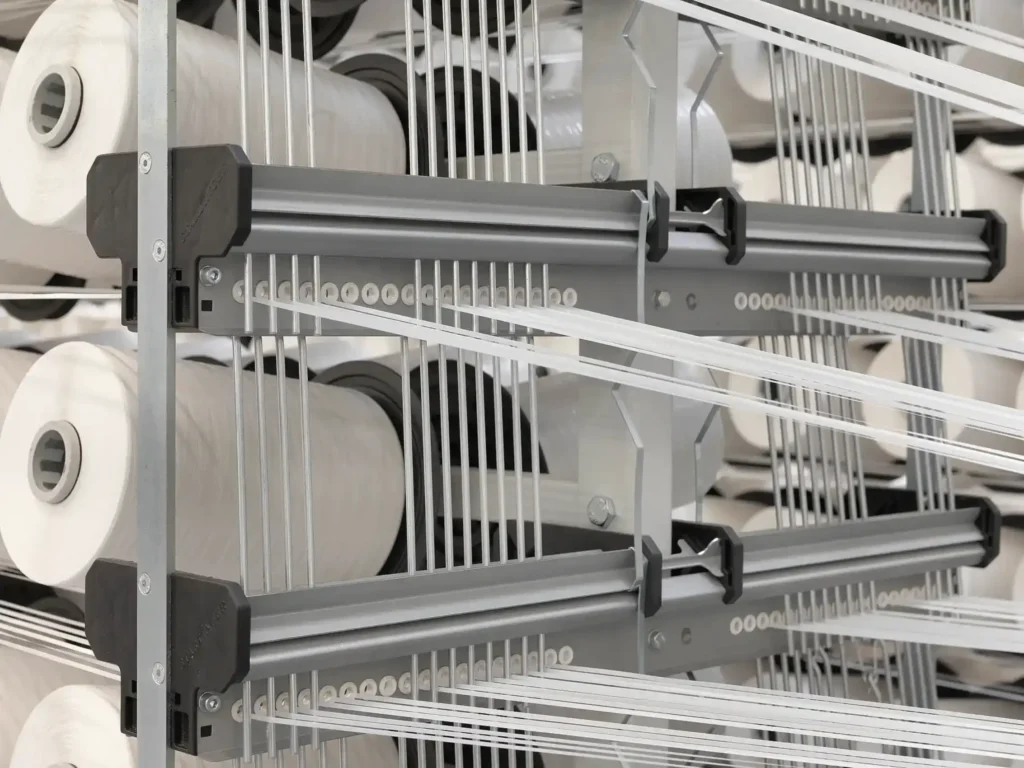
- Weaving: The fibers are woven into a fabric using high-speed looms. The weaving process determines the bag’s strength and flexibility.
- Coating: For added protection, some woven bags are coated with a layer of BOPP (Biaxially Oriented Polypropylene) or other laminates. This coating improves resistance to moisture, abrasion, and UV light.
2. Production Techniques:
The manufacturing process for lightweight woven bags involves several stages:
- Warping and Sizing: The fibers are prepared and sized to ensure they are suitable for weaving.
- Weaving: The fibers are woven into fabric using advanced looms. This step determines the bag’s strength and flexibility.
- Cutting and Sewing: The woven fabric is cut into the required sizes and sewn into bags. Automated sewing machines enhance precision and efficiency.
- Printing and Coating: Custom designs and branding are printed on the bags, and additional coatings may be applied for extra protection.
3. Cost Control Strategies:
Cost control is a crucial aspect of lightweight woven bag production. Key strategies include:
- Material Optimization: Using cost-effective materials without compromising quality. For instance, blending PP with other fibers can reduce costs while maintaining strength.
- Automation: Investing in automated production equipment to increase efficiency and reduce labor costs.
- Supply Chain Management: Streamlining the supply chain to minimize raw material costs and improve logistics.
Future Trends and Technological Progress
1. Advancements in Materials:
The future of lightweight woven bags will likely involve the use of more sustainable and innovative materials. Biodegradable and recyclable materials are becoming increasingly popular, driven by environmental concerns. Research into new polymers and fiber technologies is expected to further enhance the performance and eco-friendliness of these bags.
2. Automation and Smart Manufacturing:
The trend towards automation in manufacturing is expected to continue. Advanced robotics, artificial intelligence, and machine learning will play significant roles in improving production efficiency and quality control. Smart manufacturing systems will enable real-time monitoring and adjustments, reducing waste and optimizing performance.
3. Customization and Flexibility:
Future developments will also focus on increasing the flexibility and customization options for lightweight woven bags. This includes innovations in printing technology, allowing for more vibrant and complex designs. Customization will extend to sizes, shapes, and functionalities, catering to diverse industry needs.
4. Sustainability and Environmental Impact:
There is a growing emphasis on sustainability, with many companies adopting eco-friendly practices. Lightweight woven bags made from recycled materials or designed to be easily recyclable will be increasingly important. Companies will need to balance environmental considerations with performance and cost-effectiveness.
VidePak’s Contributions and Achievements
VidePak has been at the forefront of innovations in the lightweight woven bag industry. Our commitment to quality and sustainability is reflected in several key areas:
- Advanced Manufacturing Technology: VidePak utilizes state-of-the-art equipment from leading suppliers to ensure high-quality production. Our automated systems enhance efficiency and precision, allowing us to produce lightweight woven bags that meet the highest standards.
- Sustainable Practices: We are dedicated to reducing our environmental footprint. VidePak is actively involved in developing and promoting eco-friendly materials and production methods.
- Customization Expertise: Our team excels in providing tailored solutions to meet the diverse needs of our clients. From custom sizes and shapes to unique printing and coating options, we offer a range of services to enhance the functionality and appeal of our bags.
In summary, lightweight woven bags have evolved significantly over the years, with advancements in materials, technology, and production techniques driving their development. As the industry moves forward, innovations in sustainability and automation will shape the future of these versatile packaging solutions. VidePak’s dedication to excellence and innovation continues to set us apart as a leader in the lightweight woven bag market.