
In the world of packaging, durability, strength, and aesthetics play vital roles in ensuring that products are securely transported, stored, and presented. One of the most innovative solutions available today is Laminated Woven Bags. These bags, which combine the advantages of woven polypropylene (PP) with advanced lamination techniques, offer unparalleled performance across a wide range of industries. In this article, we’ll explore the science behind Laminated Woven Bags, focusing on the multi-layered co-extrusion blown film process and how this technology, coupled with high-precision machinery, makes these bags an essential part of modern packaging.
What are Laminated Woven Bags?
Laminated Woven Bags are engineered packaging sacks that join a woven polymer substrate—predominantly polypropylene (PP)—with a protective, printable laminate film. The woven substrate provides the structural skeleton for tensile load, drop resistance, and flex fatigue; the laminate contributes moisture moderation, scuff resistance, and high-fidelity graphics. This synergy enables fast filling on industrial lines, stable palletization through distribution, and elevated shelf presence in retail channels. Because Laminated Woven Bags sit at the confluence of materials science, converting technology, and brand communication, they are simultaneously a logistics component, a product-protection shell, and a marketing surface.
Also known as (aliases):
- Laminated PP Woven Sacks
- BOPP‑Laminated Woven Bags
- Coated Woven Polypropylene Bags
- Block‑Bottom Laminated Woven Sacks
- Printed Laminated Woven Packaging
- Laminated Poly Woven Valve Bags
Why choose this format rather than a plain fabric sack or a paper valve bag? The answer lives in competing constraints. Packs must be strong yet light, protective yet breathable enough for rapid fill, graphic‑rich yet durable against abrasion, economical yet consistent on high‑speed machinery. Laminated Woven Bags reconcile these tensions by distributing roles across layers: the woven matrix bears load; the film guards and communicates; the closure system interfaces with the line.
The Materials of Laminated Woven Bags
Every property a buyer cares about—tear strength, drop survival, moisture behavior, print gloss, seal reliability—arises from specific materials and their interfaces. To see why Laminated Woven Bags perform as they do, we walk layer by layer and explain the physics, the economics, and the placement of each component.
1) Woven Polypropylene Fabric
What it is. Polypropylene resin is extruded into tapes and drawn to align polymer chains for high tenacity, then woven—often on circular looms—into a fabric with typical pick densities around 10×10 to 14×14 per inch.
- Properties. High tensile‑to‑weight ratio, resistance to tear propagation, low water absorption, good fatigue behavior.
- Cost. Dominated by resin price, denier, basis weight, and loom throughput; globally competitive per unit strength.
- Where used. Forms the bag body—front, back, gussets, and bottom plies—and anchors sewing or ultrasonic seams.
2) BOPP (or Similar) Laminate Film
What it is. Biaxially oriented polypropylene film, commonly 15–35 μm, surface‑treated (corona/flame) for adhesion. Reverse printing places inks behind the film for abrasion protection and color longevity.
- Properties. Moisture moderation (lower WVTR vs. bare fabric), gloss or matte optics, scuff resistance, dimensional stability.
- Cost. Thickness, color count (often 6–10 stations), varnishes, and special effects drive price; reverse print can lower reject rates and lifetime cost.
- Where used. Laminated to exterior panels—and sometimes gussets and bottoms—for 360° graphics and protection.
3) Tie Layers & Adhesives
What they are. Extrusion‑coated PP/PE (≈15–30 g/m²) or solventless PU adhesives that couple film to fabric. The interface must pass peel and shear tests under humidity and temperature cycles.
- Properties. Bond integrity, heat tolerance for valve heat‑seals, resistance to cockling.
- Cost. Coat weight and scrap control are primary levers; extrusion lamination supports mono‑polymer designs.
- Where used. Invisible interlayer between BOPP and woven PP, occasionally also used on the interior for sealability.
4) Optional Inner Liner
What it is. PE or PP/PE blend liners, 20–50 μm, loose or tube‑in‑bag. Adds barrier for hygroscopic commodities, aromas, or grease.
- Properties. Hermetic potential when heat‑sealed; aroma control in feed and additives.
- Cost. Additional material and insertion step; used selectively by product sensitivity.
- Where used. Free inside the bag or tacked near the mouth to prevent collapse at fill.
5) Closures & Valve Components
What they are. Sewn or heat‑sealed tops for open bags; internal/external sleeves for valve versions. Sleeves may self‑close via head pressure or be heat‑sealed for dust control.
- Properties. Packer compatibility (air/impeller/screw), dust hygiene, weight accuracy at cut‑off.
- Cost. Precision conversion step that enables high line speeds and cleaner warehouses.
What are the Features of Laminated Woven Bags?
Feature lists can read like catalogs; here, each attribute is linked to an engineering reason and a commercial consequence so the value chain is transparent.
- Strength‑to‑weight efficiency. The oriented tape grid provides high specific strength, allowing downgauging without surrendering drop survival.
- Moisture management. Laminates reduce water vapor ingress; micro‑perfs vent trapped air for high‑speed filling with an acceptable barrier trade‑off.
- High‑impact graphics. Reverse‑printed film protects inks against conveyor abrasion, preserving colorimetry and barcodes for traceability.
- Machine compatibility. Valve formats stabilize flow and cut‑off; open‑top designs sew or heat‑seal cleanly with predictable feed into stitchers.
- Stackability. Block‑bottom creases and antislip stripes help pallets lock, reducing stretch‑wrap consumption and transit damage.
- Customization latitude. Handles, carrier holes, antistatic and UV packages, degassing patches, and registered windows tailor the pack to product and climate.
- Lifecycle economics. Reduced breakage and scuff‑related returns often offset lamination premium—total delivered cost, not unit price, wins.
| Feature | Engineering Basis | Commercial Effect |
|---|---|---|
| Drop & tear performance | Fabric BW, denier, pick density | Fewer ruptures & claims |
| Graphics durability | Reverse‑printed BOPP | Shelf readability & brand recall |
| Moisture moderation | Film thickness, liner option | Less caking & spoilage |
| Fill speed & dust | Valve geometry, perf map | Cleaner plants, accurate weights |
What is the Production Process of Laminated Woven Bags?
Production is a choreography of polymer processing, printing, lamination, and conversion. Each station has a failure mode; good manufacturers engineer these out in advance.
- Tape extrusion & draw. Control denier and draw ratio to achieve target tenacity; filter resin to reduce gels.
- Weaving. Set pick density and basis weight; maintain looms to avoid broken tapes and fabric defects.
- Film printing. Reverse rotogravure with proofed ΔE; closed‑loop register minimizes mis‑alignment.
- Lamination. Extrusion coat or solventless PU; verify peel strength and planarity; avoid cockling.
- Tube forming & cutting. Apply clean gussets; ensure length control for package consistency.
- Bottom formation. Paste or heat‑seal block bottoms for sift‑proof corners and upright stance.
- Valve or top prep. Fabricate sleeves precisely or prepare hems for sewing/heat‑sealing; map micro‑perfs for venting.
- Liner insertion (optional). Place and tack liners to prevent collapse and ensure smooth fill.
- Quality checks & palletization. Drop, burst, print adhesion, peel, dimensional audits, AQL sampling—then stable pallet unitization.
What is the Application of Laminated Woven Bags?
The portfolio spans heavy industrial powders to premium consumer staples. The same language—strength, barrier, machinability—applies, but tuning differs.
- Cement & dry mortar. Robust fabrics (≥70 g/m²), valve sleeves for dense powders, perf maps balancing air release and moisture control.
- Fertilizers & soil amendments. Moisture sensitivity drives film choice and liners; graphics must survive yard handling.
- Animal feed & pet food. Food‑contact qualified inks/adhesives; degassing patches to prevent puffing; strong shelf branding.
- Industrial minerals & chemicals. Abrasion resistance and dust hygiene matter; antistatic options reduce nuisance discharge.
- Staple foods & seeds. Traceability codes, controlled gloss for readability, optional handles for consumer convenience.
- Charcoal & pellet fuels. High tear resistance; clean, repeatable perforation behavior for air exchange.
“Laminated Woven Bags: A Game‑Changer in Packaging Technology” — From Claim to Criteria
Is the phrase merely rhetoric, or does it encode testable criteria? We translate the claim into measurable thresholds. A packaging format is “game‑changing” if it achieves: (a) a lower total delivered cost at equal or better protection; (b) a higher shelf conversion rate via superior graphics durability; (c) an increase in line throughput or a reduction in dust‑related stoppages; and (d) improved recyclability potential through mono‑polymer design. Laminated Woven Bags can meet all four when properly specified. If any are missed, the claim should be revised—not abandoned, but sharpened.
| Criterion | Mechanism in the Bag | Practical Signal |
|---|---|---|
| Lower delivered cost | Downgauged fabric, fewer breakages, fewer scuff rejects | Claims down; return rates down |
| Higher shelf conversion | Reverse‑print clarity; matte/gloss cues | Better read rates, QR scans, brand recall |
| Throughput & hygiene | Valve geometry, perf mapping | Stable packer speed; cleaner housekeeping |
| Recyclability pathway | PP fabric + BOPP film mono‑polymer system | Better alignment with PP streams |
Systems Thinking: Nodes, Flows, Feedback
To systematize decisions, we model five nodes—Performance, Cost, Market, Compliance, Sustainability—and trace their couplings. Improve Performance (stronger fabric, smarter valves) and returns fall, which lowers Cost; with budget relief, better graphics (Market) become feasible; laminate preserves labels (Compliance); mono‑PP design (Sustainability) fits EPR reporting. The loops reinforce. Conversely, remove any node—skimp on lamination, for instance—and the loops destabilize: scuff rises, labels fail, returns increase, and apparent savings evaporate.
Parameter Playbook for Spec Writers
Below are compact tables used by engineers and buyers when drafting specifications for Laminated Woven Bags. Numbers are indicative ranges, intentionally rounded for clarity.
| Structural & Film Parameters | Typical Range | Why It Matters |
|---|---|---|
| Fabric basis weight | 55–100 g/m² | Tensile & drop vs. resin mass |
| Tape denier | 600–1200 | Stiffness/hand vs. loom efficiency |
| Pick density | 10×10 to 14×14 | Tear propagation control |
| Film thickness | 15–35 μm (18–28 common) | Barrier, gloss, scuff, cost |
| Lamination method | Extrusion or solventless PU | Bond reliability; mono‑polymer design |
| Conversion & Closure Options | Options | Functional Levers |
|---|---|---|
| Geometry | Side‑gusseted; block‑bottom | Stackability; billboard face |
| Top closure | Sewn; heat‑sealed | Speed vs. hermeticity |
| Valve type | Internal/external; heat‑sealable | Dust control; cut‑off accuracy |
| Micro‑perforation | Zoned patterns | Vent trapped air during fill |
| Liner | Loose or tube‑in‑bag (PE 20–50 μm) | Moisture/odor barrier |
| Quality & Test Protocols | Method | Outcome |
|---|---|---|
| Drop test | Filled bag, defined height & cycles | No rupture; acceptable corner wear |
| Burst/creep | Pressurization/long hold | Stacking safety margin |
| Peel strength | Laminate bond peel | Above spec; no delamination |
| Print adhesion | Tape pull/solvent rub | No ink lift (protected) |
| WVTR | Film/structure test | Aligned to storage climate |
Risk Management & Quality Planning
Risk never disappears; it is simply moved or mitigated. For Laminated Woven Bags, the risk map is predictable and therefore manageable when specified up front.
- Incoming materials. Verify resin MFI; confirm film surface energy; document cylinder proof approvals.
- Process controls. Gauge coat weight; track ΔE and register; monitor peel via SPC; inspect fabric defects online.
- Final QA. Dimensional audits, pallet stability checks, transport simulation where routes are severe.
- Field feedback. Categorize failures (seam vs. corner vs. scuff), correlate with structure, and adjust specs with evidence.
Language, Rhetoric, and the Human Side
Is a bag a container, a billboard, or a safety document? Yes. Should it be strong yet light, protective yet breathable, glossy yet legible, fast yet accurate? Yes again. Parallelism is not a stylistic flourish here; it is a design demand. Antithesis helps teams see boundaries—where performance meets cost, where beauty meets function. Repetition, used well, turns specifications into shared memory: the values for basis weight, film gauge, peel minima, and ΔE limits become part of the plant’s everyday vocabulary.
From Specification to Pallet: A Compact Working Plan
- Define product, climate, and channel (cement vs. feed; rainy vs. arid; retail vs. industrial).
- Choose geometry (block‑bottom vs. side‑gusset) and nominal content (25 kg, 40 kg, 50 kg, or 50 lb).
- Set structure (e.g., 70 g/m² fabric + 25 μm BOPP; extrusion laminate ≈ 20 g/m²).
- Map micro‑perfs; define valve sleeve dimensions for the packer.
- Approve graphics with ΔE limits; decide gloss/matte strategy by channel lighting.
- Validate via trials: speed, dust, cut‑off accuracy, pallet stability, humidity aging.
- Lock the quality plan: peel, drop/burst, print adhesion, WVTR targets; AQL sampling.
Keyword and Long‑Tail Phrasing (Naturally Interleaved)
Primary term: Laminated Woven Bags. Supporting phrases used throughout include laminated PP woven sacks, BOPP‑laminated woven bags, coated woven polypropylene bags, block‑bottom laminated woven sacks, printed laminated woven packaging, laminated poly woven valve bags, moisture‑resistant woven PP bags, reverse‑printed BOPP PP sacks, and extrusion‑laminated woven sacks. The intent is clarity, not density; diversity of phrasing mirrors how different buyers and engineers search for the same solution.
What Are Laminated Woven Bags?
Laminated Woven Bags are a type of packaging material made by weaving polypropylene fibers into a fabric and then adding a lamination layer on top. This lamination typically involves applying BOPP (biaxially oriented polypropylene) or other plastic films to improve the bag’s durability, water resistance, and visual appeal.
The core of Laminated Woven Bags lies in their construction. The woven polypropylene provides excellent strength and tear resistance, while the laminated surface gives the bag additional protection against moisture and other environmental factors. This combination of materials results in a bag that is strong, versatile, and aesthetically pleasing, making it a popular choice for industries ranging from agriculture to retail.
The Multi-Layered Co-Extrusion Blown Film Process
A crucial aspect of Laminated Woven Sacks production is the multi-layered co-extrusion blown film process. This method is an advanced technique used to create high-quality laminated films that enhance the strength, barrier properties, and appearance of woven bags.
In this process, multiple layers of film are extruded simultaneously and blown into a thin film, which is then applied to the woven polypropylene fabric. Each layer in the co-extruded film serves a specific purpose. For instance, one layer might provide water resistance, while another enhances the bag’s printability. The combination of layers creates a film that offers superior protection and functionality compared to single-layer films.
One of the key benefits of this process is the ability to customize the layers to meet specific requirements. For example, if the bag is intended for food products, an additional layer can be added to ensure food safety and compliance with industry standards. If the goal is to create a premium-looking bag, a high-gloss or matte finish can be achieved through specific lamination techniques.
Key Advantages of Laminated Woven Bags
1. Durability and Strength
The woven polypropylene fabric used in Laminated Woven Bags is highly resistant to tears, punctures, and abrasions, making it ideal for packaging heavy or bulky products. The lamination further enhances the bag’s strength, providing an additional layer of protection against environmental factors such as moisture and UV rays.
2. Moisture and UV Resistance
One of the primary benefits of laminated woven bags is their ability to protect the contents from moisture and sunlight. The lamination creates a barrier that prevents water from penetrating the bag, making it suitable for products that need to remain dry, such as grains, seeds, and construction materials. Additionally, the UV-resistant properties of the lamination help protect the contents from degradation caused by prolonged exposure to sunlight.
3. Customizability
Laminated PP bags offer a high degree of customizability. The lamination allows for high-quality printing, making it easy to add branding, product information, or attractive designs to the bags. This is particularly important in industries where shelf appeal is a key factor in consumer purchasing decisions.
4. Eco-Friendly Options
Many manufacturers are now focusing on creating environmentally friendly multi-wall woven bags by using recyclable materials and sustainable production processes. While traditional plastic packaging has come under scrutiny for its environmental impact, laminated woven bags offer a more sustainable option due to their durability and potential for reuse.
The Role of Starlinger Technology in Laminated Woven Bag Production
VidePak has established itself as a leader in the production of high-quality Laminated Woven Sacks, thanks in large part to its use of cutting-edge technology from Starlinger, a world-renowned supplier of machinery for woven packaging production.
Starlinger’s complete set of equipment ensures that VidePak’s products are of the highest quality. The advanced machinery is known for its precision, which is crucial in the production of laminated woven bags. Key features of Starlinger equipment include:
- High Precision in Weaving: Starlinger’s machinery produces woven fabrics with exceptional consistency in width and thickness, resulting in a smooth surface that enhances the appearance and touch of the final product. This smoothness is particularly beneficial for BOPP Woven Bags, where the lamination needs a perfect surface to adhere to.
- Minimal Tolerance in Manufacturing: With tight control over manufacturing tolerances, the equipment ensures that the bags are produced with minimal variation in size and thickness. This results in a uniform product that meets strict quality standards.
- Enhanced Aesthetic and Functional Properties: The precise weaving and lamination processes ensure that the bags have a smooth, attractive appearance while maintaining their strength and functionality. The lamination is applied evenly, resulting in a high-quality finish that is resistant to peeling or delamination.
By using Starlinger’s equipment, VidePak can produce Laminated PP Bags that meet the highest standards of quality, consistency, and durability. This allows the company to offer its clients packaging solutions that not only look good but also perform exceptionally well in demanding environments.
Applications of Laminated Woven Bags
Due to their versatility, Laminated Woven Sacks are used in a wide variety of industries:
- Agriculture: BOPP Woven Bags are commonly used to package products like rice, seeds, fertilizers, and animal feed. The bags’ durability ensures that the contents are protected during transport and storage, while the lamination helps keep moisture and pests out.
- Building Materials: Products like cement, sand, and gravel are often packaged in multi-wall woven bags. The strength of these bags ensures they can hold heavy loads without tearing or rupturing.
- Food Industry: The food industry frequently uses Laminated PP Bags for products like flour, sugar, and snacks. The lamination provides the necessary protection from moisture and contaminants, ensuring that food products stay fresh for longer.
- Retail: In retail environments, where visual appeal is key, laminated woven bags offer a combination of strength and aesthetic value. The ability to print high-quality graphics on these bags makes them ideal for brands looking to stand out on the shelf.
VidePak’s Contributions and Achievements in Laminated Woven Bag Production
With over 30 years of experience in the industry, VidePak has become a leading producer of Laminated Woven Bags and Laminated PP Bags. By combining its expertise with cutting-edge Starlinger equipment, VidePak consistently delivers high-quality, durable, and customizable packaging solutions to its global clientele.
Key Strengths of VidePak:
- State-of-the-Art Technology: VidePak’s use of Starlinger’s advanced equipment ensures that every bag produced meets the highest quality standards. The precision in manufacturing results in bags with minimal variations in size, thickness, and appearance.
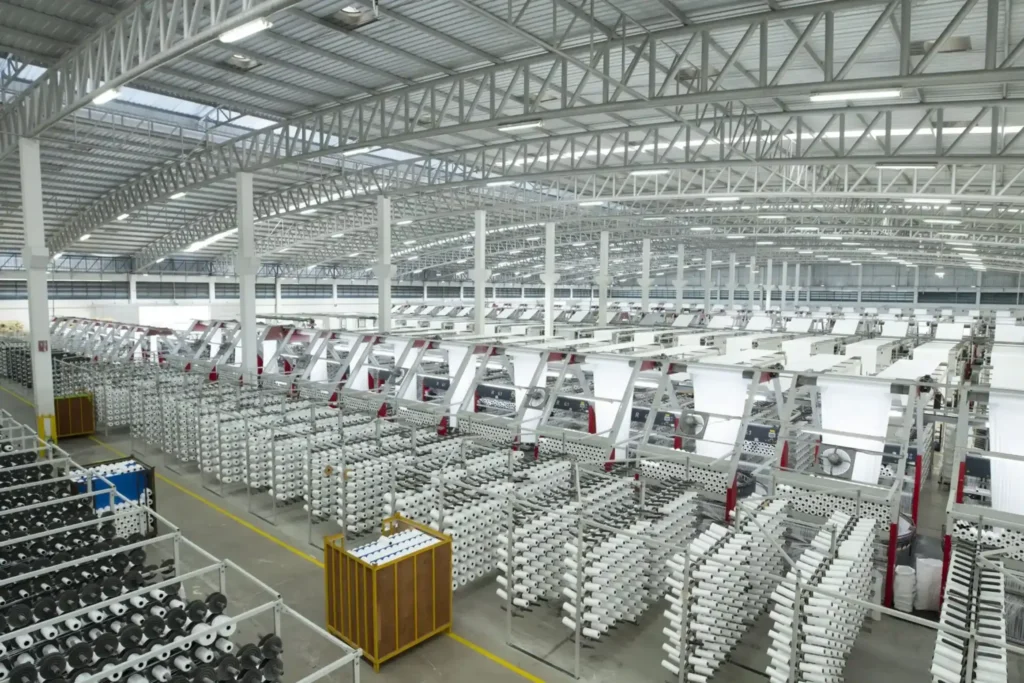
- High Production Capacity: With 150 circular looms, 16 extrusion lines, 32 lamination machines, and 16 printing machines, VidePak can handle large-volume orders without sacrificing quality. This makes the company a preferred supplier for businesses needing reliable and scalable packaging solutions.
- Global Reach: VidePak supplies Laminated Woven Sacks to major markets around the world, including North America, Europe, Asia, and Africa. The company’s commitment to quality and innovation has earned it a strong reputation in the global packaging industry.
- Customization and Innovation: VidePak offers a wide range of customization options, from multi-color printing to specialized lamination finishes. The company works closely with clients to develop packaging solutions tailored to their specific needs, ensuring both functionality and brand visibility.
The Future of Laminated Woven Bags
As industries continue to demand more durable, cost-effective, and eco-friendly packaging solutions, the market for Laminated Woven Bags is expected to grow. The ability to customize these bags for various applications, combined with their strength and environmental benefits, makes them an ideal choice for businesses looking to improve their packaging.
VidePak, with its strong focus on quality, technology, and customer service, is well-positioned to remain at the forefront of this growing industry. By leveraging advanced equipment and sustainable practices, VidePak will continue to meet the evolving needs of its clients and contribute to the future of packaging innovation.
In conclusion, Laminated Woven Bags are an excellent solution for industries that require strong, moisture-resistant, and customizable packaging. Thanks to advancements in production technology, such as the multi-layered co-extrusion blown film process, and companies like VidePak that prioritize precision and quality, these bags will continue to play a crucial role in modern packaging.