
What Are Form-Fill-Seal Woven Bags?
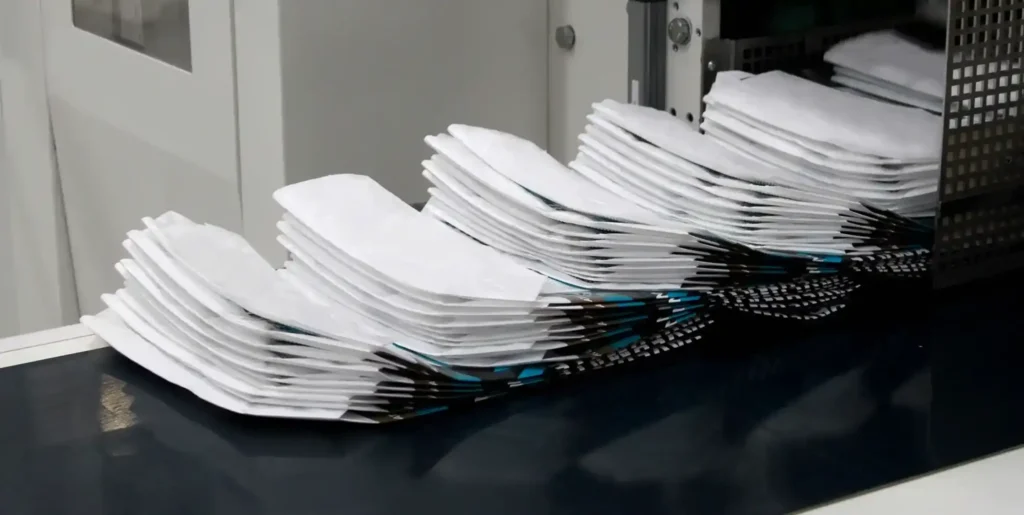
Form-Fill-Seal Woven Bags combine the tensile resilience of oriented polymer textiles with the speed and repeatability of form–fill–seal automation. In a continuous cycle, an FFS machine forms a tube or pouch from woven rollstock, fills it with powders, granules, or pellets, and then seals it—yielding a compact, drop‑resistant, dust‑tight pack. The woven fabric provides the load‑bearing lattice; the sealing skins deliver hermetic closure; the geometry ensures predictable pallet behavior. The format excels wherever high throughput, robust handling, and controlled emissions are non‑negotiable: minerals and building materials, fertilizers and feeds, chemicals and pigments, recyclate pellets and flakes, and many more.
Callout — Naming clarity matters
Using the exact term Form-Fill-Seal Woven Bags avoids confusion with non‑woven FFS film bags, sewn woven sacks, or bulk FIBCs. The phrase signals woven strength plus heat‑sealable skins that are compatible with vertical and horizontal FFS lines.
Also referred to as (aliases):
- Automated Woven FFS Sacks
- Woven Poly FFS Bags
- FFS PP Woven Bags
- FFS Woven Rollstock Bags
- Heat‑Sealable Woven Packaging
- Hermetic Woven FFS Sacks
The Material System of Form-Fill-Seal Woven Bags
Designing Form-Fill-Seal Woven Bags is an exercise in disciplined materials engineering. The aim is simple to state yet demanding to achieve: minimize mass while preserving mechanical headroom, moisture control, sealing reliability, and print endurance. The material stack typically includes an oriented tape fabric, one or two functional sealing skins, optional print faces, and additive packages that tune friction, weathering, and static behavior. Each layer plays a role; the performance emerges from the interaction.
Oriented tape fabric (backbone)
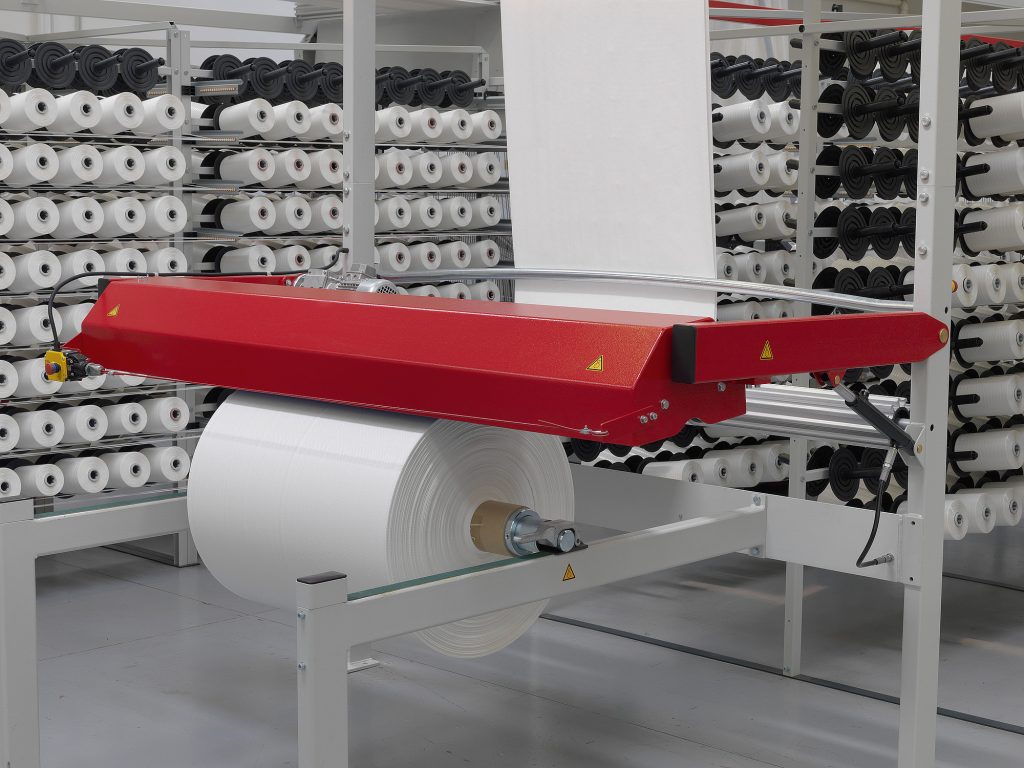
Isotactic polypropylene is extruded as a thin sheet, slit into ribbons (tapes), then drawn 5–7× to align polymer chains. The resulting tapes are woven as warp and weft on flat or circular looms. Orientation elevates tensile strength and modulus, allowing low‑GSM fabrics to carry heavy payloads without catastrophic tearing.
Functional sealing skins
Thin extrusion‑coated layers—often 10–40 µm per side—make woven substrates FFS‑friendly. PE‑rich recipes broaden the seal window and lower jaw temperature; PP‑rich recipes preserve mono‑PP purity for recycling but need tighter process control. Additives (slip, antiblock, UV) tailor coefficient of friction and outdoor durability.
Optional print faces
Where shelf presence and abrasion resistance matter, a thin oriented film (for example BOPP) is laminated as a print face. Mono‑PP stacks (PP fabric plus PP print film) simplify end‑of‑life sorting and are favored when circularity claims are central.
Additives and auxiliaries
UV stabilizers (HALS), antistatic packages for combustible dust risk, color masterbatches for brand identity, and COF zoning via printed or co‑extruded anti‑slip bands are common. These small percentages have outsized operational impact—on safety, legibility, and pallet stability.
One‑sentence anatomy
A high‑orientation woven substrate for strength, thin sealing skins for hermetic ends, treated faces for durable graphics, and micro‑dosed additives for friction and weathering—that is the practical anatomy of Form-Fill-Seal Woven Bags.
Hallmark Features of Form-Fill-Seal Woven Bags
- Form-Fill-Seal Woven Bags deliver high tensile and tear strength at modest basis weights, resisting puncture from angular solids like cement fines, crystalline salts, fertiliser prills, and recyclate pellets.
- Hermetic heat‑seals limit fugitive dust and moisture ingress, protecting worker exposure and product quality—especially for hygroscopic powders.
- Predictable geometry (tight lengths, clean seals, gusset control) yields brick‑like packs that stack efficiently and travel well.
- Inner/outer COF can be independently tuned; targeted anti‑slip bands stabilize tall pallets without slowing conveyor flow.
- Treated faces accept abrasion‑resistant inks and serialized codes for traceability, stewardship reporting, and inventory accuracy.
- Mono‑material strategies enable credible circularity pathways via PP or mixed polyolefin recycling streams; in‑plant trim is commonly reincorporated.
Strength that scales
Oriented tapes act like micro‑beams; the weave distributes stress. The result is a package that survives drops, conveyors, and vibration with headroom to spare.
Seals that matter
Needle‑hole leaks from sewing are eliminated; sealing skins bring consistent peel strengths. Cleaner lines, fewer fines in the air, tighter pallets.
Data that endures
High‑contrast, scannable marks stay legible through abrasion, supporting recalls, EPR declarations, and FEFO rotation.
How Form-Fill-Seal Woven Bags Are Manufactured
- Polymer preparation and compounding. Base PP (optionally HDPE for specific skins) is blended with UV stabilizers, slip/antiblock, pigments, and antistatic agents. Moisture conditioning ensures stable tape drawing and adhesion in later coating steps.
- Tape extrusion and drawing. A thin sheet is extruded, slit into tapes, and drawn 5–7× to align molecular chains. Edge trim and off‑spec tapes are reprocessed, closing material loops in‑plant.
- Weaving. Warp and weft are interlaced on circular or flat looms to target GSM and PPI. Uniform tension and environmental control govern permeability and later seal consistency.
- Surface activation. Corona or flame treatment raises surface energy (≥ 38 dyn/cm) to anchor coatings and inks.
- Extrusion coating / lamination. PE‑rich or PP‑rich skins (10–40 µm) are applied to achieve seal strength, WVTR control, and coefficient‑of‑friction targets. Optional oriented print films are laminated for graphics and scuff resistance.
- Printing. Flexographic or digital systems apply branding, handling icons, barcodes, and 2D serialization using abrasion‑resistant inks suitable for field conditions.
- Conversion for FFS. Plants supply tubular rollstock for VFFS/HFFS or pre‑made blanks for magazine infeeds. Forming sets, de‑aeration pins, and sealing jaws are validated for woven substrates.
- Quality and palletization. Tension, seal peel, WVTR, drop, and COF are monitored. Finished bags are stacked by robots to documented pallet patterns and protected with stretch hooding where outdoor dwell is expected.
Process tip
Seal windows for woven constructions are hotter and longer than for monolayer PE FFS film. Keep jaws clean, log temperature/dwell/pressure with SPC, and validate at the line’s maximum BPM to avoid latent weaknesses.
Where Form-Fill-Seal Woven Bags Excel
Public works departments rely on Form-Fill-Seal Woven Bags for color‑coded streams—street sweepings, fines, and source‑separated fractions—where sealed, moisture‑managed packs improve yard storage. Material recovery facilities move shredded film fluff and fines with fewer spills when seams are hermetic. Construction and demolition handlers choose woven FFS formats for shot‑blast abrasives, foundry sand, or concrete fines because puncture‑resistant walls minimize ruptures and delays on site. With liners and compliant labeling, special‑waste flows such as contaminated soils or fly ash also benefit, though they require project‑specific validation under dangerous‑goods rules. On the recycling side, pelletized PP/PE, PET flakes, and bio‑based granules load efficiently thanks to consistent geometry and pallet compactness.
Municipal collection
Color coding, printed guidance, and tidy sealing reduce contamination and streamline transfer logistics.
MRF operations
Dust‑tight seams and stack stability yield cleaner work cells and fewer forklift interventions.
C&D logistics
Angular particles punish packaging. Woven structures resist puncture and tear, keeping loads intact to their destination.
Recyclate shipping
Pellets, flakes, and regrind travel well in consistent geometry, with moisture kept at bay and IDs scannable on arrival.
Thinking in Systems with Form-Fill-Seal Woven Bags
Packaging challenges never travel alone. They arrive bundled: contain dust, tame moisture, protect workers, hit BPM targets, stack high, print clearly, and plan end‑of‑life with integrity. Form-Fill-Seal Woven Bags sit where these imperatives intersect. The following cards map common problems to practical responses.
Problem → Response Cards
Dust emissions
PE‑rich sealing skins, de‑aeration needles, and tuned dwell → sealed seams and compact packs.
Moisture ingress
Coating thickness aligned to WVTR limits; pallet hooding; UV packages to maintain integrity outdoors.
Throughput constraints
Optimized forming sets, stable web tension, and clean jaws raise bags‑per‑minute without sacrificing seal quality.
Traceability gaps
High‑contrast flexo fields and serialized IDs tie inventory to reporting, reducing administrative noise.
Parameters and Benchmarks for Specifying Form-Fill-Seal Woven Bags
Comparing Form-Fill-Seal Woven Bags with Alternatives
For a focused overview of related rollstock used with Form-Fill-Seal Woven Bags, see this note on form–fill–seal tubular roll materials.
Implementation Roadmap and Practical Checklists for Form-Fill-Seal Woven Bags
- Define the contents: particle size distribution, bulk density, hygroscopicity, and combustibility. These drive GSM, PPI, and coating thickness.
- Pick the structure: mono‑PP for purity vs PP/PE blends for wider seal windows; decide on need for print face or liner.
- Lock geometry to pallet footprints: width, length, and gusset dimensions that yield efficient patterns and stable stacks.
- Engineer seal windows: target jaw temperature, dwell, and pressure; document peel strength ranges and cleaning intervals.
- Tune COF: reconcile conveyor flow with pallet stability using localized anti‑slip zones.
- Match UV packages to outdoor dwell expectations to avoid embrittlement or slip shifts.
- Design artwork for traceability: codes, recycled‑content declarations, and handling icons positioned to survive abrasion.
- Run line trials: capture bags‑per‑minute, spillage, and seal integrity; iterate sleeve fit/de‑aeration if used.
- Validate with drop, stack compression, WVTR, and transport vibration tests; adjust GSM/denier/PPI accordingly.
- Plan end‑of‑life: bale used sacks, align with regional reclaimers, and document regrind/PCR ratios in future runs.
Reminder
Treat Form-Fill-Seal Woven Bags as a system component. Specification, line settings, and palletization must be co‑optimized to capture the full benefit.
- What Are Form-Fill-Seal Woven Bags?
- The Material System of Form-Fill-Seal Woven Bags
- Hallmark Features of Form-Fill-Seal Woven Bags
- How Form-Fill-Seal Woven Bags Are Manufactured
- Where Form-Fill-Seal Woven Bags Excel
- Thinking in Systems with Form-Fill-Seal Woven Bags
- Parameters and Benchmarks for Specifying Form-Fill-Seal Woven Bags
- Comparing Form-Fill-Seal Woven Bags with Alternatives
- Implementation Roadmap and Practical Checklists for Form-Fill-Seal Woven Bags
- 1. The Evolution of FFS Technology: From Manual to Automated Precision
- 2. Packaging Chemical Products: Tailoring Solutions to Material Properties
- 3. Global Standards: Navigating Compliance Complexities
- 4. Parameter Selection: Balancing Cost and Performance
- 5. FAQs: Addressing Critical Concerns
- 6. The Future: Smart Packaging and ESG Integration
- Conclusion: Redefining Industrial Packaging
“Why are Form-Fill-Seal (FFS) woven bags revolutionizing industrial packaging?”
Ray, CEO of VidePak, leans forward with conviction: “It’s the seamless integration of automation, material innovation, and regulatory compliance. At VidePak, every FFS bag is engineered to meet the dual demands of durability and sustainability—whether it’s transporting corrosive chemicals or hygroscopic fertilizers.”
This ethos has propelled VidePak—a global leader with $80M annual revenue and 526 employees—to the forefront of FFS woven bag innovation. Founded in 2008, the company combines 30+ years of expertise, Austrian Starlinger machinery, and ISO-certified processes to deliver solutions that redefine efficiency in chemical and raw material logistics. This report explores the technical evolution of FFS bags, analyzes global regulatory standards, and provides actionable insights for selecting optimal packaging parameters.
1. The Evolution of FFS Technology: From Manual to Automated Precision
FFS systems integrate bag formation, filling, and sealing into a single automated process, minimizing human intervention and maximizing throughput. VidePak’s 100+ Starlinger circular looms and 30+ lamination machines enable:
- High-Speed Production: 200+ bags/hour with ±1 mm valve alignment tolerance.
- Material Innovation: Virgin PP resin (30–40 MPa tensile strength) combined with BOPP lamination for moisture resistance (<1.0 g/m²/24hr permeability).
Case Study: A 2024 project for a European fertilizer supplier utilized VidePak’s FFS bags with ultrasonic seams (80–100 N/cm strength), reducing leakage incidents by 95% during pneumatic filling.
2. Packaging Chemical Products: Tailoring Solutions to Material Properties
Different chemicals demand specialized packaging strategies:
| Product | Key Challenges | VidePak Solution | Regulatory Compliance |
|---|---|---|---|
| Fertilizers | Hygroscopicity, dust generation | BOPP-laminated bags + PE inner liners | EU REACH (heavy metals <10 ppm) |
| Plastic Pellets | Static buildup, abrasion | Carbon-black infused PP (surface resistivity <10¹² Ω/sq) | OSHA 29 CFR 1910.1200 (hazard labeling) |
| Activated Carbon | Fine particle leakage | Double-layered seams + 12×12 strands/inch weave | JIS Z 0200 (moisture barrier testing) |
| Disinfectant Powders | Corrosion, clumping | Anti-static coatings + UV stabilizers | AS/NZS 2070 (chemical compatibility) |
Example: For a Japanese client handling activated carbon, VidePak’s 0.12 mm thick bags with 100 g/m² grammage achieved zero leakage across 10,000 units, validated by JIS Z 0238 standards.
3. Global Standards: Navigating Compliance Complexities
FFS bags must align with regional regulations to ensure market access:
- EU Standards: EN 13432 mandates compostability for biodegradable bags; REACH restricts heavy metals (e.g., lead <100 ppm).
- US Standards: ASTM D5035 governs tensile strength (>30 MPa), while FDA CFR 21 requires food-grade PP for additives.
- Asian Markets: China GB/T 8947 enforces a 5:1 safety factor for load-bearing capacity, while JIS Z 0200 specifies <2.0 g/m²/24hr moisture permeability for hygroscopic materials.
VidePak’s Certification Portfolio: ISO 9001, ISO 14001, BRCGS, and OEKO-TEX® ECO PASSPORT.
4. Parameter Selection: Balancing Cost and Performance
Choosing the right FFS bag involves analyzing:
A. Thickness and Grammage
- 0.10–0.15 mm thickness: Ideal for 25–50 kg loads (e.g., fertilizers).
- 80–120 g/m² grammage: Balances cost and puncture resistance (12 N tested per ASTM D1709).
B. Leak Prevention
- Outer Layer: BOPP lamination (<1.0 g/m²/24hr permeability) for moisture-sensitive products.
- Inner Liners: PE liners with micro-perforations for controlled aeration (e.g., activated carbon).
C. Sustainability
- 30% Recycled PP Blends: Maintain >90% tensile strength while reducing carbon footprint.
- Energy Recovery: Starlinger’s heat exchangers cut energy use by 25% during extrusion.
5. FAQs: Addressing Critical Concerns
Q1: How do FFS bags prevent static buildup in plastic pellets?
A: VidePak’s carbon-black infused PP bags achieve surface resistivity <10¹² Ω/sq, validated by ASTM D257.
Q2: Are FFS bags cost-effective for small-scale chemical producers?
A: Yes. Bulk orders (50,000+ units) reduce costs by 20% through automated production.
Q3: What certifications ensure compliance with EU regulations?
A: REACH and EN 13432 certifications, with third-party testing by SGS.
6. The Future: Smart Packaging and ESG Integration
The FFS bag market is projected to grow at 6.8% CAGR through 2030. VidePak’s roadmap includes:
- NFC Tracking: Real-time monitoring of chemical integrity (2025 pilot).
- Bio-Based Additives: 20% sugarcane-derived PP trials for compostable options.
Conclusion: Redefining Industrial Packaging
FFS woven bags are no longer mere containers—they are engineered ecosystems bridging automation, safety, and sustainability. VidePak’s fusion of Starlinger precision, regulatory expertise, and ESG-aligned innovation positions it as a leader in the global packaging revolution. As Ray summarizes: “In an era demanding circular economies, our bags don’t just carry chemicals—they carry responsibility.”
For industries seeking certified, high-performance solutions, VidePak remains the benchmark.
Note: All data reflects 2025 industry benchmarks and VidePak’s internal testing protocols.