
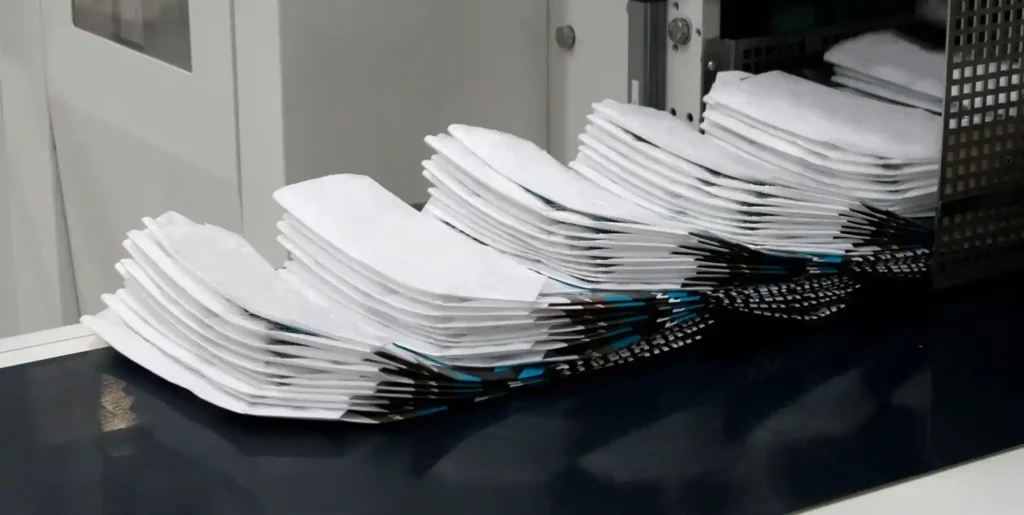
What is FFS Roll Bags?
FFS Roll Bags are industrial heavy‑duty packaging made from tubular or lay‑flat polyethylene rollstock that is formed, filled, and sealed on automated lines—often in a seamless sequence of operations. A steady web of film unwinds, a bottom or top seal is welded, a metered dose of granules or powders drops in, and a final seal completes a shipping‑ready sack. That is the essence. But the reality is richer: dimensional consistency, seal integrity, stack stability, and print legibility are engineered into the substrate long before the roll touches an FFS machine.
Manufacturers supply these films as gusseted tubular rolls with stable coefficient of friction, print primers or corona treatment, antistatic measures, and sometimes pre‑registered graphics. Once on the line, FFS Roll Bags deliver repeatable fill weights, low leak rates, and clean stacking on pallets—qualities prized by resin producers, fertilizer blenders, salt processors, mineral packers, and chemical distributors.
- Form‑fill‑seal roll bags
- FFS tubular bags
- Heavy‑duty shipping sacks from rollstock
- FFS rollstock film bags
- Tubular PE FFS sacks
- Gusseted FFS film bags
- Lay‑flat FFS tubing bags
- Form‑fill‑seal polyethylene bags
- Mono‑material PE FFS sacks
- Rollstock FFS packaging bags
Names vary, but the brief is shared: protect granules and powders through filling, transit, and warehousing; run cleanly on high‑speed equipment; and, increasingly, align with modern circularity goals. In other words, FFS Roll Bags are not just sacks—they are a system of materials science, process control, and ESG design cues.
Material Architecture of FFS Roll Bags
At first glance, a film is a film. Look closer, and the layered choreography appears. Modern FFS Roll Bags are most often three‑ to five‑layer coextrusions—each layer tuned to a job: outer printability and slip, sub‑skin toughness, a stiffening core, a seal‑support scaffold, and a product‑contact seal. Choosing polymers is not guesswork; it is a negotiation among modulus and elongation, dart impact and tear, hot‑tack and seal initiation temperature, gloss and opacity, cost and availability, virgin and recycled content.
- mLLDPE (metallocene LLDPE): prized for puncture and dart‑impact resistance, broad hot‑tack/heat‑seal window, and reliable seal‑through‑contamination in dusty fills. A frequent choice for the outer skin and the inner seal layer.
- LLDPE (C6/C8 families): ductile, puncture‑resistant, and cost‑balanced. Blends smoothly with mLLDPE to widen process latitude.
- HDPE: stiff, creep‑resistant, and shape‑holding in the core. Too much HDPE in the seal zone can narrow the seal window; in the core, it boosts pallet stability.
- LDPE: improves bubble stability and opticals; useful in the seal‑support layer to broaden sealability without overspending on specialty mLLDPE.
What of recycled content? Two streams take the stage. Post‑industrial (PIR) is clean and predictable; post‑consumer (PCR) is bolder in signal and noise. Both can live in the core where cosmetic variability is least visible and seals are protected by virgin‑rich skins. The result is an authentic circularity narrative without compromising the seal face.
Functional additives are the quiet enablers: slip agents for a target coefficient of friction; antiblock particulates to avoid blocking after winding; antistats to keep dust at bay; UV packages for yardside storage under sun; and process aids to quell melt fracture at high output. Pigments and opacity masterbatches are branding tools, but their dosage and chemistry must respect recyclability optics and downstream handling.
- Print skin: mLLDPE blend with tuned slip/antiblock, optionally UV‑stabilized.
- Toughness sub‑skin: mLLDPE/LLDPE blend to resist puncture and drop shock.
- Core: HDPE‑rich matrix that can host PIR/PCR while bolstering stiffness and creep performance.
- Seal support: LDPE/LLDPE blend to widen the seal window and enhance hot‑tack.
- Seal: mLLDPE‑dominant, for hermeticity and contamination tolerance where it counts most.
Cost is a compass, not a dictator. Resin selection matters (specialty mLLDPEs and HDPEs command premiums), but the gauge is the true lever. Thoughtful downgauging—enabled by smarter layer roles and stronger skins—removes resin mass per bag while keeping functional performance. Print strategy, conversion scrap, and uptime contribute meaningfully to the unit economics as well.
Distinguishing Features of FFS Roll Bags
How do FFS Roll Bags defend your product in a rough world while keeping lines humming? By combining mechanical integrity, seal reliability, controlled handling, and brand‑ready surfaces. Consider the quartet below, each a lever with direct P&L and safety implications.
There is more: moisture is repelled by PE’s inherent barrier; micro‑perforations vent air for high‑speed fills; QR/GS1 codes enhance traceability and governance. And because it is a mono‑material PE story, FFS Roll Bags map naturally to mainstream recycling streams where collection infrastructure exists.
Production Process from Resin to Pallet
Every durable bag begins as pellets and process control. The pathway runs through coextrusion, gusseting, winding, printing, and then conversion on an FFS machine. The choreography must be right, or the downstream line will tell on you.
- Resin preparation: Gravimetric dosing, drying if required, and blend verification. PCR/PIR are filtered and documented for melt‑flow and density windows.
- Coextrusion: Multi‑manifold dies create discrete layers. Air rings and, where available, internal bubble cooling stabilize the bubble at elevated outputs.
- Gusseting and collapsing: Depth set for the desired pack geometry. Alignment here prevents skewed layflat and seal drift later.
- Winding: Tension programs and lay‑on rollers avoid telescoping and blocking. Edge trim is minimized to reduce scrap.
- Inline/near‑line printing: Artwork in 6–10 colors, water‑based inks where compatible. Registration points support machine vision later.
- Conversion on FFS: Unwind, index, cut, fill, and seal. Powder deflectors and air knives keep seals clean. Check‑weighers verify fills; bad actors are rejected.
Applications Where FFS Roll Bags Excel
Where do FFS Roll Bags earn their keep? Wherever unitized, pallet‑friendly sacks protect bulk solids and answer to fast lines. Polymer pellets (PE, PP, PVC). Fertilizers and soil amendments. Salt and sugar. Mineral additives. Masterbatch and industrial chemicals. Even recycled resin pellets ride to market in recycled‑content sacks, closing the loop in both story and substance.
Prefer a single authoritative reference for this packaging format? See form‑fill‑seal tubular roll polyethylene bags for a concise overview of rollstock‑based heavy‑duty PE sacks.
ESG Lens: How FFS Roll Bags Align With Modern Standards
Environmental signals point one way: mono‑material designs, credible recycled content, energy‑aware conversion, verifiable claims. Social signals add safety, clarity, and ease of use. Governance ties it together with chain‑of‑custody and audit‑ready documentation. Can packaging be practical and principled? With FFS Roll Bags, yes.
| Dimension | Design choice in FFS Roll Bags | Benefit |
|---|---|---|
| Environmental | Mono‑material PE with recycled cores (PCR/PIR) | Simplifies mechanical recycling, reduces virgin resin intensity |
| Social | Higher static COF, easy‑open features, clean labeling | Safer handling, fewer slips, fewer knife incidents, clearer use |
| Governance | Chain‑of‑custody for certified feedstocks; SPC on critical KPIs | Audit‑ready claims, consistent quality, lower recall risk |
Downgauging, recycled content, mass‑balance certification, energy per packed ton—these are not buzzwords to sprinkle but dials to set. Their interactions are real: reduce gauge and you may need tougher skins; add PCR and you may raise filtration specs; chase output and you may deploy processing aids. The art is to orchestrate them.
Systems Thinking: From Sub‑Problems to One Operating Pattern
Break the problem into smaller ones, solve them, then integrate. That is the systems approach to FFS Roll Bags. Performance vs. downgauging; recycled content vs. seal risk; pallet stability vs. line friction; speed vs. reject rate; ESG claims vs. documentation burden. Each pair looks like a trade‑off. Managed well, they become complementary.
- Define abuse profiles: drop heights, pallet geometry, ambient cycles.
- Select a 5‑layer structure: stiff HDPE core, tough mLLDPE skins, forgiving seal layer.
- Place recycled content in the core; protect the seal with virgin‑rich material.
- Tune COF for both line flow and pallet grip; verify after aging.
- Engineer downgauging with response‑surface DoEs; confirm via dart and creep testing.
- Lock in SPC; connect COA data to FFS HMI recipes for fewer human errors.
- Make claims audit‑ready with chain‑of‑custody identifiers on artwork.
Quality Assurance and Test Strategy
Quality is a verb. It is the daily practice of checking, trending, and responding. For FFS Roll Bags, four tests set the foundation: dart‑impact, seal strength/hot‑tack, COF, and creep. Add tensile/elongation and, when relevant, UV durability. Below is a compact map—color‑coded for quick reading—of what to measure and why.
Design Variants and Engineering Patterns
One product family, many personalities. The same base design of FFS Roll Bags adapts to aggressive powders and to delicate granules, to humid coastlines and to arid interiors, to fast palletizers and to manual stacking. Patterns repeat—because physics repeats—but the recipes flex.
- Impact‑first pattern: Elevated mLLDPE in skins, moderate HDPE in core, thicker gussets to survive corner strikes.
- Creep‑limited pattern: Core biased toward HDPE for stack shape; static COF raised for pallet friction.
- Powder‑seal pattern: Seal‑layer chemistry focused on seal‑through‑contamination; line adds powder deflectors and air knives.
- Outdoor‑storage pattern: UV‑stabilized skin, colorant with weathering stability, and antislip stripes for forklift aggression.
- High‑PCR pattern: Core with 25–50% PCR (quality‑gated), virgin‑rich seal, fine filtration, and SPC on dart variance.
Operational Playbook for Fillers and Converters
Run best‑known methods like a routine and the routine will protect you. Below is a compact playbook for facilities handling FFS Roll Bags.
- Qualify incoming resin lots with COAs; gate recycled streams by MFI and ash content.
- Standardize roll hardness, OD limits, and winding tension windows to avoid web breaks.
- Calibrate seal bars and pressure systems monthly; verify with seal maps by SKU.
- Measure COF at receipt and after 48–72 hours to capture slip migration dynamics.
- Implement vision for print register and code presence; reject automatically.
- Trend dart and creep in SPC; trigger recipe switches if control limits drift.
- Record recycled‑content ranges per run and embed trace codes in artwork or QR.
Common Failure Modes and How to Prevent Them
Every plant has stories. The bag split at the corner. The pallet bulged after a heatwave. Seals leaked during a dusty product changeover. Each failure leaves a clue. The remedies are practical and repeatable.
- Corner splits: raise mLLDPE in skins, verify gauge profile near gussets, align gusset boards, check die lip wear.
- Top‑seal leakers: increase seal dwell or pressure, deploy powder deflectors, enrich the seal layer for seal‑through‑contamination.
- Pallet creep and bulging: HDPE‑forward core, slightly higher gauge for tall stacks, COF tuned for inter‑layer grip.
- Roll blocking: increase antiblock modestly, drop winding hardness, cool the web more aggressively before winding.
- Warehouse slippage: reduce slip agent, consider antislip stripes or micro‑emboss; confirm static COF on your actual floor material.
- Print adhesion issues: treat to target dyne, match ink to additive package, evaluate primerless systems when compatible.
Experimentation: DoE for Downgauging with Recycled Content
To cut gauge and raise PCR while protecting outcomes is to manage a set of interacting variables. The method is known: screen, model, and confirm.
| Factor (X) | Range | Response (Y) | Success signal |
|---|---|---|---|
| Core HDPE % | 30–70% | Creep deformation | ≤ application threshold over 8–12 weeks |
| PCR/PIR % in core | 15–50% | Dart variance; optical defects | Stable dart; acceptable gel count |
| mLLDPE in skins | 40–80% | Dart‑impact; tear | ≥ target; no corner splits at drop height |
| Seal‑layer composition | mLLDPE‑rich vs. blends | Hot‑tack; seal through contamination | Seal holds at speed with dusty products |
| Slip & antiblock | ppm windows by supplier | COF; unwind behavior | COF within spec; no telescoping |
Screen with a fractional factorial, fit response surfaces on the survivors, and confirm with a ton‑scale plant trial per recipe. The reward: durable downgauging, credible recycled content, and a validated operating window that operators can trust.
Comparing Formats: FFS PE vs. Woven Valve Bags
Which is better? The honest answer: it depends on your product, speed, and logistics. Still, the contrasts help frame the decision for teams moving from pre‑made formats to FFS Roll Bags.
Specification Examples You Can Tailor
Numbers anchor conversations. While every plant and product is unique, the following specification envelope is common for FFS Roll Bags in pellets and powders. Treat them as starting markers, not finish lines.
Life‑Cycle Hotspots and Practical Mitigations
What weighs most in the carbon balance? Resin production, followed by line energy and logistics. The antidotes are familiar but potent: downgauge, substitute recycled content credibly, raise line efficiency, and optimize freight. End‑of‑life depends on local collection; mono‑material PE keeps the door open where systems exist.
- Resin intensity: reduce by downgauging and hosting PCR/PIR in the core.
- Conversion energy: stabilize bubbles, use variable speed drives, and monitor with ISO‑aligned energy systems.
- Transport: increase sacks per pallet and rolls per truck; prefer regional conversion.
- End‑of‑life: add on‑pack guidance and consider take‑back loops with industrial customers.
Glossary for First‑Time Readers
Because clarity accelerates projects, here are quick definitions that appear throughout this article on FFS Roll Bags:
- FFS: the machine and method that forms a bag from rollstock, fills it, and seals it inline.
- Rollstock / lay‑flat tubing: continuous film on a core, tubular or flat, often with gussets.
- mLLDPE: metallocene‑catalyzed LLDPE known for toughness and forgiving seal behavior.
- COF: coefficient of friction; higher static COF improves pallet grip, lower dynamic aids conveyance.
- Dart‑impact: a quick predictor of drop resistance at defined conditions.
- Creep: time‑dependent deformation under load; a proxy for pallet stability across weeks.
- PCR/PIR: post‑consumer and post‑industrial recycled polyethylene streams.
- Mass balance: chain‑of‑custody accounting for certified feedstocks attributed to outputs.
- Hot‑tack: the immediate strength of a newly formed seal before it cools.
- What is FFS Roll Bags?
- Material Architecture of FFS Roll Bags
- Distinguishing Features of FFS Roll Bags
- Production Process from Resin to Pallet
- Applications Where FFS Roll Bags Excel
- ESG Lens: How FFS Roll Bags Align With Modern Standards
- Systems Thinking: From Sub‑Problems to One Operating Pattern
- Quality Assurance and Test Strategy
- Design Variants and Engineering Patterns
- Operational Playbook for Fillers and Converters
- Common Failure Modes and How to Prevent Them
- Experimentation: DoE for Downgauging with Recycled Content
- Comparing Formats: FFS PE vs. Woven Valve Bags
- Specification Examples You Can Tailor
- Life‑Cycle Hotspots and Practical Mitigations
- Glossary for First‑Time Readers
“Why are FFS roll bags now a cornerstone of sustainable packaging strategies?”
This question dominates boardroom discussions across industries. The answer lies in their adaptability to ESG frameworks, technological advancements in production, and their role in reducing carbon footprints—positioning FFS roll bags as both functional and transformative tools for a greener future.
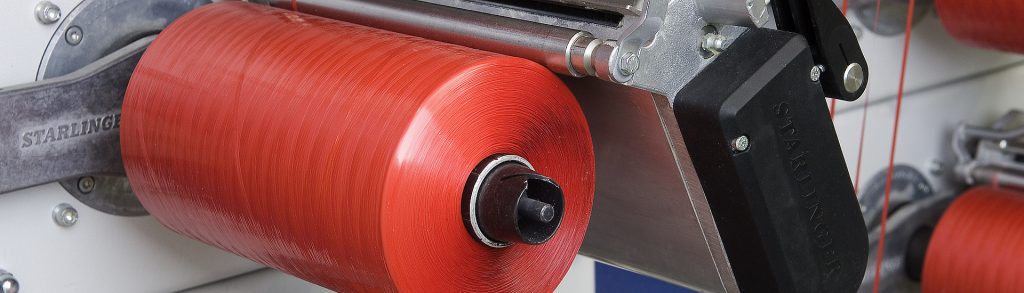
At VidePak, a global leader in woven bag manufacturing since 2008, sustainability is not an afterthought but a core operational principle. With 526 employees and annual sales of $80 million, the company combines Austrian engineering (Starlinger machinery), virgin polypropylene (PP) materials, and renewable energy initiatives to redefine packaging excellence.
1. Technological Evolution: From Utility to Sustainability
1.1 Automation and Precision with Starlinger Technology
VidePak’s production lines are powered by Austrian Starlinger AD*Star looms, which achieve speeds of 200 bags per minute while maintaining tensile strengths of 10–12 N/m². This automation reduces human intervention by 40%, ensuring consistency in high-volume orders—critical for clients like a Brazilian soy exporter that reduced spillage by 20% using VidePak’s block-bottom valve bags .
Key advancements include:
- Multi-machine synchronization: Enables 48-hour turnaround for 10,000-unit custom orders.
- AI-driven defect detection: Achieves a 99.8% defect-free rate, as validated by a 2024 German audit .
1.2 Material Innovation: Virgin PP and Recyclability
Unlike competitors using recycled polymers, VidePak employs 100% virgin PP resin, enhancing durability and compliance with FDA/EU food-grade standards. Their PE-coated recyclable bags reduce carbon emissions by 35% compared to traditional laminates, aligning with the EU’s Circular Economy Action Plan .
2. ESG Integration: Operational and Environmental Synergy
2.1 Renewable Energy Initiatives
VidePak’s 2 MW rooftop solar installation generates 2.5 GWh annually, covering 70% of factory energy needs. Excess power is sold to the national grid, contributing to regional green energy transitions and earning carbon credits under the UN Clean Development Mechanism. This initiative reduces Scope 2 emissions by 45%, as per GRI Standards .
Table 1: VidePak’s ESG Metrics
| Metric | Performance | Impact |
|---|---|---|
| Solar Energy Generation | 2.5 GWh/year | 45% reduction in Scope 2 emissions |
| Recyclability Rate | 100% (PE-coated bags) | Aligns with EU EN 13432 |
| Defect-Free Rate | 99.8% | Exceeds ISO 9001 requirements |
2.2 Regulatory Compliance and Green Innovation
VidePak adheres to EU REACH, JIS Z 1707, and FDA 21 CFR standards. For instance, their anti-static FFS roll bags prevent ignition risks in chemical transport, complying with ASTM D5260 flammability tests. A 2023 partnership with a Dutch NGO replaced 500,000 single-use bags with compostable kraft blends, diverting 72 tons of waste annually .
3. Market Leadership and Competitive Differentiation
3.1 Global Reach and Customization
VidePak serves 30+ countries, with $80 million annual revenue. A U.S. pet food brand reported a 27% sales increase after adopting VidePak’s 8-color flexo-printed BOPP bags, which feature Pantone-matched branding and anti-scuff coatings for humid climates .
3.2 ESG-Driven Market Trends
The global sustainable packaging market is projected to reach $413.8 billion by 2030 (6.7% CAGR). VidePak’s QR-code-integrated bags enable real-time supply chain tracking, addressing demands for transparency in sectors like organic agriculture .
4. Product Specifications and FAQs
Technical Parameters
| Feature | Specification |
|---|---|
| Material | Virgin PP/PE + coatings |
| Thickness | 90–120 GSM |
| Load Capacity | 5–50 kg |
| Printing Options | 8-color flexo, UV digital |
| Certifications | FDA, EU REACH, ISO 9001 |
Frequently Asked Questions
Q: How does VidePak ensure solar energy efficiency?
A: Our 2 MW solar array uses AI-optimized inverters, achieving 22% energy conversion efficiency—5% above industry averages .
Q: Are FFS roll bags suitable for hazardous materials?
A: Yes. Anti-static and PE-coated variants comply with UN Model Regulations for chemical transport .
Q: What ROI can clients expect?
A: Brands typically recoup costs within 6 months via reduced waste and carbon tax incentives .
5. Future Outlook: Smart Packaging and Circular Economy
VidePak is piloting biodegradable PLA coatings derived from corn starch, aiming for 90% compostability by 2026. Coupled with Starlinger’s iQ³ AI systems, which dynamically adjust loom tension, the company is poised to lead the next wave of ESG-aligned innovation .
Conclusion
FFS roll bags exemplify the convergence of functionality and sustainability. VidePak’s integration of renewable energy, Austrian engineering, and rigorous ESG compliance positions it as an indispensable partner for industries navigating regulatory and ecological challenges.
External Resources:
- Discover how FFS roll bags meet global demands through advanced automation.
- Explore sustainable practices in recyclable packaging to align with ESG goals.