
Packaging plays a critical role in many industries, particularly in sectors dealing with bulk goods such as agriculture, construction, and chemicals. Among the various packaging solutions, PE coated valve woven bags have emerged as a popular choice due to their strength, versatility, and protective properties. These bags are particularly suited for granular or powdered materials, offering reliable protection during storage and transportation.
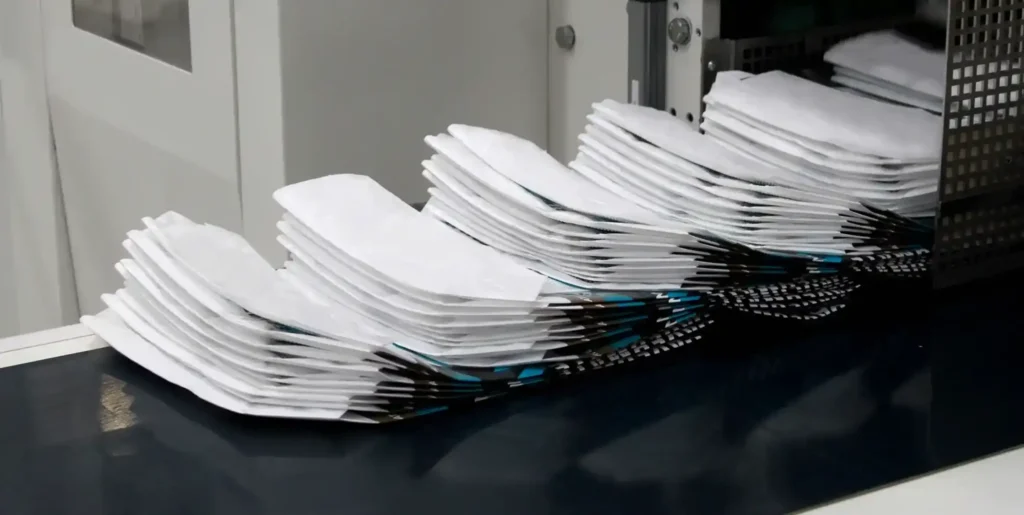
What are PE Coated Valve Woven Bags?
PE Coated Valve Woven Bags are industrial sacks engineered from a woven polypropylene (PP) substrate that is coated with polyethylene (PE) and finished with an integrated valve opening to enable rapid filling and near‑instant closure. In practical terms, they merge the structural backbone of woven PP with the sealing friendliness and surface control of PE. The outcome is a bag that fills cleanly, resists moisture ingress, minimizes dust escape, and stacks squarely on a pallet even after long transport. The valve—often a sleeve or tubular insert—accepts an impeller or air‑packer spout, and as product compacts, the valve self‑closes or can be welded for higher integrity. That single‑station convenience displaces sewing threads, reduces top finishing, and supports higher bags‑per‑minute without sacrificing product hygiene.
- PP Valve Woven Sacks (PE‑Coated)
- Polywoven Valve Bags with PE Coating
- PE‑Film Coated PP Valve Sacks
- Coated Woven Valve Bags
- Block‑Bottom Valve Woven Sacks (PE Skin)
- Heat‑Sealable Woven Valve Bags
- PE‑Bonded Polypropylene Valve Sacks
- PE‑Coated Raffia Valve Bags
Different names, same intent: run cleanly on valve fillers, suppress sifting, protect against moisture, and deliver stable pallets at attractive cost per ton.
Why do plants transition to PE Coated Valve Woven Bags? Because speed matters, cleanliness matters, and pallets that arrive intact matter even more. If a package can be lighter yet tougher, simple yet secure, fast on the line yet calm in the warehouse—why choose anything else? And yet, there are trade‑offs: gloss versus grip, stiffness versus seal latitude, downgauging versus drop strength. This document explores those trade‑offs in the language of materials, machines, and movement.
The Material of PE Coated Valve Woven Bags — Architecture, Inputs, and Cost Logic
A PE Coated Valve Woven Bag is a composite: each layer carries a job, and each job affects performance, cost, and recyclability. Understanding the stack from tape to coating to valve to graphics turns a generic sack into a repeatable specification that operators can run and logisticians can trust.
Slit‑film tapes are stretched to align chains and increase tenacity, then interlaced on circular looms to produce a tubular fabric whose picks and denier set GSM, stiffness, and puncture resistance.
Extrusion‑coated LDPE/LLDPE/MDPE blends or laminated coextrusions create a continuous low‑porosity surface, lower SIT, and provide the interface for valve welding and print anchorage.
Sleeves in PP or PE interface with impeller or air‑packer spouts; geometries may self‑close, or be welded ultrasonically/hot‑air for higher integrity.
1) Structural substrate: woven PP tapes
Composition and manufacture. The backbone is a tubular or flat‑fabric weave made from slit‑film PP tapes drawn to align polymer chains. Circular looms interlace warp and weft to form a stable grid; pick density (for example, 8×8 to 12×12 per inch) and tape denier (for example, 600–1200D) determine GSM, stiffness, and puncture resistance.
Mechanical behavior. Woven PP provides high tensile‑to‑weight efficiency and crack‑arrest behavior superior to monolithic films: tears tend to dissipate at tape intersections instead of propagating. Under pallet compression, the weave limits creep and helps bags retain a square profile.
Cost perspective. PP is globally traded with predictable pricing and broad supplier bases. Because the structural layer dominates mass, smart choices in draw ratio and weave efficiency unlock downgauging without catastrophic losses in performance.
2) Coating/skin: polyethylene
Purpose. A PE skin delivers a continuous surface that blocks dust egress, resists moisture pickup, and offers an amenable sealing interface. Depending on the specification, PE may be extrusion‑coated onto the weave (typical 15–40 gsm) or a coextruded film is laminated with PP‑compatible ties.
Chemistry choices. LDPE/LLDPE blends reduce seal initiation temperature (SIT) and improve hot‑tack for faster line speeds; MDPE adds stiffness and scuff resistance; metallocene LLDPE can deliver exceptional hot‑tack at lower coat weights. Anti‑block and slip packages tune coefficient of friction (COF) for both conveyors and pallets.
Cost perspective. While the PE skin introduces a second resin family, the additional mass is modest relative to the woven base. In many programs, reduced sifting, fewer reworks, and the deletion of sewing steps offset the resin increment.
3) Valve components and closures
Valve sleeve. Usually PP or PE film—or a light woven insert—the sleeve mates to the filler spout and manages back‑pressure during dosing. Some variants include flaps or angled cuts that encourage self‑closure under product pressure.
Closure methods. Coarse products may rely on self‑closure; finer powders benefit from auxiliary hot‑air or ultrasonic welding at the valve mouth to minimize sift‑out during transit.
4) Surface engineering and graphics
Corona or plasma treatment boosts surface energy for ink anchorage. Industrial graphics often print directly on the coated surface via flexography; premium artwork may ride on a printable laminate. Anti‑slip lacquers or micro‑emboss patterns deliver the delicate balance between belt glide and pallet grip.
5) Recyclability lens
Recent specifications seek all‑polyolefin bills of materials—PP fabric, PE skin, PP/PE valve components—to keep sorting and recovery aligned with existing streams. With the right seal windows and COF tuning, this path improves circularity without compromising strength or speed.
For a concise primer on industrial valve formats, see valve bags as a reference entry.
What Are the Features of PE Coated Valve Woven Bags?
The case for PE Coated Valve Woven Bags spans mechanics, hygiene, automation, and logistics. Strength and sealability; robustness and speed; clarity in print and calmness in storage—these pairs are not contradictions but complements when the stack is tuned.
- Mechanical robustness at modest basis weights: the woven grid disperses load and resists point puncture, protecting abrasive or angular products.
- Dimensional stability under stack loads: bags retain squareness and height on pallets, resisting creep through heat or time.
- Dust‑tight sealing at the valve mouth: PE skins support welding options that reduce sifting.
- Moisture moderation: lower water vapor transmission than uncoated fabrics helps prevent caking in hygroscopic powders.
- Automation readiness: the valve geometry interfaces with impeller or air packers; deaeration options tame pillow‑ing and settle product quickly.
- Brand resilience: coated surfaces accept readable graphics; optional laminates add scuff resistance for longer conveyor journeys.
- Polyolefin simplicity: PP plus PE stays within familiar recycling pathways and supports reporting obligations.
Valve fills reduce manual steps and enable high bags‑per‑minute with consistent geometry.
Welding options plus PE skins control dust and improve plant hygiene.
Tuned outer COF and crisp edges deliver pallets that travel safely and stack tall.
What Is the Production Process of PE Coated Valve Woven Bags?
Properties felt at the warehouse door are born upstream on the tape line, loom, and coater. The process below shows where each knob lives and why changing it changes outcomes.
- Resin and tape line — Homopolymer PP is extruded, slit, and drawn into tapes at controlled ratios for target tenacity and elongation; masterbatches may include UV stabilizers or slip.
- Weaving — Circular looms produce tubular fabric; pick uniformity and splice integrity prevent weak zones; edge flatness preserves tracking later.
- Surface preparation — Corona treatment raises surface energy, improving adhesion for coating and print.
- Coating or lamination — A PE skin is extrusion‑coated or a coextruded film is laminated. Coat weight, line speed, and chill roll profile are tuned for gloss, adhesion, and porosity sealing.
- Cutting and valve insertion — Blanks are formed and a valve sleeve inserted and secured by welding or polyolefin‑compatible adhesive. Block‑bottom folds may be introduced for squareness.
- Printing and finishing — Graphics are applied; anti‑slip lacquers and micro‑emboss may follow; stacks are conditioned to relieve curl.
- Inspection and packing — Peel tests at valve welds, drop/burst checks, and COF measurements certify each lot before bundling for transit.
If valve peel strength varies across the jaw, the root cause is often pressure non‑uniformity rather than temperature. Map pressure across the nip before chasing heat.
What Is the Application of PE Coated Valve Woven Bags?
PE Coated Valve Woven Bags are deployed where cleanliness, speed, and stack stability are non‑negotiable. Though the product families differ—cement, fertilizers, resins, food ingredients—the risk patterns rhyme: dust, moisture, impact, abrasion. The bag must keep product in, water out, and pallets upright.
- Cement and building materials — Finely divided powders are contained; abrasion resistance is high; export pallets stack densely.
- Fertilizers and minerals — Moisture resistance and robust impact performance protect friable granules; deaeration reduces pillow‑ing.
- Chemicals and masterbatches — Anti‑static options mitigate ignition risk; dust control improves plant hygiene.
- Food and feed ingredients — With appropriate food‑contact skins and inks, sugar, salt, grains, and premixes benefit from clean fills and legible print.
- Waste and recycling streams — Puncture resistance and secure closure control loss and litter in handling.
Innovations in Packaging and Transportation Efficiency — 2024–2025
The phrase PE Coated Valve Woven Bags: Innovations in Packaging and Transportation Efficiency signals three directional shifts. First, seal windows are wider and friendlier to speed; second, pallets are squarer with better controlled friction; third, design bills are cleaner and more transparent for recovery and reporting. Each shift shows up as a small improvement at a station—and a large improvement across a network.
Metallocene‑rich blends broaden hot‑tack; valve welding options shrink sift‑out; top‑seal cleaning reduces interface contamination.
COF tuning hits the belt‑vs‑pallet sweet spot; block‑bottom architecture improves column stability; micro‑perfs behind gussets accelerate settling.
All‑polyolefin stacks simplify recovery; additive disclosure aligns with EPR; energy and emissions accounting informs sourcing.
System Thinking — Breaking the Challenge into Solvable Parts
Reliable PE Coated Valve Woven Bags emerge when four subsystems harmonize: substrate architecture, sealing and valve integrity, machinability and OEE, distribution durability. Solve locally, integrate globally.
Decide tape denier and pick density; choose tubular vs flat; add UVI when yard storage is expected.
Map seal windows, define valve weld methods, and deploy cleaning at the weld zone to reduce interface peel.
Target COF bands, tighten roll geometry and splice policy, and keep layflat within tolerance for stable collar tracking.
Validate drops and pallet compression; select stretch‑hood films; define pallet patterns; monitor creep across climates.
Technical Tables — Specification‑Ready Numbers
Engineering Questions That Clarify a Spec
- If top‑seal rejections rise, is temperature really at fault—or is dust contamination and non‑uniform nip pressure the culprit?
- If pallet columns lean, is the stacking pattern wrong—or is the outer COF below the stretch‑hood’s optimal range?
- If splices cause stops, is the splice count too high—or is flagging and auto‑slowdown logic inadequate?
- If graphics scuff, is laminate hardness insufficient—or do conveyor transitions need larger radii?
Scenario — A 25 kg Fertilizer Program
Objective. Replace sewn paper sacks with PE Coated Valve Woven Bags to reduce sifting claims and increase line speed while preserving outdoor stack stability for six months.
Design. Woven base 10×10 at ~95 gsm; PE coat ~25 gsm with anti‑slip lacquer targeting a static COF in the mid‑0.4 band; micro‑perf panel behind the gusset; UVI stabilization for yard storage.
Process. Jaw setpoint ~140 °C with 400–450 ms dwell and pressure mapping to remove edge under‑press; dual air‑knife cleaning at the valve; downstream checkweigher and metal detection.
Outcomes. Peel strength ≥ 8.5 N/15 mm with cohesive failure; drops pass at 1.0 m flat/edge and 0.75 m corner; pallets remain upright under warm storage; rework falls as valve sifting is eliminated.
Troubleshooting — Symptoms, Likely Causes, Credible Fixes
Causes: dust at the seal plane; low nip pressure; high‑SIT blend. Fixes: brush + air‑knife; increase dwell/pressure; retune blend for hot‑tack.
Causes: outer COF too low; glossy varnish; stretch‑hood mismatch. Fixes: higher‑friction lacquer or emboss; retune hood film; verify COF seasonally.
Causes: edge wave; roll taper; gusset asymmetry. Fixes: tighten winding spec; limit splices; align formers; add edge guides.
Professional Sourcing and Audit Pointers
- Request a full heat‑seal map—temperature by dwell by pressure—on the nominated coat blend.
- Define acceptance on peel force and failure mode. Interface peel seldom survives logistics; cohesive tear is preferred.
- Specify post‑treatment surface energy and outer COF bands; verify on incoming QC.
- Set splice policy: maximum splices per roll, flag size/color, and automatic slowdown triggers.
- Record pallet compression across realistic temperature/humidity pairs that represent your worst season.
Logistics and Pallet Engineering — From Discharge to Delivery
Transportation efficiency is engineered, not guessed. Pallet geometry, COF synergy, and deaeration timing multiply or cancel each other. Change one knob and the others move.
Extended Application Matrix
Pilot Plan — From Trial to Plant Standard
- Define use case and constraints: density, dustiness, bag mass, storage conditions, graphics level.
- Choose substrate path: coated only for simplicity and speed; laminate outside for hard, glossy graphics.
- Lab sealing: generate a seal map and pick an initial jaw/dwell setpoint with tolerances.
- Short run trial: 3,000–5,000 bags; log OEE and reject causes by type.
- Distribution qualification: drop heights/orientations, pallet compression, and scuff cycles at seasonal extremes.
- Freeze spec: materials, seal window, COF band, roll geometry, splice policy, and QC plan.
- Scale and monitor: audit incoming skins; re‑verify COF seasonally; retrain on collar wear and splice handling.
Glossary — Terms Used Throughout
- Valve sleeve — the insert that accepts the filler spout and enables self‑closure under product pressure.
- SIT (Seal Initiation Temperature) — the onset temperature for functional seals at a given dwell and pressure.
- Hot‑tack — the immediate strength of a fresh seal before full crystallization; crucial at speed.
- COF (Coefficient of Friction) — a measure of slip or grip; both static and kinetic values matter.
- Layflat width — the flattened tube width that maps to finished bag girth.
- Pick density — weft insertions per inch that, with tape denier, determine GSM and stiffness.
In addition to bag construction, innovative packaging methods such as 200-ton packing machines and the use of pallets and shrink wrapping have significantly improved transportation efficiency, allowing more products to be loaded into a single container while ensuring product safety during transit.
Overview of PE Coated Valve Woven Bags
PE (polyethylene) coated valve woven bags are made from woven polypropylene fabric with an added polyethylene coating, providing an extra layer of protection against moisture, dust, and environmental factors. The valve system allows for easy filling and sealing, making these bags particularly suitable for packaging bulk powders and granules, such as cement, chemicals, and fertilizers.
Advantages of PE Coated Valve Woven Bags:
- Enhanced Protection: The PE coating provides excellent water resistance, protecting the contents from moisture, which is particularly important for materials sensitive to humidity.
- Strength and Durability: Woven polypropylene fabric is known for its tensile strength, which ensures that these bags can withstand heavy loads and rough handling during shipping and storage.
- Ease of Filling and Sealing: The valve system streamlines the packaging process, enabling efficient, dust-free filling and reliable sealing, which reduces spillage and wastage.
- Customizability: These bags can be customized in terms of size, shape, and printing, offering a versatile solution that can meet the unique needs of different industries.
Importance of Packaging Efficiency
While the design and material of the packaging are critical for product protection, the efficiency of the packaging process also plays a major role in logistics. In industries where large quantities of materials are transported in bulk, optimizing how products are packaged and shipped can lead to significant cost savings and better use of space.
At VidePak, the introduction of the 200-ton packing machine represents a significant leap in packaging efficiency. This machine allows for denser packing of materials, enabling more products to be loaded into a single container. Additionally, by using pallets and shrink wrapping, VidePak ensures that packages are stable and secure during transportation, minimizing the risk of damage.
Features of the 200-Ton Packing Machine
The 200-ton packing machine offers several advantages over traditional packing methods, helping to improve efficiency in the packaging process. The machine’s ability to exert high pressure during the packing process results in denser, more compact packaging, allowing more bags to fit into a standard container.
Benefits of the 200-Ton Packing Machine:
- Increased Container Capacity: The increased pressure allows for more bags to be packed into each container, reducing shipping costs per unit and improving overall logistics efficiency.
- Reduced Air Space in Packaging: By compressing the contents, the machine minimizes the amount of air in each bag, reducing the risk of settling or shifting during transportation.
- Improved Handling: The more compact packaging makes handling and stacking easier, ensuring that the bags remain stable throughout the supply chain.
Using Pallets and Shrink Wrap for Safe Transportation
In addition to packing density, VidePak uses pallets and shrink wrapping to further enhance the safety and efficiency of transportation. The combination of pallets and shrink wrap offers multiple benefits, especially when shipping large quantities of products.
Key Benefits of Pallets and Shrink Wrap:
- Stability During Transit: Pallets provide a stable base for stacked bags, reducing the risk of the load shifting or tipping over during transportation. Shrink wrap further secures the bags, ensuring they remain tightly packed on the pallet.
- Faster Loading and Unloading: Pallets allow forklifts to quickly move large quantities of bags at once, speeding up both the loading and unloading process.
- Protection Against Environmental Factors: Shrink wrap provides an extra layer of protection against dust, moisture, and other environmental factors during transportation. This is especially important for products that will be exposed to outdoor conditions at any stage of their journey.
- Reduced Damage: By securing the bags on a pallet and covering them with shrink wrap, VidePak minimizes the risk of damage during handling, transit, and storage.
Comprehensive Testing and Quality Control
Ensuring the quality and performance of PE coated valve woven bags involves rigorous testing and quality control throughout the production process. At VidePak, extensive testing ensures that each bag meets the required standards for strength, durability, and environmental protection.
Testing Procedures:
- Tensile Strength Testing: Ensures that the woven fabric can withstand the weight and pressure of the contents without tearing or breaking.
- Water Resistance Testing: The PE coating undergoes testing to ensure that it effectively repels water, protecting the contents from moisture.
- Sealing Integrity: The valve system is tested to ensure that it provides a reliable, airtight seal after filling.
- Impact and Drop Testing: To simulate real-world handling conditions, bags are subjected to impact and drop tests to ensure they can withstand rough handling without damage.
Impact of Packaging Innovations on Logistics
The combination of high-performance PE coated valve woven bags, 200-ton packing machines, and pallets with shrink wrap has a significant impact on logistics efficiency. By optimizing packaging and transportation methods, VidePak helps customers reduce costs and improve supply chain performance.
Key Logistics Benefits:
- Lower Shipping Costs: By packing more products into each container, VidePak reduces the number of containers required, resulting in lower shipping costs.
- Faster Handling: The use of pallets and shrink wrap streamlines the loading and unloading process, reducing handling time at each stage of the supply chain.
- Improved Product Safety: Enhanced protection during transit reduces the risk of damage, ensuring that products arrive in good condition.
Summary Table of Key Points
| Section | Main Topics |
|---|---|
| Introduction | Overview of PE coated valve woven bags and their benefits. |
| Packaging Efficiency | Introduction of 200-ton packing machines and their impact on container capacity and logistics. |
| Pallets and Shrink Wrap | Benefits of using pallets and shrink wrap for stability and protection during transportation. |
| Quality Control and Testing | Overview of testing methods used to ensure the quality and durability of PE coated valve woven bags. |
| Logistics Impact | Discussion of the logistical advantages of using advanced packing and packaging methods. |
The Future of Packaging and Transportation Efficiency
The packaging industry is constantly evolving, with innovations aimed at improving efficiency, sustainability, and protection. PE coated valve woven bags represent a versatile, durable packaging solution, ideal for bulk materials that require protection from moisture and environmental factors.
At VidePak, the combination of high-quality packaging materials and innovative packing methods, such as the 200-ton packing machine and the use of pallets with shrink wrapping, has led to significant improvements in the efficiency of shipping and logistics. These advancements not only reduce costs but also ensure that products are well-protected and arrive in excellent condition.
The continued development of packaging technologies, coupled with stringent quality testing and a focus on logistics efficiency, will shape the future of packaging across industries. By staying at the forefront of these innovations, companies like VidePak can deliver reliable, cost-effective packaging solutions that meet the demands of a global market.