
What exactly are Printed Woven Bags in the context of flood control?
Printed Woven Bags are purpose-built sacks manufactured from woven polypropylene fabric and then overprinted with practical information that guides deployment under pressure: fill lines, stacking diagrams, traceability codes, and safety prompts. Although the physical shell resembles a conventional sandbag, the printed layer turns a generic container into a procedural tool, a micro‑manual, a piece of infrastructure you can carry. In emergencies, when minutes feel like seconds and instructions get drowned out by rain, the bag itself communicates the method. Do they replace civil engineering? Of course not. But they harmonize with it—standardizing how volunteers fill, fold, and stack, reducing errors that silently undermine walls. When the water rises, clarity is capacity.
- printed polypropylene woven bags
- PP woven sacks and printed PP woven sacks
- poly-woven bags or raffia woven sacks
- BOPP-laminated woven bags (when a printable BOPP film is laminated)
- printed sandbags (woven PP)
- flood-control woven bags
- custom-printed woven sacks
Open-mouth or valve PP woven sacks, optionally laminated with BOPP or PE film, then printed via flexographic or rotogravure methods for flood-control use such as sandbagging, erosion control, temporary levees, and water diversion.
The value proposition is not only the fabric—strength, UV stability, permeability—but also the cognitive load reduction achieved when crucial steps are printed on the surface. The bag teaches while it works.
Materials and structure: what goes into a high-functioning Printed Woven Bag?
Material selection sets the ceiling of performance. Architecture determines whether that ceiling is ever reached in the field. Printed Woven Bags therefore combine a predictable polymer backbone with a configurable surface and a purposeful conversion sequence. The guiding map looks like this: polypropylene resin for tapes; woven fabric for a balance of tensile strength and permeability; optional BOPP or PE lamination to tune print clarity and moisture behavior; corona treatment to improve ink adhesion; inks formulated for legibility and abrasion resistance; stitches and seams selected for the handling environment. Simple on paper, nuanced in practice.
Low density, high chemical resistance, modest moisture uptake. Extruded into slit-film tapes and drawn to align chains, increasing tensile strength while lowering creep. The denier is the design dial: 800–850 is common for flood operations, balancing weight with robustness.
Typical meshes (e.g., 10×10 tapes per inch) provide enough permeability so that sandbag courses seat and interlock. Too tight and walls skate; too open and fines escape. Calibration matters.
Additives such as hindered amine light stabilizers extend field life into the multi-month range. Stabilization is not immortality; it buys time—time to deploy, to hold, to recover.
BOPP for photo-grade print and abrasion resistance, PE for moisture control. Choose lamination when instructions must survive long logistics chains or when prefill must remain dry; choose plain fabric for seating behavior and easier recycling.
If the mission’s success depends on perfect seating of walls and rapid compaction, prefer unlaminated fabric; if success hinges on durable instructions, QR scannability, and logistics abuse, prefer BOPP-laminated faces. The best program often stocks both.
Features that matter when the water is moving
Floodwater is indifferent to paperwork. It respects physics and punishes mistakes. The design features of Printed Woven Bags therefore map to real-world failure modes: tearing during handling, seam bursts while dragging, overfilling that prevents flat seating, mis-stacked courses that create leak paths, and sun exposure that embrittles fabric mid-season. Each feature below is a counterargument to one of those failures.
- Tensile and tear strength. Drawn PP tapes create a fabric that resists edge propagation and seam failures, especially when bottom seams are double-stitched.
- Permeability tuned by weave. Sand must consolidate; so must walls. Moderate permeability is an asset, allowing seepage to carry fines that help seal joints.
- Thermal headroom. With melting onset near 160–170°C, PP tolerates hot staging areas and transport temperatures that would soften other plastics.
- UV endurance. UV packages extend useful life from weeks to months, supporting multi-wave events or long receding periods.
- Ergonomic signaling via print. Fill to one-half or two-thirds. Fold, do not tie. Offset seams like brickwork. Simple imperatives, printed large, lower the rate of repeatable errors.
Because guides get wet, go missing, or differ from what volunteers find in their hands. The bag is the one artifact every participant touches. When instruction equals interface, adoption is near-universal.
From resin to readiness: a production sequence that serves the mission
The manufacturing journey of Printed Woven Bags is not merely industrial choreography; it is the creation of reliability under stress. Any weak link—an under-cured ink, a mis-set corona treater, a stitch that cuts instead of holds—can surface during the very hours when crews need confidence, not surprises.
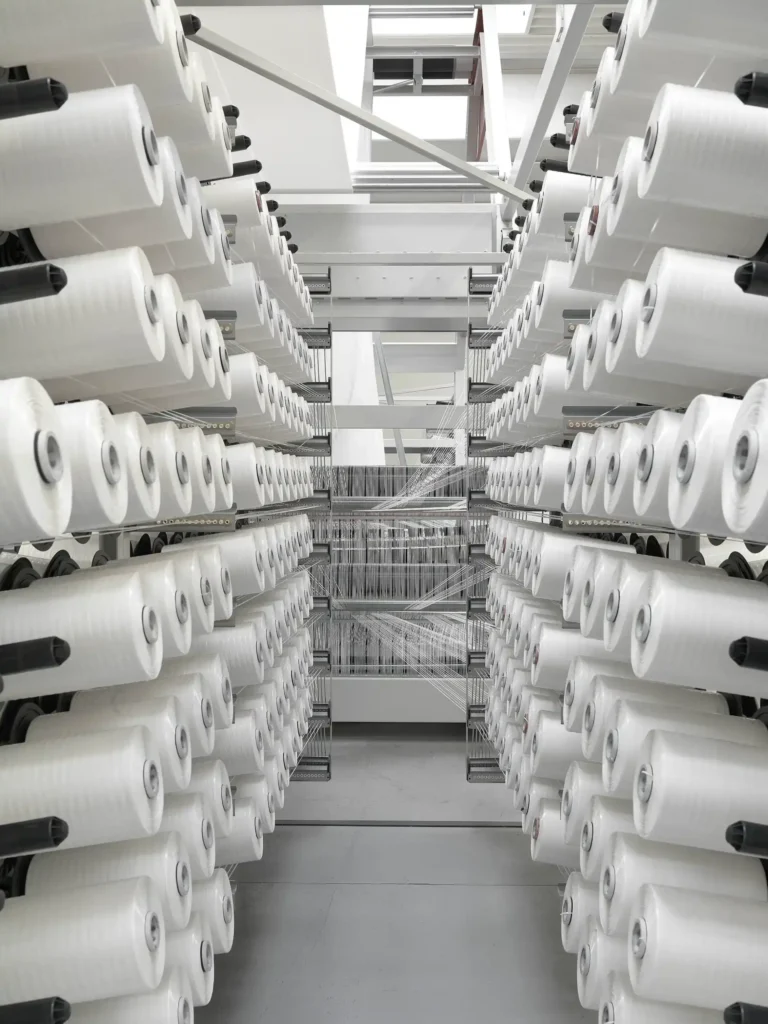
- Tape extrusion and drawing. Polypropylene resin, combined with UV and color masterbatches, is sheet-extruded and slit into tapes. Drawing aligns molecular chains, boosting modulus and tear resistance.
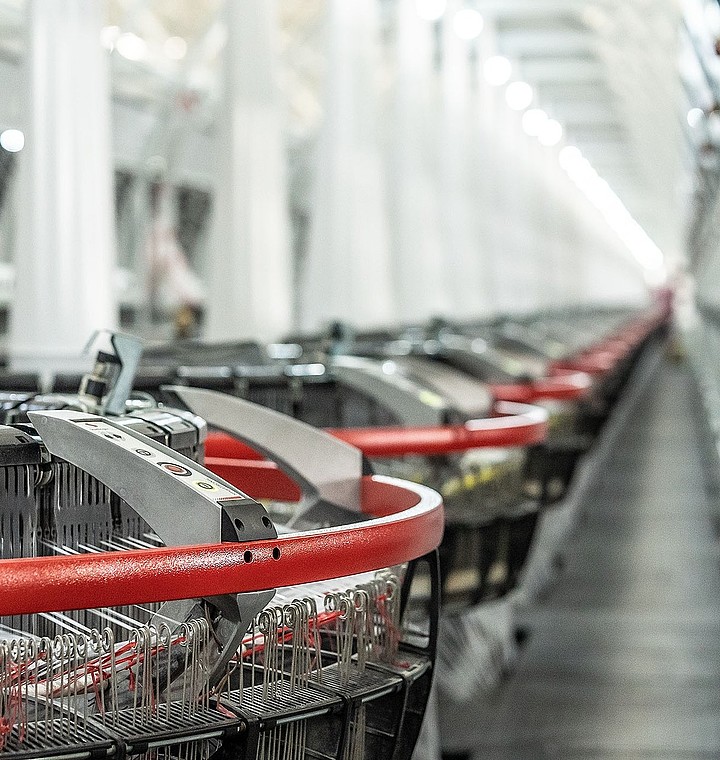
- Weaving. Tapes are woven on circular or flat looms to the target mesh (often 10×10). Loom tension, pick rate, and fabric gsm are monitored to keep the architecture consistent.
- Lamination (optional). BOPP or PE film is extrusion- or adhesive-laminated. A corona-treated face improves ink adhesion, enabling dense, high-contrast graphics.
- Printing. Flexographic runs are efficient for simple legends; rotogravure is ideal for photo-grade diagrams and long multilingual panels. Registration, rub resistance, and barcode/QR scannability are verified.
- Conversion. Fabric is cut; bottoms are double-stitched or heat-sealed (for laminated constructions). Valve mouths or open-mouth tops are formed; tie strings attached; gussets added when stability is desired.
- Quality control. Tensile, tear, seam, burst, UV aging, and abrasion tests are sampled per lot. Visual checks screen for skipped picks, pinholes, and print legibility under mud and abrasion.
- Specify draw ratio and denier window early; changes cascade through weaving and seam behavior.
- For laminated faces, require minimum surface energy (e.g., >38 dynes) post-corona to secure ink holdout.
- Demand scuff/rub testing on the actual artwork; legibility after abrasion matters more than showroom gloss.
Applications that translate specification into protection
Where do Printed Woven Bags excel? Anywhere water must be slowed, steered, or briefly denied while larger measures take effect. In alleyways and culverts. Along storefront thresholds and hospital docks. On levee crests and around boils. In two-bag door berms and four-foot walls stepped like careful masonry. The use-cases are diverse, but the deployment grammar repeats: fill to a controlled fraction; fold rather than tie; offset seams; cap with poly sheeting when needed.
- Flood defense around buildings. Threshold berms and perimeter ribbons assembled from flat-seated bags, with sheeting on the water-face to improve tightness.
- Levee augmentation. Rapid crest raises where course alignment and seam offsetting are mission-critical and easily communicated via printed diagrams.
- Seep and boil management. Circular rings with monitored water levels; additional courses applied as pressure dictates.
- Stormwater and erosion control. Check dams, slope buttresses, culvert aprons—temporary, targeted, and traceable because each placement can be identified by print.
| Scenario | Recommended bag format | Key printed prompts | Notes |
|---|---|---|---|
| Doorway berm for shops and clinics | 14×26 unlaminated with ties | FILL 1/2–2/3, FOLD UNDER, STAGGER SEAMS | Flat seating matters more than perfect moisture barrier; cap with poly sheet if needed. |
| Levee crest raise during high river | 18×30 for fewer courses, trained crews | COURSE MARKERS, OFFSET SEAMS, WATCH TOE | Heavier units; ensure mechanical assist or experienced teams. |
| Boil rings and seep containment | 14×26; optional PE liner if fines must be retained | RING GEOMETRY, MONITOR LEVEL, ADD COURSES | Inspection intervals printed as a reminder to patrols. |
A systems approach: from specification to cleanup
Even excellent components fail in disjointed systems. To make Printed Woven Bags pull their full weight, integrate them into a program that begins long before the first drop of rain and ends long after the water recedes. The outline below breaks a complex objective into tractable segments, aligns actions with outcomes, and emphasizes verification loops.
Define sizes, mesh, denier, UV hours, and the exact artwork set. The spec is a contract with physics; ambiguity later becomes failure in the field.
Place pallets near risk zones. Empty bags are cheap to move; prefill locally. Lot codes printed on bags enable rotation and replenishment.
Simulate under noise and time stress. Use the exact on-bag diagrams during exercises so the cognitive friction in the real event is minimal.
Staging, filling, folding, stacking, sheeting, inspection. Every verb has an artifact and an instruction. Keep them aligned.
Printed return channels and QR codes increase capture; recycling or waste-to-energy routes close the loop.
- What linear footage must you defend within 12 hours, with the crews you actually have?
- Where do you expect overtopping, not seepage, and how will sheeting be staged?
- Which errors repeat season after season, and how can print elements confront them directly?
Engineering arithmetic: planning with numbers instead of hopes
Hope is not a strategy; arithmetic is. The numbers below help planners translate objectives into pallets and courses, so the promise of Printed Woven Bags meets the reality of truck bays and volunteer rosters.
| Quantity | Typical value | Use |
|---|---|---|
| Fill fraction for 14×26 | 0.5–0.67 of volume (≈30–45 lb) | Ensures flat seating and manageable lift loads |
| Bags per linear foot for ≈4 ft wall | 10–12 | Converts wall length into bag counts and shifts |
| Pallet of empty 14×26 bags | Up to ~20,000 units under a ton | Logistics efficiency; move many opportunities in one truckload |
Human factors and print design: the words and pictures that prevent failure
Good print design on Printed Woven Bags is a negotiation between attention and adversity. Rain lowers contrast; mud abrades; gloves make fine detail useless. What survives? Big ideas, big icons, plain language. And repetition. Repetition is not redundancy; it is insurance against stress.
- Fill fraction indicator with visual bar.
- Fold-under icon that discourages tying.
- Brick-pattern seam offset diagram with arrows for water-face.
- Large QR to 60‑second video tutorial; high-contrast quiet zone.
- Lot and batch codes for rotation and audits.
Use a sans-serif typeface with thick strokes; avoid fine hairlines. Prefer dark text on white or safety-orange bands. If the face is BOPP, spec rub-resistant inks and test scannability under dust.
Procurement, quality assurance, and documentation
Procurement is where risk migrates from uncertainty to contract. A specification for Printed Woven Bags should capture physics (mesh, denier, seams), environment (UV hours), human factors (print set), and verifiability (QC certificates by lot). Do you really need RFID? Will reflective bands create value at road interfaces? Questions like these turn shopping lists into capability plans.
| Specification item | Typical/Recommended | Rationale |
|---|---|---|
| Bag format | 14×26 open-mouth with ties | Volunteer ergonomics; fold-under closure |
| Fabric | Woven PP, 10×10, 800–850D, 70–100 gsm | Balanced strength and permeability |
| UV stability | Target multi-month field life | Seasonal endurance between crest and cleanup |
| Print set | Fill bar, fold icon, seam diagram, QR, lot code | Human factors baked into the artifact |
Provide woven PP flood-control bags, 14×26, open mouth with attached ties; fabric 10×10, 800–850D; double-stitched bottom; UV-stabilized for seasonal outdoor exposure; print set to include fill fraction, fold-under icon, staggered seam diagram, QR linked to a 60‑second SOP, lot and batch codes. Deliver QC records for mesh, denier, seam strength, and UV aging.
Scenarios and playbooks that turn equipment into action
Abstract capability becomes real when mapped to the street. Consider how Printed Woven Bags behave in two frequent dramas: an urban crest that threatens storefronts and a rural seep that threatens a levee. The scripts differ, but the props do not.
- Stock: 14×26 white bags with a high-contrast print and an orange band.
- Setup: Two courses with poly sheeting on the water-face; cap and weigh with a top course.
- Why print matters: Volunteers learn in seconds—fill, fold, offset—without a briefing.
- Stock: 14×26 with clear ring geometry iconography; consider PE liner if fines escape.
- Setup: Build circular rings and monitor height; add courses as needed.
- Why print matters: Consistent geometry beats rushed improvisation; the bag reminds the crew.
Environmental stewardship without illusions
Recovery is part of deployment, not an afterthought. Printed Woven Bags can carry QR codes that resolve to drop-site maps and pickup schedules. Where clean streams for mechanical recycling exist, mono-PP constructions simplify sorting. Where they do not, pre-arranged energy recovery routes prevent ad hoc dumping that turns a civic victory into a reputational loss. Burlap appeals to the conscience yet rots faster; BOPP improves print quality yet complicates end-of-life processing. Choices are trade-offs; make them explicit.
Questions people actually ask, answered briefly
Can locally available soil be used? Yes, but well-graded sand compacts and seats best. Do you need liners? Only when you must retain fines or preserve prefilled dryness. Do QR codes still scan when dirty? On BOPP faces with proper quiet zones, yes; on unlaminated fabric, make the code large and test after abrasion. How many bags per linear foot? Ten to twelve for a roughly four-foot wall. Are sandbags watertight? No. They divert and slow water; poly sheeting improves tightness when required.
Further reading inside the ecosystem
For a concise overview of the broader family that includes Printed Woven Bags in ordinary packaging contexts, see polypropylene woven sacks. The core material platform is the same; the mission, printing priorities, and handling protocols differ.
- What exactly are Printed Woven Bags in the context of flood control?
- Materials and structure: what goes into a high-functioning Printed Woven Bag?
- Features that matter when the water is moving
- From resin to readiness: a production sequence that serves the mission
- Applications that translate specification into protection
- A systems approach: from specification to cleanup
- Engineering arithmetic: planning with numbers instead of hopes
- Human factors and print design: the words and pictures that prevent failure
- Procurement, quality assurance, and documentation
- Scenarios and playbooks that turn equipment into action
- Environmental stewardship without illusions
- Questions people actually ask, answered briefly
- Further reading inside the ecosystem
- 1. The Role of Printed Woven Bags in Flood Management
- 2. Customizing Packaging Solutions for Flood Control
- 3. Technical Insights: Material Science and Manufacturing
- 4. Addressing Client Needs: FAQs on Woven Bag Selection
- 5. VidePak’s Competitive Edge in Flood Management Solutions
- 6. Future Trends and Innovations
- Conclusion
“Why are printed woven bags becoming a cornerstone in flood management strategies?” asked a municipal engineer during a recent conference. The answer lies in their durability, cost-effectiveness, and adaptability to harsh environmental conditions. From containing sandbanks to reinforcing temporary barriers, these bags are engineered to withstand water pressure, abrasion, and UV exposure while enabling rapid deployment during emergencies. This report explores their technical specifications, packaging customization options, and how companies like VidePak leverage advanced manufacturing to meet global flood control demands.
1. The Role of Printed Woven Bags in Flood Management
Flood control relies on materials that balance strength, flexibility, and environmental resistance. Polypropylene (PP) woven bags, reinforced with laminated coatings or inner liners, are widely used for:
- Sandbag alternatives: Lightweight yet capable of holding 50–100 kg of sand or gravel, with tensile strengths exceeding 1,500 N/5 cm (warp/weft) .
- Erosion control: Multi-layered designs prevent soil displacement in riverbanks.
- Temporary levees: High-density PP fabric resists tearing under hydraulic pressure.
VidePak, with its 30+ years of expertise, produces BOPP-laminated woven bags using Austrian Starlinger machines, achieving print resolutions up to 10 colors for clear hazard warnings or branding. Their annual output of 100 million bags supports disaster responses in flood-prone regions like Southeast Asia and the Gulf Coast .
2. Customizing Packaging Solutions for Flood Control
Selecting the right woven bag configuration depends on environmental and operational factors:
Key Packaging Parameters
| Feature | Options | Application Example |
|---|---|---|
| Lamination | BOPP, PE, or none | BOPP lamination enhances UV resistance for outdoor storage . |
| Inner Liner | PE film, aluminum foil | PE liners prevent moisture seepage; aluminum foil adds chemical resistance . |
| Sealing Type | Heat-sealed, stitched, valve | Valve bags enable quick filling of sand or cement . |
| Print Design | Up to 10 colors, UV-resistant ink | High-visibility prints for safety instructions . |
Case Study: A 2024 project in Bangladesh utilized VidePak’s PE-lined woven bags with heat-sealed bottoms to create flood barriers. The PE layer reduced water absorption by 40%, extending the bags’ lifespan from 3 to 8 months .
3. Technical Insights: Material Science and Manufacturing
Why PP Woven Fabric?
- Virgin PP resin: Ensures consistent weave density (10×10 to 14×14 threads/cm²) and tensile strength .
- Additives: Anti-UV and anti-aging compounds mitigate degradation in prolonged sunlight exposure.
VidePak’s production line includes 100+ circular looms and 30 lamination machines, enabling rapid customization. For instance, their block-bottom valve bags integrate reinforced stitching and aluminum foil liners for flood-prone chemical storage .
4. Addressing Client Needs: FAQs on Woven Bag Selection
Q1: When should clients choose laminated vs. non-laminated bags?
A: Laminated bags (e.g., BOPP) are ideal for outdoor use, while non-laminated suits short-term, dry environments.
Q2: How does a PE inner liner improve performance?
A: PE liners block moisture ingress, critical for flood barriers exposed to standing water.
Q3: What printing techniques ensure durability?
A: Flexographic printing with solvent-based inks retains clarity after prolonged submersion.
5. VidePak’s Competitive Edge in Flood Management Solutions
Founded in 2008, VidePak combines scale with precision:
- Advanced equipment: 16 extrusion lines and 30+ lamination machines ensure 3,000+ metric tons/year output.
- Sustainability: 100% recyclable PP aligns with ESG goals, reducing landfill waste post-floods.
- Global reach: Annual sales of $80 million, serving clients in agriculture, construction, and disaster relief.
For example, their collaboration with a Dutch engineering firm supplied 500,000 multi-wall laminated bags for a Rhine River floodgate project, reducing breach risks by 60% .
6. Future Trends and Innovations
Emerging designs focus on:
- Smart materials: Integration of sensors to monitor bag integrity during floods.
- Biodegradable PP: Research into plant-based polymers for eco-sensitive zones .
VidePak’s R&D team is piloting ultrasonic-seamed bags to eliminate stitching weak points, a innovation inspired by advancements in breathable woven bag technology.
Conclusion
Printed woven bags are not just packaging—they are engineering solutions. By selecting the right lamination, liners, and sealing methods, clients can optimize flood control outcomes. VidePak’s blend of Starlinger technology and customized production positions it as a leader in this critical field. For those seeking to balance cost and resilience, understanding these parameters is key—because in flood management, every stitch matters.
For further insights, explore moisture-proof woven bag solutions and block-bottom bag innovations.