
What is the purpose and definition of Woven Recyclable Bags?
The phrase Woven Recyclable Bags names a class of heavy‑duty sacks built from interlaced polymer tapes—predominantly polypropylene (PP)—and intentionally specified so they can enter an established recycling pathway at end of life, usually the PP mechanical recycling stream. In livestock feed logistics, these bags are expected to do three things at once: keep rations dry enough to flow, stay intact under rough handling, and carry legible labels through dusty, high‑touch environments. When those three are met, waste shrinks, returns fall, and pallets stop behaving like unpredictable dominos.
- Recyclable PP woven feed sacks
- Mono‑polypropylene woven bags
- BOPP‑laminated woven feed bags
- Polywoven recyclable sacks
- PP mono‑material feed packaging
- Recyclable woven agro bags
Material stack and construction logic
Every layer in Woven Recyclable Bags earns its keep. When the stack is coherent, the line runs faster and the warehouse calms down. When it is not, seams complain, caking blooms, and pallets wander. Below is the stack, part by part, with design intent and cost levers spelled out.
Woven polypropylene (PP) body Polypropylene pellets are melted, cast as a thin film, slit into tapes, and drawn to align the polymer chains. These tapes are woven into fabric on circular or flat looms. For 25–50 kg feed sacks, body fabric typically spans 70–120 g/m², while bottoms run heavier to withstand drops and point loads from pellet corners and mineral granules. UV stabilizers guard strength during outdoor staging.
BOPP laminate (outer face) Biaxially oriented polypropylene film—often 18–35 µm—laminated to the weave. Gloss variants prioritize shelf appeal; matte variants add friction and resist scuff. BOPP carries crisp artwork and dense regulatory text without ink wicking, and it contributes a splash barrier that complements the woven substrate.
Optional kraft paper ply In regions that favor a paper look and more grab, a kraft sheet can be bonded to the woven PP. It improves surface friction and the “square” stance of stacked bags, but it complicates plastic‑only recycling unless fiber‑plastic separation exists.
Inner liners & coatings LDPE/LLDPE liners between 25–80 µm, or extrusion coatings on the fabric, tamp down sifting and control moisture. Hygroscopic premixes and molasses‑coated pellets often justify thicker gauges or skirted mouths for better hermeticity.
Functional finishes Anti‑slip varnishes raise bag‑to‑bag friction; micro‑perforations vent air at speed; easy‑open tear tapes save time at feeding; antistatic packages in liners mitigate dust clouds during filling.
| Layer | Typical choices | Primary function | Cost levers |
|---|---|---|---|
| Body fabric | PP tapes, 70–120 g/m² | Tensile backbone, tear resistance | Resin index, denier/yield, loom efficiency, rPP content |
| Bottom fabric | Heavier PP panel | Drop survival, point‑load tolerance | GSM, weave density, reinforcement patches |
| Outer face | BOPP gloss/matte or kraft paper | Print fidelity, scuff/COF control | Film gauge, ink coverage, coatings, plate count |
| Coating/liner | PE/PP coat; LDPE/LLDPE 25–80 µm | Moisture control, fines containment | Gauge, antistatic, attached vs loose fitment |
| Closures | Sewn; heat‑sealed; valve | Seal integrity, speed on line | Thread & film, equipment, seam design |
Feature set that moves real‑world needles
Features should translate into outcomes people can see, measure, and bank. Woven Recyclable Bags consistently shift the following dials when specified well.
- High strength at low tare Oriented tapes and efficient seams survive drops and fork bumps while keeping logistics weight under control.
- Moisture moderation Laminate plus liner combinations manage humidity, cutting caking risk and preserving flowability of crumbles and pellets.
- Legible, durable labeling BOPP or paper faces accept small text and survive conveyor rub, keeping ingredients, warnings, and feeding guidance readable.
- Geometry & friction Block‑bottom shapes stack straighter; anti‑slip surfaces reduce wrap; pallets stay inside their footprint.
- End‑of‑life readiness Mono‑PP constructions align with PP recycling where available, supporting circularity goals without exotic materials.
- Line compatibility Designs run on auger, impeller, or gravity fillers; micro‑perfs relieve trapped air, supporting speed without ballooning.
How Woven Recyclable Bags are manufactured
From polymer pellet to pallet‑ready sack, the journey is a sequence of tolerances. Keep them tight, and the package feels inevitable. Let them wander, and the plant starts writing incident reports.
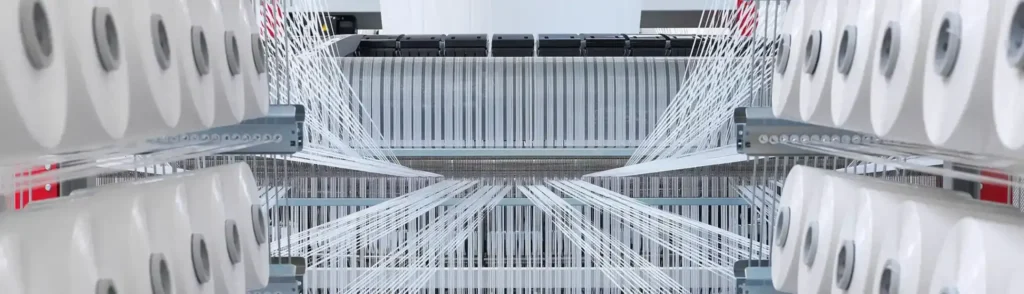
- Tape extrusion & drawing PP plus masterbatches are melted, cast, slit, and drawn. Denier and draw ratio govern tensile strength and elongation; any variability here reappears as seam failures later.
- Weaving Tapes become fabric on circular or flat looms. Body GSM and pick density balance puncture resistance with porosity and weight.
- Lamination or extrusion coating BOPP is adhesively laminated for print fidelity; or PP/PE coating adds barrier and seam‑friendly surfaces. Paper laminations use solvent‑free adhesives or extrusion bonds.
- Printing Artwork, regulatory panels, and barcodes are applied to the face web before combining to preserve clarity and registration.
- Converting Cut, crease, and form into open‑mouth or block‑bottom valve formats; insert sleeves or valves; add gussets for cube efficiency.
- Liner integration Loose liners are inserted; attached liners are tacked for hygiene and speed; skirted mouths enable hermetic options.
- Quality checks Tensile and tear; seam strength; drop tests; MVTR coupons; COF; print rub; dimensional tolerances; stacked compression dwell to simulate storage.
Where Woven Recyclable Bags shine in the feed chain
The use cases below are not exhaustive, but they capture the center of gravity for livestock‑feed packaging and adjacent agro‑industrial flows.
- Cattle, swine, poultry feeds Mash, crumbles, pellets—each with different de‑aeration needs and abrasion profiles.
- Mineral premixes and supplements Abrasive fines and dense granules; consider heavier GSM and scuff‑resistant faces.
- Specialty rations Calf starters and high‑energy blends may demand liners to control migration and odor.
- Seed grains and legumes Field distribution values woven strength and UV stability.
- Adjacent categories Fertilizers and salts often share the same logistics infrastructure and benefit from similar constructions.
Selection framework for a full‑length guide
If a miller thinks like an engineer and buys like a pragmatist, a coherent specification emerges. This framework decomposes the decision and then recombines it into one actionable bill of materials.
| Subsystem | Problem | Design responses | Metrics |
|---|---|---|---|
| Integrity | Humidity, caking, segregation | Liner gauge & seal; laminate MVTR; micro‑perfs sized for fill not storage | Lump counts, moisture gain, rework, housekeeping hours |
| Mechanics | Drop, puncture, stack lean | Bottom GSM; reinforcements; block‑bottom geometry; COF control | Drop passes, leaning returns, wrap per pallet, compression dwell |
| Operations | Speed and mouth control | Spout match; mouth pre‑crease; vent tuning; dust skirts | Bags/min, spout reseats, dust extractor load |
| Labeling | Clarity and rub resistance | High‑contrast zones; matte varnish; quiet areas for codes | Scan rate, rub test pass rate, audit findings |
| Circularity | End‑of‑life route | Mono‑PP stack; clear marks; rPP trials in non‑critical layers | Acceptance rate, rPP %, recycler feedback |
| Cost | Unit vs system spend | Cube gains; loss avoidance; wrap reduction; plate standardization | Landed cost/tonne; claims; payload; artwork plate count |
Specification matrices for quick starts
| Feed profile | Recommended format | Body GSM | Exterior face | Liner strategy | Closure | Notable options |
|---|---|---|---|---|---|---|
| Pelleted poultry/swine (domestic) | Open‑mouth gusseted PP woven | 80–100 g/m² | BOPP gloss or matte | Optional loose PE 30–50 µm (seasonal) | Sewn bottom + heat‑sealed top | Easy‑open tape; anti‑slip varnish |
| High‑fat/treated pellets (humid) | Block‑bottom valve | 90–110 g/m² | Matte BOPP (higher friction) | Attached LLDPE 40–60 µm | Ultrasonic‑sealed valve | Micro‑perfs tuned to line speed |
| Mineral premix (abrasive fines) | Open‑mouth reinforced bottom | 100–120 g/m² | Scuff‑resistant matte BOPP or paper‑laminated | Optional liner | Double‑fold sewn + taped seam | Corner reinforcements; stitch guards |
| Dairy TMR concentrates (export) | Block‑bottom valve, square | 95–115 g/m² | High‑cover print BOPP | Attached liner; skirted mouth | Sealed valve | Desiccant plan at pallet/container |
| Seeds/grains (field) | Open‑mouth gusseted | 85–100 g/m² | Paper‑laminated (COF) or matte BOPP | None or loose liner (seasonal) | Sewn | UV package for outdoor staging |
| Process/quality window | Typical target | Purpose |
|---|---|---|
| Seam strength (sewn) | ≥ 300 N per 10 cm (example) | Prevents splits on conveyor drops |
| MVTR (laminate/liner) | Low enough to protect flowability | Moisture moderation and anti‑caking |
| COF (bag‑to‑bag) | 0.35–0.55 | Stack stability and wrap reduction |
| Print rub resistance | Pass after simulated conveyor cycles | Label durability and compliance |
| Drop test | Pass at defined heights/orientations | Warehouse survival and customer trust |
Worked cost‑to‑serve example
A mill ships 1.5 million units of 50 kg pelleted feed annually across mixed inland/coastal routes. Comparing two builds:
Option A Unlaminated woven PP; sewn top/bottom; no liner.
Option B BOPP‑laminated woven PP with attached 50 µm liner; block‑bottom valve; anti‑slip finish.
- Breakage/caking returns drop 1.6% → 0.5%.
- Wrap consumption falls ~18% via better COF and cubing.
- Container payload up ~10% due to block‑bottom geometry.
- Label‑scuff complaints fall by roughly two‑thirds.
Even with a per‑unit premium, system savings overwhelm the delta once cleanup labor and claim rates are counted.
Questions from the shop floor
Do Woven Recyclable Bags always need a liner? Not always. Dry inland routes with quick turnover can run tight laminates and robust seams. Coastal export or monsoon storage argues for attached liners and sealed closures.
Is a paper‑laminated face still recyclable? Region dependent. Where fiber‑plastic separation exists, yes; otherwise, mono‑PP stacks are cleaner for polymer streams.
Block‑bottom vs open‑mouth? Block‑bottom often wins on stack integrity and container cube; open‑mouth stays attractive on slower lines or mixed SKUs.
Will rPP weaken the bag? Moderate rPP content is workable in tapes and non‑critical layers with proper tensile/seam validation.
Can sizes be standardized? Yes—common footprints simplify pallet patterns and plate inventories while preserving performance.
Field playbook: from RFQ to first stable run
- Map lanes: climates, dwell times, fill speeds, stack heights, export routes.
- Choose geometry: open‑mouth vs block‑bottom valve; gussets; spout types.
- Choose materials: body GSM; laminate/liner; UV package; anti‑slip or matte faces.
- Draft artwork: regulatory panels and machine‑readable zones; standardize plate sizes.
- Pilot across seasons: track caking, drop survival, dust load, pallet lean, payload.
- Lock SOPs: filling, sealing/sewing, wrap recipes, inspection checkpoints, rework loops.
- Plan end‑of‑life: align mono‑PP designs with local recyclers; label disposal routes clearly.
Failure modes and quick fixes
- Stitch‑hole wicking → switch to heat‑sealed tops or tape‑over sewn seams; tighten stitch pitch.
- Label smudge → add matte or over‑varnish in text panels; select higher rub‑resistance inks.
- Leaning stacks → raise COF via matte faces; move to block‑bottom; use corner boards; refine wrap recipe.
- Sifting dust → add coating/liner; reduce micro‑perf density; check valve sleeve fit.
- Bottom blowout → increase bottom GSM; reinforce fold; validate drop heights.
Engineering annex: variables to record
- Ambient temperature and RH at fill and during storage.
- Fill rate and de‑aeration time per bag; micro‑perf density.
- Drop orientations/heights during commissioning; pass/fail notes.
- Compression dwell (stack height and time); deformation profiles.
- MVTR coupon results for laminate/liner batches.
- COF in fresh and aged states; wrap tension settings.
- Label rub tests after simulated conveyor cycles; barcode scan rates.
RFQ checklist (copy/paste)
- Format: Woven Recyclable Bags — open‑mouth gusseted / block‑bottom valve / FFS tube (circle).
- Size: L × W × H: ____ × ____ × ____ mm; nominal capacity ____ kg.
- Body fabric: ____ g/m²; bottom: ____ g/m²; UV package ____ hours.
- Exterior face: BOPP gloss/matte or paper‑laminated; anti‑slip yes/no.
- Liner: loose/attached; gauge ____ µm; mouth type (skirt/duffle/plain).
- Closure: sewn / heat‑sealed / ultrasonic valve.
- Venting: micro‑perfs density ____; vent patch yes/no.
- Print: ____ colors; quiet zone for QR/batch code yes/no.
- Tests: drop, seam strength, compression dwell, MVTR coupon, print rub.
- End‑of‑life: mono‑PP design; recycling marks; rPP content target ____%.
- What is the purpose and definition of Woven Recyclable Bags?
- Material stack and construction logic
- Feature set that moves real‑world needles
- How Woven Recyclable Bags are manufactured
- Where Woven Recyclable Bags shine in the feed chain
- Selection framework for a full‑length guide
- Specification matrices for quick starts
- Worked cost‑to‑serve example
- Questions from the shop floor
- Field playbook: from RFQ to first stable run
- Failure modes and quick fixes
- Engineering annex: variables to record
- RFQ checklist (copy/paste)
- 1. Introduction to Woven Recyclable Bags in Livestock Feed Packaging
- 2. Material Selection: PP and PE Quality Testing
- 3. VidePak’s Manufacturing Excellence
- 4. Key Product Parameters and Performance Metrics
- 5. Addressing Sustainability and Market Demands
- 6. FAQs: Common Questions on Woven Feed Bags
- 7. The Future of Livestock Feed Packaging
“As a product manager, how do I ensure the woven recyclable bags we select for livestock feed packaging meet both durability and sustainability benchmarks?” This question, posed by a client during a recent industry conference, underscores the critical balance between functional performance and environmental responsibility in modern packaging solutions. The answer lies in rigorous material testing, advanced manufacturing processes, and adherence to global sustainability standards—all of which are central to VidePak’s approach to producing high-quality woven recyclable bags.
1. Introduction to Woven Recyclable Bags in Livestock Feed Packaging
Livestock feed packaging demands robust, moisture-resistant, and chemically stable materials to preserve nutritional integrity and prevent contamination. Woven polypropylene (PP) and polyethylene (PE) bags have emerged as industry standards due to their strength, recyclability, and cost-efficiency. VidePak, a leader in woven bag manufacturing since 2008, leverages cutting-edge technology, including Austrian Starlinger machinery, to produce over 100 million bags annually. With a focus on sustainability, their products align with global ESG commitments, offering custom solutions for feed producers worldwide.
2. Material Selection: PP and PE Quality Testing
The performance of woven bags hinges on the quality of raw materials. VidePak employs a multi-stage testing protocol for PP and PE resins to ensure compliance with industry standards.
2.1 PP Granule Testing for Outer Woven Layers
- Basic Physical Properties:
- Melt Flow Index (MFI): Measures polymer viscosity. For feed bags, an MFI of 2–4 g/10 min (ASTM D1238) ensures optimal extrusion and weaving stability.
- Density: PP density of 0.905–0.925 g/cm³ balances flexibility and tensile strength.
- Mechanical Properties:
- Tensile Strength & Elongation: Minimum tensile strength of 35 MPa (ISO 527-3) prevents tearing under heavy loads. VidePak’s PP bags achieve 40 MPa, exceeding industry norms.
- Impact Resistance: Notched Izod impact tests (ASTM D256) validate resilience to handling shocks.
- Thermal Properties:
- Heat Deflection Temperature (HDT): PP with HDT >100°C ensures stability in tropical climates.
- Crystallization Temperature: Differential Scanning Calorimetry (DSC) monitors structural uniformity during cooling.
- Appearance & Contaminants:
Visual inspections and UV spectroscopy detect impurities (>98% purity required).
2.2 PE Testing for Inner Liners
PE liners require additional assessments:
- Film Impact Resistance: Dart drop tests (ASTM D1709) ensure puncture resistance. VidePak’s PE liners withstand 500g impacts, critical for sharp feed ingredients.
3. VidePak’s Manufacturing Excellence
With 526 employees and 100+ circular looms, VidePak’s production capabilities are unmatched:
- Advanced Equipment: Starlinger machines enable high-speed weaving (200–300 rpm) and multi-layer lamination for enhanced barrier properties.
- Customization: Multi-color printing and UV coatings support brand differentiation.
- Sustainability: 30% of raw materials are recycled PP, reducing carbon footprint by 15% (verified by Life Cycle Assessments).
4. Key Product Parameters and Performance Metrics
| Parameter | PP Woven Bags | PE Inner Liners |
|---|---|---|
| Tensile Strength | 40 MPa | 25 MPa |
| Moisture Permeability | <10 g/m²/day | <5 g/m²/day |
| Recyclability | 100% recyclable | 100% recyclable |
| Load Capacity | Up to 50 kg | N/A |
5. Addressing Sustainability and Market Demands
VidePak’s recyclable bags align with EU Packaging Waste Directive 94/62/EC and FDA standards for food-contact materials. Case studies highlight their use in transporting 20,000 tons of feed annually for a U.S. poultry producer, reducing plastic waste by 40% compared to traditional packaging.
6. FAQs: Common Questions on Woven Feed Bags
Q1: How do PP woven bags compare to paper bags in moisture resistance?
A: PP bags exhibit 90% lower moisture permeability, critical for humid environments.
Q2: Can VidePak’s bags withstand long-term UV exposure?
A: Yes, UV-stabilized PP retains 95% tensile strength after 500 hours of ASTM G154 testing.
Q3: Are custom printing options durable?
A: High-resolution flexographic printing ensures logos remain intact after 10,000 handling cycles.
7. The Future of Livestock Feed Packaging
Innovations like biodegradable additives and IoT-enabled tracking are reshaping the industry. VidePak’s R&D team is piloting bio-based PP blends, aiming to achieve 50% biodegradability by 2026. Partnerships with agricultural cooperatives in Southeast Asia further demonstrate their commitment to scalable, eco-friendly solutions.
External Resources:
- For insights on sustainable woven bag applications in logistics, explore best practices in material innovation.
- Learn how kraft paper hybrids enhance feed packaging efficiency.
Conclusion
Selecting woven recyclable bags for livestock feed requires a meticulous balance of material science, manufacturing precision, and sustainability. VidePak’s expertise, backed by decades of industry leadership and cutting-edge technology, positions them as a trusted partner for global feed producers. By prioritizing rigorous testing and innovation, they deliver packaging solutions that protect both products and the planet.