
What Are Breathable Woven Bags for Pet Food Packaging?
Breathable Woven Bags for Pet Food Packaging are engineered sacks built around a woven polymer substrate and a deliberately controlled air‑exchange pathway. Instead of chasing absolute hermeticity, they invite a measured and purposeful “breath” that releases trapped air during filling, equalizes pressure during transport, and mitigates micro‑condensation during storage. The result is practical: crunchy kibble resists softening, baked treats keep their snap, dehydrated inclusions don’t sponge ambient moisture, and pallets behave like tidy rectangles rather than slumping cylinders. In short, Breathable Woven Bags for Pet Food Packaging are not simply containers; they are tuned components of a larger preservation‑and‑logistics system.
Also known as (aliases):
- Ventilated woven pet food sacks
- Air‑permeable PP woven bags
- Micro‑perforated polywoven pet food bags
- Breathable BOPP‑laminated woven sacks
- Moisture‑moderated woven pet packaging
- De‑aerating woven kibble bags
Plain‑language snapshot: a tough woven sack that intentionally “breathes” just enough to vent air and temper humidity—without inviting oil weep, aroma loss, or pest ingress.
Why this format, and why now? Because pet food behaves like a paradox. Fatty coatings crave oxygen control yet hate trapped humidity. Pellets shed micro‑dust that needs to escape during filling yet must be contained during transport. Retail panels must stay legible through conveyor rub while pallets need friction to keep layers square. Breathable Woven Bags for Pet Food Packaging reconcile these demands with a balanced design: strong but not stiff, printable but not fragile, breathable but not porous to trouble.
The Material System Behind Breathable Woven Bags for Pet Food Packaging
Think of the construction as a toolkit in layers: a structural spine, a functional face, a breathability engine, and a closure that respects flavor and fats. Each layer contributes; each contribution carries trade‑offs. The art is choosing the right layer at the right thickness in the right place.
1) Woven Polypropylene (PP) Fabric — Structural Spine
What it is. Polypropylene resin is melted, slit into tapes, drawn to orient the polymer chains, and woven into fabric on circular or flat looms. For 5–20 kg retail packs, body weights around 70–110 g/m² are common; for 25–50 kg kennel or breeder formats, 90–120 g/m² offers a robust safety margin. UV stabilizers can be included where outdoor staging is typical.
Why it’s selected. An oriented tape weave delivers a high strength‑to‑tare ratio, abrasion resistance against kibble edges and mineral premixes, and very low water uptake. Woven construction tolerates flexing and repeated bends on conveyors without stress‑cracking.
Where it sits. Everywhere that carries load: the body panels, base, seam zones, and lifting interfaces for larger formats.
Cost levers. Resin index, tape denier (yield), loom efficiency, pick density, and permissible recycled content (rPP) in non‑critical layers. Raising GSM improves drop survival but adds mass and cost; the sweet spot depends on route roughness and stack height.
2) Functional Faces — Print, Friction, and Scuff Control
- Matte BOPP laminate (roughly 18–35 µm): excellent graphic fidelity, barcode clarity, and a splash barrier. The matte texture raises bag‑to‑bag friction (COF) and hides scuffs in text zones.
- Paper‑laminated face (typically 60–90 g/m²): tactile grip and high friction for stable stacks; well‑suited to stamped secondary labels. Choose where fiber‑plastic separation exists at end of life.
- Coated woven PP: thin PP/PE coatings curb sifting yet preserve a modest porosity that aids de‑aeration on fast fillers.
Design nuance. Blend matte areas for friction with strategic gloss windows only where shelf appeal demands them. Keep ingredient decks and feeding guides in matte, high‑contrast zones.
3) The Breathability Engine — Perfs, Vents, and Weave Tuning
What it is. Needle or laser micro‑perforations, breathable membrane patches, and controlled porosity zones in the laminate. Together they allow trapped air to escape during fill and equalize pressure in transit, lowering the risk of condensation pockets.
Placement. Frequently on the back panel or in side gussets away from rain‑facing faces. Density and hole geometry are tuned to kibble size and fat level to discourage oil spotting.
Trade‑offs. More perf area means faster de‑aeration but higher vapor ingress; fewer perfs protect barrier but can slow filling and trap moisture. The optimal point is rarely theoretical; it’s measured on your filler, with your recipes, in your climate.
4) Optional Liners — Boundary Control Without Smothering
“Breathable” does not mean “unlined.” For high‑fat kibbles, aroma‑sensitive bakes, or freeze‑dried inclusions, a light liner (about 30–60 µm) can be added. Skirted liner mouths with tiny vent slits let air escape at the filler and then seal under heat or clip, preserving aromas and oil balance while keeping the overall system breathable.
5) Closures and Ergonomics — Open‑Mouth, Pinch‑Top, Zipper, or Valve
Retail pet formats typically use open‑mouth bags with heat seals, pinch‑tops, or reclosable zippers. Larger kennel formats may adopt valve sleeves for high‑speed filling. Tear notches replace pocket knives; rounded corners reduce scuffs in the trunk and on the shelf.
Essence in one line: a woven PP spine, a friction‑tuned face, a calibrated vent map, and a closure that respects fats and flavors—this is the working definition of Breathable Woven Bags for Pet Food Packaging.
Feature Set That Changes Outcomes
Calibrated Air Exchange
Air escapes quickly at the filler and gently thereafter. Condensation paths are reduced; pressure balloons are rare; panels stay smooth and readable.
Strength at Low Tare
Oriented tape weaves offer high tensile and tear resistance. Bags endure conveyor knocks, pallet edges, and routine drops without excessive mass.
Friction and Stack Geometry
Matte faces and gusset/block‑bottom options keep layers aligned. Pallets creep less; stretch‑wrap recipes shrink; container payloads rise.
Retail‑Grade Print Durability
Ingredient lists and feeding guides remain legible after miles of conveyor rub thanks to matte or scuff‑resistant varnish in text zones.
- Dust & oil management: perf fields avoid greasy zones; dust skirts around mouths contain fines; coatings discourage weep.
- Ergonomics: tear notches, soft corners, and predictable opening behavior make home use easier and safer.
- End‑of‑life: mono‑PP stacks slot into PP recycling where available; paper‑faced variants suit regions with fiber‑plastic separation. Label the path clearly.
How Breathable Woven Bags for Pet Food Packaging Are Manufactured
Production is less a straight line than a relay race of tolerances. Each station either preserves geometry and breathability—or injects variance you will pay for in claims and cleanup. Here is the modern, automation‑aware flow:
- Tape extrusion & drawing. Melt, cast, slit, draw. Maintain denier with closed‑loop control; poor draw ratios telegraph as seam weakness months later. Capture trim for in‑house reprocessing where allowed.
- Weaving. Circular or flat looms set GSM and pick density. Where breathability is the goal, engineers may target a slightly more open weave, letting laminate design and perf density define true vapor behavior.
- Coating/lamination. Extrusion coats control sifting and create weldable interfaces; BOPP laminates enable sharp print and COF tuning. Corona treatment ensures ink anchor; bond strength and curl are monitored continuously.
- Perforation & venting. Needle or laser systems create consistent micro‑perfs. Pilot against fattest recipes to ensure no visible oil spotting at storage extremes.
- Printing. Rotogravure or high‑screen flexo lays down dense text at fine line weights. Reserve low‑scuff quiet zones for barcodes and batch codes.
- Converting. Cut, gusset, and form. Open‑mouth heat seals or pinch‑tops are most common; valve styles are reserved for bulk kennel lines with high speed.
- Quality release. Dimensions, seam strength, drop survival, compression dwell, COF, print rub, perf density, and retained‑sample aroma/moisture checks. When in doubt, hold and learn.
Practical tip: standardize one vent density per SKU family instead of per flavor. Changeovers simplify; performance variance narrows; procurement leverages scale.
Where These Bags Earn Their Keep
Where do Breathable Woven Bags for Pet Food Packaging shine? Anywhere texture, aroma, and pallet discipline must coexist:
- Dry kibble (dogs, cats) in 3–25 kg retail units and 25–50 kg kennel formats.
- Baked biscuits and treats that require de‑aeration after oven cooling.
- High‑fat or oil‑coated recipes where controlled breathability curbs sweating.
- Mixed diets with dehydrated meat or vegetable inclusions sensitive to condensation.
- Adjacencies: working‑dog feed for farms, shelter and zoo diets, breeder‑program bulk formats.
Export lanes appreciate square geometry and matte faces: less wrap, fewer leans, more payload. Coastal humidity motivates light liners with skirted mouths: vapor moderation without pressure balloons or wrinkled print.
Benefits and Considerations — A Balanced Walkthrough
Letting a bag breathe sounds simple; the practice is nuanced. What do you gain—and what must you guard?
| Benefit | Operational effect | Guardrail |
|---|---|---|
| Fast de‑aeration at fill | Higher sustained bags‑per‑minute; fewer mouth reseats | Perf density tuned to keep faces clean (no oil spotting) |
| Lower condensation risk | Texture stability and fewer caking complaints | Place perfs away from rain‑facing panels and bottom corners |
| Square pallets, less wrap | Safer stacks; better container cube | Maintain COF ~0.35–0.55 to avoid sliding or snagging |
| Legible retail panels | Readability of ingredient decks and feeding guides | Use matte varnish in text zones; route panels away from scuff paths |
End‑of‑life pathways also deserve early attention. Where polymer streams exist, mono‑PP stacks (woven PP spine + BOPP face + PP zipper/valve) are generally accepted. Where fiber‑plastic separation is real, paper‑faced variants add grip without sacrificing recovery—provided the collection partner confirms acceptance before plates are locked.
Systematic Breakdown → Integrated Solution
Use a systems mindset to specify Breathable Woven Bags for Pet Food Packaging. Break the decision into sub‑problems, solve each with evidence, and reassemble into one coherent specification.
- Integrity (moisture, oils, volatiles). Calibrate MVTR to climate and dwell. Direct perf fields away from the oiliest panels. For high‑fat recipes, add skirted liner mouths with small vent slits.
- Mechanics (drop, stack, puncture). Tune GSM and bottom reinforcements to survive end‑drops. Target COF deliberately; get there with matte faces or anti‑slip varnishes.
- Operations (throughput, housekeeping). Size perfs for peak fill rates; pre‑crease mouths for consistent presentation; add dust skirts where fines accumulate.
- Compliance (labels, traceability). Reserve high‑contrast panels; validate rub resistance; keep batch codes out of high‑scuff corners.
- Sustainability (reuse/recycle). For breeder formats with predictable routes, explore closed‑loop reuse; otherwise keep designs mono‑PP and mark disposal paths clearly.
- Cost‑to‑serve (beyond unit price). Model avoided caking, wrap reduction, faster fills, and complaint declines; weigh against any bag premium.
Specification Tables and Engineering Data
The following color‑coded tables condense practical starting points. They are not prescriptions; they are catalysts for the first trial.
| Product profile | Recommended format | Body GSM | Face & friction | Perf/vent strategy | Closure |
|---|---|---|---|---|---|
| Standard kibble, inland | Open‑mouth gusseted | 80–95 g/m² | Matte BOPP; COF ≈ 0.4–0.5 | Low‑density micro‑perfs on back panel | Heat‑seal or pinch‑top |
| High‑fat kibble, coastal | Open‑mouth with light liner | 90–110 g/m² | Matte face; anti‑scuff varnish | Tuned perfs + skirted liner mouth | Heat‑seal; easy‑open tear |
| Baked treats, aroma‑sensitive | Paper‑laminated woven | 85–100 g/m² | High‑friction paper face | Micro‑perfs away from brand panel | Pinch‑top with reclose |
| Kennel bulk (25–50 kg) | Block‑bottom; optional valve | 95–120 g/m² | Matte; COF ≥ 0.45 | Higher perf density; venting in gussets | Sealed valve or sewn + tape |
| Parameter | Typical window | Why it matters |
|---|---|---|
| Bag‑to‑bag COF | 0.35–0.55 | Stack stability vs. ease of depalletizing |
| Perf density | Tune to de‑aeration time at filler | Throughput without oil spotting |
| Print rub resistance | Pass after simulated conveyor cycles | Label legibility throughout the route |
| Compression dwell | No failure at target top‑load/time | Safe stack height and container cube |
For a compact overview of related sack families and material options, see the background on PP woven bags.
Quality Assurance and Field Testing
Consistency is the quiet superpower of Breathable Woven Bags for Pet Food Packaging. One outlier—too many perfs, a glossy text panel, a loose zipper—can dominate your complaint log. Wrap your specification inside a test plan that catches drift early.
- Incoming checks: resin certificates; tape denier sampling; BOPP gauge and corona; paper basis weight; ink adhesion drawdowns.
- In‑process: loom GSM and pick density; lamination bond; COF; print registration; vent map verification; seal calibration for heat or pinch tops.
- Release tests: dimensions; seam strength; drop tests by orientation; compression dwell; perf density by vision system; print rub; retained‑sample moisture and aroma.
- Line trials: sustained BPM; de‑aeration settle time; pallet stability; wrap recipe; container payload; housekeeping around the filler.
Field sanity check: store retained bags in both high‑humidity and low‑humidity chambers, open weekly, and log texture, aroma, and visible oiling. The right perf map works in both worlds.
Risk Register and Countermeasures
| Symptom | Likely cause | Corrective action |
|---|---|---|
| Oil spots near perf field | Perf density too high in oily zones | Reduce density; move perf field; add breathable membrane patch |
| Leaning pallets | COF too low; bulge outside footprint | Raise COF with matte face; adopt block‑bottom geometry; re‑tune wrap |
| Dust around filler | Undersized vent area; spout mismatch | Increase perf area; add dust skirt; correct spout clamp |
| Scuffed ingredient panel | Glossy text zone in conveyor rub path | Switch to matte varnish; relocate panel; widen quiet zone |
Automation, Sustainability, and End‑of‑Life
Automation reduces variance; sustainability reduces doubt. Fortunately, Breathable Woven Bags for Pet Food Packaging align with both aims.
- Automation: vision systems verify perf maps and zipper placement; servo‑guided sealers hold dwell and temperature bands; predictive maintenance keeps loom GSM steady.
- Design‑for‑recycling: mono‑PP stacks (woven PP + BOPP face + PP zipper/valve) fit polymer streams; avoid dark pigments that lower recyclate value; make disposal marks unambiguous.
- Reuse where feasible: breeder formats with higher safety factors can be inspected and reused in controlled loops; retail sizes generally cycle through mechanical recycling rather than reuse.
RFQ Checklist and Decision Tree
Copy, paste, adapt. Consistent data in, comparable quotes out.
- Format: Breathable Woven Bags for Pet Food Packaging — open‑mouth / block‑bottom / valve (circle)
- Size (L × W × H): ____ × ____ × ____ mm; nominal capacity ____ kg
- Body fabric: ____ g/m²; bottom reinforcement: yes/no
- Face: matte BOPP / paper‑laminated / coated PP; target COF ____
- Perf density & location: ______; membrane patches: yes/no
- Liner: none / loose / attached (gauge ____ µm); mouth: plain / skirted
- Closure: heat‑seal / pinch‑top / zipper / valve (self‑closing or sealed)
- Print: ____ colors; rub‑resistant varnish in text zones: yes/no
- Tests: drop; compression dwell; print rub; perf density audit; MVTR sample; aroma retention trial
- End‑of‑life: mono‑PP design and marks; rPP content target ____% (if applicable)
Decision tree (fast track)
If humidity is high → add skirted liner mouth, keep perf field off rain‑facing panel.
If pallets lean → raise COF with matte face and consider block‑bottom geometry.
If labels scuff → matte varnish in text zones; relocate panels from conveyor rub.
If oil spots appear → move perf field; reduce density; trial breathable membrane patches.
Worked Scenarios and Thought Experiments
Scenario 1 — Three flavors, one footprint. You launch chicken (moderate fat), salmon (high fat), and lamb (aroma‑sensitive). Keep geometry constant and tune by panel: higher perf density on the back gusset; for salmon, add a light skirted liner mouth and a breathable patch above the fill plane. Your wrap recipe holds constant, your plate set remains unified, and your housekeeping team notices less dust.
Scenario 2 — Inland warehouse, winter to summer. A single specification must span cold‑dry and hot‑humid seasons. Rather than changing the bag, change the closure: heat‑seal in monsoon months, pinch‑top in dry months. Maintain the same perf field; alter only the sealer dwell to accommodate seasonal film behavior.
Scenario 3 — Kennel bulk for breeders. A 25–50 kg block‑bottom with tuned perf fields and an optional valve sleeve runs fast on industrial fillers and stacks square on tall pallets. Because units are consumed quickly in professional settings, the bag’s breathability improves turnover and reduces condensation inside transport vans.
Frequently Asked Questions
Q1: Do these bags always require a liner?
Not always. For inland routes with quick turnover and moderate fat levels, matte faces and tuned perf fields often suffice. In coastal humidity or for oilier recipes, add a light attached liner with a skirted mouth to preserve aromas and control moisture.
Q2: Won’t breathability reduce shelf life?
Counterintuitively, measured breathability can improve shelf life for crunchy textures by reducing condensation risk and pressure balloons that wrinkle films and stress seams. The key is calibrating perf density so oxygen exposure does not dominate the failure mode for the recipe.
Q3: Paper face or matte BOPP—how to choose?
Paper faces provide extra friction and a natural look; matte BOPP balances print brilliance with scuff resistance and broader recycling alignment. Choose paper where fiber‑plastic separation is robust; choose matte BOPP where polymer streams dominate.
Q4: How do we prevent oil spotting near perf fields?
Place perf maps away from the oiliest panels, reduce density for high‑fat SKUs, and consider breathable membrane patches that allow air out while resisting oil migration.
Q5: Are zipper closures practical at larger sizes?
For 10–15 kg premium retail formats, yes—if the zipper is robust and placed above a reinforced seal band. For 25–50 kg kennel sacks, valve or pinch‑top formats tend to be faster and safer.
Q6: How much does COF really matter?
Enough to move your stretch‑wrap budget. Targets around 0.35–0.55 typically balance stack stability and depalletizing ease. Below the window, pallets slide; above it, snagging and handling effort rise.
Glossary for Faster Teams
- COF (Coefficient of Friction): the grip between bag faces; tunes pallet stability and wrap usage.
- MVTR (Moisture Vapor Transmission Rate): the rate at which moisture passes through a face or liner; sets condensation risk.
- Perf density: number and size of micro‑holes per area; controls de‑aeration rate and vapor ingress.
- GSM (grams per square meter): fabric mass; correlates with puncture and drop performance.
- Matte face: a textured or low‑gloss laminate or varnish that raises friction and hides scuffs.
From Insight to Spec—A Closing Map
Begin with the product (fat level, inclusion type, aroma sensitivity). Add the route (humidity and dwell). Layer in line realities (fill speed, sealing method). Choose geometry (gusset or block‑bottom) and friction (paper face or matte BOPP). Calibrate breathability (perf density and placement, optional breathable patch). Validate with tests (drop, compression, rub, perf audit, retained‑sample aroma and moisture). Only then do you lock plates and place the order. This is how Breathable Woven Bags for Pet Food Packaging move from a promising idea to a quietly reliable workhorse.
- What Are Breathable Woven Bags for Pet Food Packaging?
- The Material System Behind Breathable Woven Bags for Pet Food Packaging
- Feature Set That Changes Outcomes
- How Breathable Woven Bags for Pet Food Packaging Are Manufactured
- Where These Bags Earn Their Keep
- Benefits and Considerations — A Balanced Walkthrough
- Systematic Breakdown → Integrated Solution
- Specification Tables and Engineering Data
- Quality Assurance and Field Testing
- Risk Register and Countermeasures
- Automation, Sustainability, and End‑of‑Life
- RFQ Checklist and Decision Tree
- Worked Scenarios and Thought Experiments
- Frequently Asked Questions
- Glossary for Faster Teams
- From Insight to Spec—A Closing Map
- 1. The Critical Role of Breathability in Pet Food Packaging
- 2. Logistics-Centric Design: Enhancing Efficiency in Transport and Warehousing
- 3. Case Study: VidePak’s Solution for a Global Pet Food Brand
- 4. Technical Specifications and Performance Metrics
- 5. Addressing Common Concerns: FAQs
- 6. Future Trends: Smart Packaging and Circular Economy
“How can pet food manufacturers ensure product freshness during long-haul transportation while meeting sustainability goals?” This question, posed by a supply chain manager at a recent pet industry conference, highlights the dual challenges of maintaining product integrity and reducing environmental impact. The answer lies in adopting breathable woven bags—a solution that combines material innovation, functional design, and logistics optimization, precisely the expertise that VidePak has honed over three decades in advanced woven packaging.
1. The Critical Role of Breathability in Pet Food Packaging
Pet food, particularly dry kibble, requires packaging that balances moisture control, aeration, and structural durability. Breathable woven polypropylene (PP) bags address these needs by allowing controlled airflow to prevent condensation while blocking external contaminants. For example, VidePak’s breathable bags maintain a moisture permeability rate of <15 g/m²/day (tested via ASTM E96), ensuring pet food remains crisp even in humid climates like Southeast Asia.
1.1 Material Science: Fine-Filament Weaving Technology
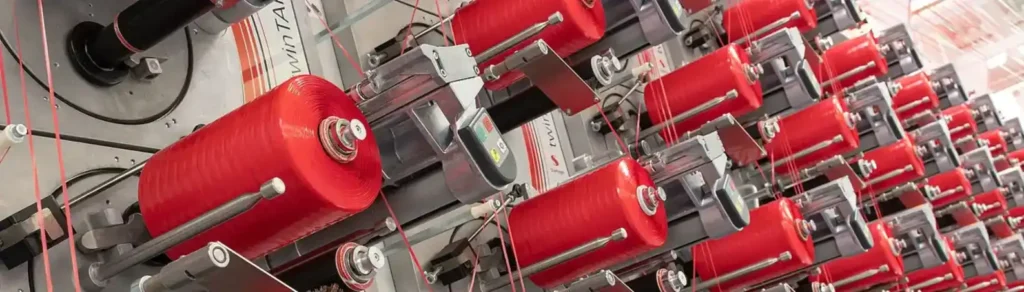
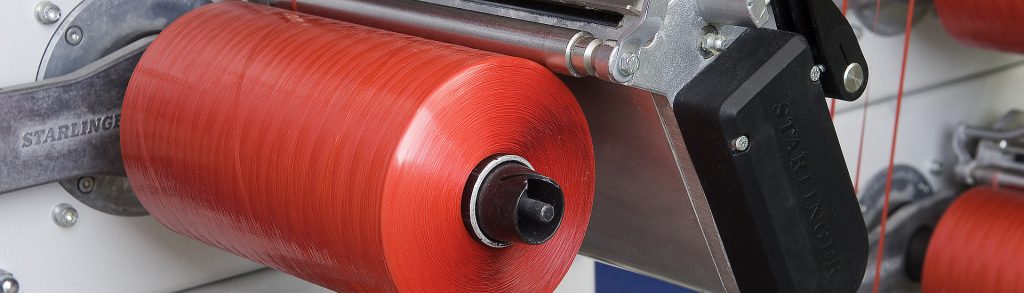
VidePak employs fine-filament weaving using Starlinger circular looms to produce fabric densities of 12–16 threads/cm². This technology enhances tensile strength (up to 2,200 N/5 cm per ISO 527-3) while creating micro-pores (40–60 microns) for optimal airflow. Compared to traditional jute bags, these PP bags reduce mold growth risk by 70% and extend shelf life by 30%.
1.2 Sustainability Alignment
With 30% recycled PP content and full recyclability, VidePak’s breathable bags align with EU Packaging Waste Directive 94/62/EC. A 2024 study by the Sustainable Packaging Coalition notes that such designs reduce carbon footprints by 18% compared to multi-layer laminated alternatives.
2. Logistics-Centric Design: Enhancing Efficiency in Transport and Warehousing
Breathable woven bags must withstand rigorous handling across global supply chains. VidePak integrates features tailored for logistics efficiency:
2.1 Stackability and Palletization
- Reinforced Corners: Heat-sealed edges and anti-slip coatings enable stable stacking up to 8 layers (4 meters), critical for high-density warehouse storage.
- Uniform Dimensions: Bags are precision-cut to fit Euro pallet standards (1200×800 mm), maximizing container space utilization (85–90% fill rate).
2.2 Handling Convenience
- Lift Loops and Forklift Channels: Integrated loops allow crane-assisted loading, reducing manual labor by 40% in ports like Rotterdam.
- QR Code Integration: Laser-printed QR codes enable real-time tracking via RFID, reducing shipment loss rates to <0.1%.
3. Case Study: VidePak’s Solution for a Global Pet Food Brand
A leading U.S. pet food company partnered with VidePak to redesign packaging for its Asia-Pacific distribution. Key outcomes:
- Moisture Control: Reduced spoilage from 5% to 0.8% during monsoon-season shipments.
- Cost Savings: Lightweight design (180 g/bag vs. 250 g for traditional bags) cut海运 costs by 15% on the Shanghai-to-Los Angeles route.
4. Technical Specifications and Performance Metrics
| Parameter | VidePak Breathable Bags | Standard PP Bags |
|---|---|---|
| Tensile Strength (Warp/Weft) | 2,200 N/5 cm | 1,500 N/5 cm |
| Moisture Permeability | <15 g/m²/day | <30 g/m²/day |
| Load Capacity | 50 kg | 35 kg |
| Recyclability | 100% | 80–90% |
5. Addressing Common Concerns: FAQs
Q1: Can breathable bags withstand freezing temperatures during transit?
A: Yes. VidePak’s PP fabric retains flexibility at -30°C (ASTM D746), making it suitable for cold chain logistics.
Q2: How do these bags compare to FIBCs for bulk pet food transport?
A: While FIBCs handle 1–2 tons, breathable woven bags are 40% cheaper for mid-sized loads (25–50 kg) and offer better stackability.
Q3: Are custom printing options fade-resistant?
A: High-definition flexographic printing retains 95% color vibrancy after 5,000 handling cycles.
6. Future Trends: Smart Packaging and Circular Economy
VidePak’s R&D team is piloting:
- Biodegradable Additives: PP blends with 20% PLA aim for 50% biodegradability by 2027.
- IoT-Enabled Bags: Temperature/humidity sensors embedded in liners provide real-time data via Bluetooth, trialed with a European pet food retailer.
External Resources:
- Discover how breathable woven bags enhance retail storage efficiency.
- Explore innovative pet food packaging solutions with FFS roll bags.
Conclusion
Breathable woven bags represent a paradigm shift in pet food packaging, merging material resilience with logistics intelligence. VidePak’s expertise in fine-filament weaving and sustainability-driven design positions it as a leader in this space, offering solutions that protect products, streamline supply chains, and align with global environmental standards. As the pet food market grows (projected 6.2% CAGR through 2030), adopting such innovations will be pivotal for brands aiming to balance quality, cost, and planetary health.