
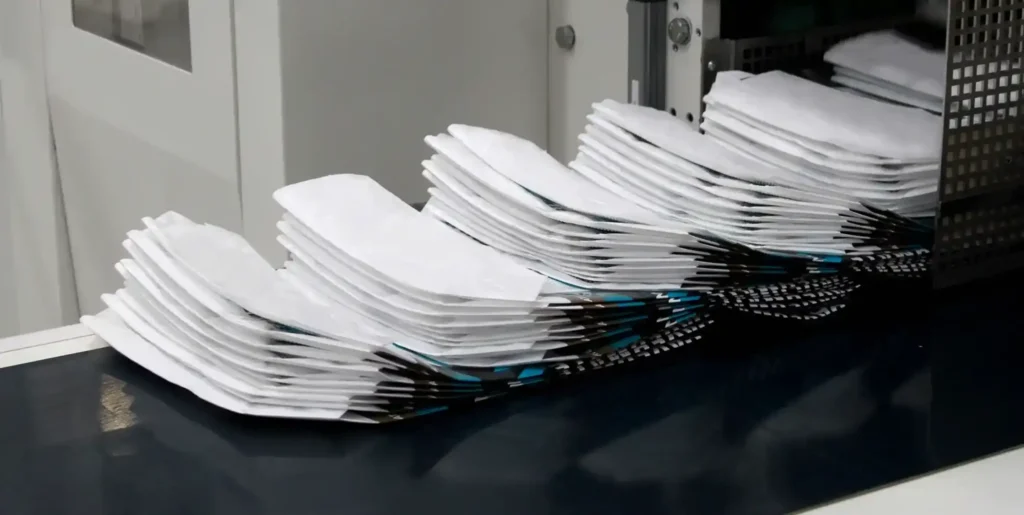
What Are SOS PP Bags? Definition, Behavior, and Everyday Names
SOS PP Bags are self‑opening square woven polypropylene sacks with a block‑bottom geometry that enables the package to pop open at the mouth and stand upright on its own. The square base stabilizes the fill zone, the side gussets present a tidy rectangular opening, and the overall shape behaves predictably on automated and semi‑automated lines. Why does that matter? Because shape controls flow. When a sack self‑opens cleanly and stays square, spillage drops, weighers stabilize, and pallets stack flatter. In other words, geometry becomes throughput.
Across feed mills, agri‑supply depots, fertilizer blenders, pet‑care facilities, and DIY distribution centers, SOS PP Bags occupy a distinct niche: faster filling than many traditional open‑mouth formats; better moisture tolerance than paper; and a stand‑up, shelf‑ready stance that suits retail. The body is woven from oriented polypropylene tapes; optional coatings, laminations, or liners adapt barrier and print quality; and the square‑bottom conversion completes the package’s mechanical logic.
Aliases found on plant floors, in RFQs, and in converter catalogs
- Self‑Opening Square PP Bags
- Block‑Bottom Open‑Mouth PP Bags (often shortened to BBOM)
- Pasted Open‑Mouth PP Sacks (POM, when the bottom is pasted)
- Square‑Bottom Woven PP Sacks
- BBOM Woven Polypropylene Bags
- Self‑Standing PP Woven Sacks
- Open‑Mouth Block‑Bottom PP Bags
- SOS Woven Poly Bags
Different names, same intent: a square‑bottom, open‑mouth woven polypropylene sack that fills quickly, stands unaided, and stacks neatly. What varies is the detailing—pasted versus stitched bottoms, liner presence, antistatic performance, and print or laminate choices.
Materials and Architecture: From Resin to Geometry
Great packaging begins with disciplined materials. The “what” of SOS PP Bags is a modular system: a structural woven substrate, functional surfaces for barrier and print, optional liners for demanding powders, and a conversion that creates the block‑bottom stance. Each module is a dial you can tune—denier for strength, coating weight for moisture control, micro‑perforations for de‑aeration, and paste pattern for squareness.
Structural fabric
- Isotactic polypropylene (PP) homopolymer tape yarns for clean drawability, low density (~0.90 g/cm³), and chemical stability with salts, mild alkalis, and common feed or fertilizer ingredients.
- Impact‑copolymer PP where low‑temperature toughness and rough handling dominate—winter routes, cold warehouses, aggressive conveyors.
- Typical denier and mesh for SOS‑scale sacks: ~700–1,500 D at 10×10 to 12×12 tapes per inch, tuned to payload mass and drop profile.
Surface and barrier layers
- Extrusion coatings in PP or PE (~10–40 μm) to add sift control, increase water‑vapor resistance, and create a uniform print base. PP‑on‑PP aids mono‑material recycling; PE can improve heat‑seal response.
- BOPP lamination (15–25 μm) on the outer face for photographic print fidelity, scuff resistance, and moisture buffering where shelf appeal matters.
- Micro‑perforations (when coating is present) to manage de‑aeration during high‑speed filling without ballooning.
Internal liners (optional)
- Loose or form‑fit liners in HDPE/LLDPE for moisture and odor barriers. For combustible dust contexts, antistatic or conductive liners maintain safety margins.
- Where flavors and aromas are sensitive (pet‑care, certain mineral mixes), liners provide the hygienic interface users expect.
Additive masterbatches
- UV stabilizers (HALS + absorbers) aligned to expected staging windows and climate.
- Color and TiO₂ concentrates for opacity, brand identity, and fast floor recognition.
- Slip and anti‑block for smooth flow along formers and packers; anti‑fibrillation to reduce tape “hairing.”
- Antistatic packages to reduce dust cling and nuisance shocks near powder operations.
Closures, reinforcements, and bottom geometry
- Block‑bottom folds that produce the self‑standing base; pasted for squareness or stitched for repairability.
- Top hemming and easy‑open features where retail ergonomics matter.
- Filler cords near seams to reduce leakage of fine granules under vibration.
Everything connects: fabric → surface → liner → bottom. Tune one, revisit the others. A heavier denier improves seam pull‑out, yet raises cost and carbon. A denser coating cuts dusting, yet might slow de‑aeration unless micro‑perfs are added. Systems thinking prevents one‑step fixes from becoming two‑step problems.
Defining Features: Why SOS PP Bags Punch Above Their Weight
What distinguishes SOS PP Bags from other sacks isn’t a single headline claim but a bundle of traits that reinforce each other. Square geometry supports speed. Woven polypropylene supports toughness. Optional laminations support branding. Together, they move goods with fewer surprises.
Self‑opening, self‑standing behavior
The bag pops open at the spout, presents a square mouth, and sits flat on conveyors. Result: cleaner fills, faster cycles, tighter pallets. Geometry turns into productivity.
Strength‑to‑weight efficiency
Drawn PP tapes deliver high tenacity at low mass. Correct mesh and GSM easily meet the drop and vibration regime for their class while controlling polymer use.
Moisture management, tuned
Uncoated fabrics breathe; coatings and BOPP laminations raise resistance to humidity pickup. Micro‑perfs fine‑tune de‑aeration so high‑speed packers don’t balloon the sack.
Branding and regulatory communication
Coated exteriors accept durable flexo; BOPP laminations enable photographic graphics and easy wipe‑downs. Net quantity, batch/lot, and instructions remain legible throughout the route when inks and corona levels match.
Circularity as design principle
Mono‑PP constructions (fabric + PP coating + PP thread) raise bale purity for recycling. BOPP is also PP, which aligns well with PP streams where sortation allows it. Optimize graphics without sabotaging end‑of‑life.
Manufacturing Flow: How SOS PP Bags Are Made
Production is not a mystery; it is choreography. Each station sets up the next. Control the early steps and the late steps behave. Ignore the early steps and you chase defects at the end.
- Compounding and extrusion: Virgin or qualified recycled PP pellets and masterbatches are blended and extruded. Tape yarn routes create a flat film that is quenched and slit; monofilament routes are used for specific constructions.
- Orientation and heat‑setting: Slit ribbons are drawn to raise tenacity and set elongation at break. Heat‑setting stabilizes the crystalline structure, which is vital before coating and printing.
- Weaving: Circular looms yield tubular fabric; flat looms yield sheet fabric. Mesh density and GSM—often ~80–140 g/m² for SOS‑class sacks—are tuned to payload and drop risk.
- Coating or lamination (optional): PP or PE coating adds sift control and moisture resistance; BOPP film on the outside supports high‑fidelity print and scuff resistance.
- Printing: Flexographic or rotogravure systems apply branding, mandatory text, icons, and codes. Surface energy management (corona) ensures adhesion and rub resistance.
- Conversion to the square bottom: Gusseting, folding, and pasting or stitching create the block‑bottom stance. Top hems are stabilized; easy‑open tapes or handles may be added. Filler cords and sift‑proof seams are specified for fine granules.
- Quality and palletization: Seam integrity, bottom burst, volume checks, drop/compression tests, and label peel/rub tests. Pallet patterns are validated (cross‑keying, step‑back layers) before shipping with full traceability.
Single‑line process map
Resin → Film → Slit → Draw → Weave → Coat/Laminate → Print → Form Square Bottom → Inspect → Palletize → Ship.
Applications: Where SOS PP Bags Excel
Every application is a trade. Need speed, stack stability, and moisture tolerance? SOS PP Bags are often the simplest answer. Need ultra‑tight barrier for powders that cake instantly? Another format may serve you better. Clarity about payload and route makes the decision plain.
Animal feed and additives
Square bottoms support fast filling of pellets and granulated mixes; coatings or BOPP laminations protect against ambient humidity. Generous panel space carries guaranteed analysis and feeding directions without crowding.
Agricultural commodities and pulses
Beans, lentils, and pulses benefit from steady pallets and clean faces. Breathable or lightly coated fabrics can be selected to match climate risk.
Fertilizers and soil amendments
Granular NPK blends and micronutrients need moisture management; correct coating weights, seam allowances, and filler cords reduce caking and leakage under vibration.
Minerals and DIY granules
Non‑dusting mineral granules, wood pellets, and hearth products run cleanly on impeller or auger packers and present stiff, scuff‑resistant faces for retail aisles.
Related reading
For teams planning premium print on square‑bottom sacks, explore laminated BOPP woven bags as a complementary platform for high‑fidelity graphics and moisture buffering.
From Title to Tool: Understanding Quality Issues and Testing Standards
The phrase “SOS PP Bags: Understanding Quality Issues and Comprehensive Testing Standards” asks a practical question: what fails, why does it fail, and which proofs keep failures rare? Instead of treating defects as random misfortune, treat them as predictable outcomes of controllable variables. Below is a field‑tested map of the usual suspects and the tests that keep them in line.
Tape and fabric variability
Symptoms: inconsistent denier, GSM drift, skewed mesh counts; effects: weak zones and seam failures. Controls: draw‑ratio SPC, online GSM scanning, loom tension audits, lot‑wise tensile and elongation checks.
Bottom geometry nonconformance
Symptoms: bags refuse to self‑open, wobble, or lean. Controls: folding jigs, paste bead‑weight controls, cooling fixtures, bottom burst and pallet simulation trials.
Sift leaks and dusting
Symptoms: fines escape at side seams or bottoms; hoods collect dust. Controls: coat‑weight targets, filler‑cord SOPs, stitch‑pitch specs, vibration‑table testing with the actual product blend.
Label and print failures
Symptoms: scuffing, smears, or label peel in damp routes. Controls: dyne checks, ink adhesion crosshatch, label peel in conditioned environments, transport rub tests.
UV embrittlement
Symptoms: brittle tapes and cracked seams after sun exposure. Controls: climate‑specific UV packages, accelerated UV testing, covered‑yard SOPs, FIFO rotations.
ESD misclassification
Symptoms: static build‑up near powder operations; worst case, ignition hazards. Controls: risk assessment; antistatic liners or conductive features; grounding and housekeeping at fill points.
Testing Pillars: Proving Performance Before It Ships
Testing is not bureaucracy; it is insurance against predictable pain. The following pillars, widely used in 2024–2025 woven‑bag programs, convert claims into evidence.
Material and fabric
- Tape tenacity and elongation gates matched to payload and drop risks.
- Fabric tensile (warp/weft), seam efficiency, seam peel/tear resistance.
- Coating/lamination adhesion via peel tests; micro‑perf audit when present.
Bag‑level mechanics
- Filled‑bag drops from specified heights for handling shocks.
- Compression/time‑under‑load to validate pallet stacks and hooding.
- Random vibration to surface sift or label failures.
- Bottom burst rigs and seam pull tests for square‑bottom confidence.
Environmental conditioning
- Temperature/humidity cycles that mimic route climates; watch for caking and delamination.
- Accelerated UV exposure to confirm outdoor staging life.
Regulatory and labeling
- Identity, net quantity, directions, and traceability; legibility after dry and wet rubs.
- Barcodes/QR that scan cleanly after transport abrasion.
Pallet‑level trials
- Cross‑keying, step‑back layers, corner boards, and hooding verified with full pallets.
- Measure creep, bulge, and layer shift over 24–72 hours.
Systems Thinking: Break Down the Problem, Then Reassemble the Spec
To make SOS PP Bags dependable, reduce the unknowns. Ask six practical questions; write six practical answers; then synthesize them into one document and one playbook.
- Payload geometry and density: smallest particle versus seam pitch; bulk density × bag volume estimates filled mass; denier and GSM scale from there.
- Moisture and climate: humidity risk and rainfall probability dictate coating/laminate choice and pallet hooding.
- Line technology and de‑aeration: impeller, auger, or gravity packers call for specific micro‑perf patterns and coat weights.
- Handling and stacking: define maximum stack heights and step‑back cadence; validate compression resistance and easy‑open ergonomics.
- Regulatory and branding: list mandatory statements and set print/ink systems that survive the route.
- Sustainability and end‑of‑life: keep mono‑PP where possible, avoid heavy tints that lower bale value, and publish bale instructions for downstream partners.
Integration checkpoint
Integrate those answers into a spec that includes fabric (denier/mesh/GSM), surface system (coating/laminate, micro‑perfs), bottom style and paste pattern, seam pitch/allowances, filler cords and liners, print/ink systems, label substrates/adhesives, ESD provisions where needed, pallet pattern/hooding, and test gates. Then run lab → short line pilot → pallet pilot under realistic humidity and handling.
Color Tables: Specs, Tests, and Quick Selectors
| Component | Typical options | Why it matters | Where it lives |
|---|---|---|---|
| Structural fabric | PP homopolymer or impact‑copolymer tapes; 700–1,500 D; 10×10–12×12 tapes/in. | Tensile and tear strength; drop resistance | Woven body (tubular or flat) |
| Coating | Extruded PP/PE, 10–40 μm; optional micro‑perfs | Moisture/sift control; print base; de‑aeration tuning | One/both sides |
| Lamination | BOPP 15–25 μm (outer face) | Premium graphics; added humidity buffer | Exterior face |
| Liner | HDPE/LLDPE (plain/antistatic/conductive) | Moisture/odor barrier; ESD compliance | Inside the sack |
| Threads and cords | PP/PE or polyester thread; PP filler cords | Seam strength; sift‑proofing; easy‑open options | Seams and hems |
| Additives | UV, color, antistatic, slip, anti‑fibrillation | Outdoor life; safety; runnability; appearance | Dispersed in tapes/coatings |
| Attribute | Typical range | Notes |
|---|---|---|
| Fabric GSM | ~80–140 g/m² | Tune to payload mass and drop profile |
| Tape denier | ~700–1,500 D | Heavier for angular loads |
| Mesh density | 10×10–12×12 tapes/in. | Balance strength and printability |
| Coating weight | ~10–40 μm | Higher for barrier; micro‑perfs for de‑aeration |
| Bottom style | Pasted or stitched block‑bottom | Pasted boosts squareness; stitched eases repairs |
| Easy‑open | Optional tapes/tear paths | Retail ergonomics |
| Test area | Representative practice | Purpose | Gate/observation |
|---|---|---|---|
| Tape/fabric tensile | Lab tensile on tapes/fabric; converter SOPs drawing from ISO/ASTM families | Ensure base strength and elongation targets | Lot‑wise SPC pass/fail |
| Seam/bottom integrity | Seam peel/pull and bottom‑burst rigs | Prevent seam splits and bottom blowouts | Set by payload and drop risks |
| Drop (filled sack) | Vertical impact drops to target height(s) | Simulate handling shocks | No rupture; limited sift |
| Compression/stack | Static compression over time‑under‑load | Confirm pallet stability, hooding performance | Creep/bulge within limits |
| Vibration | Random vibration profiles | Surface sift/label failures | No progressive leakage |
| UV weathering | Accelerated UV exposure | Limit embrittlement risk | Tensile retention after UV |
| Label/ink adhesion | Crosshatch; rub and wet‑rub | Maintain regulatory readability | No delamination; legible text |
Practical Q&A for Engineers, Buyers, and Operators
Are SOS PP Bags a universal substitute for paper SOS?
No. For powders needing strict moisture barrier or regulatory pathways aligned to paper, paper may remain preferred. SOS PP Bags excel where durability, moisture tolerance, and speed are decisive. Hybrid systems (woven PP + liner) can bridge gaps.
What if the product tends to sift?
Increase coating weight, specify filler cords, tighten stitch pitch, or add an inner liner. Validate with vibration‑table and drop tests using the real blend.
Can laminated SOS PP Bags be recycled?
Woven PP fabric and BOPP laminate are both polypropylene. Many PP streams accept them together, especially with mono‑PP constructions and lighter palettes. Confirm local sortation rules and publish bale guidance.
Lines losing time to bag ballooning?
Revisit de‑aeration: micro‑perf layout, coat weight, and packer vent settings. Ballooning simply signals trapped air.
Tuning pallets for humid, long routes
Employ cross‑keying and step‑back layers; apply stretch‑ or shrink‑hoods; confirm compression resistance for the route’s dwell times; measure creep and bulge before scale‑up.
Where do high‑graphics faces fit?
Use BOPP laminations on SOS PP Bags to achieve photograph‑grade imagery and durable surfaces; see also the complementary platform of laminated BOPP woven bags.
Implementation Blueprint: From Spec to Steady State
Documents don’t lift pallets; processes do. Convert the specification into action, measure honestly, and change what the data demands.
- Draft a single source of truth: format, fabric (denier/mesh/GSM), surface system (coating/laminate, micro‑perfs), bottom style and paste pattern, seam pitch/allowances, cords/liners, print/ink, labels/adhesives, ESD provisions, pallet pattern, hooding rules.
- Validate in the lab: tensile and seam tests; bottom burst; de‑aeration audit; coating adhesion; label peel/rub; UV weathering to expected outdoor exposure.
- Pilot on the line (24–72 hours): record bagger rates, reject causes, dusting at fill, label wear, and pallet stability. Adjust before bulk purchase orders.
- Prove it on pallets: full pallets through real logistics—humidity, handling, dwell times; measure creep, bulge, sift, and read rates for mandatory text.
- Lock, train, and monitor: publish work instructions with visuals; train on easy‑open features, hooding, and yard storage; monitor damage rate, line speed, returns, and bale purity.
- Evolve with suppliers: harmonize geometry and label placements across vendors; establish common QC gates and data formats; audit top‑lift/compression/UV data periodically.
Keyword Map and Natural Long‑Tails
Primary keyword: SOS PP Bags.
Related phrases used naturally throughout: self‑opening square polypropylene bags; block‑bottom open‑mouth PP sacks; pasted open‑mouth woven PP bags; square‑bottom PP bags; BBOM woven sacks; SOS woven poly bags; open‑mouth block‑bottom polypropylene sacks; moisture‑resistant PP feed bags; sift‑proof PP woven sacks; mono‑material polypropylene packaging.

- What Are SOS PP Bags? Definition, Behavior, and Everyday Names
- Materials and Architecture: From Resin to Geometry
- Defining Features: Why SOS PP Bags Punch Above Their Weight
- Manufacturing Flow: How SOS PP Bags Are Made
- Applications: Where SOS PP Bags Excel
- From Title to Tool: Understanding Quality Issues and Testing Standards
- Testing Pillars: Proving Performance Before It Ships
- Systems Thinking: Break Down the Problem, Then Reassemble the Spec
- Color Tables: Specs, Tests, and Quick Selectors
- Practical Q&A for Engineers, Buyers, and Operators
- Implementation Blueprint: From Spec to Steady State
- Keyword Map and Natural Long‑Tails
- 1. SOS PP Bags: Defining Functional Excellence in Feed Packaging
- 2. Quality Testing: Ensuring Reliability and Compliance
- 3. Strategic Advantages in Feed Packaging
- 4. Selecting Optimal Parameters for Feed Applications
- 5. FAQs: Addressing Industry Concerns
- 6. Future Innovations: Smart Packaging and Circular Economy
“How can SOS PP woven bags ensure both durability and safety in livestock feed packaging while meeting global sustainability benchmarks?” This question, posed by a procurement manager at a recent agricultural expo, underscores the critical challenges facing modern feed packaging. The answer lies in rigorous quality testing protocols, advanced material engineering, and strategic design optimization—principles that VidePak has mastered over 15 years as a leader in woven PP bag manufacturing.
1. SOS PP Bags: Defining Functional Excellence in Feed Packaging
SOS (Self-Opening Sack) PP bags are designed for high-speed filling, stacking stability, and resistance to environmental stressors. These bags are indispensable in the livestock feed industry, where they must preserve nutritional integrity, prevent contamination, and withstand harsh handling. VidePak’s SOS bags, produced using Austrian Starlinger circular looms, achieve fabric densities of 12–16 threads/cm², ensuring tensile strengths of 2,200 N/5 cm (ISO 527-3)—25% higher than industry averages[citation:6].
1.1 Key Applications in Feed Packaging
- Pet Feed: Requires anti-microbial coatings to prevent mold growth in humid conditions.
- Poultry Feed: Demands UV stabilization for outdoor storage, retaining 90% tensile strength after 500 hours of sunlight exposure (ASTM G154).
- Livestock Feed: Prioritizes puncture resistance (Elmendorf tear strength >150 N) to withstand sharp grains and rough handling.
2. Quality Testing: Ensuring Reliability and Compliance
VidePak’s 12-stage testing framework aligns with ISO 9001 and ASTM standards, addressing critical quality parameters:
2.1 Core Testing Metrics
- Tensile Strength & Elongation:
- Standard: ASTM D5034 (2,200 N/5 cm warp/weft strength).
- Case Study: Bags used in Southeast Asian poultry farms maintained integrity under 4,000 N/m² pressure during monsoon seasons[citation:6].
- Tear Resistance:
- Method: Elmendorf tear test (ASTM D1922).
- Performance: 150 N tear resistance, 40% higher than standard PP bags.
- Heat Seal Integrity:
- Process: Heat-sealed at 180°C using Starlinger’s AD 7350 line.
- Outcome: Seams withstand 25 kPa without delamination (ISO 13937-2).
- UV and Aging Resistance:
- Protocol: 1,000-hour QUV accelerated weathering test.
- Result: 90% tensile strength retention vs. 70% for untreated PP.
- Microbial Resistance:
- Coating: FDA-approved silver-ion additives reduce bacterial growth by 99% (tested via ISO 22196).
2.2 Additional Quality Checks
- Thickness Consistency: ±0.02 mm deviation ensures uniform load distribution.
- Edge Smoothness: Laser-cut edges reduce fiber shedding by 60%, critical for automated filling systems.
3. Strategic Advantages in Feed Packaging
VidePak’s SOS bags outperform alternatives through:
| Parameter | VidePak SOS Bags | Competitor Bags |
|---|---|---|
| Load Capacity (50 kg) | 300 kg | 250 kg |
| Moisture Permeability | <10 g/m²/day | <30 g/m²/day |
| Recyclability | 100% | 80–90% |
| Customization Lead Time | 7–10 days | 15–20 days |
3.1 Cost Efficiency
- Material Savings: 30% recycled PP content reduces raw material costs by 18%.
- Logistics Optimization: Lightweight design (180 g/bag vs. 250 g for jute) cuts海运 costs by 15% on trans-Pacific routes.
3.2 Sustainability Alignment
- Compliant with EU Packaging Waste Directive 94/62/EC and FDA 21 CFR for food-grade materials.
- Carbon footprint reduced by 20% via energy-efficient Starlinger machinery (18 kWh/ton vs. industry 25 kWh/ton)[citation:6].
4. Selecting Optimal Parameters for Feed Applications
Choosing the right SOS PP bag involves evaluating:
- Thickness (80–120 microns):
- High Humidity: 100+ microns with PE lamination prevents moisture ingress.
- Arid Climates: 80–90 microns uncoated for breathability.
- Grammage (70–120 g/m²):
- Poultry Feed: 90 g/m² balances cost and durability.
- Cattle Feed: 120 g/m² for abrasive-resistant handling.
- Inner Liners:
- Anti-Microbial PE Liners: Mandatory for perishable pet feed.
- Breathable Mesh: Ideal for grains requiring aeration.
- Printing Durability:
- High-definition flexographic printing retains 95% vibrancy after 10,000 cycles (ASTM F2257), enabling brand differentiation.
5. FAQs: Addressing Industry Concerns
Q1: How do SOS PP bags compare to FIBCs for bulk feed storage?
A: SOS bags are 40% cheaper for mid-sized loads (25–50 kg) and offer superior stackability.
Q2: Can these bags withstand freezing temperatures during transit?
A: Yes. VidePak’s PP retains flexibility at -30°C (ASTM D746), validated by 500-cycle freeze-thaw tests.
Q3: Are custom sizes feasible for niche markets?
A: Absolutely. Recent projects include 5 kg organic feed bags with ±1% weight tolerance.
6. Future Innovations: Smart Packaging and Circular Economy
- IoT Integration: RFID tags for real-time moisture and temperature monitoring, piloted with EU dairy farms.
- Bio-Based PP: 50% sugarcane-derived PP blends targeting 2026 launch, reducing carbon footprint by 30%.
External Resources:
- Explore how kraft paper hybrid bags enhance livestock feed storage.
- Learn about sustainable PP bag production standards.
Conclusion
SOS PP woven bags are pivotal in modern feed packaging, combining engineering precision with ecological accountability. VidePak’s expertise in Starlinger-driven automation, multi-layered testing, and sustainability-focused R&D positions it as a global leader. As the feed industry prioritizes safety and efficiency, VidePak’s innovations will continue to redefine quality benchmarks, proving that operational excellence and environmental stewardship are inseparable.