
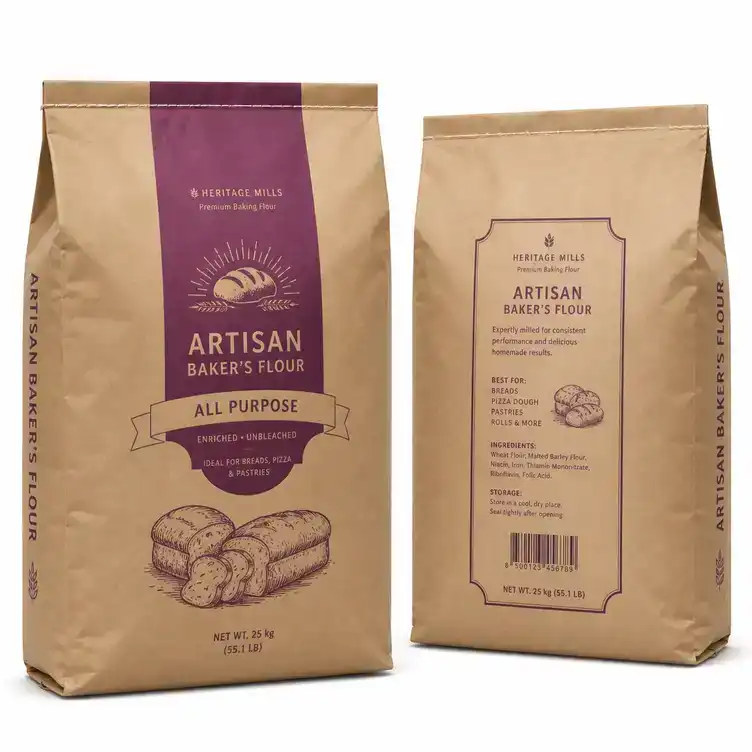
What are Kraft Paper Bags Laminated with PP Woven Fabric?
Kraft Paper Bags Laminated with PP Woven Fabric are composite industrial sacks that pair a printable, tactile kraft exterior with a high‑tenacity woven polypropylene (PP) substrate, united by a thin polyolefin lamination. The result is a hybrid that looks and feels like paper, yet behaves—under load, under humidity, under abrasion—like a rugged polymeric sack. Why settle for either print beauty or mechanical strength when a well‑designed composite can reconcile both? The purpose is simple: preserve branding and legibility while resisting tears, punctures, and moisture‑driven caking.
In practice, this family of bags serves 10–50 kg formats in sectors where appearance and endurance must coexist: building materials, agro‑inputs, feed and pet nutrition, staple grains and sugars, pigments and resins. Some buyers call them paper‑laminated woven polypropylene bags; others prefer paper‑plastic composite sacks or kraft‑laminated WPP valve bags. Naming varies; the engineering intent does not.
Aliases and Market Naming
Across catalogs and RFQs, you may encounter parallel labels that describe essentially the same platform. For clarity, the following aliases can map to Kraft Paper Bags Laminated with PP Woven Fabric when context matches:
- Paper‑laminated woven polypropylene bags
- Kraft‑laminated WPP sacks (block‑bottom or pinch‑bottom)
- Paper‑plastic composite valve bags
- Paper‑on‑woven pinch‑bottom open‑mouth bags
- Hybrid paper‑polymer industrial sacks
Different words, one objective: maintain visual quality while cutting transit loss. Is a unified industry term necessary? Perhaps not. What matters is the specification.
- Capacities: 10–50 kg typical.
- Formats: block‑bottom valve, pinch‑bottom open‑mouth, sewn open‑mouth.
- Outer: printable kraft; Inner layer: woven PP; Interface: polyolefin lamination.
- Optional: micro‑perforations, anti‑slip stripes, internal PE liners, EZ‑open tape.
Constituent Materials and Their Roles
Understanding materials is more than listing ingredients; it is about connecting micro‑structure to macro‑performance. A small shift in paper basis weight alters rub resistance; a few microns in lamination can swing water vapor ingress; a denier change in tapes reshapes drop‑test survival. The composite works because each layer contributes a distinct function while tolerating the manufacturing temperatures, nip pressures, and post‑fill stresses of real supply chains.
Kraft Paper (Outer Layer)
Unbleached or bleached sack kraft—typically 70–120 gsm when laminated—provides the visual canvas. Mills optimize porosity and surface sizing to accept water‑based flexographic inks, manage dot gain, and stabilize color under handling. Paper confers that unmistakable tactile signal of quality: matte, printable, and familiar. It shields light, reduces dusting, and when varnished, resists scuffing on conveyors.
- Function: brand presentation, print fidelity, surface friction for stacking, light and dust moderation.
- Typical levers: basis weight, sizing chemistry, varnish choice, coating add‑ons.
- Trade‑offs: higher gsm improves scuff resistance but adds cost and stiffness; heavy inks require drying latitude.
Woven Polypropylene Fabric (Structural Substrate)
Flat PP tapes—e.g., 500–1200 denier—are oriented to raise tensile strength, then woven on circular or flat looms into fabric densities around 10×10 to 12×12 tapes per inch. This layer carries the load, absorbs the drops, resists puncture. It is chemically inert, minimally hygroscopic, and stable under typical warehouse climates. Additives such as UV stabilizers or slip modifiers tailor outdoor exposure and pallet friction.
- Function: tensile backbone; drop, tear, and puncture resistance; durability under repeated handling.
- Typical levers: tape denier and draw ratio, weave density, recycled content share, UV package.
- Trade‑offs: heavier fabric boosts strength but reduces yield; tight weaves cut sifting but slow de‑aeration.
Polyolefin Lamination (Bonding Interface)
Between paper and fabric lies a thin extrusion layer—PP or LDPE, often 20–40 μm—that binds plies, lowers WVTR, and smooths the printing surface. Adhesion must be strong enough to prevent ply separation without crushing the paper. Co‑extruded tie layers or primers occasionally improve bonding, particularly when line speeds push beyond 100 m/min.
- Function: interply adhesion, moisture moderation, heat‑seal compatibility for pinch‑bottom designs.
- Typical levers: polymer choice (PP vs LDPE), thickness, nip pressure/temperature, primer selection.
- Trade‑offs: thinner saves cost and weight but may raise WVTR or reduce bond strength; thicker improves barrier but stiffens the web.
Auxiliaries: Inks, Coatings, Liners, Closures
Water‑based flexo inks dominate for sustainability and fast dry; overprint varnishes (matte or gloss) protect graphics. Optional PE liners—15–30 μm—provide extra aroma or oil barriers for feeds and specialty foods. Closures range from chainstitch to hot‑melt pinch‑bottom, with EZ‑open tear tapes for consumer comfort. Micro‑perforations tune de‑aeration during pneumatic filling.
How the Composite Works as a System
Think in layers: the printed kraft face for communication and friction, the lamination for cohesion and moisture moderation, the woven PP for strength, the optional liner for barrier. Do these roles overlap? A little. Do they conflict? Occasionally. The craft is in tuning parameters so local optimizations—ink coverage, laminate thickness, weave density—do not sabotage the global objectives: prevent sifting, protect against caking, survive drops, stack straight.
A common cross‑section, from outside to inside, reads: Printed kraft (70–120 gsm) → Polyolefin lamination (20–40 μm) → Woven PP fabric (75–110 gsm) → Optional PE liner (15–30 μm). The numbers are not commandments; they are starting points. What if ocean humidity is extreme? Add a few microns of lamination or move to a liner. What if pallets climb to seven layers? Consider heavier weave or anti‑slip features.
Feature Set: What Buyers Actually Gain
Any list of features risks sounding generic. Let the outcomes speak:
- Strength‑to‑weight efficiency that reduces breakage in rough handling without inflating material costs.
- Moisture moderation and sift control that keep powders coherent and pallets clean, especially with sealed seams.
- High‑fidelity printing—logos, small type, regulatory text—on a surface that welcomes ink instead of fighting it.
- Stack stability through block‑bottom geometry and frictional paper surfaces; fewer leaning towers of pallets.
- Format flexibility: valve for dusty powders, pinch‑bottom for retail aesthetics, sewn for legacy lines.
- Customizable barrier packages—lamination microns, liners, or both—matched to climate and dwell time.
- Human‑friendly opening options that seniors, store clerks, and pet owners appreciate.
Is every advantage available at once? Not always. Choose deliberately; trade‑offs define engineering.
Manufacturing Flow and Control Points
The process resembles a choreography of melt, draw, weave, laminate, print, and form. Each step adds opportunity—and risk. What follows is a practical, shop‑floor view of how converters achieve repeatable quality.
- PP Tape Extrusion: resin is melted, cast into a thin film, slit into tapes, and biaxially oriented. Draw ratios determine tensile strength and yield. Colorants, UV stabilizers, and slip/anti‑block additives tune performance. Monitor thickness with inline gauges; variation today is failure tomorrow.
- Fabric Weaving: circular or flat looms interlace warp and weft. Density—tapes per inch—sets strength and sifting behavior. Watch for broken ends and knots; they are precursors to seam stress risers.
- Surface Prep: corona or primer application raises surface energy and adhesion potential. Kraft rolls are humidity‑conditioned to avoid curl, cockle, or crack during lamination.
- Extrusion Lamination: a PP or LDPE melt is cast between paper and fabric and bonded in a chilled nip. Thickness typically 20–40 μm. Target strong ply bond without crushing paper. Too much nip? Hello, gloss change and micro‑cracking. Too little? Delamination at the seam.
- Printing: water‑based flexo applies up to eight colors with controlled dot gain. Overprint varnish locks pigments, curbs rub‑off, and stabilizes appearance after long haul. Registration matters; a millimeter error on the web is a centimeter on the shelf.
- Bag Forming: tubes are formed, bottoms folded and sealed (for block‑bottom valve), valves inserted, or pinch‑bottom flaps readied with hot‑melt. Sewn open‑mouth remains viable for economy lines; EZ‑open tear tapes serve retail sacks.
- Features & Conversions: micro‑perforations for de‑aeration; anti‑slip stripes for pallet friction; serialized coding for traceability; anti‑static options for powders that spark.
- Quality & Compliance: drop tests, burst/creep, seam efficiency, WVTR, valve leakage, rub resistance, and migration testing when food or feed contact applies. Document lots and retain samples; tomorrow’s claim is today’s data request.
Applications with Context, Not Just Categories
Scenario 1 — Cement and Dry Mortar. Pneumatic filling inflates the bag; air must escape. Micro‑perfs in the kraft face let air out without dusting, while block‑bottom geometry stacks square. Moisture pressure along coastal lanes argues for thicker lamination. A plain multiwall paper sack might do in a desert warehouse; on the coast, it clumps. The hybrid holds.
Scenario 2 — Fertilizer and Crop Inputs. Granules grind at seams, UV can yellow surfaces, and regulations demand crisp labels. A woven substrate curbs tears from sharp granules, UV packages keep print respectable, and valve options increase line speed. Sift‑tight seams preserve pallet hygiene—less sweep, fewer complaints.
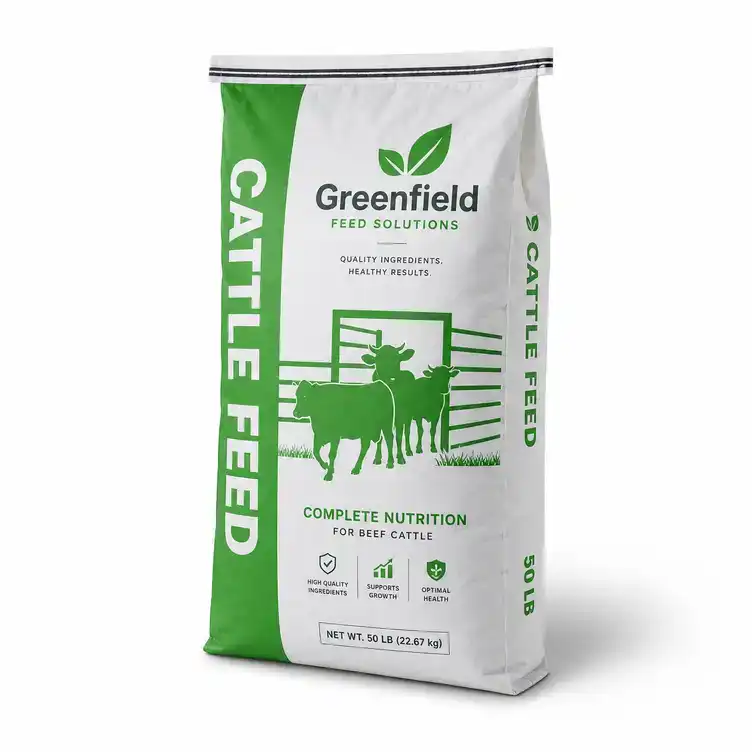
Scenario 3 — Animal Feed and Pet Food. Aroma matters, oils travel, and shoppers notice stains. Add a thin PE liner to guard against oil migration; adopt pinch‑bottom for retail neatness; integrate EZ‑open tape for home convenience. The paper face projects warmth in pet aisles—and it prints beautifully.
Scenario 4 — Rice, Sugar, and Grains. Staples need identity: origin, grade, lot. High‑coverage prints shine on paper without the glare of films. Woven structure survives repetitive handling from mill to store to kitchen.
Scenario 5 — Pigments and Resins. Fine powders can spark and sift. Anti‑static measures and sift‑tight seams protect workers and keep pallets clean. When fines clog valves, revisit geometry; sometimes a few millimeters rescues a line.
- Dusty powders → block‑bottom valve with tuned venting.
- Retail appearance → pinch‑bottom open‑mouth with EZ‑open.
- Legacy sew lines → sewn open‑mouth with crepe tape.
Customization Framework: Turning Requirements into Specs
Because Kraft Paper Bags Laminated with PP Woven Fabric form a platform, not a product, customization is the real product. Begin with cargo physics (powder vs granule, bulk density, oil content), then integrate filling dynamics, distribution climate, regulatory markings, and shelf experience. The right answer is not one choice; it is a set of compatible choices.
Sizing and Construction
- Capacities of 10, 15, 20, 25, 40, 50 kg map to common pallet patterns; choose heights that prevent overhang and sway.
- Paper: 70–120 gsm; press coverage and scuff risk push gsm upward; cost pressure pulls it down.
- Woven fabric: ~75–110 gsm; raise for higher stacks or rough lanes.
- Lamination: 20–40 μm; heavier for tropical humidity or long ocean legs.
Barrier and Breathability
- Micro‑perfs on paper or laminate for de‑aeration; omit when moisture exposure dominates and product is not aerated.
- Internal PE liners for odors, oils, or oxygen control; attached liners accelerate filling changeovers.
- Sift‑tight seam technologies (hot‑melt, ultrasonic) for fine powders.
Filling Interface and Closures
- Valve sleeves—internal friction‑fit vs external—sized to nozzles; heat‑seal capability locks filled sacks.
- Open‑mouth closures: pinch‑bottom for hermetic, chainstitch for economy, EZ‑open for consumer convenience.
Print and Brand Presentation
- Water‑based flexographic inks for sustainability; manage lightfastness for outdoor exposure.
- Matte or gloss varnish; tactile bands to guide handling and elevate shelf feel.
- Serialization and QR for traceability; covert taggants if high risk of diversion.
System Thinking: Decomposition and Synthesis
Break the challenge into parts, examine each, then reunite them into a single, testable specification.
- Product physics: powders aerate and trap air; granules abrade; oils migrate; hygroscopic salts demand WVTR discipline.
- Filling line: pneumatic or gravity, nozzle angle, BPM targets, de‑aeration times, operator ergonomics.
- Distribution climate: humidity cycles, day‑night temperature swings, ocean legs vs short hops, pallet height and dwell time.
- Regulatory and claims: food/feed declarations, multilingual artwork, recycling marks consistent with local frameworks.
- Shelf and user experience: rub resistance, opening method, graphics clarity, anti‑slip feel.
Now the synthesis: define target outcomes first—drop test matrix, WVTR limits by climate, seam efficiency thresholds, and acceptable dust‑loss at the filler. Then select materials and features that beat these by a margin. This is engineering: not merely choosing parts, but composing tolerances.
Colored Tables: Options, Parameters, and Targets
| Subsystem | Typical Options | Range / Notes |
|---|---|---|
| Outer paper | Unbleached or bleached sack kraft | 70–120 gsm; varnish optional; manage porosity for de‑aeration |
| Woven PP fabric | Flat‑woven tapes | ~75–110 gsm; 10×10 to 12×12 tapes/in; UV‑stabilizer optional |
| Lamination | PP or LDPE extrusion | ~20–40 μm; tie‑layer/primer as needed; barrier vs stiffness trade‑off |
| Format | Block‑bottom valve / Pinch‑bottom / Sewn OM | Select for filling speed vs hermeticity vs legacy equipment |
| Valve | Internal sleeve / External; heat‑sealable | Match diameter to nozzle; tune for dust control |
| Liner | Loose PE or attached | 15–30 μm; use for oils, aromas, oxygen control |
| Perforation | Micro‑perfs in paper/laminate | Vent aerated powders; avoid in high‑humidity non‑aerated products |
| Printing | Water‑based flexo | Up to 8 colors; control rub; manage lightfastness |
| Finish | OPV matte/gloss; tactile bands | Enhance scuff resistance and handling feel |
Application‑tuned examples
| Use Case | Capacity | Paper (gsm) | Woven (gsm) | Laminate (μm) | Format | Notes |
|---|---|---|---|---|---|---|
| Cement / Dry mortar | 25–50 kg | 90–110 | 90–110 | 30–40 | Block‑bottom valve | Micro‑perfs; anti‑slip; sift‑tight seams |
| Fertilizer (granular) | 25–50 kg | 80–100 | 85–100 | 25–35 | Valve or sewn OM | UV package; lot coding |
| Animal feed | 10–25 kg | 80–100 | 80–95 | 20–30 | Pinch‑bottom OM | EZ‑open; optional liner for fats |
| Rice / Sugar | 10–25 kg | 70–90 | 75–90 | 20–30 | Pinch‑bottom OM | High‑coverage print; shelf neatness |
| Pigments / Resins | 20–25 kg | 90–110 | 90–110 | 30–40 | Pinch‑bottom or valve | Anti‑static; sift‑tight seams |
Performance benchmarks
| Test | Typical Target | Purpose |
|---|---|---|
| Drop | ≥10 drops @ 1.0–1.2 m (25 kg) | Transit robustness |
| Burst/Creep | Pass at spec pressure/time | Pallet and handling stress |
| WVTR | Meet climate‑specific limit | Anti‑caking and shelf life |
| Seam efficiency | ≥85% | Prevent seam failures |
| Dust loss | ≤ X g (line‑specific) | Sift resistance |
| Rub (print) | Pass specified cycles | Graphic durability |
Cost Architecture and Practical Levers
Price is not a number; it is a consequence of choices. Raise print coverage, and inks and varnish climb. Slide paper gsm down, and rub resistance is taxed. Reduce lamination microns, and bond and barrier wobble. Choose valve formats, and per‑bag cost inches up while filler throughput and pallet stability often repay the difference. Increase run length—move from 10k to 50k—and unit price bends to volume logic.
Sustainability in Operation and at End of Life
Composites complicate recycling. Separation of fiber from polymer is not trivial, and infrastructures vary. Yet sustainability is more than recycling claims: it is keeping product intact—reducing wastage, preventing caking, minimizing repacks and rework. In many lanes, a durable hybrid can shrink the footprint per delivered ton by avoiding spill, spoilage, and damage. Where mono‑material recycling is favored, consider coated woven PP alternatives; where fiber recovery is strong, design the lamination and inks to ease delamination.
- Prefer water‑based inks and low‑residue coatings to aid fiber recovery.
- Use recycled PP content where properties allow; test odor and strength.
- Label clearly and honestly according to local frameworks; avoid generic recycling icons that mislead.
Comparison with Adjacent Formats
- Versus multiwall paper: superior tear and puncture resistance; more moisture moderation; less susceptible to humid lanes.
- Versus pure woven PP with film print: superior print feel and legibility on paper; better concealment of content shadowing.
- Versus PE valve bags: potential for mono‑material recycling on PE side, but paper‑faced hybrids often win on tactile and visual brand execution.
Which should you choose? Ask what fails today: is it print, moisture, tear, or stack stability? The answer points to the format.
Decision Pathway: From Question to Configuration
- Powder or granule? Powders push toward valve with venting; granules tolerate open‑mouth.
- Target BPM? High rates reward optimized valve sleeves and de‑aeration strategy.
- Humidity and ocean exposure? Longer or wetter lanes justify thicker lamination or liners.
- Retail or industrial? Retail favors pinch‑bottom aesthetics and EZ‑open features.
- Pallet height and dwell? Higher stacks call for heavier fabric and anti‑slip strategies.
- End‑of‑life context? Align design to local infrastructure—composite where net outcome wins, mono‑material where systems support it.
Keyword Architecture and Long‑Tail Phrases
Use natural language that buyers use: paper‑laminated woven polypropylene bags; kraft laminated woven sacks; paper plastic composite valve bag; block‑bottom paper‑laminated woven sack; pinch‑bottom paper woven PP bag; paper laminated WPP bags for cement, feed, fertilizer; custom printed kraft laminated woven polypropylene bags; moisture‑moderating laminated woven sacks; sift‑resistant valve bags; extrusion‑laminated paper‑woven sacks; hybrid paper‑polymer industrial sacks. Repeat sparingly, precisely, contextually.
From Title to Outline to Finished Draft: Method in the Madness
Start with the phrase itself—Kraft Paper Bags Laminated with PP Woven Fabric. Unpack it: kraft, lamination, woven PP, bag geometries, line interfaces, climates. Map the nodes: materials, manufacturing, application, customization, sustainability. For each node, ask: what knobs exist, what numbers matter, what trade‑offs arise? Only then draft, weaving short sentences with long ones, questions with assertions, parallel clauses with crisp imperatives. The goal is not verbosity; the goal is clarity under decision pressure.
Editable RFQ Checklist
- Product: Kraft Paper Bags Laminated with PP Woven Fabric; target capacity __ kg
- Format: □ block‑bottom valve □ pinch‑bottom OM □ sewn OM
- Dimensions: W __ × G __ × H __ mm; pallet pattern __ × __, layers __; pallet height __ mm
- Paper: __ gsm; bleached/unbleached; finish (matte/gloss/tactile); colors __
- Woven fabric: __ gsm; weave density __ × __; UV‑stabilized? Y/N; recycled PP content __%
- Lamination: __ μm; polymer (PP/LDPE); tie‑layer? Y/N
- Liner: Y/N; thickness __ μm; batch‑inclusion? Y/N
- Vent/perf: micro‑perfs on paper/laminate; de‑aeration time __ s on line __
- Valve: internal/external; sleeve __ mm; heat‑seal? Y/N
- Closure (OM): pinch‑bottom hot‑melt / chainstitch / EZ‑open
- Printing: water‑based flexo __ colors; rub target __ cycles; varnish __
- Performance: drops __× @ __ m; WVTR ≤ __; seam efficiency ≥ __%; dust loss ≤ __ g
- Compliance: food/feed contact? Y/N; migration testing scope __; labeling languages __
- MOQ & lead time: __ pcs; sample lead __ days; production lead __ days
- What are Kraft Paper Bags Laminated with PP Woven Fabric?
- Aliases and Market Naming
- Constituent Materials and Their Roles
- How the Composite Works as a System
- Feature Set: What Buyers Actually Gain
- Manufacturing Flow and Control Points
- Applications with Context, Not Just Categories
- Customization Framework: Turning Requirements into Specs
- System Thinking: Decomposition and Synthesis
- Colored Tables: Options, Parameters, and Targets
- Cost Architecture and Practical Levers
- Sustainability in Operation and at End of Life
- Comparison with Adjacent Formats
- Decision Pathway: From Question to Configuration
- Keyword Architecture and Long‑Tail Phrases
- From Title to Outline to Finished Draft: Method in the Madness
- Editable RFQ Checklist
- 1. Introduction: The Dual Advantage of Kraft-PP Laminated Bags
- 2. PP Resin Selection: Aligning with International Standards
- 3. Additives and Fillers: Enhancing Performance
- 4. Customization for Market-Specific Needs
- 5. VidePak’s Production Capabilities
- 6. FAQs: Addressing Critical Concerns
- 7. Future Trends: Smart and Circular Packaging
- 8. Conclusion: Strategic Differentiation through Customization
“Our coffee export business needs packaging that’s both eco-friendly and strong enough to withstand humid sea voyages. How can your bags prevent moisture damage without compromising sustainability?” asks a sourcing manager at a Colombian coffee cooperative.
The answer lies in VidePak’s kraft paper bags laminated with PP woven fabric—a hybrid solution combining the biodegradability of kraft paper with the tear resistance of polypropylene (PP), tailored to meet global regulatory standards and extreme environmental conditions.
1. Introduction: The Dual Advantage of Kraft-PP Laminated Bags
The global sustainable packaging market, projected to reach $413 billion by 2027[^1], demands materials that balance ecological responsibility and functional durability. Kraft-PP laminated bags address this need by merging kraft paper’s compostability (degrading in 2–5 years) with PP’s tensile strength (up to 1,800 N/cm²). VidePak, leveraging 30+ years of expertise and Austrian Starlinger looms, produces 50 million such bags annually, serving industries from agriculture to luxury retail.
2. PP Resin Selection: Aligning with International Standards
Choosing the right PP grade ensures compliance with regional regulations and performance requirements.
2.1 Key Standards and Corresponding PP Grades
| Standard | PP Grade | Key Properties | Applications |
|---|---|---|---|
| ASTM D4101 (US) | Homopolymer PP | High stiffness (1.5–2.0 GPa), UV resistance | Agricultural bulk packaging |
| JIS K 6758 (Japan) | Block Copolymer PP | Low-temperature flexibility (-20°C), FDA compliance | Frozen food exports |
| EN 13432 (EU) | Recycled PP (30% post-consumer) | Melt flow index (MFI) 8–12 g/10min, ISO 14064 certified | Retail branding in ESG markets |
| GB/T 8946 (China) | Calcium Carbonate-filled PP | Cost efficiency, 15–20% mineral filler | Construction material sacks |
Kraft Paper Woven Bags Producer
Professional manufacturer of kraft paper laminated PP woven bags with customizable options for diverse market needs.
Check More →PP Woven Fabric Bags Analysis
Detailed analysis of PP woven fabric used in laminated kraft paper bags for strength and durability.
Check More →Laminated PP Woven Bags Thickness
Guide to thickness options for kraft paper laminated PP woven bags for customized industrial packaging.
Check More →Kraft Paper Sacks Product Guide
Complete guide to kraft paper laminated woven sacks with customizable features for market applications.
Check More →VidePak’s Starlinger extrusion lines enable precise control of MFI (6–25 g/10min) and crystallinity (50–70%), ensuring compliance with ASTM and EN standards for load-bearing (≥50kg) and recyclability.
3. Additives and Fillers: Enhancing Performance
3.1 Anti-UV Stabilizers
For tropical climates (e.g., Southeast Asia), PP resins blended with 0.5–1.0% hindered amine light stabilizers (HALS) retain 95% tensile strength after 1,200 hours of UV exposure (per ASTM G154).
3.2 Antioxidants
Phosphite-based antioxidants (e.g., Irgafos 168) prevent thermal degradation during lamination (180–200°C), reducing oxidative induction time (OIT) decay by 80%.
3.3 Mineral Fillers
Calcium carbonate (15–25% load) lowers production costs by 20% while maintaining puncture resistance (>8 J/m, ISO 7765-1).
4. Customization for Market-Specific Needs
4.1 Agricultural Exports (US/EU Markets)
- Requirement: Moisture barrier (<5 g/m²/day WVTR), pest resistance.
- Solution: 90 GSM kraft paper + 20µm PP coating + LDPE inner liner.
- Case Study: A Brazilian soybean exporter reduced spoilage by 30% using VidePak’s triple-layer laminated bags with hermetic valves.
4.2 Luxury Retail (Japan/UK Markets)
- Requirement: High-definition branding, tactile appeal.
- Solution: 120 GSM art-grade kraft paper + gravure-printed PP film (10-color accuracy).
- Regulatory Alignment: Meets Japan’s JIS Z 1707 for ink migration limits (<0.01 mg/dm²).
5. VidePak’s Production Capabilities
With 100+ circular looms and 30 lamination machines, VidePak achieves:
- Throughput: 1.2 million bags/day.
- Customization: 5–200kg capacity, 15+ print colors, RFID tag integration.
- Sustainability: 30% recycled PP content, ISO 14001-certified processes.
6. FAQs: Addressing Critical Concerns
Q1: How do kraft-PP bags compare to pure PP woven bags in cost?
A: Kraft-PP bags cost 15–20% more but offer 50% faster biodegradation and 30% lower carbon footprint (per LCA studies).
Q2: What PP grade suits acidic fertilizer packaging?
A: Block copolymer PP with 2% antioxidant masterbatch resists sulfuric acid (pH 2) corrosion for 12+ months.
Q3: Can these bags withstand -30°C storage?
A: Yes. VidePak’s cold-chain PP (MFI 25 g/10min) maintains flexibility at -30°C (tested per ASTM D746).
7. Future Trends: Smart and Circular Packaging
By 2030, 40% of brands will demand QR-code traceability and compostable adhesives. VidePak’s R&D team is piloting PP-kraft blends with embedded NFC chips and starch-based laminates that decompose in 18 months.
8. Conclusion: Strategic Differentiation through Customization
VidePak’s kraft-PP laminated bags empower clients to:
- Comply Globally: Meet FDA, EU 10/2011, and China GB 4806.7 standards.
- Optimize Costs: Balance filler ratios for regional price sensitivity.
- Enhance Branding: Luxury finishes for premium markets.
As CEO Ray states: “In packaging, one size fits none—our kraft-PP bags are the chameleons of sustainability.”
This report integrates data from ASTM/JIS/EN standards, client case studies, and VidePak’s proprietary production analytics to guide procurement strategies.
[^1]: Global Sustainable Packaging Market Report, 2026.
[^2]: Life Cycle Assessment of Hybrid Packaging Materials, 2024.