
What are Printed Woven Bags?
Printed Woven Bags are industrial sacks engineered on a textile substrate formed by interlacing drawn polypropylene (PP) tapes. After the fabric stage, the surface is decorated by direct printing or by bonding a reverse‑printed film so the package can carry brand graphics, compliance text, and machine‑readable codes. In agricultural supply chains—from seed conditioning to grain merchandising, from fertilizer blending to animal‑feed distribution—these sacks must do three jobs at once: protect bulk goods against mechanical shock and climate swings, run fast and clean on filling lines and palletizers, and present a shelf‑ready face that informs farmers and persuades retailers. The format bends without breaking, stacks like bricks yet flexes like cloth, and presents wide panels for logos, barcodes, QR, and multilingual labeling.
Below the graphics, the structural idea is consistent: oriented PP tapes are woven into fabric for high strength per unit mass; coatings or laminations tune barrier and print quality; and closures (sewn, pinch‑top, or valve) align the sack with filler geometry and product rheology. The result is a robust, automation‑friendly package with wide design latitude for print.
In quotations and RFQs, the same platform appears under multiple names. To keep procurement, engineering, and marketing aligned, here are common aliases for Printed Woven Bags:
- BOPP‑Laminated Woven PP Bags
- Printed WPP Sacks
- Printed Polypropylene Woven Bags
- Graphic‑Grade Woven Poly Bags
- Custom Logo Woven PP Sacks
- Block‑Bottom Printed Valve Bags
- Pinch‑Bottom Printed Woven Sacks
- Retail‑Ready Woven Polypropylene Packaging
- Agricultural Printed Woven Sacks
- Brandable Woven PP Packaging
The Materials of Printed Woven Bags: From Tapes to Topcoats
Printed Woven Bags are not a single material; they are an orchestrated stack. Each gram, each micron, each stitch exists to prevent a specific failure: a corner split on the dock, a caked fertilizer after a tropical ocean leg, a smeared barcode after a week of conveyors, a dusty fill that slows a packer. Thinking in layers turns vague feature lists into controllable engineering choices.
Polypropylene tapes (the structural backbone)
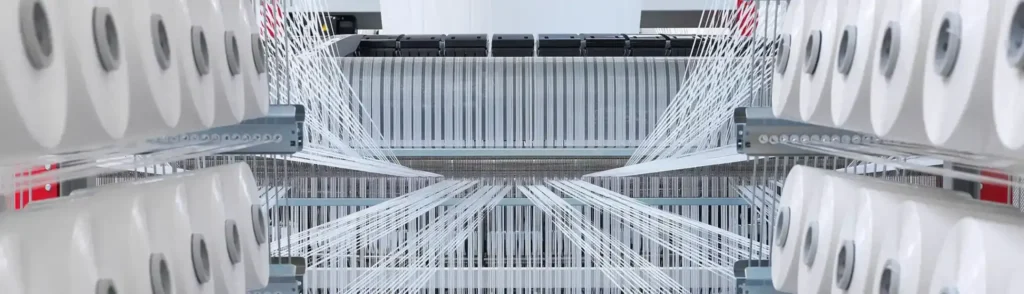
Tape lines slit film from homopolymer PP and thermally draw it to align molecular chains. Drawing trades thickness for strength, producing tapes with high tensile properties and low moisture uptake. Typical constructions for agricultural sacks live near 10×10 to 12×12 tapes per inch at ~75–110 g/m² fabric mass.
- Where used: warp and weft across the entire body.
- What they contribute: strength, puncture resistance, abrasion tolerance, and predictable compressibility under pallet load.
- Cost levers: resin dominates; denier and grammage move both performance and unit cost.
Coatings and laminations (the print‑barrier interface)
Not all Printed Woven Bags are coated, but most high‑graphic formats are. The aim is a smooth, receptive face for inks, controlled moisture transmission, and closures that seal cleanly.
- Extrusion coating (PP or PE, ~20–40 μm): smooths the fabric, narrows WVTR, enables heat‑seal pinch‑tops. Over‑thick coats stiffen mouths and hinder line speed—find the sweet spot.
- Film lamination (BOPP 12–25 μm typical): reverse‑printed biaxially oriented polypropylene bonded to the fabric. Delivers photographic gloss or matte finishes, superior rub resistance, and high ink holdout while preserving the woven body’s strength.
- Surface treatment: corona or flame raises surface energy; primers improve adhesion at modest coat weights.
Ink systems and graphics protection
Agriculture rarely means gentle handling; graphics must survive vibratory feeders, conveyors, and palletizers.
- Water‑based flexographic inks for coated surfaces balance color gamut with rub resistance.
- Gravure inks for reverse‑printed BOPP hide the image behind film, creating durable, scuff‑resistant graphics.
- Overprint varnish (matte or gloss) protects against rub and preserves barcode contrast.
Closures and mouth styles
- Open‑mouth (sewn): chainstitch or lockstitch with crepe tape for neatness; cost‑effective and line‑forgiving.
- Open‑mouth (pinch‑top): heat‑sealed tops yield clean, tamper‑evident closures with good hermeticity.
- Valve: internal or external sleeves matched to nozzle diameter; micro‑perfs around the sleeve vent trapped air for faster filling without dusting.
Optional liners and functional layers
- Thin PE liners (15–30 μm) for oils, aromas, or oxygen control—loose or attached.
- Anti‑skid stripes, antistatic treatments, and UV stabilizers as selectable add‑ons for realistic hazards: sliding pallets, static cling in dry climates, outdoor storage under sun.
Feature Set: Capabilities That Matter in the Field
On a busy dock, features only matter when they change outcomes. When a bag resists a corner snag, a spill does not happen. When a stack stays square, a forklift driver does not rework the pallet. When de‑aeration is fast, a filler does not slow. Judge Printed Woven Bags by consequences.
- Strength‑to‑weight efficiency: oriented tapes translate grams into drops survived and punctures avoided.
- Premium, durable graphics: reverse‑printed BOPP delivers photographic images; coated faces hold crisp flexo text and scannable codes; varnishes preserve legibility.
- Moisture moderation: PP’s low water affinity plus coatings or films protects hygroscopic fertilizers and treated seeds through humid lanes.
- Fast, clean filling: valve geometry and engineered venting let process air escape rapidly while seams keep dust inside.
- Stack stability and automation readiness: block‑bottom geometry and anti‑skid options build dense, low‑lean unit loads compatible with robotic palletizers.
- Traceability real estate: large panels for data‑matrix codes, QR links to agronomy info, and multilingual labels.
- Design‑for‑recycling pathways: mono‑PP configurations (woven PP + PP coating + PP valve) avoid foreign layers and improve alignment with emerging recyclability criteria.
Production Process: From Pellet to Pallet
Great sacks are manufactured, not declared. The choreography is melt → slit → draw → weave → treat → coat/laminate → print → convert → verify. Drift anywhere becomes tomorrow’s claim, so windows must be explicit and measured.
- Film extrusion and slitting: polypropylene pellets become film; chill rolls lock thickness; razor slitting yields tapes with tight width tolerance. Inline gauges prevent basis‑weight creep.
- Tape drawing: staged ovens stretch tapes to align chains; draw ratio couples to resin MFR and line speed; over‑draw embrittles, under‑draw wastes potential.
- Weaving: circular or flat looms interlace warp and weft; broken ends and pick variation are monitored because they become seam stress risers later.
- Surface preparation: corona or flame treatment raises surface energy; primers added when heavy prints or laminations are planned.
- Coating / lamination: a 20–40 μm PP/PE layer smooths the web, moderates WVTR, and enables heat‑seal closures; anti‑skid emboss may be integrated.
- Printing: water‑based flexo for coated faces; gravure reverse printing for BOPP; overprint varnish increases rub resistance.
- Conversion: tubing, bottom formation (block‑bottom or pinch‑bottom), valve insertion or hem prep, sewing or heat sealing. Valves sized to nozzle geometry; heat‑sealable sleeves support post‑fill closure.
- Quality checks: drop tests, seam efficiency, WVTR, dimensional audits, print rub cycles, color ΔE, barcode grading, and traceability to machine settings.
Applications: Agricultural Scenarios and Risk Controls
Labels name markets; scenarios expose risks. Frame your application by the failure to avoid, then map features that neutralize it.
Seed and hybrid crop packaging: moisture pickup, label density, and brand differentiation. Countermeasures: BOPP lamination for premium print, pinch‑top for neat closures, controlled WVTR, and large panels for variety, lot, and treatment disclosures.
Grains and rice: abrasion and rub‑off during long distribution; consumer presentation at retail. Countermeasures: coated or laminated faces with OPV, high‑coverage print, and block‑bottom geometry for shelf stability.
Animal feed and pet food: oils/aromas and repeated handling. Countermeasures: thin PE liner, pinch‑top, varnished print, and re‑close features where required.
Fertilizer and ag‑chem minerals: UV exposure in yards; hygroscopic caking. Countermeasures: UV‑stabilized tapes, coating to moderate WVTR, anti‑slip exterior for stack stability.
Soil amendments / compost: variable moisture and odor; rough handling. Countermeasures: uncoated or selectively micro‑perforated variants for breathability, durable print with OPV, reinforced hems.
Produce (when airflow is essential): heat build‑up and mildew. Countermeasures: ventilated woven constructions or hybrid mesh windows; graphics positioned away from vent zones.
- Powdery fertilizers → block‑bottom printed valve bags with controlled venting.
- Retail‑facing grains → pinch‑top printed open‑mouth with EZ‑open and varnished print.
- Legacy lines → sewn printed open‑mouth with crepe tape and reinforced hems.
Printed Woven Bags: Exploring the Versatility in Agricultural Applications
Versatility sounds like an adjective until you watch it reduce rework. Where does it show up? On the shelf: a high‑gloss seed bag that looks premium and scans first time. In the yard: a UV‑stable fertilizer sack that does not fade to anonymous gray. At the filler: a valve bag that vents air without venting powder. On the route: a block‑bottom stack that does not walk on the pallet. The point is not merely that Printed Woven Bags can carry a logo; the point is that structure amplifies graphics and graphics amplify operations. A smoother face prevents ink voids; a tougher face prevents rub; a smarter closure prevents dust; and all of that prevents phone calls you would rather not get.
Consider a parallelism that operations teams appreciate: they protect goods in transit, they present information at retail, they perform on fast lines, and they prepare you for policy. Protect, present, perform, prepare—the four P’s of practical packaging value.
System Thinking: Break the Problem, Then Recompose the Solution
To move from adjectives to outcomes, decompose the challenge into sub‑problems with measurable targets, then merge the decisions into a single, testable spec for Printed Woven Bags.
A) Product physics
- Bulk density, particle size distribution, oil/fat content, hygroscopic behavior, oxygen/UV sensitivity.
- Map to: fabric mass and weave density; liner need and thickness; coating or film microns; porosity/venting plan; antistatic options.
B) Filling‑line dynamics
- Gravity vs pneumatic; nozzle diameter; target BPM; allowable de‑aeration time; dust capture design.
- Map to: valve type (internal/external), sleeve geometry, micro‑perf plan, mouth stiffness limits, pinch‑top vs sewn closure.
C) Distribution climate
- Humidity cycles, temperature extremes, outdoor dwell, ocean or rail transit, pallet height and wrap pattern.
- Map to: UV package, coating thickness, anti‑skid emboss, block‑bottom geometry, interleaf and wrap choices.
D) Labeling and brand strategy
- Mandatory text and pictograms; languages; barcode/data‑matrix grading; shelf impact targets; QR/digital‑twin plans.
- Map to: BOPP finish (gloss/matte), ink and OPV choices, high‑contrast zones for codes, layout with quiet zones, registration tolerances.
E) Compliance and end‑of‑life
- Food‑contact declarations if applicable; recycling marks aligned with local laws; EPR signals; recycled content usage and claims.
- Map to: mono‑PP design where feasible; recycled content declaration; QR to reuse/recycling info.
Synthesis rule: set outcome targets first—drop matrix, WVTR band, seam efficiency, dust‑loss grams, barcode grade, pallet‑lean incidents per 1,000. Then back‑solve materials and geometry to clear each target with 10–15% margin.
Technical Tables: Parameters and Decisions at a Glance
| Layer / Element | Typical Options | Why It Exists | Cost Levers |
|---|---|---|---|
| Woven PP fabric | Flat or circular loom; 10×10–12×12 tapes/in | Base strength; puncture and tear resistance; compressibility | Fabric gsm; denier; draw ratio |
| Coating / lamination | PP or PE; 20–40 μm; anti‑skid emboss optional | Print surface; moisture/sift control; heat seal | Resin price; microns; line speed |
| Liner | PE 15–30 μm; loose or attached | Oil/odor barrier; oxygen control | Gauge; attachment method |
| Valve / sleeve | PP fabric or PE film; heat‑sealable or friction‑fit | Fast, clean filling; controlled de‑aeration | Geometry; sleeve length; angle |
| Surface treatment | Corona or flame; OPV varnish | Ink adhesion; rub resistance; code legibility | Treatment level; varnish type |
| UV package | UVI‑stabilized tapes | Outdoor resilience during yard storage | Stabilizer dosage |
Application‑tuned examples
| Use Case | Capacity | Fabric (g/m²) | Surface (μm) | Format | Notes |
|---|---|---|---|---|---|
| Hybrid seed | 10–25 kg | 85–100 | BOPP 15–20 | Pinch‑top OM | Heavy label density; gloss or matte for premium look |
| Rice / grain | 10–50 kg | 80–95 | Coat 20–30 or BOPP 15 | Block‑bottom OM | Shelf neatness; high‑coverage print; barcode quiet zones |
| Animal feed | 10–25 kg | 80–95 | Coat 20–30 | Pinch‑top OM | Optional PE liner; EZ‑open tear strip |
| Fertilizer | 25–50 kg | 90–110 | Coat 25–35 | Valve or sewn OM | UV package; anti‑slip; sift‑tight seams |
| Soil / compost | 15–25 kg | 85–100 | Coat 20–30 or micro‑vent | Sewn OM | Selective venting; reinforced hems |
Performance targets (set before RFQ)
| Test | Typical Target | Purpose |
|---|---|---|
| Drop | ≥10 drops @ 1.0–1.2 m (25 kg) | Transit robustness |
| Seam efficiency | ≥85% | Avoid seam failures |
| WVTR | Meet climate‑specific limit | Prevent caking or dehydration |
| Dust loss at filler | ≤ line‑specific grams | Cleanliness and worker safety |
| Rub (print) | Pass specified cycles | Graphic durability and code legibility |
Cost Architecture and Failure‑Mode Controls
| Lever | Typical Impact |
|---|---|
| Lower fabric g/m² one step | Reduces cost and weight; re‑check drop/split risk |
| Reduce coating or BOPP microns | Lowers cost/mass; verify bond strength and WVTR |
| Switch to pinch‑top from sewn | Higher bag cost; lower dust; better shelf appearance |
| Add anti‑skid emboss | Slight conversion cost; fewer lean events and reworks |
| Increase run length (10k → 50k) | Unit price bends to volume; plan artwork cycles |
Failure modes and practical controls
| Failure Mode | Likely Cause | Design Control |
|---|---|---|
| Caking on arrival | WVTR too high for route | Thicker coating/lamination; add liner; pinch‑top |
| Dusty pallets | Valve leak or seam gaps | Heat‑sealable sleeve; anti‑sift seams; tuned porosity |
| Leaning stacks | Geometry/friction inconsistency | Block‑bottom; anti‑slip stripes; wrap pattern |
| Barcode rub‑off | Low contrast or no OPV | White base; OPV varnish; quiet zones |
| Mouth spring‑back | Over‑stiff laminate | Trim microns; adjust nip; pre‑break mouth |
Keyword Architecture
Place phrases people actually type—sparingly—where they clarify decisions: Printed Woven Bags; printed polypropylene woven sacks; BOPP laminated PP printed bags; custom logo woven bags for agriculture; printed woven fertilizer sacks; printed rice packaging bags; retail‑ready woven polypropylene packaging; recyclable mono‑PP printed sacks; pinch‑top printed woven bags; block‑bottom printed valve sacks.
From Prompt to Page: Method in Brief
The outline flowed from the headline on Printed Woven Bags and their versatility in agriculture: define the platform and reconcile aliases; map materials to the failures they prevent; translate features into warehouse and retail outcomes; trace the manufacturing sequence with control points; frame applications as risk maps rather than generic markets; compress trade‑offs into tables and a ready‑to‑use checklist. Along the way, sentence length varies for rhythm; questions challenge claims; contrasts make choices obvious. The aim is operational clarity—granularity for engineers to act, framing for buyers to compare, and context for operations to adopt without friction.
- What are Printed Woven Bags?
- The Materials of Printed Woven Bags: From Tapes to Topcoats
- Feature Set: Capabilities That Matter in the Field
- Production Process: From Pellet to Pallet
- Applications: Agricultural Scenarios and Risk Controls
- Printed Woven Bags: Exploring the Versatility in Agricultural Applications
- System Thinking: Break the Problem, Then Recompose the Solution
- Technical Tables: Parameters and Decisions at a Glance
- Cost Architecture and Failure‑Mode Controls
- Keyword Architecture
- From Prompt to Page: Method in Brief
- 1. Market Dynamics: Agricultural Demand and Construction Waste Solutions
- 2. VidePak’s Technological Edge: Precision and Scalability
- 3. Case Studies: Bridging Agriculture and Construction
- 4. Material Innovation: Polypropylene’s Dual Role
- 5. Sustainability and ESG Alignment
- FAQs: Addressing Critical Concerns
- 6. Future Outlook: Technology and Market Expansion
“The agricultural sector isn’t just about crops—it’s about packaging solutions that withstand harsh conditions while aligning with sustainability goals,” observed a senior agribusiness executive during a recent industry summit. This statement underscores the transformative role of printed woven bags in modern agriculture, where durability, cost-efficiency, and adaptability are paramount. For companies like VidePak, leveraging advanced polypropylene (PP) technology and Starlinger equipment has positioned them as leaders in delivering tailored solutions for both agricultural and construction waste management needs[citation:9].
1. Market Dynamics: Agricultural Demand and Construction Waste Solutions
The global agricultural packaging market is projected to reach $5.2 billion by 2026, with Asia-Pacific accounting for 45% of this growth due to rising food production and export demands. Simultaneously, China’s construction waste volume exceeded 3 billion tons in 2024, driving demand for high-strength, low-cost packaging to manage debris.
Key Trends Driving Adoption:
- Agricultural Needs: Printed woven bags are critical for storing grains, fertilizers, and livestock feed. Their UV resistance and breathability prevent spoilage, reducing post-harvest losses by up to 15%.
- Construction Waste: Heavy-duty woven bags with load capacities exceeding 1 ton are replacing traditional disposal methods, cutting transportation costs by 30%[citation:9].
- Sustainability Mandates: China’s 14th Five-Year Plan emphasizes circular economy practices, favoring recyclable PP-based solutions.
2. VidePak’s Technological Edge: Precision and Scalability
Founded in 2008, VidePak combines 30+ years of expertise with cutting-edge infrastructure to serve global markets.
Production Capabilities:
| Equipment | Quantity | Function |
|---|---|---|
| Circular Looms | 100+ | High-speed weaving for uniform fabric |
| Extrusion Lines | 16 | Seamless PP film production |
| Digital Printing Presses | 12 | Custom designs with <0.1mm precision |
These resources enable VidePak to produce 50 million bags annually, including BOPP laminated bags for moisture-sensitive crops and valve bags for powdered fertilizers[citation:9].
3. Case Studies: Bridging Agriculture and Construction
Case 1: Reinventing Grain Storage in Shandong Province
A cooperative producing 200,000 tons of wheat annually faced a 12% loss due to pest infiltration. VidePak’s anti-microbial laminated bags, incorporating PP and biodegradable additives, reduced losses to 3% while enabling traceability via QR code printing.
Case 2: Construction Waste Management in Urban Shanghai
A demolition contractor struggling with inefficient debris handling adopted VidePak’s PE-coated valve bags, capable of holding 1.5 tons of rubble. The bags’ puncture resistance and stackability cut disposal costs by 25%, aligning with Shanghai’s zero-landfill initiative[citation:9].
4. Material Innovation: Polypropylene’s Dual Role
Polypropylene copolymer, VidePak’s primary material, offers unmatched versatility:
- Agricultural Benefits:
- Chemical Resistance: Withstands fertilizers and pesticides without degradation.
- Breathability: Reduces condensation, critical for seed storage.
- Construction Advantages:
- Tensile Strength: 50% higher than traditional HDPE, ideal for sharp debris[citation:9].
- Cost Efficiency: PP bags cost $0.12/unit vs. $0.20/unit for biodegradable alternatives.
5. Sustainability and ESG Alignment
VidePak’s ESG framework integrates operational efficiency with social responsibility:
- Environmental: A 2 MW solar system powers 40% of production, reducing CO2 emissions by 1,200 tons/year.
- Social: Education programs for 500+ migrant workers’ children improve community ties.
- Governance: 5S management cut workplace accidents by 45% since 2021.
FAQs: Addressing Critical Concerns
Q: How do printed bags withstand extreme weather?
A: VidePak’s UV-stabilized PP maintains integrity at -20°C to 80°C, validated by ISO 4892-2 testing.
Q: Can bags be customized for small farms?
A: Yes. Minimum order quantities start at 5,000 units, with 12-color printing for brand visibility.
Q: What certifications ensure safety?
A: Bags meet FDA CFR 21 (food contact) and EU REACH (chemical safety) standards.
6. Future Outlook: Technology and Market Expansion
The integration of IoT-enabled tags for real-time tracking and partnerships with platforms like Alibaba Agri will drive rural market penetration. Meanwhile, innovations in construction waste solutions position VidePak to capture 15% of China’s $1.7 billion construction packaging sector by 2027.
Conclusion
Printed woven bags are redefining efficiency in agriculture and construction. For VidePak, blending Starlinger’s automation with ESG-centric practices ensures resilience in a competitive market. As Ray Chen, CEO, states: “Our bags don’t just carry goods—they carry trust.” With 8,000 global clients and $80 million revenue, VidePak exemplifies how innovation and ethics can coexist in modern manufacturing.
This report integrates data from the China Packaging Association, Global Packaging Insights, and VidePak’s 2024 Sustainability Report. For technical specifications, refer to ASTM D4632 and ISO 2233 standards.