
What Are Woven Poly Bags and Why Do They Keep Winning Real‑World Routes?
Woven Poly Bags are packaging sacks constructed from interlaced polymer tapes—most commonly polypropylene—woven into a fabric and converted into familiar formats such as open‑mouth, pinch‑bottom, and valve styles. In effect, they are textiles that carry heavy loads while presenting a surface that can be printed, laminated, coated, perforated, or combined with liners. The promise is simple to state yet difficult to achieve: low mass, high strength, reliable stacking, and graphics that still look good after a rough logistics journey. Why do they succeed where single‑layer films sag and multiwall papers scuff? Because a fabric of oriented tapes resists creep, and a laminated skin guards the artwork. Strength and presentation, not in conflict but in concert.
The platform travels under various names. Different catalogs say different things; the structure remains the same. To reduce confusion, here is a short roster of the most common aliases referenced by buyers and engineers alike.
- PP woven bags
- WPP bags (woven polypropylene bags)
- Woven poly sacks
- Block‑bottom woven valve bags
- BOPP‑laminated woven poly bags
- Valve woven bags / AD‑style woven sacks
- Raffia woven bags
Call them what you will; the essence is unchanged: an oriented‑tape fabric that bears load, optionally paired with a film that bears graphics. In other words, a structure‑first substrate plus a surface‑first skin, tuned jointly rather than separately.
Material Architecture: How Woven Poly Bags Are Built Layer by Layer
A bag that behaves predictably on the pallet is never a single material; it is a layered architecture. Each layer answers a different constraint, and the interfaces between layers are where most failures are born or prevented. Think of the design as four major elements—substrate, skin, bond, and conversion—plus optional specialty fabrics when risk demands them.
1) Woven polypropylene substrate
Polypropylene is extruded as a thin sheet, slit into ribbons, and drawn (stretched) to align molecular chains. Drawing elevates tenacity while controlling elongation and creep—hence the characteristic strength‑to‑weight advantage of Woven Poly Bags. The tapes are woven on circular or flat looms to a target mesh such as 10×10, 12×12, or 14×14 ends × picks per inch. Three dials govern the substrate: denier (linear mass of tapes), weave density (mesh), and base fabric mass (GSM). Raise denier to improve puncture resistance and cut‑through strength; raise mesh to flatten the surface and improve seam anchoring; raise GSM if and only if seam and peel numbers are already healthy.
2) Surface skin: coatings and films
Uncoated fabric is strong but porous and textural. A thin polyolefin coating closes pores and smooths the surface. For retail‑grade graphics and rub resistance, a biaxially oriented polypropylene (BOPP) film is reverse‑printed and laminated to the fabric, placing the artwork beneath a protective shell. Gauge typically lands between 15 and 35 µm. Finishes include gloss for high vibrancy, matte or soft‑touch to hide rub and reduce glare, pearlized white for opacity, and metallized variants when light or oxygen exposure must be controlled. Finish is not decoration; it is a performance choice.
3) Bonding system
Film and fabric are married by either extrusion coating—laying down a molten polyolefin tie—or by solventless polyurethane adhesive lamination. The aim is ductile peel at hems and needle penetrations, so creases bend rather than crack. Coating weight, nip pressure, and temperature control determine whether the bond behaves like a resilient hinge or a brittle seam starter.
4) Conversion details
Anti‑slip lacquers tune outer coefficient of friction for pallet stability; micro‑perforations vent trapped air during high‑speed filling; easy‑open tear tapes upgrade user experience; UV stabilizers slow tensile loss during outdoor staging; optional liners in LDPE or co‑ex PE add heat‑sealability and barrier. Above all, stitching threads, filler cords, seam bite, and stitch density form the seam program—the most common point of failure in corner‑drop tests if neglected.
| Layer | Primary job | Key dials | Typical ranges |
|---|---|---|---|
| Woven PP substrate | Load‑bearing tensile and tear resistance | Denier, mesh, GSM | 600–1500D; 10×10–14×14; 60–120 g/m² |
| BOPP film skin | Graphics fidelity and scuff shield | Gauge, finish, dyne | 15–35 µm; gloss/matte/pearlized/metallized |
| Bonding system | Peel strength and crease ductility | Coat weight, nip, temperature | Extrusion tie or solventless PU |
| Conversion details | COF control, venting, sealability | Anti‑slip, micro‑perfs, EZ‑open, liner | Configured to route and filler |
Characteristic Advantages: What Woven Poly Bags Do Well (and Why)
A platform lives or dies by the concrete pains it relieves. Woven Poly Bags deliver a set of advantages that map directly to persistent packaging challenges: torsional stiffness for neat pallets, scuff‑resistant surfaces for brand integrity, moisture tolerance for climate variance, and strength‑to‑weight performance that outcompetes many single‑layer films and paper constructions.
- High strength at low mass: drawn tapes convert molecular orientation into real tensile reserve.
- Stack reliability: fabric stiffness and block‑bottom geometry keep faces square and angles stable.
- Graphics survivability: reverse‑printed skins protect ink from conveyors, bins, and warehouse rub.
- Moisture tolerance: laminated or coated exteriors shrug off humidity and can be wiped clean.
- Style flexibility: open‑mouth sewn, pinch‑bottom sealed, and valve block‑bottom options run on modern fillers.
- Customization: transparent windows, soft‑touch films, registered textures, die‑cut handles, and easy‑open features.
- Recyclability pathway: monomaterial PP builds line up with PP collection streams where infrastructure exists.
Pitfall Card — Relying on GSM Alone
Many failed specs try to buy safety by adding base fabric GSM. If seams and peels are the true limiters, extra mass buys little. Fix the seam program and bond ductility first; then tune mass with data.
Pitfall Card — Gloss and Rub
Glossy films look vibrant in the art room and unforgiving in a warehouse. If your route is abrasive, matte or soft‑touch films prevent complaint‑driven reprints while preserving brand tone.
Manufacturing Workflow: From Pellet to Pallet for Woven Poly Bags
The flow seems simple on paper; reality is more exacting. A single out‑of‑tolerance nip, an aging dyne level, or a starved seam bite can undo a week’s worth of otherwise excellent production. The checkpoints below emphasize where small numbers drive large outcomes.
- Tape extrusion and drawing — Polypropylene is melted, extruded, slit, and drawn to target tenacity and elongation. Too little draw and the fabric creeps; too much and tapes crack at folds.
- Weaving — Tapes are interlaced on circular or flat looms. Mesh (10×10, 12×12, 14×14) governs surface flatness and puncture path length. Miss‑picks become future tears.
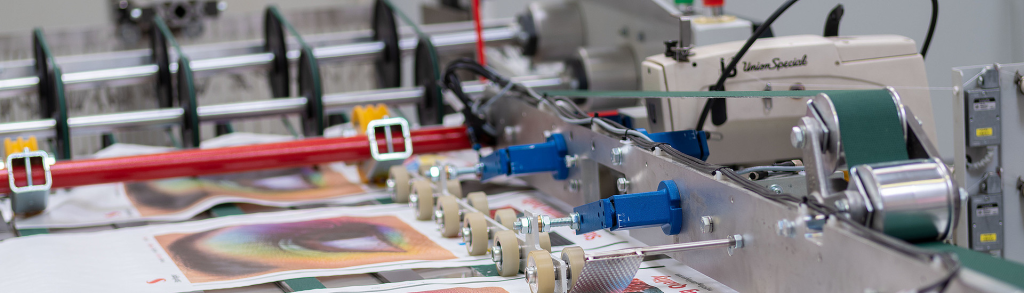
- Surface prep and printing — BOPP film is corona‑treated to a target dyne window; artwork is reverse‑printed by gravure or high‑definition flexo with controlled dot gain and color targets.
- Lamination — Film and fabric are bonded by extrusion tie or solventless PU adhesive. Coating weight and nip/temperature profiles determine peel ductility at hems and needle penetrations.
- Slitting, gusseting, cutting — Laminates are slit to width, gussets formed for cube efficiency, blanks cut to length.
- Conversion — Bottoming (sewn or pinch), valve and block‑bottom formation, top finishes, and optional liners are added. Stitch density and seam bite are recorded.
- Quality checks — Tape/fabric tensile, laminate peel, seam rupture, COF mapping, and multi‑position drop testing (corner/edge/face). UV retention is validated if outdoor staging is credible.
Where Woven Poly Bags Excel: Use Cases and Line Realities
Across agriculture and feed, minerals and resins, construction powders and retail grains, Woven Poly Bags offer the same promise: robust handling without sacrificing presentability. The specifics vary; the reasoning repeats.
- Food staples and grains — Moisture‑tolerant exteriors, sift‑proof seams, and high‑fidelity graphics that survive long distribution chains.
- Animal nutrition and seeds — Abrasion‑resistant skins handle feed‑mill life; micro‑perfs vent aerating mixes; windows offer fast visual confirmation.
- Fertilizers and agrochemicals — Higher denier and denser meshes counter sharp granules; anti‑slip coats prevent pallet drift in open yards.
- Industrial minerals and pellets — Valve block‑bottom formats improve de‑aeration and cubic efficiency; matte finishes protect visuals in B2B logistics.
- Dry construction materials — Cement, grout, and dry mix expose seam and peel limits quickly; aggressive seam programs and ductile bonds are non‑negotiable.
Trends and Innovations Touching Woven Poly Bags (Recent Year)
The last twelve months have moved the conversation beyond incremental tweaks. Policy is accelerating change, equipment is catching up, and material flows—especially post‑consumer recycled (PCR) polypropylene—are entering practical pilots. What seemed aspirational now looks procedural: define mono‑material stories, validate closed‑loop pathways, and instrument conversion so recycled blends run with stability.
- Circularity mandates — Buyers request mono‑PP constructions with documented end‑of‑life paths and, where feasible, declared PCR shares, especially in non‑contact layers.
- Closed‑loop pilots — Bag‑to‑bag demonstrations recycle used woven sacks into new tapes and fabrics, including valve block‑bottom variants.
- PCR supply constraints — Demand outruns food‑grade supply; many programs route PCR to artwork films or industrial sacks while food‑contact approvals catch up.
- Faster conversion — Special‑edition lines push beyond 100 block‑bottom bags per minute with smarter tension/temperature control and cleaner HMIs.
- Engineered venting — Plants are placing micro‑perfs where they vent trapped air without granting dust a free pass, guided by fill‑line data.
- Branded surface science — Matte and soft‑touch finishes, registered textures, and transparent windows become standard for retail‑facing sacks, balanced by anti‑slip patterns tuned to stack angle.
System Method: Specifying Woven Poly Bags Without Guesswork
Good specifications read like the minutes of a clear conversation: the route defines risk; risk defines substrate; substrate and skin define the bond; the bond constrains seams; the whole stack either passes the drop regime or it does not. Solve in this order and the bag behaves like one material; solve out of order and defects migrate between layers.
- Route definition — Density, fill method, fill rate, drop heights, staging climate, and pallet behavior goals.
- Substrate calibration — Denier, mesh, and GSM corridors that deliver tensile reserve without excess mass.
- Film and finish — Gauge and finish aligned with handling realities and brand tone; reverse print for durability.
- Bond windows — Extrusion tie or solventless PU with minimum peel and preferred failure mode; check after fold conditioning.
- Geometry and seams — Open‑mouth, pinch‑bottom, or block‑bottom valve; stitch pattern, seam bite, stitches per decimeter, filler cords.
- Validation — Tensile, peel, seam rupture, COF mapping, and multi‑position drop series; UV retention if relevant; document line‑trial metrics and bake improvements into the spec.
Key Parameters for Woven Poly Bags: Selection and Interactions
Parameters rarely move alone. Denier interacts with mesh; film gauge interacts with finish; peel strength interacts with seam bite. The table consolidates first‑pass targets and cautions; adjust with pilot data.
| Parameter | What it controls | Typical options / first‑pass | How to choose / caution |
|---|---|---|---|
| Tape denier | Tensile capacity; cut‑through resistance; mass | 600–800D (≤10 kg); 800–1100D (15–25 kg); 1000–1500D (25–50 kg) | Match to fill mass and abrasiveness; higher D permits lower mesh but adds stiffness |
| Weave density (mesh) | Surface flatness; puncture path; seam anchoring | 10×10 baseline; 12×12 balanced; 14×14 premium/aggressive content | Increase mesh with lower denier or high print demands; mind loom productivity |
| Base fabric GSM | Structural reserve vs. cost | ~60–120 g/m²; 25 kg often ~90–110 g/m² | Too low → corner‑drop failures; too high → wasted resin and stiffness |
| Film gauge & finish | Scuff survival; crease whitening; aesthetics | 15–35 µm; matte for rough routes; gloss for vibrancy; white/metallized for opacity/barrier | Matte masks rub but mutes brightness; thicker film hides crease whitening |
| Surface energy (dyne) | Ink/adhesive wetting; bond reliability | ≈38–42 dyne/cm for PP films | Under‑treat → ink pick‑off and delam; over‑treat can age poorly |
| Bond route & peel | Seam survivability; fold ductility | Extrusion tie (mono‑PP) or solventless PU (uniform bonds) | Specify min peel (N/25 mm) and failure mode; verify after fold cycles |
| Seam program | Corner‑drop survival; sift‑proofing | Double chain; bite ≥25 mm; ~14 ± 2 stitches/dm; filler cords for powders | Most failures are seam‑limited—fix here before adding GSM |
| Geometry & style | Cube efficiency; de‑aeration; line speed | Open‑mouth; pinch‑bottom; block‑bottom valve | Map to filler type and product aeration; valve styles for fast powders |
| Outer COF / anti‑slip | Pallet stability; shingling | Low‑slip films; anti‑slip lacquers; micro‑textures | Tune to conveyors and stacking angle; over‑stick can jam magazines |
| Venting strategy | Ballooning prevention at fill | Micro‑perfs or breathable builds | Use only when needed; perforations invite dust ingress |
| UV package | Outdoor staging endurance | None to 200–1600 h retention targets | Align to actual exposure; over‑specification wastes money |
| Liner strategy | Sealability; moisture/odor control | LDPE or co‑ex PE liners; occasional foil | Adds sealability and barrier; complicates end‑of‑life separation |
Application‑Driven Starter Specs for Woven Poly Bags
Use the map as a starting point for conversation and pilots; never as a substitute for line data.
| Application | Substrate | Surface | Style | Seam program | Notes |
|---|---|---|---|---|---|
| 25 kg retail rice | 800–900D; 12×12; ~95 g/m² | 20 µm matte BOPP; reverse print | Open‑mouth sewn or block‑bottom | Double chain; bite ≥25 mm; filler cord optional | Matte hides rub; optional window for contents |
| 50 kg fertilizer | 1000–1200D; 12×12 or 14×14 | 25 µm film with anti‑slip | Block‑bottom valve | Double chain; filler cord; target ≥1.2 m corner drop | Granules are sharp; prioritize seams and COF |
| Premium pet food | 800–900D; 12×12 | 25–30 µm soft‑touch/matte; registered effects | Open‑mouth or pinch‑bottom | Double chain; EZ‑open | Brand‑critical visuals; tight color control |
| Resin pellets | 900–1000D; 10×10 or 11×11 | 20 µm gloss; low‑slip | Open‑mouth sewn | Double chain | Low‑slip improves automated shingling |
| Flour / starch | 900–1000D; 12×12 | 20–25 µm matte; engineered vent pattern | Block‑bottom valve | Double chain; filler cord | Aerating powders; vent thoughtfully |
Economics: Where Cost Lives in Woven Poly Bags
Price slides on four rails: resin mass (denier, mesh, film gauge), conversion complexity (geometry, windows, lacquers), printing amortization (cylinders/plates, SKU cadence), and yield/waste (tension and temperature control, rework rates). When budgets tighten, the reflex is to cut mass; the wiser move is to fix seam‑limited failures at the seam, then remove grams if drop data allow. Matte films can be a cost‑effective way to reduce complaint rates on abrasive routes without inflating gauge. Add anti‑slip only when pallets truly pyramid; lacquer is not free and over‑stick snarls magazines.
Economy Lever — Substrate
Choose the lowest denier that clears your corner‑drop target with the chosen seam program. Shift mass from fabric to film only if scuff and crease whitening dominate complaints.
Economy Lever — Surface
Matte or soft‑touch finishes reduce perceived scuff without necessarily increasing gauge; registered textures can elevate branding without compromising logistics.
Economy Lever — Conversion
Modern block‑bottom lines with smarter HMIs reduce waste and speed changeovers; savings compound over multi‑SKU programs.
Quality Assurance: High‑Signal Tests for Woven Poly Bags
A lean plan that measures the right things at the right time prevents both false alarms and expensive misses. The following checkpoints create a compact yet powerful signal chain from resin to pallet.
| Checkpoint | Metric | When to test | Desired signal |
|---|---|---|---|
| Tape/fabric tensile | Strip and grab methods | Incoming and post‑conditioning | Substrate reserve confirmed |
| Lamination peel | N/25 mm; failure mode | Across lanes; after folding cycles | Ductile peel (not brittle) |
| Seam rupture | Force at failure; bite; stitches/dm | Per style and SKU | Corner drops survive |
| COF mapping | Outer/inner COF | Before line trials | Stable pallets and smooth shingling |
| Drop series | Corner/edge/face at 1.0–1.2 m | Pilot and PPAP runs | Seams and peels validated |
Sustainability Pathways in Woven Poly Bags
Mono‑PP stories are the most straightforward to communicate, especially when extrusion‑tied PP/PP laminates are used. PCR integration is advancing, but supply—most of all for food‑contact grades—remains constrained; early wins often live in non‑contact layers or in industrial sacks. Light‑weighting programs must never outrun data: re‑validate seams and peel after each gram removed. Reuse is practical for many routes because ink sits beneath film; graphics last, structure holds.
Pathway — Mono‑material
Extrusion‑tied PP/PP laminates align with polypropylene recovery streams and simplify messaging. Mark bags accordingly to improve capture.
Pathway — PCR integration
Start in non‑contact layers or industrial sacks at 10–20% PCR; raise shares only after draw‑window and tensile data prove stable.
Troubleshooting Library for Woven Poly Bags
- Graphics scuffing → film too thin or gloss unforgiving → move to 25 µm matte; verify dyne and lamination adhesion.
- Corner splits → seam bite too small or peel brittle at hem → enlarge bite; increase stitches/dm; target ductile peel.
- Pallet pyramids → outer COF too low or inconsistent → add anti‑slip or switch to higher‑COF film; test on live conveyors.
- Ballooning at fill → inadequate venting → add micro‑perfs or choose valve style with engineered sleeves; confirm with fill‑rate data.
- Powder leakage → missing filler cords or under‑crushed seams → add cords; verify seam crush and stitch tension.
- Color drift → ink/anilox change dot gain → lock anilox; recalibrate curves; verify ΔE before and after lamination.
Case Snapshots: Three Realistic Scenarios Using Woven Poly Bags
Retail Jasmine Rice
Complaint: shelf rub marks on gloss film. Adjustment: switch to 20 µm matte film; maintain graphics vibrancy with revised color curves; confirm peel after crease conditioning. Result: fewer returns, stable pallets.
Fertilizer in Humid Yards
Complaint: pallets leaning during monsoon staging. Adjustment: add anti‑slip lacquer; raise denier modestly; tighten seam bite. Result: squarer stacks, fewer strap failures.
Pet Food Brand Refresh
Goal: upscale touch without hurting runnability. Adjustment: soft‑touch film at 25–30 µm with registered texture; EZ‑open top; solventless PU lamination for low odor. Result: premium feel, unchanged line speeds.
Frequently Asked Questions About Woven Poly Bags
How much PCR can be used before tensile and draw stability suffer? Begin at 10–20% in non‑contact layers or in tapes for industrial sacks, then increase as draw‑window and tensile data confirm stability. Validate after humidity conditioning and with instrumented drops.
Can laminated bags still be claimed recyclable? If the stack remains mono‑PP (fabric plus PP coating or PP film) and the region accepts PP flexible packaging, claims are defensible with evidence. Where infrastructure lags, work with take‑back programs to build capture.
Do transparent windows weaken the bag? They can if placed near high‑stress folds or cut sharply. Use adequate gauge and smooth edges, and keep windows away from seam lines.
Why do face drops pass while corners fail? Corner impacts concentrate stress at the hem fold, exposing seam‑bite or brittle peel. Increase bite and target ductile peel before adding fabric mass.
When is a block‑bottom valve the right choice? When fast, clean filling of fine powders is required along with self‑standing, cubic pallets. De‑aeration is superior and pallet faces look clean; conversion is more complex but often justified.
Glossary Snapshot Aligned to Woven Poly Bags
Denier — grams per 9,000 meters of tape, a proxy for tape thickness and strength. GSM — grams per square meter, a mass indicator for substrates. COF — coefficient of friction, a predictor of pallet stability and shingling behavior. Reverse printing — artwork on the film’s inner face protected by lamination. Pinch‑bottom — heat‑sealed bottom with clean edges. Block‑bottom valve — self‑standing cubic sack with an internal valve for high‑speed filling. PCR — post‑consumer recycled resin.
Buying Checklist for Woven Poly Bags
- State the product and style clearly: Woven Poly Bags, open‑mouth, pinch‑bottom, or block‑bottom valve.
- Declare fill mass, density, aeration during fill, and representative drop heights.
- Choose initial denier/mesh/GSM corridors and justify with route data.
- Select film gauge and finish; note any transparent windows and their placement.
- Specify bond route and minimum peel with failure‑mode language; verify after fold conditioning.
- Fix a seam program: stitches per decimeter, seam bite, filler cords, thread selection.
- Set dyne targets at print and lamination; include decay checks on stored rolls.
- Include UV packages aligned to realistic exposure durations.
- Define a QA plan with acceptance bands for tensile, peel, seam rupture, COF, and drop series.
- Run a pilot and pallet validation before scaling across SKUs.
- What Are Woven Poly Bags and Why Do They Keep Winning Real‑World Routes?
- Material Architecture: How Woven Poly Bags Are Built Layer by Layer
- Characteristic Advantages: What Woven Poly Bags Do Well (and Why)
- Manufacturing Workflow: From Pellet to Pallet for Woven Poly Bags
- Where Woven Poly Bags Excel: Use Cases and Line Realities
- Trends and Innovations Touching Woven Poly Bags (Recent Year)
- System Method: Specifying Woven Poly Bags Without Guesswork
- Key Parameters for Woven Poly Bags: Selection and Interactions
- Application‑Driven Starter Specs for Woven Poly Bags
- Economics: Where Cost Lives in Woven Poly Bags
- Quality Assurance: High‑Signal Tests for Woven Poly Bags
- Sustainability Pathways in Woven Poly Bags
- Troubleshooting Library for Woven Poly Bags
- Case Snapshots: Three Realistic Scenarios Using Woven Poly Bags
- Frequently Asked Questions About Woven Poly Bags
- Glossary Snapshot Aligned to Woven Poly Bags
- Buying Checklist for Woven Poly Bags
“Why should businesses invest in next-generation woven poly bags?” asked a logistics manager during a recent industry conference. “Because the future lies in smart packaging, sustainability, and seamless traceability—innovations that redefine efficiency and accountability,” replied Ray, CEO of VidePak. This exchange highlights the transformative trajectory of woven poly bags, driven by technological advancements and shifting market demands. As industries increasingly prioritize transparency and environmental responsibility, woven poly bags are evolving into intelligent, multifunctional solutions that transcend traditional packaging roles.
1. Market Drivers and Emerging Trends
The global woven poly bag market, valued at $12.4 billion in 2024, is projected to grow at a 6.8% CAGR through 2030, fueled by three key trends:
1.1 Demand for Smart Packaging
Smart packaging integrates technologies like RFID tags and QR codes to enable real-time tracking and data collection. For instance, Zhejiang Gangfa’s patented IoT-enabled bags embed RFID sensors to monitor temperature and humidity, ensuring product integrity during transit—a critical feature for pharmaceuticals and perishable goods. Similarly, UV coding technology offers high-resolution, durable printing for traceability, reducing counterfeiting risks by 40% in agricultural supply chains.
1.2 Sustainability Imperatives
With 67% of consumers prioritizing eco-friendly packaging, brands are adopting recycled polypropylene (rPP) and biodegradable additives. VidePak’s rPP bags, comprising 30% post-industrial waste, reduce carbon footprints by 1.2 tons per 10,000 bags while maintaining tensile strengths of 12–15 N/mm².
1.3 Regulatory Compliance
Global standards like EU REACH and FDA 21 CFR 177.1520 mandate stringent material safety and traceability. VidePak’s BOPP laminates, compliant with JIS Z 1539 moisture barriers, ensure <5g/m²/day permeability, critical for rice and grain storage in humid climates.
2. Technological Innovations in Smart Packaging
2.1 RFID and IoT Integration
VidePak’s R&D team is piloting RFID-enabled bags with embedded microcontrollers, mirroring Zhejiang Gangfa’s IoT solutions. These tags track location, temperature, and humidity, transmitting data to cloud platforms for real-time analytics—ideal for pharmaceuticals requiring cold chain compliance.
2.2 Advanced Printing Technologies
UV喷码机 technology, highlighted in industrial reports, achieves 200 bags/minute printing speeds with 1200 dpi resolution. This allows for dynamic QR codes that update shipment data, enhancing supply chain transparency.
2.3 Material Science Breakthroughs
| Innovation | Function | Impact |
|---|---|---|
| Oxo-degradable Films | Break down in 18–24 months | Aligns with EU Single-Use Plastics Directive |
| Anti-static PE Liners | Prevent dust adhesion in chemical transport | Reduces contamination risks by 30% |
| BOPP/PE Lamination | Combines UV resistance + moisture barriers | Extends shelf life by 6 months |
3. VidePak’s Strategic Advantages
Leveraging 30+ years of expertise, VidePak combines cutting-edge infrastructure with global certifications:
3.1 Production Capacity
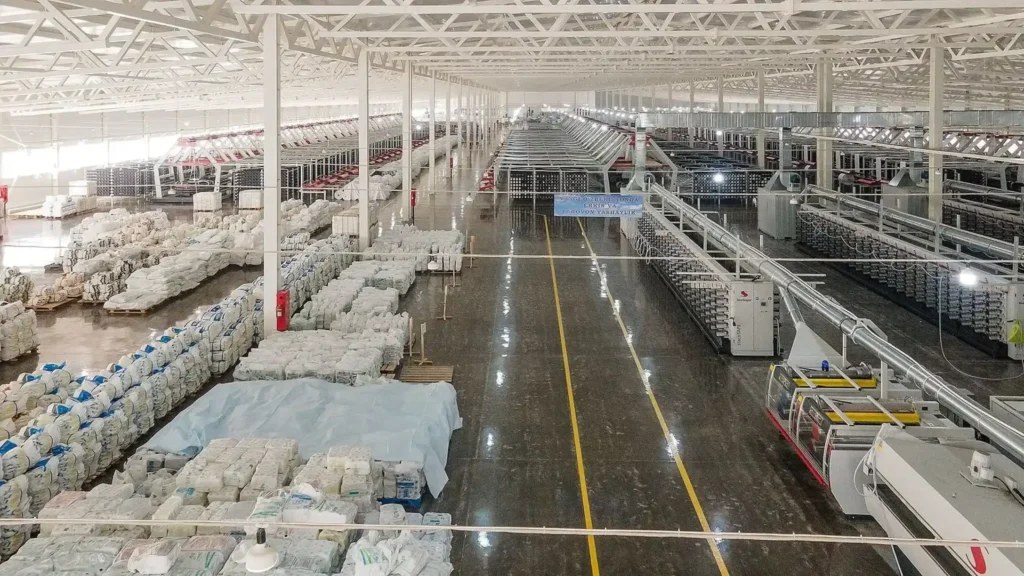
- 100+ Starlinger Looms: Enable 12,000 bags/hour output with ±0.1mm seam precision.
- 30 Lamination Machines: Apply BOPP coatings with ±2μm thickness control, critical for moisture barriers.
3.2 Case Study: Agri-Traceability Solutions
A Southeast Asian rice exporter reduced spoilage by 22% using VidePak’s QR-coded bags. Each bag’s QR code links to a blockchain platform, providing farm-to-shelf data on cultivation practices and storage conditions.
4. Sustainable Practices and Circular Economy
VidePak’s ESG initiatives include:
- rPP Sourcing: 30% recycled content, reducing virgin PP dependency.
- Solar-Powered Facilities: Cut CO₂ emissions by 15% annually.
- Takeback Programs: Partnering with TerraCycle to recycle 95% of used bags.
5. Future Outlook: Integration with Industry 4.0
By 2027, VidePak plans to deploy AI-driven defect detection systems on Starlinger lines, reducing material waste by 18%. Additionally, collaborations with IoT startups aim to launch biodegradable RFID tags, merging sustainability with smart tracking.
FAQs: Addressing Key Concerns
Q1: What is the ROI of switching to smart woven poly bags?
While smart bags cost 20–25% more upfront, they reduce logistics losses by 30–40% and enhance brand trust through traceability.
Q2: How durable are QR codes on woven bags?
UV喷码机 ensures codes withstand abrasion, humidity, and UV exposure for 12+ months.
Q3: Can these bags be customized for niche industries?
Yes. VidePak offers FDA-compliant PE liners for food and anti-static coatings for electronics.
Conclusion
The future of woven poly bags lies at the intersection of intelligence, sustainability, and adaptability. VidePak’s integration of Starlinger automation, IoT-enabled traceability, and circular design principles positions it as a leader in the $14.2 billion market. As industries grapple with evolving regulations and consumer demands, innovations like smart RFID-enabled packaging and high-efficiency BOPP laminates will redefine packaging’s role in a connected, eco-conscious world.
This report synthesizes insights from industry patents, market analyses, and technical guidelines to ensure accuracy. For further details on IoT integration, explore our case study on Zhejiang Gangfa’s temperature-monitoring solutions.