
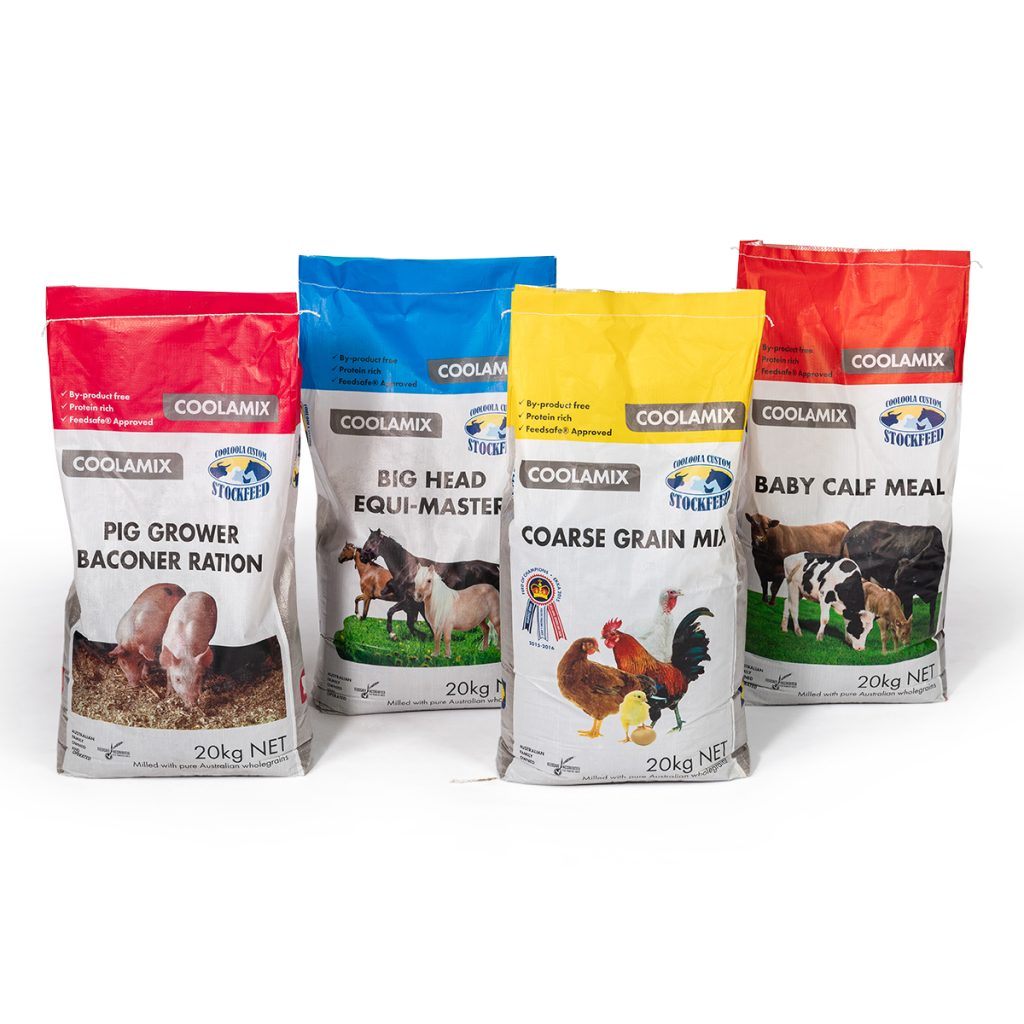
BOPP Woven Bags are hybrid packaging sacks in which a load‑bearing woven polypropylene (PP) fabric is integrally bonded to a reverse‑printed biaxially oriented polypropylene (BOPP) film. The woven fabric provides tensile strength, tear resistance, and dimensional stability; the BOPP film shelters the artwork from abrasion, moderates moisture ingress on the print side, and offers a pristine surface for brand communication. In practice, this duet of structure and surface allows grain processors, flour mills, sugar refineries, seed houses, and pet‑food brands to ship heavy goods with confidence while still presenting store‑worthy graphics after long, multi‑modal journeys.
Different markets use different names, but the underlying construction remains the same. For clarity, here are widely used aliases that refer to the same product family of BOPP Woven Bags:
Different labels, one principle: a strength‑first fabric carries the physical load, a surface‑first film carries the brand promise, and the bond between them carries the risk. When a complaint arises—graphics scuffing, corner splits, odor taint—it almost always traces back to how these layers interact.
A bag that looks good on the shelf and behaves on the pallet is never the result of a single material; it is an engineered stack. Each layer solves a specific constraint, and the interfaces are where success or failure hides. Think substrate → skin → bond → conversion details → (optional) liner. Each is a dial; turn one, others move.
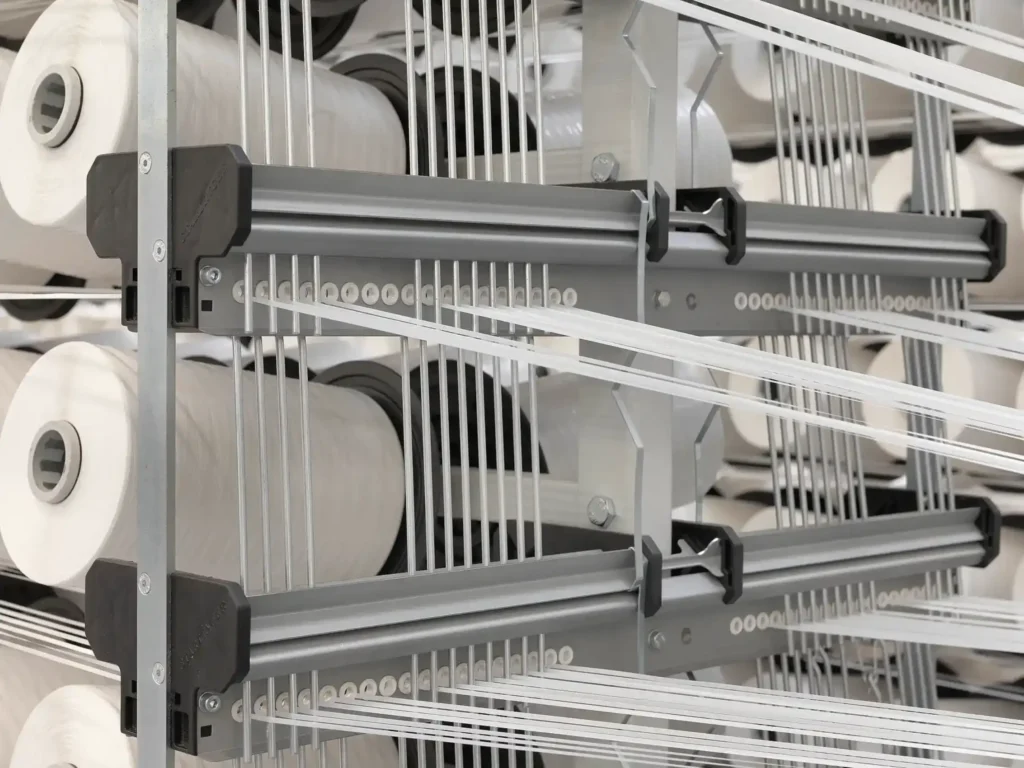
PP resin is extruded as a thin sheet, slit into narrow ribbons, and drawn to orient molecular chains. Orientation elevates tenacity and restrains creep—the source of the category’s celebrated strength‑to‑weight ratio. Ribbons (tapes) are woven on circular or flat looms to meshes like 10×10, 12×12, or 14×14 ends × picks per inch. Three dials define the fabric: denier (linear mass of tapes), mesh (ends × picks), and base GSM (grams per square meter). Heavier denier resists puncture and cut‑through; denser meshes flatten the surface for lamination and anchor seams more securely; base GSM reflects the total mass you pay for. Raise any of these without data and you may buy stiffness instead of safety; tune them with data and you buy reliability without waste.
BOPP (biaxially oriented polypropylene) supplies clarity, stiffness, and scuff resistance. Films typically range from 15 to 35 μm and are printed in reverse so that inks sit beneath the film after lamination. Finish options are purposeful: gloss amplifies vibrancy but broadcasts rub; matte and soft‑touch hide scuff and glare; pearlized white boosts opacity; metallized variants add light and oxygen shielding for sensitive contents. Gauge interacts with finish: thicker glossy film can still crease‑whiten; a thinner matte can sometimes outperform in perceived scuff. Make the finish a logistics choice, not merely a styling preference.
Film and fabric are married by either extrusion coating (a molten PP or PE/PP tie layer) or solventless polyurethane adhesive lamination. The objective is ductile peel—bonds that bend at hems and around needle penetrations rather than shatter. Coating weight, nip pressure, temperature, and cure windows decide whether the laminate survives creases and sewing or yields brittle edges that blossom into complaints.
Anti‑slip lacquers or higher‑COF films stabilize pallets; micro‑perforations vent trapped air during high‑speed filling; easy‑open tapes and die‑cut handles improve usability; UV stabilizers slow strength loss in outdoor staging. Optional liners (LDPE or co‑ex PE) enable heat sealing and provide additional moisture/odor barrier when direct food contact is required. Seam bite, stitch density, thread selection, and filler cords collectively form the seam program—the single most common source of corner‑drop failures if neglected.
Why do procurement teams keep choosing this platform despite viable alternatives like multiwall paper and heavy‑duty PE film? Because BOPP Woven Bags bring a set of advantages that address recurring pains in bulk‑to‑retail corridors. There is no magic; there are disciplined trade‑offs. Consider the following feature map—and how each feature also casts a shadow.
Drawn tapes convert polymer orientation into tensile capacity. Result: drop tests pass with less resin than many single‑layer films. Trade‑off: higher denier can stiffen hems; fix seams before you add grams. Reverse printing sequesters ink beneath film. Result: artwork survives conveyors, bins, and pallet rub. Trade‑off: gloss highlights scuff; matte mutes brilliance—choose by route reality. Fabric stiffness and block‑bottom geometry keep pallets square. Result: fewer lean‑induced damages. Trade‑off: COF must be tuned; over‑slip pyramids, over‑stick jams magazines.
On a flowchart the process looks linear; on the plant floor it is full of delicate windows. A dyne level that decays in storage, a nip that drifts five degrees, a seam bite that shrinks two millimeters—these small numbers decide whether a customer sees a flawless bag or a brittle hem. Below is the practical sequence, with emphasis on failure‑sensitive checkpoints.
Across food staples, pet nutrition, seeds, fertilizers, industrial minerals, and resin pellets, the same pattern repeats: heavy goods, long routes, high expectations for appearance. BOPP Woven Bags resolve that triangle with predictable mechanics and protected graphics.
Safety is not an adjective added after printing; it is a scaffold of law, guidance, and practice that prevents migration, off‑odors, and contamination. For BOPP Woven Bags in food use, the scaffold includes three pillars: legal authorization, controlled migration, and auditable plant hygiene.
EU: Framework Regulation 1935/2004 and Plastics Regulation 10/2011 (with its recent amendments) establish overall and specific migration limits and a Union List of authorized substances. US: 21 CFR 177.1520 for polyolefins; 175.105 for adhesives; 175.300 for coatings used as a direct contact surface. Reverse printing behind BOPP acts as a functional barrier; adhesives must cure into low‑migration networks; specific migration of regulated monomers, additives, and aromatic amines must remain within limits under foreseeable use conditions. Good manufacturing practice is codified in EU 2023/2006 and mirrored by schemes such as FSSC 22000 v6 and BRCGS Packaging Issue 7, which institutionalize hazard analysis, zoning, traceability, and calibration of critical controls.
Because these laminates are multilayer systems, safety relies on what does not move: substances staying below migration limits and odors staying imperceptible. The following checkpoints focus effort where it pays.
A packaging plant that serves human or pet‑food markets should feel like a food factory in miniature. Auditors look for the basics—hazard analysis, zoning, calibration—and the specifics unique to fabric‑and‑film laminates.
Let us parse the headline into decisions. What touches the food? If a liner is present, it does. If not, the laminate does. Where could migration originate? From residual monomers in the film or tie layers, from adhesive by‑products, from ink components via set‑off, or from NIAS formed during cure and storage. What conditions stress the system? Heat, time, fat content, humidity, sunlight. Which controls matter most? Peel ductility at the hem, seam integrity, surface energy for ink and adhesive wetting, cure windows, and cleanliness. What convinces an auditor? Declarations of compliance tied to batches, OML/SML data, PAA screens, NIAS assessments, organoleptic panels, and GMP records that show the plant knows its critical numbers and tunes them on purpose.
Safety emerges when small solutions add up. Decompose, solve, and recombine into one specification.
Use these tables to anchor design conversations. They are starting points, not laws—pilot data should refine them.
A concise plan that measures the right things in the right order is better than a long plan that measures everything badly. Structure → Surface → Bond → Seam → Pallet → Consumer perception.
Specification choices increasingly reflect circularity expectations. Mono‑PP laminates simplify recyclability narratives; claims of recycled content demand careful scoping in food applications. Procurement now treats certification (FSSC 22000 v6; BRCGS Issue 7) as an entry ticket, not an accolade, because hygiene systems and traceability have become material facts in risk transfer.
Blueprints are not rules; they are experienced guesses to test. Start here, then tune with your line’s behavior.
Substrate ~900D, 12×12 mesh, ~95 g/m²; 20 μm matte film; extrusion tie; open‑mouth sewn or block‑bottom; bite ≥25 mm; optional filler cord. Validate OML, PAA ND at 0.01 mg/kg, COF mapping, organoleptics after humidity cycles. Substrate 800–900D; 12×12; soft‑touch 25–30 μm film with registered texture; solventless PU lamination; EZ‑open top. Emphasize odor panels and photoinitiator screening if UV effects appear anywhere in the stack. Substrate 1000–1200D; 12×12 or 14×14; 25 μm film with anti‑slip lacquer; block‑bottom valve for de‑aeration. Food‑grade not required, but NIAS and odor controls reduce complaints when stocks sit near food corridors.
Do I need a liner for food‑grade claims? Not always. If the laminate clears OML/SML and organoleptics for the intended use, the BOPP surface can be the direct contact. Many brands still specify a PE liner to simplify US compliance and bolster moisture barrier.
Are transparent windows a structural risk? Only if poorly executed. Use adequate gauge, smooth cutouts, and place windows away from stress concentrations and seam lines.
Is matte always better? Matte conceals rub and glare but softens color. If your logistics route is gentle and brand pop is paramount, a carefully chosen gloss may be appropriate; otherwise, matte/soft‑touch is a safer baseline.
How much recycled PP can I use? For direct food contact, authorization pathways limit options today; many food programs keep recycled content to non‑contact layers. Industrial sacks can run higher PCR shares with proper QA.
Why do face drops pass but corners fail? Corner impacts concentrate stress at the hem fold. Increase seam bite, check stitch density, and demand ductile peel before raising GSM.
What Are BOPP Woven Bags and How Do They Earn Trust in Food Supply Chains?
Material Architecture of BOPP Woven Bags: What Each Layer Does, and Why
1) Woven polypropylene substrate
2) BOPP film skin
3) Bonding system
4) Conversion details
Layer
Primary function
Key dials
Typical corridors
Woven PP substrate
Load bearing; puncture and tear resistance
Denier, mesh, base GSM
800–1200D; 10×10–12×12; 85–110 g/m² (food SKUs)
BOPP film
Graphics preservation; moisture moderation
Gauge, finish, dyne
15–35 μm; gloss/matte/soft‑touch/pearlized/metallized
Bonding system
Peel strength and crease ductility
Coating weight, nip, temperature, cure
Extrusion tie (mono‑PP) or solventless PU
Conversion details
COF control, venting, usability, UV stability
Anti‑slip, micro‑perfs, EZ‑open, liner, UV package
Configured to filler and route
What Distinguishes BOPP Woven Bags: A Feature Map with Trade‑offs
Strength at modest mass
Graphics that endure
Stacking predictability
From Pellet to Pallet: The Production Flow of BOPP Woven Bags
Where BOPP Woven Bags Shine: Application Patterns
Health and Safety Spine of Food‑Grade BOPP Woven Bags
Legal baselines
Migration control
Plant hygiene
Food‑Contact Chemistry in BOPP Woven Bags: What to Test, When, and Why
Checkpoint
Target / limit
Why it matters
Practical note
Overall migration (OML)
≤10 mg/dm² (≈60 mg/kg)
Global cap on substance transfer
Choose simulants/time to reflect worst foreseeable use
Specific migration (SML)
Substance‑specific limits
Controls high‑concern monomers/additives
Confirm with supplier DoCs and periodic tests
PAAs
ND at 0.01 mg/kg; 0.002 mg/kg for listed carcinogens
Prevents amine migration from adhesives/inks
Mind hardener/adhesive chemistry and cure
NIAS
Risk‑based thresholds
Captures degradants and by‑products
Model first, analyze when indicated
Organoleptic
No noticeable odor/taint
Consumer trust and brand perception
Panel after realistic conditioning
Hygiene and GMP: What Auditors Expect from a BOPP Woven Bags Plant
Thinking Through the Theme: BOPP Woven Bags and Food‑Focused Health & Safety
System Method: Break the Safety Problem into Solvable Parts
Parameter Tables: Mechanics and Compliance for BOPP Woven Bags
Mechanical parameter
Typical range
Why it matters
Starter choice (25 kg rice)
Tape denier
800–1100D
Tensile and cut‑through reserve
~900D
Weave density
10×10–12×12
Surface flatness; seam anchoring
12×12
Base fabric GSM
85–110 g/m²
Structural reserve vs mass
~95 g/m²
BOPP film gauge
20–30 μm
Scuff survival; crease whitening
20 μm matte
Lamination route
Extrusion tie or solventless PU
Peel ductility; recyclability story
Extrusion tie (mono‑PP)
Seam program
Double chain; bite ≥25 mm; ~14±2 stitches/dm
Corner‑drop survival; sift‑proofing
As left
Compliance dial
Target / limit
Rationale
Evidence kept on file
Overall migration
≤10 mg/dm² (≈60 mg/kg)
Global limit on transfer
OML test report with simulants & conditioning
Specific migration
Per‑substance SMLs
Controls high‑concern species
SML reports; supplier DoCs
Primary aromatic amines
ND at 0.01 mg/kg; 0.002 mg/kg for CMR PAAs
Adhesive/ink by‑product control
PAA screening with method LODs
Organoleptics
No taint or odor
Consumer acceptability
Panel results after storage
GMP documentation
Aligned to EU 2023/2006
Process accountability
Cure logs; nip/temperature records; training
Validation Plan for BOPP Woven Bags: Tests That Catch Real Risk
Sustainability and Regulatory Signals Affecting BOPP Woven Bags
Use‑Case Blueprints: Building Food‑Grade BOPP Woven Bags That Work
Retail jasmine rice (25 kg)
Premium dog kibble (12–20 kg)
Fertilizer (50 kg)
Troubleshooting Library for BOPP Woven Bags
FAQ Focused on Engineers Working with BOPP Woven Bags
A Step‑by‑Step Builder for Food‑Focused BOPP Woven Bags
- What Are BOPP Woven Bags and How Do They Earn Trust in Food Supply Chains?
- Material Architecture of BOPP Woven Bags: What Each Layer Does, and Why
- What Distinguishes BOPP Woven Bags: A Feature Map with Trade‑offs
- From Pellet to Pallet: The Production Flow of BOPP Woven Bags
- Where BOPP Woven Bags Shine: Application Patterns
- Health and Safety Spine of Food‑Grade BOPP Woven Bags
- Food‑Contact Chemistry in BOPP Woven Bags: What to Test, When, and Why
- Hygiene and GMP: What Auditors Expect from a BOPP Woven Bags Plant
- Thinking Through the Theme: BOPP Woven Bags and Food‑Focused Health & Safety
- System Method: Break the Safety Problem into Solvable Parts
- Parameter Tables: Mechanics and Compliance for BOPP Woven Bags
- Validation Plan for BOPP Woven Bags: Tests That Catch Real Risk
- Sustainability and Regulatory Signals Affecting BOPP Woven Bags
- Use‑Case Blueprints: Building Food‑Grade BOPP Woven Bags That Work
- Troubleshooting Library for BOPP Woven Bags
- FAQ Focused on Engineers Working with BOPP Woven Bags
- A Step‑by‑Step Builder for Food‑Focused BOPP Woven Bags
“Why are BOPP woven bags becoming the backbone of food-grade packaging?” asked a supply chain manager at a global agro-commodity firm. “It’s simple,” replied Ray, CEO of VidePak, during a recent industry roundtable. “They combine unmatched durability, compliance with food safety standards, and cost efficiency—critical factors for businesses navigating today’s volatile supply chains.” This dialogue encapsulates the core thesis of this report: BOPP woven bags are indispensable in safeguarding health and safety within food packaging, with Chinese manufacturers like VidePak leading the market through technological innovation, scalable production, and integrated global logistics.
Global Market Dynamics for BOPP Woven Bags
1. Regional Market Characteristics
BOPP (Biaxially Oriented Polypropylene) woven bags have emerged as a dominant packaging solution across industries, particularly in food storage and transport. Regional demand varies significantly:
- Asia-Pacific: Accounts for 45% of global demand, driven by agricultural exports (e.g., rice, flour) and rapid industrialization. Countries like India and Vietnam prioritize cost-effective, high-volume solutions.
- Europe: Stringent EU regulations on food-contact materials (e.g., EC 1935/2004) push manufacturers to adopt recyclable and chemically inert BOPP bags. Germany and France lead in sustainable packaging innovations.
- North America: Focuses on premium customization, such as multi-layer laminations for extended shelf life, with the U.S. importing 60% of its woven bags from Asia.
- Africa: Rising demand for durable, moisture-resistant packaging to combat harsh climatic conditions during grain storage and transport.
2. Competitive Landscape of Global Manufacturers
- Chinese Producers: Dominate 65% of global supply, leveraging economies of scale, advanced automation (e.g., Starlinger machinery), and vertically integrated supply chains. For instance, VidePak operates 100+ circular looms and 30+ laminators, enabling a monthly output of 8,000 metric tons.
- European Manufacturers: Focus on niche, high-margin segments like pharmaceutical-grade packaging but struggle with higher labor and regulatory costs.
- Indian and Southeast Asian Players: Compete on price but lag in technological adoption, often relying on semi-automated equipment.
Strategic Advantages of Chinese Manufacturers: Quality, Price, and Beyond
1. Quality Assurance Through Advanced Technology
Chinese manufacturers like VidePak utilize ISO 9001-certified processes and cutting-edge equipment to meet international food safety standards. For example:
- Material Purity: VidePak uses virgin PP resin (no recycled content), ensuring compliance with FDA and EU food-contact regulations.
- Printing Precision: High-definition rotogravure printing achieves 98% color accuracy, critical for brand differentiation and regulatory labeling.
2. Cost Efficiency and Scalability
- Economies of Scale: China’s centralized production hubs reduce raw material costs by 15–20% compared to regional competitors.
- Fast Turnaround: With 16 extrusion lines and 30 laminators, VidePak delivers bulk orders (e.g., 500,000 bags) within 25 days, 30% faster than industry averages.
3. Global Supply Chain Integration
- Logistics Networks: Strategic partnerships with shipping companies enable VidePak to serve 50+ countries, with 40% of shipments routed through China’s mega-ports (e.g., Shanghai, Ningbo).
- Customization Flexibility: Tailored solutions like anti-static coatings for flour bags or UV-resistant laminations for tropical markets demonstrate adaptability to diverse client needs.
VidePak: A Case Study in Excellence
Founded in 2008, VidePak exemplifies China’s manufacturing prowess. Key differentiators include:
- Technology Leadership: Adoption of Austrian Starlinger looms ensures seam strength exceeding 35 N/mm², critical for heavy-duty applications like rice and sugar transport.
- Sustainability Initiatives: Development of recyclable BOPP bags with <5% CaCO3 filler reduces carbon footprint while maintaining tensile strength (200–1,500 Denier).
- Market Penetration: Annual revenue of $80 million stems from diversified product lines, including valve bags for pet food and laminated sacks for frozen seafood.
Technical Specifications of BOPP Woven Bags (Food-Grade)
| Parameter | VidePak Standard | Industry Average |
|---|---|---|
| Material | Virgin PP (FDA-compliant) | Mixed PP (70% virgin) |
| Tensile Strength | 1,200 Denier | 800–1,000 Denier |
| Lamination | 3-layer BOPP + PE coating | 2-layer BOPP |
| Print Resolution | 200 LPI | 150 LPI |
| Lead Time (50k units) | 25 days | 35–40 days |
FAQs: Addressing Critical Concerns
Q1: Are BOPP woven bags safe for direct food contact?
Yes, when produced with FDA-grade virgin PP and laminated with food-safe polyethylene (PE). VidePak’s bags undergo rigorous migration testing to ensure no chemical leaching.
Q2: How do Chinese prices compare to local suppliers in Europe?
Chinese bags are 20–30% cheaper due to automated production and subsidized raw materials. A 50g/m² BOPP bag costs $0.12/unit from VidePak vs. $0.18/unit from European suppliers.
Q3: Can BOPP bags withstand humid conditions during maritime shipping?
Absolutely. VidePak’s 3-layer lamination reduces moisture permeability to <5g/m²/day, ideal for rice and coffee exports to tropical regions. Learn more about moisture-proof solutions.
Future Trends and Strategic Recommendations
- Smart Packaging: Integration of RFID tags for real-time tracking, a feature under development at VidePak.
- Circular Economy: Partnerships with recyclers to achieve 100% closed-loop PP reuse by 2030.
- Market Expansion: Target Africa’s $2.1 billion agro-packaging sector with cost-effective, UV-stabilized designs.
Printed BOPP Woven Bags
Safe and food-grade printed BOPP woven bags ensuring health compliance for food packaging applications.
Check More →Laminated BOPP Woven Bags
High-safety laminated BOPP woven bags designed for food-grade health and safety standards.
Check More →BOPP Bags With Custom Printing
Customized food-safe BOPP bags meeting strict health and safety requirements for food packaging.
Check More →BOPP PP Woven Bags Solutions
Complete health-focused BOPP woven bag solutions for safe and hygienic food-grade packaging.
Check More →For insights into custom printing innovations, explore how VidePak balances aesthetics and functionality.
In conclusion, BOPP woven bags are not just packaging—they are a critical component of global food safety and supply chain resilience. Chinese manufacturers, armed with technological sophistication and unrivaled scalability, are poised to dominate this sector, with VidePak leading the charge through relentless innovation and customer-centric solutions.