
What Are Leakproof Woven Bags?
Leakproof Woven Bags are engineered sacks built on a woven polyolefin backbone—predominantly polypropylene (PP)—with surfaces, closures, and (often) liners that together suppress powder sifting, control moisture ingress, and limit odor transfer across demanding chemical logistics. In chemical packaging, leakproof seldom means liquid-tight; far more often it signals dust-tightness and barrier stability under vibration, compression, and rough handling. Typical constructions range from coated woven PP sacks, to woven PP with an integrated polymer liner, to hybrid paper-faced composites in which the woven mesh supplies the puncture-resistant skeleton. The format is valued because it marries textile-like strength with film-like sealing behavior and crisp pallet geometry.
Aliases differ by region and audit vocabulary, but the family is consistent. The list below helps harmonize purchasing and quality language.
- Sift‑proof woven polypropylene bags
- Leak‑tight woven PP sacks
- Coated woven plastic chemical bags
- Liner‑integrated woven chemical sacks
- UN 5H2 woven plastic bags (with inner liner or coating)
- Dust‑tight woven poly bags for powders
- Static‑safe FIBC (Type B/C/D) woven containers
- Valve‑style leakproof woven sacks
Why do chemical packagers specify this format? Because it is a balanced proposition: the woven architecture contributes tensile and tear strength at low mass; controlled coatings and liners deliver sift‑proof, moisture‑managed performance; and repeatable dimensions make pallets stable for automated handling. In short, Leakproof Woven Bags are not a single material but a system: fabric + surface + closure + (often) a liner, validated by tests that simulate what really happens on a chemical filling line and during the journey that follows.
Materials That Make Leakproof Woven Bags Work
Materials are levers. Change one and a cascade follows—fill speed at the spout, dust housekeeping, pallet creep, end‑of‑life routing, even barcode pass rates. Below is a map of what goes into Leakproof Woven Bags and why each component matters.
1) Woven backbone (mechanical strength and puncture resistance)
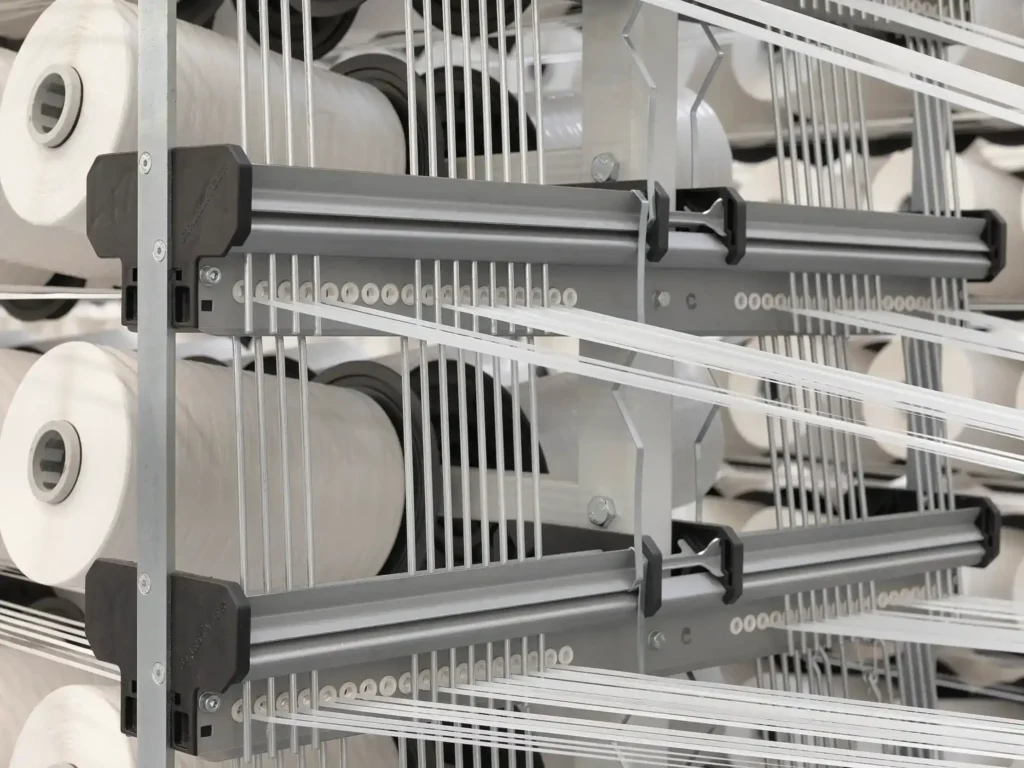
- Polypropylene tape yarns (PP): PP is melt‑extruded as a film, slit into tapes, and drawn to orient polymer chains. The resulting fabric offers high strength‑to‑weight, low moisture uptake, and excellent puncture resistance—critical for angular solids such as mineral salts, catalysts, and pigments. PP’s stiffness window supports crisp gussets and dimensional repeatability that sustains pallet integrity.
- Polyethylene tape yarns (PE) (specialty): Selected when low‑temperature toughness is paramount. PE’s softness eases cold‑weather folds but trades some stiffness and print handling relative to PP.
Design levers: fabric GSM (about 60–90 g/m² for 10–50 kg sacks), pick density (8×8 to 12×12 per inch), and tape denier (600–1200 D). Higher values raise drop and tear performance but add mass and cost.
2) Surfaces that make the fabric leakproof (coatings & laminations)
- Extrusion coating (PP or PE): A 15–35 µm molten layer smooths the surface, seals pinholes, reduces porosity, and creates a predictable print base. It is the workhorse for dust‑tightness and compatible with high‑throughput flexographic printing.
- BOPP lamination: A biaxially oriented polypropylene film laminated to the fabric (often reverse printed). It delivers a scuff‑resistant face and can add incremental moisture control. Matte or micro‑textured BOPP improves barcode readability and pallet friction.
3) Inner liners and patch films (the barrier engine)
- LDPE/LLDPE liners: Soft and sealable with good water‑vapor barrier per gauge—ideal for hygroscopic powders and odor‑sensitive solids.
- HDPE liners: Stiffer and higher moisture barrier per thickness, holding shape at the mouth for repetitive fills.
- PP liners: Keep the whole system in the PP family (mono‑polyolefin logic) to simplify end‑of‑life where PP streams are favored; require tighter seal windows.
- Localized patch films: Film patches under code zones, around valves, or on splash‑exposed panels provide barrier without the mass of a full liner.
4) Adhesives, tie‑layers, and pastes (the invisible load path)
- Polyurethane laminating adhesives—solventless or solvent‑based—for paper/film‑to‑fabric bonds. Cure completeness is critical: under‑cure risks odor and low peel; over‑cure can embrittle fold radii.
- Hot‑melts for local reinforcements and valve features; chosen for polyolefin compatibility and controlled odor.
- Starch‑based pastes in hybrid builds with paper facings (for pasted‑valve variants).
5) Printing inks and protective coats (legibility and durability)
- Water‑based flexographic inks dominate for low odor and robust adhesion on treated coatings or films.
- Matte over‑varnish reduces glare and lifts scuff resistance so data matrices and barcodes remain scannable after vibration and pallet rub.
- Gravure or digital may be selected for complex graphics; in chemical packaging, legibility and regulatory marks trump decoration.
6) Static‑control elements (when powders can ignite)
For larger formats (FIBCs) used alongside small sacks, static‑dissipative or conductive constructions (Type B/C/D) mitigate ignition hazards at the filling spout. Groundable yarns, corona‑discharge fabrics, or charge‑decay systems belong in that toolkit. Even for smaller Leakproof Woven Bags, grounded frames and antistatic liners reduce nuisance shocks and dust cling in dry air.
Features That Matter (Translated to Outcomes)
Features matter only when they move plant KPIs. Here the cause‑to‑effect map shows how Leakproof Woven Bags deliver measurable changes on the line and on the road.
- Sift‑proof performance under vibration: Sealed faces and liners keep fines inside despite conveyor shake and pallet compression; targeted micro‑perforation (where used) vents air without dust loss.
- Moisture and odor control: Liner selection and seal windows govern water‑vapor ingress and cross‑taint. With hygroscopic salts, the difference is free‑flowing product vs caked returns.
- Drop and puncture resilience: Oriented PP tapes distribute impact energy and resist puncture from angular particles—typical of minerals, catalysts, and pigments.
- Dimensional repeatability and stack behavior: Balanced weaves and laminated faces help bags stand square and resist pallet creep—essential for high bays and automated wrap cells.
- Legibility of critical information: Matte‑protected code zones, durable inks, and stable panels keep UN numbers, hazard pictograms, and batch data readable after abuse.
- Closure assurance: From pressure‑assisted self‑closing valves to ultrasonic sleeves or taped mouths, the goal is the same—repeatable closures that do not weep fines.
- Static‑safety options: Where explosive dust atmospheres exist, pair leakproof sacks with static‑safe filling practices or use static‑rated FIBCs upstream.
- End‑of‑life clarity: Monomaterial PP designs ease routing to PP streams; paper/PP hybrids need explicit depot instructions.
Production Process (From Resin to Ready‑to‑Fill)
Manufacturing Leakproof Woven Bags is disciplined choreography: polymer processing, textile weaving, surface engineering, printing, conversion, and quality assurance. Each station has a lever; each lever carries a failure mode if neglected.
- Resin selection and incoming controls — Verify melt flow, moisture, and odor on PP resins for tapes and coatings; confirm LDPE/HDPE/PP grades for liners; retain additive documentation (antioxidants, slip, antiblock).
- Tape extrusion and orientation — Extrude PP as a film, slit into tapes, and draw to orient. Control denier and width; monitor shrink as a crystallinity proxy; keep slitting knives sharp to avoid filament shedding.
- Weaving — Interlace warp/weft tapes on circular or flat looms. Tune picks per inch and warp density; balance tensions to prevent barre patterns that telegraph through print and destabilize folds.
- Surface creation—coating or lamination — Apply PP/PE extrusion coating for dust‑tightness and print base, or bond BOPP film for scuff‑resistant faces. Validate adhesion at folds and corners to avoid delamination in transit; manage paper moisture in hybrid builds.
- Printing and protection — Use water‑based flexo for robust adhesion and low odor; reserve matte varnish for code zones to cut glare; verify barcode readability after simulated vibration.
- Cutting, forming, and seam engineering — Heat‑cut edges to minimize fray; fold and stitch or paste bottoms in block‑bottom geometries; form gussets for cubic stability; engineer mouth closures (open‑mouth with tape/ultrasonic fitments or valve sleeves).
- Liner insertion and fixation — Insert LDPE/HDPE/PP liners; tab or cuff; avoid snags that cause pinholes; validate seal windows and perform pinhole tests; confirm ultrasonic weld quality under “dust‑in‑seam” challenges.
- Hygiene and foreign‑matter controls — Zone clean areas; filter air; enforce housekeeping; screen finished stacks with metal detection or X‑ray where required; inspect on light tables for inclusions.
- Testing and release — Physical tests (tensile, tear, seam pull, drop, burst); sift‑proofness under vibration/tilt‑shake; sensory checks for odor when relevant; trace batch codes to raw‑material lots and test records.
Applications Across the Chemical Value Chain
Leakproof Woven Bags excel wherever fast filling, dust control, and rugged handling converge—especially for solids and powders.
- Minerals and building chemistry: Cement additives, gypsum, lime, calcium carbonate, silica, and specialty aggregates—trapped air requires de‑aeration without sifting; sharp granulates demand puncture resistance.
- Resins and masterbatch: PVC resin, PP/PE pellets, color concentrates, and additives—dust‑tight mouths and strong seams prevent pellet loss and fines migration.
- Pigments, carbon black, and fillers: High surface‑area powders call for dust control and code durability; matte code zones minimize scanner misreads.
- Salt and de‑icing agents: Hygroscopic crystals need moisture‑managed liners and robust seams; pallets face seasonal outdoor exposure.
- Agrochemicals and feed additives: Premixes and micronutrients require low‑odor packaging, traceability, and sift‑proof performance to avoid cross‑contamination.
Why this format over sewn open‑mouth paper alone? Because leakproof woven structures combine the fill speeds and de‑aeration options of sack formats with the puncture and drop resilience of PP fabrics—and they retain dimensional stability for automated warehouses.
Understanding Their Role in Chemical Packaging (A Systems View)
The practical question is not “what are these sacks,” but “where do they add value in a chemical packaging system?” Think like an engineer—break the problem into parts, interrogate each lever, then recombine into a coherent whole.
A) Define leakproof for your product
Decision: Are you preventing liquid leakage, dust sifting, moisture ingress, or odor transfer? Analysis: Most chemical solids need dust‑tightness more than liquid‑tightness; moisture control preserves flowability; odor control protects neighboring loads. Synthesis: Specify leakproofness as a bundle—dust loss limits under vibration, MVTR limits set by liner gauge, and closure leak criteria at the mouth or valve.
B) Architecture choice (coated only vs liner)
Decision: Coated woven fabric only, coating + patch films, or full liner? Analysis: Coating fixes pinholes and modest dust; patch films harden vulnerable zones; liners unlock real moisture control for fine powders. Risk: Over‑engineering inflates cost and complicates recycling; under‑engineering produces dust complaints and caking. Synthesis: Choose the least complex build that meets measured targets; escalate to liners for hygroscopic or high‑fines products.
C) Static control in powder packaging
Decision: What static‑safety posture fits your powder and process? Analysis: Dust clouds plus ignition sources equal hazard. For big fills (FIBCs), Type C (groundable) or Type D (no‑ground‑required) containers are standard. For small sacks, antistatic liners and grounded frames reduce nuisance shocks and dust attraction. Synthesis: Use a graded approach—pair leakproof sacks with safe practices and static‑rated FIBCs upstream where charging is greatest.
D) Regulatory and documentation pathway
Decision: Which frameworks govern your package and product? Analysis: Dangerous‑goods rules define drop/tear/sift‑proof tests for woven plastic bags (5H1/5H2). Hazard communication rules dictate labeling. Synthesis: Tie materials and tests to clauses; track revisions so audits and border checks succeed.
E) Printing for abuse and legibility
Decision: Which print system and finish keep codes readable after vibration and rub? Analysis: Warehouse lighting produces glare; conveyors scuff; pallets rub corners. Synthesis: Use water‑based flexo + matte code zones; position barcodes away from fold lines; verify with vibration exposure.
F) End‑of‑life routes without wishful thinking
Decision: Paper‑forward hybrid vs mono‑PP design; liner removable vs integrated. Analysis: Regions differ on acceptance and value; mono‑PP structures are favored in PP streams. Synthesis: Decide early, label clearly, and publish depot instructions (e.g., liner removal) where applicable.
Standards, Rules, and What They Mean on the Plant Floor
- UN packaging codes for woven plastic bags (5H1/5H2) — Define and test for drop, tear, and sift‑proofness when coatings or liners are present (5H2). The matrix ensures powders stay in the bag under mechanical stress.
- General leakage‑prevention duties — Chemical transport rules require packages to withstand normal transport without leakage or release. This is the umbrella under which leakproof sack design lives.
- Electrostatic safety for FIBCs (Type A/B/C/D) — When larger woven containers are used alongside small sacks, follow electrostatic classification and grounding to prevent ignition in dusty atmospheres.
- Hazard communication updates — Label content and formatting are governed by current rules; durable, legible printing and varnish selection are compliance enablers, not cosmetics.
- Latest FIBC performance standard — Updates sharpen quality and safety expectations for big formats that may sit upstream of small leakproof sacks.
So what? On a filling line, this translates to: pick 5H2‑style builds when you need sift‑proofness; design closures and liners to pass leak criteria; ground your frames if dust can ignite; and print hazard data where it will survive abrasion.
From URS to Plant Trial (A Practical Toolkit)
User Requirement Specification (URS)
- Product: density, particle size/shape, hygroscopicity, odor sensitivity.
- Fill: mass per sack, temperature, static risk, target fill rate, spout geometry.
- Logistics: pallet height, wrap method, vibration profile, climatic exposure.
- Compliance: dangerous‑goods status, label content, end‑of‑life preference.
Convert URS into a spec
- Fabric GSM/denier and weave density; coating vs lamination; liner gauge/material; seam/valve selection; print system and varnish; anti‑slip features.
- Leakproof targets: vibration/tilt‑shake dust‑loss limits; moisture ingress (maximum mass gain over time); closure‑leak criteria; barcode readability thresholds.
Prove it on the line
- Pilot at target speeds; observe spout dust, weighment accuracy, and pallet behavior.
- Adjust micro‑perforation fields, valve geometry, and wrap tension until targets are met.
- Lock process windows (adhesive coat weight, cure, ultrasonic parameters) and train operators.
Tables — Parameters and Decisions at a Glance
| Parameter | Typical window / option | Why it matters |
|---|---|---|
| Fabric GSM | 60–90 g/m² (10–50 kg sacks) | Balances tensile/tear vs mass and cost |
| Tape denier | 600–1200 D | Higher denier raises drop/puncture resistance |
| Weave density | ≈8×8 to 12×12 tapes/inch | Controls porosity and print‑base smoothness |
| Coating thickness | 15–35 µm PP/PE | Seals pinholes; dust‑tight print base |
| Liner gauge | 40–120 µm LDPE/HDPE/PP | Moisture barrier; fines retention |
| Mouth style | Open‑mouth (taped/ultrasonic) or valve | Drives throughput and leak control |
| Code zone finish | Matte varnish | Scanner readability after vibration |
| Anti‑slip features | Bands, textures, matte films | Pallet stability and worker safety |
| Failure mode | Likely cause | Corrective action |
|---|---|---|
| Dust weeping at mouth | Inadequate closure; valve misplacement | Tighten valve tolerance; adopt ultrasonic sealing; add inner lip/tape |
| Corner pop‑open | Under‑pasted ends; brittle adhesive ridge | Re‑meter paste; adjust adhesive; increase compaction dwell |
| Punctures from sharp granules | Fabric too light; low denier tapes | Raise GSM/denier; add localized patches |
| Barcode unreadable | Glare; scuff at code panel | Matte coat code zones; reposition; verify adhesion |
| Moisture‑driven caking | Liner too thin; poor seal | Increase liner gauge; validate seal window |
| Static shocks at spout | Dry air; no grounding | Ground frames; add antistatic treatment; manage humidity |
| Option | What changes | Effect on performance | End‑of‑life impact |
|---|---|---|---|
| Switch coating → BOPP lamination | Smoother, protected face | Higher scuff resistance; durable codes | Still PP if inks/adhesives compatible |
| Add PP liner (vs PE) | Mono‑polyolefin system | Easier PP‑stream routing where available | Requires tuned seal windows |
| Matte vs gloss face | Surface glare and texture | Better scan rates; safer stacking | Neutral |
| Valve vs open‑mouth | Filling method | Faster fills; less spout dust | Neutral, closure‑dependent |
| Micro‑perforation fields | De‑aeration strategy | Faster fill; risk of sifting if over‑done | Neutral |
Worked Scenarios
Scenario 1 — 25‑kg pigment blend (abrasive, dusty)
Architecture: 75 g/m² woven PP, 25 µm PP extrusion coating, matte code zones, 80 µm HDPE liner cuffed at mouth, ultrasonic valve sleeve. Targets: Zero visible dust at spout; barcode pass rate above 99% after vibration; no punctures in drop test. Controls: Sleeve position ±1.5 mm; ultrasonic amplitude/time window validated with dust‑in‑seam challenge; composite puncture testing. Outcome: Faster fills and clean pallets; claims decline as codes remain readable.
Scenario 2 — 20‑kg hygroscopic salt (humid summer distribution)
Architecture: 70 g/m² woven PP with matte BOPP lamination; 100 µm LDPE liner tab‑sealed; open‑mouth taped closure with inner dust‑lip. Targets: Mass gain below 0.5% after 14 days at elevated humidity; no caking; no dust weeping. Controls: Seal window validation; humidity‑conditioned line trial; pallet wrap tension tuned to prevent creep. Outcome: Free‑flowing product at destination; stable pallets; low dock dust.
Scenario 3 — 15‑kg carbon black (electrostatic sensitivity)
Architecture: Small leakproof sacks paired with Type C groundable FIBCs upstream; 80 g/m² fabric; PP coating; 60 µm PP liner; grounded filling frame and antistatic treatment on liner. Targets: No nuisance shocks; dust containment at mouth; stable weights. Controls: Ground verification; humidity management; seal checks. Outcome: Safe, clean fills; better operator ergonomics.
Frequently Asked Questions (Straight Answers)
Are Leakproof Woven Bags “approved” by a single authority? No. Woven plastic bags are defined and tested under dangerous‑goods frameworks (5H1/5H2 categories) and must meet general leakage‑prevention duties. Compliance in practice means choosing appropriate architectures, validating tests, and labeling to current hazard‑communication rules.
Do these bags handle liquids? They are intended for solids and powders. “Leakproof” here concerns dust and moisture; for true liquid containment, choose packages designed and tested for hydrostatic leakproofness.
Do we always need a liner? Not always. For coarse, dry solids with modest moisture sensitivity, coated woven sacks may suffice. Liners become essential for hygroscopic powders or where odor transfer must be minimized.
What about static electricity? Treat static as a distinct hazard. Use static‑rated FIBCs (Type C/D) and grounding where needed; for small sacks, ensure grounded frames and, if appropriate, antistatic liners.
How do these sacks fit circular‑economy goals? Mono‑PP designs and compatible inks/adhesives improve prospects in PP recycling streams. For paper/PP hybrids, publish depot SOPs for component separation and label clearly.
A Coherent Set of Moves for Chemical Packagers in 2025
- Define leakproofness in measurable terms (dust loss under vibration, MVTR limits, closure leak criteria).
- Choose the least‑complex architecture that meets those metrics; escalate to liners for hygroscopic/high‑fines products.
- Engineer closures (valve or open‑mouth) with positional tolerances and, where justified, ultrasonic sealing to tame dusty seams.
- Treat static as a parallel control when powders or atmospheres warrant it; integrate ground checks into shift routines.
- Print to survive abuse: water‑based flexo + matte code zones; position data away from scuff lines; verify with vibration tests.
- Lock documentation to current rules and standards; track revisions so audits and border checks go smoothly.
- Decide end‑of‑life logic up front and instruct depots accordingly; favor mono‑PP where it meets performance.
- Close the loop with defect Pareto charts tied to raw‑material lots; change specs where failures concentrate—fewer claims, quieter docks, safer teams.
In short, when Leakproof Woven Bags are treated as engineered systems rather than commodities, they protect people and product, run fast on modern lines, stack safely in real warehouses, carry legible risk information, and leave credible options at end‑of‑life.
- What Are Leakproof Woven Bags?
- Materials That Make Leakproof Woven Bags Work
- 1) Woven backbone (mechanical strength and puncture resistance)
- 2) Surfaces that make the fabric leakproof (coatings & laminations)
- 3) Inner liners and patch films (the barrier engine)
- 4) Adhesives, tie‑layers, and pastes (the invisible load path)
- 5) Printing inks and protective coats (legibility and durability)
- 6) Static‑control elements (when powders can ignite)
- Features That Matter (Translated to Outcomes)
- Production Process (From Resin to Ready‑to‑Fill)
- Applications Across the Chemical Value Chain
- Understanding Their Role in Chemical Packaging (A Systems View)
- Standards, Rules, and What They Mean on the Plant Floor
- From URS to Plant Trial (A Practical Toolkit)
- Tables — Parameters and Decisions at a Glance
- Worked Scenarios
- Frequently Asked Questions (Straight Answers)
- A Coherent Set of Moves for Chemical Packagers in 2025
- 1. SOM PP Bags: Structural Advantages and Customization Pathways
- 2. Material Science: Why PE Liners Dominate Food Packaging
- 3. Strategic Selection: Matching Packaging to Food Types
- 4. VidePak’s Operational Excellence: Technology Meets Sustainability
- 5. FAQs: Addressing Industry Concerns
- 6. Market Trends and Strategic Insights
“In food packaging, the choice of material and design isn’t just about containment—it’s about preserving quality, ensuring safety, and aligning with sustainability goals,” states Ray, CEO of VidePak, during a factory tour. This report reveals how Sewn Open Mouth (SOM) polypropylene (PP) woven bags, through tailored structural and material innovations, address critical challenges in food preservation, logistics efficiency, and regulatory compliance. By analyzing customization options such as lamination, inner liners, and closure systems, we demonstrate how SOM PP bags are redefining food packaging standards globally.
PP Woven Bags Manufacturer
Trusted manufacturer of SOM PP bags designed for safe, hygienic food-grade packaging applications.
Check More →Woven Fabric PP Bags Features
Key features of SOM PP woven bags that ensure safety and durability for food packaging use.
Check More →Breathable PP Woven Bags
Food-safe breathable SOM PP bags ideal for fresh and dry food packaging requirements.
Check More →Heavy-Duty Woven Bags Guide
Complete guide to durable SOM PP bags for reliable food packaging and storage solutions.
Check More →1. SOM PP Bags: Structural Advantages and Customization Pathways
1.1 Core Design and Functional Benefits
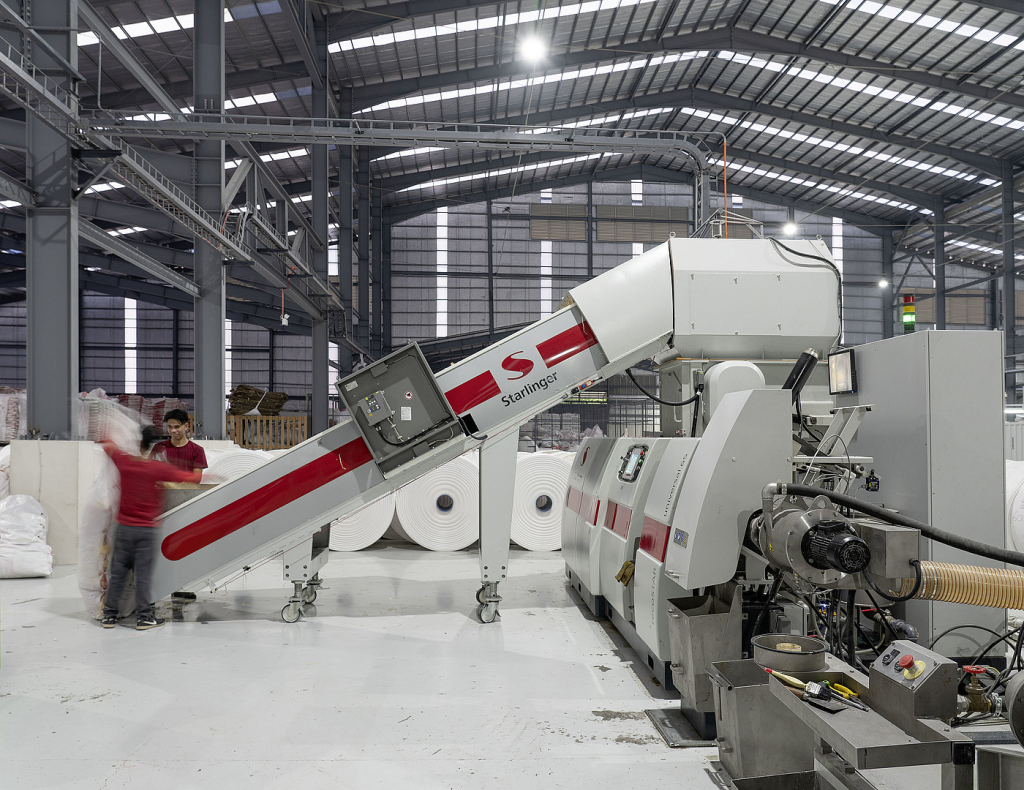
SOM PP bags, characterized by their sewn open-mouth closure and woven PP fabric, offer superior durability (tensile strength: 25–30 N/mm²) and adaptability. Their design ensures easy filling and resealing, making them ideal for bulk food items like grains, flour, and animal feed. VidePak’s SOM bags, produced using Starlinger circular looms, achieve a weaving density of 12×12 strands per inch, minimizing particulate leakage by 90% compared to traditional sacks.
1.2 Customization Frameworks for Food Applications
a. Lamination vs. Inner Liners:
- BOPP Lamination: Enhances moisture resistance (WVTR <5 g/m²/day) and printability for branding. Suitable for dry foods like rice or pasta.
- PE Inner Liners: High-density polyethylene (HDPE) liners (80–120 µm) provide airtight seals, critical for hygroscopic powders like spices or奶粉.
- Aluminum Foil Liners: Essential for oxygen-sensitive products (e.g., coffee, nuts), reducing oxidation by 95%.
b. Closure Systems:
- Heat-Sealed Valves: For automated filling lines, ensuring contamination-free packaging.
- Sewn + Ultrasonic Sealing: Combines mechanical strength with airtightness, reducing spoilage rates by 30% in humid climates.
2. Material Science: Why PE Liners Dominate Food Packaging
2.1 PE Liners: Performance and Cost Efficiency
Polyethylene (PE) liners are preferred for their:
- Chemical Inertness: FDA-compliant for direct food contact, resisting oils and acids (pH 2–12).
- Flexibility: Maintains integrity under dynamic loads (e.g., 1,000+ transport vibrations).
- Cost-Effectiveness: 40% cheaper than aluminum foil for equivalent moisture barrier performance.
Case Study: A 2024 trial with a European flour producer showed VidePak’s PE-lined SOM bags reduced moisture absorption by 70%, extending shelf life from 6 to 12 months.
3. Strategic Selection: Matching Packaging to Food Types
3.1 Decision Matrix for Food Applications
| Food Type | Recommended Design | Key Parameters |
|---|---|---|
| Dry Grains | BOPP Laminated SOM | WVTR <5 g/m²/day, UV-resistant prints |
| Powders (Spices, Flour) | PE Liner + Sewn Closure | HDPE 100 µm, tensile strength ≥20 N/mm² |
| Oxygen-Sensitive (Coffee) | Aluminum Foil Liner + Valve | OTR <10 cm³/m²/day, resealable valve |
| Frozen Foods | PE Coated + Anti-Condensation Layer | Low-temperature flexibility (-30°C to 50°C) |
3.2 Aesthetic and Branding Considerations
VidePak’s 12-color flexographic printing achieves 150 LPI resolution on BOPP surfaces, enabling photorealistic branding. A 2024 client survey noted a 25% sales increase for snacks packaged in custom-printed SOM bags due to enhanced shelf appeal.
4. VidePak’s Operational Excellence: Technology Meets Sustainability
Founded in 2008, VidePak leverages 100+ Starlinger looms and 30+ lamination machines to produce 50 million SOM bags annually. Innovations include:
- IoT-Enabled Production: Real-time monitoring of extrusion temperatures (±1°C) and seam strength (≥15 N/mm²), reducing defect rates to 0.5%.
- ESG Alignment: 100% recyclable PP and PE materials, diverting 1,200+ tons of waste yearly.
5. FAQs: Addressing Industry Concerns
Q1: How do SOM bags compare to FIBCs for bulk food storage?
A: SOM bags are lighter (2–5 kg vs. 10–15 kg for FIBCs) and cost-efficient for mid-sized loads (25–50 kg). FIBCs suit 1-ton shipments but lack resealing flexibility.
Q2: Are aluminum foil liners recyclable?
A: Yes, VidePak’s PE/Aluminum composite liners are separable via hydro-pulping, achieving 85% recyclability under ISO 15270 standards.
6. Market Trends and Strategic Insights
The global food packaging market, projected to reach $478 billion by 2027 (Grand View Research), demands innovations like biodegradable PP blends and smart sensors for traceability. VidePak’s R&D in cornstarch-based liners (40% fossil fuel reduction) and partnerships with blockchain startups position it as a sustainability leader.
Conclusion
SOM PP bags are a nexus of durability, customization, and sustainability. By integrating advanced materials, precision engineering, and client-centric design, VidePak exemplifies how modern packaging solutions can safeguard food quality while driving brand value. As Ray concludes, “Every stitch in our bags isn’t just a seam—it’s a promise of safety and innovation.”
External Links:
- Explore how SOM bags enhance efficiency in food logistics.
- Learn about food-grade packaging innovations for compliance and market competitiveness.