

What Are Eco‑Friendly Woven Bags?
Eco‑Friendly Woven Bags are heavy‑duty packaging sacks and bulk containers engineered from woven polyolefin textiles—predominantly polypropylene, and occasionally polyethylene—purpose‑built to reduce environmental burden while safeguarding demanding loads such as cement, gypsum, lime, dry mortar, aggregates, and mineral fillers. In applied terms, eco‑friendly is a system, not a slogan. It is an orchestrated set of design choices: mono‑material architectures that enable credible end‑of‑life routes, certified recycled or bio‑attributed content where quality allows, rugged mechanics that cut product loss, and process controls that limit VOCs, odors, and scrap. Construction supply chains add a twist: bags must be resource‑aware and field‑tough at once—resisting puncture and fork rub, managing humidity swings, and keeping labels legible after long road miles.
- Sustainable woven polypropylene bags
- Recyclable woven PP sacks
- Low‑carbon woven poly packaging
- Mono‑PP woven construction bags
- Recycled‑content PP woven bags
- Circular woven packaging for building materials
- Energy‑efficient woven sacks
- Eco‑optimized woven FIBCs and small sacks
Why this format instead of paper‑only sacks or film‑only FFS rolls? Because Eco‑Friendly Woven Bags blend textile‑like strength with film‑like sealing and barrier options—then lace in circular‑economy logic. Paper excels at print tactility and de‑aeration yet struggles with puncture and wet handling; pure films seal easily but tend to tear on sharp granulates and stack poorly at mass. Woven polypropylene strikes the balance: high strength‑to‑weight, tunable moisture performance, and a clear path to mono‑polyolefin design for recovery.
The Materials of Eco‑Friendly Woven Bags
Materials are levers; nudge one and a cascade follows—drop survival, seal integrity, pallet creep, odor profile, scan rates, end‑of‑life options. Eco‑Friendly Woven Bags are not a single sheet. They are a layered, cooperating stack whose parts must work under humidity, vibration, compression, and time.
1) Woven Backbone
Oriented polyolefin tapes form the structural mesh. Polypropylene dominates because its stiffness‑to‑weight and low moisture uptake deliver square bodies, high tear, and dependable drop performance.
2) Filmic Skins
Extrusion coatings and BOPP laminations smooth porosity, enable sealing, stabilize friction for stacking, and protect print from conveyor scuff.
3) Liners & Patches
LDPE, HDPE, or PP liners deliver decisive moisture control; local patches harden hot spots like mouths and code panels.
4) Closures
Sewn mouths use crepe tape, filler cord, and chain stitches; sealed mouths rely on mapped windows of temperature × dwell × pressure.
1) Woven polypropylene backbone (mechanics, durability, mass efficiency)
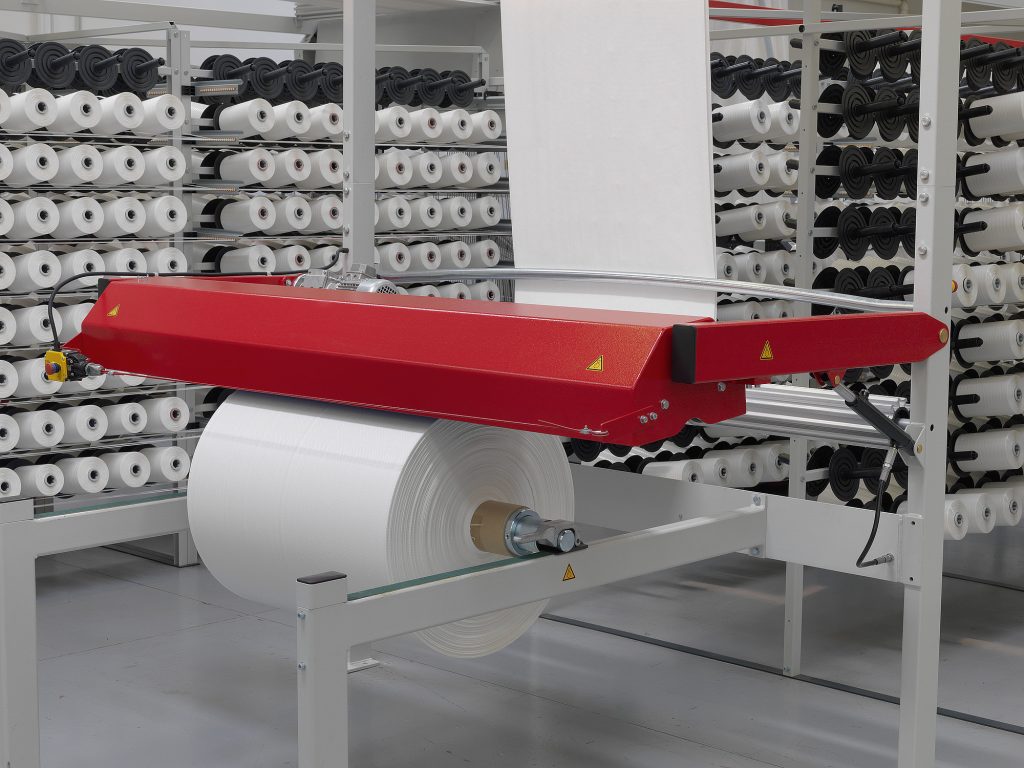
Polypropylene tape yarns are melted, cast as film, slit to narrow tapes, and drawn to orient polymer chains. Orientation elevates modulus and tensile strength while keeping density low. Practical windows for 10–50 kg construction formats: fabric 60–90 g/m², tapes around 600–1200 denier, weave densities roughly 8×8 to 12×12 tapes per inch. That recipe resists puncture from angular granulates (silica, clinker fines), holds squareness for safe pallets, and survives the notorious third‑tier bend.
Selective polyethylene tapes appear where low‑temperature toughness or a softer folding response is required, typically in cold storage or high‑latitude yards. The trade‑off is panel stiffness and print crispness versus polypropylene’s rigidity. In eco programs, the backbone is also a lever for certified recycled or bio‑attributed content. Mechanical recycled PP and mass‑balance PP can substitute part of the virgin feed; success depends on yarn quality control, because poor feedstock drives tape breaks and loom downtime. Document claims through recognized schemes and verify with routine tensile, tear, and tape‑break Pareto charts.
2) Surfaces for sealing, print, and recovery
Raw woven is porous and fray‑prone. Construction lines need a filmic skin to block capillary channels, carry barcode‑friendly print, and (on some equipment) accept heat seals.
- Extrusion coatings (PP or PE, ≈15–35 μm). A molten layer calendered onto the fabric seals pinholes and stabilizes the coefficient of friction for stacking. PP‑on‑PP supports mono‑polyolefin logic; PE coatings widen sealing windows for jaws tuned to polyethylene.
- BOPP laminations (biaxially oriented PP). Reverse‑printed BOPP yields scuff‑resistant faces and premium visuals with either gloss depth or matte glare control. Staying within PP systems (fabric + film + compatible adhesive) keeps mono‑material status realistic.
An eco lever hides here: adhesive and ink compatibility. Selecting laminating systems and print chemistries that behave in PP recycling—low haze, limited gel formation, acceptable odor—raises the chance that recovered material finds second life without severe down‑cycling.
3) Liners and functional patches (moisture control, hygiene, odor)
Coatings slow vapor; liners change the curve. LDPE or LLDPE liners bring forgiving heat‑seal windows and strong water‑vapor barriers per gauge. HDPE liners add barrier per thickness and a stiffer mouth presentation that behaves well under repetitive sewing or heat‑seal cycles. PP liners keep the whole system mono‑polyolefin but demand tighter sealing discipline. A right‑sized liner is eco‑friendly because avoiding caking prevents product waste that dwarfs the bag’s own footprint.
Local patches—film reinforcements at the mouth or under code panels—protect hot spots without the mass of a full free liner. Fixation methods matter. Cuffing a liner into the mouth fold prevents telescoping and needle‑hole bypass; tabbing keeps the liner centered through fast fills. Verify seals, hunt pinholes with light‑tables or air tests, and document moisture‑gain curves under climate conditioning.
4) Sewing, sealing, and small parts with big effects
For sewn‑open‑mouth formats, the classic moisture‑aware stack is crepe tape + filler cord + dual chain stitch. The filler cord occupies needle paths; the tape compresses the fold; the stitch resists peel. On sealed configurations, jaw geometry and release surfaces prevent stringing or crush marks and keep seams sound even when a breath of dust reaches the interface. Minute tweaks—a slightly wider tape, a millimeter more cord diameter, a different jaw texture—often decide whether pallets arrive clean or dusty.
5) Inks, varnishes, and readability under abuse
Water‑based flexographic inks dominate heavy‑duty packaging for low odor and robust anchorage. Matte over‑varnish in barcode panels reduces glare for scanners and crews in bright yards. Where brand visuals carry retail weight (premium building chemicals), reverse‑printed BOPP shields artwork below an abrasion‑resistant film. Durability first, drama second—and then both survive.
6) Additives that punch above their weight
Slip and antiblock packages tune stacking angle; UV absorbers protect outdoor pallets; antistatic treatments reduce dust cling; optical brighteners (sparingly) lift contrast on white faces. Each tiny percentage moves a real KPI: pallet creep, scuff resistance, operator ergonomics, and code reliability.
What Are the Features of Eco‑Friendly Woven Bags?
Features only matter if they change outcomes on the line and at the jobsite. The features below are written as a cause‑and‑effect map that construction suppliers measure.
- Strength at low mass. Oriented tapes deliver tensile and tear at modest grammage. Result: fewer burst failures, fewer double‑handling cycles, less waste.
- Moisture discipline tuned to climate. Liner polymer and gauge are set to a water‑vapor transmission target; seals are validated under temperature swings and mild contamination so powders stay free‑flowing.
- Clean closures. Crepe tape plus filler cord plus tuned stitches reduce weeping at the mouth; sealed configurations use window‑mapped jaws that tolerate a breath of dust. Clean pallets mean calmer housekeeping and better worker exposure metrics.
- Dimensional repeatability. Balanced weaves and stiff faces hold squareness, resisting pallet creep and tower lean in high bays.
- Readable, durable labeling. Matte panels and scuff‑resistant faces protect hazard statements, mix ratios, and batch data; scanners pass more often, trucks load faster.
- End‑of‑life clarity. Mono‑PP designs (fabric + PP coating + PP liner) align with PP recycling where markets exist; hybrid paper/PP builds demand clear depot instructions.
- Compatibility with high‑speed lines. Coated or laminated skins behave like films at sealing jaws; SOM closures remain field‑serviceable with portable sewing heads if a station goes down.
- Documented recycled or bio‑attributed content. When quality allows, certified content reduces primary feedstock dependency and helps meet policy or customer targets.
What Is the Production Process of Eco‑Friendly Woven Bags?
Manufacturing is choreography—polymer processing, weaving, surface finishing, printing, conversion, and QA—tuned to performance and circularity targets. Each station has a lever; each lever has a failure mode if neglected.
- Resin selection and receiving. Specify melt‑flow, odor limits, and additive packages (antioxidants, UV, slip/antiblock). Document recycled or bio‑attributed claims through recognized schemes; verify moisture and contamination on receipt.
- Tape extrusion and orientation. Cast film → slit to tapes → draw to orient. Control denier and width; monitor shrink as a crystallinity proxy; keep knives sharp to avoid filament shedding that weakens seams and contaminates bond zones.
- Weaving. Balance warp/weft tensions to avoid barre patterns; tune picks per inch and density for porosity and strength; watch tube‑width drift because pallet lean multiplies small errors.
- Surface creation. Extrusion coat (PP/PE) for a sealable skin or laminate BOPP for scuff‑resistant faces and premium graphics. Validate adhesion at folds and corners so laminates do not peel during hot–cold cycles or vibration.
- Printing and protective finishes. Water‑based flexo is the workhorse; gravure for photo‑grade visuals. Reserve matte varnish for data panels; verify scuff, color, and barcode readability after simulated vibration.
- Cutting, gusseting, bottoming. Heat‑cut edges to minimize fray; form gussets for cubic stability; paste or stitch bottoms per geometry; hold length/width tolerance tight.
- Liner insertion and fixation. Insert LDPE/HDPE/PP liners; cuff or tab to hold position; validate seal windows; inspect pinholes and organoleptic neutrality for sensitive products.
- Closure preparation. For sewn mouths: set crepe tape width, filler cord diameter, and stitch density; for sealed mouths: map temperature × dwell × pressure windows and jaw surface release.
- Hygiene and foreign‑matter control. Zone clean areas; filter air; enforce housekeeping; manage odor by ink/adhesive segregation and curing discipline.
- Testing and release. Physical: tensile, tear, seam pull, drop, burst. Functional: moisture‑gain curves with climate conditioning, sift‑proofness, barcode readability after rub. Traceability: tie batch codes to raw‑material lots and window settings.
Coating and lamination are energy‑intensive steps. Lower‑VOC inks, solvent capture/abatement, and stable drying reduce environmental burden. Scrap reduction through preventive maintenance is both an eco and cost win.
For a concise overview of the woven PP base, see woven polypropylene bags, which outlines the tape extrusion and weaving logic underpinning this format.
What Is the Application of Eco‑Friendly Woven Bags?
The construction ecosystem depends on powders that dislike water yet demand speed. Eco‑Friendly Woven Bags fit when logistics are rough, pallets see the weather, and failure costs a pour.
- Cement and blended cements. Free‑flow on site hinges on moisture discipline from mill to mixer. Bags need venting for fast fills and (where justified) liners for humid corridors.
- Dry mortars, grouts, and tile adhesives. Polymer‑modified mixes cake quickly when damp; right‑sized barrier and seam hygiene separate usable material from a solid brick.
- Gypsum and stucco. Even a slight moisture uptick ruins performance; matte code panels improve readability for mixing ratios in bright yards.
- Lime, calcium carbonate, and mineral fillers. Abrasive and angular; require stiff faces and puncture‑resistant backbones. Anti‑slip features stabilize tall stacks.
- Silica sand and joint compounds. Heavy, dense, and dust‑prone; seam integrity and pallet friction are safety issues as much as quality issues.
- Infrastructure and landscaping aggregates. Small woven sacks or FIBCs offer reuse potential with inspection regimes, reducing footprint per trip.
Eco‑Friendly Woven Bags: Their Role in the Construction Industry
The title promises two things: that Eco‑Friendly Woven Bags matter to construction, and that the reasons can be organized into a practical plan. The surest way to keep that promise is to think like a systems engineer—decompose the challenge, test each lever, and then compose a specification that works on a plant floor and survives the road.
Sub‑problem A — What makes a woven bag eco‑friendly in practice?
Define the levers that credibly reduce burden without undermining performance: mono‑material architecture, recycled or bio‑attributed content, durability that prevents product loss, right‑sized barrier, and end‑of‑life routes that exist in your markets. Mono‑PP builds (woven + PP coating + PP liner) align with present design‑for‑recycling guidance for polyolefin flexibles. Adhesive and ink compatibility decides whether recyclate emerges usable or gummy. Recycled content must be certified and quality‑controlled to avoid yarn breaks and seam failures. Durability matters because wasted product overwhelms the footprint of a single bag.
Sub‑problem B — Moisture profile and barrier right‑sizing
Coating only? Coating plus patches? Full liner? Coatings seal pinholes and handle modest humidity; patches harden hot spots; liners unlock real humidity control for hygroscopic loads and long routes. Over‑engineering complicates recycling and inflates cost; under‑engineering breeds caking and returns. The synthesis is simple to state, hard to execute: select the least complex barrier that meets a written moisture‑gain threshold (for example, maximum mass gain over 14 days at route‑specific climate).
Sub‑problem C — Pallet mechanics and safety
Square bodies from balanced weaves and stiff skins behave like bricks; matte textures or anti‑slip bands prevent gloss‑on‑gloss sliding under stretch‑wrap; wrap tension must match climate. The engineered outcome is a stable prism—pallets that travel straight, stacks that stay put, crews that handle with confidence.
Sub‑problem D — Dust hygiene, worker exposure, and site etiquette
Needle holes are inevitable on sewn mouths; a filler cord occupies paths, tape compresses the fold, and stitch density locks it down. On sealed configurations, jaw surfaces and release textures maintain seam quality even with a whisper of dust. Cleaner seams reduce airborne load, earn audit points, and lower housekeeping overhead.
Sub‑problem E — Legibility that outlasts rubbing and rain
Warehouse lighting glares; conveyors scuff corners; pallets rub. Water‑based flexo plus matte data panels is a durable baseline; reverse‑printed BOPP protects artwork on premium lines. Code placement away from fold and scuff lines matters as much as chemistry.
Sub‑problem F — End‑of‑life routes you can defend
Design for PP streams, mixed‑poly streams, or managed reuse. Markets for PP recyclate are growing but uneven. Mono‑PP simplifies routing; mixed substrates require clear depot instructions. Larger formats (FIBCs) offer reuse cycles with inspection protocols, improving footprint per trip. Decide early, label clearly, and publish a one‑page depot SOP.
System Synthesis: From URS to a Living Specification
Here is a practical operating model that changes only when data say it should.
- Capture reality. Product density and morphology; hygroscopicity; fill temperature; target speed; route climate; pallet height; yard exposure; scanning light conditions.
- Draft the architecture. Fabric GSM/denier; coating versus BOPP; liner polymer and gauge; anti‑slip plan; code‑panel plan; seam recipe (tape width, cord diameter, stitch type) or a sealing window for heat‑sealed mouths.
- Write the numbers. Drop height/count; seam pull minimum; burst; moisture‑gain limits; barcode pass rate after vibration; pallet creep angle at 24/72 hours.
- Prove on the line. Pilot fills; adjust perforation or seam parameters; tune wrap tension; reposition codes if scuff lines threaten readability.
- Lock and label. Freeze BOMs and windows; publish end‑of‑life notes (liner removal where relevant).
- Improve with Pareto. Link defect tallies to raw‑material lots and machine settings; change the spec when patterns—not anecdotes—demand it.
Tables — Parameters and Decisions at a Glance
| Parameter | Typical window / option | Why it matters |
|---|---|---|
| Fabric GSM | 60–90 g/m² (10–50 kg formats) | Balances tensile/tear against mass and cost |
| Tape denier | 600–1200 D | Higher denier lifts drop and puncture resistance |
| Weave density | ≈8×8 to 12×12 tapes/inch | Controls porosity and print‑base smoothness |
| Coating thickness | 15–35 μm PP/PE | Creates a sealable, splash‑resistant skin |
| Lamination | Single/duplex BOPP; matte or gloss | Scuff resistance and durable visuals |
| Liner gauge | 60–120 μm LDPE/HDPE/PP | Tunes moisture barrier and fines retention |
| Mouth seam (SOM) | Dual chain stitch + crepe tape + filler cord | Sift‑proof closure at speed |
| Code zone finish | Matte varnish or matte BOPP | Improves scanner pass rates |
| Anti‑slip | Bands, micro‑texture, matte faces | Stabilizes pallets and reduces creep |
| Lever | Option | Benefit | Trade‑off |
|---|---|---|---|
| Liner polymer | LDPE/LLDPE | Forgiving seals; solid WVTR | Slightly lower barrier per thickness than HDPE |
| Liner polymer | HDPE | Higher barrier per gauge; stiffer mouth | Tighter folds; stress‑crack watch |
| Liner polymer | PP | Mono‑PP recyclability logic | Narrower sealing window |
| Outer skin | PP coating | Mono‑PP logic; stable friction | Less scuff‑proof than BOPP |
| Outer skin | BOPP laminate | Scuff resistance; premium print | Extra step; adhesive selection crucial |
| Venting | Micro‑perforation | Faster fill; less puffing | Over‑venting risks dust leaks |
| Seam recipe | Wider tape + larger filler cord | Fewer weeps at mouth | Small material cost increase |
| Failure mode | Likely cause | Corrective action |
|---|---|---|
| Moisture‑driven caking | Liner too thin; wrinkled seal; pinholes | Increase gauge; map seal window; improve cuffing/pinhole checks |
| Punctures during drop | Fabric too light; low denier; sharp granules | Raise GSM/denier; add local patches |
| Pallet creep/lean | Gloss‑on‑gloss faces; tube width drift | Add matte textures or bands; tighten width tolerance; adjust wrap |
| Dust weeping at mouth | Tape too narrow; small filler cord; low stitch density | Increase tape width/cord; raise stitch count; refine fold |
| Barcode failures | Glare; scuff; low contrast | Matte code zones; reposition; add white underlay |
Worked Scenarios (Transferable Patterns)
Architecture: 70 g/m² woven PP; PP extrusion coating; matte BOPP brand panel; 100 μm LDPE liner cuffed to mouth. Targets: ≤0.5% moisture gain over 14 days; no caking; ≥99% barcode pass after vibration. Controls: seal window validation on customer FFS/sewing line; humidity‑conditioned trials; tuned wrap tension for summer heat. Outcome: free‑flowing product, clean pallets, steady scans.
Architecture: woven PP; PE coating for forgiving seal window; 100 μm HDPE liner; matte friction bands. Targets: seam integrity despite condensation; stable stacks in cool rooms; no rehydration clumps. Controls: cold‑room seal validation; condensation challenge; liner pinhole tests. Outcome: seals hold; pallets stay square; powder spreads cleanly.
Architecture: 80 g/m² fabric; PP coating; reverse‑printed matte BOPP front; 80 μm PP liner for mono‑PP logic; micro‑perforation fields away from seam path. Targets: drop‑puncture survival; humidity control on ocean leg; code durability. Controls: composite puncture tests; seal-window mapping; vibration + scan verification. Outcome: strong, dry, scannable loads with clear end‑of‑life notes.
Frequently Asked Questions
Are Eco‑Friendly Woven Bags biodegradable? No. Polypropylene is durable and recyclable rather than biodegradable. The eco strategy is to design for recycling, include certified recycled or bio‑attributed content where feasible, and maximize durability to prevent product loss.
Do we always need a liner? No. Coated‑only builds work for coarse, dry materials in mild climates. Liners are justified for hygroscopic powders, humid routes, longer storage, or when odor transfer must be controlled.
Can these bags be heat‑sealed like films? With an extrusion‑coated or laminated skin, yes—on the coated surface or at a fitment—but sealing windows and jaw surfaces must be validated because coated woven behaves differently than cast film.
How do they compare to paper sacks? Paper can excel in de‑aeration and print feel but struggles with wet handling and puncture. Woven PP wins on puncture resistance, outdoor resilience, and pallet stability; de‑aeration is engineered via micro‑perforation and mouth design.
What about regulations and documentation? While many construction products are not dangerous goods, some additives are. Where applicable, woven plastic bag codes (5H1/5H2) and general leakage‑prevention duties apply. Beyond that, regional policies increasingly push recyclability and recycled content; operationally, that means documenting material choices, tests, and end‑of‑life notes with revision control.
Keyword Strategy and Semantic Variants
Primary keyword used throughout: Eco‑Friendly Woven Bags.
Secondary and long‑tail phrases placed contextually: sustainable woven polypropylene bags; recyclable woven PP sacks; mono‑PP construction packaging; recycled‑content woven poly bags; circular woven bags for cement; moisture‑resistant eco woven sacks; matte BOPP woven packaging; barcode readability on woven PP; anti‑slip woven pallets; WVTR‑controlled woven bags; low‑carbon woven packaging for building materials; environmentally friendly woven sacks.
- What Are Eco‑Friendly Woven Bags?
- The Materials of Eco‑Friendly Woven Bags
- 1) Woven Backbone
- 2) Filmic Skins
- 3) Liners & Patches
- 4) Closures
- 1) Woven polypropylene backbone (mechanics, durability, mass efficiency)
- 2) Surfaces for sealing, print, and recovery
- 3) Liners and functional patches (moisture control, hygiene, odor)
- 4) Sewing, sealing, and small parts with big effects
- 5) Inks, varnishes, and readability under abuse
- 6) Additives that punch above their weight
- What Are the Features of Eco‑Friendly Woven Bags?
- What Is the Production Process of Eco‑Friendly Woven Bags?
- What Is the Application of Eco‑Friendly Woven Bags?
- Eco‑Friendly Woven Bags: Their Role in the Construction Industry
- Sub‑problem A — What makes a woven bag eco‑friendly in practice?
- Sub‑problem B — Moisture profile and barrier right‑sizing
- Sub‑problem C — Pallet mechanics and safety
- Sub‑problem D — Dust hygiene, worker exposure, and site etiquette
- Sub‑problem E — Legibility that outlasts rubbing and rain
- Sub‑problem F — End‑of‑life routes you can defend
- System Synthesis: From URS to a Living Specification
- Tables — Parameters and Decisions at a Glance
- Worked Scenarios (Transferable Patterns)
- Frequently Asked Questions
- Keyword Strategy and Semantic Variants
“Sustainability in construction isn’t just about materials—it’s about reimagining every component, down to the bags that protect and transport them,” declares Ray, CEO of VidePak, during a site visit to a green infrastructure project. This report demonstrates how eco-friendly woven polypropylene (PP) bags, engineered to meet global standards and fortified with advanced additives, are transforming construction logistics by balancing durability, regulatory compliance, and environmental stewardship. By analyzing PP resin selection frameworks, additive technologies, and VidePak’s operational excellence, we reveal how these bags are becoming indispensable in modern construction.
1. Material Science: Selecting PP Resins for Global Compliance
1.1 Aligning PP Grades with International Standards
Polypropylene resins must adhere to region-specific mechanical and environmental benchmarks:
- ASTM D4101 (U.S.): Requires tensile strength ≥30 MPa and melt flow index (MFI) of 8–12 g/10 min for extrusion stability.
- EN ISO 1873-1 (EU): Mandates UV resistance (≥1,000 hours xenon arc testing) and oxidative induction time (OIT) >20 min for outdoor use.
- JIS K6758 (Japan): Prioritizes low heavy metal content (<50 ppm) and recyclability ≥95% under ISO 15270.
VidePak’s BOPP laminated woven bags utilize Homo-PP (MFI 10 g/10 min), achieving tensile strengths of 32–35 N/mm², ideal for heavy-duty applications like sandbagging and concrete additive transport.
1.2 Additive Engineering for Enhanced Performance
- UV Stabilizers: Hindered amine light stabilizers (HALS) reduce UV degradation by 70%, extending bag lifespan to 5+ years in tropical climates.
- Antioxidants: Phosphite-based additives (e.g., Irgafos 168) maintain OIT >25 min, preventing polymer breakdown during high-temperature lamination.
- Anti-static Agents: Carbon-black masterbatches lower surface resistivity to 10⁶–10⁸ Ω/sq, mitigating explosion risks in dust-prone environments.
| Additive Type | Function | Regulatory Compliance |
|---|---|---|
| HALS UV Stabilizers | Prevents photo-oxidation | EU REACH, RoHS |
| Phosphite Antioxidants | Delays thermal degradation | FDA CFR 21, EU 10/2011 |
| Carbon-Black Masterbatch | Reduces static buildup | ANSI/ESD S20.20, ATEX Directive 2014/34/EU |
2. Application-Specific Design in Construction
2.1 Flood Control and Erosion Management
VidePak’s block-bottom valve bags, reinforced with PE liners (120 µm), withstand hydrostatic pressures up to 15 kPa, reducing sand leakage by 90% in flood barriers. A 2024 trial in Bangladesh demonstrated a 40% cost reduction compared to traditional clay bunds.
2.2 Heavy-Duty Material Transport
- FIBC Jumbo Bags: Woven with 16×16 strands/inch density, these bags support 1-ton loads of aggregates while resisting punctures (>500 g/mil, ASTM D1709).
- Anti-Bulge Designs: Cross-stitched seams and radial tensile webbing prevent bag deformation under dynamic loads, critical for crane-lifted materials.
3. VidePak’s Manufacturing Excellence: Bridging Scale and Sustainability
Founded in 2008, VidePak operates 100+ Starlinger circular looms and 30+ lamination machines, producing 50 million eco-friendly bags annually. Key innovations include:
- Solar-Powered Production: A 2 MW rooftop solar system reduces CO₂ emissions by 1,200 tons/year.
- Closed-Loop Recycling: Post-consumer PP is reprocessed into non-woven geotextiles, diverting 800+ tons of waste annually.
4. Market Trends and Strategic Insights
The global construction packaging market is projected to reach $63 billion by 2027 (Grand View Research), driven by ESG mandates. VidePak’s R&D in biodegradable PP-PLA blends (30% fossil fuel reduction) and partnerships with IoT firms for smart moisture sensors position it as a sustainability leader. Competitors must adopt blockchain traceability and AI-driven quality analytics to compete.
5. FAQs: Addressing Industry Concerns
Q1: How do eco-friendly bags compare to traditional options in cost and performance?
A: While initial costs are 15–20% higher, lifecycle savings (e.g., 5-year durability vs. 2-year for conventional bags) and carbon tax rebates offset premiums.
Q2: Can recycled PP meet ASTM/ISO strength requirements?
A: VidePak’s virgin-recycled PP hybrids achieve 95% of virgin resin’s tensile strength while complying with EN 13432 compostability standards.
Conclusion
Eco-friendly woven bags are redefining construction logistics through science-driven material innovation. By aligning PP engineering with global standards, integrating advanced additives, and prioritizing circular economies, VidePak exemplifies how industrial packaging can drive both operational efficiency and planetary health. As Ray concludes, “Every bag we produce is a step toward a future where construction thrives without compromising the earth.”
External Links:
- Explore how polypropylene bags meet regulatory and ESG standards for sustainable construction.
- Learn about FIBC bags in construction waste management to optimize material handling.
References:
- IndustryARC, Nonwoven Fabric Market Report (2025)
- ASTM International, Standard Specification for Polypropylene Injection and Extrusion Materials (D4101)
- European Committee for Standardization, Plastics—Polypropylene (PP) Moulding and Extrusion Materials (EN ISO 1873-1)