
What is HDPE Woven Fabric Bags?
HDPE Woven Fabric Bags are heavy‑duty packaging sacks engineered from flat, oriented tapes of high‑density polyethylene that are woven together to create a robust yet lightweight fabric. After weaving, the fabric can remain breathable or receive an extrusion‑laminated polyethylene film for greater resistance to moisture and sifting. In everyday supply chains, these bags appear across agriculture, chemicals, construction aggregates, food commodities, and emergency sandbagging—where durability, stackability, and predictable handling are essential.
Because different industries speak different dialects, the same object is frequently called by several labels. To avoid confusion and to help with procurement searches, practitioners often encounter the following aliases for HDPE Woven Fabric Bags:
- HDPE woven sacks
- Woven polyethylene bags
- Poly woven bags or poly‑weave sacks
- HDPE raffia sacks
- Laminated HDPE woven bags (for coated variants)
- HDPE woven fabric sacks
Material Architecture of HDPE Woven Fabric Bags
Think of HDPE Woven Fabric Bags as a layered mechanical system in which each constituent—tape, weave, coating, liner, and seam—plays a specific role. Alter one, and you shift strength, barrier performance, form stability, or cost. The following breakdown maps the material logic.
Base fabric: oriented HDPE tapes
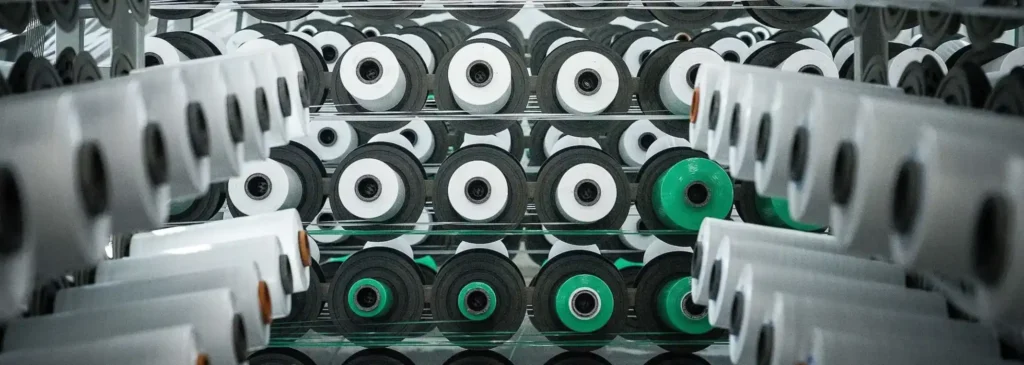
Flat tapes are slit from an extruded film and drawn to align polymer chains, producing high tensile strength at low mass. Typical ranges include 600–1200 denier tapes in 8×8 to 14×14 weaves. Denier controls tear and seam‑holding; weave density influences stiffness and powder retention.
Coating or lamination (optional)
An LDPE/LLDPE film (often 12–50 μm) can be extrusion‑coated on one or both sides of the fabric. The coating smooths the surface for printing, raises moisture barrier, and reduces sifting of fine powders. One‑sided coatings keep breathability; two‑sided coatings maximize barrier.
Inner liner (use‑dependent)
For hygroscopic products—fertilizers, salt, sugar, specialty chemicals—an LLDPE or HDPE liner (about 60–120 μm) boosts moisture protection and prevents dust escape. Liners can be tubular or gusseted, loose or attached, clear or pigmented for light protection.
Additives and stabilization
UV packages (HALS with UVA absorbers) extend outdoor life; slip and antiblock improve handling; pigments aid coding or branding. Additive selection should match the expected sun exposure and storage months, not merely the shipping window.
Features and Performance Characteristics
Why do operators repeatedly specify HDPE Woven Fabric Bags for 10–50 kg fills? Because these sacks unite a handful of mechanical virtues that matter at the warehouse as much as in transit: high tensile‑to‑weight ratio, puncture resistance, predictable stacking behavior, configurable moisture protection, and print‑ready surfaces when laminated. The following feature set distinguishes them in day‑to‑day use.
- Strength with economy. Drawn HDPE tapes deliver impressive tensile performance without penalizing mass, allowing cost‑effective shipping and manual handling.
- Form stability. The fabric’s inherent stiffness helps bags stand and stack; pallets are tidier, stretch‑wrap usage is more efficient, and unit loads are more stable.
- Barrier tuning. Choose breathable fabric for grains, add lamination for hygroscopic fertilizer, insert a liner for fine powders requiring higher moisture defense.
- Outdoor readiness. With HALS‑based UV stabilization, stored stock resists embrittlement in sun‑exposed yards.
- Print and code quality. Laminated surfaces accept flexographic inks cleanly; barcodes and traceability marks achieve reliable contrast.
- Recyclability logic. Mono‑polyolefin constructions (HDPE fabric with PE coating or liner) align with many recycling and extended‑producer‑responsibility frameworks.
Manufacturing Workflow and Control Points
The industrial journey from pellet to pallet follows a disciplined sequence. Each stage introduces variables that can either elevate or erode the performance of HDPE Woven Fabric Bags. Consider the checkpoints below as non‑negotiable for plants targeting repeatable quality and realistic cost control.
Compounding and tape extrusion. Resin selection (HDPE grade, melt index), additive dosages, and extrusion temperature profiles define film quality prior to slitting. Tight control of film gauge uniformity leads to tapes with consistent denier.
Drawing and orientation. Drawing aligns chains, elevating tensile strength; the draw ratio determines the balance between strength and elongation. Excessive draw can make seams brittle; insufficient draw leaves the fabric underperforming.
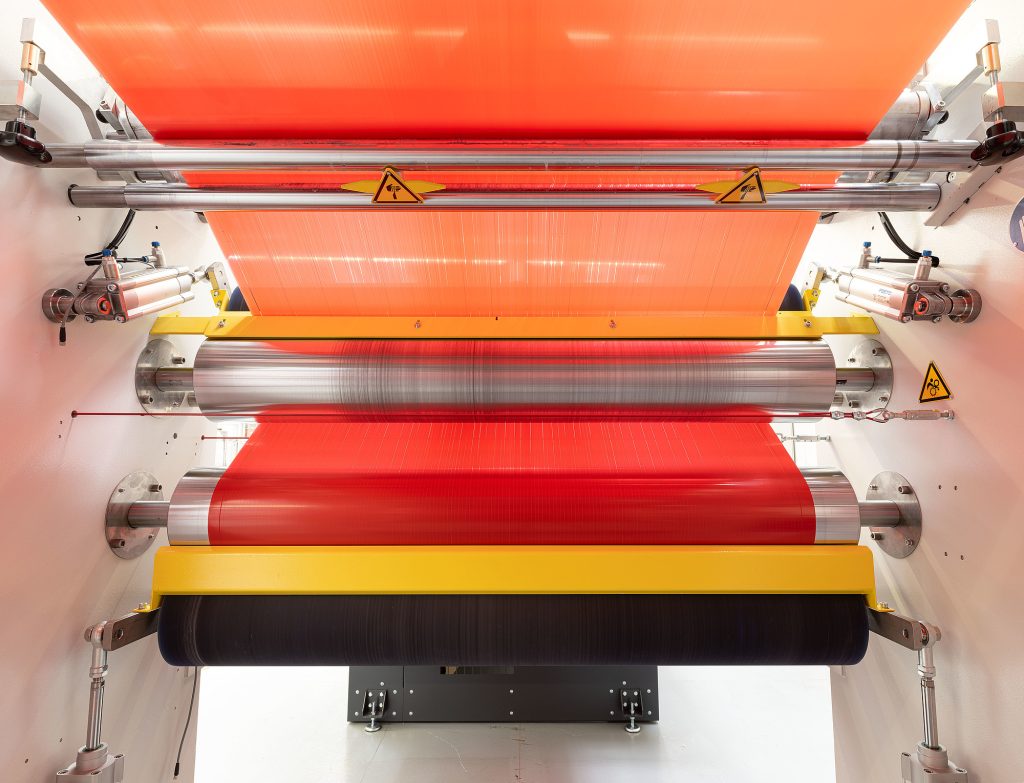
Weaving on circular or flat looms. Circular looms produce tubular fabric with fewer seam variables; flat looms yield sheets that are later back‑seamed. Loom tension, pick density, and warp/weft balance govern weave integrity.
Extrusion coating or lamination. A thin LDPE/LLDPE layer improves barrier and print surface. Process stability—nip pressure, melt temperature, line speed—prevents voids and ensures adhesion.
Conversion. Cutting length, bottom fold geometry, stitch density, and valve or spout options define end use. For drop‑sensitive fills, double‑fold bottoms and reinforced stitching are prudent.
Printing and coding. Flexographic plates, ink systems, corona treatment levels, and dryer settings influence color density and barcode readability.
Quality control. Routine tests—GSM, tensile, seam integrity, drop tests, moisture ingress—should be recorded with SPC charts, not only pass/fail stamps.
A rhetorical question often clarifies priorities: what fails first in your duty cycle—seam, wall, or moisture? If you cannot answer, schedule drop testing and humidity exposure before arguing lamination thickness or liner cost.
Applications and Fit‑for‑Purpose Patterns
Applications cluster where toughness, repeatability, and logistics discipline intersect. The following deployment patterns show how HDPE Woven Fabric Bags flex to context.
- Agriculture and fertilizer: laminated fabric or fabric with liner protects urea and NPK blends from caking; antiskid weaves keep pallet stacks secure.
- Grains and animal feed: breathable or one‑side coated fabric balances moisture exchange with protection; printing enables traceability in cooperatives.
- Chemicals and minerals: for dense powders, double‑fold seams and higher denier resist cuts from angular granules; liners mitigate dust and humidity.
- Food commodities: sugar and salt lines commonly specify smooth laminated surfaces for hygiene and clean print zones.
- Construction and flood control: sandbags exploit water tolerance and UV‑stabilized grades for staging in open air.
System Thinking: Evolution, Technology, Materials, Cost
The subject often appears as four isolated conversations—history, machinery, polymers, budgets. But in real factories these threads form a single tapestry. The better one appreciates the linkages, the fewer surprises appear on the loading dock. The matrix below reframes HDPE Woven Fabric Bags as a system.
Decision Framework for Specifying HDPE Woven Fabric Bags
Rather than generic advice, here is a working decision flow that procurement and packaging engineers can share. Short sentences coexist with long ones because real meetings contain both.
Define the payload. Mass, bulk density, particle shape, and friability. Ten kilograms is not fifty; rounded pellets are not sharp granules.
Map the environment. Yard storage? Coastal humidity? Solar exposure for three months? State it.
Choose the fabric. Start with GSM for working load; set denier for seam integrity; set weave (10×10, 12×12) for sifting and print laydown.
Decide barrier architecture. Coating for moderate protection, liner for stringent moisture control, or both for extreme conditions.
Engineer the seam. Single fold for light, double fold for heavy; stitch density matched to fabric stiffness.
Stabilize for outdoors. Specify HALS and, if graphics matter, a UVA package. Target exposure in months, not adjectives.
Lock printing and coding. Define plate count, ink colors, lot code location, and barcode grade. Make it explicit.
Test and iterate. Drop tests from realistic heights, humidity soaks, pallet tilt tests. Data persuades; anecdotes mislead.
Parallel truths deserve repetition: specify in numbers, not adjectives; validate with tests, not assumptions; negotiate with indices, not guesses. This is how HDPE Woven Fabric Bags remain safe, reliable, economical.
Cost Structure and Practical Levers
Costs do not fall from the sky; they accumulate from choices. Resin, energy, labor, compliance, and freight dominate. Control one lever poorly and the savings from another evaporate. The colored table below translates that reality into procurement language.
Engineering Notes and Practical Tactics
Details win or lose the day. The following tactics are deliberately granular because small process changes often deliver the largest, fastest savings without risking product integrity.
- Maintain corona treatment above 38 dynes on laminated surfaces to improve ink adhesion and barcode fidelity.
- Use antiskid weave patterns or embossed coatings when pallet instability appears despite stretch‑wrap.
- Specify valve dimensions precisely for powder bagging lines that aerate the product during filling.
- Audit draw ratios quarterly; machine drift is real and undermines elongation before anyone notices.
- When switching to a liner‑only architecture, validate de‑aeration paths to avoid trapped air during filling.
Contrast clarifies choices: coating reduces moisture ingress at the surface; liners protect from the product side out. Coating aids print and scuff resistance; liners guard headspace humidity and prevent sifting. Many plants use both selectively across SKUs.
Specification Ranges for 2025 Procurement
The following ranges are common in active catalogs and RFQs. They are not commandments. They are adjustable dials you turn until your drop tests, moisture soaks, pallet tilts, and cost windows line up.
Questions Engineers Actually Ask
Short, direct, useful—because real projects move quickly.
- Are HDPE Woven Fabric Bags compatible with typical recycling streams? Yes, but always confirm local programs and maintain mono‑polyolefin constructions where feasible.
- When should one pick HDPE fabric instead of polypropylene? When moisture response and form stability dominate; choose polypropylene if flex‑fatigue and ultra‑sharp print are paramount.
- What is a sensible starting spec for 25 kg fertilizer? Around 80–90 GSM fabric, 10×10 or 12×12 weave, double‑fold seam, and either one‑side lamination or an LLDPE liner.
- How do we prevent sifting without over‑engineering? Tighter weave plus one‑side coating often suffices; reserve liners for highly hygroscopic or very fine powders.
- Which fails first during abuse—seam or wall? In many drop scenarios, seam design is the limiting factor; denier and stitch pattern deserve early attention.
Every question above can be rewritten as a test. Turn uncertainty into data, then into a specification. That is the repeatable path to safe, economical HDPE Woven Fabric Bags.
- What is HDPE Woven Fabric Bags?
- Material Architecture of HDPE Woven Fabric Bags
- Features and Performance Characteristics
- Manufacturing Workflow and Control Points
- Applications and Fit‑for‑Purpose Patterns
- System Thinking: Evolution, Technology, Materials, Cost
- Decision Framework for Specifying HDPE Woven Fabric Bags
- Cost Structure and Practical Levers
- Engineering Notes and Practical Tactics
- Specification Ranges for 2025 Procurement
- Questions Engineers Actually Ask
“In the world of industrial packaging, HDPE woven bags are no longer just sacks—they’re engineered solutions that balance strength, sustainability, and smart economics,” asserts Ray, CEO of VidePak, during a factory tour. This report demonstrates how HDPE woven fabric bags, driven by advancements in fine-fiber weaving technology and material science, are revolutionizing chemical, agricultural, and construction logistics while aligning with global cost-efficiency imperatives. By dissecting innovations in high-density weaving, additive engineering, and circular economy practices, we reveal why these bags are pivotal to modern supply chains.
1. Fine-Fiber Weaving Technology: Redefining Structural Integrity
1.1 The Science Behind Fine-Fiber Weaving
Fine-fiber weaving involves extruding high-density polyethylene (HDPE) into ultra-thin filaments (20–30 µm diameter) and weaving them into fabrics with densities up to 16×16 strands per square inch. VidePak’s Starlinger circular looms achieve this precision by maintaining tension at 15–20 N/cm and extrusion temperatures of 200–220°C, ensuring filament uniformity.
Key Advantages:
- Enhanced Tensile Strength: Fine-woven HDPE fabrics achieve tensile strengths of 28–32 N/mm² (ASTM D5035), 30% higher than conventional 8×8 weaves.
- Leakage Prevention: Reduced pore size (<0.1 mm) minimizes particle escape, critical for powders like titanium dioxide or sodium carbonate.
- Aesthetic Refinement: Smoother surfaces enable high-definition printing, boosting brand visibility.
Case Study: A 2024 trial with a Chinese chemical firm showed VidePak’s 16×16 weave bags reduced silica dust leakage by 85%, complying with EU REACH particulate limits.
2. Material Innovations: Balancing Performance and Compliance
2.1 HDPE Resin Selection for Global Markets
HDPE grades are selected based on regional standards:
Heavy-Duty HDPE Bags With Venting
Advanced HDPE woven fabric bags with innovative venting technology for improved durability and cost efficiency.
Check More →Co-Extruded FFS HDPE Bags
Cutting-edge co-extruded HDPE woven bags representing the latest material evolution and production technology.
Check More →Heavy-Duty PE Bags Roll
High-performance HDPE woven fabric rolls combining modern technology, material quality and cost-effective production.
Check More →FFS Roll PE Film With Gussets
HDPE-based FFS woven film technology evolving for better performance, efficiency and long-term cost savings.
Check More →- ASTM D4976 (U.S.): Requires melt flow index (MFI) of 0.5–1.0 g/10 min and density ≥0.945 g/cm³ for chemical resistance.
- EN ISO 1872-1 (EU): Mandates UV stabilization (≥1,000 hrs xenon arc testing) and oxidative induction time (OIT) >25 min.
- JIS K6745 (Japan): Prioritizes recyclability ≥95% (ISO 15270) and heavy metal content <50 ppm.
VidePak’s virgin HDPE resins incorporate hindered amine light stabilizers (HALS) and phosphite antioxidants, extending outdoor lifespan to 5+ years in harsh climates.
2.2 Additive Engineering for Specialized Applications
| Additive Type | Function | Compliance |
|---|---|---|
| Carbon-Black Masterbatch | Anti-static properties | ANSI/ESD S20.20 |
| UV Stabilizers | Prevents polymer degradation | EU REACH, RoHS |
| Anti-block Agents | Reduces film adhesion | FDA CFR 21 |
3. Cost Efficiency: Scaling Production with Sustainability
3.1 Advanced Manufacturing at VidePak
With 100+ Starlinger looms and 30 lamination machines, VidePak produces 50 million HDPE bags annually. Key cost-saving strategies include:
- Solar-Powered Production: A 2 MW rooftop solar system reduces energy costs by 40% and CO₂ emissions by 1,200 tons/year.
- Closed-Loop Recycling: Post-consumer HDPE is reprocessed into non-woven geotextiles, diverting 800+ tons of waste annually.
3.2 Economic Analysis: Fine-Weave vs. Conventional Bags
| Parameter | Fine-Weave HDPE Bags | Conventional Bags |
|---|---|---|
| Material Cost | $0.25–$0.35/bag | $0.18–$0.25/bag |
| Lifespan | 5 years | 2–3 years |
| Leakage-Related Losses | <5% | 15–20% |
| ROI (5-year) | 200% | 120% |
4. Regulatory Alignment and Future Trends
4.1 Global Standards and Certification
- EU Circular Economy Package: Requires 55% recycled content in packaging by 2030, driving demand for VidePak’s HDPE-PLA hybrids.
- U.S. EPA Guidelines: Incentivize bags with <1% chemical migration, achievable via HDPE’s inert structure.
4.2 Emerging Technologies
- Smart Bags: RFID tags for real-time moisture/pH monitoring (piloted in VidePak’s ChemGuard series).
- Bio-Based HDPE: Partnerships with biotech firms to develop 30% plant-derived resins, reducing carbon footprint by 25%.
5. FAQs: Addressing Industry Concerns
Q1: How does fine-fiber weaving improve load capacity?
A: Higher strand density distributes stress evenly, enabling 1-ton FIBC jumbo bags to withstand dynamic loads without bulging (tested per ASTM D5264).
Q2: Are recycled HDPE bags viable for corrosive chemicals?
A: VidePak’s virgin-recycled blends retain 90% of virgin HDPE’s chemical resistance (pH 2–12) while meeting EN 13432 compostability standards.
Conclusion
HDPE woven bags exemplify the synergy of technological precision and ecological responsibility. By mastering fine-fiber weaving, optimizing material science, and embracing circular economies, VidePak is redefining industrial packaging as a driver of efficiency and sustainability. As Ray concludes, “Our bags aren’t just containers—they’re blueprints for a smarter, greener supply chain.”
External Links:
- Explore how eco-friendly HDPE bags align with ESG goals for sustainable logistics.
- Learn about polypropylene compliance frameworks to enhance regulatory alignment.
References:
- ASTM International, Standard Specification for Polyethylene Plastics (D4976)
- European Committee for Standardization, Plastics—Polyethylene (PE) Moulding and Extrusion Materials (EN ISO 1872-1)
- Japan Industrial Standards, Polyethylene Pipes (JIS K6745)