
FFS Roll Woven Bags are increasingly popular in the packaging industry, known for their efficiency and versatility. These bags are produced through a highly automated process that enhances productivity while maintaining high-quality standards. This article will explore the production process of FFS Roll Woven Bags, focusing on key stages such as drawing, weaving, cutting and sewing, printing and coating, as well as inspection and packaging. Additionally, we will emphasize the advanced technology provided by Starlinger, which plays a crucial role in optimizing production efficiency.
FFS Roll PE Film With Gussets
High-performance gusseted FFS roll films optimized for automated packaging production lines.
Check More →25kg Polyethylene Tubular FFS Films
Durable tubular FFS woven films designed for 25kg industrial packaging production.
Check More →Polyethylene FFS Film For 50kg
Heavy-duty 50kg capacity FFS roll films with advanced production technology.
Check More →Heavy-Duty Polyethylene Bags
Industrial-grade polyethylene bags compatible with FFS production and packaging processes.
Check More →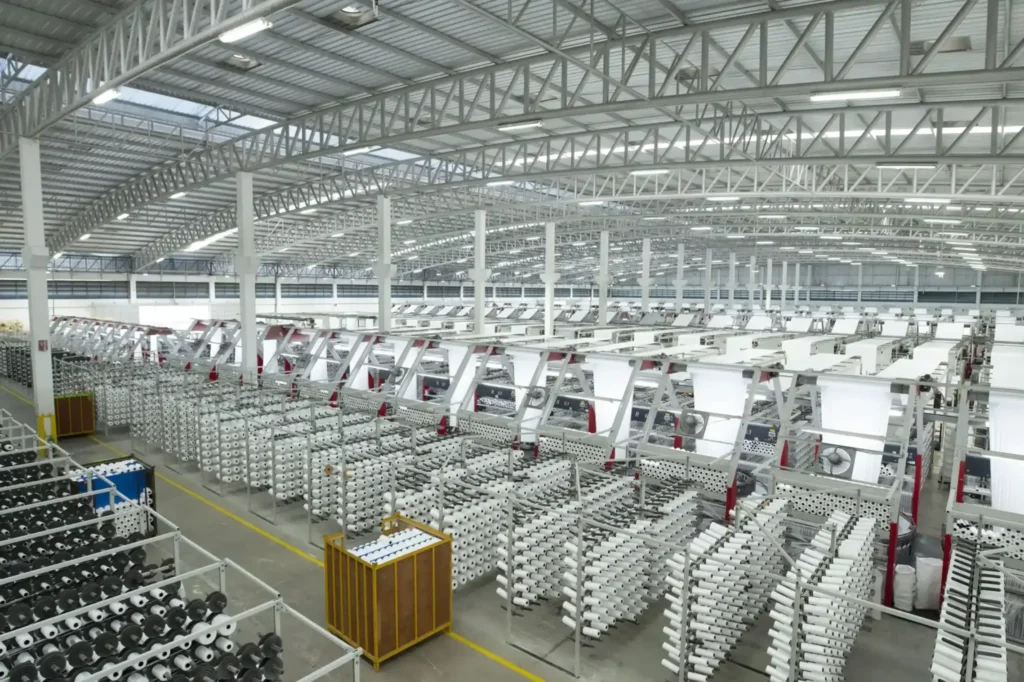
What are FFS Roll Woven Bags?
FFS Roll Woven Bags are continuous, printable reels of woven polyolefin packaging engineered to run on form‑fill‑seal equipment. Instead of feeding discrete sacks into a magazine, an automated line shapes a single web into a tube, meters product, then closes the package in one uninterrupted rhythm. The result marries film‑line cadence with industrial‑sack toughness: the line runs long and clean; the package survives drops, clamp‑trucks, and long routes. By design, FFS Roll Woven Bags turn friction into flow—fewer stops, fewer touches, fewer points where dust blooms or weights drift.
Mental model: the woven substrate is the strength engine; the continuous roll is the uptime lever; the forming and sealing windows are the integrity locks. When those three align, FFS Roll Woven Bags behave like a reliable team: one carrier, one tempo, one objective—get product into strong, square, scannable packages, fast.
Across procurement notes and equipment manuals, you will see interchangeable labels that all point to this same architecture. To keep RFQs crisp and searches unambiguous, these aliases are frequently used:
- FFS roll woven sacks
- Woven FFS tubular rolls
- Polypropylene woven FFS reels
- Heavy‑duty woven FFS packaging
- Fabric‑based FFS web rolls
- FFS woven tubular web for 10–50 kg fills
Although the names differ, the anatomy is consistent: oriented polypropylene (or compatible polyolefin) tapes woven into fabric, optionally coated or laminated, converted into a registered web that your vertical or horizontal FFS machine can form, fill, and seal at speed.
The Materials of FFS Roll Woven Bags
A roll is only as good as its layers. Each component in FFS Roll Woven Bags has a narrow job to do—carry load, keep moisture out, accept ink, vent air, fuse on command—and the economics hinge on choosing just enough material to achieve that job with margin. Below is a parts‑to‑purpose map that ties choices to consequences.
1) Structural shell — oriented PP woven fabric
What it is. Slit polypropylene film is drawn into tapes, woven at a specified pick density, and delivered at a target basis weight. Typical ranges for 10–50 kg duties: 600–1200 denier tapes, 10×10–12×12 picks/in², about 60–110 g/m² before coatings.
Why it matters. The shell resists puncture, tolerates conveyor scuffs, and holds squareness under wrap. When formed on FFS shoulders, predictable modulus and modest spring‑back keep seal lands flat and cut lengths true.
Cost signal. Resin mass and draw efficiency dominate. Right‑weight after seam‑efficiency and drop data—not before.
2) Coatings & laminations — the printable face
Coated face (LDPE/LLDPE). About 12–40 g/m² extrusion coat smooths texture, raises surface energy, improves ink hold, and adds modest moisture defense. It also reduces dust pickup and protects codes from wrap glare.
BOPP lamination. Adds photographic print fidelity and scuff resistance while lowering porosity; plan vent paths or micro‑perfs so trapped air can escape during fast fills.
Paper–poly. A kraft veneer can be bonded where a natural aesthetic or high abrasion resistance is desired; verify the bonding layer matches your jaw recipe.
3) Inner barriers — liners & sleeves (optional)
Loose liners. LDPE/LLDPE films, often 60–120 μm, become the primary moisture and dust barrier for hygroscopic powders. Separation at end‑of‑life is straightforward.
Continuous sleeves. Preferred for high‑speed powder lines: simplified sealing, lower sifting. HDPE blends lower WVTR but require attention to fold brittleness.
4) Tie layers & adhesives — marrying layers
Extrusion lamination. A 15–35 μm molten polyolefin layer bonds film to fabric. Too thin invites corner delam; too thick adds mass and crushes texture.
Adhesive systems. Solventless variants exist; extrusion lamination often wins for speed and VOC simplicity.
5) Functional finishes — small doses, big effects
UV stabilization for outdoor dwell; slip/antiblock tuning for pallet friction; antistatic paths for dry, dusty lines; antiskid textures at contact faces to suppress leaning pallets.
6) Inks, corona, and codes
Target ≥38 dyn/cm on coated faces; choose ink systems for scuff resistance and barcode grade through dust and wrap. Registration marks should be crisp for reliable sensor reads at speed.
What are the Features of FFS Roll Woven Bags?
Features only matter if they turn into better shifts, safer pallets, and clearer audits. The signature advantages of FFS Roll Woven Bags are practical and measurable:
- Throughput at scale. Long web runs mean fewer changeovers, fewer touches, and fewer magazine jams. Cycle times stabilize; operators focus on rate, not rescue.
- Strength‑to‑weight efficiency. Drawn PP tapes deliver tensile and tear strength at modest GSM, so you ship product—not packaging mass.
- Moisture and sift control by design. Choose uncoated fabric for dry climates, coated faces for general duty, liners or sleeves for hygroscopic or dusty grades. Vent with micro‑perfs, not wishful thinking.
- Stack stability. Square shoulders and antiskid panels behave like cartons on pallets. Neater stacks mean fewer rewraps and fewer clamp‑truck rescues.
- Printability and traceability. Continuous web printing plus reliable registration gives crisp brands and high scan rates—even after stretch‑wrap glare and dust.
- System‑aware sustainability. Mono‑polyolefin logic simplifies take‑back where it exists; most environmental benefit comes from preventing product loss and rework.
Callout — A single link worth bookmarking: for teams aligning terminology and options, see the reference page on form‑fill‑seal tubular roll polyethylene bags. The vocabulary and modular options there mirror what modern FFS Roll Woven Bags programs implement in practice.
What is the Production Process of FFS Roll Woven Bags?
From pellets to pallets, quality is a chain. If the tape line drifts or the lamination nip crushes, the defect appears later as a split seam or a wrinkled face. A capable process keeps small variances from becoming big complaints.
- Tape extrusion & slitting. PP resin is extruded into a thin film, slit into tapes, and gauged for uniformity. Additives (color, UV, slip) are dosed per spec. Scrap and speed here are major cost levers.
- Drawing (orientation). Tapes are stretched at elevated temperature. Too much draw: brittle folds and seam cracks. Too little: limp fabric and poor seam efficiency.
- Weaving. Circular or flat looms interlace warp and weft at target picks. Tension drift is the quiet thief—control it by shift.
- Coating / lamination. Extrusion coats smooth the print face and add modest barrier; BOPP or paper facings add scuff resistance and stiffness. Tune tie‑layer thickness and nip pressure to avoid delam or crush.
- Micro‑perforation & vent design. Venting patterns are introduced to evacuate air at fill without creating sift paths. Balance speed against containment.
- Web prep & registration. Trim, edge‑finish, splice flat, and print register marks that sensors read cleanly at speed.
- Forming, filling, sealing (on the FFS line). Shoulders and jaws are set to fabric stiffness; dwell/temperature/pressure windows are documented as the golden set. De‑aeration aids keep powder from fighting the top seal.
- Coding & inspection. Date/lot marks and barcodes land within windows; vision and seal sensors catch off‑register prints and weak seams.
- Palletization & unitization. Specify pattern, wrap, antiskid, and top sheets. Run tilt/compression audits; fix lean before it rides a truck.
What is the Application of FFS Roll Woven Bags?
The architecture is modular, so FFS Roll Woven Bags appear wherever rugged packaging must run like film. Representative use cases:
Chemicals & Minerals
Pigments, carbonates, silica, gypsum. Vent paths for rapid de‑aeration; sleeves or liners for dusty, hygroscopic grades.
Construction Materials
Cementitious blends, grout, tile adhesives. Coated faces keep labels scannable; antiskid faces tame pallet lean.
Fertilizers & Agriculture
Urea and NPK blends stay free‑flowing under liners. Square bags and flat tops improve shed stacking.
Food Staples & Ingredients
Flour, starch, sugar, salt (industrial scale). Liners manage compliance; clean seals beat manual sack feed every time.
Resin Pellets & Masterbatch
Tough bags for tough handling; long routes reward woven strength; tidy seals keep pellets in.
Pet Food & Feed
Abrasive kibbles justify scuff‑resistant faces; continuous web printing preserves brand at speed.
From the Title to the Thinking: “Understanding FFS Roll Woven Bags: Production Process and Technology”
The title contains its own outline. Understanding demands clear definitions and testable assumptions. FFS Roll Woven Bags names a specific artifact—woven substrates running as a continuous web. Production Process insists on capability at each station, not generic promises. Technology points to forming sets, sensors, recipes, and feedback loops. Read it that way and a plan emerges:
- Define the structure (weave, denier, GSM, coatings, barrier) and the role of each layer.
- Map process control points where small drift becomes big scrap: draw ratios, coat weights, nip settings, registration contrast.
- Align machine recipes with material stiffness and spring‑back; confirm sealing windows with real product at speed.
- Engineer de‑aeration for powders so the top seal isn’t fighting an air pillow.
- Codify stacking rules—fill height, antiskid zones, wrap pattern—so pallets behave like blocks, not domes.
System Thinking: Break the Problem, Then Recombine
A purchase‑ready specification for FFS Roll Woven Bags emerges when five subsystems are solved honestly and then woven back together.
Subsystem A — Material architecture
Question. Which stack hits strength, barrier, and print goals without excess mass?
Answer. Start at 60–110 g/m² woven PP; add a single‑side coating for print smoothness and modest barrier; introduce a 60–120 μm PE liner or sleeve for hygroscopic powders; reserve BOPP faces for brand‑critical SKUs.
Subsystem B — Machine integration
Question. How do we keep speed high and rejects low?
Answer. Match forming geometry to web stiffness; lock dwell/temperature/pressure windows with coupons; validate vent aids; keep a named recipe for each structure to stop ‘hunt‑and‑peck’ tuning.
Subsystem C — Handling & stacking
Question. What turns a good bag into a bad pallet?
Answer. Overfill, smooth faces, soft corners. Enforce fill‑height caps, specify antiskid panels, and validate tilt/compression on a representative pattern.
Subsystem D — Compliance & labeling
Question. What can you claim and prove?
Answer. Place codes on flat zones; prove scan grade after wrap; publish region‑appropriate disposal guidance; for food/feed, put the liner in charge of compliance and document its resin/additive system.
Subsystem E — Economics & carbon
Question. Does the premium over commodity bundles pay back?
Answer. Count avoided failures, higher OEE, lower wrap use, and better cube utilization. Most value arrives as fewer stoppages and reworks, not a single line item.
Technical Tables (Parameters & Details)
| Layer / feature | Typical options | Primary purpose | Notes |
|---|---|---|---|
| Shell (woven) | PP raffia 600–1200 D; 10×10–12×12 picks; 60–110 g/m² | Tensile/tear; puncture tolerance | Right‑weight after seam & drop tests |
| Face finish | Uncoated; single‑side coated; BOPP laminated | Printability; scuff control; dust reduction | Add micro‑perfs if porosity drops |
| Liner (optional) | LDPE/LLDPE 60–120 μm; HDPE for lower WVTR | Moisture/dust barrier; hygiene | Loose, tacked, or sleeve; validate seals |
| Venting aids | Micro‑perfs; internal vent channels | Fast de‑aeration at fill | Balance speed vs. sift risk |
| Antiskid panels | Embossed coat; twill weave zones | Stack friction; pallet stability | Place where wrap & adjacent faces contact |
| Step | Control variable | Typical check |
|---|---|---|
| Tape extrusion | Film gauge; slit edge quality | Hourly mic checks; edge inspection |
| Drawing | Draw ratio; tape width | SPC; strip tensile spot checks |
| Weaving | Pick density; loom tension | In‑process gauges; shift audits |
| Coating/lamination | Coat weight; tie‑layer; nip settings | Gravimetrics; peel coupons by roll |
| Micro‑perforation | Hole diameter/pattern | Optical checks; airflow tests |
| Web prep & splicing | Mark contrast; splice flatness | Vision checks; profile gauges |
| FFS forming/sealing | Dwell/temp/pressure windows | Seal coupons; burst/peel per shift |
| Performance question | Method | Example target |
|---|---|---|
| Handle drops without tearing? | Conditioned flat & corner drops | 5/5 passes at 1.2 m (25 kg fills) |
| Top seal free of pinholes? | Seal peel & burst; leak check | Peel in window; zero pinholes (AQL) |
| Vent keeps pace at speed? | Fill‑time vs. venting study | Cycle time within spec; no blow‑back |
| Stable stacks over time? | Pallet tilt/compression; friction angle | No lean at target tilt; angle ≥ spec |
| Codes readable after wrap? | ANSI/ISO barcode grading | Grade ≥ C across faces |
A Practical Procurement Workflow
- Define the duty cycle in numbers. Density, dust, abrasiveness; route length and climate; handling mechanics. Write numbers—avoid adjectives.
- Select the base structure. Weave/denier/GSM by seam & drop data; add coatings only as needed; introduce liners for hygroscopic or dusty grades.
- Engineer the machine recipe. Forming geometry, seal windows, vent aids, registration marks. Lock a named golden set per structure.
- Validate stacking. Pattern, wrap, antiskid, stack height. Run tilt/compression and 24–72‑hour lean checks.
- Align artwork & documentation. Place codes on flat zones; verify scan grade after wrap; maintain declarations, peel/dart reports, change‑control logs.
- Plan end‑of‑life honestly. Polyolefin families simplify take‑back; use loose liners where separation is feasible; publish region‑appropriate guidance.
Quality Assurance, Risks, and Durable Fixes
A credible QA plan mirrors real failure modes. Build it around inputs, in‑process controls, functional tests, integration runs, and feedback. Common defects and remedies:
- Seal pinholes at top seam. Clean jaws, increase dwell, curb dust, verify coating tie‑down, widen seal land.
- Delamination between face and fabric. Tune tie‑layer thickness; balance nip temperature/pressure; manage web moisture; test peel by roll.
- Mis‑registration at cut. Improve mark contrast; service read heads; stabilize web tension; smooth splices.
- Off‑square bags and leaning pallets. Tighten cut‑length tolerance; adjust forming shoulder; enforce fill‑height caps; add antiskid zones.
- Sifting at corners during transit. Add internal sleeve; increase weave tightness; adjust micro‑perfs; heat‑seal the sleeve where possible.
- Graphics scuffing or barcode failure. Raise dyne; upgrade ink/varnish; consider BOPP face for abuse routes; verify scan grade after wrap.
Rhetorical Checks: Questions That Keep Specs Honest
Are we buying mass or performance? If a higher GSM doesn’t raise seam efficiency or drop survival, it’s ballast. Remove grams after data, not before.
Are seals fighting air? If powder doesn’t have an exit path, your top seal is negotiating with a pillow. Give air a door—micro‑perfs, sleeves, or vent channels.
Are codes real‑world readable? If barcodes only scan in the art room, they’re theater. Grade them after dust, wrap, and a cold soak.
Do pallets behave like blocks? If stacks lean by morning, the bag is fine but the system is broken: adjust fill height, add antiskid, change the wrap recipe.
Is end‑of‑life honest? Avoid blanket claims that outrun local acceptance. Offer loose liners where separation is plausible, and publish route‑specific guidance.
Is maintenance chasing stiffness? Changing from coated to laminated faces alters spring‑back. Store machine recipes as first‑class citizens.
Keyword Field (Synonyms & Long‑Tail Phrases)
FFS Roll Woven Bags; woven FFS tubular rolls; polypropylene woven FFS reels; heavy‑duty woven FFS packaging; fabric‑based FFS web rolls; micro‑perforated FFS woven packaging; coated woven FFS rolls; BOPP‑laminated woven FFS structures; PE‑liner FFS woven formats; moisture‑resistant woven FFS sacks; 25 kg FFS woven bags; antiskid FFS woven packaging; barcode‑ready FFS woven rolls; WVTR‑tuned FFS woven liners; form‑fill‑seal woven web; tubular woven FFS film.
Overview of FFS Roll Woven Bags
FFS Roll Woven Bags (Form-Fill-Seal Roll Woven Bags) are designed for high-speed packaging of various products, ranging from agricultural grains to industrial materials. Their key features include:
- Durability: Made from high-quality polypropylene, these bags can withstand significant weight and environmental conditions.
- Customization: Available in various sizes, colors, and printing options to meet customer needs.
- Efficiency: The production process allows for rapid manufacturing, leading to reduced costs and time.
Production Process of FFS Roll Woven Bags
The production process of FFS Roll Woven Bags involves several critical steps:
| Process Stage | Description |
|---|---|
| 1. Drawing | Raw polypropylene is extruded into thin strands. |
| 2. Weaving | The strands are woven into tubular fabrics using advanced machinery. |
| 3. Cutting and Sewing | The woven fabric is cut to desired lengths and sewn into bags. |
| 4. Printing and Coating | High-quality prints and coatings are applied for branding and moisture resistance. |
| 5. Inspection | Each bag is thoroughly inspected for quality assurance. |
| 6. Packaging | Final products are packaged for distribution. |
1. Drawing Process
The first stage in the production of FFS Roll Woven Bags involves the drawing of polypropylene. The process begins with:
- Extrusion: Raw polypropylene pellets are fed into an extruder, where they are heated and melted into a viscous form. This molten material is then extruded through a die to form thin strands.
- Cooling: These strands are cooled rapidly to maintain their integrity and prevent deformation.
This step is crucial, as the quality of the drawn material directly affects the strength and durability of the final product.
2. Weaving Process
After drawing, the next step is weaving the polypropylene strands into a tubular fabric:
- Warping and Wefting: The strands are interlaced using advanced weaving technology provided by Starlinger. This ensures consistent fabric density and strength.
- Quality Control: Continuous monitoring during weaving guarantees that any defects are immediately detected, minimizing waste.
The resulting tubular woven fabric forms the basis for the FFS bags, offering both flexibility and strength.
3. Cutting and Sewing
Once the fabric is woven, it moves to the cutting and sewing stage:
- Cutting: The tubular fabric is cut into appropriate lengths, determined by the desired size of the bags.
- Sewing: Using high-speed sewing machines, the cut pieces are stitched into bags. This process is automated, enhancing efficiency and consistency.
This stage ensures that each bag is correctly shaped and ready for further processing.
4. Printing and Coating
The next stage is printing and coating, where the bags receive branding and protective finishes:
- Printing: High-definition printing technology is used to apply logos, product information, and other graphics directly onto the bags. The automated printing process ensures accuracy and vibrant colors.
- Coating: A protective coating may be applied to enhance moisture resistance and durability. This is especially important for bags used in outdoor or humid environments.
This combination of printing and coating adds both aesthetic appeal and functional benefits to the bags.
5. Inspection
Quality assurance is paramount in the production of FFS Roll Woven Bags:
- Inspection Procedures: Each bag undergoes a series of inspections to check for defects, such as improper stitching, printing errors, or material inconsistencies.
- Testing: Bags may be subjected to tensile strength tests and other evaluations to ensure they meet industry standards.
Starlinger’s high level of automation ensures that inspections are conducted swiftly and accurately, maintaining high-quality output.
6. Packaging
Finally, the finished bags move to the packaging stage:
- Automated Packaging: The bags are automatically bundled and prepared for shipment, reducing manual handling and increasing efficiency.
- Labeling: Each package is labeled for identification, ensuring proper distribution.
This final step ensures that the bags are ready for delivery, minimizing lead times for customers.
Advantages of Starlinger Equipment
The use of Starlinger’s equipment significantly enhances the production process of FFS Roll Woven Bags:
- High Automation: The equipment features a high level of automation, which reduces labor costs and improves consistency.
- High Speed: With line speeds exceeding 200 bags per minute, production efficiency is maximized.
- Multi-Machine Coordination: The interconnected machinery allows for seamless transitions between processes, further streamlining production.
Key Takeaways
The production of FFS Roll Woven Bags is a sophisticated process that combines advanced technology with quality control at every stage. The main points discussed include:
- Material Quality: The use of high-quality polypropylene ensures durability and strength.
- Advanced Production: Each stage, from drawing to packaging, is optimized for efficiency and quality.
- Automation Benefits: High-speed, automated processes provided by Starlinger significantly enhance production output.
Future Trends in FFS Roll Woven Bags
As the packaging industry evolves, the future of FFS Roll Woven Bags will likely include:
- Sustainable Materials: Increased focus on using recycled or biodegradable materials in production.
- Innovative Designs: Development of new bag designs that improve functionality and appeal.
- Smart Packaging: Integration of technology to monitor contents and environmental conditions.
In conclusion, FFS Roll Woven Bags are a vital component in various industries, thanks to their strength, versatility, and efficient production processes. The combination of advanced technology and rigorous quality control ensures that these bags meet the highest standards, ready to face the demands of modern packaging needs.