
SOM PP bags, short for Sewn Open Mouth Polypropylene bags, are widely used in various industries for packaging a range of products, particularly in agriculture. These bags are specially designed to meet the diverse needs of packaging seeds, nuts, grains, rice, soybeans, wheat, corn, coffee beans, starch, and other processed agricultural products. This article will delve into the unique requirements of these applications and analyze how SOM bags cater to them.
Sewn Open Mouth PP Bags Manufacturer
Professional manufacturer of SOM PP bags with key features optimized for industrial packaging applications.
Check More →Laminated PP Woven Bags
Durable laminated SOM PP bags combining strength and versatility for various packaging solutions.
Check More →PP Woven Fabric Bags Analysis
Comprehensive analysis of SOM PP bag materials, features and performance in packaging applications.
Check More →Heavy-Duty Woven Bags Guide
Complete guide to heavy-duty SOM PP bags with enhanced features for industrial packaging use.
Check More →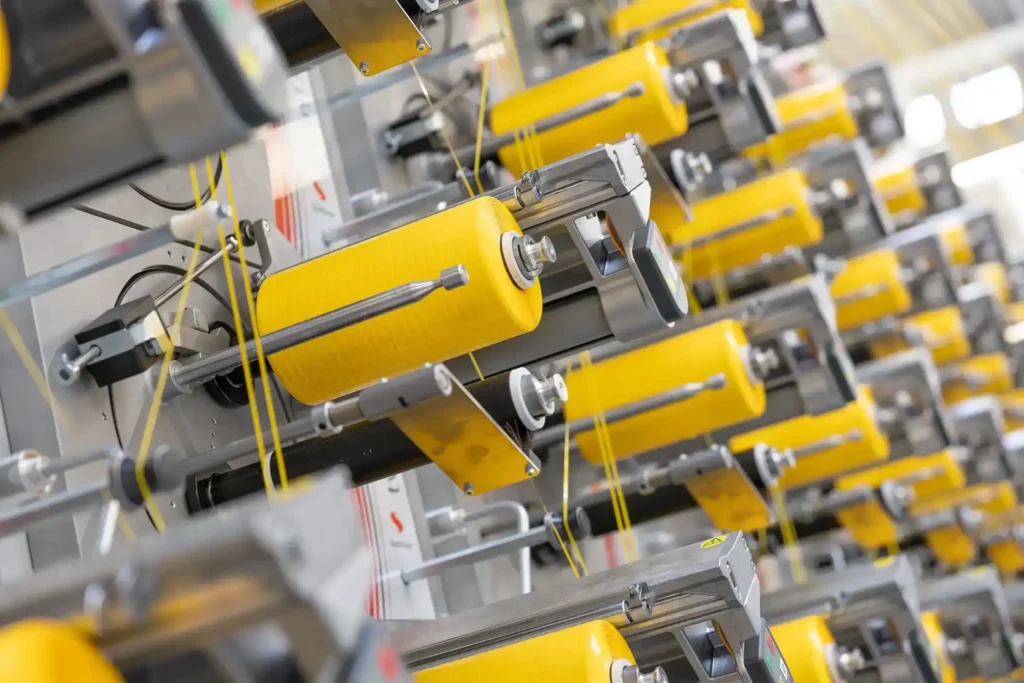
What are SOM PP Bags?
SOM PP Bags are woven polypropylene open‑mouth sacks that are filled through a wide top opening and then closed by sewing—hence the abbreviation SOM, short for Sewn Open Mouth. In an era crowded with pinch‑bottom and valve architectures, SOM PP Bags persist because they are rugged, forgiving, and fast to adapt: a woven shell takes the mechanical load, an optional inner liner controls moisture, and a stitched mouth delivers a simple, auditable closure that works across plants and climates.
Aliases and plant‑floor synonyms used for the same family:
- sewn open mouth polypropylene woven sacks
- open‑mouth woven PP bags
- stitched open‑mouth PP sacks
- plain woven SOM sacks
- coated SOM PP bags
- BOPP‑laminated SOM bags
- gusseted SOM PP sacks
Material composition of SOM PP Bags
Every behavior customers notice—tear resistance, seam integrity, moisture tolerance, pallet friction, scannable codes—originates in materials. The following cards describe each layer, where it sits, and why it matters to SOM PP Bags.
Isotactic polypropylene is extruded into film, slit into tapes, and drawn (molecularly oriented) to raise tensile strength. Those tapes are woven on circular or flat looms into fabrics typically 70–120 g/m² for 10–50 kg formats. The fabric behaves like a lightweight textile beam—strong in tension, tough in abrasion—so SOM PP Bags survive dragging, scraping, and stacking without bursting.
A thin PP or PE coating (10–25 µm) can be extrusion‑applied to curb dust sifting and slow moisture ingress. Where premium branding or scuff resistance is needed, a BOPP film is laminated as a printable face. These skins also tune coefficient of friction (COF) for conveyors and pallets.
Low‑density or metallocene LLDPE liners add sealability and odor control for oily feeds, hygroscopic fertilizers, or long‑haul export. Gauge is chosen for puncture risk (dart impact), while vent logic (micro‑perfs or breather strips) manages air release during filling.
High‑tenacity polypropylene or polyester threads, set to defined stitch densities, create the sewn closure. Seam architectures include single‑thread chain, double‑thread chain, and overlock plus chain; seam tapes (crepe or woven) can be added for powder duty to reduce sifting through needle holes.
UV packages extend outdoor life; anti‑static packages control nuisance shocks; slip/anti‑block masterbatches stabilize COF. Corona or plasma treatment lifts surface energy (≥38–42 dynes) so inks anchor and barcodes stay readable after rough handling.
The main levers are fabric gram weight, coating/lamination gauge, print color count, and seam complexity. Thinner cloth and lighter coatings look attractive on a quote but tend to leak, tear, and scuff—costs that return as claims, rework, and lost time. In practice, the sweet spot for SOM PP Bags is a mono‑PP build tough enough for duty yet compatible with PP recovery streams where infrastructure exists.
Key features of SOM PP Bags
Features are useful only when they show up as better line speeds, safer stacks, and cleaner yards. The traits below translate directly into measurable outcomes for SOM PP Bags.
Drawn tapes behave like a textile beam: bags tolerate dragging on concrete and scraping on pallets while retaining seam integrity. This strength‑to‑weight ratio is the hallmark that keeps SOM PP Bags cost‑effective per delivered ton.
Sewn closures forgive upstream variability—density shifts, temperature swings, even last‑second inserts. Operators can re‑stitch mis‑sewn mouths instead of scrapping a bag.
From breathable uncoated fabric to coated and lined hybrids, the platform spans arid to monsoon. Coatings reduce rain splash ingress and sifting; liners keep powders dry and flowable.
Gussets, block‑like geometry, and tuned COF surfaces keep pallets square and safe during long hauls. Paper‑touch coatings can be used where extra grip is needed.
Plain woven faces accept flexographic codes; BOPP laminates enable retail‑grade art. Either way, keeping dyne levels up and optical density in range ensures scan paths remain reliable.
Mono‑PP constructions enter PP recovery streams where available; designs with limited ink coverage and clear polymer codes support end‑of‑life sorting.
Production process of SOM PP Bags
From pellets to palletized bundles, production is a chain of capabilities. VidePak invests in best‑in‑class European machinery—Starlinger (Austria) for extrusion, weaving, coating, and converting; Windmöller & Hölscher (Germany) for printing and film handling—to shrink variation and boost repeatability.
Front‑end: raw materials and incoming tests
- Polypropylene resin: specify homopolymer grades with tight melt flow windows; test for MFI, moisture, ash, and gels.
- Films & coatings: verify BOPP thickness profile, dyne level, haze, and COF; for coatings, qualify PP/PE resins for viscosity and thermal stability.
- Masterbatches: confirm UV package strength, slip/anti‑block dosage, and anti‑static effect.
- Threads & tapes: check tensile/elongation and oil contamination to protect seam adhesion and print.
Core manufacturing flow
- Tape extrusion & drawing (Starlinger): film is slit to tapes and drawn; draw ratio sets strength and elongation so weavings run fast without breaks.
- Weaving (Starlinger looms): circular or flat looms produce fabric at target gsm and pick density; selvedge integrity avoids fray at cut lines.
- Surface treatment: corona/plasma lifts dyne to ≥38–42 for lasting ink/laminate anchorage.
- Coating/lamination: extrusion coating applies PP/PE skins for sift/moisture control; BOPP lamination adds a printable, scuff‑resistant face with tuned COF.
- Printing (W&H presses): flexographic or gravure printing delivers branding, grades, barcodes, and QR codes with tight registration and optical density targets.
- Cutting & forming: CNC or rotary knives shape blanks; gussets formed; mouth hems folded for clean sewing.
- Sewing/closure: single or double chain stitches, optionally with overlock; seam tapes added for powder duty; stitch density documented.
- Liner conversion: blown‑film liners are sized, optionally vented, and inserted; tie‑points prevent ballooning.
- Final finishing & pack‑out: count, bundle, palletize; stretch‑hoods protect for outdoor staging; labels carry lot/date/traceability.
Back‑end: quality assurance
- Fabric & tape: tensile (N/tex), elongation, gsm uniformity.
- Lamination & surface: 180° peel strength, dyne retention, abrasion rub.
- Print & codes: registration tolerance, optical density, first‑pass barcode/QR scan rates.
- Seam integrity: stitch density checks, peel and burst tests, dust‑sift trials.
- Friction: COF film/film and film/steel within declared windows.
- AQL sampling: incoming, in‑process, and pre‑shipment gates with retained samples.
Applications of SOM PP Bags
Because closure is sewn and the shell is woven, SOM PP Bags migrate easily between sectors—from dusty minerals to fragrant feeds, from abrasive blends to retail‑visible staples. The following use‑cases pair risks with practical specs.
Use mid‑range gsm and coated fabric for humidity moderation; add liners for export voyages. Stitch density and hem quality protect mouth integrity under repeated handling.
Coated faces or BOPP laminates resist oil migration and scuff; seam tapes reduce fines sifting. Barcode targets and clear grade IDs keep traceability intact.
Hygroscopic products want coatings or liners to prevent caking. Anti‑static packages reduce nuisance shocks during dry, cold fills.
Higher gsm and laminated faces resist abrasion; optional liners maintain powder flow index; pictograms help grade separation at depots.
Heavier gsm with micro‑vent patches near the mouth keeps fills clean and pallets square. Paper‑touch coatings add stack friction without excessive slip on conveyors.
BOPP facings enable premium art; matte coatings tune COF for shippers. Tamper cues can be integrated into the stitched mouth.
How VidePak controls and guarantees quality
Quality is a system, not a slogan. VidePak’s approach is intentionally methodical because predictable output comes from predictable processes.
Designs, sampling, and pass criteria align with ISO, ASTM, EN, and JIS logic—tensile testing for fabrics, COF per ASTM D1894, lamination adhesion via 180° peel test conventions, barcode verification to ISO/IEC 15416, and transport abuse simulations for drop and stacking.
Virgin PP/PE resins with tight melt‑flow windows, tier‑one BOPP films with stable dyne and gauge, and reputable masterbatches reduce batch‑to‑batch drift that would otherwise appear as weak seams or ink failures.
Starlinger lines cover tape, weaving, coating, and converting; W&H presses hold registration and ink density at speed. This pedigree cuts scrap and holds peel strength, COF, and scan rates inside tight bands.
Incoming checks (resin MFI, film dyne/COF, thread tensile); in‑process controls (gsm, tenacity, peel, registration, COF trends); finished‑goods AQL (dimensions, seams, sift tests, code readability); periodic audits (UV/humidity exposure snapshots) with retained samples.
SOM PP Bags: Main Characteristics and Usage in Packaging — analysis and reasoning
The headline contains two promises—characteristics and usage—and a hint at method: describe traits that matter, then show where those traits pay off. The reasoning path mirrors how engineers think: material behavior → line behavior → logistics behavior → customer experience → end‑of‑life.
Woven PP provides tensile efficiency per gram that paper or film cannot match; coatings and liners modulate moisture; BOPP adds durable graphics. The sweet spot for SOM PP Bags is often mono‑PP where regulations allow, because it simplifies recycling and stabilizes supply.
Sewn closures tolerate manual and semi‑automatic fills. COF, hem integrity, and stitch density are the levers that keep changeovers short and rejects low. Printing needs to respect scan paths.
Gussets, COF control, and wrap/hood practice determine whether pallets hold shape under vibration and weather. Moisture is the silent killer; coatings and pallet hoods quietly pay for themselves.
For B2B buyers, “useful” means fewer leakers and readable codes; for retail, it also means trustworthy graphics and tamper‑evident mouths. SOM PP Bags can serve both by combining a workhorse structure with premium facings.
Where PP recovery exists, mono‑PP sacks can be captured; otherwise, designs with fewer materials and minimal ink coverage reduce burden. Reuse cycles, where allowed, deliver the biggest footprint reduction.
Standardize a mono‑PP SOM PP Bags platform with coated fabric for powders and an uncoated option for breathable streams; split SKUs by risk (lined for hygroscopic products; heavier gsm for sharp aggregates; BOPP face for retail); lock COF and stitch density specs; publish a one‑page operator card for sewing heads and pallet patterns; track five metrics—leaker rate, barcode first‑pass reads, topple incidents, moisture claims, and reuse cycles—and iterate with data.
System thinking — decompose, then recombine
Break complex choices into solvable sub‑problems, then compose a solution. This is how SOM PP Bags achieve repeatable field performance.
Choose coated woven PP with stitched closure and optional PE liner, tune COF for your conveyors, specify stitch density by product density, adopt block‑like pallet patterns, and mark polymer codes clearly. That is the boring, effective playbook behind reliable SOM PP Bags.
Technical tables and presets
Tables compress decision‑making onto a single screen. Use these as starting points and edit to your routes and climates.
Failure modes and countermeasures
All formats fail in characteristic ways. Anticipate the pattern; design the fix. The playbook below keeps SOM PP Bags out of trouble.
Purchase‑order template you can adapt
- Product: SOM PP Bags, open‑mouth, stitched closure
- Structure: woven PP 90 g/m²; coating 18–25 µm PP/PE; optional PE liner 30–60 µm
- Seams: double‑thread chain with stitch density per spec; overlock + chain for powders; seam tape for sift control
- Printing: up to 8 colors; barcode + QR with ≥99% first‑pass scan; matte varnish on high‑abrasion SKUs
- Performance: drop/stack pass at declared limits; COF within window; peel strength ≥ target
- Palletization: slip‑sheets as needed; stretch‑hood; desiccant policy for RH > 70%
- Circularity: mono‑PP preference; clear polymer codes; limited ink coverage
- Machinery pedigree: Starlinger for extrusion/weaving/coating/converting; W&H for printing
Frequently asked questions
No container is waterproof under immersion. Coatings and liners reduce ingress substantially, but storage discipline and pallet hooding remain essential.
With trained operators and tuned stitch density, no. Sewing heads are forgiving and keep changeovers short—one reason SOM PP Bags remain common where SKUs switch often.
For dry, non‑contaminating streams, yes—if you define an inspection checklist (seam wear, print legibility, odor). Retire into PP recovery when they fail.
Only for wet or odor‑sensitive products. Dry recyclables and many minerals perform well unlined with a simple coating.
Keyword map (embedded naturally)
SOM PP Bags; Sewn Open Mouth polypropylene bags; open‑mouth woven PP sacks; stitched open‑mouth PP bags; coated SOM PP sacks; BOPP‑laminated SOM bags; gusseted woven PP bags; moisture‑resistant SOM packaging; sift‑proof SOM sacks; stitched closure PP sacks; liner‑insert SOM bags; chain‑stitch SOM sacks; overlock seam SOM bags; pallet‑stable woven PP sacks; polypropylene woven packaging.
Overview of SOM PP Bags
SOM bags are made from woven polypropylene, a material known for its durability and strength. They are typically produced using a weaving process that creates a sturdy fabric, which is then sewn into bags. The open mouth design allows for easy filling, while the sewn closure ensures secure packaging.
Table 1: Key Features of SOM Bags
| Feature | Description |
|---|---|
| Material | Polypropylene (PP) woven fabric |
| Design | Sewn Open Mouth |
| Closure | Sewn or heat-sealed |
| Customization | Size, thickness, weight, printing, inner liners, and coatings |
| Application | Seeds, nuts, grains, and various agricultural products |
Requirements for Packaging Different Products
1. Thickness and Weight
The thickness and weight of SOM bags play a crucial role in their effectiveness for different applications.
- Seeds and Nuts: For seeds, which may be sensitive to moisture and require good airflow, a lighter bag with a thickness of around 80 to 100 microns is often preferred. This ensures that the seeds remain dry and can breathe, preventing mold growth.
- Grains and Rice: For grains like wheat, corn, and rice, thicker bags (100 to 120 microns) are often necessary. These bags need to withstand the weight and pressure of the contents, especially when stored in bulk.
- Coffee Beans and Starch: Coffee beans require bags that can protect the beans from external elements while maintaining freshness. Here, a medium thickness of about 90 to 110 microns is often ideal. Starch, being a fine powder, typically requires slightly thicker bags (120 microns) to prevent tearing and spillage.
2. Size
The size of SOM bags is another vital consideration that varies based on the product being packaged.
- Seeds and Small Nuts: For seeds and small nuts, bags typically range from 25 kg to 50 kg. Smaller bags facilitate easier handling and transport.
- Grains and Bulk Products: For grains like wheat and corn, bags can be larger, ranging from 50 kg to 100 kg, catering to the need for bulk storage and transport.
- Specialized Products: For specialty items like coffee, bags may also be customized to specific weights, often around 30 kg, to suit market preferences.
3. Types of Bags
Different types of SOM bags can be utilized depending on the application:
- Standard SOM Bags: Typically used for general purposes like packaging grains and seeds.
- Bags with Inner Liners: Some products may require an inner liner for extra protection against moisture, especially in regions with high humidity. This is common for seeds and sensitive products.
- Foil-Laminated Bags: For products that require an extended shelf life, such as nuts and coffee beans, bags with foil lamination may be preferred. This design helps protect the contents from light, moisture, and oxygen.
4. Coatings and Finishes
The outer surface of SOM bags can be treated or coated to enhance their functionality.
- Uncoated Bags: Suitable for products that do not require additional protection.
- Coated Bags: For products that need resistance to moisture or chemicals, a polyethylene coating can be applied. This is particularly useful for packaging starch and similar products.
Customization Options
One of the key advantages of SOM bags is their customizability. Woven bag manufacturers can tailor the bags to meet specific client requirements:
- Printing: Branding is important in competitive markets. SOM bags can be printed with company logos, product information, and other relevant graphics, enhancing visibility and marketability.
- Inner Liners: As mentioned earlier, the addition of inner liners can significantly improve the protective qualities of the bags, particularly for sensitive products.
- Sizing Options: Manufacturers can provide bags in various dimensions to cater to different agricultural and industrial needs.
Regulatory Considerations
In addition to functional requirements, it’s essential to consider government regulations regarding packaging materials, particularly in the agricultural sector. Regulations may govern aspects such as:
- Material Safety: Ensuring that the materials used in SOM bags are safe for direct contact with food products.
- Recyclability: Many regions are pushing for environmentally friendly packaging solutions. SOM bags made from recyclable materials can appeal to environmentally conscious consumers.
- Labeling Standards: Compliance with labeling regulations is crucial. Proper labeling helps in traceability and provides consumers with necessary product information.
Applications and Best Practices
1. Packaging Seeds
For seeds, it’s essential to choose bags that provide both protection and breathability. Factors like thickness and the possibility of using inner liners should be considered to prevent moisture retention.
2. Packaging Grains
Grains require strong, durable bags. Selecting a thicker bag that can withstand the weight of the grains during storage is critical. Moreover, bags should be sealed properly to avoid contamination and spillage.
3. Nuts and Coffee Beans
The packaging for nuts and coffee should focus on preserving freshness. Therefore, using laminated bags or those with inner liners is advisable to prolong shelf life.
Summary of Key Points
Table 2: Summary of Key Considerations for SOM Bags
| Consideration | Seeds | Grains | Nuts | Coffee Beans |
|---|---|---|---|---|
| Thickness | 80-100 microns | 100-120 microns | 90-110 microns | 90-110 microns |
| Size | 25-50 kg | 50-100 kg | 30 kg | 30 kg |
| Type | Standard/Sewn | Bulk/Sewn | Lined/Laminated | Lined/Laminated |
| Coating | Uncoated | Coated (if necessary) | Coated | Coated |
Conclusion
SOM PP bags play a vital role in the agricultural packaging industry, providing a versatile and effective solution for various products. With their ability to be customized to meet specific requirements, manufacturers can ensure that these bags serve their purpose effectively, ensuring quality and safety from packaging to transport. The future of SOM bags will likely focus on sustainability, regulatory compliance, and innovative design to meet the evolving needs of the market.