
What Are Laminated Kraft Paper Aluminum Foil Bags?
Laminated Kraft Paper Aluminum Foil Bags are engineered multi-layer sacks and pouches that integrate a printable paper exterior with a metallic barrier core and a sealable inner film. The wall is not a single material; it is a composite—paper for stiffness and legibility, aluminum foil for oxygen, moisture, and light barrier, and polymer films/adhesives for sealing and cohesion. The result is a package that looks approachable like paper, behaves like a high-barrier container, and survives industrial handling like a heavy-duty sack. When the mission is to keep odors in, humidity out, flavors stable, or residues contained, Laminated Kraft Paper Aluminum Foil Bags earn their keep across production lines, waste rooms, and long-distance logistics.
Also known as (synonyms listed for cross-reference)
- Kraft Paper Aluminum Foil Bags
- Foil-Lined Kraft Sacks
- Paper–Foil Composite Bags
- Aluminum Foil Kraft Pouches
- Foil Laminate Paper Valve Bags
- Laminated Paper–Foil Industrial Sacks
- Foil-Barrier Kraft Waste Bags
Why does one product family carry so many names? Because the value proposition touches several pain points at once: odor containment for organics, shelf life for oxidation-sensitive powders, light shielding for UV-reactive actives, and clean handling for dusty residues. A single wall solves many headaches. That is the quiet logic behind Laminated Kraft Paper Aluminum Foil Bags: less smell, less mess, less loss.
Purpose, in one line
Deliver paper-like handling with foil-like barrier so sensitive, smelly, or moisture-prone contents travel quietly.
Primary users
Food and ingredient processors, flavor/fragrance makers, chemical plants, municipal services, labs, and waste-management operators.
Where they outperform
Where plain paper fails in humidity, and plain film fails in puncture/printability, Laminated Kraft Paper Aluminum Foil Bags keep working.
The Materials of Laminated Kraft Paper Aluminum Foil Bags
Every layer earns its place. Paper brings structure and message. Foil brings barrier and light-block. Adhesives bring cohesion. Films bring seals and toughness. Together, they form a wall that is thin yet persuasive against oxygen, moisture, and odor. The bill of materials below explains not only what each layer is but why it is there—and what happens when a knob is turned.
Material stack by function
- Kraft paper (outer face): Adds stiffness for stand-up geometry, scuff resistance for handling, and an ink-receptive surface for legible branding and compliance text. Brown grades read utilitarian; white grades read premium.
- Aluminum foil (barrier core): A thin metallic sheet (often 7–20 µm) with near-zero oxygen transmission, very low water vapor transmission, and complete light block. It is the engine of shelf life and odor control.
- Adhesive or extrusion tie: Solventless polyurethane systems or molten polyethylene ties that marry paper to foil (and foil to films) without brittle bonds. Cure time and coat weight determine long-term integrity.
- Inner sealant film: Polyethylene (LDPE/LLDPE/HDPE), cast polypropylene (CPP), or ionomer blends that form fast, repeatable heat seals and resist puncture from granular edges.
- Optional protector films: Thin PET or PE may be paired to foil to reduce flex cracking on tight folds; in most waste/industrial formats, the paper and sealant already do this work.
- Coatings/varnishes: Over-prints that tune rub resistance, surface coefficient of friction (COF), and gloss/matte balance—for readability and pallet stability.
Cost behaves like physics: you never make it disappear, you only move it. Paper basis weight, foil gauge, and sealant thickness trade with performance and process speed. Thin foil saves money and mass but invites pinholing if bends are sharp. Heavy paper stiffens stacks but can scuff more without a varnish. A good specification balances these forces with the environment in which the package will live.
| Component | Typical Options | Influence on Behavior |
|---|---|---|
| Paper basis weight | 60–120 g/m² (higher for sacks) | Stiffness, print fidelity, stack geometry |
| Foil gauge | 7–20 µm | Barrier headroom, flex-crack resilience, cost |
| Sealant film | PE 30–80 µm; CPP 40–70 µm; ionomer where tough seals are needed | Seal window, hot-tack, puncture and creep resistance |
| Adhesive / tie | Solventless PU; extrusion PE | Bond strength, curl, cure timing, odor profile |
| Over-varnish | Matte/gloss; COF-targeted | Rub resistance, pallet stability, barcode readability |
Tip: design the weakest link on purpose. If a package must fail, make it fail at the seal in a way that is obvious and easy to investigate—not at a hidden delamination miles down the road.
What Are the Features of Laminated Kraft Paper Aluminum Foil Bags?
Features only matter when they answer predictable problems. That is why the most useful list is short, plain, and testable. Here is the translation from engineering to outcomes—what operators feel and auditors measure.
- High barrier to oxygen and moisture: Foil’s barrier reclaims shelf life for oxidation-sensitive materials and blocks humidity that cakes powders or wakes up microbes.
- Full light block: Aluminum foil denies UV and visible light the chance to degrade actives or stir off-notes; graphics remain readable without film glare.
- Odor containment: Volatile organics stay in the bag; lobbies and trucks smell like lobbies and trucks, not like waste rooms.
- Heat-sealable closures: With an inner film, seals form quickly and repeatably; pinch-bottom conversions deliver hermetic sacks at industrial speed.
- Printable paper face: Compliance icons, barcodes, and instructions stay legible; color coding simplifies crew training and sorting.
- Geometry that stacks: Stand-up pouches, block-bottom sacks, and side-gusseted formats keep pallets square and aisles tidy.
- Process compatibility: Pouches run on impulse or constant-heat sealers; sacks run on valve or pinch-bottom lines; both can be configured for manual or automatic fill.
Reader prompt
Which failure costs you more—odor complaints, caked product, or leakers? Your answer tells you which layer deserves the budget.
What Is the Production Process of Laminated Kraft Paper Aluminum Foil Bags?
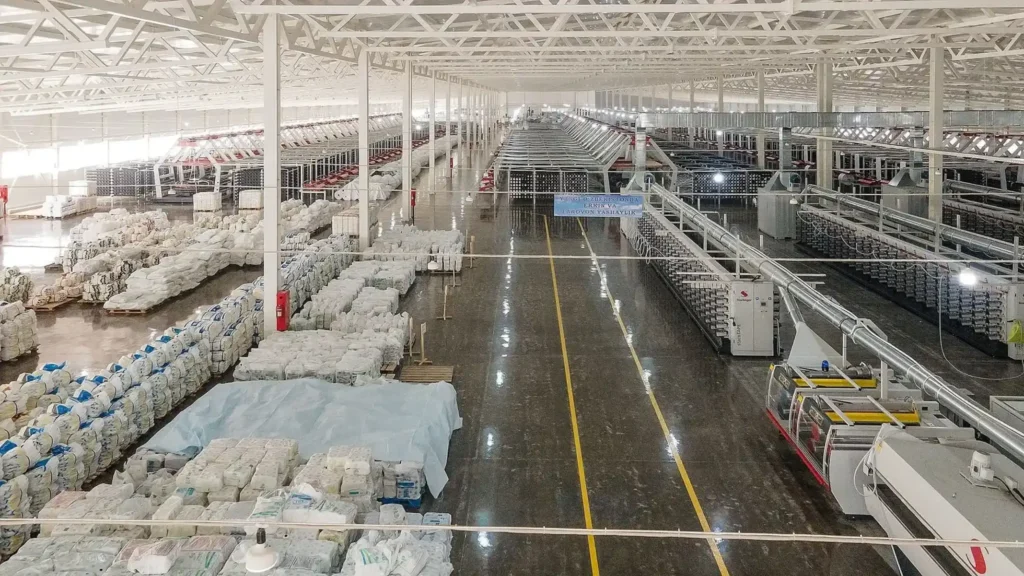
Process clarity is product clarity. The journey from rolls and pellets to predictable pallets is a chain of measurable stages. VidePak standardizes on proven assets—heavy-duty sack platforms from Austria’s Starlinger for hybrid woven/paper needs and high-precision printing and converting from Germany’s W&H (Windmöller & Hölscher)—because stable tension, accurate register, and tight gauge control are not luxuries; they are risk controls wrapped in steel and firmware.
Upstream selection and checks
- Paper: confirm basis weight, Cobb value, moisture, surface strength, and brightness (if white).
- Foil: verify alloy and gauge; inspect pinhole counts and temper; test dead-fold where needed.
- Adhesives/ties: verify mix ratios (PU), pot life, or MFI (extrusion ties); archive food-contact declarations where applicable.
- Sealant films: measure thickness, seal initiation temperature, hot-tack, and puncture.
- Inks/coatings: confirm viscosity window, adhesion, and rub resistance against the chosen paper.
Core manufacturing
- Lamination: Either solventless adhesive lamination (meter-mix PU; marry paper to foil; cure) or extrusion lamination (molten PE between webs; chill in nip; control neck-in).
- Curing: For adhesive systems, track temperature/time to full cure; run bond-strength T-peel by shift before slitting.
- Printing: CI flexo or offset on the paper face; register, dot gain, and Delta-E color are monitored; handling icons and regulatory panels added.
- Slitting & sheeting: Maintain edge quality and taper wind; label logs with roll maps and QA status for traceability.
- Conversion: Form fin/side/stand-up pouches or industrial sacks (open mouth, pinch-bottom, valve); define seal windows or hot-melt parameters; add tear notches, zippers, valves, or document pouches.
- Palletizing: Square stacks, COF-matched wrap, and corner boards for tall loads; print pallet cards with lot and revision codes.
Quality gates and release
- Dimensions: length, width, gusset, and squareness checked per shift.
- Bonds: T-peel at paper//foil and foil//film interfaces.
- Barrier: WVTR and OTR on representative builds; light-transmission proxies as applicable.
- Seals: peel strength, burst, creep; vacuum-dye or pressure leak tests for critical SKUs.
- Mechanicals: dart impact, tear, and drop per route severity.
- Surfaces: COF, rub/adhesion, barcode readability; over-varnish verification.
- Sampling: AQL release with retains archived; nonconformances drive CAPA with owners and deadlines.
The fewer the surprises on the floor, the quieter the claims inbox. Standards, stable equipment, and simple specs are the best kind of boredom.
What Is the Application of Laminated Kraft Paper Aluminum Foil Bags?
Because they pair paper’s stiffness and printability with foil’s barrier, Laminated Kraft Paper Aluminum Foil Bags shine wherever moisture, oxygen, odor, or light threaten quality or workplace comfort. The following use cases show how geometry and materials map to real operations.
- Municipal organics and food-service residues: Side-gusseted pouches with heat-sealable mouths lock down odors and liquids before transit across public areas. Color bands and big icons simplify sorting at the source.
- Special wastes & lab residues: Small lots of solvent-laden wipes or bench residues are isolated in peel-seal pouches with QR-coded manifests. Chain-of-custody stays auditable without medical-hazard optics.
- Industrial powders & nuisance dusts: Valve or pinch-bottom sacks retain fines, keep moisture out, and run fast on fillers; odor and dust complaints drop.
- Odor-active by-products: Fish and meat plants, flavor/fragrance production, and pet-food palatants benefit from odor containment during storage and transfer.
- Construction residues & admixtures: Additives that hate humidity and sunlight travel better in foil-paper with matte over-varnish and block-bottom geometry.
- Reverse logistics & returns: Self-seal mailers built on foil-paper keep messes contained in consumer returns of supplements or cosmetics.
Further reading
For closely related structures and buyer guidance, explore this detailed overview of laminated kraft paper sacks and compare format choices with your lane conditions.
How VidePak Controls and Guarantees the Quality
Quality is not a slogan; it is a rhythm on the floor. VidePak’s rhythm converts standards into habits and habits into outcomes. The steps below show how that rhythm prevents drift and defends promises.
- Standards first: Design and testing align to mainstream frameworks (ISO, ASTM, EN, JIS). Test suites include WVTR/OTR for barrier, T-peel for bonds, F88/F88M for seals, D1894 for COF, Elmendorf for tear, and D5276 for drop.
- 100% new raw materials: Virgin paper grades, certified foil, compliant adhesives, and spec’d sealant films reduce batch-to-batch drift and make root-cause investigations tractable.
- Best-in-class equipment: VidePak emphasizes Starlinger platforms for heavy-duty woven/paper hybrids and W&H presses/converters for high-register graphics and consistent web handling.
- Full-stack inspection: IQC on paper/foil/adhesives/films; IPQC on bond strength, curl, register, and seal integrity; FQC on barrier, COF, rub, and dimensional geometry.
Why standards?
Comparable data builds trust across sites and borders. Only numbers with methods behind them can be defended.
Why virgin inputs?
Predictable strength and bond behavior beat cheapness that arrives with surprises. Fewer surprises, fewer claims.
Why Starlinger & W&H?
Tight tension windows and crisp register are the invisible safety nets that prevent little errors from becoming big ones.
System Thinking: From Hazards to Specs to Outcomes
Treat Laminated Kraft Paper Aluminum Foil Bags as interacting subsystems. Break the problem down—barrier and chemistry, mechanics and handling, closures and sealing, graphics and communication, end-of-life, and logistics—then build it back up as a coherent specification. The reward is a package that behaves the way your SOP says it should, even when rooms are busy and weather refuses to cooperate.
| Subsystem | Levers | What Shifts When You Pull Them |
|---|---|---|
| Barrier & chemistry | Foil gauge, adhesive type, sealant thickness, varnish | OTR/WVTR headroom, odor hold-in, light block |
| Mechanics & handling | Paper basis, protector films, gussets, block bottoms | Puncture/tear, stack behavior, cube efficiency |
| Closures & sealing | Heat seal vs. pinch-bottom, dwell/pressure, peelable vs. permanent | Leaker rates, tamper evidence, operator speed |
| Identity & communication | Color coding, iconography, barcode targets, varnish | Right action at a glance; scan rates; rub-fast text |
| End-of-life | Monomaterial options, energy recovery, design-for-separation | MRF acceptance, RDF suitability, worker time at bins |
| Logistics | COF tuning, corner boards, wrap recipe, pallet pattern | Topple frequency, damage rate, container utilization |
Recombine thoughtfully. For odor-critical organics, choose generous foil gauge and secure heat-seal windows with thick PE. For moisture-hating powders, target lower WVTR and add matte varnish to stabilize pallet friction. For consumer returns, choose peelable seals and friendly opening features so customers succeed without knives.
Parameters and Ranges: Color-Coded Quick Reference
| Parameter | Typical Range / Options | Purpose / Notes |
|---|---|---|
| WVTR (38 °C / 90% RH) | ≤ 0.5 g/m²·day (foil laminates) | Moisture exclusion; anti-caking |
| OTR (23 °C / 0% RH) | ≤ 1 cc/m²·day | Oxidation control; aroma retention |
| Seal strength (ASTM F88) | 4–8 N / 15 mm (application-dependent) | Compression/vibration survival |
| T-peel bond (paper//foil) | ≥ 2 N / 15 mm | Delamination resistance during conversion |
| COF (bag/bag) | 0.30–0.45 (via varnish/stripes) | Stack stability and safe wrap recipes |
Quality and Performance Tests That Matter
| Test | Protects Against | Tighten When |
|---|---|---|
| Seal strength | Leakers in transit; tamper issues | Compression-heavy lanes; parcelized shipments |
| T-peel (interfaces) | Delamination under bending | Tight folds; high cure variability |
| Dart impact | Corner punctures; granular edges | Harsh pallets; long haul with vibration |
| WVTR/OTR | Caking, oxidation, aroma loss | Hygroscopic powders; odor-critical contents |
| COF | Stack slippage and wrap cuts | Tall columns; smooth films; sea legs |
Troubleshoot Once, Fix for Good
Most field issues trace to a few repeat offenders. A seal opens because SIT and dwell are mismatched. A pallet leans because COF is too low for the wrap recipe. A foam of odor escapes because foil gauge is thin and flex-cracked near a fold. Each failure has a countermeasure you can write into the spec and train into the shift.
| Symptom | Likely Causes | Corrective Actions |
|---|---|---|
| Seal tunnels or cold seals | Low jaw temp or dwell; contamination | Increase temp/dwell; clean jaws; adjust pressure |
| Delamination on folds | Insufficient cure; low coat weight; wrong adhesive | Extend cure; raise coat weight; validate adhesive family |
| Odor bleed | Foil pinholes; flex cracks; weak seals | Increase foil gauge; add protector film; widen seal window |
| Pallet slippage | Low COF; glossy varnish; wrap recipe off | Specify matte varnish; anti-slip stripes; retune wrap |
| Scuffed graphics | Low rub resistance; no OPV; rough handling | Add over-varnish; alter ink set; introduce corner boards |
Cost, Risk, and the Pallet You Actually Ship
A unit price can seduce; a total cost can educate. The bag that looks cheap but leaks, smells, or cakes content is not cheap. The line that moves fast but pushes rework downstream is not fast. Engineer to the lane you have: define barrier bands, seal windows, and pallet recipes; measure outcomes you actually pay for—intact pallets per hundred shipped, odor complaints per week, kilograms per container, claims per million, days between issues. Laminated Kraft Paper Aluminum Foil Bags specified with discipline lower each of those numbers without calling attention to themselves.
A quiet KPI dashboard is not an accident; it is the echo of a well-written specification executed on stable equipment by teams watching the right numbers.
Sustainability and End-of-Life
Multilayer packages complicate recycling, but design choices can soften the trade-offs. Favor monomaterial pathways where possible (paper-only for low-barrier needs, PP-lean hybrids for certain sacks), or document separation steps so liners and papers part cleanly. Where recycling is impractical, energy recovery is a practical path—especially in waste programs that already route contaminated materials to RDF. The strongest sustainability lever is durability: packages that do not fail prevent emergency repacks and wasted routes.
KPI Dashboard Ideas
- Barrier: WVTR, OTR, and odor-challenge pass rates.
- Mechanics: puncture, tear, drop, and compression results.
- Seals: F88 peel, burst/creep, and leaker counts per thousand.
- Graphics: Delta-E color drift, register, rub resistance.
- Process: lamination bond strength, press waste, first-pass yield.
- Field: claims per million, time to CAPA close, odor complaints per site.
Glossary (Short and Useful)
- WVTR — Water Vapor Transmission Rate; predicts caking and moisture ingress risk.
- OTR — Oxygen Transmission Rate; predicts oxidation and aroma loss.
- SIT — Seal Initiation Temperature; the point at which the film begins to bond.
- Hot-tack — Strength of a seal while still hot; critical for fast lines.
- COF — Coefficient of Friction; controls pallet stability and wrap behavior.
- Delta-E — Color difference metric used in print QA.
Keyword Cluster (Natural Sentences)
laminated kraft paper aluminum foil bags; foil-lined kraft bags; paper–foil composite sacks; aluminum foil kraft pouches; odor-barrier kraft waste bags; moisture-proof paper foil packaging; oxygen-barrier paper foil bags; pinch-bottom foil paper sacks; heat-sealable foil kraft pouches; block-bottom foil-lined sacks; stand-up foil paper pouches; laminated kraft paper sacks for waste management; laminated kraft foil bags for organics; industrial foil-laminate paper bags; high-barrier paper sacks with aluminum foil.
October 25, 2025
- What Are Laminated Kraft Paper Aluminum Foil Bags?
- The Materials of Laminated Kraft Paper Aluminum Foil Bags
- What Are the Features of Laminated Kraft Paper Aluminum Foil Bags?
- What Is the Production Process of Laminated Kraft Paper Aluminum Foil Bags?
- What Is the Application of Laminated Kraft Paper Aluminum Foil Bags?
- How VidePak Controls and Guarantees the Quality
- System Thinking: From Hazards to Specs to Outcomes
- Parameters and Ranges: Color-Coded Quick Reference
- Quality and Performance Tests That Matter
- Troubleshoot Once, Fix for Good
- Cost, Risk, and the Pallet You Actually Ship
- Sustainability and End-of-Life
- KPI Dashboard Ideas
- Glossary (Short and Useful)
- Keyword Cluster (Natural Sentences)
Laminated Kraft Paper Aluminum Foil Bags, including Laminated Kraft Paper Sacks and Aluminum Foil Bags, are specialized packaging solutions that combine the strengths of various materials to provide enhanced protection for their contents. This article will explore why aluminum foil is used as an inner layer in these bags, compare them with traditional Kraft Paper Woven Bags, and discuss their applications in waste collection and recycling.
Why Use Aluminum Foil as an Inner Layer?
The incorporation of aluminum foil in laminated Kraft paper bags serves several essential purposes:
1. Barrier Properties
Aluminum foil provides excellent barrier properties against moisture, oxygen, and light. This is critical for products sensitive to these elements, such as food items and pharmaceuticals. The foil layer effectively prevents spoilage and extends shelf life, making these bags ideal for packaging consumables.
2. Strength and Durability
The laminated structure, which typically includes a Kraft paper exterior and an aluminum foil interior, results in a robust packaging solution. The combination ensures that the bags can withstand handling, transportation, and storage without tearing or breaking.
3. Temperature Resistance
Aluminum foil can withstand a range of temperatures, making these bags suitable for hot-fill applications and ensuring that the contents remain safe during various storage conditions. This feature is particularly beneficial for items that may require heating or cooling.
4. Lightweight
Despite their strength, aluminum foil bags are relatively lightweight. This characteristic reduces shipping costs and makes them more efficient for logistics, especially when transporting large quantities.
Comparing Laminated Kraft Paper Aluminum Foil Bags with Kraft Paper Woven Bags
When comparing Laminated Kraft Paper Aluminum Foil Bags to Kraft Paper Woven Bags, several key differences and features emerge:
| Feature | Laminated Kraft Paper Aluminum Foil Bags | Kraft Paper Woven Bags |
|---|---|---|
| Barrier Properties | Excellent moisture, oxygen, and light barrier | Limited barrier properties |
| Durability | High, resistant to tearing | Moderate, suitable for bulk items |
| Temperature Resistance | High, suitable for hot and cold items | Limited temperature resistance |
| Application Range | Food, pharmaceuticals, and chemicals | Agriculture, construction materials |
| Customization | High, various sizes and printing options | Moderate, primarily size variations |
Waste Collection and Recycling Applications
Laminated Kraft Paper Aluminum Foil Bags are increasingly being used in waste management and recycling efforts. Their design and material properties make them suitable for various waste collection applications:
1. Collecting Recyclables
These bags are ideal for collecting recyclables such as paper, plastic bottles, and aluminum cans. Their strength and durability ensure they can handle the weight and volume of recyclables without tearing. The barrier properties also prevent contamination of the collected materials, maintaining their quality for recycling processes.
2. Waste Segregation
In waste management, segregation is crucial for effective recycling. Laminated Kraft Paper Aluminum Foil Bags can be color-coded or labeled for different waste categories, making it easier for users to sort their waste properly. This feature enhances recycling efficiency and promotes proper waste disposal practices.
3. Storage of Waste Materials
These bags can also be used for the temporary storage of waste materials before they are transported to recycling facilities. Their strength and moisture resistance prevent leaks and spills, making them suitable for both indoor and outdoor storage.
4. Environmental Impact
By utilizing Laminated Kraft Paper Aluminum Foil Bags in waste collection, the overall environmental impact can be reduced. These bags are often designed to be recyclable themselves, contributing to a circular economy and minimizing landfill waste. Additionally, their use in recycling programs can enhance the recovery rates of valuable materials.
Future Trends and Developments
As environmental awareness grows, the demand for sustainable packaging solutions continues to rise. Laminated Kraft Paper Aluminum Foil Bags are well-positioned to adapt to these trends:
1. Sustainable Materials
Manufacturers are increasingly exploring the use of sustainable materials for the production of laminated bags. This includes biodegradable films or recycled paper, which can enhance the eco-friendliness of these products without compromising performance.
2. Innovations in Design
Advancements in design technology may lead to new bag configurations that further enhance usability and performance. This includes easy-to-open features, resealable options, and integrated handles for easier transport.
3. Increased Customization
As businesses seek to differentiate their products, the customization of laminated bags will become more prevalent. This includes printing high-quality graphics, branding, and specific labeling for various applications.
4. Focus on Recycling
The push for more comprehensive recycling programs means that Laminated Kraft Paper Aluminum Foil Bags will need to be designed with recyclability in mind. This could involve clearer labeling on how to dispose of the bags properly, as well as innovations that make them easier to recycle.
Conclusion
Laminated Kraft Paper Aluminum Foil Bags represent a significant advancement in packaging technology, offering superior protection, strength, and versatility compared to traditional Kraft Paper Woven Bags. Their applications in waste collection and recycling align with current sustainability trends, making them a vital component of modern waste management solutions. As the industry continues to evolve, these bags will likely incorporate more sustainable practices and innovative designs, further enhancing their role in responsible packaging.
Product Parameters and Key Points
| Feature/Parameter | Description |
|---|---|
| Material | Laminated Kraft paper and aluminum foil |
| Barrier Properties | Excellent moisture, oxygen, and light barrier |
| Durability | High, resistant to tearing |
| Temperature Resistance | Suitable for hot and cold items |
| Applications | Food, pharmaceuticals, waste collection |
| Customization | Available in various sizes, colors, and prints |
References
- J. M. Smith, “The Role of Aluminum Foil in Packaging: An Overview,” Journal of Packaging Science, vol. 45, no. 1, pp. 15-28, 2021.
- K. L. Johnson, “Sustainable Packaging Solutions: Trends and Innovations,” Packaging Technology Journal, vol. 29, no. 2, pp. 65-78, 2022.
- R. T. Anderson, “Waste Management: Effective Collection Strategies,” Environmental Science & Technology, vol. 55, no. 3, pp. 200-215, 2020.
- T. B. Reynolds, “Laminated Packaging: Materials and Applications,” International Journal of Food Packaging, vol. 18, no. 4, pp. 150-162, 2023.